|
#1
●
03-21-2024, 04:00 PM
|
 ♚ Legacy Gold Member ♚ Poster Rank:914 Join Date: Jul 2020 Posts: 820
Contributions: 13
820Posts 27,649Thanked 173Quoted 13Mentioned 13Contrib. |
|
The Shocker's Mix 90
Some of the stuff I work on doesn't make the cut so I thought about gathering them up in a single post. So basically it's images I have little or no info about or I've decided that they don't get their own thread, for example, because of low image/content quality, lack of backstory or additional info/knowledge, possibly uninteresting, only one image but not very special. I still do the usual image work including upscaling and color correction as needed, as I prefer to have my content high quality and educational. - - - Case 1 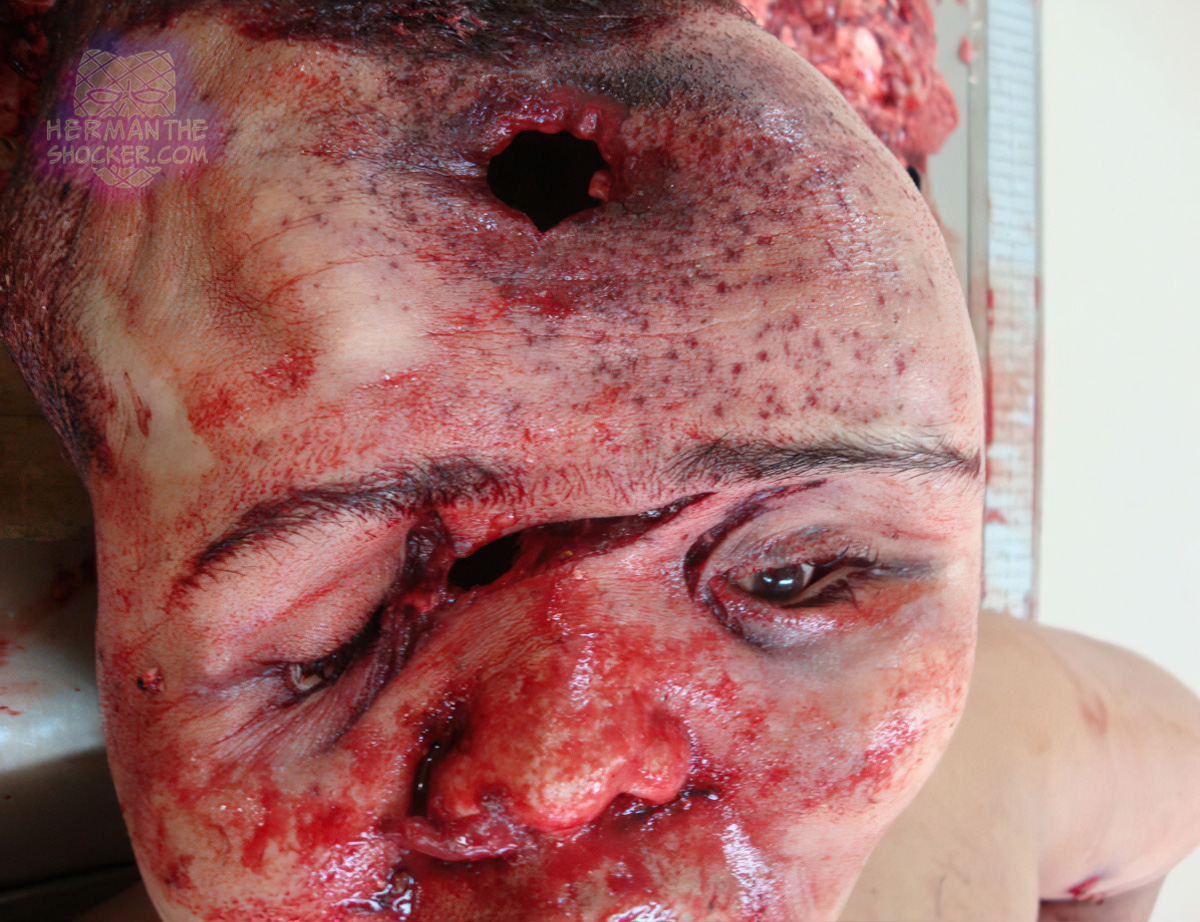 Fig1.1 Entrance gunshot wound on the forehead. 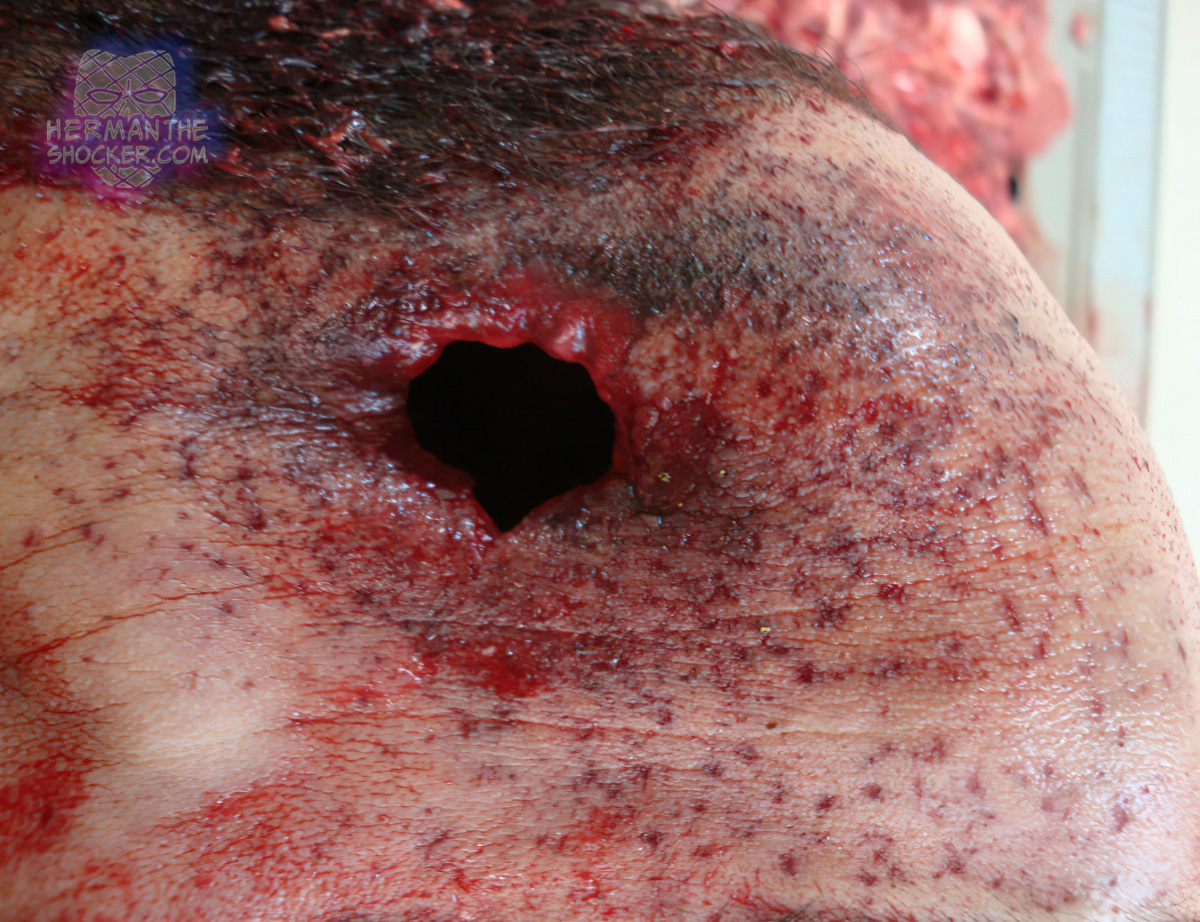 Fig1.2 Entrance gunshot wound on the forehead. This individual has an entrance gunshot wound on the forehead, note the stippling around the wound. Entrance wounds can be round, oval or irregular (atypical); an abrasion ring is almost always present. Stippling (or powder tattooing) is red to orange or brownish punctate abrasions surrounding the entrance wounds as a result of pieces of gunpowder expelled from the barrel and striking the skin. Soot deposition is due to the carbon produced by the combustion of the gunpowder that exits the barrel and deposits on the skin surrounding the entrance wound. - - - Case 2 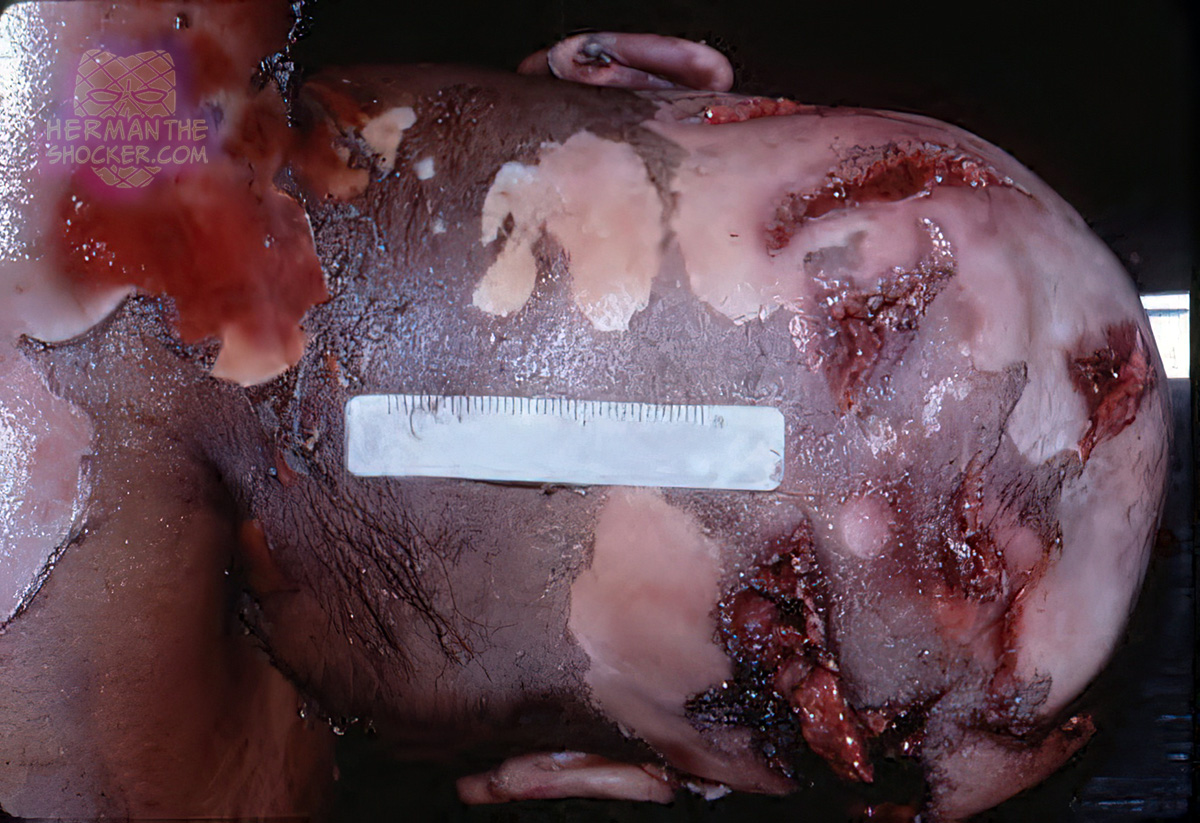 Fig2.1 Multiple stab wounds and lacerations. Antemortem injuries that have been obscured by postmortem change. This individual had multiple stab wounds and lacerations. Note the wound margins are dark and irregular due to drying. This may make wound interpretation challenging and at some point impossible. Also, animals and insects will often more readily feed from injured areas with exposed soft tissue and blood, further obscuring these findings. - - - Case 3 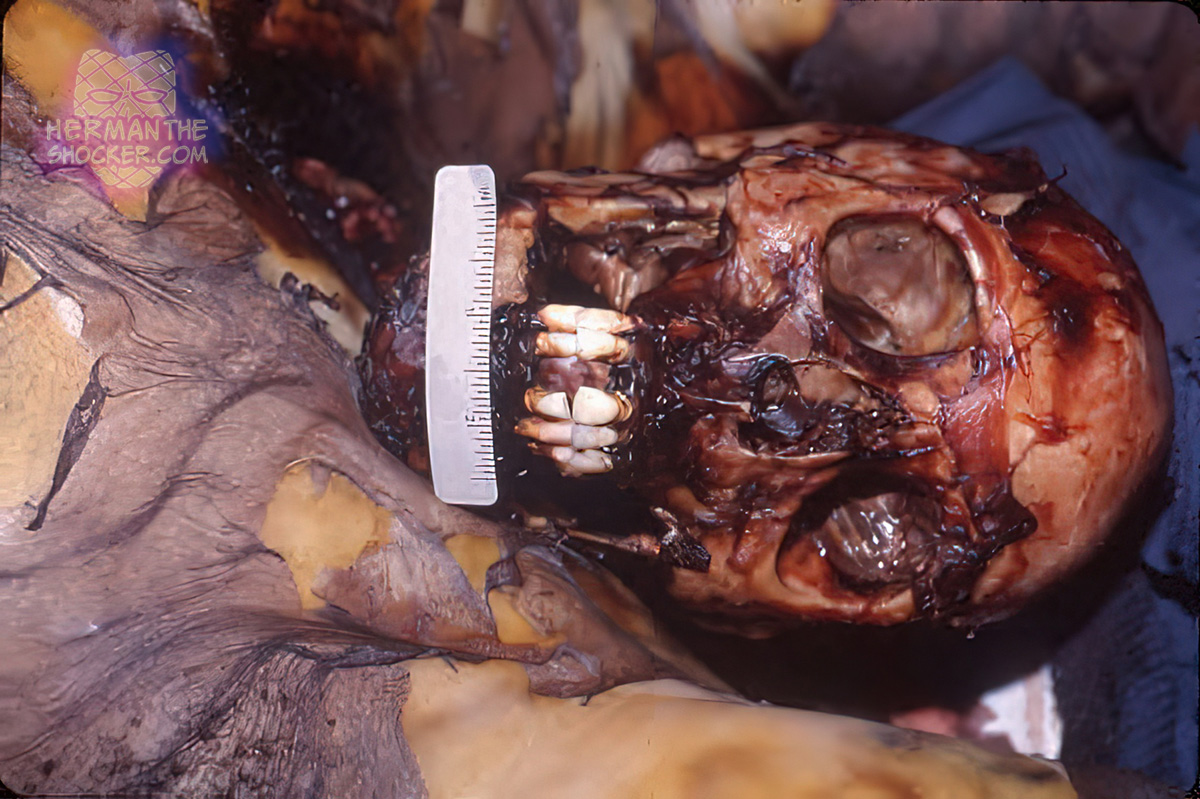 Fig3.1 Postmortem animal feeding with dog claw abrasions. 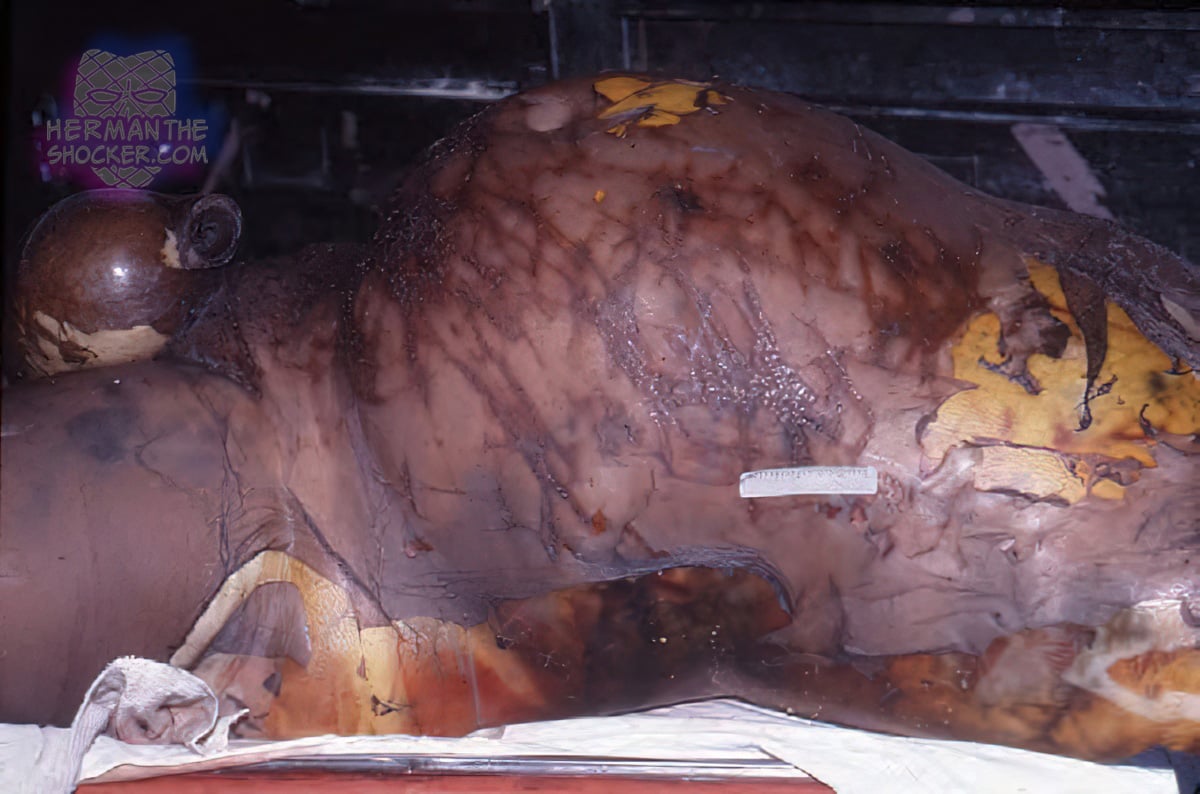 Fig3.2 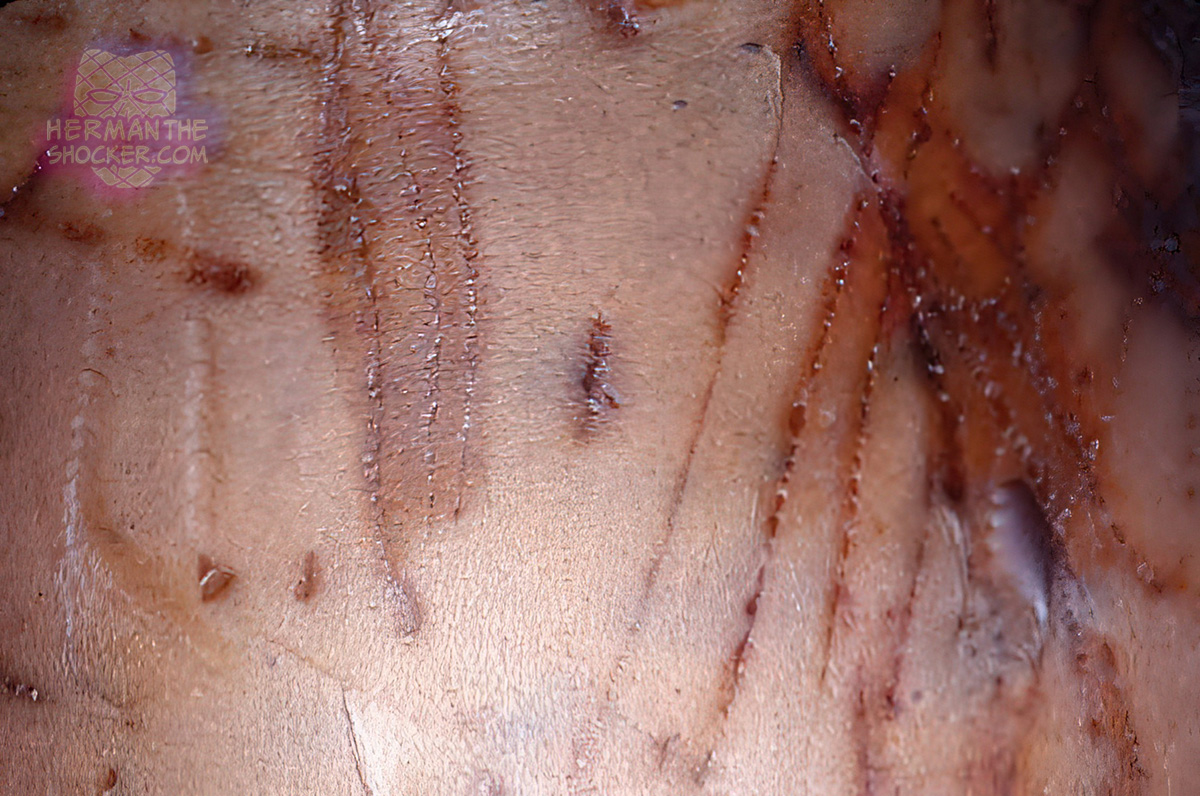 Fig3.3 An example of postmortem dog feeding, which often initially involves the face, genitals, anus, and areas of wounds. - - - Case 4  Fig4.1 Postmortem predation from fish and crustaceans. 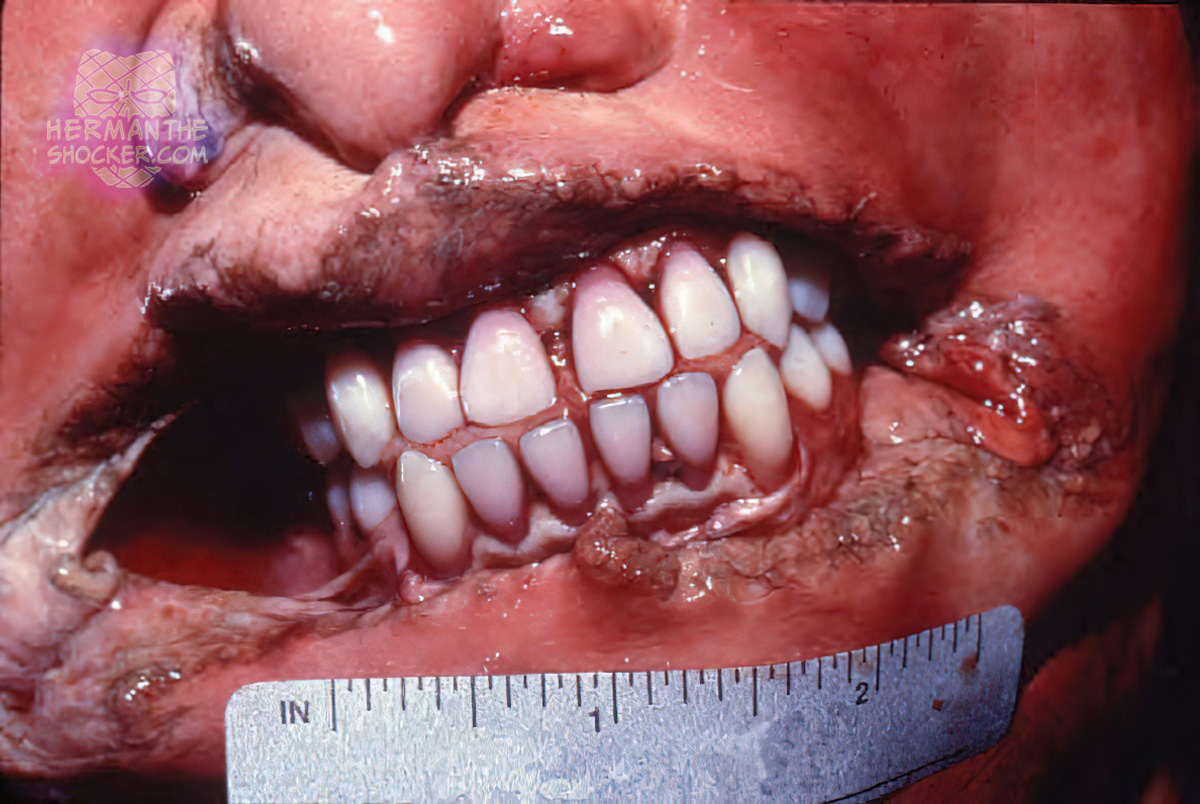 Fig4.2 Crustaceans will cause tissue damage that in some cases may mimic trauma to the body. Postmortem feeding from fish and crustaceans found on this body retrieved from the ocean. No further info. Bodies that are found in the sea will often be decomposed and injured by the action of waves against obstructions or by marine predators, and blood may be washed out of the wounds. These changes may complicate the evaluation of cases. In deep waters such as ocean and sea, many small fish species feed on corpses. Animal predation, including insect activity, is very different in the water environment. In some cases, the body will be floating on the surface and the usual arthropod predators such as blowflies and carrion beetles will have access to exposed tissue. The immersed portion of the body will be subject to different predators. Aquatic insects may alter the appearance and condition of the remains. Large animals such as turtles, large fish, and large crustaceans will cause tissue damage that in some cases may mimic trauma to the body. Smaller fishes, crabs, shrimp, and invertebrates prey on soft tissue and if given the opportunity can completely deflesh exposed parts of the body. Fish, turtles, and other animals may aggressively feed on remains and in the ocean environment, large carnivores such as sharks will create postmortem artifacts. It is not unusual for small fish and crustaceans to gain access to the interior of the body through skin and soft tissue defects or even normal body orifices. - - - Case 5  Fig5.1 Decomposing suicide victim. This individual committed suicide by hanging. When the body was found it was in an advanced state of decomposition. Putrefaction begins immediately upon death and usually becomes noticeable within 24 hours. As soon as death occurs, the bacteria or microorganisms within the intestinal tract escape from the bowel into the other tissues of the body. As they grow, they begin to produce gases and other properties that distort and discolor the tissues of the body. The discoloration is a dark greenish combination of colors and is generally pronounced within 36 hours. As a result, the body begins to swell from the putrefactive gases, emitting an extremely repugnant odor. The rate of decomposition depends on the temperature, ground conditions, amount of clothing, size of the body, etc. For example, a body in a warm climate will not only encourage insect attack from the outside, but will also increase the interior bacteria development and subsequent tissue attack from within. As the tissues inside are destroyed and enzymes released, the gases formed emit a foul and sickening smell. - - - Case 6 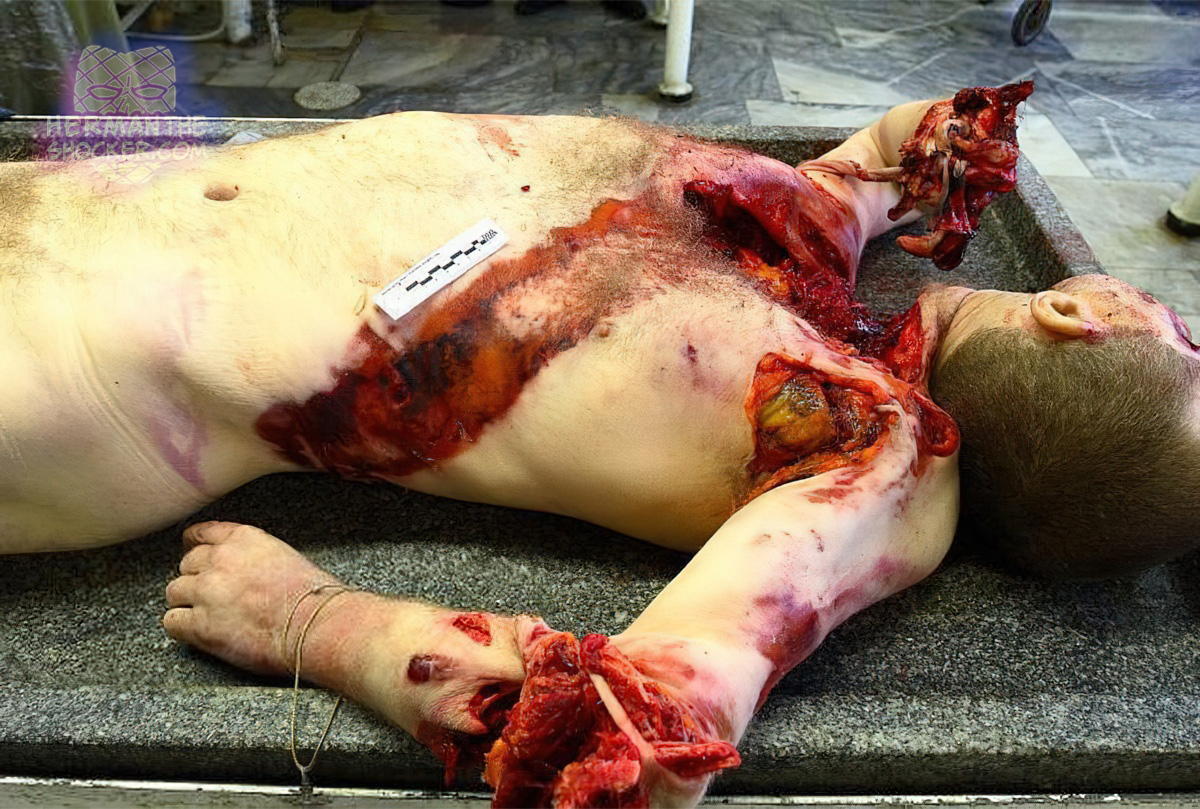 Fig6.1 Man run over by a train. This individual was run over by a train. Railroad deaths in the US totaled 757 in 2020, a decrease of more than 12% from the 2019 revised total of 862 and the lowest since 2015. Nonfatal injuries totaled 5,479, a 33% decrease from the 2019 revised total of 7,983. From 2019 to 2020, fatalities at highway-rail crossings decreased 32%, while fatalities involving other types of incidents decreased 1%. The latter included 529 deaths (94%) attributed to trespassers. Ten employees were killed while on duty, a 25% increase compared to the 2019 death toll. There were two train passenger deaths, up from one death in 2019. - Part 1 --- Part 2 --- Part 3 --- Part 4 --- Part 5 --- Part 6 --- Part 7 --- Part 8 --- Part 9 --- Part 10 --- Part 11 --- Part 12 --- Part 13 --- Part 14 --- Part 15 --- Part 16 --- Part 17 --- Part 18 --- Part 19 --- Part 20 --- Part 21 --- Part 22 --- Part 23 --- Part 24 --- Part 25 --- Part 26 --- Part 27 --- Part 28 --- Part 29 --- Part 30 --- Part 31 --- Part 32 --- Part 33 --- Part 34 --- Part 35 --- Part 36 --- Part 37 --- Part 38 --- Part 39 --- Part 40 --- Part 41 --- Part 42 --- Part 43 --- Part 44 --- Part 45 --- Part 46 --- Part 47 --- Part 48 --- Part 49 --- Part 50 --- Part 51 --- Part 52 --- Part 53 --- Part 54 --- Part 55 --- Part 56 --- Part 57 --- Part 58 --- Part 59 --- Part 60 --- Part 61 --- Part 62 --- Part 63 --- Part 64 --- Part 65 --- Part 66 --- Part 67 --- Part 68 --- Part 69 --- Part 70 --- Part 71 --- Part 72 --- Part 73 --- Part 74 --- Part 75 --- Part 76 --- Part 77 --- Part 78 --- Part 79 --- Part 80 --- Part 81 --- Part 82 --- Part 83 --- Part 84 --- Part 85 --- Part 86 --- Part 87 --- Part 88 --- Part 89 - This post is for educational purposes only and is nonprofit. Under Section 107 of the US Copyright Act of 1976; Allowance is made for "Fair Use" for purposes such as criticism, comment, news reporting, teaching, scholarship, and research. OP is not a medical expert. No copyright infringement intended. This post does not encourage or glorify violence/harassment. Images might have been upscaled and enhanced. Text might have been shortened and simplified/reorganized for online view.
__________________ ⭐️ hermantheshocker.com ⭐️ |
|
#2
●
03-21-2024, 09:53 PM
|
 ♚ Legacy Gold Member ♚ Poster Rank:268 ꓕSIꓤIꓕ∀S ϽINOᗡꓤ∀S Join Date: Feb 2010 Posts: 5,187
Contributions: 8
5,187Posts 31,200Thanked 1,445Quoted 45Mentioned 8Contrib. |
|
Re: The Shocker's Mix 90
That first guy's impersonation of a whale is spot on... thanks herm.
|
|
#4
●
03-24-2024, 06:38 PM
|
 ♚ Legacy Gold Member ♚ Poster Rank:199 Female Join Date: Nov 2009 Posts: 7,749 7,749Posts 11,993Thanked 709Quoted 5Mentioned 0Contrib. |
|
Re: The Shocker's Mix 90
Thank you. Another fascinating post. Much appreciated H.  |
|
#5
●
03-24-2024, 09:43 PM
|
 ♚ Legacy Gold Member ♚ Poster Rank:650 Woman Join Date: Apr 2011 Posts: 1,353 1,353Posts 2,340Thanked 142Quoted 3Mentioned 0Contrib. |
|
Re: The Shocker's Mix 90
Always excited to see a new set!! Thanks for all your hard work!!
__________________ You can not imagine the immensity of the Fuck I do not give. |
|
#6
●
03-24-2024, 10:50 PM
|
 My Rank: STAFF SERGEANT Poster Rank:876 Male Join Date: Jun 2011 Posts: 864 864Posts 2,301Thanked 227Quoted 0Mentioned 0Contrib. |
|
Re: The Shocker's Mix 90
Herman, you are the best! Very interesting and educational. I enjoy reading your posts on the cases almost as much as I like the photos. Please keep up the excellent work!   |