|
#1
●
02-20-2022, 10:10 AM
|
 ♚ Legacy Gold Member ♚ Poster Rank:914 Join Date: Jul 2020 Posts: 820
Contributions: 13
820Posts 27,645Thanked 173Quoted 13Mentioned 13Contrib. |
|
The Shocker's Mix 24
Some of the stuff I work on doesn't make the cut so I thought about gathering them up in a single post. So basically it's images I have little or no info about or I've decided that they don't get their own thread, for example, because of low image/content quality, lack of backstory or additional info/knowledge, possibly uninteresting, only one image but not very special. I still do the usual image work including upscaling and color correction as needed, as I prefer to have my content high quality and educational. - - - Case 1 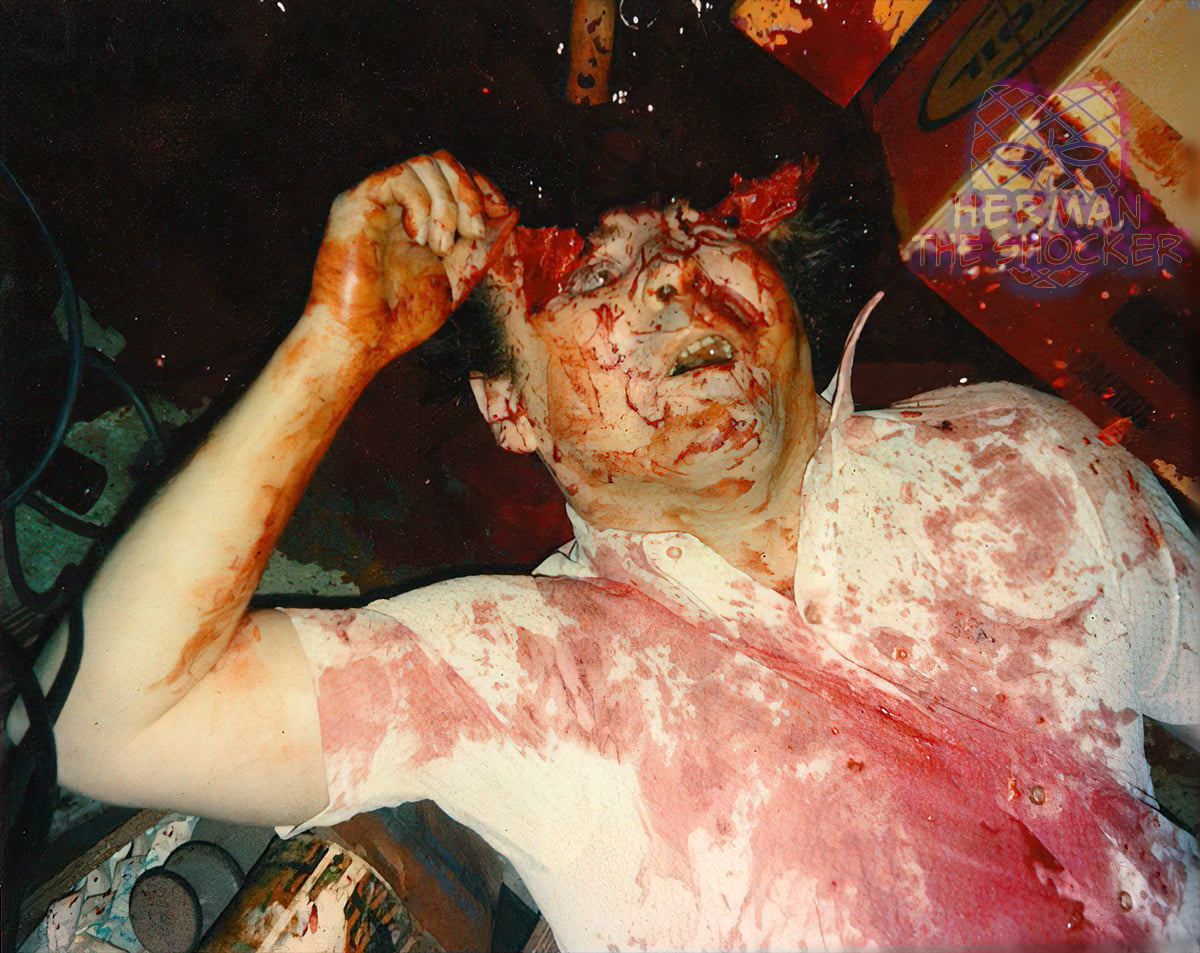 Fig1.1 Top of the head blown away from shotgun blast in the mouth. This suicide shows the devastating result of a shotgun blast in the mouth, which resulted in the top of the head being blown away. No further info. In gunshot injuries in soft parts of the body, especially in the brain, the bullet can produce a considerable explosive effect, which is greatest with unjacketed or soft-nosed bullets from high-velocity firearms. Such a bullet may split into several parts, each of which forms its own track, and thus several exit wounds may be present. When such a bullet strikes the head, large parts of the cranium can be blown away and the brain scattered around. - - - Case 2 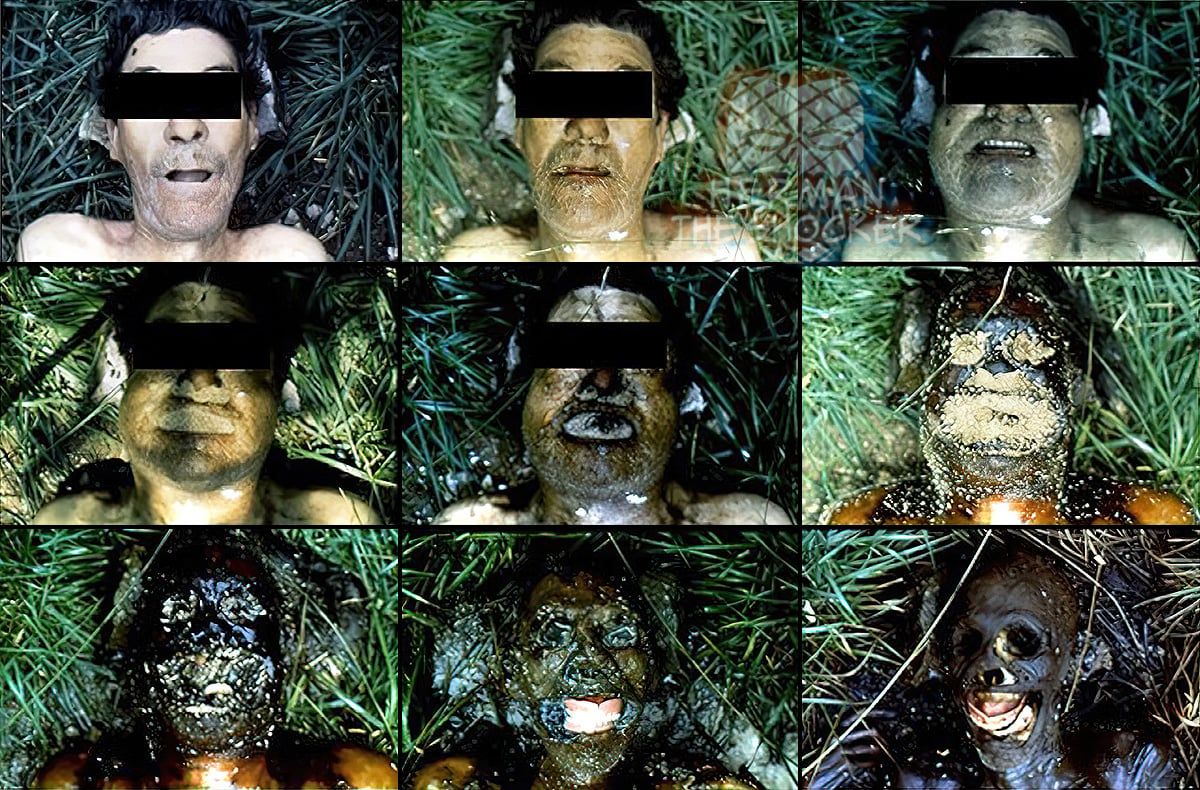 Fig2.1 Decomposition changes. Decomposition is the process by which organic material is broken down into simpler forms. It occurs systematically in all biological organisms with the cessation of normal life functions, and begins immediately following death. Decomposition results in many physical and biochemical changes that can be observed macroscopically and microscopically. Decomposition occurs through two primary chemical processes: autolysis and putrefaction. They often occur in tandem, but one may predominate in certain conditions. Autolysis (or “self-digestion”) is the destruction of cells through the action of their own enzymes. Autolysis typically occurs most rapidly in the pancreas and stomach and may be the predominant decomposition process in more arid environments. Putrefaction is the microbial deterioration of tissues caused by the proliferation of bacteria associated with the digestive system. Putrefaction causes color changes in the body including various shades of green, purple, and brown due to the release of pigments from the breakdown of internal structures. In a process called intravascular hemolysis, bacteria increase throughout the circulatory system, resulting in a significant darkening of the vessels, a process referred to as marbling. The images are from a body farm. A body farm is a research facility where decomposition can be studied in a variety of settings. - - - Case 3 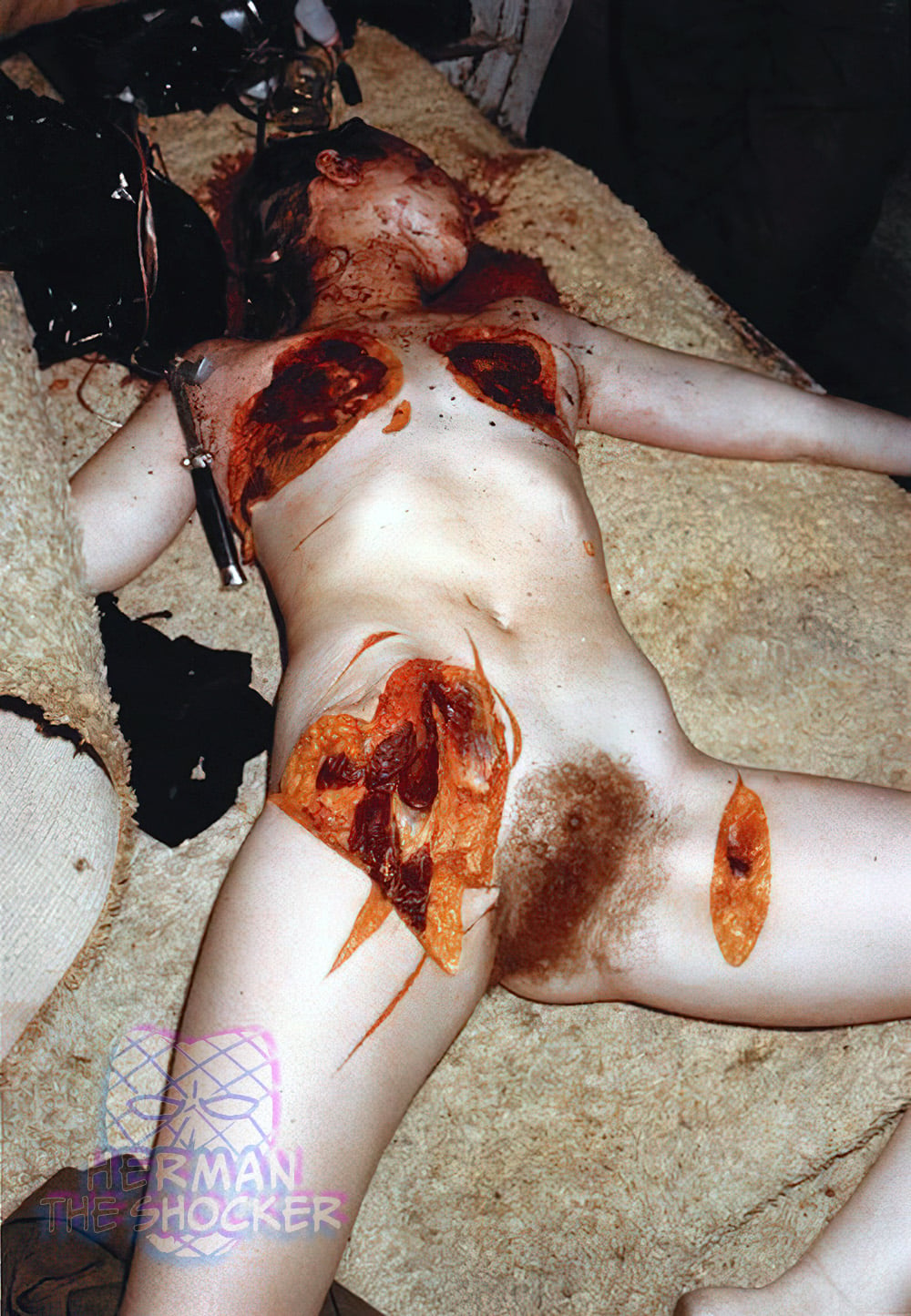 Fig3.1 A murder case showing sex-related mutilation. Los Angeles. A murder case showing sex-related mutilation. No further info about this case. A lust murder is a homicide in which the offender searches for sexual satisfaction by killing someone. Lust murder is synonymous with the paraphilic term erotophonophilia, which is sexual arousal or gratification contingent on the death of a human being. The term lust killing stems from the original work of Richard von Krafft-Ebing in his 1898 discussion of sadistic homicides. Commonly, this type of crime is manifested either by murder during sexual activity, by mutilating the sexual organs or areas of the victim's body, or by murder and mutilation. The mutilation of the victim may include evisceration, displacement of the sexual organs, or both. The mutilation usually takes place postmortem. Although the killing sequence may include an act of sexual intercourse, sexual intercourse does not always occur, and other types of sexual acts may be part of the homicide. Lust murder sometimes includes activities such as removing clothing from the body, posing and propping of the body in different positions (generally sexual ones), insertion of objects into bodily orifices, cannibalism and necrophilia. Most cases of lust murder involve male perpetrators, although accounts of female lust murderers do exist. - - - Case 4 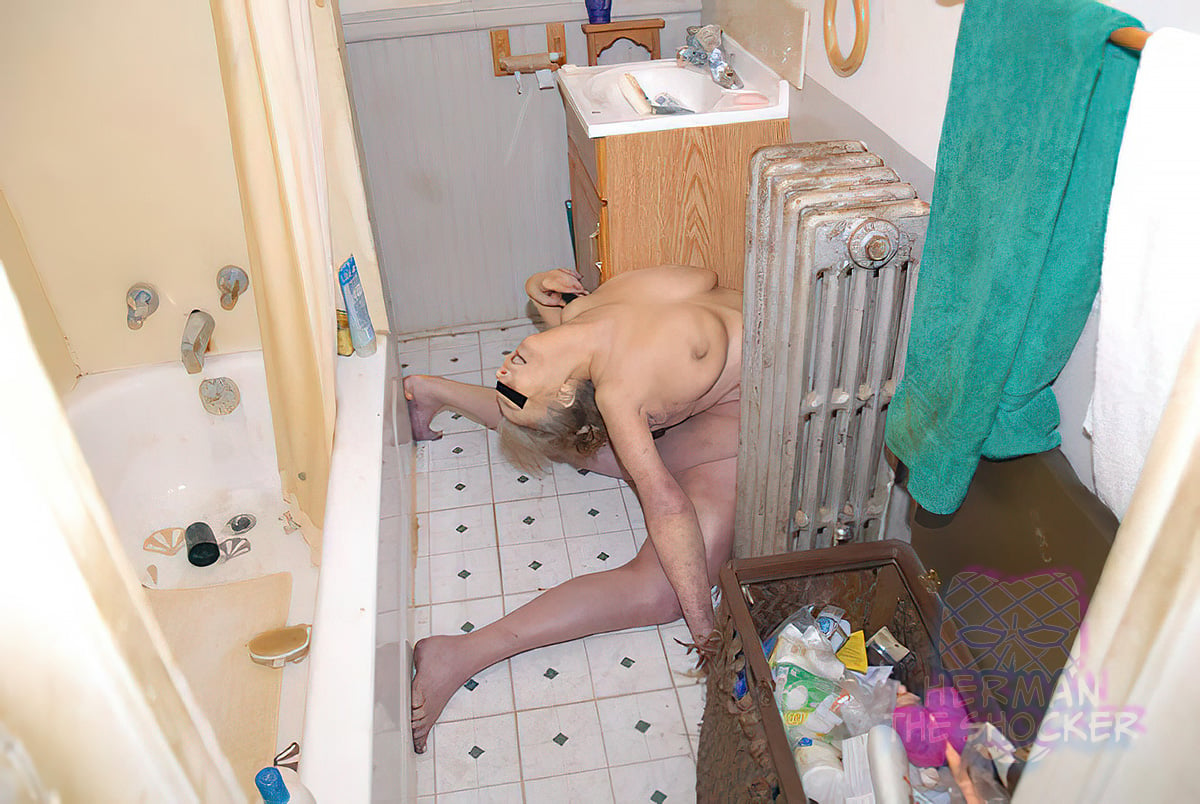 Fig4.1 Unusual position of a body. Maryland, USA. The unusual position of the body at this scene resulted from the deceased experiencing a heart attack after stepping from her bathtub. No further info. Occasionally, an accidental death raises suspicion. The position of the body, injuries, and appearance of the crime scene can all lead investigators into thinking the accidental death is a homicide. It is always better for an accidental death to be investigated as a homicide than vice versa. - - - Case 5 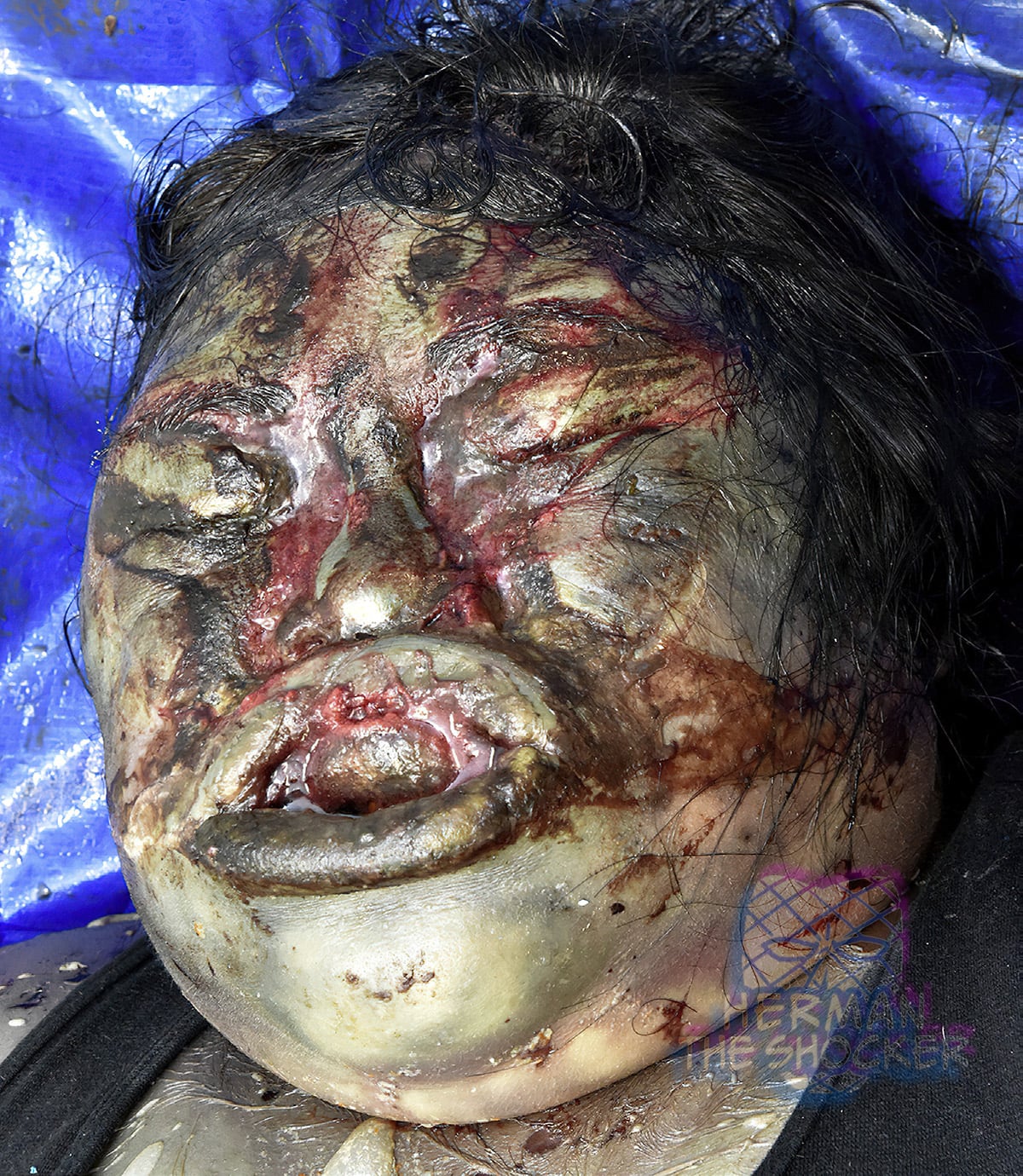 Fig5.1 Anterior view of the head showing an advanced state of decomposition. 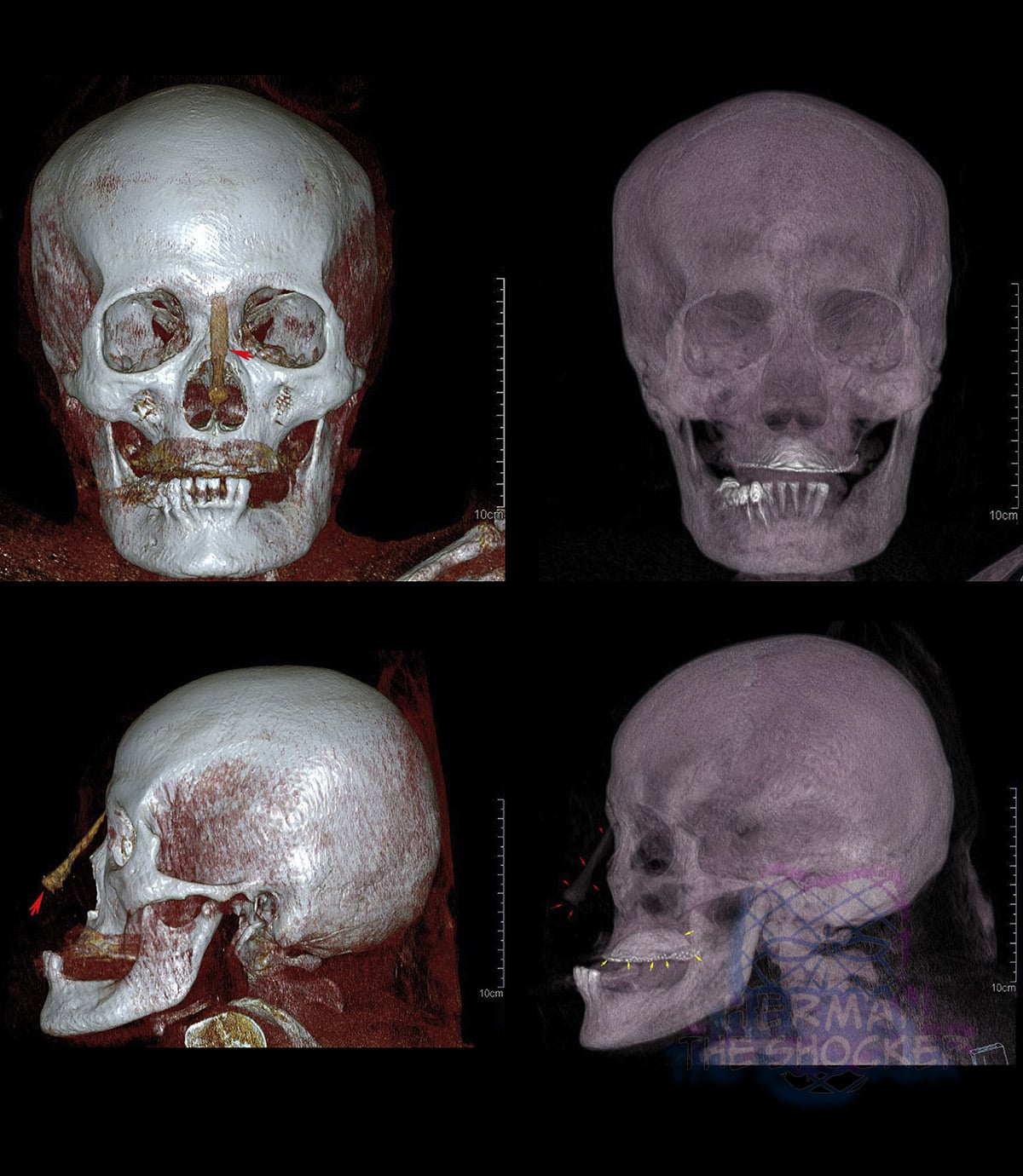 Fig5.2 VR images of the anterior and left lateral views of the head showing the nasal implant (red arrows) and the chrome-cobalt framework for a denture (yellow arrows). Australia. This elderly woman was located in a state of advanced decomposition. Because of decomposition the body was not visually identifiable. She was identified through x-ray comparisons. An important duty of coroners, medical examiners, and forensic pathologists involves the identification (ID) of deceased individuals. While this process does not usually present many difficulties, the consequences of misidentification can be significant and long lasting. In many cases investigated by medicolegal death teams, initial inquiries will produce a preliminary or tentative identification. The most reliable methods of identification involve a more scientific approach where a unique feature of the unidentified decedent can be compared to a likely match. This requires that the features of both are compatible, with no significant features that do not match. Examples of scientific methods of identification include fingerprint comparison, dental comparison and x-ray comparisons, and DNA typing. For each of these methods (except for DNA typing) an antemortem (prior to death) record must exist and be available for a successful comparison to be made. Postmortem CT showed evidence of a nasal implant and a chrome cobalt framework for a denture. Nasal implants are used as a cartilage substitute to more easily shape or reshape the nose. They are commonly made from soft materials that can be sculpted. In cases where visual identification is not possible, such implants may assist in the identification process. Unlike metal prosthetics, such material will not usually have a serial number. - - - Case 6 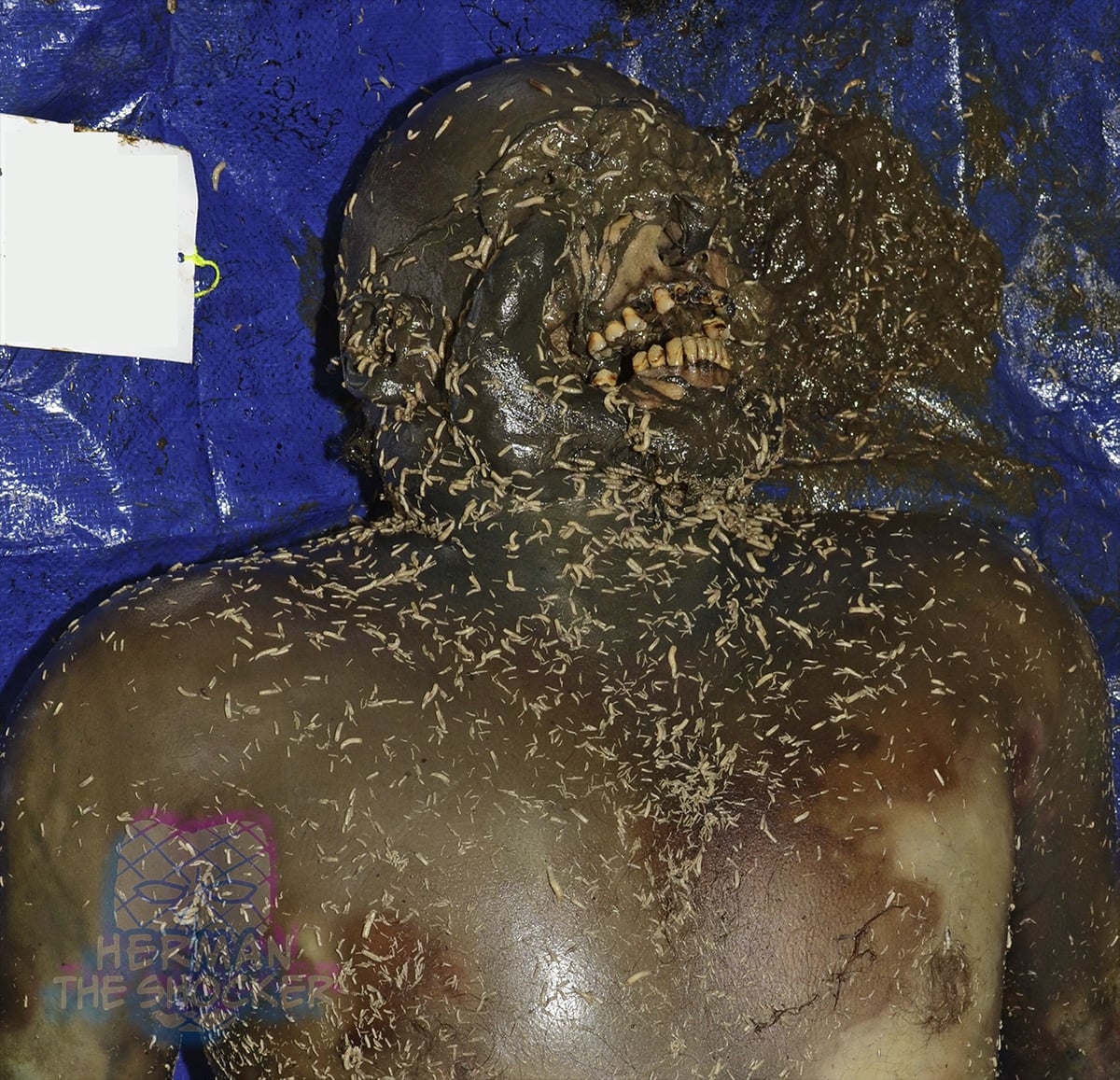 Fig6.1 Anterior view of the head and chest of a man who was significantly decomposed and not visually identifiable. 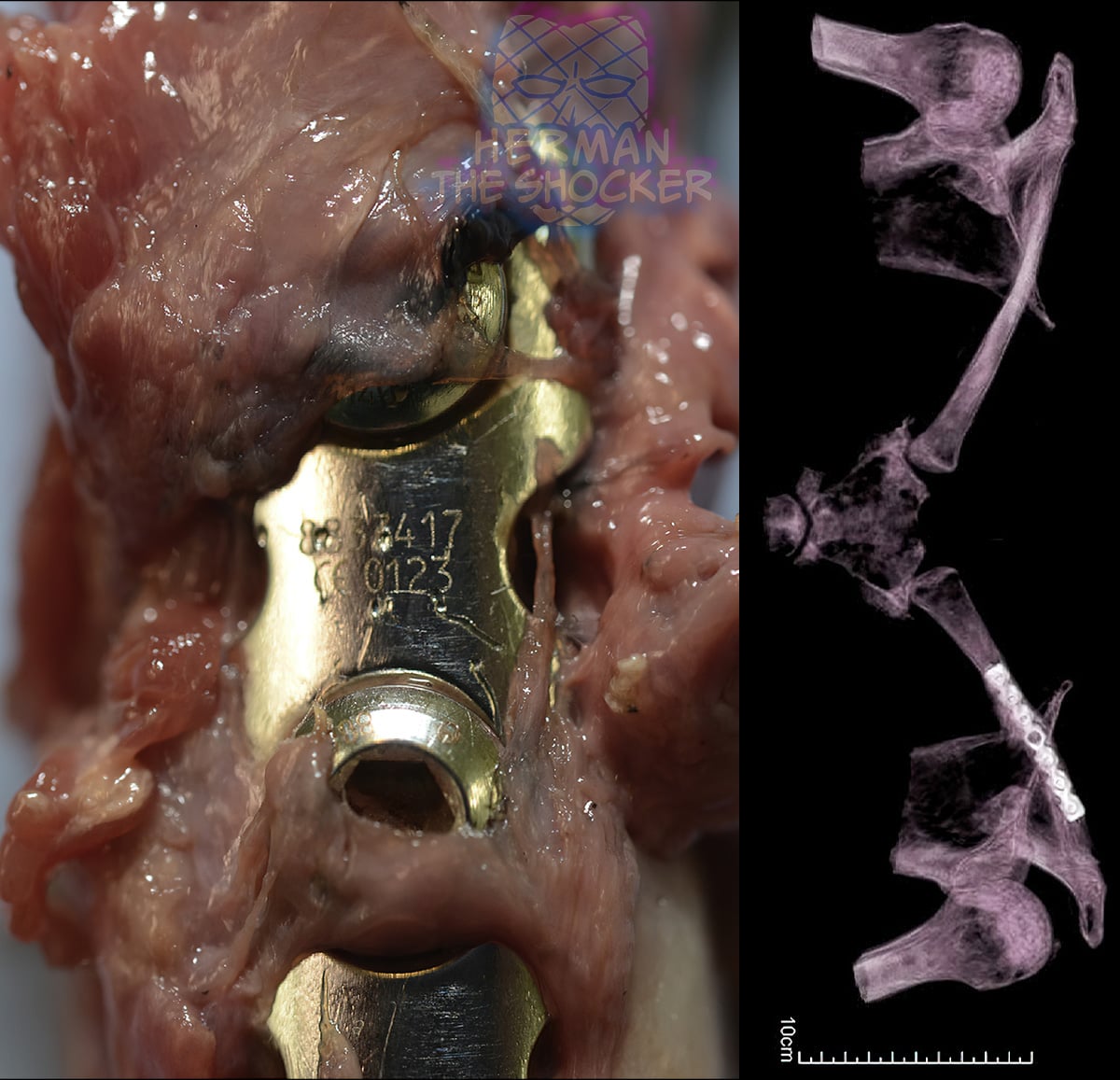 Fig6.2 Detailed view of the metal orthopedic plate, which had an identification number. VR image of the bones of the shoulder girdle showing the metal orthopedic implant. Australia. This elderly male individual was significantly decomposed and not visually identifiable. Postmortem CT showed a metal orthopedic implant in the left distal clavicle. Internal examination located an orthopedic plate on the left clavicle, which had an identification number. In cases where an individual is decomposed or no longer visually recognizable, the location of prosthetic devices can be of assistance in the identification process. The potential for orthopedic prostheses to assist in the identification process has resulted in the call in some countries for the establishment of a national register of prostheses. - - - Case 7 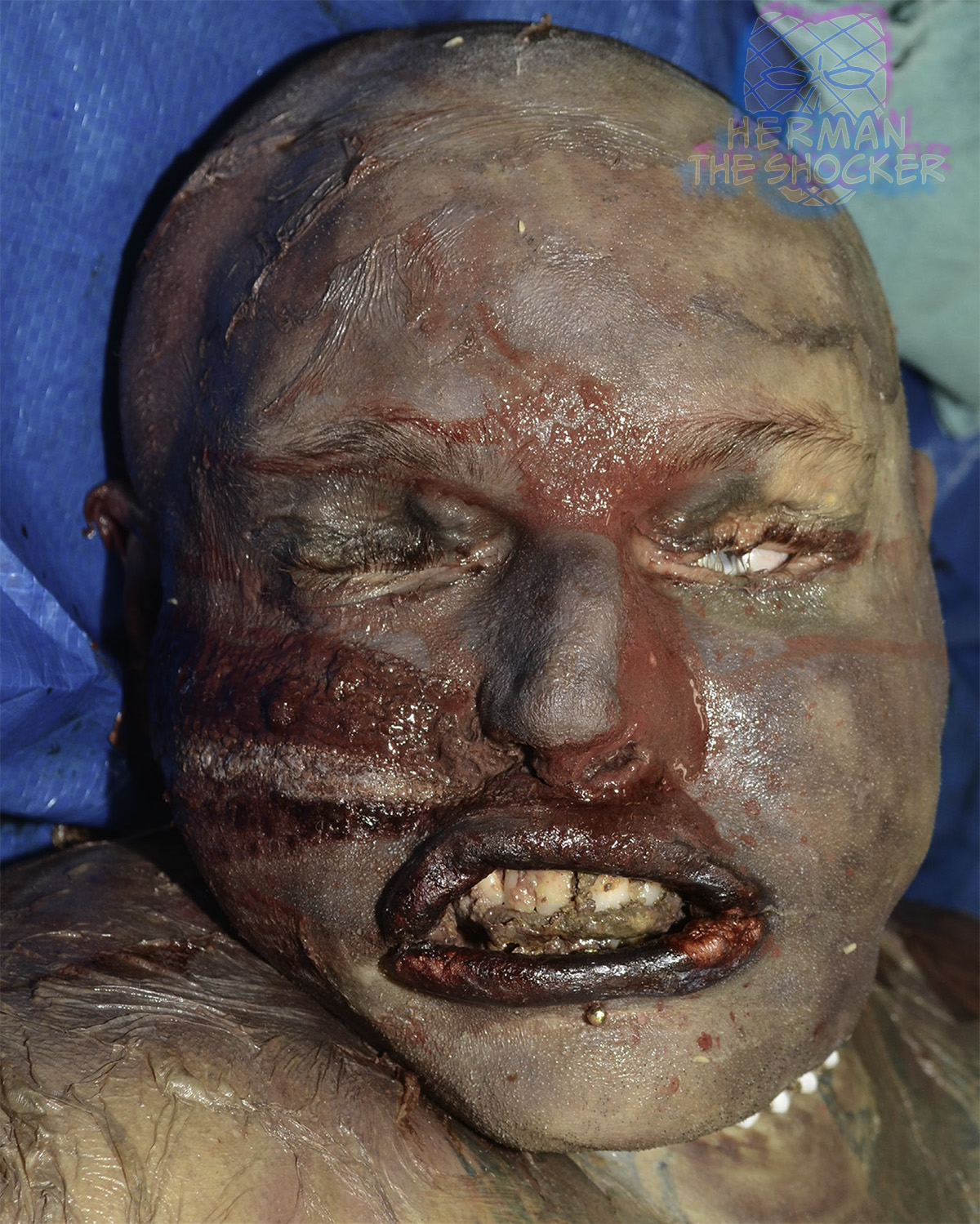 Fig7.1 Anterior view of the head showing the advanced stage of decomposition. 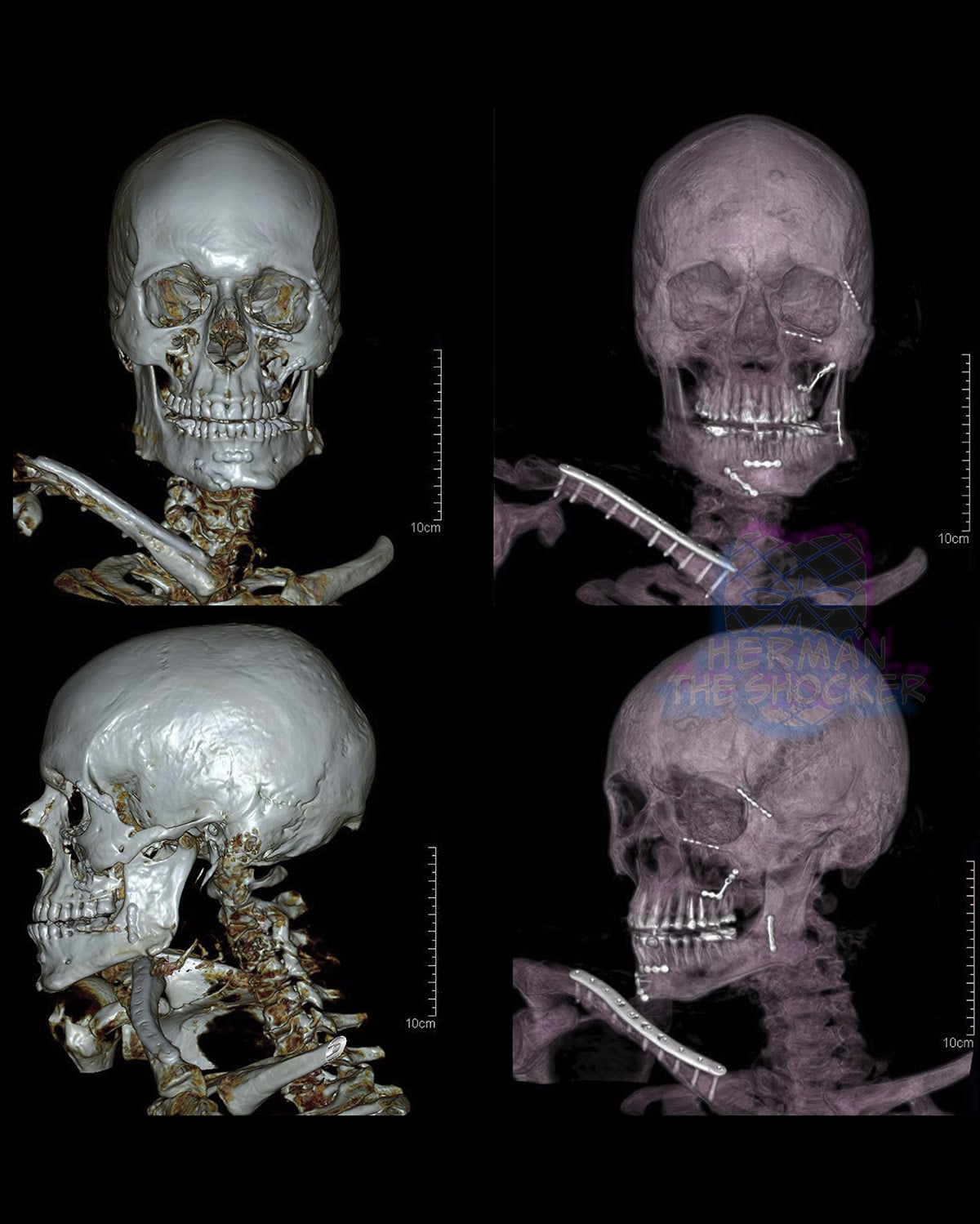 Fig7.2 VR images of the skull showing plate fixations. NB: a metal tongue piercing is also visible in the images on the top and bottom right. Australia. This middle aged male individual was located at home in an advanced state of decomposition. Postmortem CT showed that the individual had numerous surgical repairs in the form of metal plates and screws on the left frontal-zygomatic suture, left inferior orbit, left maxilla, left mandibular body, mid- and right mandibular symphysis and on the right lateral clavicle. A number of soft tissue piercings were also noted. There are a range of dental implant prosthetics. The pattern of prosthetic repair in the individual presented in this case is indicative of complex reconstructive surgical intervention, which suggests he suffered major head and chest trauma in the past. This repair is likely to be highly individualized and described in detail in medical records, which are likely to include clinical radiographs and/or CT scans. Such evidence may assist in the identification process. - - - Part 1 --- Part 2 --- Part 3 --- Part 4 --- Part 5 --- Part 6 --- Part 7 --- Part 8 --- Part 9 --- Part 10 --- Part 11 --- Part 12 --- Part 13 --- Part 14 --- Part 15 --- Part 16 --- Part 17 --- Part 18 --- Part 19 --- Part 20 --- Part 21 --- Part 22 --- Part 23 - - - This post is for educational purposes only and is nonprofit. Under Section 107 of the US Copyright Act of 1976; Allowance is made for "Fair Use" for purposes such as criticism, comment, news reporting, teaching, scholarship, and research. OP is not a medical expert. No copyright infringement intended. This post does not encourage or glorify violence/harassment. Images might have been upscaled and enhanced. Text might have been shortened and simplified/reorganized for online view.
__________________ ⭐️ hermantheshocker.com ⭐️ |
|
#2
●
02-20-2022, 10:47 AM
|
 My Rank: MAJOR Poster Rank:169 Join Date: Jul 2015 Posts: 9,325 9,325Posts 10,833Thanked 1,583Quoted 5Mentioned 0Contrib. |
|
Re: The Shocker's Mix 24
The poor young woman from Maryland sadly deserved another chance at life  |
|
#3
●
02-20-2022, 11:41 AM
|
| My Rank: MASTER SERGEANT Poster Rank:506 Male Join Date: Jul 2009 Posts: 2,068 2,068Posts 1,912Thanked 207Quoted 0Mentioned 0Contrib. |
|
Re: The Shocker's Mix 24
Excellent mix again, thanks.
|
|
#4
●
02-21-2022, 01:20 AM
|
 My Rank: PRIVATE FIRST CLASS Poster Rank:3579 Male Man Join Date: May 2017 Posts: 97 97Posts 201Thanked 15Quoted 0Mentioned 0Contrib. |
|
Re: The Shocker's Mix 24
For the first one, those are snapshots from a video that showcases a timelapse of a decomposing dead body. Again, another gem of a post, herman. Keep it up!  |
|
#7
●
02-21-2022, 01:38 AM
|
 ★ Legacy Member ★ Poster Rank:252 So many choices now Join Date: Jul 2015 Posts: 5,542 5,542Posts 19,786Thanked 2,120Quoted 15Mentioned 0Contrib. |
|
Re: The Shocker's Mix 24
Case 4 - If she was trying to perform cunnilingus on herself, she was doing it horribly wrong... Oh, it was a heart attack? Riiiiiiiight. Herm,  |
|
#9
●
02-21-2022, 03:25 PM
|
 ♚ Legacy Gold Member ♚ Poster Rank:199 Female Join Date: Nov 2009 Posts: 7,749 7,749Posts 11,993Thanked 709Quoted 5Mentioned 0Contrib. |
|
Re: The Shocker's Mix 24
Interesting heart shaped knife damage on the right hip on #3. And that woman bent in the bathroom. Wow. Fantastic. Thanks Herman. |
|
#10
●
02-22-2022, 04:07 AM
|
 My Rank: MASTER SERGEANT Poster Rank:491 male Join Date: Feb 2010 Posts: 2,157 2,157Posts 3,945Thanked 286Quoted 0Mentioned 0Contrib. |
|
Re: The Shocker's Mix 24
Great work again I thank you for the time you put in to our pleasure |