|
#1
●
03-03-2023, 08:09 AM
|
 ♚ Legacy Gold Member ♚ Poster Rank:914 Join Date: Jul 2020 Posts: 820
Contributions: 13
820Posts 27,649Thanked 173Quoted 13Mentioned 13Contrib. |
|
The Shocker's Mix 55
Some of the stuff I work on doesn't make the cut so I thought about gathering them up in a single post. So basically it's images I have little or no info about or I've decided that they don't get their own thread, for example, because of low image/content quality, lack of backstory or additional info/knowledge, possibly uninteresting, only one image but not very special. I still do the usual image work including upscaling and color correction as needed, as I prefer to have my content high quality and educational. - - - Case 1 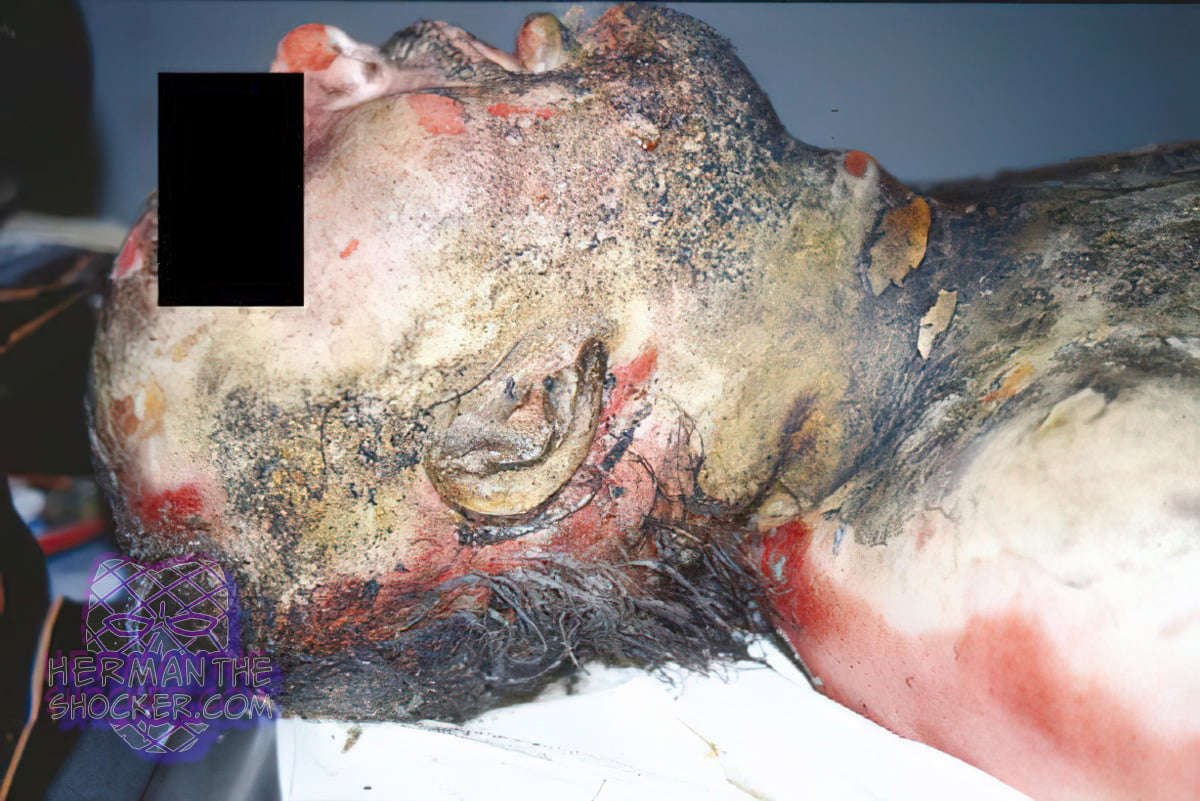 Fig1.1 A homeless alcoholic, found dead in a fire. A homeless alcoholic, found dead in a fire, was extremely drunk. Fatal residential fires account for 10% of all accidental deaths in developed countries, with one-fourth of the deaths involving elderly people. Significantly more fires killing elderly people were caused by faulty or misused electrical items in the house, particularly electric blankets and heating devices. The fire-related fatality rate is highest among older persons. Alcohol is not a factor in fatal fires involving older adults. This differs from fatal fires involving the young and middle-aged adults. Ethanol or substance use may increase the risk of fire-related injury or death. From the records of all fatalities from fire reported to the US state medical examiner’s office, blood assay results for ethanol were positive in 29.5% of fatalities of fire, and blood or urine assay results for substances of abuse were positive in 14.6% of fatalities. - - - Case 2 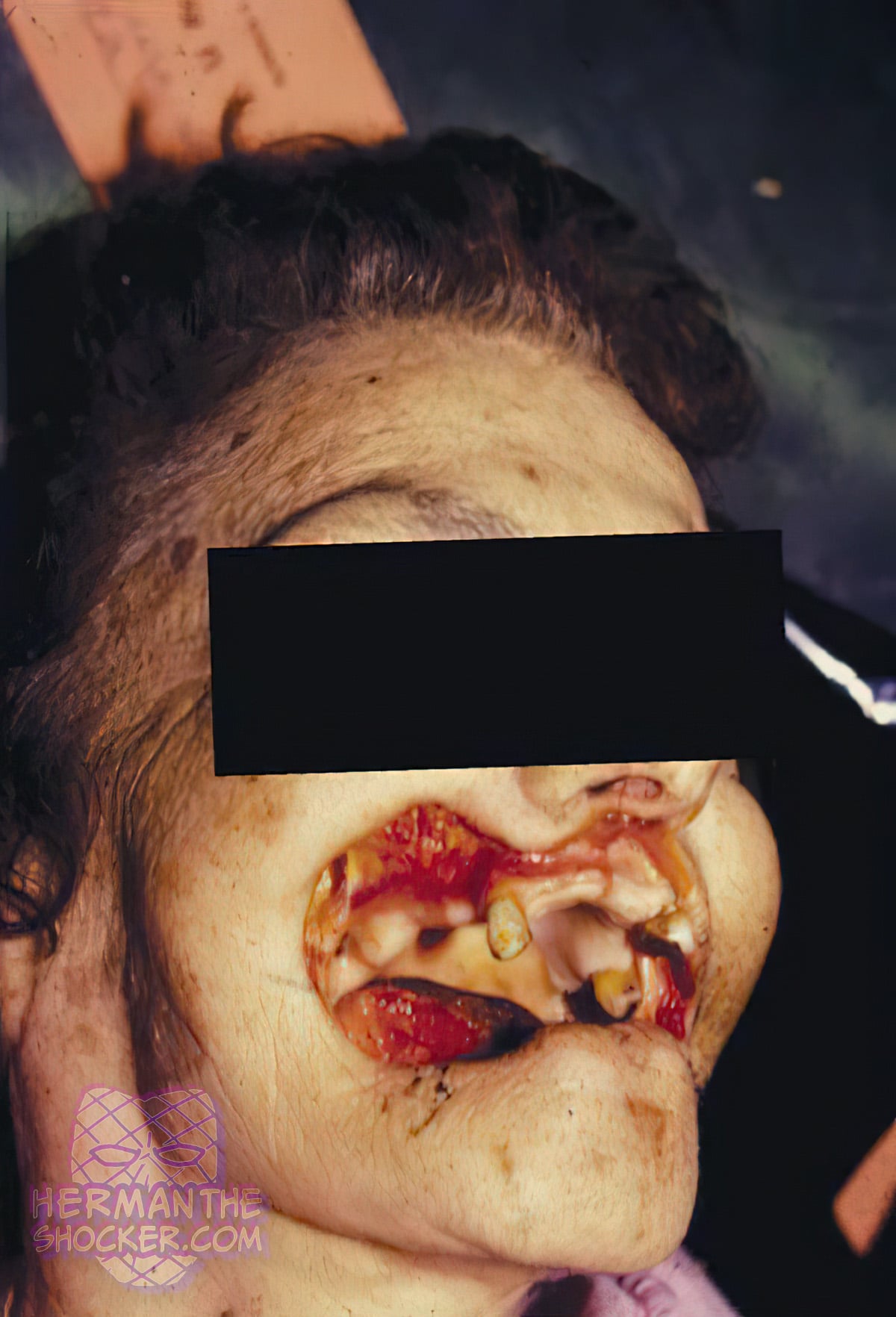 Fig2.1 Postmortem injuries made by rodents. Postmortem scavenging is common among wild and domestic rodents; they are well known to alter or destroy the indicators of the cause of death and preclude the visual identification of the victim. Rodents tend to gnaw on bone, to wear down on their incisors, leaving telltale sets of parallel striations on the osseous cortex. Postmortem rodent-caused injuries are usually wedged, paired, clean, small incisions without subcutaneous bleeding. Porcupines are known to collect and modify both dry and meaty bones. They leave a typical pattern of gnawed trails, thinning the bones in a fan-shaped pattern and creating ‘‘windows’’ in the shaft produced by heavy gnawing and scooping out material. - - - Case 3 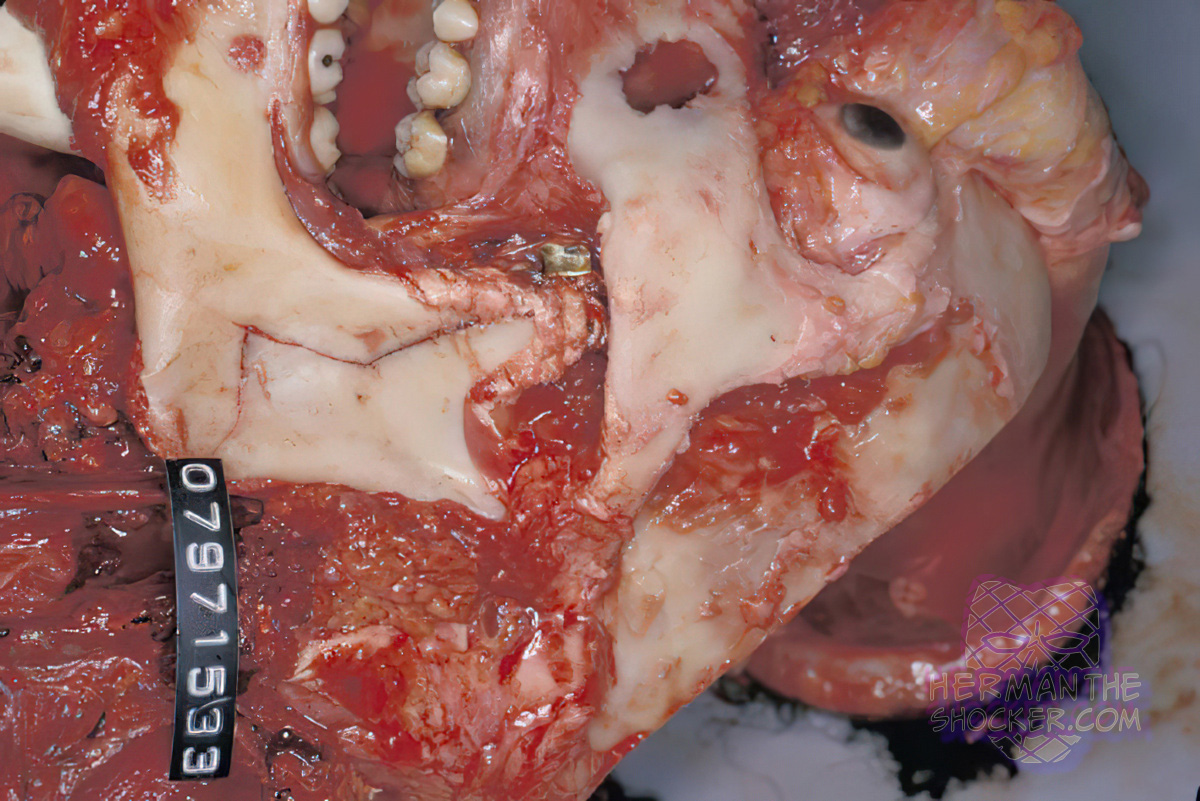 Fig3.1 Facial dissection. Facial dissection. Facial fractures may not be visualized by radiologic imaging techniques. In this case it was important to document or exclude blunt facial trauma. Reflecting the face revealed a fracture of the mandibular ramus not related to the gunshot wound of the maxilla. Note also that the projectile (anterior and deep to the mandibular ramus) is easily accessible with this approach. (The dissection technique allows for easy facial reconstruction and subsequent viewing of the body at the funeral home.) - - - Case 4 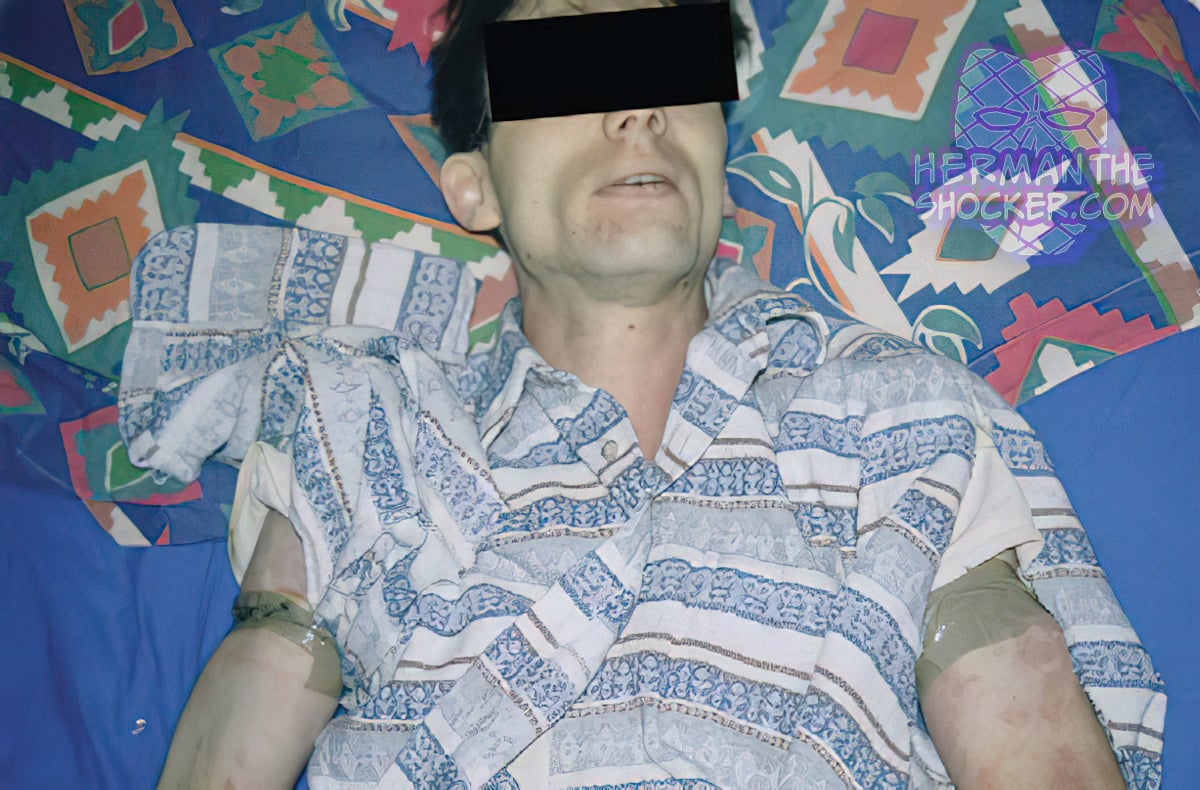 Fig4.1 An electrocution system linked to a timer in a suicide by electrocution. 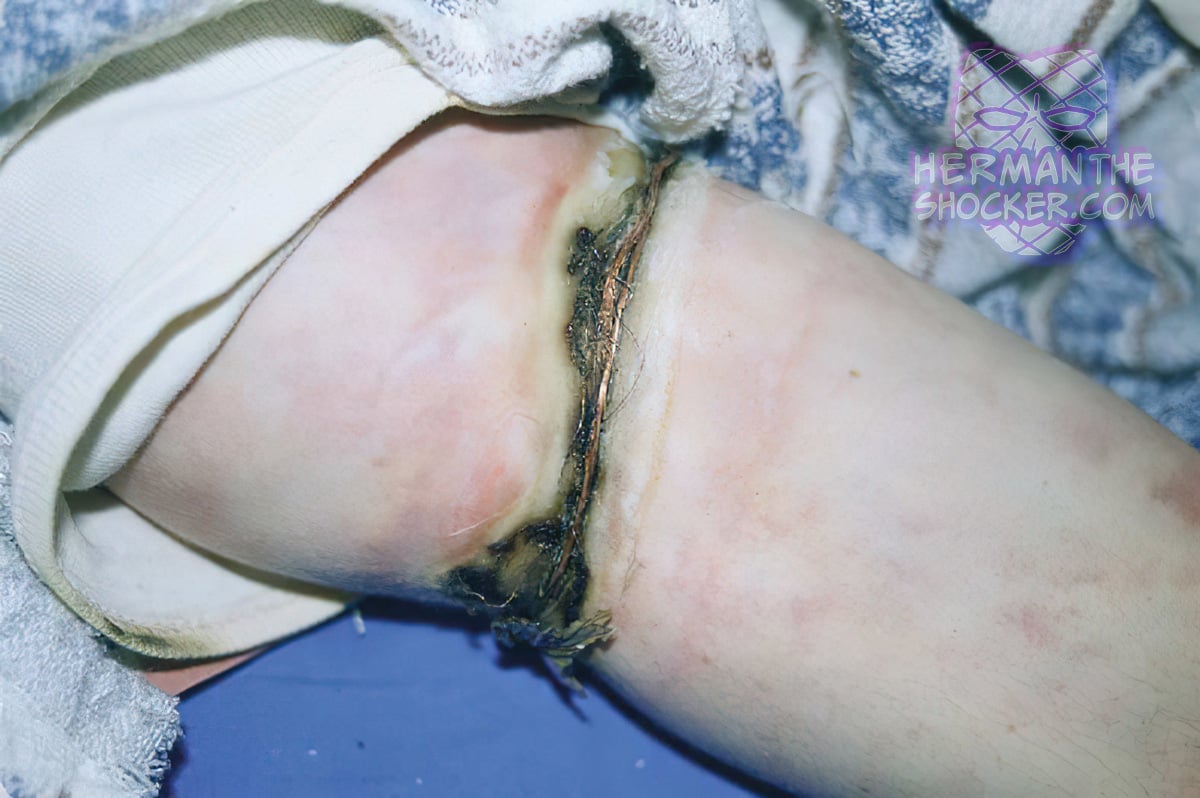 Fig4.2 Cutaneous electric burns under naked wires. Fatalities caused by electrocution often lack specific morphologic evidence. Investigation of the death scene together with technical inspection of the electrical apparatus may help to clarify the cause and manner of death. Cutaneous current marks may be the only sign of low-voltage-associated fatalities. Often, a professional such as an electrician may use electric power to commit suicide. This fact is stressed by published case reports. Electrodes (coins, metal pieces) can be fixed with adhesive tape at the height of the heart to the front and back of the left side of the chest, on each wrist or arm, or on one finger of each hand. In at least two published cases, a timer was used. Autopsy reveals blackish linear marks on the skin, tissue, and muscles under the cutaneous current marks. Current-related and heat-related changes, such as hypercontraction muscle bands and coagulative changes of the peripheral nerves, can be found on histologic examination. - - - Case 5 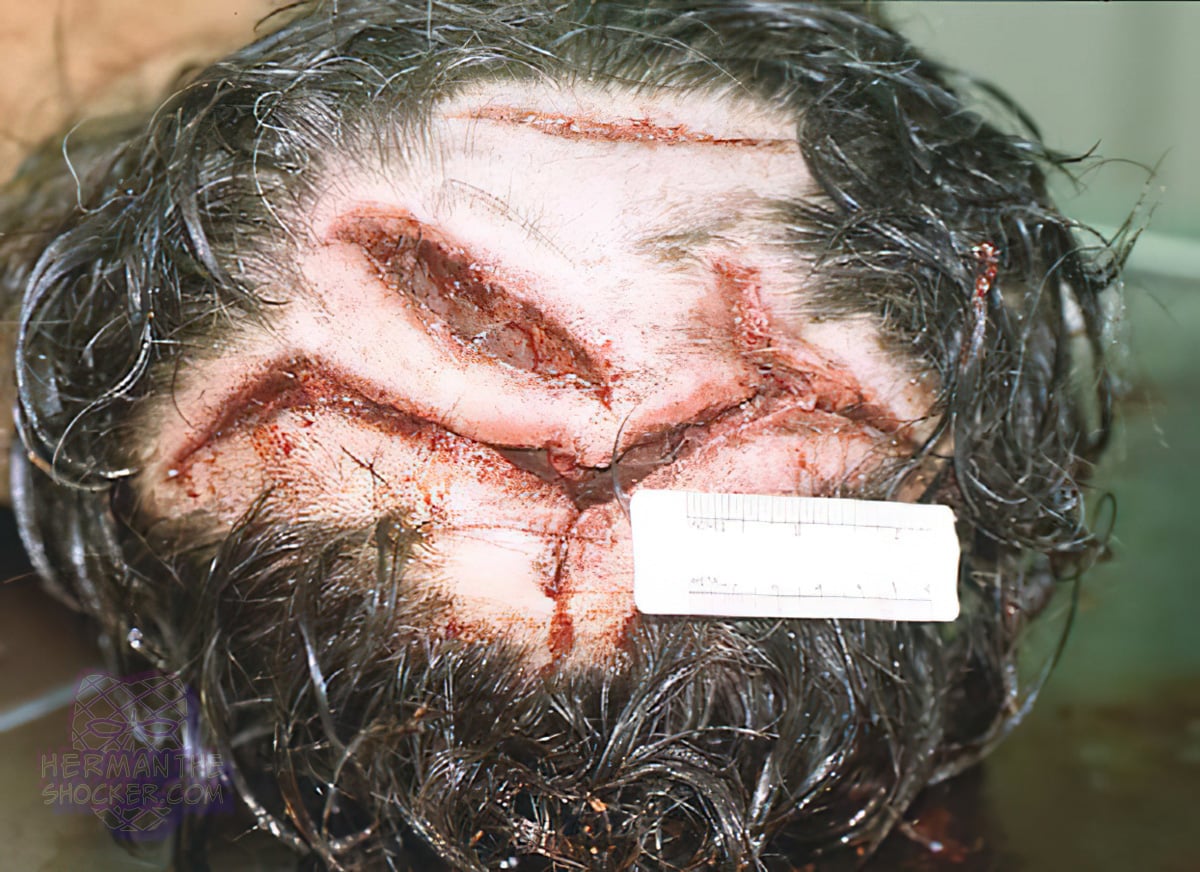 Fig5.1 Lacerations with abrasions along the wound margins. A laceration is a type of wound caused by the tearing or splitting of skin, which can occur due to a variety of reasons such as accidents, falls, or sharp objects. When a laceration occurs, it can often be accompanied by an abrasion, which is a superficial wound that affects only the top layer of skin. Abrasions are typically caused by friction or scraping against a rough surface. When a laceration is accompanied by abrasions along the wound margins, it can pose a particular challenge for healthcare providers in terms of wound care and healing. The presence of abrasions can complicate the healing process by introducing additional foreign material and bacteria into the wound, potentially leading to infection or delayed healing. - - - Case 6 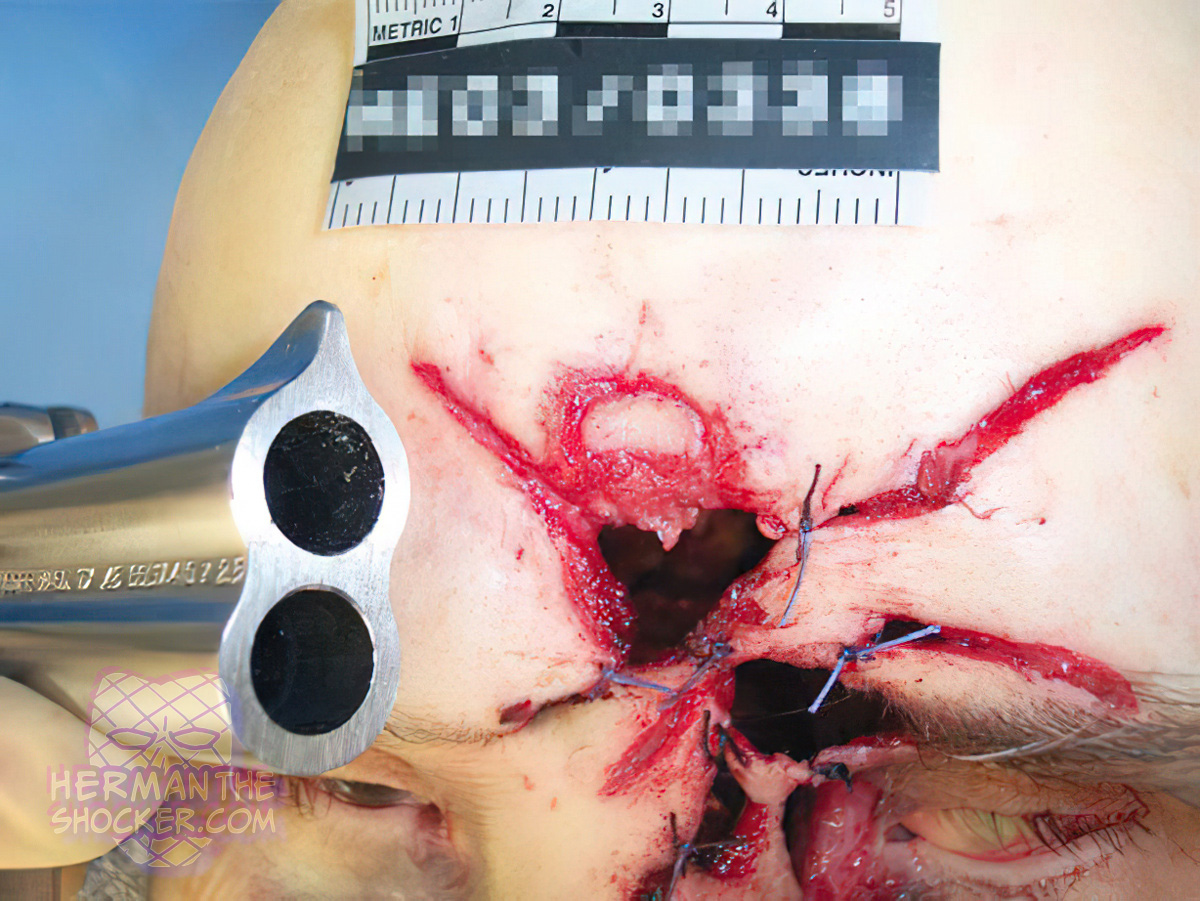 Fig6.1 Contact gunshot wound. Contact gunshot wound with .410-gauge derringer. Only the lower barrel has been fired. After reapproximating the gas pressure-induced marginal lacerations, a side-by-side com- parison reveals the shape of the barrels and sight on the skin. - - - Case 7 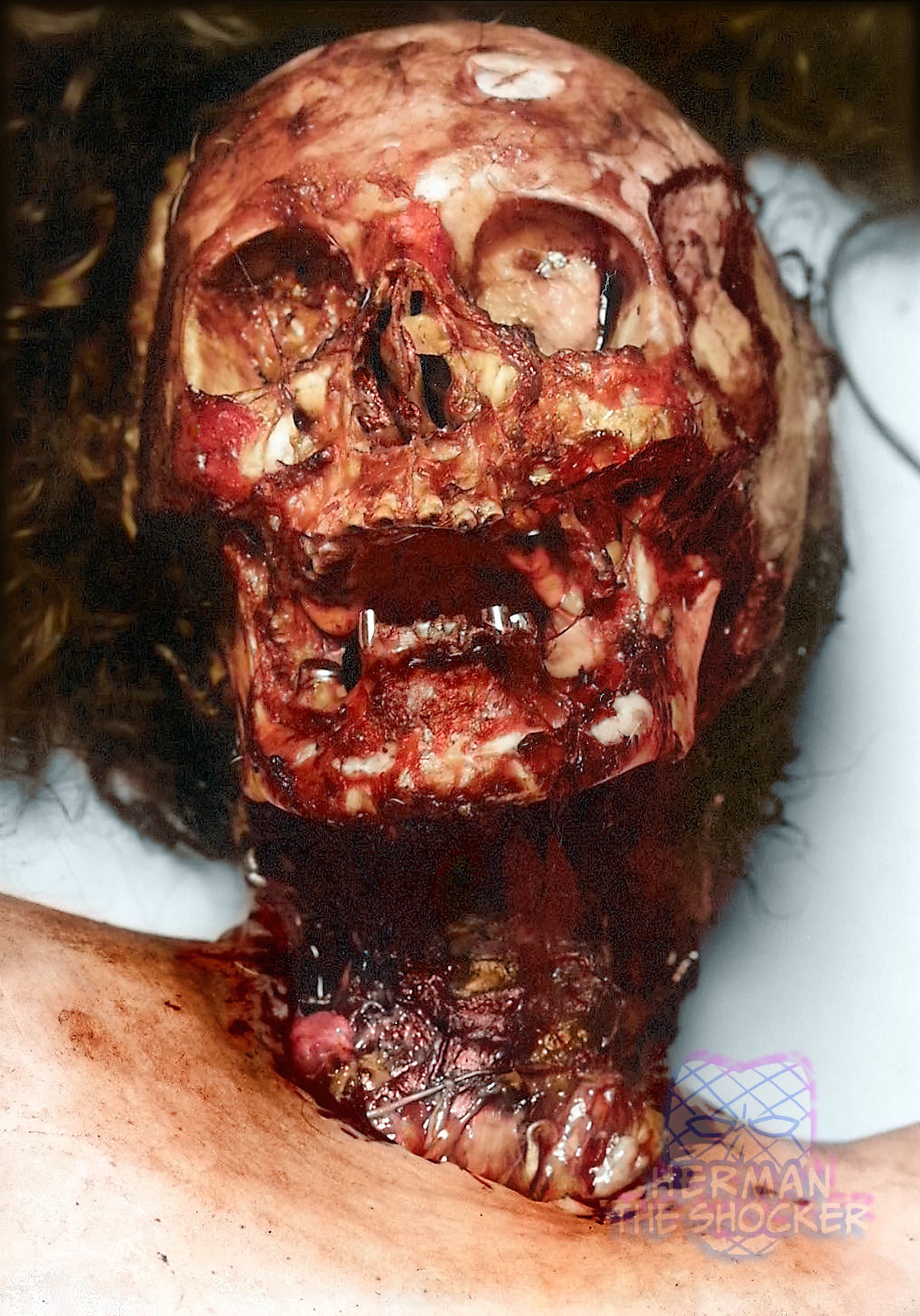 Fig7.1 Woman's face eaten postmortem by her dog [Colorized]. A 40-year-old woman was found dead in her apartment lying supine on the bed and the upper trunk and legs were fully covered by clothing. The head and neck were almost totally skeletonized apart from a small portion of subcutaneous tissue and facial muscles left on the cheek-bones and chin. There was no sign of a struggle and the apartment was secure. A pit bull terrier owned by the partner was inside the apartment. The woman was last been seen alive by the partner 37 hours before. Death was attributed to lobar pneumonia. According to the autopsy findings and death scene investigation, the injuries were found to be caused postmortem by the pit bull terrier found at the scene. In cases with postmortem animal predation, the psychological state of the animal is a possible reason for its behavior. One possible explanation for such behavior is that a pet will try to help an unconscious owner first by licking or nudging, but when this fails to produce any results the behavior of the animal can become more frantic and in a state of panic can lead to biting. The motive is not to attack the owner but is a kind of ‘‘displacement’’ behavior motivated by confusion and fear. The fact that the efforts of the animal will obviously be fruitless explains why this can easily escalate and culminate in excessive mutilation. - Part 1 --- Part 2 --- Part 3 --- Part 4 --- Part 5 --- Part 6 --- Part 7 --- Part 8 --- Part 9 --- Part 10 --- Part 11 --- Part 12 --- Part 13 --- Part 14 --- Part 15 --- Part 16 --- Part 17 --- Part 18 --- Part 19 --- Part 20 --- Part 21 --- Part 22 --- Part 23 --- Part 24 --- Part 25 --- Part 26 --- Part 27 --- Part 28 --- Part 29 --- Part 30 --- Part 31 --- Part 32 --- Part 33 --- Part 34 --- Part 35 --- Part 36 --- Part 37 --- Part 38 --- Part 39 --- Part 40 --- Part 41 --- Part 42 --- Part 43 --- Part 44 --- Part 45 --- Part 46 --- Part 47 --- Part 48 --- Part 49 --- Part 50 --- Part 51 --- Part 52 --- Part 53 --- Part 54 - This post is for educational purposes only and is nonprofit. Under Section 107 of the US Copyright Act of 1976; Allowance is made for "Fair Use" for purposes such as criticism, comment, news reporting, teaching, scholarship, and research. OP is not a medical expert. No copyright infringement intended. This post does not encourage or glorify violence/harassment. Images might have been upscaled and enhanced. Text might have been shortened and simplified/reorganized for online view.
__________________ ⭐️ hermantheshocker.com ⭐️ |
|
#2
●
03-03-2023, 08:21 AM
|
 My Rank: FIRST SERGEANT Poster Rank:399 Join Date: Apr 2011 Posts: 3,046 3,046Posts 5,763Thanked 276Quoted 2Mentioned 0Contrib. |
|
Re: The Shocker's Mix 55
Keep on Shockin'   Now this collection is so brutal that when I looked at the #4, my first thought was "What is HE doing here?" Now this collection is so brutal that when I looked at the #4, my first thought was "What is HE doing here?"  Talk about outsider syndrome, poor guy! The #1 features again some stunning colors, but I hope his eventual cause of death was alcohol poisoning, or that he was least unconscious when the fire began. Talk about outsider syndrome, poor guy! The #1 features again some stunning colors, but I hope his eventual cause of death was alcohol poisoning, or that he was least unconscious when the fire began.
|
|
#3
●
03-03-2023, 11:03 AM
|
 ★ Legacy Member ★ Poster Rank:252 So many choices now Join Date: Jul 2015 Posts: 5,542 5,542Posts 19,786Thanked 2,120Quoted 15Mentioned 0Contrib. |
|
Re: The Shocker's Mix 55
Fig 2. So I guess that kissable mug was made by rodents. That is a smile that would clear any room. Herm, |
|
#4
●
03-03-2023, 04:46 PM
|
 My Rank: STAFF SERGEANT Poster Rank:876 Male Join Date: Jun 2011 Posts: 864 864Posts 2,301Thanked 227Quoted 0Mentioned 0Contrib. |
|
Re: The Shocker's Mix 55
Herman, you always amaze me with your posts. Keep up the great work my man!! |
|
#5
●
03-03-2023, 06:46 PM
|
 ♚ Legacy Gold Member ♚ Poster Rank:122 Happy Happy Happy Join Date: Dec 2009 Posts: 13,383 13,383Posts 25,651Thanked 4,367Quoted 23Mentioned 0Contrib. |
|
Re: The Shocker's Mix 55
These threads make me dream of getting a huge hardcover forensic pathology book. Great post |
|
#7
●
03-05-2023, 12:46 AM
|
 My Rank: LANCE CORPORAL Poster Rank:1999 XX Join Date: Jun 2017 Posts: 251 251Posts 364Thanked 30Quoted 0Mentioned 0Contrib. |
|
Re: The Shocker's Mix 55
Re case 4 - I am always interested in the unique suicide methods that you show! Kudos, H!
|
|
#8
●
03-07-2023, 01:01 AM
|
 My Rank: LANCE CORPORAL Poster Rank:2914 Perimenopausal Bitch Join Date: Feb 2016 Posts: 137 137Posts 275Thanked 16Quoted 0Mentioned 0Contrib. |
|
Re: The Shocker's Mix 55
Another great set by Mr. Shocker, himself! Cheers, mate! |