|
#1
●
07-10-2022, 02:08 PM
|
 ♚ Legacy Gold Member ♚ Poster Rank:914 Join Date: Jul 2020 Posts: 820
Contributions: 13
820Posts 27,649Thanked 173Quoted 13Mentioned 13Contrib. |
|
The Shocker's Mix 32
Some of the stuff I work on doesn't make the cut so I thought about gathering them up in a single post. So basically it's images I have little or no info about or I've decided that they don't get their own thread, for example, because of low image/content quality, lack of backstory or additional info/knowledge, possibly uninteresting, only one image but not very special. I still do the usual image work including upscaling and color correction as needed, as I prefer to have my content high quality and educational. - - - Case 1 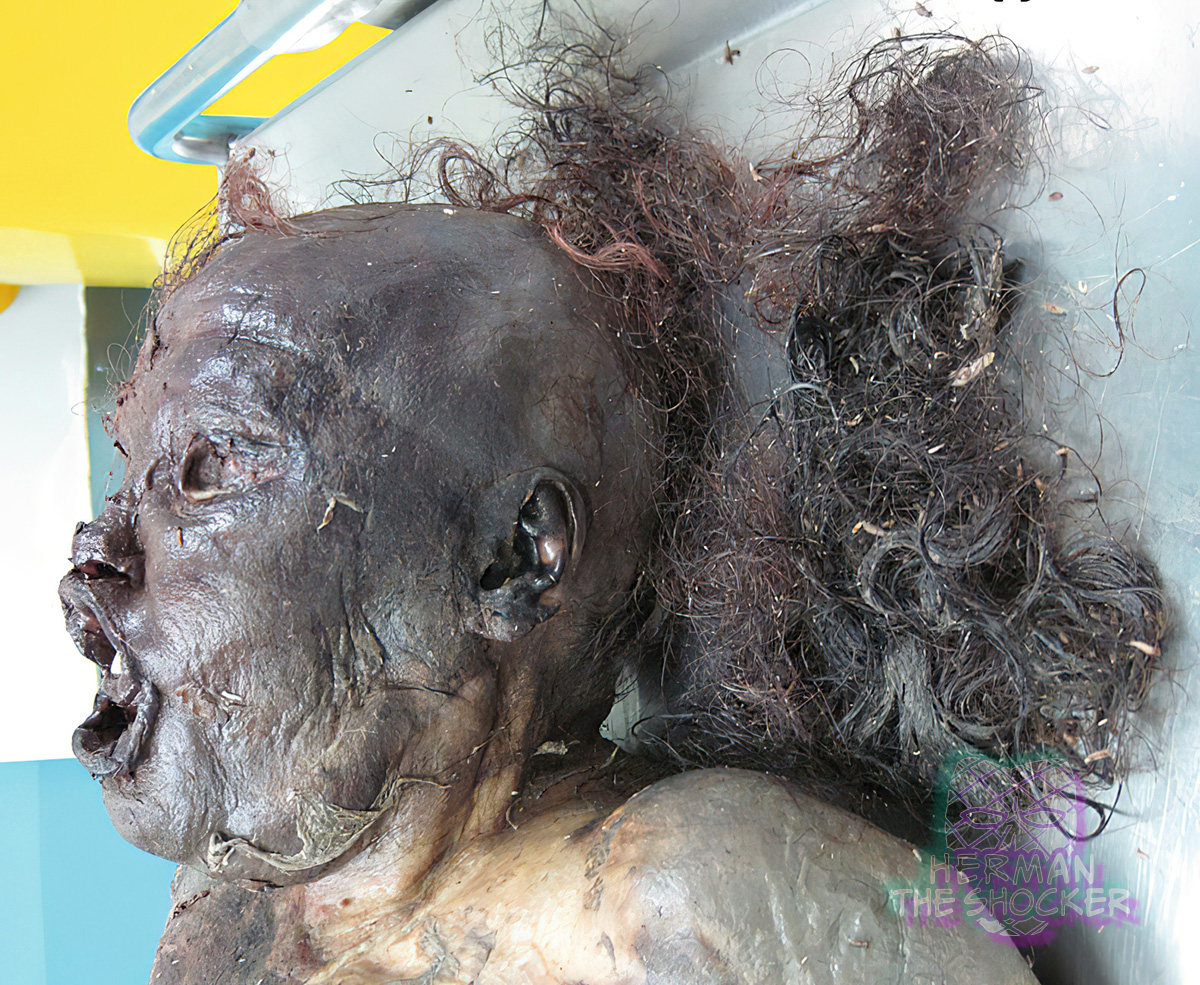 Fig1.1 Putrefaction with skin slippage is also associated with loss of hair. Decomposition, or putrefaction, is a combination of two processes: autolysis and bacterial action. Autolysis is the breakdown of cells and organs through an aseptic chemical process caused by intracellular enzymes. Because it is a chemical process, it is accelerated by heat, slowed by cold, and stopped by freezing. Bacterial action results in the conversion of soft tissues in the body to liquids and gases. The chemicals produced as a result of the putrefaction are cadaverine and putrescine, hydrogen sulfide and other sulfides, which generate a horrible smell. Putrefaction begins immediately upon death and usually becomes noticeable within 24 hours. As soon as death occurs, the bacteria or microorganisms within the intestinal tract escape from the bowel into the other tissues of the body. As they grow, they begin to produce gases and other properties that distort and discolor the tissues of the body. The decomposition of the gastrointestinal tract results in a dark, foul-smelling liquid called "purge fluid" that is forced out of the nose and mouth due to gas pressure in the intestine. The skin discoloration is a dark greenish combination of colors and is generally pronounced within 36 hours. As a result, the body begins to swell from the putrefactive gases, emitting an extremely repugnant odor. The rate of decomposition depends on the temperature, ground conditions, amount of clothing, size of the body, etc. For example, a body in a warm climate will not only encourage insect attack from the outside, but will also increase the interior bacteria development and subsequent tissue attack from within. As the tissues inside are destroyed and enzymes released, the gases formed emit a foul and sickening smell. - - - Case 2 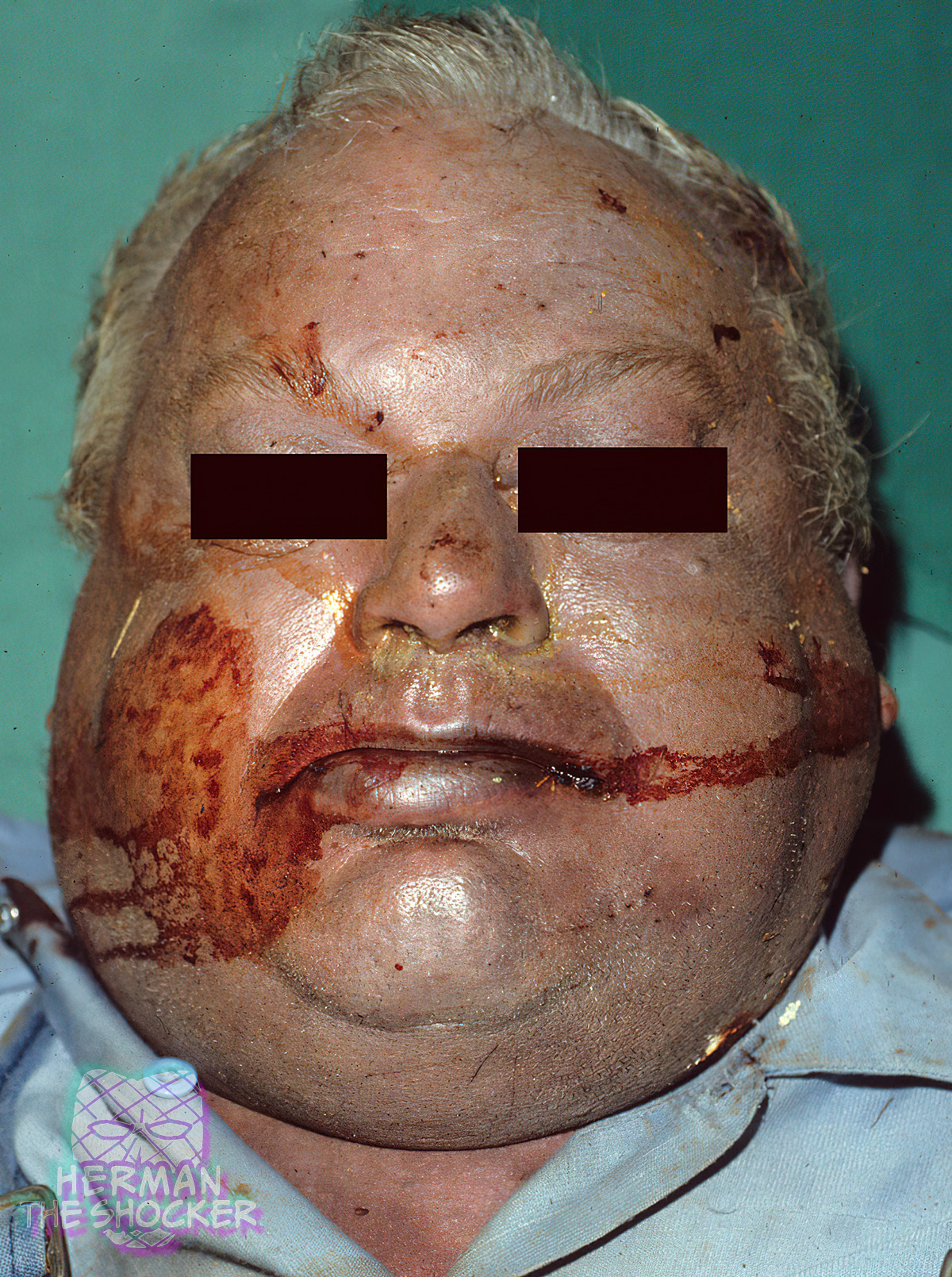 Fig2.1 Purge fluid expelled from the mouth and nose after death. The decomposition of the gastrointestinal tract results in a dark, foul-smelling liquid called "purge fluid" that is forced out of the nose and mouth due to gas pressure in the intestine. Putrefaction begins immediately upon death and usually becomes noticeable within 24 hours. As soon as death occurs, the bacteria or microorganisms within the intestinal tract escape from the bowel into the other tissues of the body. As they grow, they begin to produce gases and other properties that distort and discolor the tissues of the body. - - - Case 3 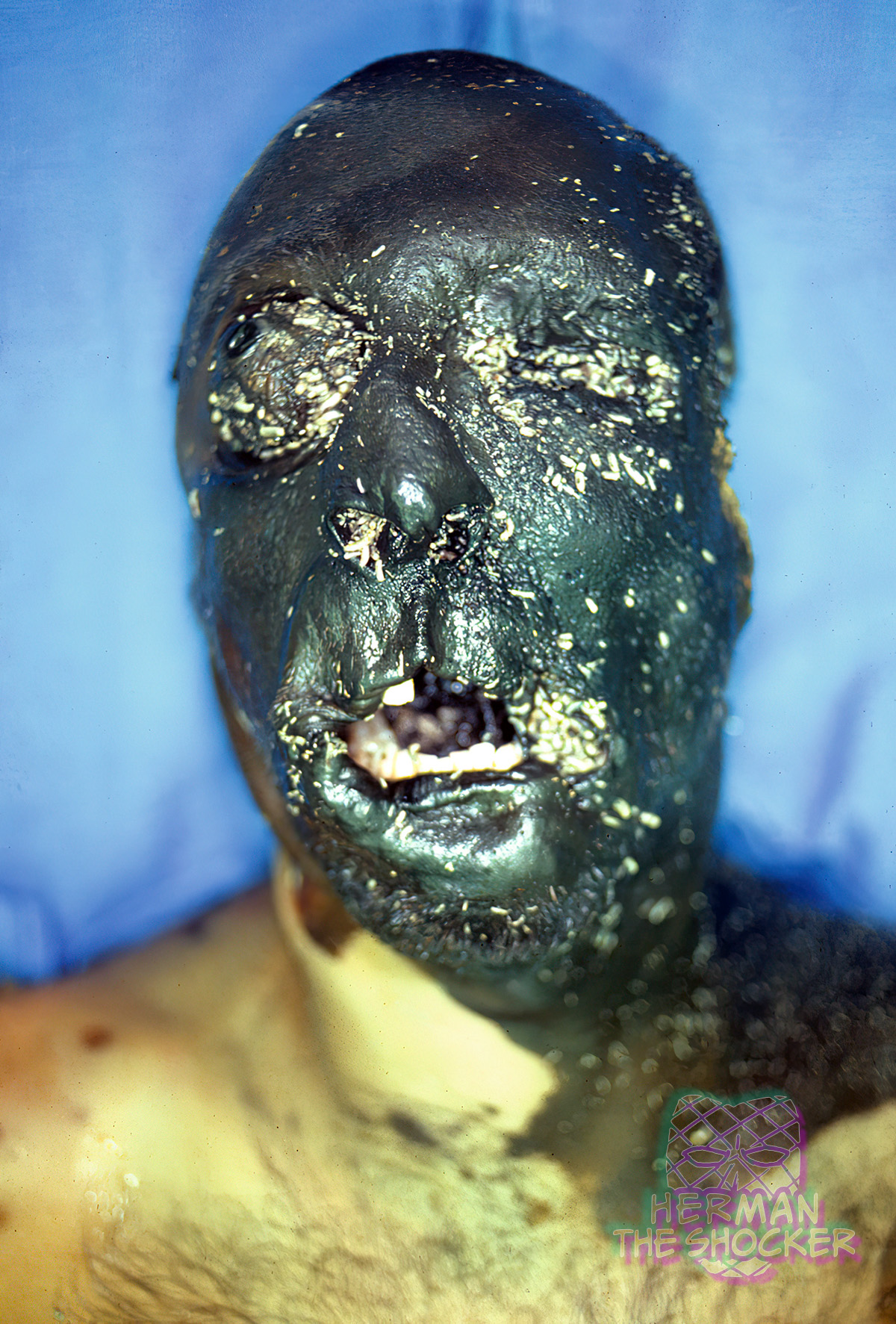 Fig3.1 Clothing can slow down the decomposition process. This image is an example of how clothing can slow down the decomposition process. Note that the skin of the torso, which was covered with clothing, is reasonably intact compared to the advanced decompositional changes noted on the face and neck. - - - Case 4 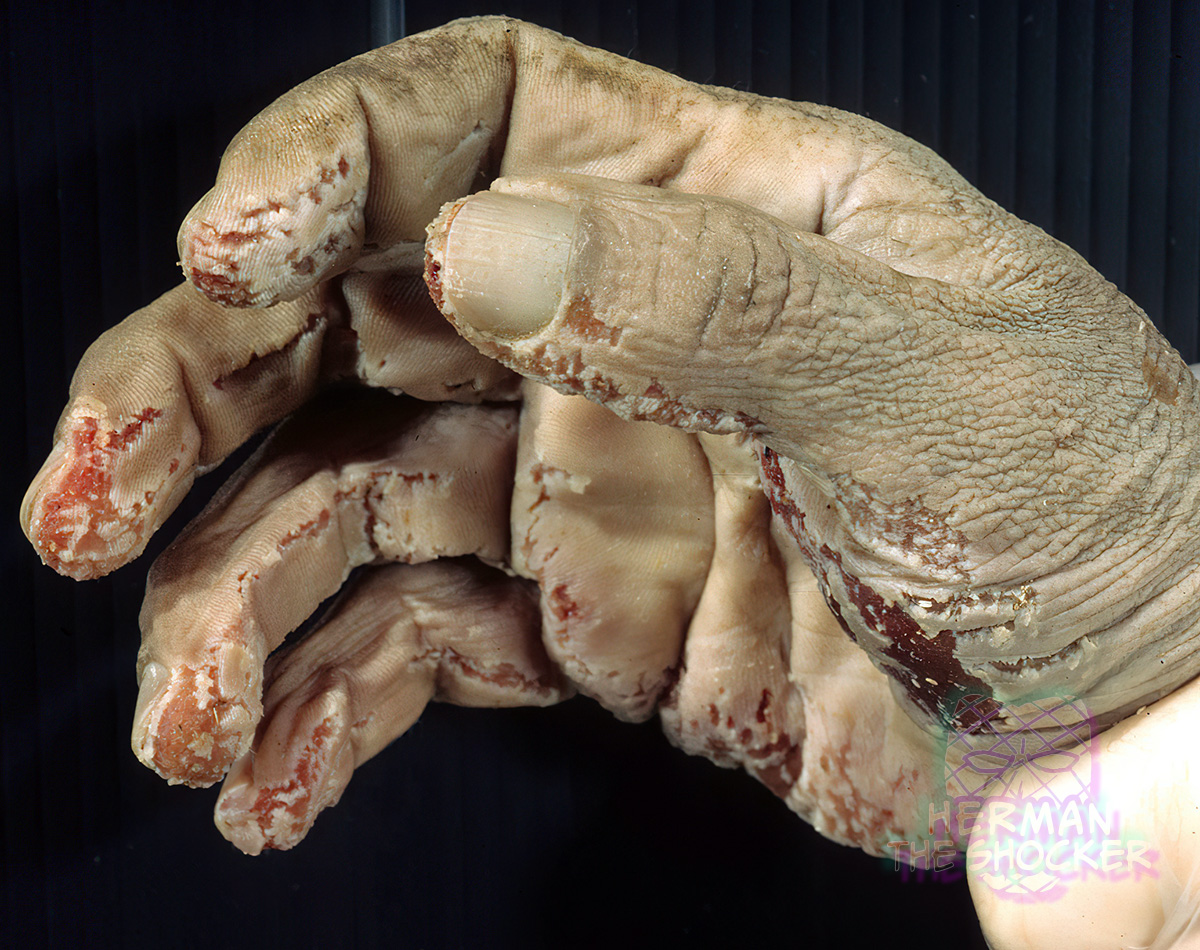 Fig4.1 Postmortem animal activity by rodents. Rodents such as rats and mice tend to concentrate on the soft tissues of the fingers, toes, and the tip of the nose. Bites can be recognized by the paired grooves from the upper and lower incisors and can be seen here on the side of a finger. Postmortem injuries are usually characterized by a lack of blood, although dependent body parts may passively exude blood from postmortem wounds. Occasionally such injuries may occur before death in an unconscious individual. This has been termed the Popiel phenomenon, after a mythical Polish king who was devoured by rats. In these cases a vital reaction may be seen microscopically. This consists of an infiltrate of inflammatory cells in the tissues - - - Case 5 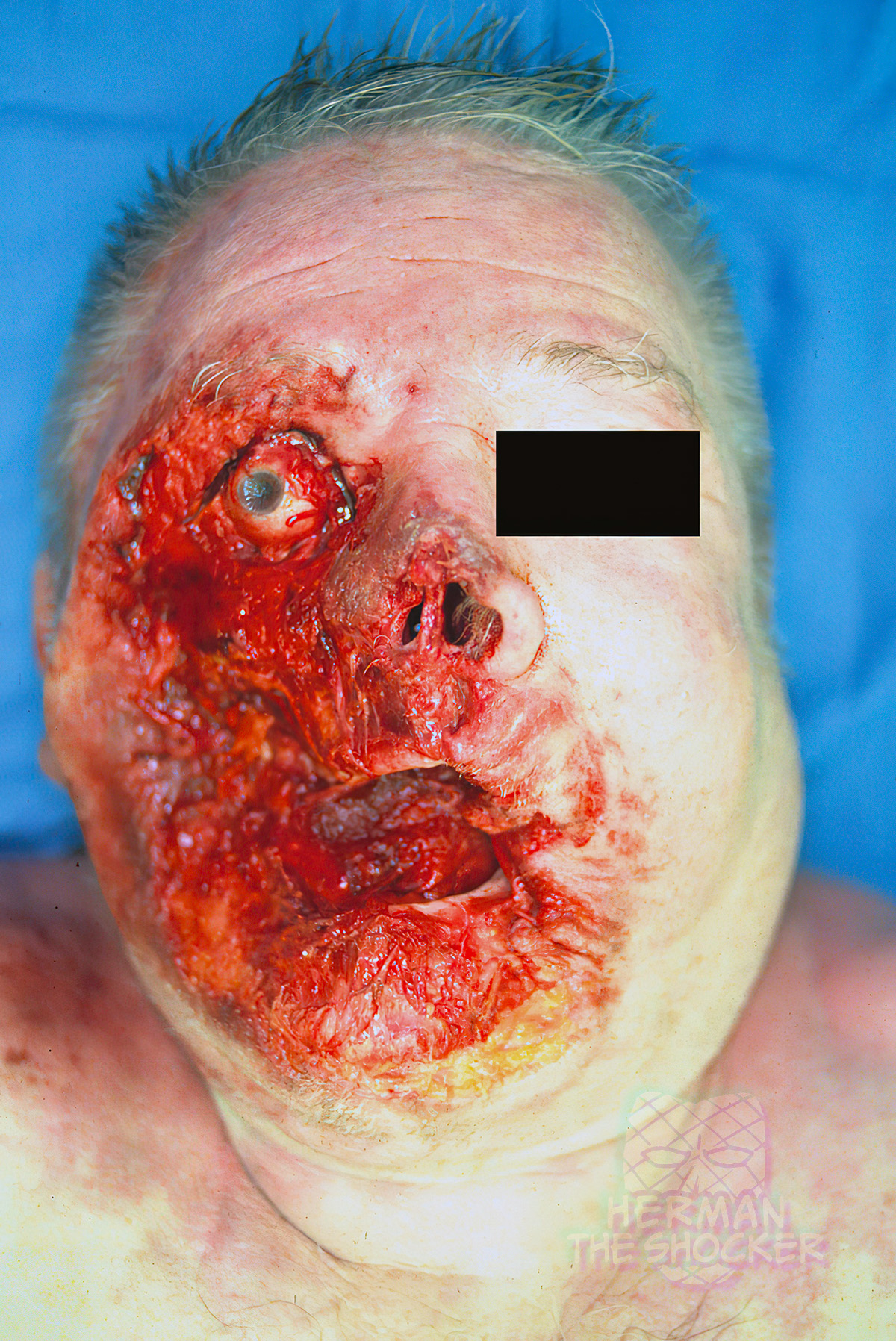 Fig5.1 Postmortem predation by a dog. Early postmortem predation by a dog with bite marks evident at the edge of the soft tissue defect. Postmortem animal depredation is a substantial part of the taphonomic processes a body undergoes after death. While the occurrence and presentation of such injuries are well known to forensic pathologists, the morphological appearance of these injuries may be misinterpreted by police officers or members of other investigating authorities. A broad range of carnivores can be involved in the postmortem destruction of corpses located in open spaces or indoors (e.g. wild animals such as foxes and big cats or domestic animals such as dogs and cats). The wound margins caused by carnivores often appear more regular than those caused by rodents and V-shaped or rhomboid punctured wounds are often seen upon the intact skin in the immediate vicinity to the actual wound margins. Such stab wound-like defects represent canine tooth marks of carnivore origin. An additional criterion for animal depredation by carnivores is the presence of claw-induced linear scratch-type abrasions in the vicinity of the damaged skin areas. In cases with postmortem animal predation, the psychological state of the animal is a possible reason for its behavior. One possible explanation for such behavior is that a pet will try to help an unconscious owner first by licking or nudging, but when this fails to produce any results the behavior of the animal can become more frantic and in a state of panic can lead to biting. The motive is not to attack the owner but is a kind of ‘‘displacement’’ behavior motivated by confusion and fear. The fact that the efforts of the animal will obviously be fruitless explains why this can easily escalate and culminate in excessive mutilation. - - - Case 6 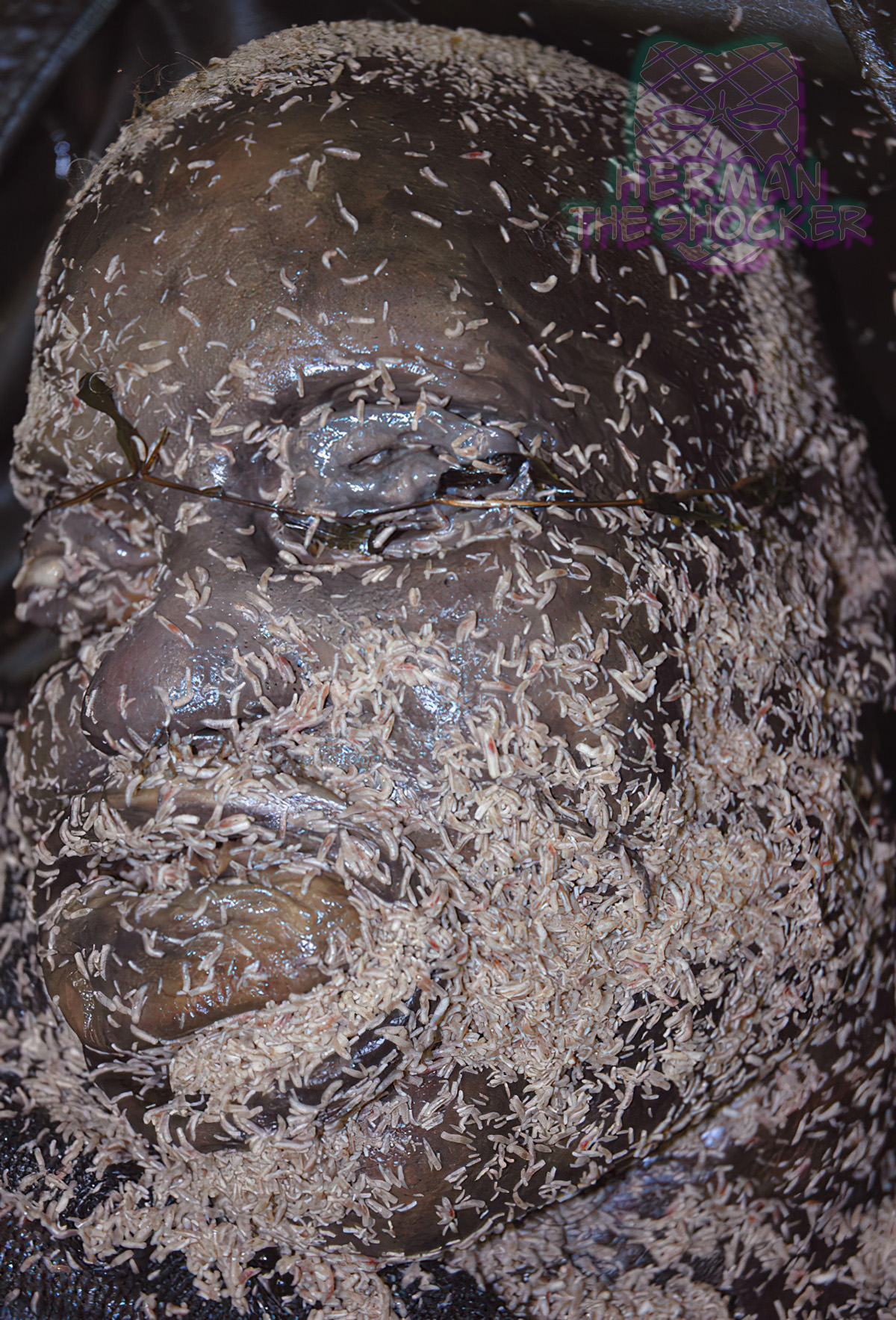 Fig6.1 Extensive maggot activity on the face of a decomposing man Maggots cause most of the body's decomposition because the maggot will do the majority of the eating. Maggots have powerful proteolytic enzymes that aid the dissolution of tissues and facilitate penetration. The maggots are voracious and energetic, first exploring the natural passages, such as mouth and nostrils, then burrowing into the tissues. They secrete digestive fluids with proteolytic enzymes that help soften the tissues, burrowing beneath the skin, and making tunnels and sinuses that hasten putrefaction by admitting air and access to external micro-organisms. Successive waves of eggs are laid, producing new generations of maggots. Eventually, loss of tissue and drying makes the host cadaver unattractive to egg-laying insects, and the later stages of decomposition become free from maggots. - - - Case 7 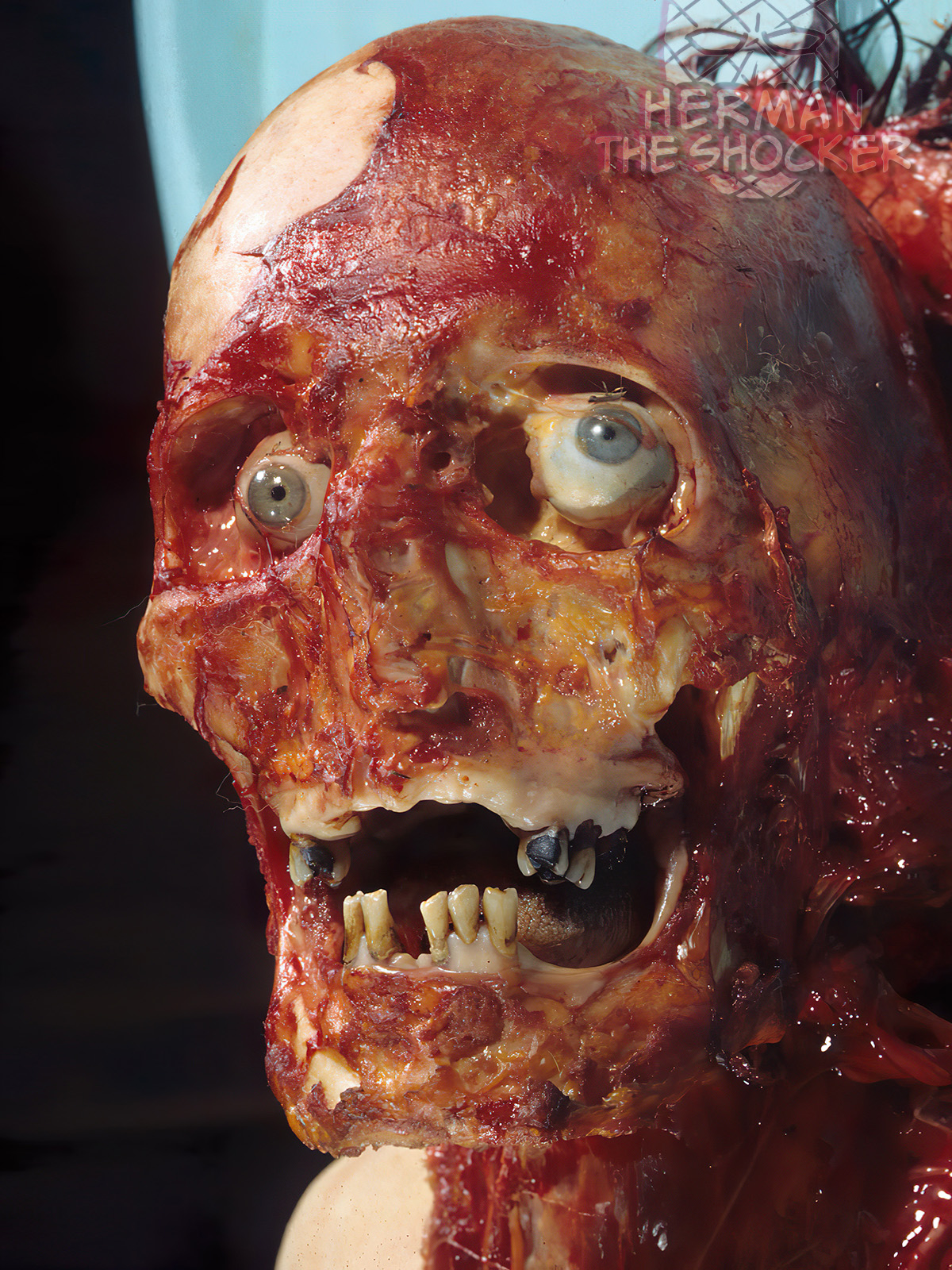 Fig7.1 The face of this individual has been consumed postmortem by a domestic dog. The individual in the images received the injuries postmortem by a domestic dog, cause of death unknown. No further info on the case. Domestic pets, such as dogs, will sometimes feed on a dead body, with large portions of soft tissue being removed. Animal predation is less commonly seen than insect predation. Because most putrefied bodies are recovered from a home environment, the most common animal predators are domestic cats and dogs and rodents. Bodies found outdoors may have been predated by wild birds and animals. Postmortem animal depredation is a substantial part of the taphonomic processes a body undergoes after death. While the occurrence and presentation of such injuries are well known to forensic pathologists, the morphological appearance of these injuries may be misinterpreted by police officers or members of other investigating authorities. - Part 1 --- Part 2 --- Part 3 --- Part 4 --- Part 5 --- Part 6 --- Part 7 --- Part 8 --- Part 9 --- Part 10 --- Part 11 --- Part 12 --- Part 13 --- Part 14 --- Part 15 --- Part 16 --- Part 17 --- Part 18 --- Part 19 --- Part 20 --- Part 21 --- Part 22 --- Part 23 --- Part 24 --- Part 25 --- Part 26 --- Part 27 --- Part 28 --- Part 29 --- Part 30 --- Part 31 - This post is for educational purposes only and is nonprofit. Under Section 107 of the US Copyright Act of 1976; Allowance is made for "Fair Use" for purposes such as criticism, comment, news reporting, teaching, scholarship, and research. OP is not a medical expert. No copyright infringement intended. This post does not encourage or glorify violence/harassment. Images might have been upscaled and enhanced. Text might have been shortened and simplified/reorganized for online view.
__________________ ⭐️ hermantheshocker.com ⭐️ |
|
#2
●
07-10-2022, 02:27 PM
|
 ★ Legacy Member ★ Poster Rank:779 I'm not A bitch.... I'm THE bitch. Join Date: Jul 2012 Posts: 1,030 1,030Posts 1,727Thanked 174Quoted 4Mentioned 0Contrib. |
|
Re: The Shocker's Mix 32
Caviar, as usual!!
|
|
#4
●
07-10-2022, 10:03 PM
|
 ★ Legacy Member ★ Poster Rank:252 So many choices now Join Date: Jul 2015 Posts: 5,542 5,542Posts 19,786Thanked 2,120Quoted 15Mentioned 0Contrib. |
|
Re: The Shocker's Mix 32
Figure 7 - Which one of the Nazi's from Raiders of the Lost Ark was that again?
|
|
#6
●
07-11-2022, 03:42 AM
|
 ♚ Legacy Gold Member ♚ Poster Rank:199 Female Join Date: Nov 2009 Posts: 7,749 7,749Posts 11,993Thanked 709Quoted 5Mentioned 0Contrib. |
|
Re: The Shocker's Mix 32
Whew. Can almost smell them through the screen. Thanks Herman.  |
|
#7
●
07-11-2022, 03:12 PM
|
 ♚ Legacy Gold Member ♚ Poster Rank:122 Happy Happy Happy Join Date: Dec 2009 Posts: 13,383 13,383Posts 25,651Thanked 4,367Quoted 23Mentioned 0Contrib. |
|
Re: The Shocker's Mix 32
Case #7 seems familiar I wish I had Access to forensic journals such as yourself:( |
|
#8
●
07-11-2022, 11:32 PM
|
| My Rank: LANCE CORPORAL Poster Rank:2823 Join Date: Jun 2021 Posts: 143 143Posts 229Thanked 26Quoted 1Mentioned 0Contrib. |
|
Re: The Shocker's Mix 32
the whole 'pictures you can smell' thing has never felt so real lmao great shit as always, I literally always look forward to your posts and Simones post, and honestly a few others but yeah lol :]
|