|
#1
●
11-30-2021, 12:13 PM
|
 ♚ Legacy Gold Member ♚ Poster Rank:914 Join Date: Jul 2020 Posts: 820
Contributions: 13
820Posts 27,645Thanked 173Quoted 13Mentioned 13Contrib. |
|
The Shocker's Mix 14
Some of the stuff I work on doesn't make the cut so I thought about gathering them up in a single post. So basically it's images I have little or no info about or I've decided that they don't get their own thread, for example, because of low image/content quality, lack of backstory or additional info/knowledge, possibly uninteresting, only one image but not very special. I still do the usual image work including upscaling and color correction as needed, as I prefer to have my content high quality and educational. ________ Case 1  Fig1.1 South Bronx rape–homicide victim. Bronx, New York City. This is the victim of a rape–homicide that occurred in an unoccupied apartment within a building in the South Bronx. The victim was raped and sodomized by the killer, who had forced her into this location after tricking her into going into the building. She was a classic “victim of opportunity” who just happened to be at the wrong place at the wrong time. Rape and sexual homicide are often difficult crimes to prove, even in this climate of evolving technology of DNA and “rape kits”. To be ruled a sexual homicide or rape and murder the genital area must be examined for signs of tearing, scratching and bruising. The sensitivity of such a case requires the forensic pathologist to be proficient in examining sexually derived injuries and determining whether rape occurred, or if results are consistent with consensual sexual behavior. Examinations include inspections of the genitalia and hymen, the presence or absence of seminal fluid, venereal disease and pregnancy. The evidence compiled by a medical examination may be able to either confirm or deny sexual homicide allegations. ________ Case 2 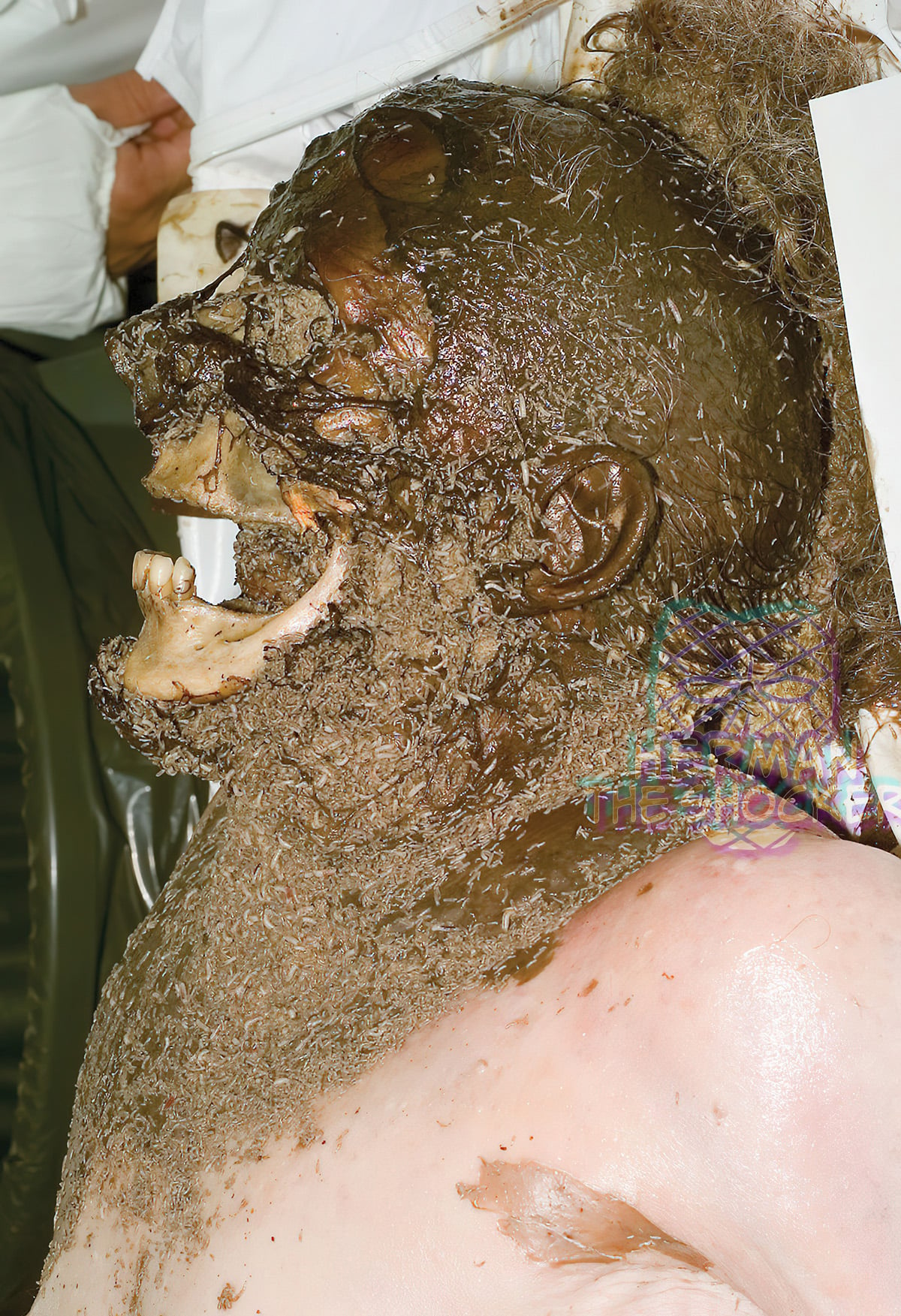 Fig2.1 Near-complete skeletonization of face by maggot mass. Maggots are the larval form of flies. Flies lay their eggs in small and sometimes large bulky clusters on accessible unsubmerged areas, crevices, and cavities of the body, preferring moist areas such as the eyes, nostrils, scalp, lips, ear canals, and open wounds. Individually, these are tiny, round to ovoid, tan-white structures that resemble seeds or grains of rice. Egg laying occurs within 1–2 hours of death. The mobile larvae will be noted by approximately 24 hours, depending on the species. If undisturbed on land, within 2–3 weeks, they will pupate, forming a hardened brown outer covering remaining on or around the body or burrowed within the surrounding soil. Maggots will enter anatomic openings, wounds, and body cavities and feed off of the body tissues and organs. Maggots feeding on the skin may leave multiple, small, round (2–4 mm in diameter) holes, leaving a lace-like or web-like pattern on the skin that may be misinterpreted as antemortem blunt, sharp, or other penetrating injuries. With time and if left undisturbed, masses of maggots will completely consume the flesh and expose the bones (skeletonization). Their activities constitute a type of anthropophagy. ________ Case 3 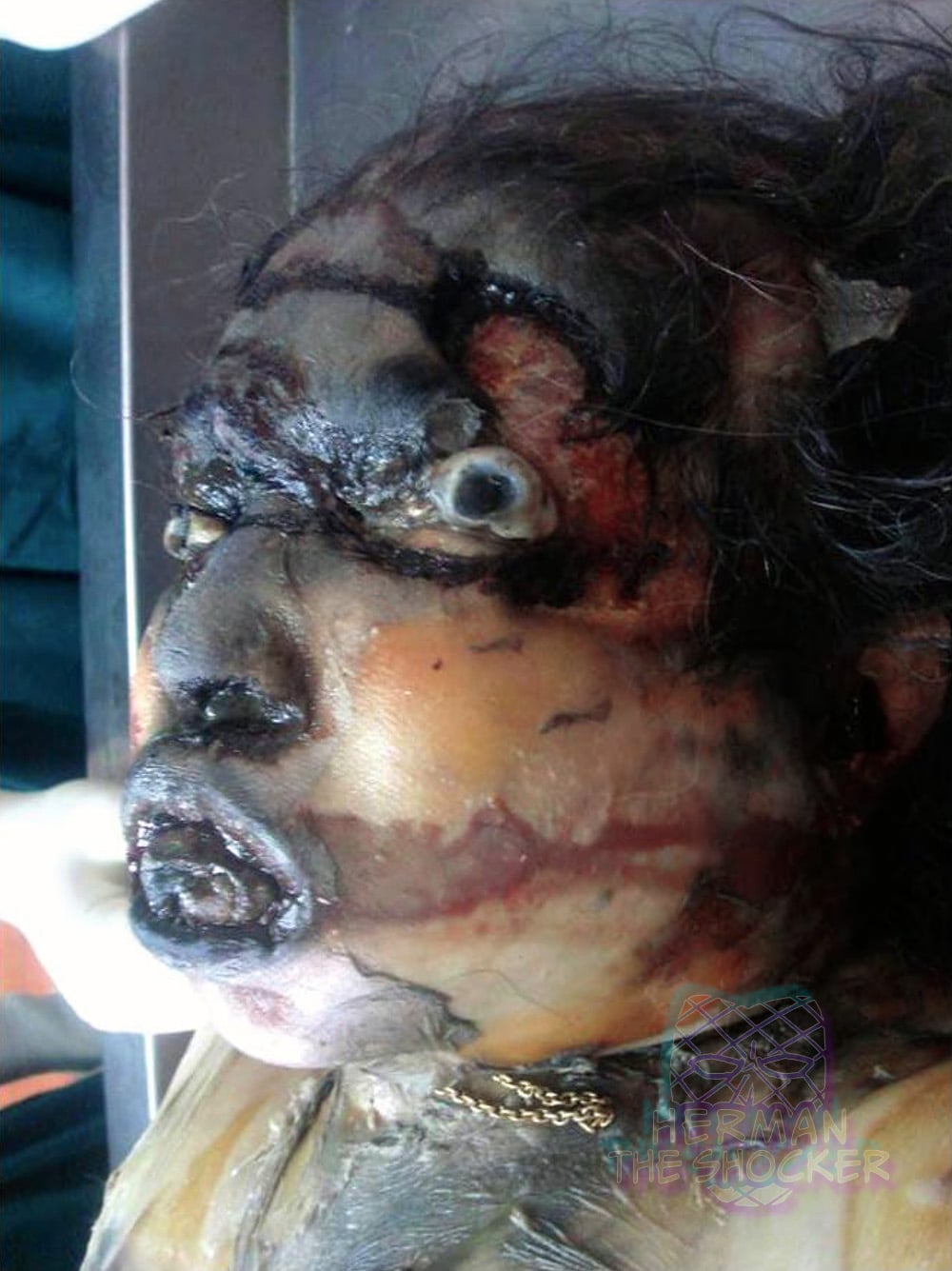 Fig3.1 Bulging eyes, lips and face with protrusion of the tongue on this decomposing individual. Note the bulging eyes, lips and face with protrusion of the tongue on this decomposing individual, all related to the decomposition process. No further info about this case. Decomposition, or putrefaction, is a combination of two processes: autolysis and bacterial action. Autolysis is the breakdown of cells and organs through an aseptic chemical process caused by intracellular enzymes. Because it is a chemical process, it is accelerated by heat, slowed by cold, and stopped by freezing. Bacterial action results in the conversion of soft tissues in the body to liquids and gases. The chemicals produced as a result of putrefaction are cadaverine and putrescine, hydrogen sulfide and other sulfides, which generate a horrible smell. Putrefaction begins immediately upon death and usually becomes noticeable within 24 hours. As soon as death occurs, the bacteria or microorganisms within the intestinal tract escape from the bowel into the other tissues of the body. As they grow, they begin to produce gases and other properties that distort and discolor the tissues of the body. The discoloration is a dark greenish combination of colors and is generally pronounced within 36 hours. As a result, the body begins to swell from the putrefactive gases, emitting an extremely repugnant odor. The rate of decomposition depends on the temperature, ground conditions, amount of clothing, size of the body, etc. For example, a body in a warm climate will not only encourage insect attack from the outside, but will also increase the interior bacteria development and subsequent tissue attack from within. As the tissues inside are destroyed and enzymes released, the gases formed emit a foul and sickening smell. ________ Case 4 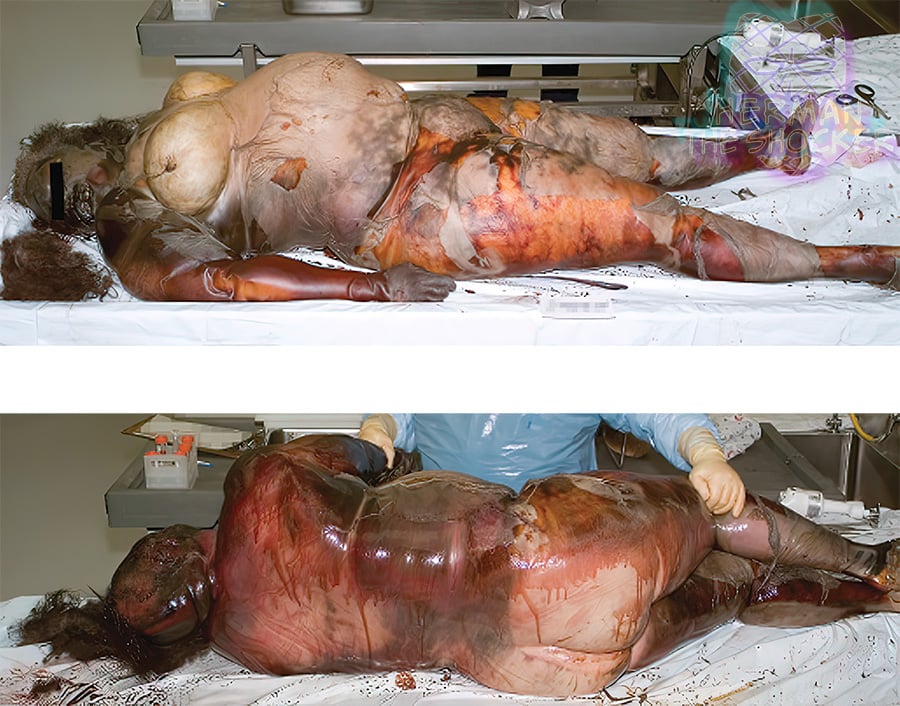 Fig4.1 Decomposition of the entire body. Decomposition of the entire body, including discoloration, skin slippage, bloating, mummification of lower arms, legs, and thighs, and marbling of abdomen and thighs and near-total detachment of scalp with hair. Skin slippage is when the superficial layers of the skin “slip” off of the body. It occurs early in decomposition, in temperate conditions usually it starts around the two to three day mark and its appearance can be varied. Usually it starts as a formation of what looks like a blister, then when the roof of the blister ruptures the skin then flops off the body. it can make the body surface that is left very slimy to the touch. Marbling is a common finding usually found after at least 24 h since death occurred and is a red, green, and black discoloration that follows the vessels of the body due to the breakdown of hemoglobin. Marbling occurs when certain types of bacteria found in the abdomen “migrate” to the blood vessels, causing them to assume a purple-greenish tint. This effect gives the skin on some body parts — usually the trunk, legs, and arms — the appearance of marble (hence its name). ________ Case 5 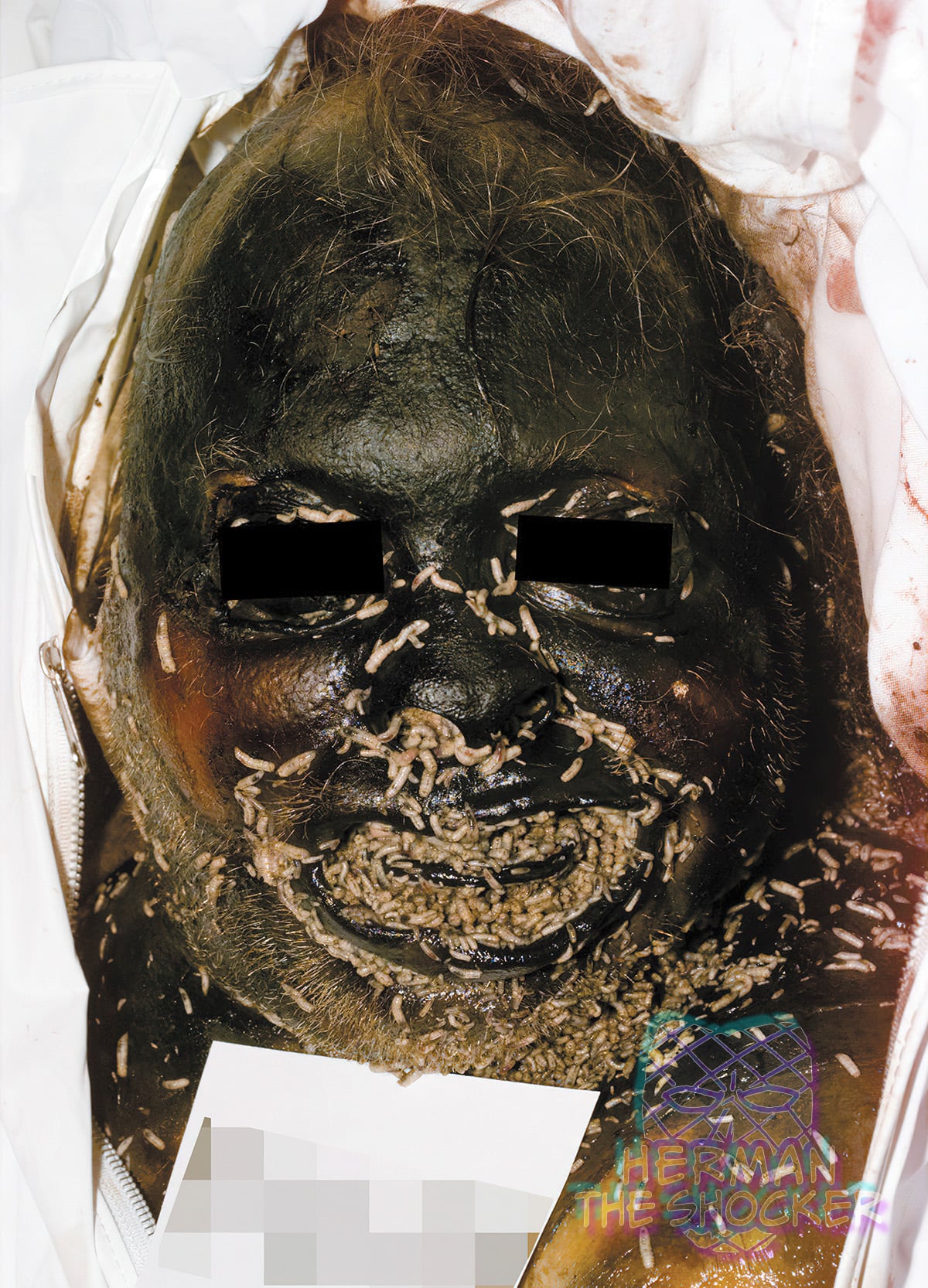 Fig5.1 Masses of maggots concentrated around eyes, mouth, and neck. Maggots cause most of the body's decomposition because the maggot will do the majority of the eating. Maggots have powerful proteolytic enzymes that aid the dissolution of tissues and facilitate penetration. The maggots are voracious and energetic, first exploring the natural passages, such as mouth and nostrils, then burrowing into the tissues. They secrete digestive fluids with proteolytic enzymes that help soften the tissues, burrowing beneath the skin, and making tunnels and sinuses that hasten putrefaction by admitting air and access to external micro-organisms. Successive waves of eggs are laid, producing new generations of maggots. Eventually, loss of tissue and drying makes the host cadaver unattractive to egg-laying insects, and the later stages of decomposition become free from maggots. ________ Case 6 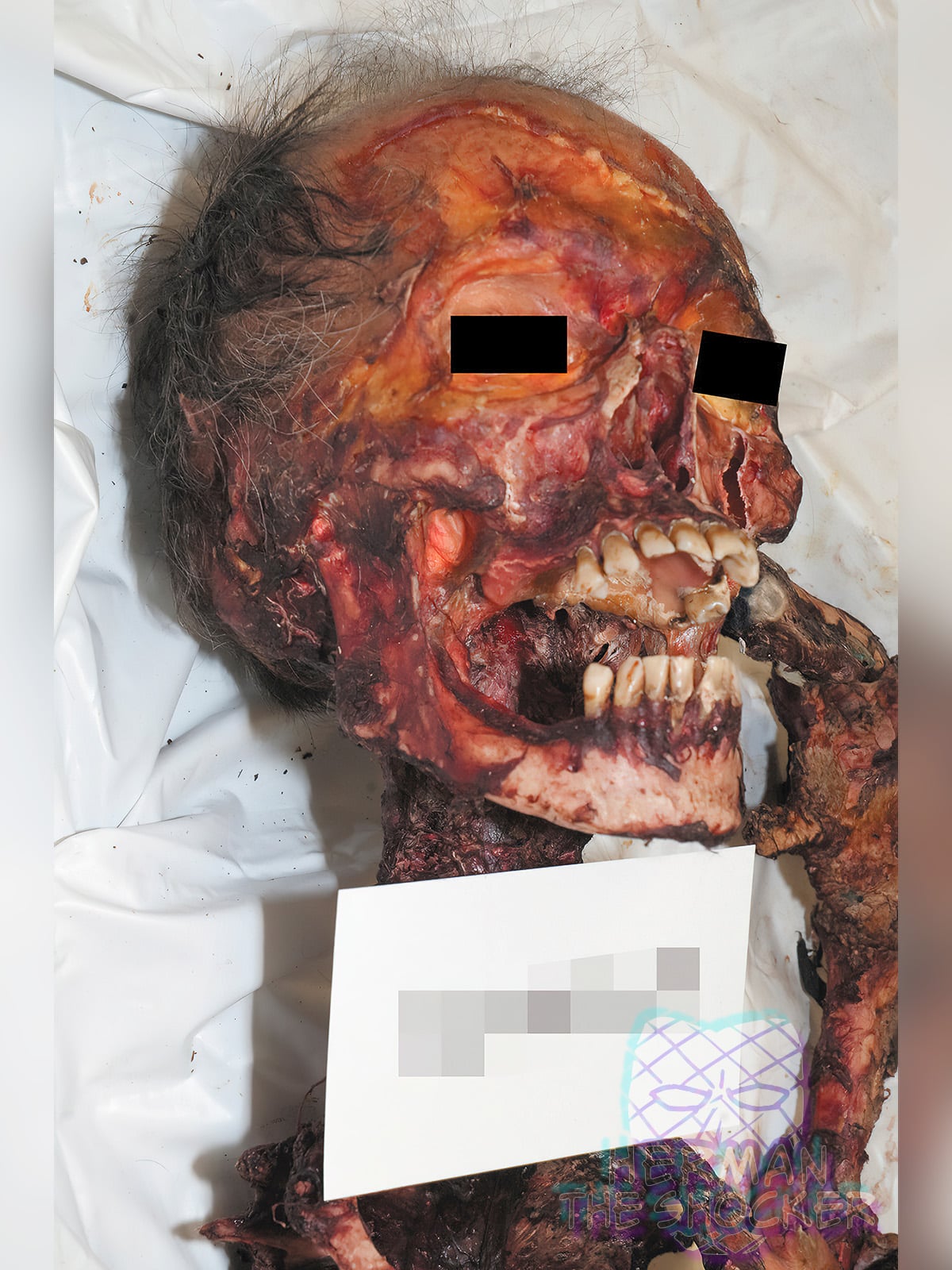 Fig6.1 Postmortem injuries by pet dog with near total absence of facial skin and nose. 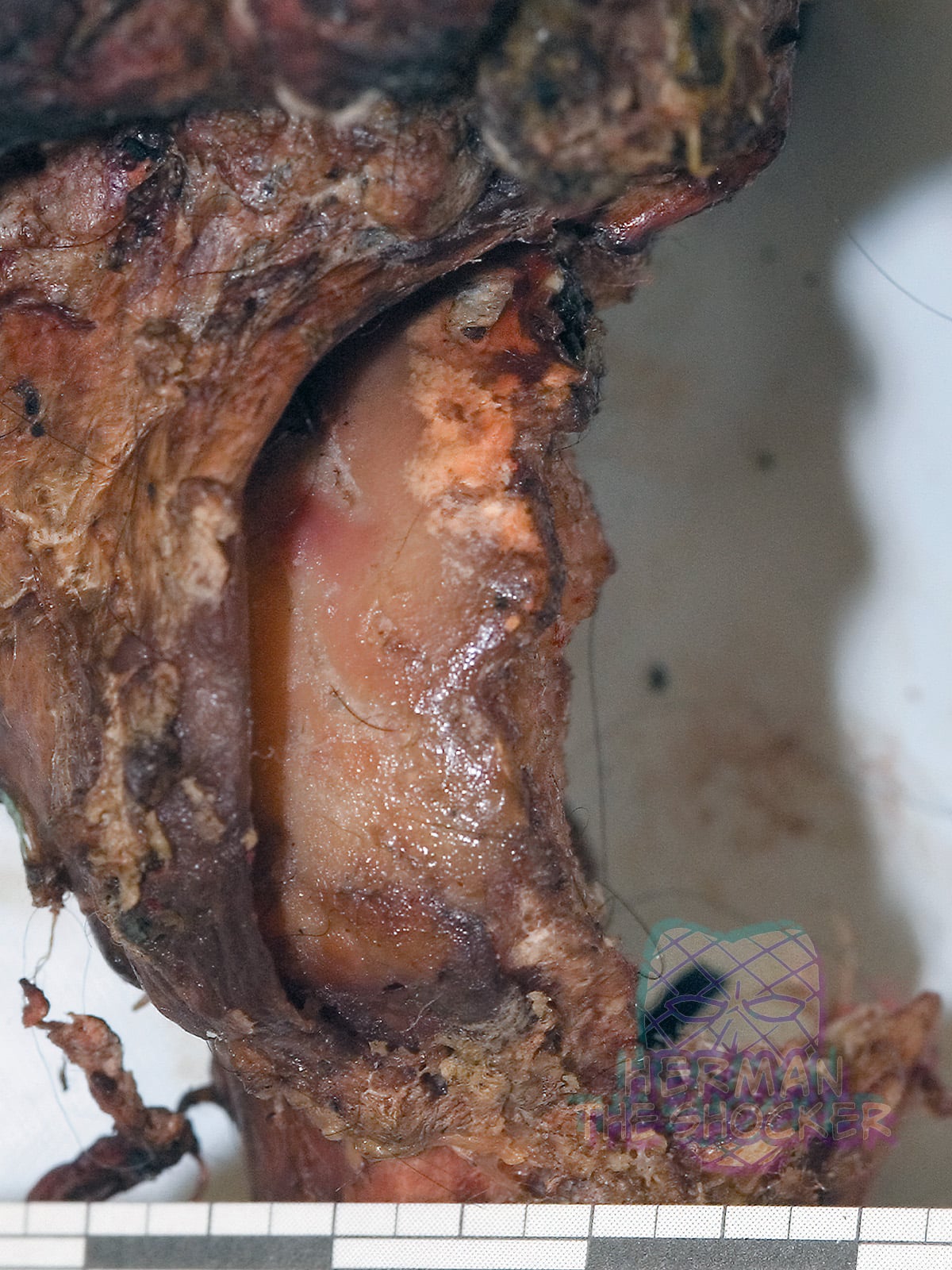 Fig6.2 Postmortem injuries by pet dog showing curvilinear oblique teeth marks and gnawed, jagged edges on piece of bone. Postmortem animal depredation is a substantial part of the taphonomic processes a body undergoes after death. While the occurrence and presentation of such injuries are well known to forensic pathologists, the morphological appearance of these injuries may be misinterpreted by police officers or members of other investigating authorities. The individual in the images received the injuries postmortem by a domestic dog, cause of death unknown. No further info on the case. A broad range of carnivores can be involved in the postmortem destruction of corpses located in open spaces or indoors (e.g. wild animals such as foxes and big cats or domestic animals such as dogs and cats). The wound margins caused by carnivores often appear more regular than those caused by rodents and V-shaped or rhomboid punctured wounds are often seen upon the intact skin in the immediate vicinity to the actual wound margins. Such stab wound-like defects represent canine tooth marks of carnivore origin. An additional criterion for animal depredation by carnivores is the presence of claw-induced linear scratch-type abrasions in the vicinity of the damaged skin areas. In cases with postmortem animal predation, the psychological state of the animal is a possible reason for its behavior. One possible explanation for such behavior is that a pet will try to help an unconscious owner first by licking or nudging, but when this fails to produce any results the behavior of the animal can become more frantic and in a state of panic can lead to biting. The motive is not to attack the owner but is a kind of ‘‘displacement’’ behavior motivated by confusion and fear. The fact that the efforts of the animal will obviously be fruitless explains why this can easily escalate and culminate in excessive mutilation. ________ Case 7 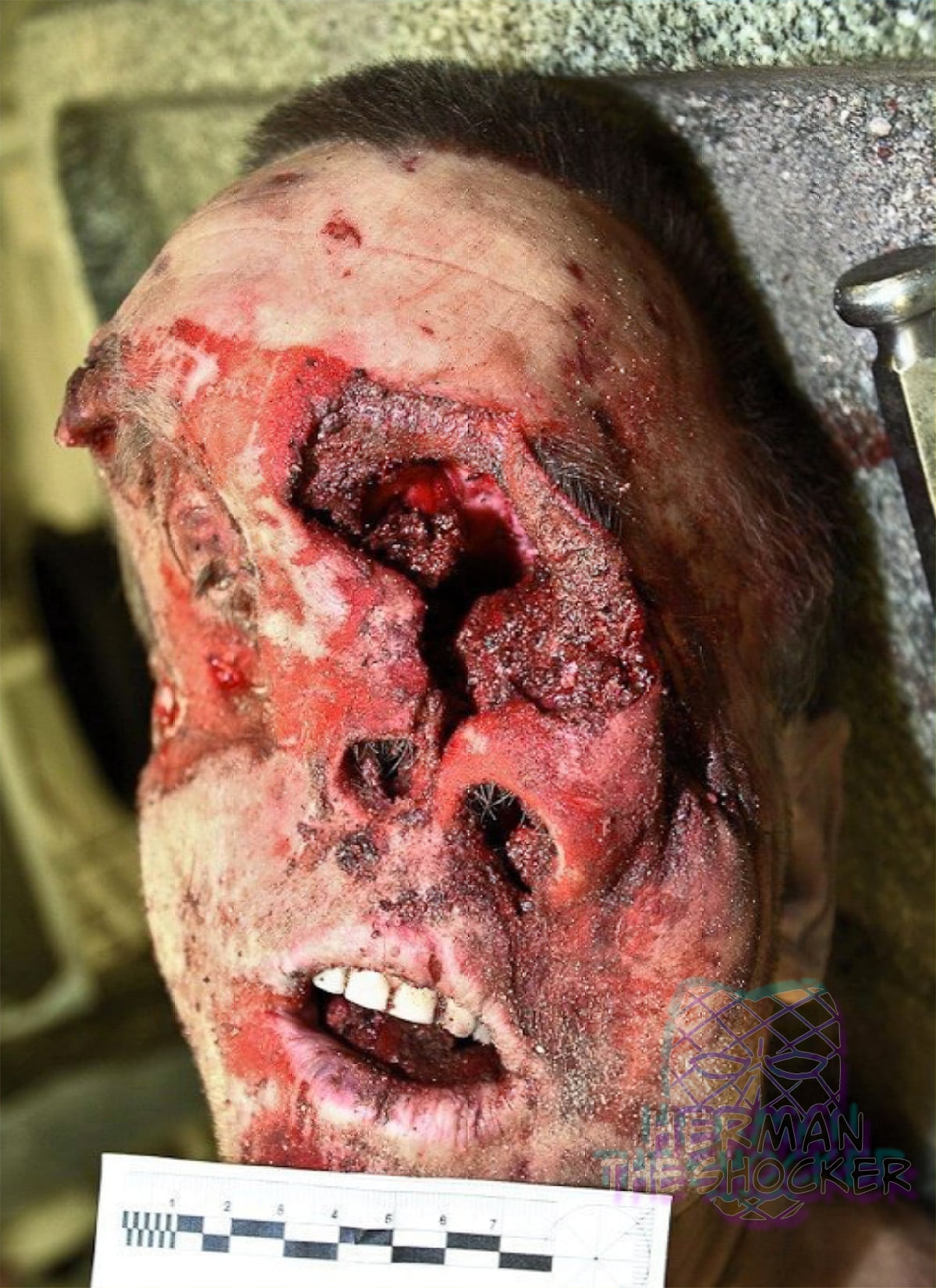 Fig7.1 Fatal head crushing injury. This individual suffered a fatal head crushing injury, no further info. A crushing brain injury causes damage to the brain, blood vessels, and skull, each of which can be life-threatening: A skull fracture exposes the brain to further damage by robbing the brain of its protective case. Further, fragments of the skull may puncture the brain or blood vessels, causing more damage. - This post is for educational purposes only and is nonprofit. Under Section 107 of the US Copyright Act of 1976; Allowance is made for "Fair Use" for purposes such as criticism, comment, news reporting, teaching, scholarship, and research. OP is not a medical expert. No copyright infringement intended. This post does not encourage or glorify violence/harassment. Images might have been upscaled and enhanced. Text might have been shortened and simplified/reorganized for online view. |
|
#2
●
11-30-2021, 01:51 PM
|
 My Rank: FIRST SERGEANT Poster Rank:481 Male Join Date: Dec 2009 Posts: 2,252 2,252Posts 5,941Thanked 293Quoted 0Mentioned 0Contrib. |
|
Re: The Shocker's Mix 14
Great post! I could smell some of the decomp through the computer - !
|
|
#3
●
11-30-2021, 01:59 PM
|
 ★ Legacy Member ★ Poster Rank:252 So many choices now Join Date: Jul 2015 Posts: 5,542 5,542Posts 19,786Thanked 2,120Quoted 15Mentioned 0Contrib. |
|
Re: The Shocker's Mix 14
Right? I suddenly smell dirt, cigarettes, and unwashed clothes. No, its not me (I checked). Herm, if you've managed to add Smell-o-Vision to your posts, again, well done! |
|
#4
●
11-30-2021, 06:31 PM
|
 My Rank: STAFF SERGEANT Poster Rank:809 I Am Dic-N-Bawss Join Date: Aug 2012 Posts: 969
Contributions: 8
969Posts 1,984Thanked 179Quoted 0Mentioned 8Contrib. |
|
Re: The Shocker's Mix 14
This is why hermantheshocker is my favorite poster here. Even the shit he says "doesn't make the cut" is interesting. Thanks for doing all these post man.  The time and effort you put into your work is appreciated. The time and effort you put into your work is appreciated. |
|
#6
●
12-01-2021, 04:52 PM
|
 ♚ Legacy Gold Member ♚ Poster Rank:915 Join Date: Oct 2020 Posts: 820 820Posts 1,957Thanked 119Quoted 0Mentioned 0Contrib. |
|
Re: The Shocker's Mix 14
Damn good thing they covered the eyes in some of those. That would have been hard to look at...LOLOL...  |
|
#8
●
12-02-2021, 06:05 AM
|
 Für Immer Verloren Poster Rank:50 Boredom + Despair Join Date: Sep 2017 Posts: 30,197
Contributions: 743
30,197Posts 192,616Thanked 10,332Quoted 136Mentioned 743Contrib. |
|
Re: The Shocker's Mix 14
Great mix, mate. Keep up the brilliant work.
__________________ "I'd give the world for the chance just to see your face again. Still I pretend that you're still standing by." |
|
#9
●
12-02-2021, 04:14 PM
|
 My Rank: MAJOR Poster Rank:94 Male Join Date: Aug 2009 Posts: 16,989 16,989Posts 25,163Thanked 1,901Quoted 9Mentioned 0Contrib. |
|
Re: The Shocker's Mix 14
That's a kick in the head knowing your pet dog could eat you after death.
|