|
#1
●
09-09-2023, 12:09 PM
|
 ♚ Legacy Gold Member ♚ Poster Rank:914 Join Date: Jul 2020 Posts: 820
Contributions: 13
820Posts 27,649Thanked 173Quoted 13Mentioned 13Contrib. |
|
The Shocker's Mix 78
Some of the stuff I work on doesn't make the cut so I thought about gathering them up in a single post. So basically it's images I have little or no info about or I've decided that they don't get their own thread, for example, because of low image/content quality, lack of backstory or additional info/knowledge, possibly uninteresting, only one image but not very special. I still do the usual image work including upscaling and color correction as needed, as I prefer to have my content high quality and educational. - - - Case 1 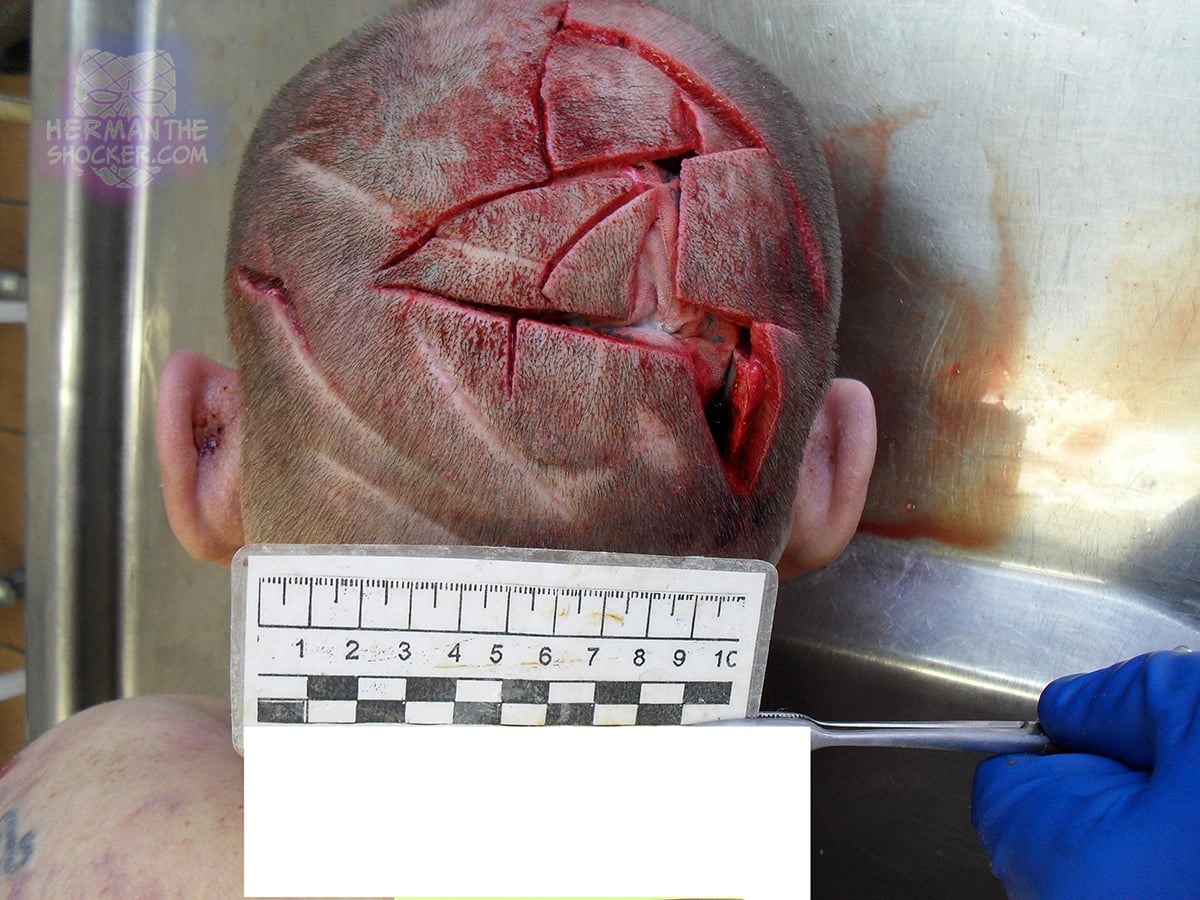 Fig1.1 Homicidal chop wounds. 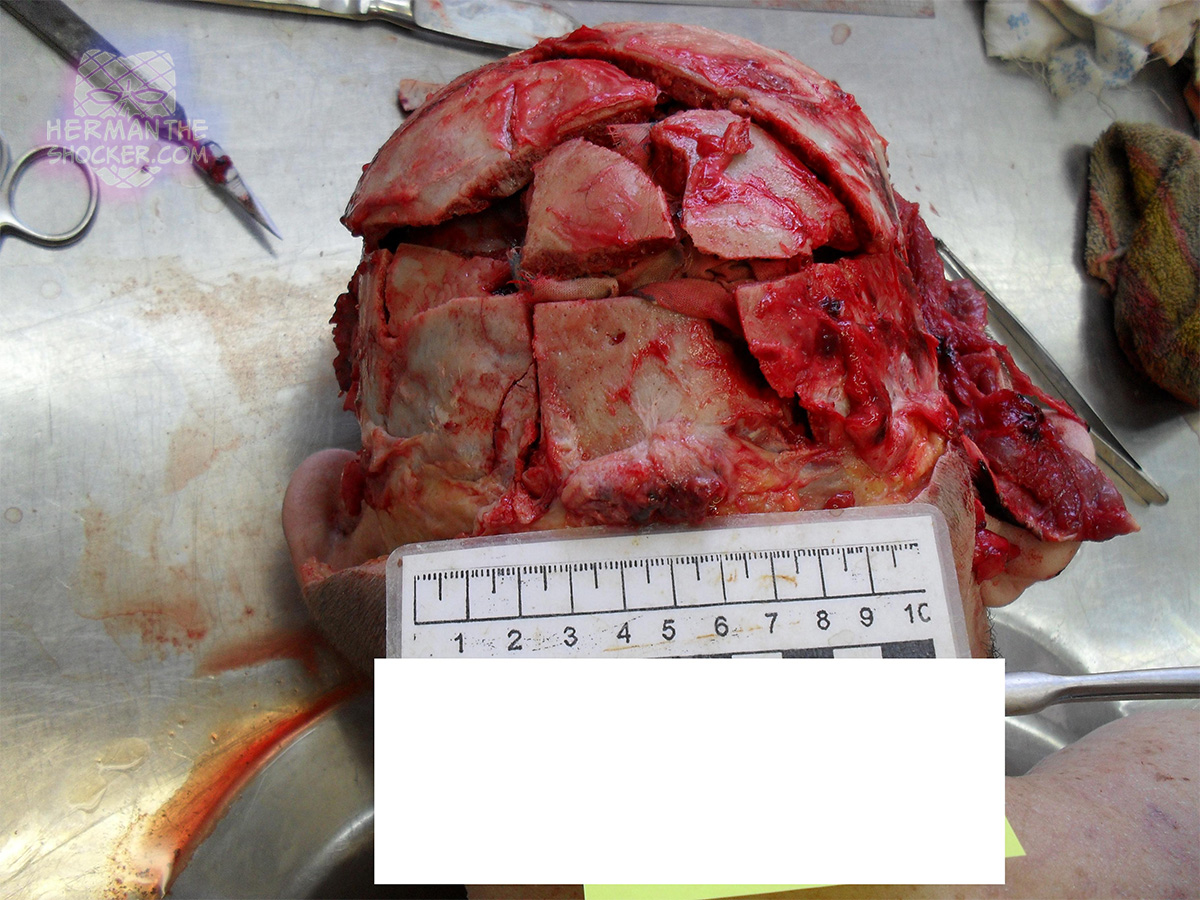 Fig1.2 After scalp removal. This individual has homicidal chop wounds. No further info. Chop wounds can be considered a combination of sharp and blunt force trauma, wherein a relatively bulky object with an edge, or a fast-moving object with an edge, impacts the body, resulting in injuries that have features of sharp force trauma as well as those of blunt force trauma. - - - Case 2 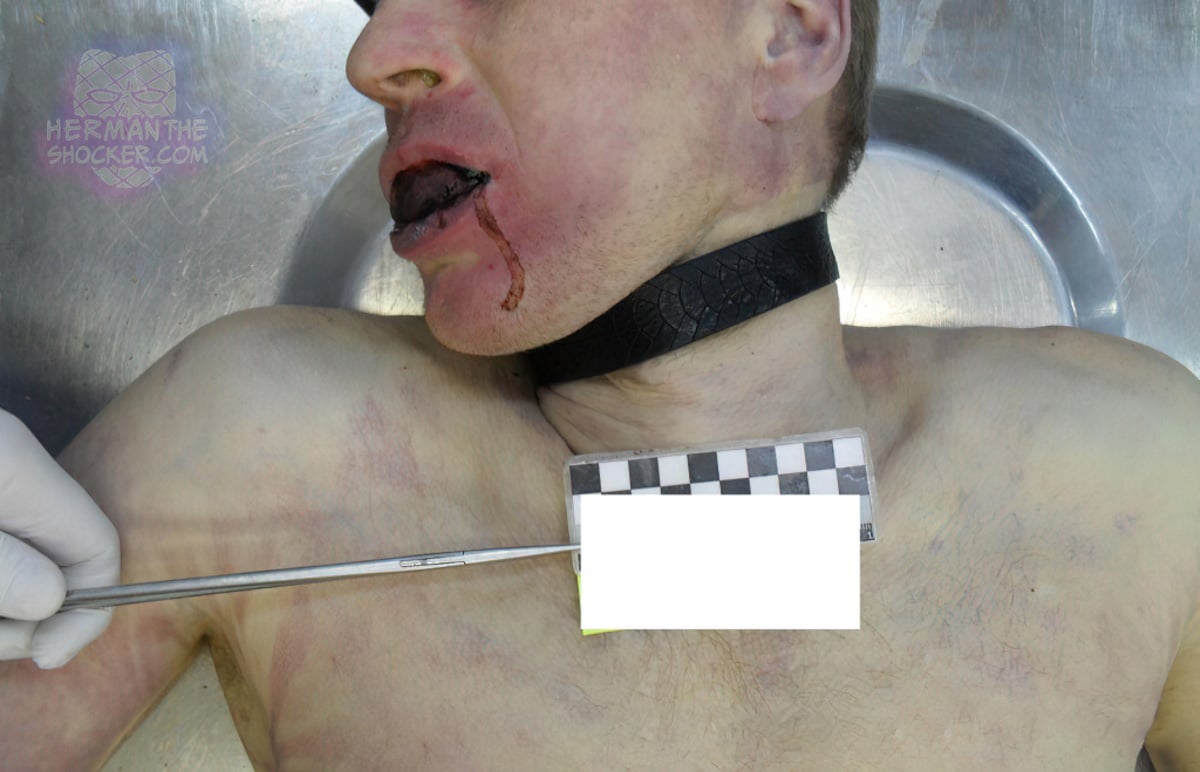 Fig2.1 Suicide by hanging using a belt. 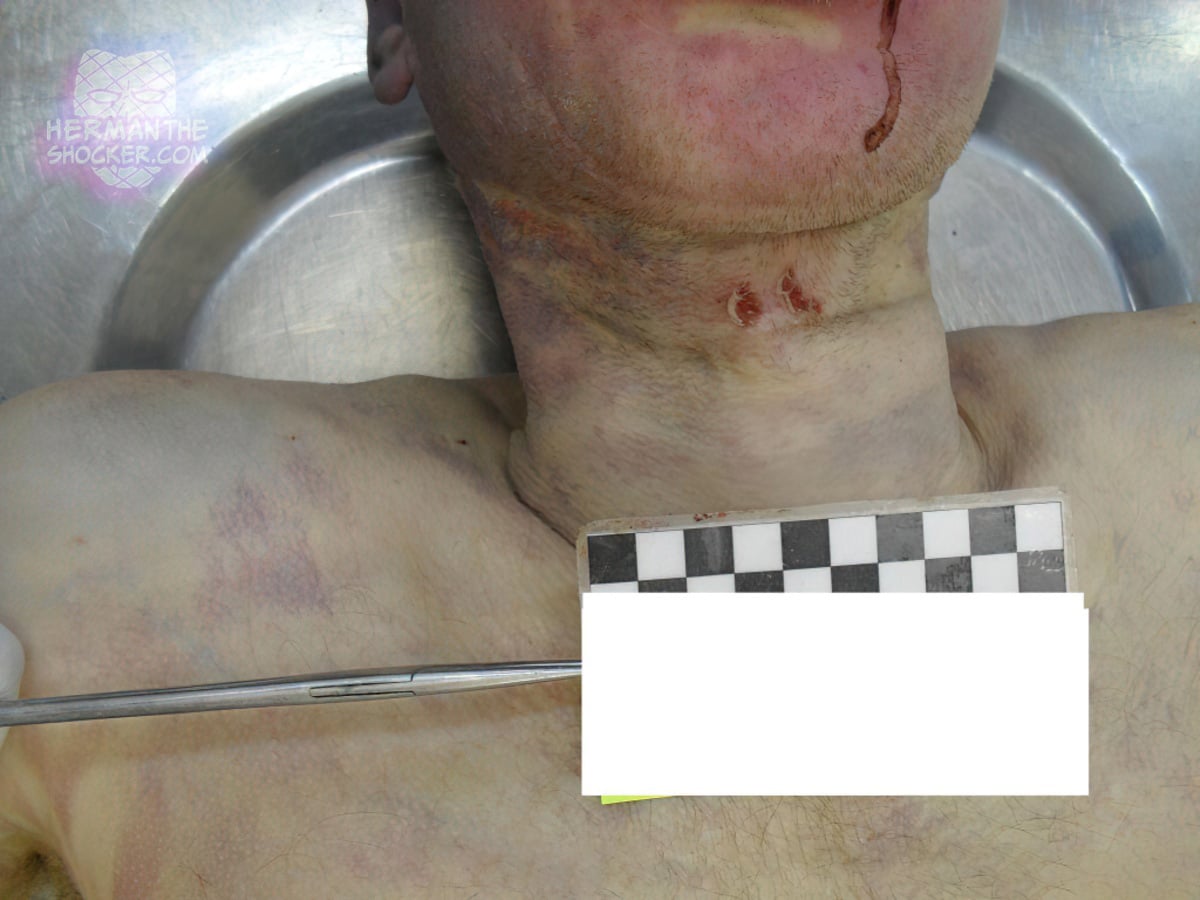 Fig2.2 Suicide by hanging using a belt. This individual committed suicide by hanging using a belt. Suicide by hanging is the intentional killing of oneself via suspension from an anchor-point such as an overhead beam or hook, by a rope or cord or by jumping from a height with a around the neck. Hanging is often considered to be a simple suicide method that does not require complicated techniques; a study of people who attempted suicide by hanging and lived usually suggests that this perception may not be accurate. It is one of the most commonly used suicide methods and has a high mortality rate; Gunnell et al. gives a figure of at least 70 percent. The materials required are easily available, making it a difficult method to prevent. - - - Case 3 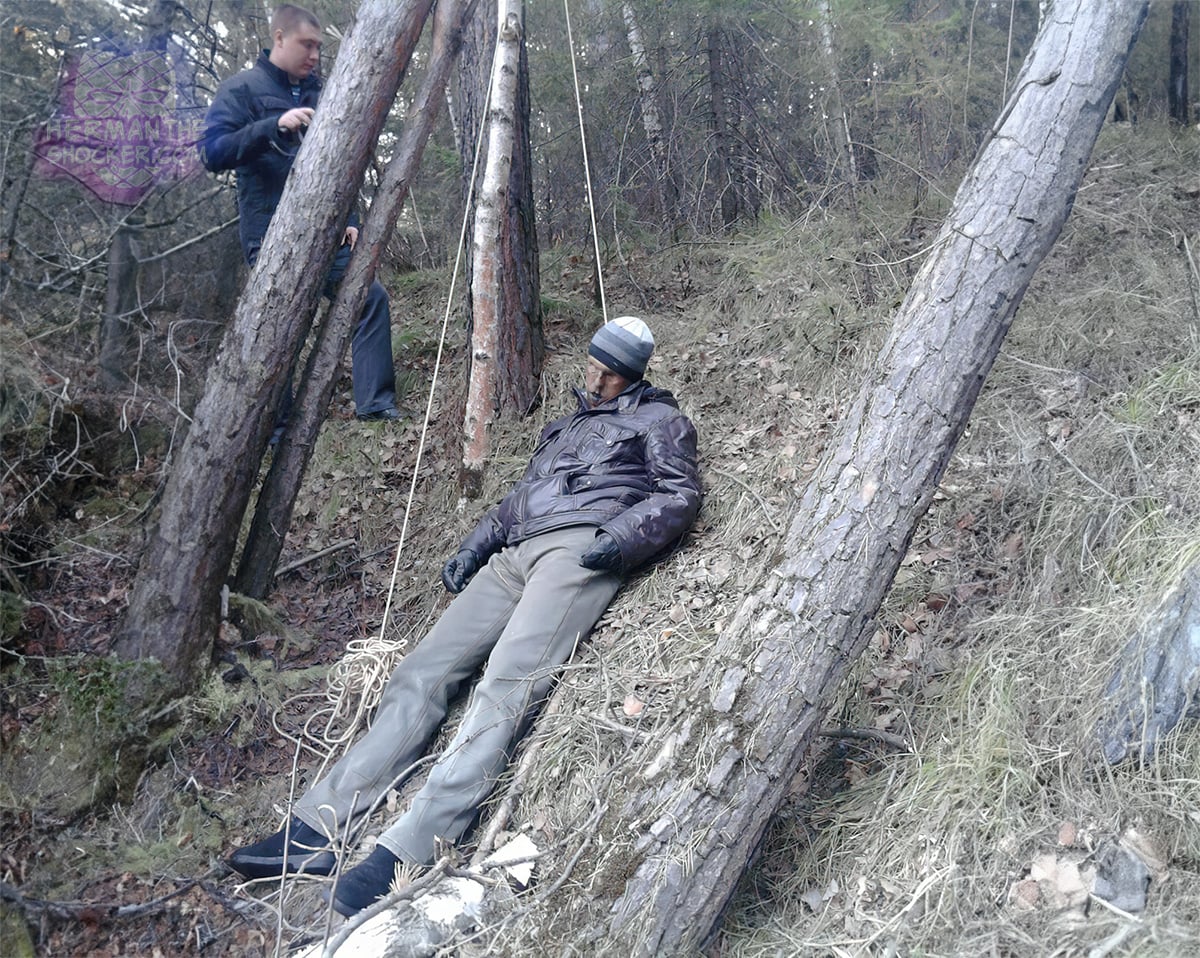 Fig3.1 Suicide by hanging in the woods. This individual committed suicide by hanging in the woods. No further info. - - - Case 4  Fig4.1 Suicide by cutting arms. 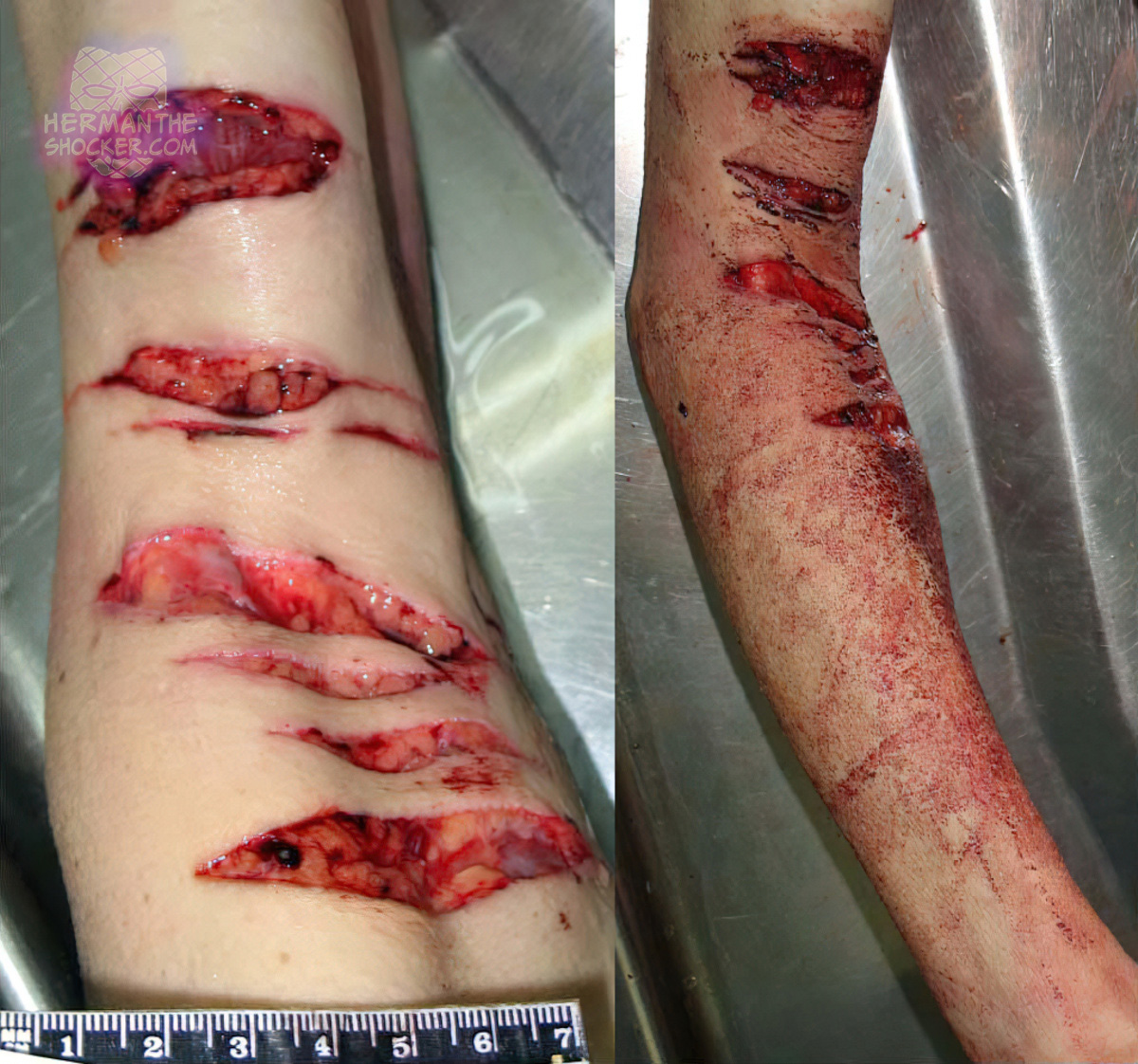 Fig4.2 Deep wounds in the arms. 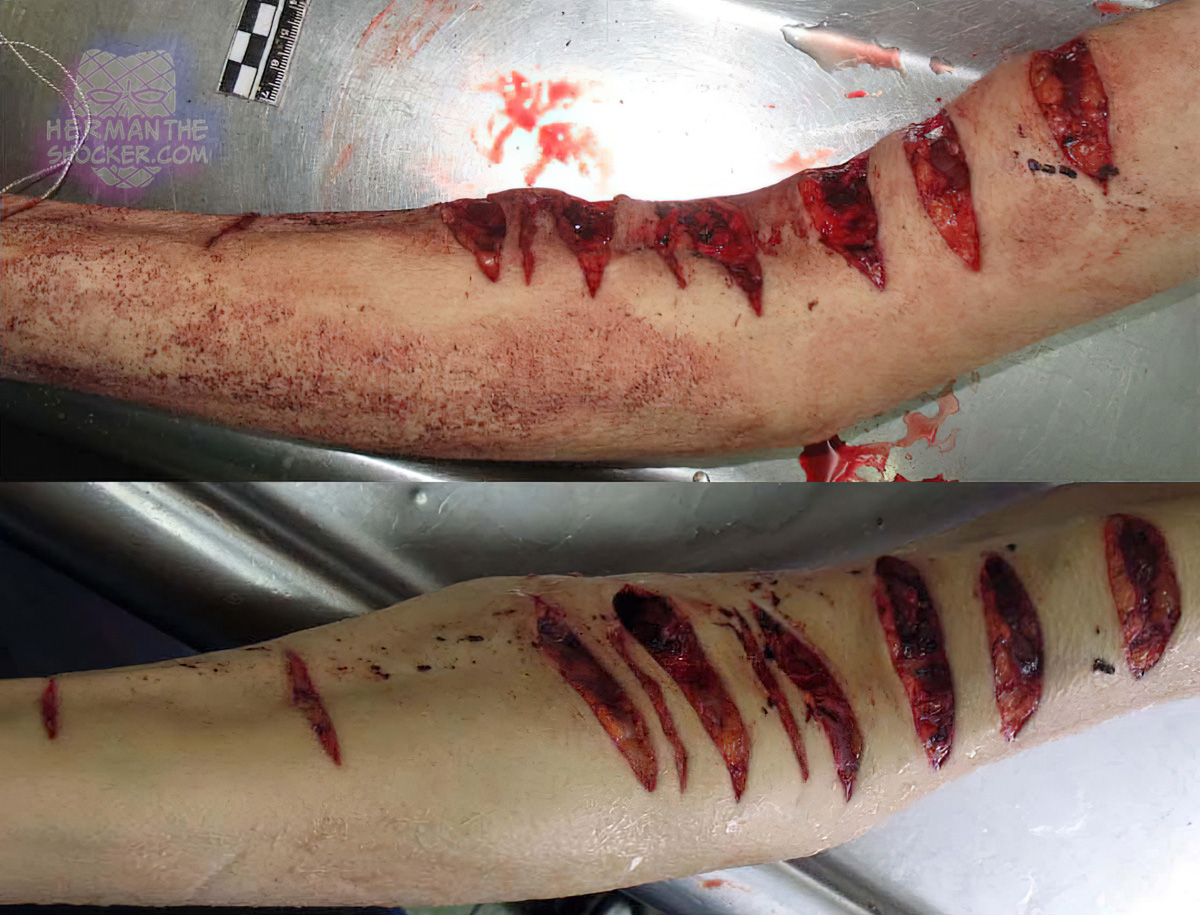 Fig4.3 Deep wounds in the arms. This individual committed suicide by cutting deep wounds into his arms and bled out. No further info. - - - Case 5 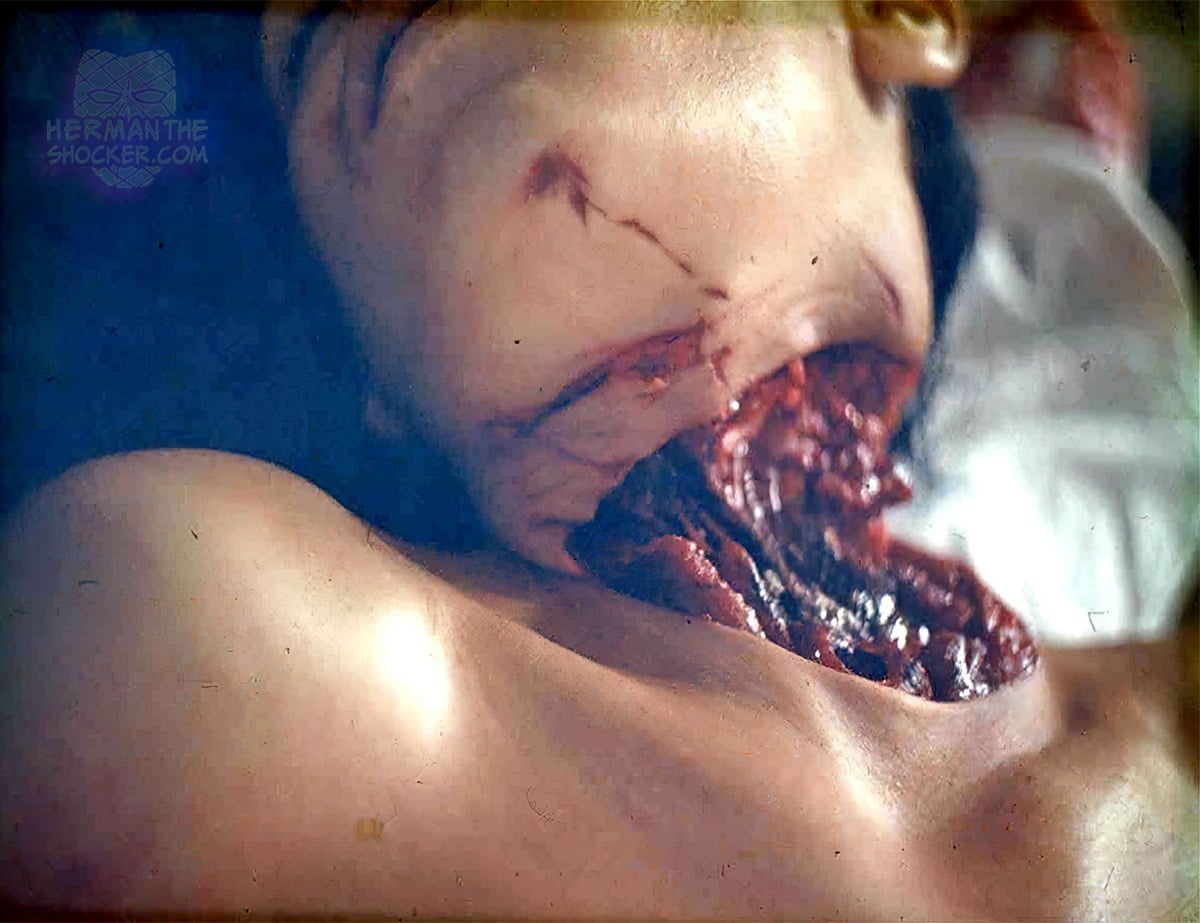 Fig5.1 Near decapitation. This individual was nearly decapitated, no more info. - - - Case 6 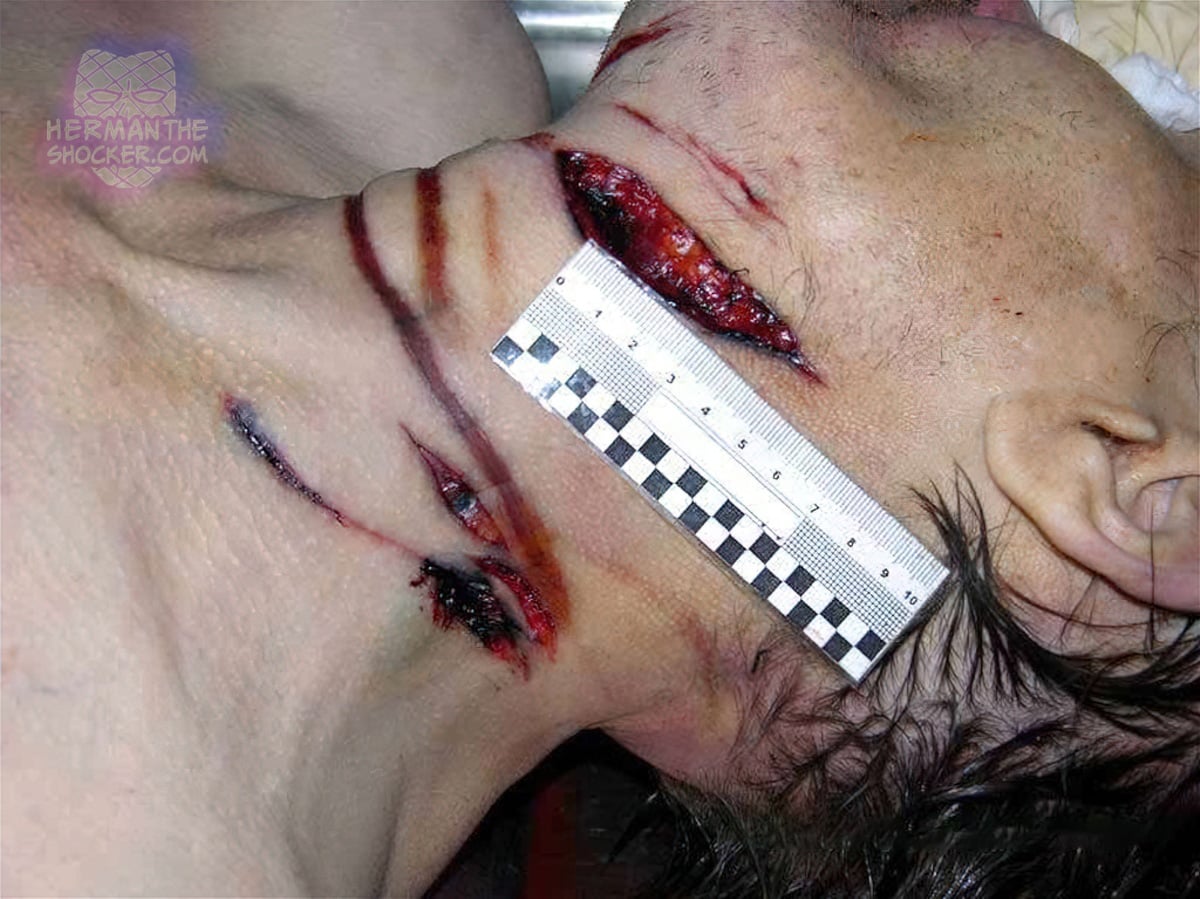 Fig6.1 Cut throat and abrasions. This man has cut throat and abrasions on his neck. No further info. Cut throat is not the commonly preferred method for committing suicide. Homicidal cut throat injuries are more commonly found in others studies. The most important task for forensic expert is to distinguish between suicidal and homicidal cut throat injuries. Therefore in crime scene investigation, the deceased's medical history as well as all autopsy and toxicological findings must be considered with a skeptical approach before being able to establish the manner of death. - - - Case 7 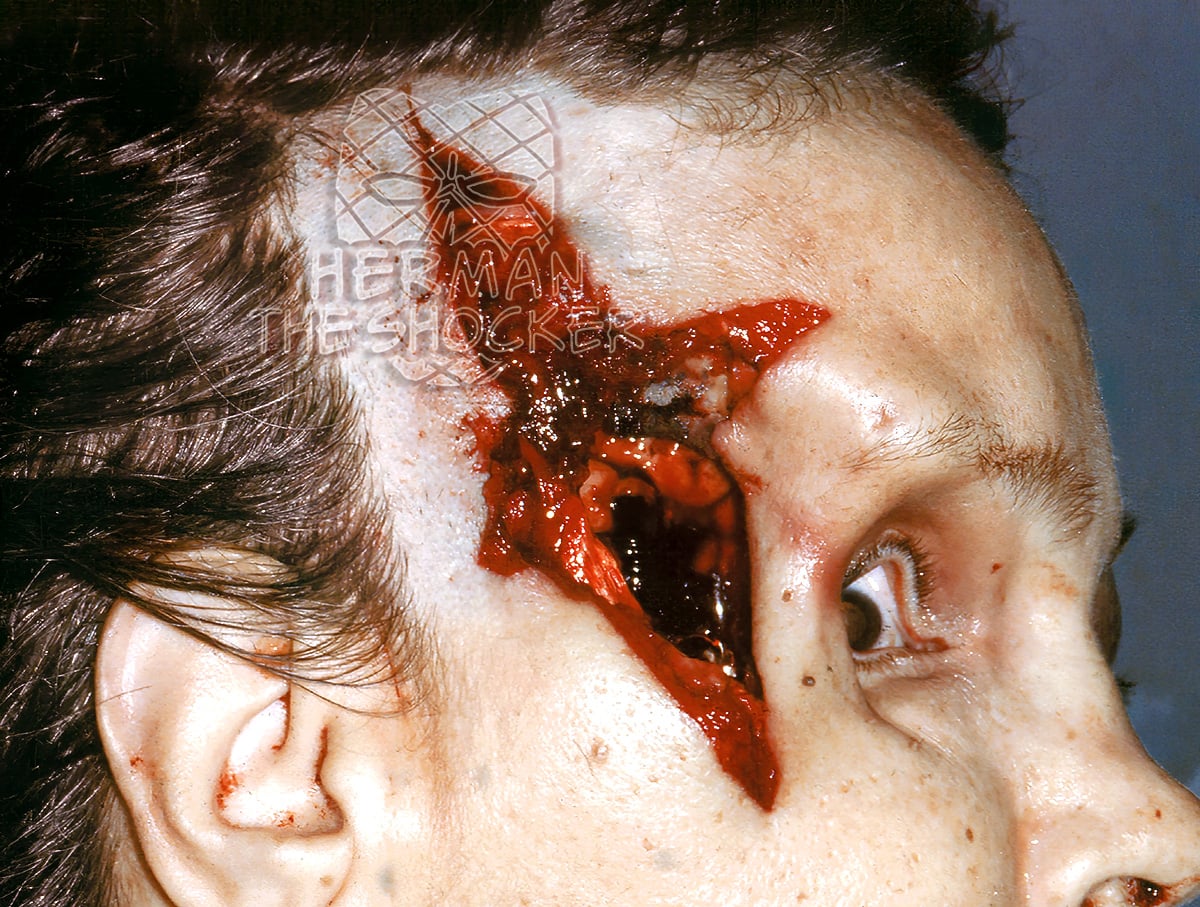 Fig7.1 This woman has a contact gunshot wound of her right temple. Tears – a splitting of scalp tissue due to many causes, including crush injuries, fall from height and expanding gas from a contact gunshot wound. This 52-year-old woman has a contact gunshot wound of her right temple. Note how the scalp is split by tears radiating from a central region of the wound where the end of the muzzle of the gun was pressed tightly against the skin. When a gun is fired, a cloud of hot gas is expressed from the end of the muzzle along with the projectile. In a contact gunshot wound of the head, these gases are forced between the scalp and the cranial bones and build up pressure along its path. The pressure is eventually released as the scalp tears. Scalp injuries (the most common of which are contusions, abrasions, and lacerations) are of particular importance because they provide information about the type, location, and severity of force applied to the head. Careful examination and documentation of the presence or absence of injury is a vital component of forensic casework. Never consider photographs to be an unnecessary expense. Even when they illustrate a paucity or complete lack of findings (pertinent negative), they have the potential to make or break a case. - Part 1 --- Part 2 --- Part 3 --- Part 4 --- Part 5 --- Part 6 --- Part 7 --- Part 8 --- Part 9 --- Part 10 --- Part 11 --- Part 12 --- Part 13 --- Part 14 --- Part 15 --- Part 16 --- Part 17 --- Part 18 --- Part 19 --- Part 20 --- Part 21 --- Part 22 --- Part 23 --- Part 24 --- Part 25 --- Part 26 --- Part 27 --- Part 28 --- Part 29 --- Part 30 --- Part 31 --- Part 32 --- Part 33 --- Part 34 --- Part 35 --- Part 36 --- Part 37 --- Part 38 --- Part 39 --- Part 40 --- Part 41 --- Part 42 --- Part 43 --- Part 44 --- Part 45 --- Part 46 --- Part 47 --- Part 48 --- Part 49 --- Part 50 --- Part 51 --- Part 52 --- Part 53 --- Part 54 --- Part 55 --- Part 56 --- Part 57 --- Part 58 --- Part 59 --- Part 60 --- Part 61 --- Part 62 --- Part 63 --- Part 64 --- Part 65 --- Part 66 --- Part 67 --- Part 68 --- Part 69 --- Part 70 --- Part 71 --- Part 72 --- Part 73 --- Part 74 --- Part 75 --- Part 76 --- Part 77 - This post is for educational purposes only and is nonprofit. Under Section 107 of the US Copyright Act of 1976; Allowance is made for "Fair Use" for purposes such as criticism, comment, news reporting, teaching, scholarship, and research. OP is not a medical expert. No copyright infringement intended. This post does not encourage or glorify violence/harassment. Images might have been upscaled and enhanced. Text might have been shortened and simplified/reorganized for online view.
__________________ ⭐️ hermantheshocker.com ⭐️ |
|
#2
●
09-09-2023, 01:24 PM
|
 ♚ Legacy Gold Member ♚ Poster Rank:199 Female Join Date: Nov 2009 Posts: 7,749 7,749Posts 11,993Thanked 709Quoted 5Mentioned 0Contrib. |
|
Re: The Shocker's Mix 78
Thanks Herman. Don’t know which way to choose my way out!   Great set and info. |
|
#3
●
09-09-2023, 09:17 PM
|
 ♚ Legacy Gold Member ♚ Poster Rank:122 Happy Happy Happy Join Date: Dec 2009 Posts: 13,383 13,383Posts 25,651Thanked 4,367Quoted 23Mentioned 0Contrib. |
|
Re: The Shocker's Mix 78
These posts are the best Forensic pathology is awesome A career I will never obtain :( |
|
#7
●
09-09-2023, 10:42 PM
|
 ★ Legacy Member ★ Poster Rank:252 So many choices now Join Date: Jul 2015 Posts: 5,542 5,542Posts 19,786Thanked 2,120Quoted 15Mentioned 0Contrib. |
|
Re: The Shocker's Mix 78
Another solid set, Herm! Figures 1.1 and 1.2 are especially gnarly. Figure 7.1 - What the fuck you lookin' at? The final side-eye. |