|
#1
●
01-25-2024, 12:59 PM
|
 ♚ Legacy Gold Member ♚ Poster Rank:914 Join Date: Jul 2020 Posts: 820
Contributions: 13
820Posts 27,649Thanked 173Quoted 13Mentioned 13Contrib. |
|
The Shocker's Mix 86
Some of the stuff I work on doesn't make the cut so I thought about gathering them up in a single post. So basically it's images I have little or no info about or I've decided that they don't get their own thread, for example, because of low image/content quality, lack of backstory or additional info/knowledge, possibly uninteresting, only one image but not very special. I still do the usual image work including upscaling and color correction as needed, as I prefer to have my content high quality and educational. - - - Case 1 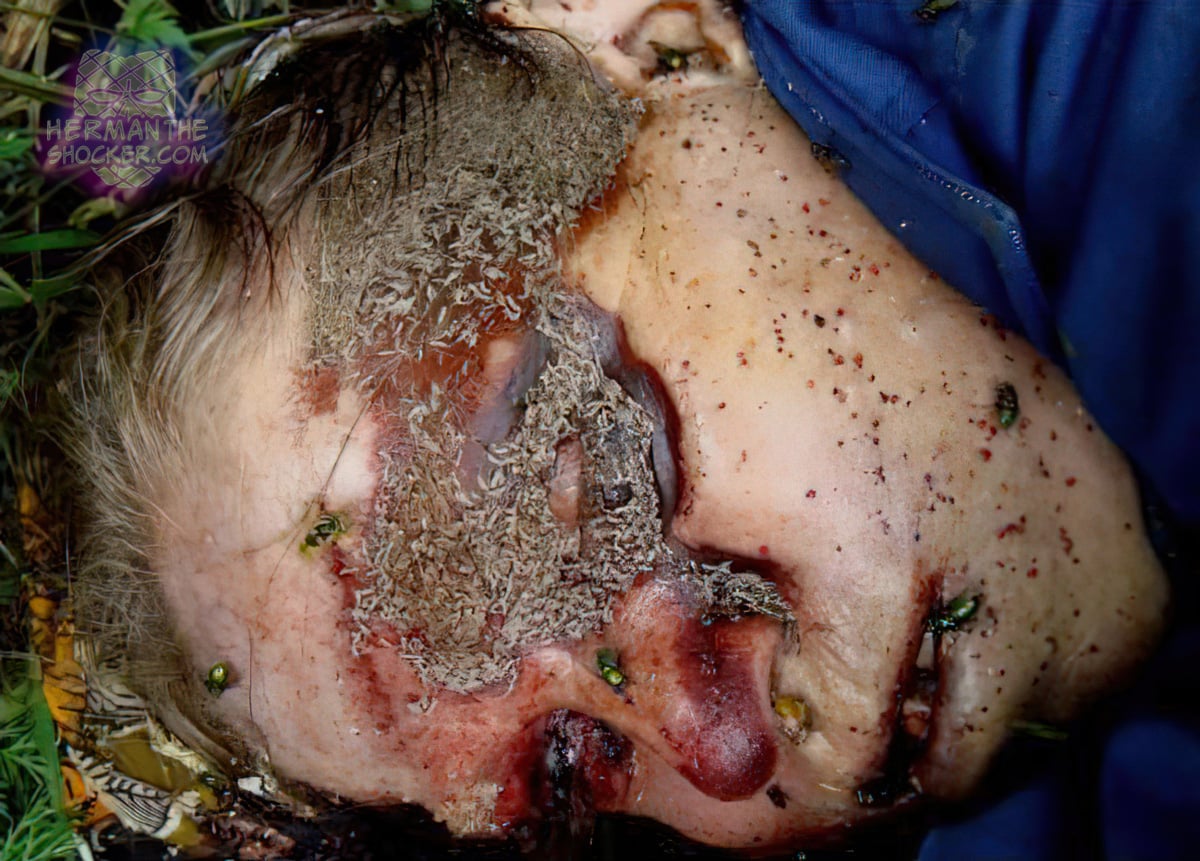 Fig1.1 Maggots on face of deceased person. Maggots cause most of the body's decomposition because the maggot will do the majority of the eating. Maggots have powerful proteolytic enzymes that aid the dissolution of tissues and facilitate penetration. The maggots are voracious and energetic, first exploring the natural passages, such as mouth and nostrils, then burrowing into the tissues. They secrete digestive fluids with proteolytic enzymes that help soften the tissues, burrowing beneath the skin, and making tunnels and sinuses that hasten putrefaction by admitting air and access to external micro-organisms. Successive waves of eggs are laid, producing new generations of maggots. Eventually, loss of tissue and drying makes the host cadaver unattractive to egg-laying insects, and the later stages of decomposition become free from maggots. - - - Case 2 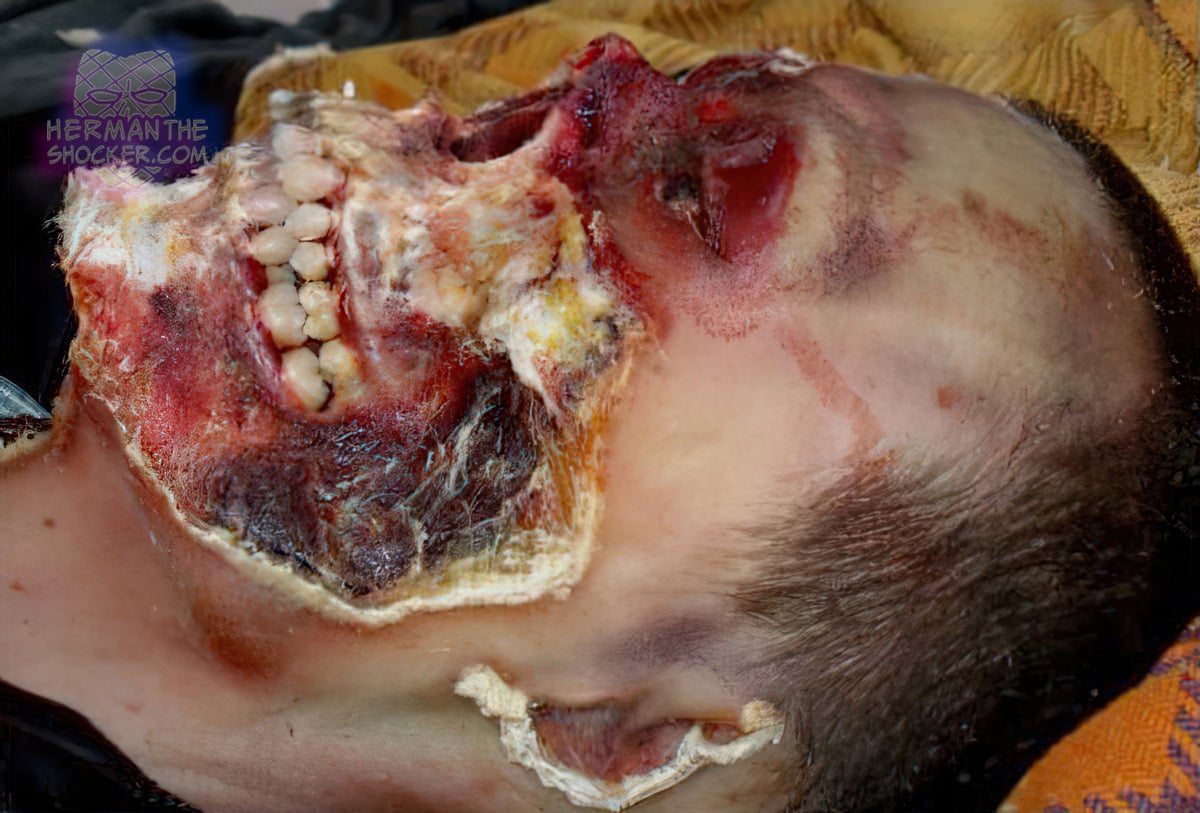 Fig2.1 Postmortem animal scavenging by rodents. 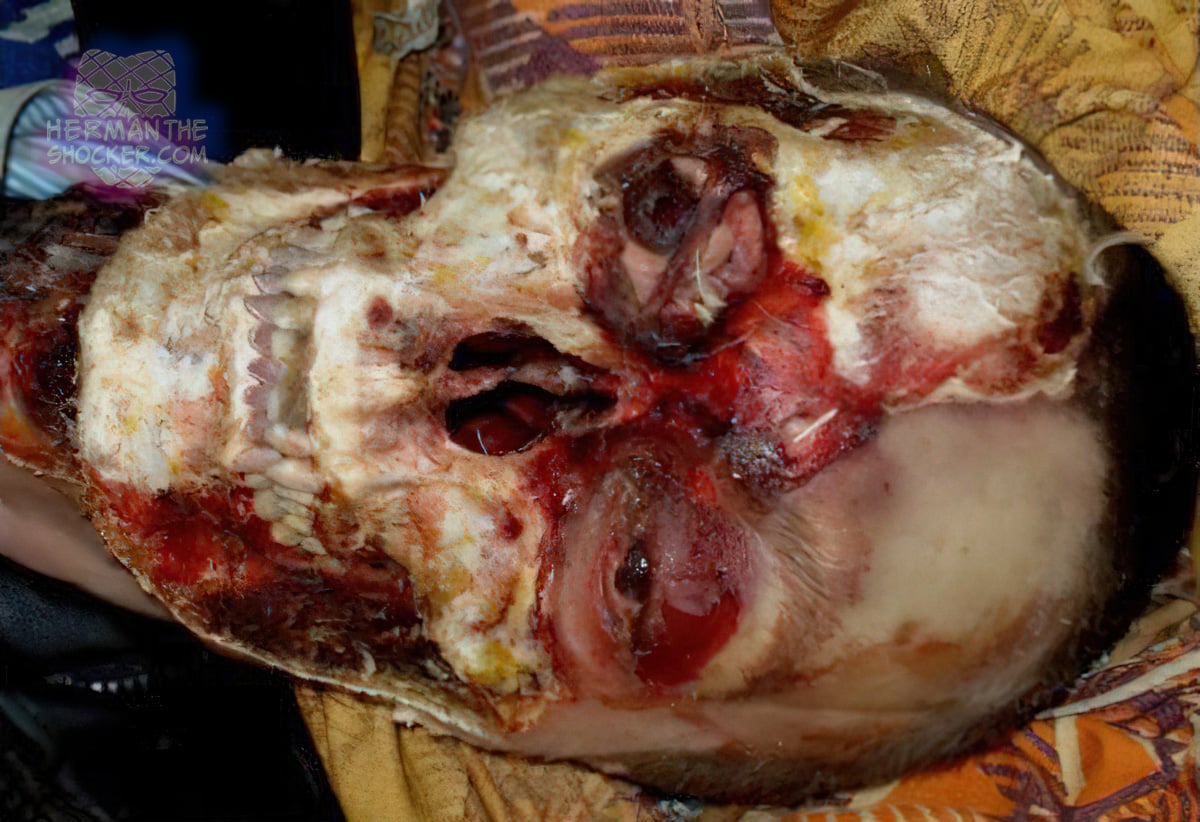 Fig2.2 Animal scavenging is routinely encountered in forensic pathology. The phenomenon of postmortem animal interference with human bodies or their remains is a substantial part of the taphonomic processes a body undergoes after death and animal depredation occurring after death is routinely encountered in forensic pathology. Postmortem injuries can be inflicted by all kinds of animals, irrespective of their size or environmental origin, whether from land, sea, or air. The discrimination between antemortem injury versus postmortem artifacts generally presents no difficulties because of the total absence of hemorrhages and reddening in the tissue adjacent to the wound margins and the lack of any vital reaction under the microscope. - - - Case 3 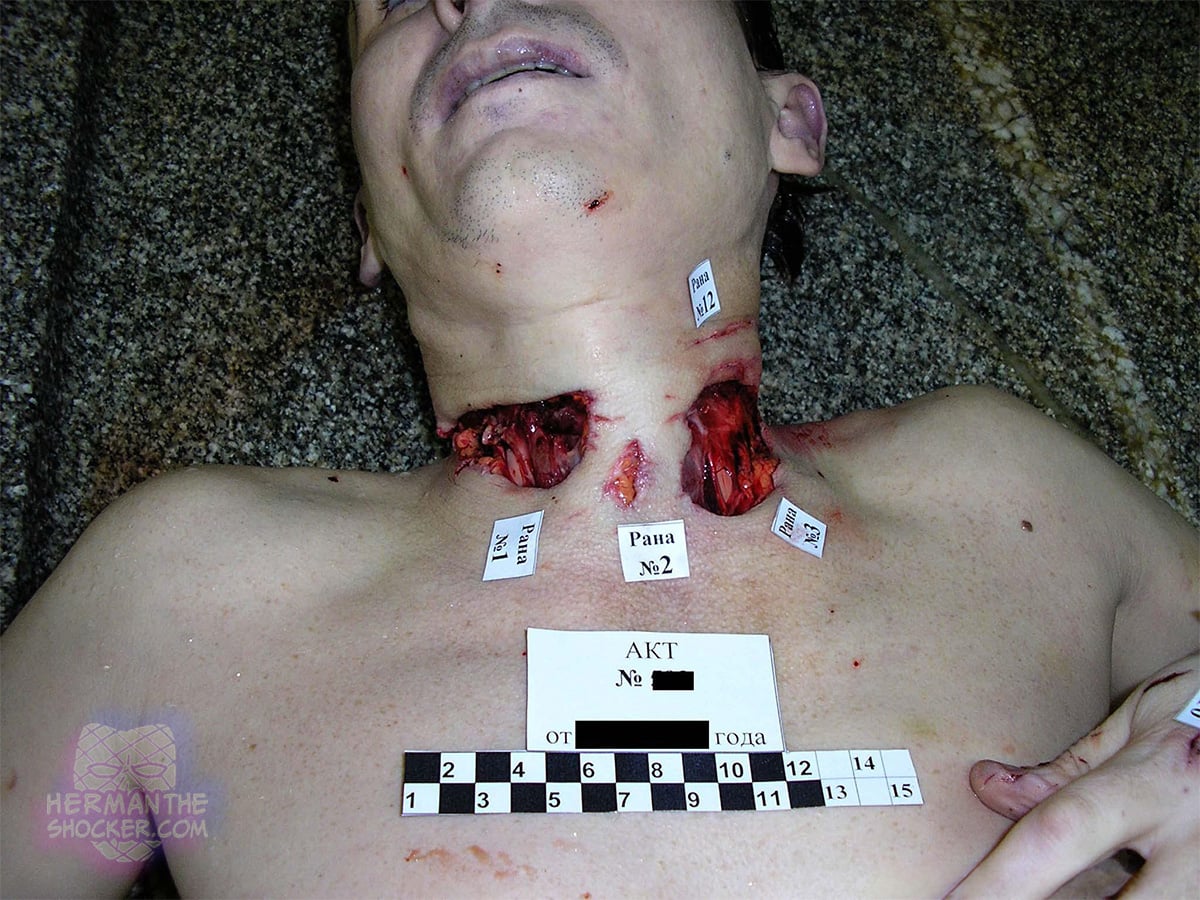 Fig3.1 Suicide with a knife. Russia. This individual committed suicide by cutting his neck with a knife, no further info. Cut throat injuries can be either suicidal or homicidal. These are well recognized methods of homicide and are less commonly used in suicides and are very rarely accidental. Suicide is one of the leading causes of death in the world. The incidence and pattern of suicide vary from country to country. Cultural, religious and social value plays a vital role. Psychiatric illness, psychological stress and poverty are some of the associated factors of suicidal cut throat injury. - - - Case 4 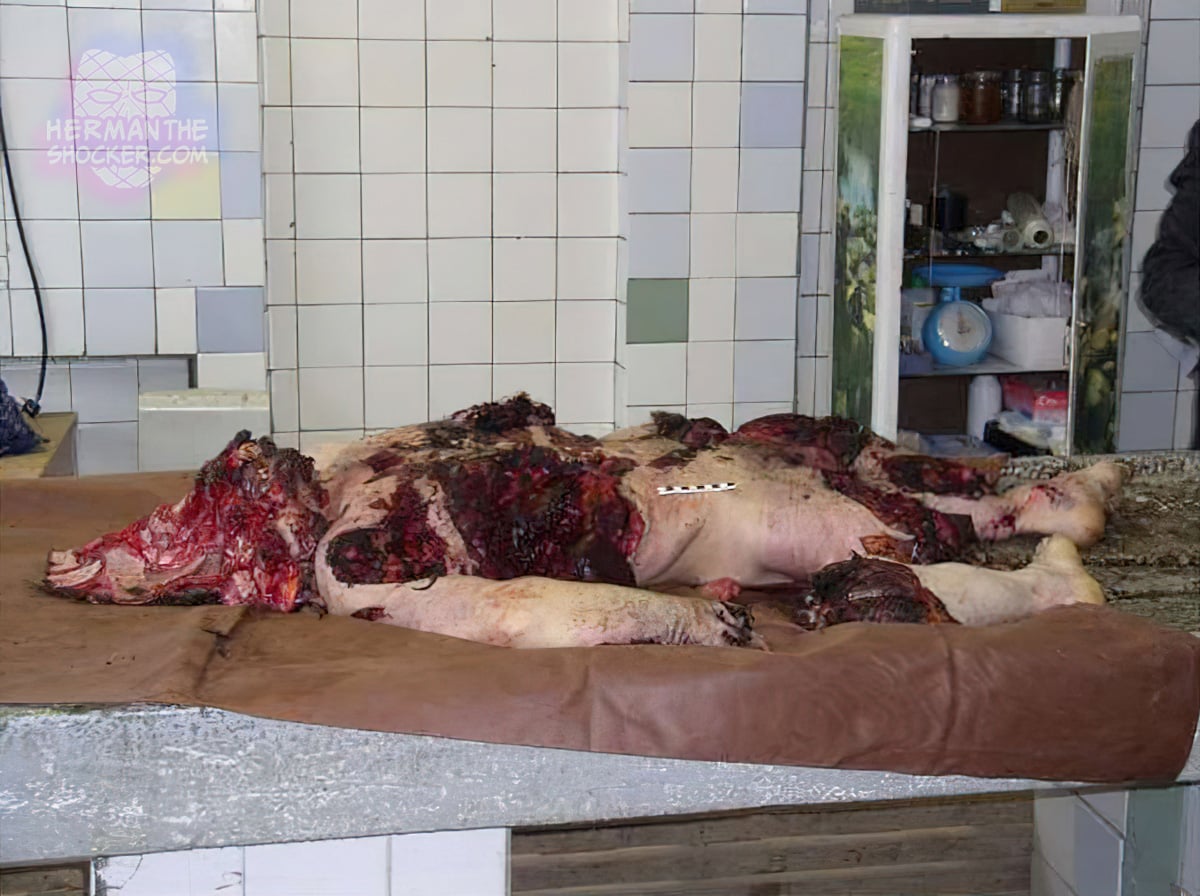 Fig4.1 Mangled body after shell explosion. Mangled body after shell explosion, no further info. A shell, in a military context, is a projectile whose payload contains an explosive, incendiary, or other chemical filling. Originally it was called a bombshell, but "shell" has come to be unambiguous in a military context. Modern usage sometimes includes large solid kinetic projectiles, which are more properly termed shot. Solid shot may contain a pyrotechnic compound if a tracer or spotting charge is used. - - - Case 5  Fig5.1 Bloated decomposing body. Note the bloating and protrusion of the tongue on this decomposing individual, all related to the decomposition process. No further info about this case. Decomposition, or putrefaction, is a combination of two processes: autolysis and bacterial action. Autolysis is the breakdown of cells and organs through an aseptic chemical process caused by intracellular enzymes. Because it is a chemical process, it is accelerated by heat, slowed by cold, and stopped by freezing. Bacterial action results in the conversion of soft tissues in the body to liquids and gases. The chemicals produced as a result of putrefaction are cadaverine and putrescine, hydrogen sulfide and other sulfides, which generate a horrible smell. - - - Case 6 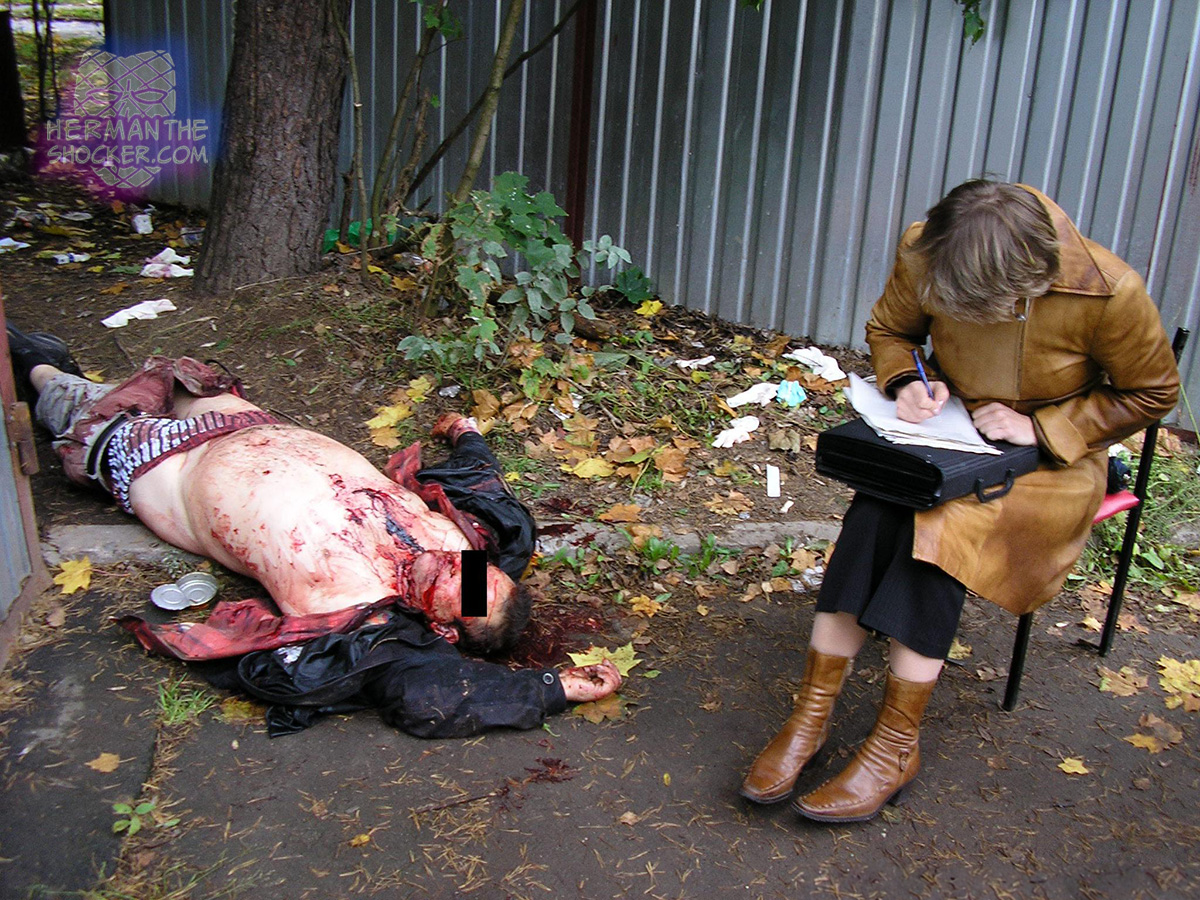 Fig6.1 Man attacked and stabbed to death. 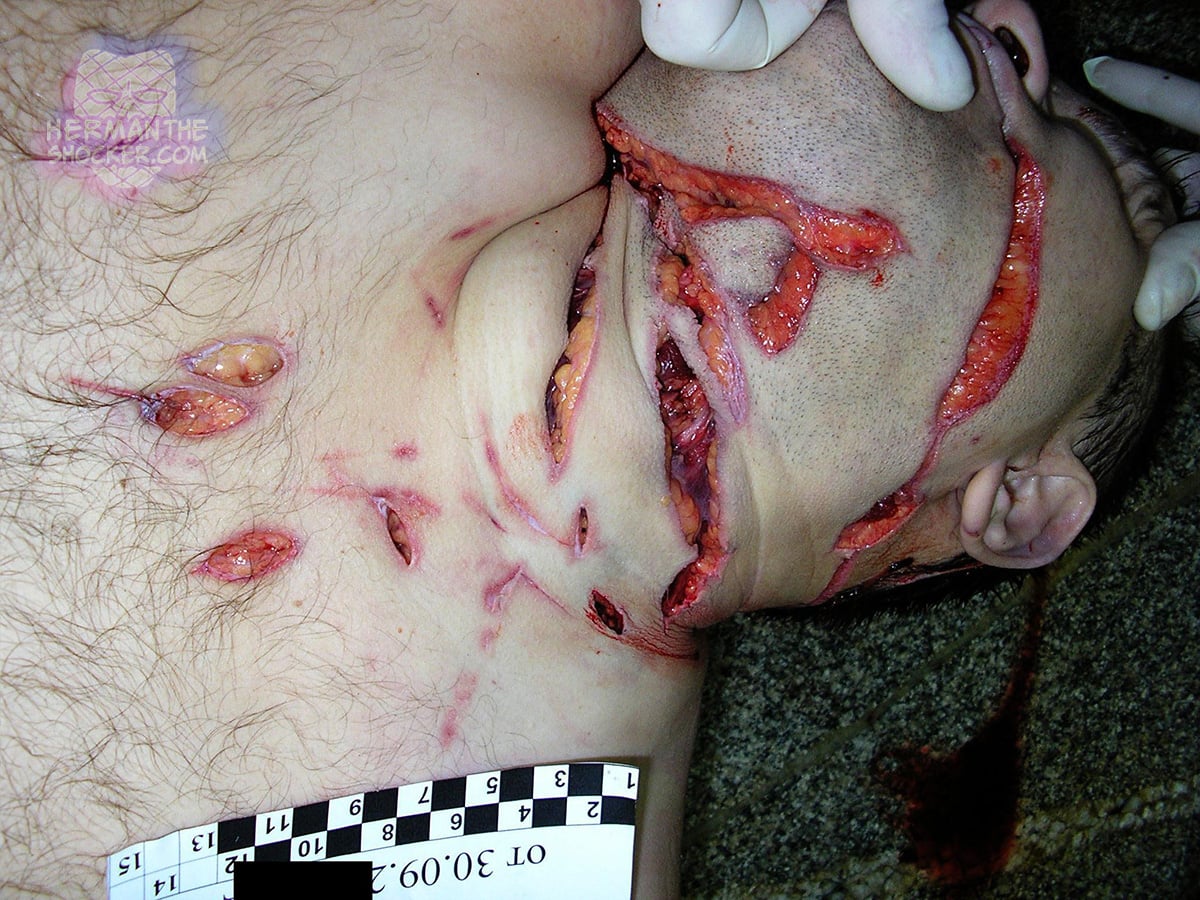 Fig6.2 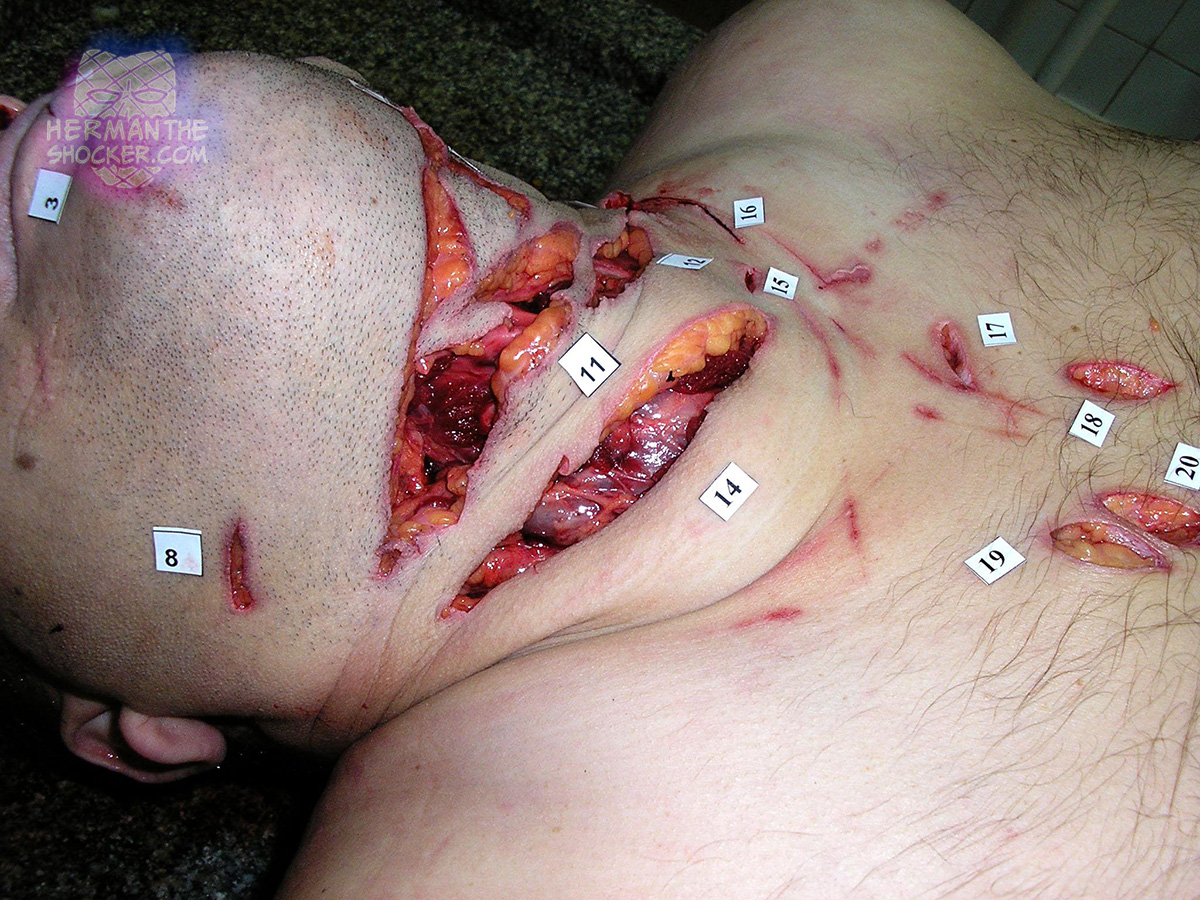 Fig6.3 Russia. This man was attacked and stabbed to death after refusing to hand over the keys to his car to a thief, no further info. - - - Case 7  Fig7.1 The lust murder of 20-year-old Keri Lynn. 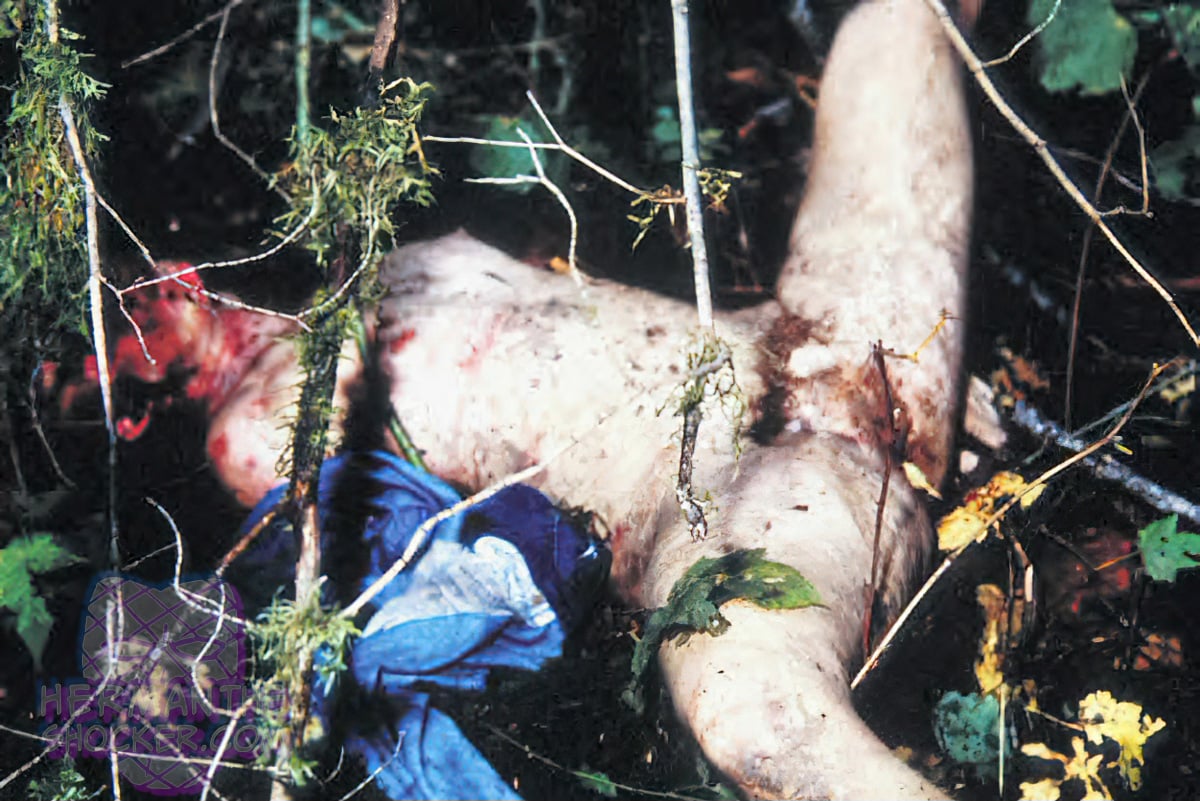 Fig7.2 The offender had jammed a stick into the victim’s vagina. October 1998 - Bellingham, Washington, US. 20-year-old Keri Lynn was visiting relatives in Bellingham, Washington, and she had gone on a day outing to a city park near Mt. Baker. However, she never came home. Her friends described Keri Lynn as an innocent, trusting, and carefree young woman who was “free-spirited.” She had never been to the West Coast and was considering attending college the next semester at Western Washington University. On the evening of October 4, Keri’s battered and nude body was found by two boys who were riding their bikes on a trail in a remote section of Whatcom County near Mt. Baker. The victim had been posed with her legs spread open and held open with a vine. There was evidence of blunt force trauma to her face and manual strangulation. However, the strangulation did not cause her death. She had received blunt force trauma to the face and head from a pair of lopping shears used by gardeners. The police recovered the blood-stained lopping shears at the scene. There was evidence that the killer had spent time with the victim after she was killed. There were also several beer cans and field-stripped cigarette butts found at the crime scene. Full case report here - Part 1 --- Part 2 --- Part 3 --- Part 4 --- Part 5 --- Part 6 --- Part 7 --- Part 8 --- Part 9 --- Part 10 --- Part 11 --- Part 12 --- Part 13 --- Part 14 --- Part 15 --- Part 16 --- Part 17 --- Part 18 --- Part 19 --- Part 20 --- Part 21 --- Part 22 --- Part 23 --- Part 24 --- Part 25 --- Part 26 --- Part 27 --- Part 28 --- Part 29 --- Part 30 --- Part 31 --- Part 32 --- Part 33 --- Part 34 --- Part 35 --- Part 36 --- Part 37 --- Part 38 --- Part 39 --- Part 40 --- Part 41 --- Part 42 --- Part 43 --- Part 44 --- Part 45 --- Part 46 --- Part 47 --- Part 48 --- Part 49 --- Part 50 --- Part 51 --- Part 52 --- Part 53 --- Part 54 --- Part 55 --- Part 56 --- Part 57 --- Part 58 --- Part 59 --- Part 60 --- Part 61 --- Part 62 --- Part 63 --- Part 64 --- Part 65 --- Part 66 --- Part 67 --- Part 68 --- Part 69 --- Part 70 --- Part 71 --- Part 72 --- Part 73 --- Part 74 --- Part 75 --- Part 76 --- Part 77 --- Part 78 --- Part 79 --- Part 80 --- Part 81 --- Part 82 --- Part 83 --- Part 84 --- Part 85 - This post is for educational purposes only and is nonprofit. Under Section 107 of the US Copyright Act of 1976; Allowance is made for "Fair Use" for purposes such as criticism, comment, news reporting, teaching, scholarship, and research. OP is not a medical expert. No copyright infringement intended. This post does not encourage or glorify violence/harassment. Images might have been upscaled and enhanced. Text might have been shortened and simplified/reorganized for online view.
__________________ ⭐️ hermantheshocker.com ⭐️ |
|
#2
●
01-25-2024, 01:56 PM
|
 ★ Legacy Member ★ Poster Rank:252 So many choices now Join Date: Jul 2015 Posts: 5,542 5,542Posts 19,786Thanked 2,120Quoted 15Mentioned 0Contrib. |
|
Re: The Shocker's Mix 86
Top notch content, Herman. Thank you!
|
|
#3
●
01-25-2024, 07:48 PM
|
 My Rank: STAFF SERGEANT Poster Rank:876 Male Join Date: Jun 2011 Posts: 864 864Posts 2,301Thanked 227Quoted 0Mentioned 0Contrib. |
|
Re: The Shocker's Mix 86
A brutal but very interesting collection of photos and thorough explanations in each case (which I enjoy but have no idea what you are talking about half the time due to technical jargon). Thank you for the consistently interesting additions to the page!!
|
|
#5
●
01-26-2024, 01:43 AM
|
 My Rank: FIRST SERGEANT Poster Rank:399 Join Date: Apr 2011 Posts: 3,046 3,046Posts 5,763Thanked 276Quoted 2Mentioned 0Contrib. |
|
Re: The Shocker's Mix 86
You just keep on Shockin'  I remember the Keri Lynn post, what a sickening yet interestingly presented case. I feel such an edgelord saying this but case #6 could be summarized in one phrase: "Draw me like one of your French girls." I remember the Keri Lynn post, what a sickening yet interestingly presented case. I feel such an edgelord saying this but case #6 could be summarized in one phrase: "Draw me like one of your French girls."  |
|
#6
●
01-26-2024, 11:28 AM
|
| My Rank: SERGEANT Poster Rank:976 Join Date: Jul 2023 Posts: 732 732Posts 2,298Thanked 107Quoted 0Mentioned 0Contrib. |
|
Re: The Shocker's Mix 86
i believe case 5 died while jerking off...  and case 4! that's intense!!!  another great set. |
|
#7
●
01-26-2024, 01:55 PM
|
 ♚ Legacy Gold Member ♚ Poster Rank:199 Female Join Date: Nov 2009 Posts: 7,749 7,749Posts 11,993Thanked 709Quoted 5Mentioned 0Contrib. |
|
Re: The Shocker's Mix 86
Great post. Thank you. Poor Keri. Sickening.
|