|
#1
●
03-17-2023, 08:53 AM
|
 ♚ Legacy Gold Member ♚ Poster Rank:914 Join Date: Jul 2020 Posts: 820
Contributions: 13
820Posts 27,649Thanked 173Quoted 13Mentioned 13Contrib. |
|
The Shocker's Mix 57
Some of the stuff I work on doesn't make the cut so I thought about gathering them up in a single post. So basically it's images I have little or no info about or I've decided that they don't get their own thread, for example, because of low image/content quality, lack of backstory or additional info/knowledge, possibly uninteresting, only one image but not very special. I still do the usual image work including upscaling and color correction as needed, as I prefer to have my content high quality and educational. - - - Case 1 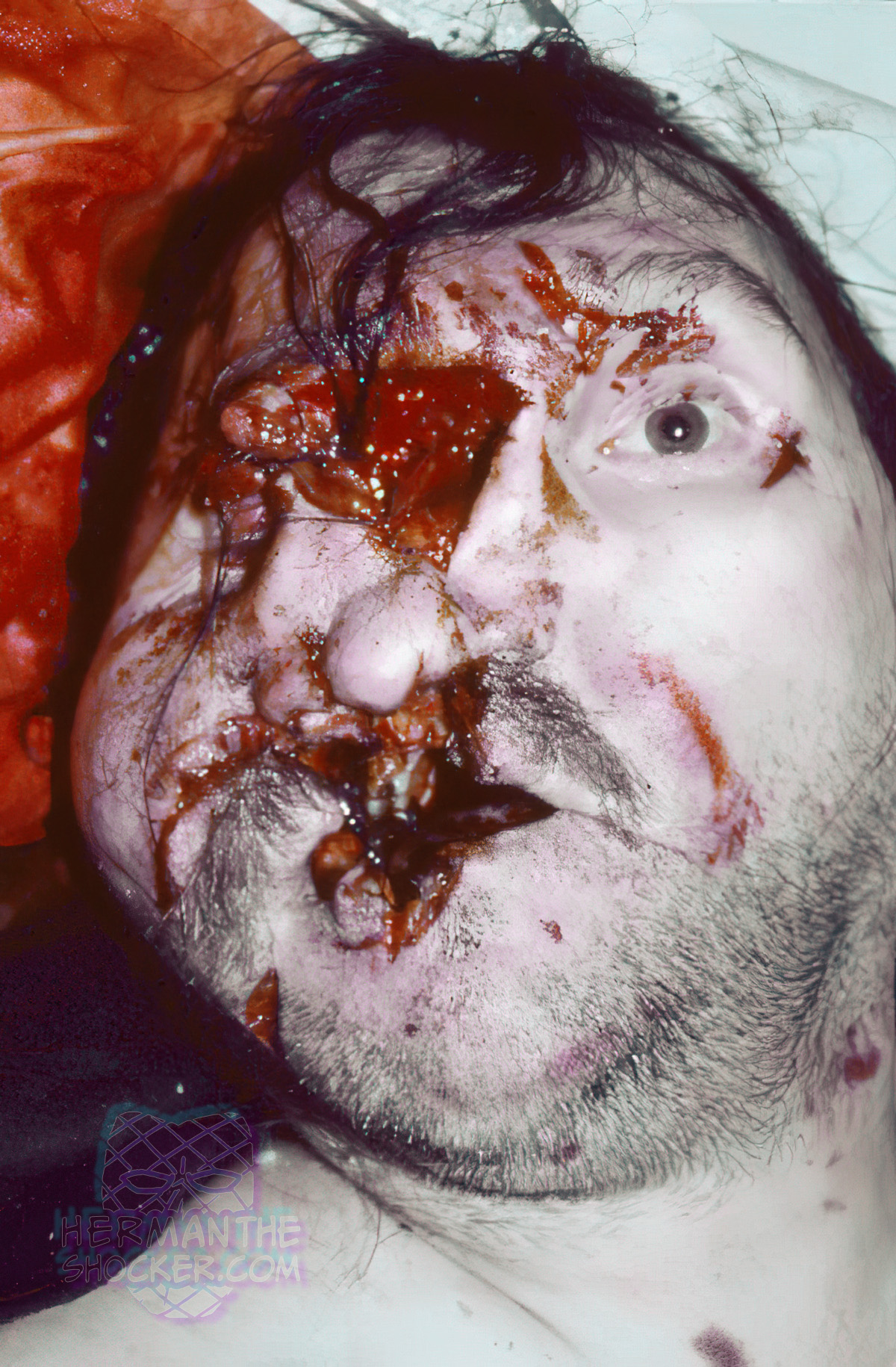 Fig1.1 Suicide by shotgun. Suicide by shotgun: entrance wound in the mouth and facial major lesions. It has been clearly established that firearm availability is linked to high mortality by suicide among individuals who had bought firearms in the recent past. A clear example is given by the fact that, among individuals who died from firearm injuries in the USA in 1997, a total of 54% died by suicide. In the head, neck, and limbs, shotgun exit wounds can be ragged and very large, with extensive tissue damage. In a suicide where the gun has been placed in the mouth, there will be significant disruption of the head, and brain may be expelled, the so-called “burst head” effect. - - - Case 2 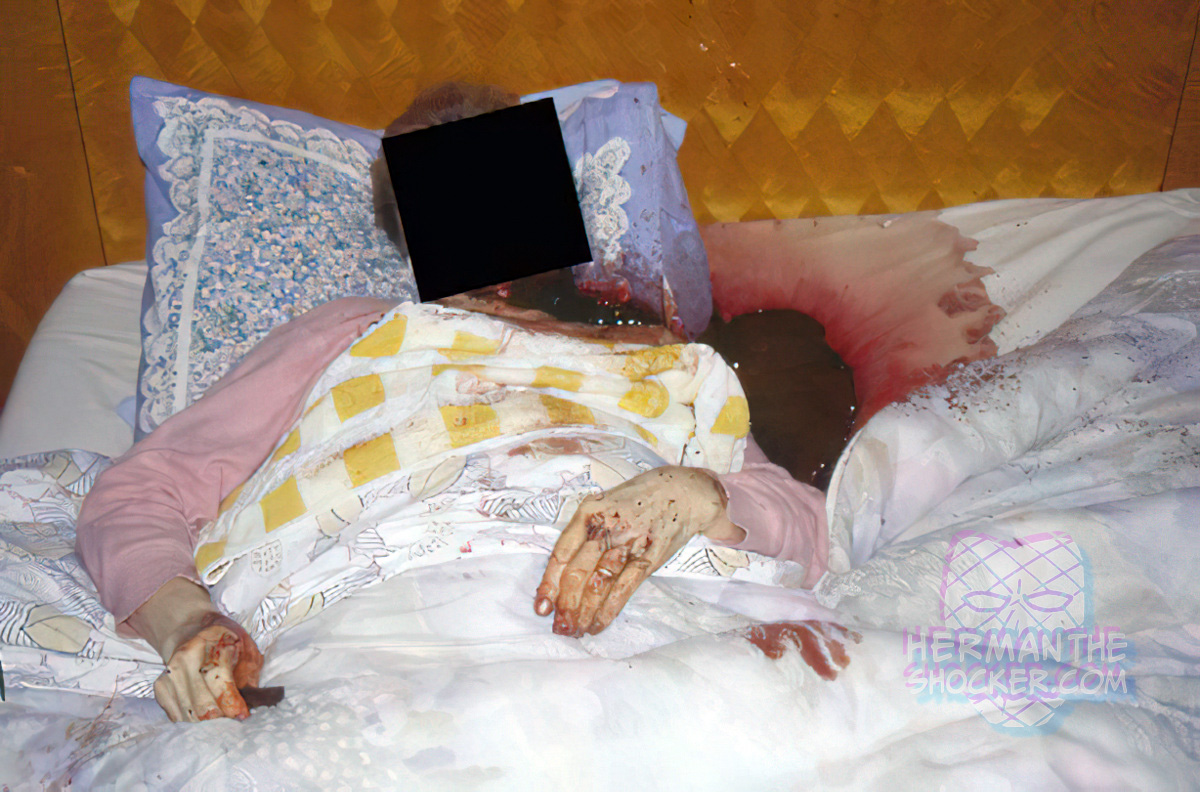 Fig2.1 Self-stabbing of the throat in an elderly woman. Whether the death is accidental, suicidal, or homicidal is one of the main questions asked of the forensic physician at the death scene. Some criteria may help to distinguish between these three types of death. Suicidal stabbings are often observed in people who pull aside the clothing first, a feature which is evidence of the motive. Many suicidal stabbings take place in bathrooms. Obviously, the death scene is often prepared and in order. Suicidal stab wounds take place on wrists and arms or on the inner surface of the throat, sometimes on a vascular access (hemodialysis). Stab wounds in suicide are repeated, usually parallel, and close together. Tentative or trial incisions are next to the deeper ones, reaching a major vessel or larynx. Abdominal suicidal stab wounds (hara-kiri) are not usual in occidental countries. In contrast, homicidal stab wounds have no particular character, they are often associated with a violent crime scene, and only close together when the victim has been injured by many knife wounds before finally dying under the killer’s knife. - - - Case 3 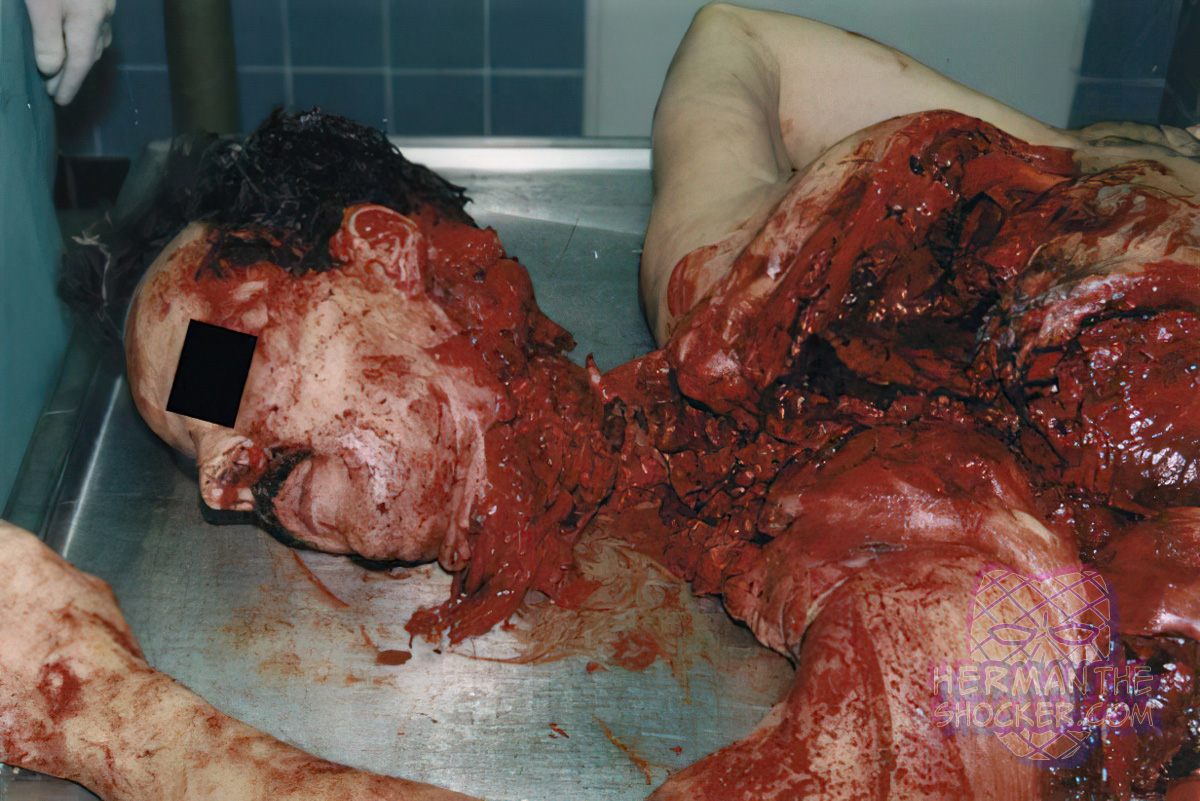 Fig3.1 Explosive-induced trauma. Explosive-induced trauma of the upper posterior part of the trunk with decapitation and gaping lacerations of the superior parts of both thoracic cavities in a suicidal-homicidal bombing victim who was located in the immediate vicinity to the epicenter of the explosive device consisting of TNT. - - - Case 4 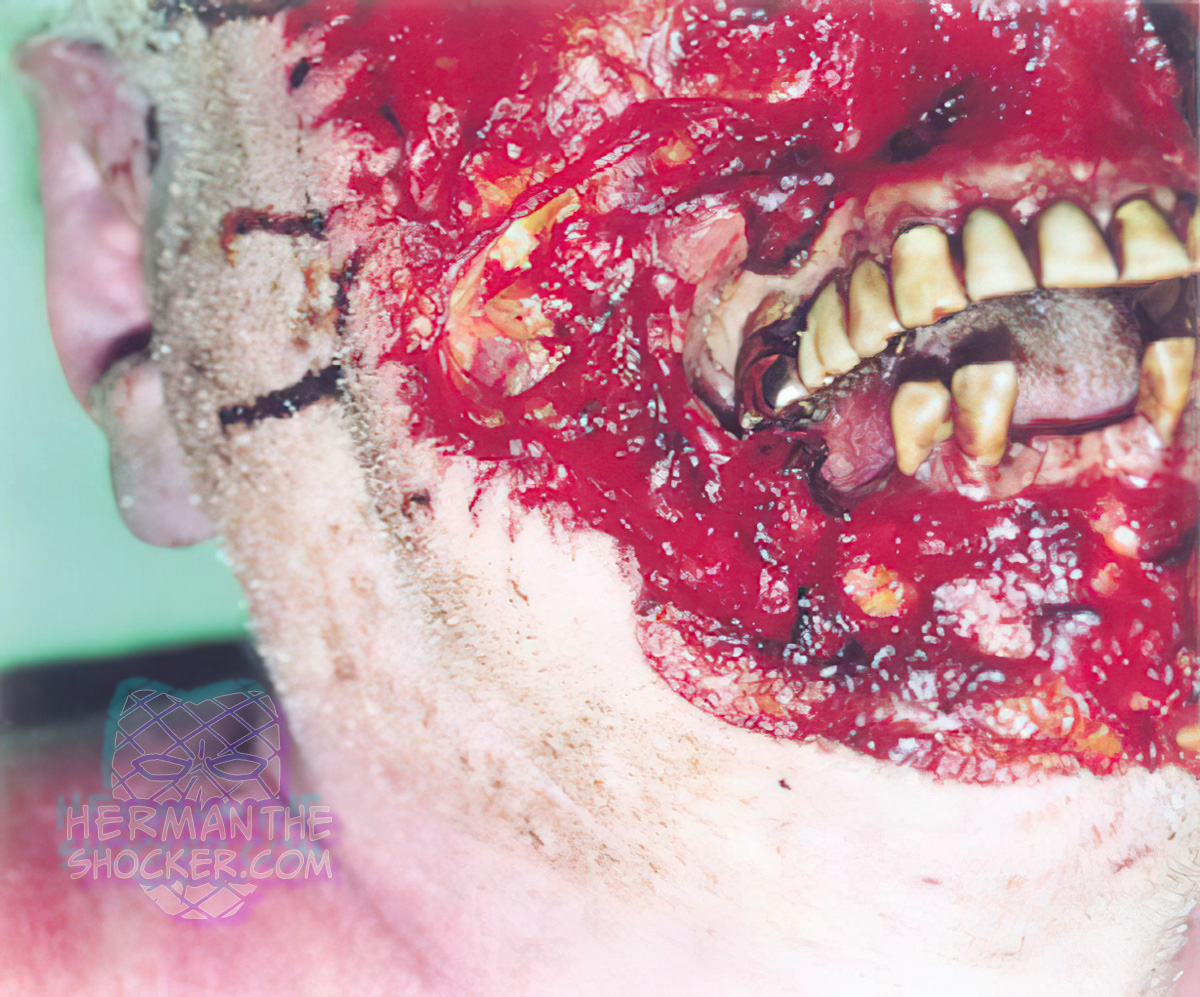 Fig4.1 Postmortem rodent scavenging. Irregular and finely serrated wound margins with a series of parallel cutaneous lacerations deriving from the biting action of the upper and lower pairs of rodents. This large tissue defect in the face was caused postmortem by rats. The phenomenon of postmortem animal interference with human bodies or their remains is a substantial part of the taphonomic processes a body undergoes after death and animal depredation occurring after death is routinely encountered in forensic pathology. Postmortem injuries can be inflicted by all kinds of animals, irrespective of their size or environmental origin, whether from land, sea, or air. The discrimination between antemortem injury versus postmortem artifacts generally presents no difficulties because of the total absence of hemorrhages and reddening in the tissue adjacent to the wound margins and the lack of any vital reaction under the microscope. The most effective tissue removers are insects and rodents. Skin and soft-tissue artifacts caused by rodents may occur as early as within the first hour postmortem. In the majority of injuries inflicted postmortem by rodents, the wounds have a circular appearance and the wound margins are finely serrated, showing irregular edges. Distinct parallel series of cutaneous lacerations deriving from the biting action of the upper and lower pairs of the rodent’s incisors are diagnostic of rodent activity. - - - Case 5 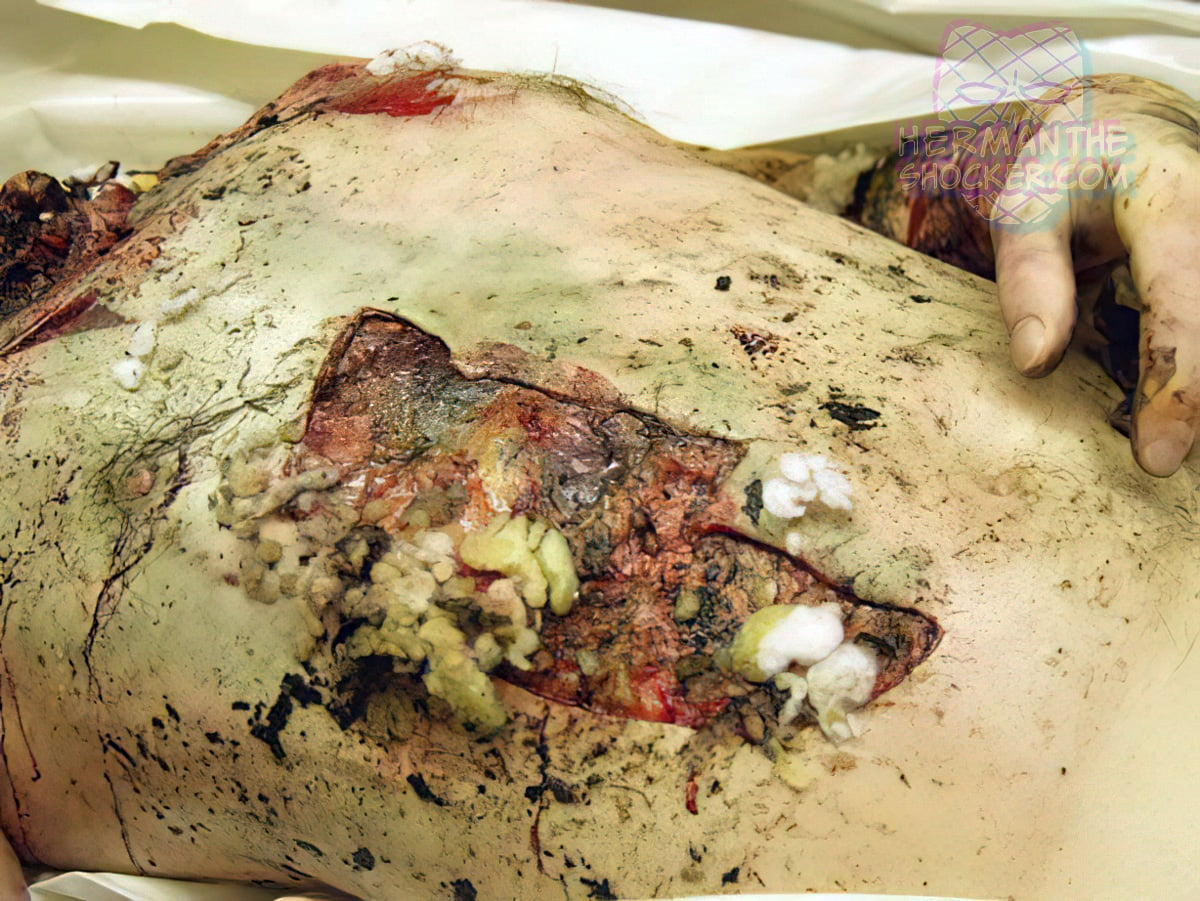 Fig5.1 Opening of the abdominal body cavity. Opening of the abdominal body cavity following the (probably accidental) explosion of a homemade pipe bomb containing black powder. Note peppering, bruising, and abrasions seen on and adjacent to the wound’s margin. Primary blast injuries Injuries directly inflicted on the human body by the sudden increase in air pressure after an explosion are referred to as primary blast injuries and involve almost exclusively gas-containing internal organs such as the lungs, middle ear, and gastrointestinal tract, the organs most vulnerable to overpressure. Primary blast injuries on the external surface of the body are: scattered dermal abrasions and contusions, gross lacerations of the skin that may be interspersed with foreign body material, mutilations or amputations of limbs, opening of body cavities, decapitation, near-total disruption of the body, or even complete body destruction. Primary blast injuries are estimated to contribute to 86% of fatal injuries in explosion victims. - - - Case 6 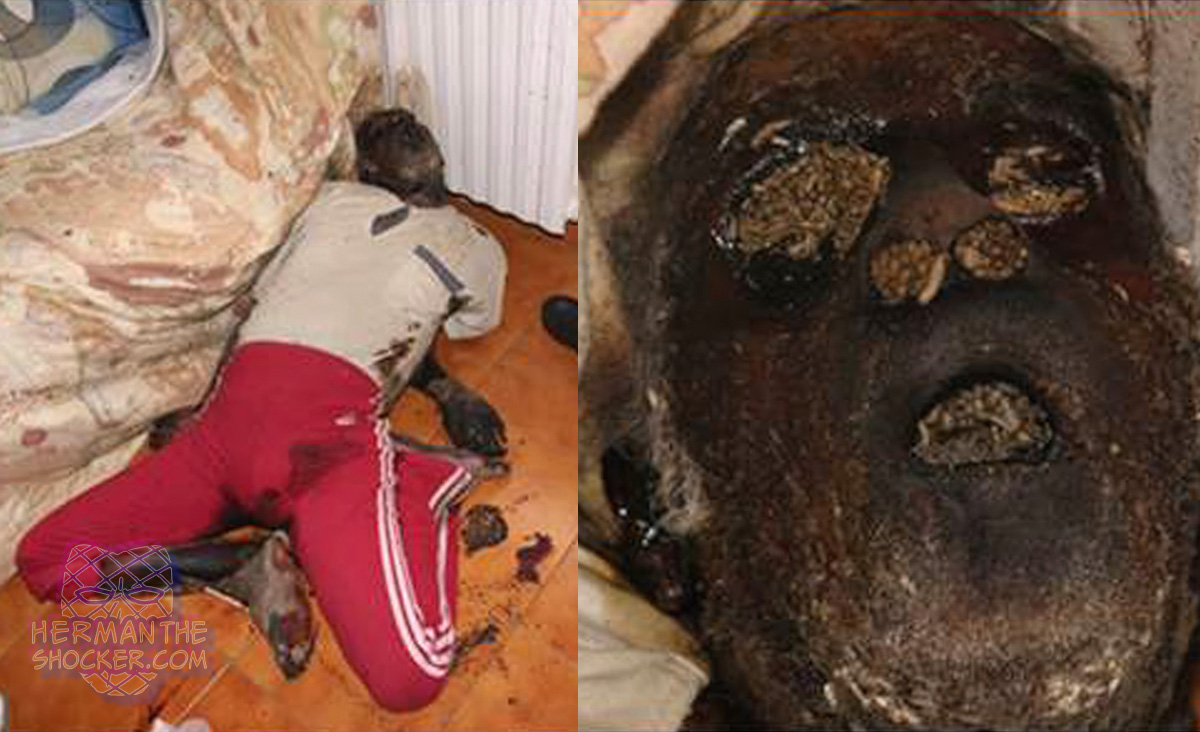 Fig6.1 Decomposed corpse discovered. On May 24, 2013, the body of a 50-year-old male was found on the floor of a room in Cosenza (southern Italy) which did not receive direct sunlight. At the time of discovery, the door was shut but two windows of the apartment were open. The temperature in the apartment when the corpse was discovered was 22.5 °C. The cadaver was found in a supine position dressed in a shirt and trousers. The feet were completely bare. Medical evidence and a toxicological analysis carried out on the cardiac blood confirmed that death was associated with methadone intake. The methadone concentration in the blood was 242 ng/ml. The body was in an advanced state of decay, with heavy maggot infestation on the face and on the entire body. - - - Case 7 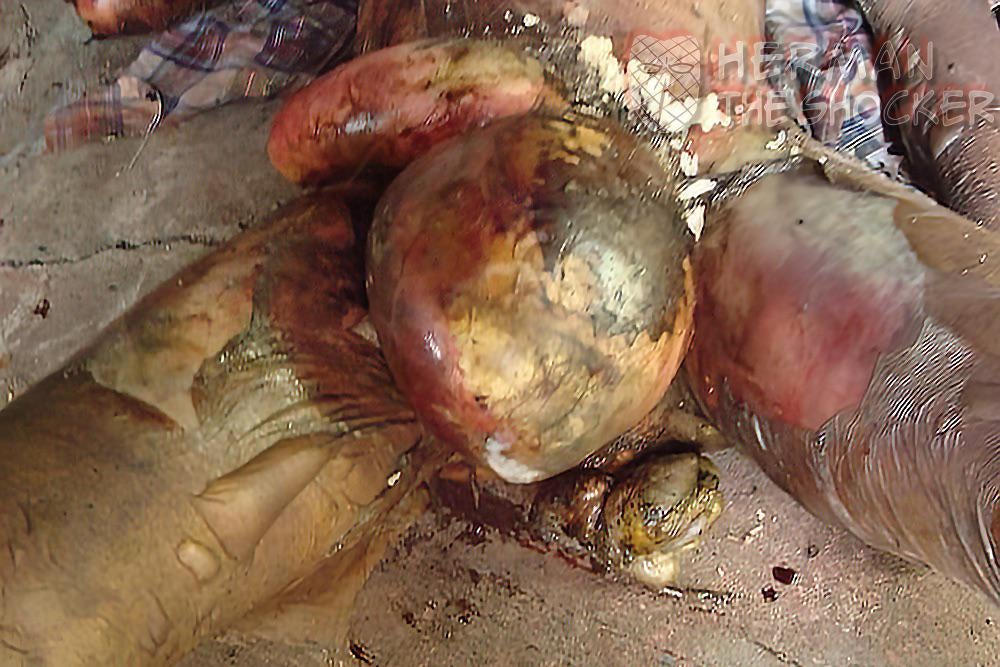 Fig7.1 Scrotal enlargement from gas formation. Skin slippage and expansion of the scrotum due to gas accumulation. There are five stages of decomposition, namely fresh, bloated, active decay, advanced decay, and skeletal stage. These stages may occur simultaneously in different parts of the same corpse, and it may be difficult for a forensic pathologist to label the state of the corpse with a single stage. The earliest external sign of putrefaction is the greenish discoloration of the skin of the anterior abdominal wall in the right iliac fossa region. In this region of the abdomen, the caecum, loaded with semi-solid intestinal content and commensal gut bacteria, lies quite superficial. This greenish discoloration of the skin results from the formation of sulfhemoglobin facilitated by the commensal intestinal bacteria that invade the tissues after death. This skin discoloration in the right iliac fossa region appears about 18 hours after death. In temperate climates, this greening may first appear 2 to 3 days after death. The ambient temperature affects the speed of onset of putrefaction and its rate of progression. In the bloated stage, body parts, including organs and soft tissues, swell due to the accumulation of putrefactive gases or other decompositional products from the putrefaction process. It usually starts in the abdomen and then slowly affects other parts, including the face, breasts, and genitals. Also, during this stage, skin changes occur, such as blisters and slippage. Skin slippage at the extremities is known as degloving. Moreover, the phenomenon of marbling is also present during this stage, where blood vessels are visible on the skin as greenish-black streaks and eventually results in skin discoloration ranging from green to black. These postmortem changes are apparent in about 24 to 48 hours after death. - Part 1 --- Part 2 --- Part 3 --- Part 4 --- Part 5 --- Part 6 --- Part 7 --- Part 8 --- Part 9 --- Part 10 --- Part 11 --- Part 12 --- Part 13 --- Part 14 --- Part 15 --- Part 16 --- Part 17 --- Part 18 --- Part 19 --- Part 20 --- Part 21 --- Part 22 --- Part 23 --- Part 24 --- Part 25 --- Part 26 --- Part 27 --- Part 28 --- Part 29 --- Part 30 --- Part 31 --- Part 32 --- Part 33 --- Part 34 --- Part 35 --- Part 36 --- Part 37 --- Part 38 --- Part 39 --- Part 40 --- Part 41 --- Part 42 --- Part 43 --- Part 44 --- Part 45 --- Part 46 --- Part 47 --- Part 48 --- Part 49 --- Part 50 --- Part 51 --- Part 52 --- Part 53 --- Part 54 --- Part 55 --- Part 56 - This post is for educational purposes only and is nonprofit. Under Section 107 of the US Copyright Act of 1976; Allowance is made for "Fair Use" for purposes such as criticism, comment, news reporting, teaching, scholarship, and research. OP is not a medical expert. No copyright infringement intended. This post does not encourage or glorify violence/harassment. Images might have been upscaled and enhanced. Text might have been shortened and simplified/reorganized for online view.
__________________ ⭐️ hermantheshocker.com ⭐️ |
|
#2
●
03-17-2023, 08:59 AM
|
 ♚ Legacy Gold Member ♚ Poster Rank:270 Join Date: Aug 2022 Posts: 5,147
Contributions: 88
5,147Posts 132,301Thanked 1,005Quoted 34Mentioned 88Contrib. |
|
Re: The Shocker's Mix 57
This is probably your goriest mix yet...disfigured faces, maggots, bloated scrotum, decapitation. It all makes for yet another satisfying mix  |
|
#3
●
03-17-2023, 09:05 AM
|
 My Rank: FIRST SERGEANT Poster Rank:399 Join Date: Apr 2011 Posts: 3,046 3,046Posts 5,763Thanked 276Quoted 2Mentioned 0Contrib. |
|
Re: The Shocker's Mix 57
You shock my world Damn the elderly lady in #2, she was both extremely gutsy and extremely intent on ending her life resorting to such a method  Aandd the number #7, I can't resist the urge I just need to say it aloud: Monster's Ball. Aandd the number #7, I can't resist the urge I just need to say it aloud: Monster's Ball.  |
|
#4
●
03-17-2023, 12:14 PM
|
 My Rank: CAPTAIN Poster Rank:212 Boob enthusiast Join Date: Jul 2017 Posts: 7,247 7,247Posts 7,426Thanked 2,714Quoted 8Mentioned 0Contrib. |
|
Re: The Shocker's Mix 57
I want a bedsheet with this logo   · |
|
#5
●
03-17-2023, 01:28 PM
|
| ♚ Legacy Gold Member ♚ Poster Rank:914 Join Date: Jul 2020 Posts: 820
Contributions: 13
820Posts 27,649Thanked 173Quoted 13Mentioned 13Contrib. |
|
Re: The Shocker's Mix 57
haha well I only have t-shirts and hoodies at the moment in my store 
__________________ ⭐️ hermantheshocker.com ⭐️ |
|
#8
●
03-17-2023, 09:02 PM
|
 My Rank: GUNNERY SERGEANT Poster Rank:606 Join Date: Aug 2017 Posts: 1,553 1,553Posts 2,803Thanked 276Quoted 0Mentioned 0Contrib. |
|
Re: The Shocker's Mix 57
#4. Looks like he may have some gold in them thar teeth! #7. It took me a while to figure out what it was….thought it was one of those garden sphere things or a bowling ball…..then it figured it out! It’s been a long week!  |