|
#1
●
02-24-2023, 09:31 AM
|
 ♚ Legacy Gold Member ♚ Poster Rank:914 Join Date: Jul 2020 Posts: 820
Contributions: 13
820Posts 27,649Thanked 173Quoted 13Mentioned 13Contrib. |
|
The Shocker's Mix 54
Some of the stuff I work on doesn't make the cut so I thought about gathering them up in a single post. So basically it's images I have little or no info about or I've decided that they don't get their own thread, for example, because of low image/content quality, lack of backstory or additional info/knowledge, possibly uninteresting, only one image but not very special. I still do the usual image work including upscaling and color correction as needed, as I prefer to have my content high quality and educational. - - - Case 1 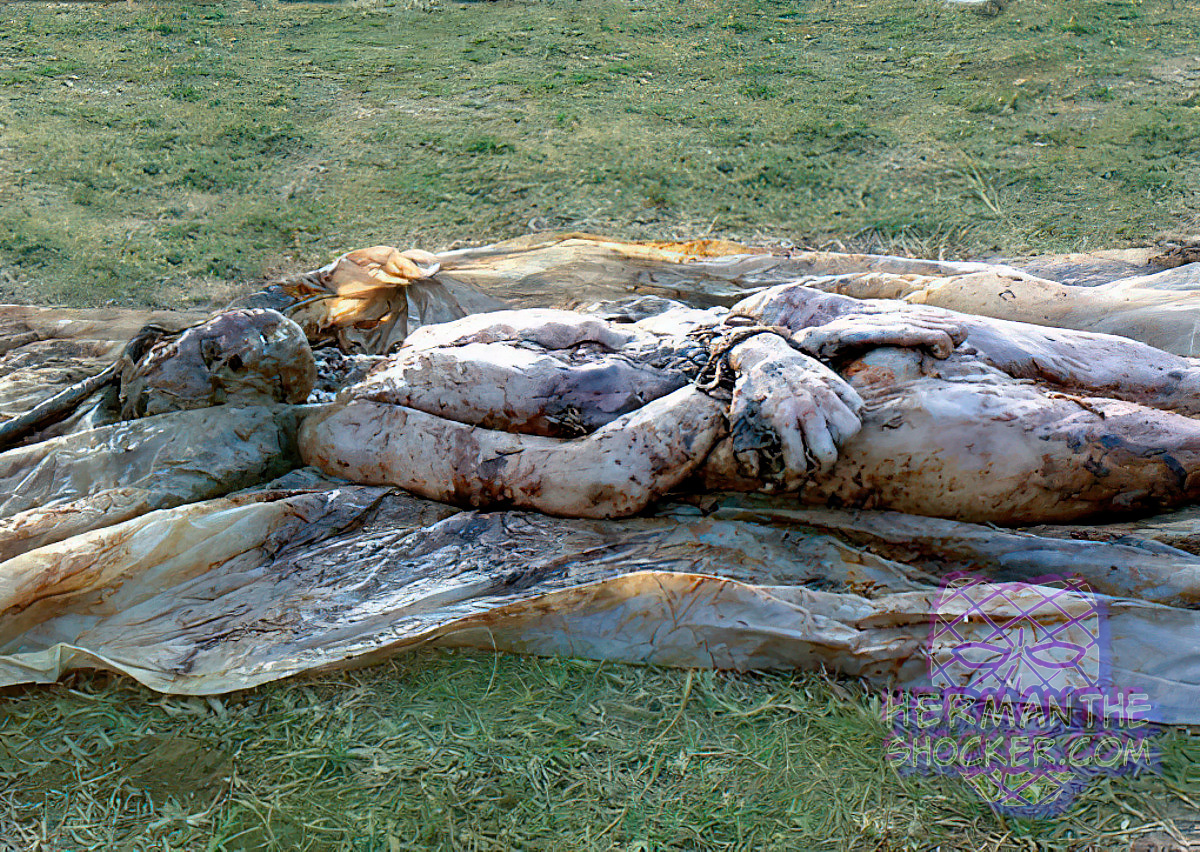 Fig1.1 Exhumed body. Exhumation means to dig out corpse from the ground. It is a lawful process of retrieval of previously buried body for postmortem examination. The term should be restricted to the removal of a body interred in a legitimate fashion in the graveyard. - - - Case 2 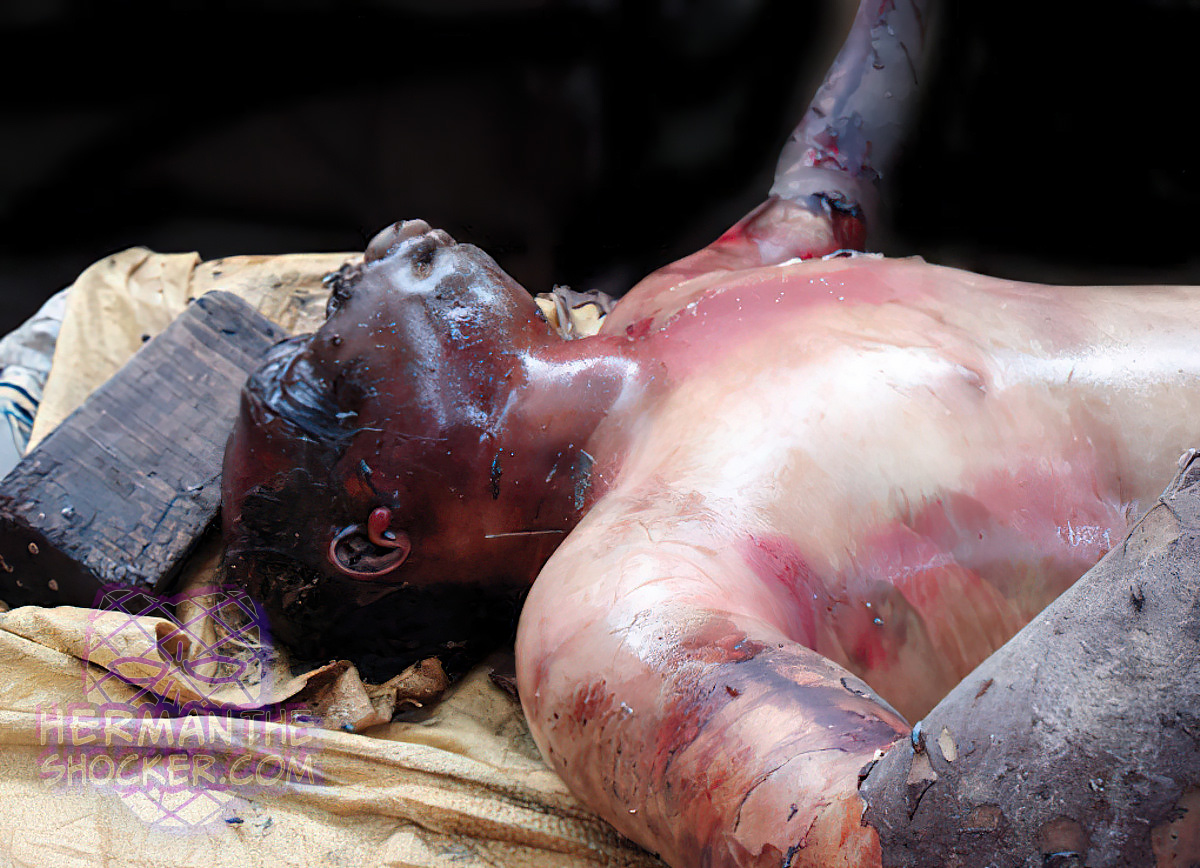 Fig2.1 Postmortem bloating of a body. Postmortem bloating of body may create a misleading picture of obesity. Bloody decomposition fluid oozing from mouth and nos*trils may be misinterpreted as antemortem bleeding due to trauma. Diffusion of hemolysed blood into tissues in areas of livor may be difficult to distinguish from genuine bruis*ing in decomposed bodies. Fissures or splits formed in the skin due to decomposi*tion may simulate lacerated or incised wound. Postmortem dilatations and flaccidity of vagina or anus may produce the appearance of sexual assault. - - - Case 3 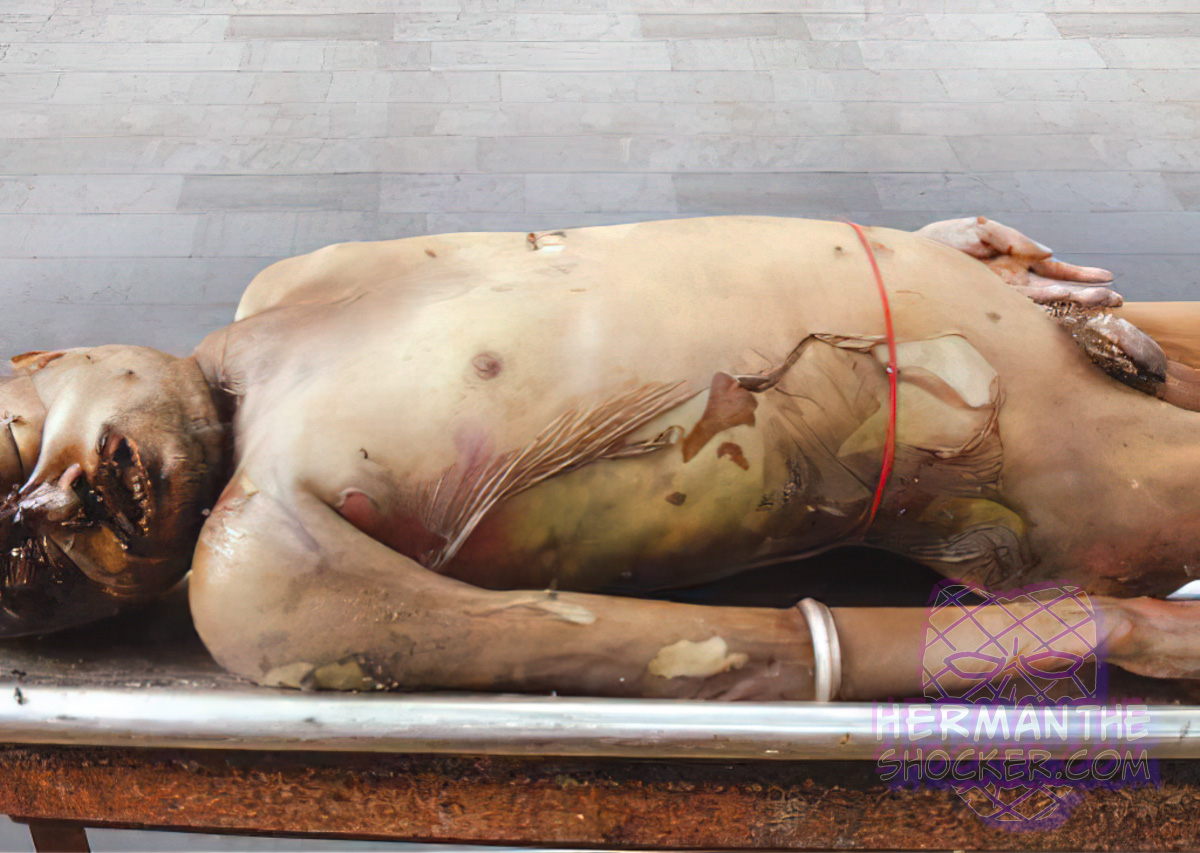 Fig3.1 Greenish discoloration of trunk. Putrefaction is the most absolute sign of death. Externally, the first sign of putrefaction (decomposition) is a greenish discoloration of right side of abdomen over right caecal area. Gradually the color spreads over the whole abdomen, thence on the chest and by this time a putrid odour becomes apparent. The contents of caecum are more fluid and full of bacteria therefore putrefaction develops earlier. Since the caecum is close proximity with abdominal wall, the right lower abdomen stains first. - - - Case 4 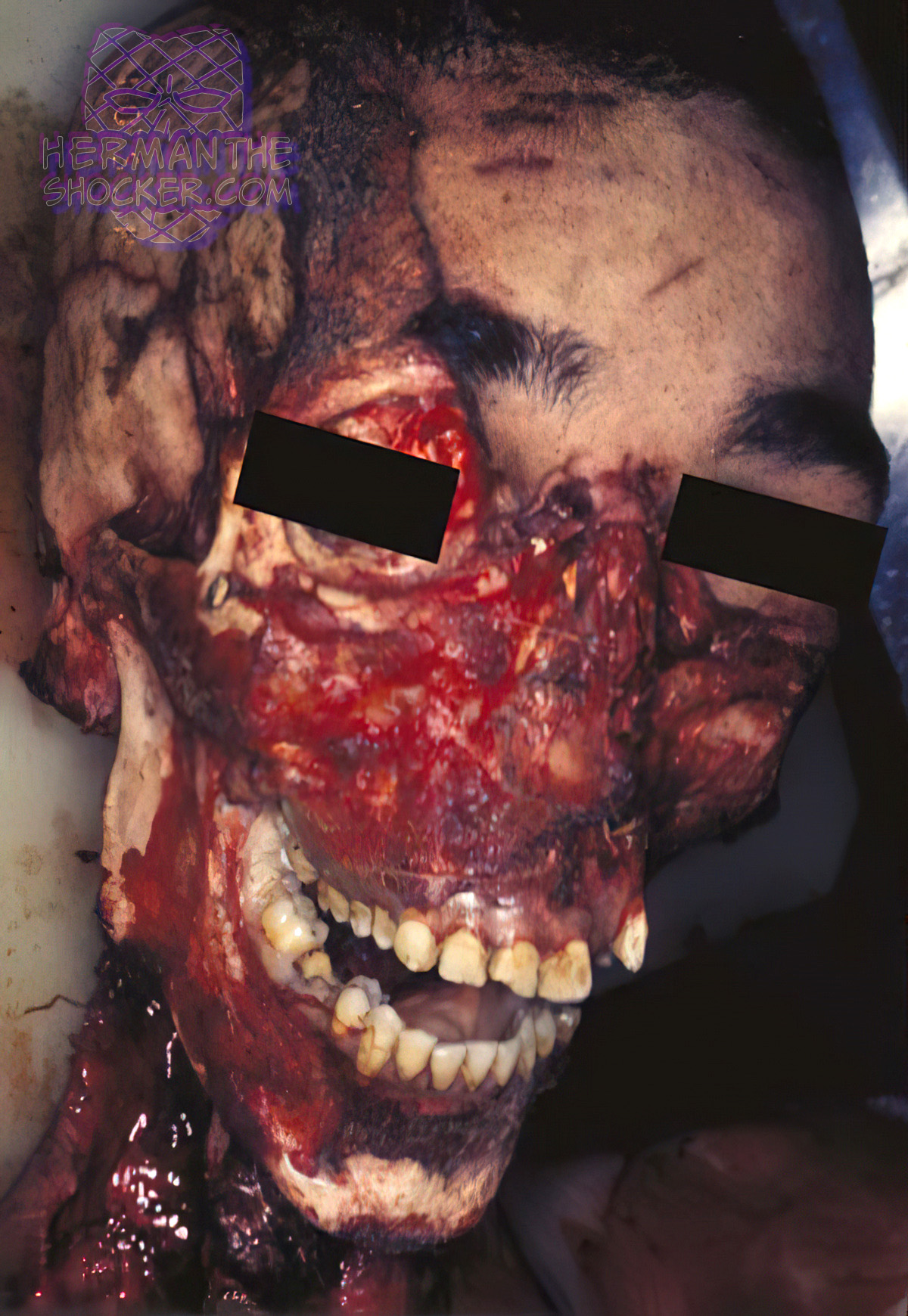 Fig4.1 Postmortem injuries made by rodents. Postmortem scavenging is common among wild and domestic rodents; they are well known to alter or destroy the indicators of the cause of death and preclude the visual identification of the victim. Rodents tend to gnaw on bone, to wear down on their incisors, leaving telltale sets of parallel striations on the osseous cortex. Postmortem rodent-caused injuries are usually wedged, paired, clean, small incisions without subcutaneous bleeding. Porcupines are known to collect and modify both dry and meaty bones. They leave a typical pattern of gnawed trails, thinning the bones in a fan-shaped pattern and creating ‘‘windows’’ in the shaft produced by heavy gnawing and scooping out material. - - - Case 5 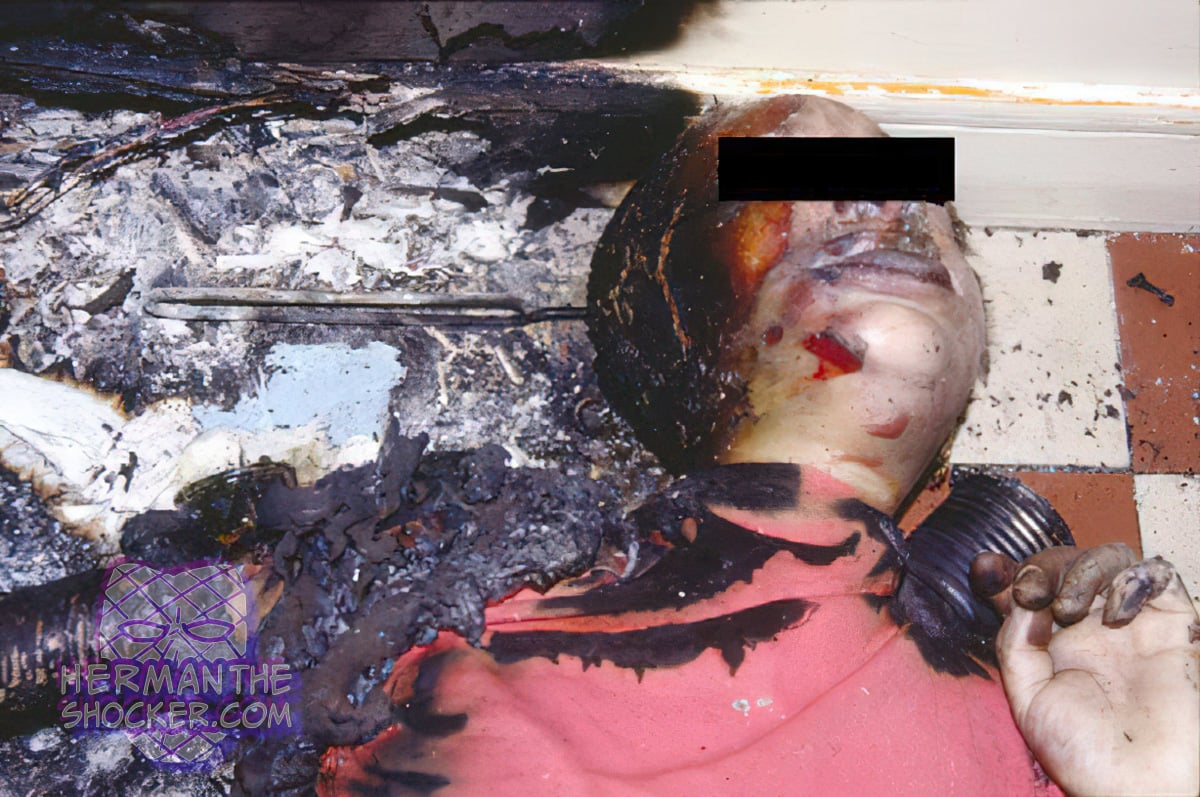 Fig5.1 Accidental death by fire. A fatal case of burns by flash fire which caused the death of a 41-year-old woman when she used an air-freshener spray in a kitchen. Burning with flash fire on the left side of the skull, face, neck, and shoulder. Fires in confined spaces such as a room can produce a phenomenon called a flashover, often involving a gas heater or device. Once a fire starts, it produces radiant heat, hot gases, and smoke. Initially, the fire and hot gases begin to heat the ceiling and adjacent upper walls and then objects in the lower portion of the room. In turn, the combustible materials in the room begin to give off flammable gases. Adults may also be involved in accidents caused by the flammability of many aerosol cosmetics and household products; this can be attributed to the use of hydrocarbon propellants in combination with alcohol solvents. Products such as hairspray, deodorants, air fresheners, bug bombs, tire sealant, solvents, paints, and cleaners are propeled out of their aero- sol gases, many of which contain propane, butane, isopropane, or isobutane. All these common products can generate dense, flammable vapors, creating a path for fire or explosion. When vapors spread throughout an enclosed space, they are subsequently ignited by an ignition source, and an explosion or flash fire may result. The aerosol propellant gas consisted of a mixture of propane and butane and was ignited by the flame of a gas heater. Ignition resulted in a flash fire, extensively burning the woman. - - - Case 6 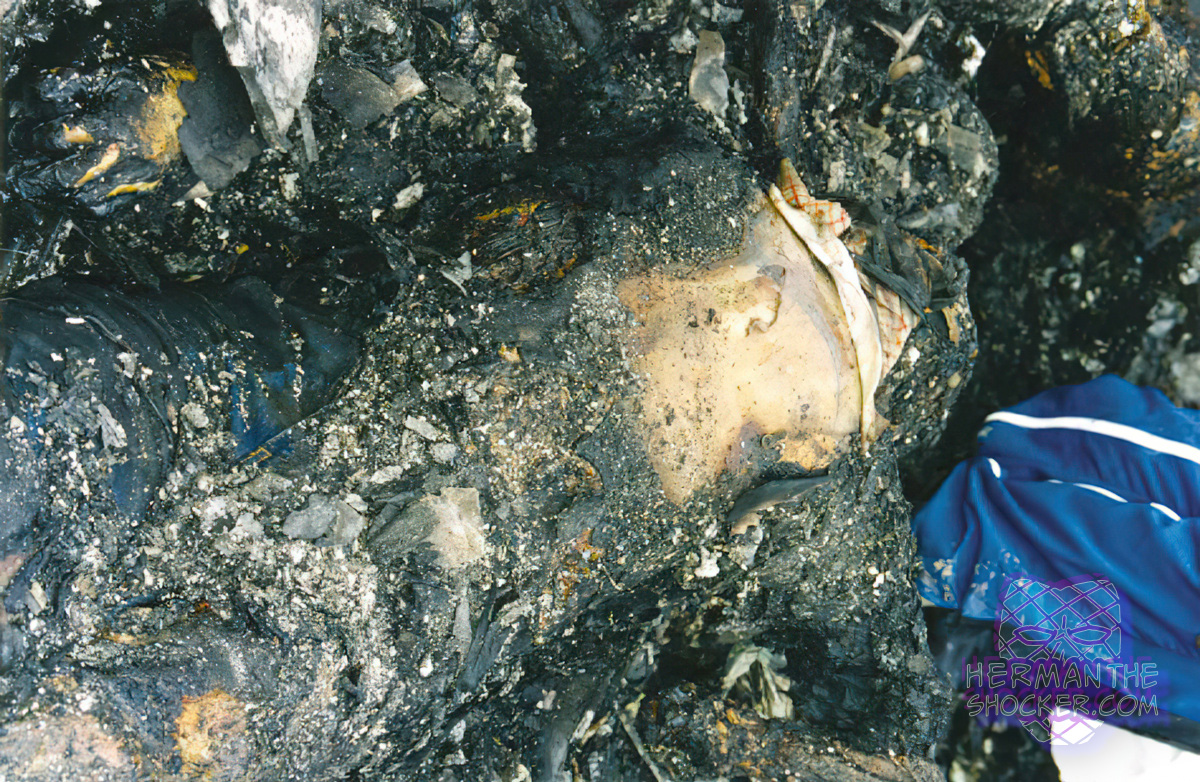 Fig6.1 Concorde air crash victim. Large blue tattoo on the skin of the trunk of a crash fire victim. On 25 July 2000, Air France Flight 4590, a Concorde passenger jet on an international charter flight from Paris to New York, crashed shortly after takeoff, killing all 109 people on board and four on the ground. It was the only fatal Concorde accident during its 27-year operational history. While taking off from Charles de Gaulle Airport, the aircraft ran over debris on the runway, causing a tyre to blow up and disintegrate. Tyre fragments, flung by the rapidly spinning wheel, violently struck the underside of the wing, damaging parts of the landing gear – thus preventing its retraction – and causing the integral fuel tank to rupture. Large amounts of fuel leaking from the rupture ignited, causing a loss of thrust in the left-hand-side engines 1 and 2. The aircraft lifted off, but the loss of thrust, high drag from the extended landing gear, and fire damage to the flight controls made it impossible to maintain control. The jet crashed into a hotel in nearby Gonesse two minutes after takeoff. All 9 crew and 100 passengers on board were killed, as well as four people in the hotel. Six other people in the hotel were critically injured. - - - Case 7 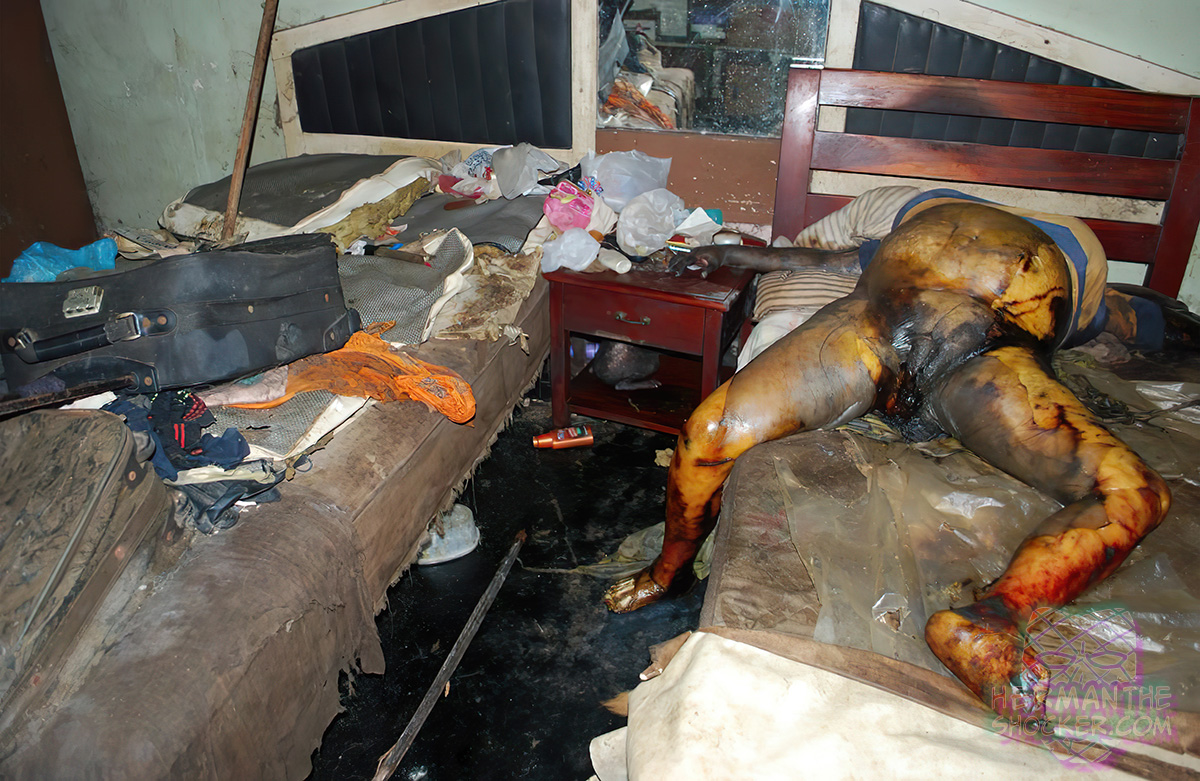 Fig7.1 Scene where the body was recovered from. 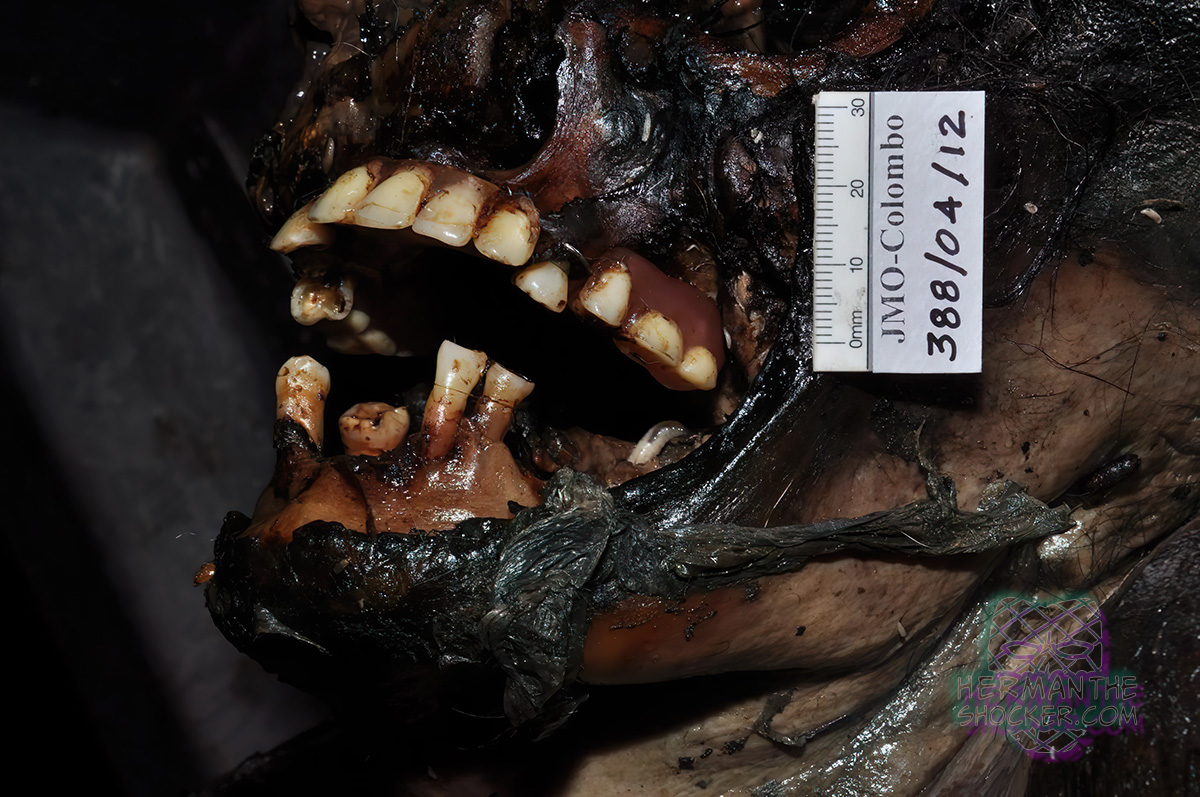 Fig7.2 The upper partial acrylic denture was in place. In Sri Lanka, a 76-year-old female was found dead in her house lying supine on the bed and the chest was covered with a T-shirt and the lower part of the body was exposed. The right foot was resting on the floor. The arms were spread out and the head was resting on a pillow. There was no sign of a struggle. The T-shirt had 3 tear marks and the piece of cotton cloth was found on the floor which was extensively torn and it was believed that this material had been used to cover the lower part of her body. The house was in a state of disorder with garbage everywhere. There was hardly any blood at the scene and on the clothing except few dried-up patches on the T-shirt. There were no signs of struggle and the house was locked from inside. At the time of the recovery of the body, 15 dogs were living free inside the house including 4 puppies and 4 medium-sized male dogs. Postmortem animal scavenging is a familiar phenomenon to forensic death investigators. The Discovery of decomposed bodies in a domestic setting is not an uncommon occurrence. However postmortem animal scavenging of their owner is not commonly reported but can occur when the main predisposing factors are social isolation, living with free pets in the house, and a medical condition causing sudden death. According to the autopsy and histological findings the cause of the death was recognized as complications of Diabetes Mellitus. In considering the death scene investigations, autopsy, and forensic odontological examinations it was concluded that the injuries found on the body of the 76-year-old woman had to be caused postmortem by the dogs found at the scene. From this case Indoor Postmortem Animal Scavenging by 15 Dogs - Part 1 --- Part 2 --- Part 3 --- Part 4 --- Part 5 --- Part 6 --- Part 7 --- Part 8 --- Part 9 --- Part 10 --- Part 11 --- Part 12 --- Part 13 --- Part 14 --- Part 15 --- Part 16 --- Part 17 --- Part 18 --- Part 19 --- Part 20 --- Part 21 --- Part 22 --- Part 23 --- Part 24 --- Part 25 --- Part 26 --- Part 27 --- Part 28 --- Part 29 --- Part 30 --- Part 31 --- Part 32 --- Part 33 --- Part 34 --- Part 35 --- Part 36 --- Part 37 --- Part 38 --- Part 39 --- Part 40 --- Part 41 --- Part 42 --- Part 43 --- Part 44 --- Part 45 --- Part 46 --- Part 47 --- Part 48 --- Part 49 --- Part 50 --- Part 51 --- Part 52 --- Part 53 - This post is for educational purposes only and is nonprofit. Under Section 107 of the US Copyright Act of 1976; Allowance is made for "Fair Use" for purposes such as criticism, comment, news reporting, teaching, scholarship, and research. OP is not a medical expert. No copyright infringement intended. This post does not encourage or glorify violence/harassment. Images might have been upscaled and enhanced. Text might have been shortened and simplified/reorganized for online view.
__________________ ⭐️ hermantheshocker.com ⭐️ |
|
#2
●
02-24-2023, 09:40 AM
|
 My Rank: FIRST SERGEANT Poster Rank:399 Join Date: Apr 2011 Posts: 3,046 3,046Posts 5,763Thanked 276Quoted 2Mentioned 0Contrib. |
|
Re: The Shocker's Mix 54
Shock'n'Roll   In the #1, the exhumed corpse looks so peaceful it is almost moving. #2 is fantastic, like straight from an art exhibition. #4 is brutal, but the crazy animal lady in me rejoices that the rodents weren't left hungry In the #1, the exhumed corpse looks so peaceful it is almost moving. #2 is fantastic, like straight from an art exhibition. #4 is brutal, but the crazy animal lady in me rejoices that the rodents weren't left hungry  |
|
#4
●
02-25-2023, 09:08 AM
|
| My Rank: MASTER GUNNERY SERGEANT Poster Rank:350 "IT"-Species; Genus-genius Join Date: Jan 2013 Posts: 3,611 3,611Posts 5,349Thanked 619Quoted 0Mentioned 0Contrib. |
|
Re: The Shocker's Mix 54
Rotten pictures. What a nasty living/sleeping arrangement.
|
|
#6
●
02-26-2023, 12:18 AM
|
| My Rank: PRIVATE FIRST CLASS Poster Rank:4356 Join Date: Aug 2017 Posts: 69 69Posts 135Thanked 15Quoted 0Mentioned 0Contrib. |
|
Re: The Shocker's Mix 54
Great stuff as usual. Photos of victims from AF4590 are mega rare... Thanks Herman. |
|
#7
●
02-26-2023, 01:37 AM
|
 ★ Legacy Member ★ Poster Rank:252 So many choices now Join Date: Jul 2015 Posts: 5,542 5,542Posts 19,786Thanked 2,120Quoted 15Mentioned 0Contrib. |
|
Re: The Shocker's Mix 54
Another superb set Herm. You set the gold standard in quality posts. |