|
#1
●
01-27-2023, 07:44 AM
| ||||||||
 ♚ Legacy Gold Member ♚ Poster Rank:908 Join Date: Jul 2020 Posts: 820
Contributions: 10
Mentioned: 13 Post(s) Quoted: 173 Post(s)
| ||||||||
|
The Shocker's Mix 50
Some of the stuff I work on doesn't make the cut so I thought about gathering them up in a single post. So basically it's images I have little or no info about or I've decided that they don't get their own thread, for example, because of low image/content quality, lack of backstory or additional info/knowledge, possibly uninteresting, only one image but not very special. I still do the usual image work including upscaling and color correction as needed, as I prefer to have my content high quality and educational. - - - Case 1 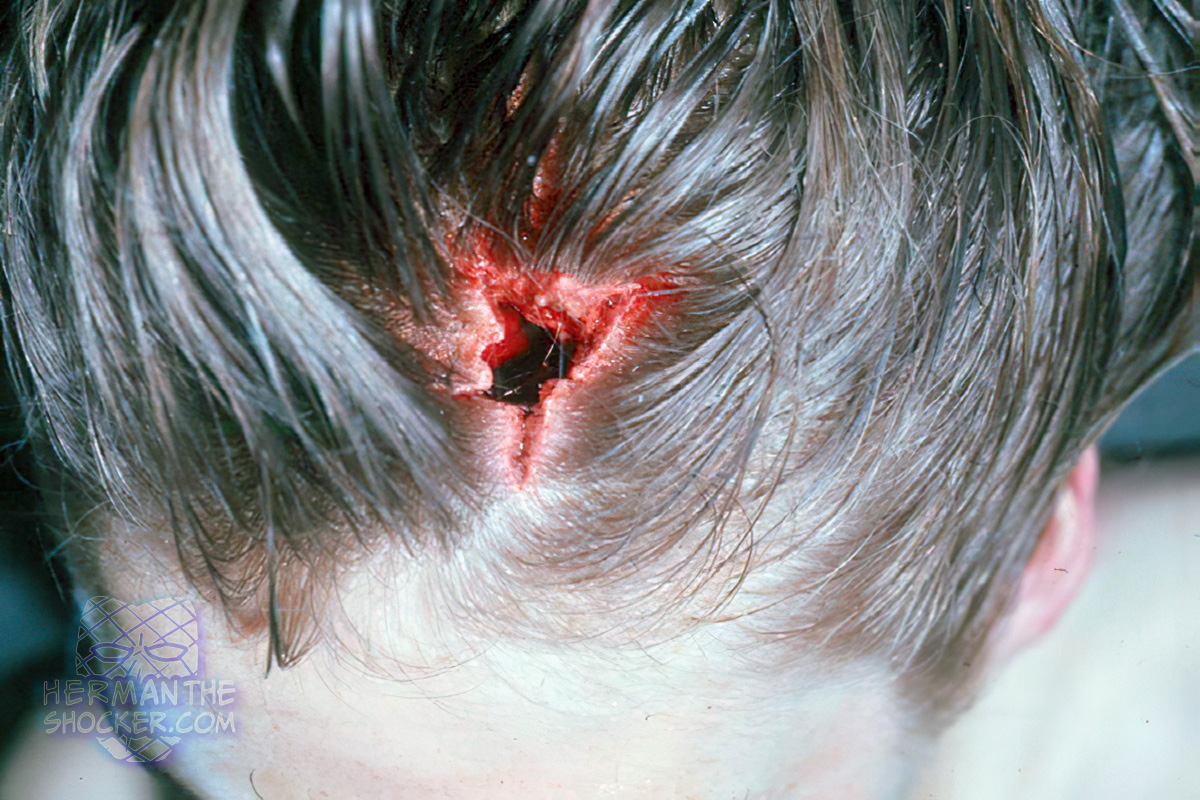 Fig1.1 Exit gunshot wound. Exit gunshot wounds are usually irregular in shape and relatively large – and may be confused with contact entrance wounds. exit wounds tend to vary widely in their appearance and may be multiple (in the event of fragmentation of the projectile or secondary projectiles resulting from shattered bone), very irregular in shape (even mimicking incised wounds) and are usually significantly larger than the entrance wounds. care should be taken to differentiate contact entrance wounds from exit wounds, especially to the head. examining the base of the wound for signs of blackening and searing will help. - - - Case 2  Fig2.1 Firearm discharged into the mouth. Note the tissue tears extending from the sides of the mouth. These tears result from the large amount of gases exiting the end of the barrel at high pressures. The discharge of a weapon involves the release not only of a projectile but of hot gas under high pressure as well. If the lips are sealed around the barrel, the rapid expansion of departed gases causes the cheeks and face to balloon far beyond their elastic capacity. This results in the characteristic tears seen in the figures. In a contact shot fired anywhere on the head, the gases from the firing discharge can enter into the skull. This results in an acute build-up of intracranial pressure with the rigid cranium attempting to accommodate it by expansion. Gases under pressure accumulate inside the cranium and in the process of attempting to release this build-up of pressure, fractures will arise with outward expansion with outwards pushing of the fracture fragments and consent tears (lacerations) through the skin of the face as these sharp and tough bony fragments are pushed outwards. This is seen especially on the face and this produces facial distortion effects. - - - Case 3 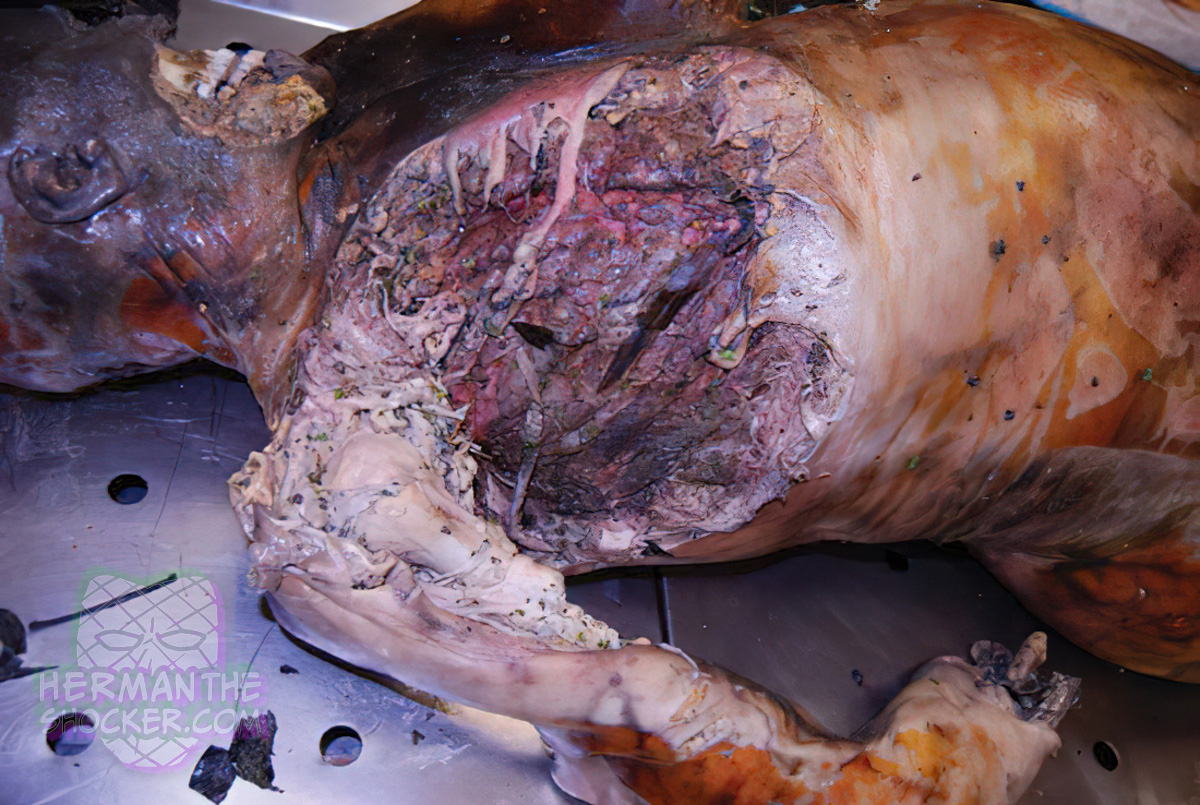 Fig3.1 Body recovered from the bank of a swamp. The body of a 35-year-old woman was recovered from the bank of a swamp in the southeastern United States. The presence of gnaw marks on the amputated forearm bones and long strands of tissue consistent with large teeth marks, relate to alligator anthropophagy. - - - Case 4 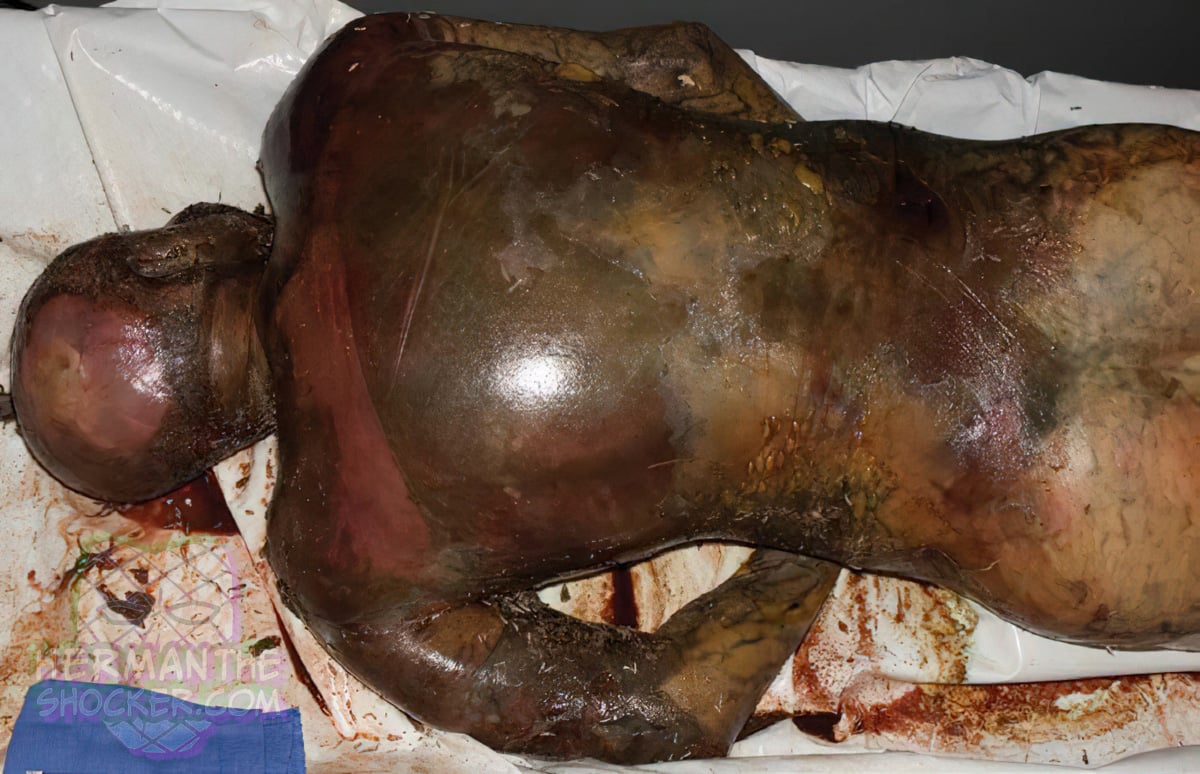 Fig4.1 Decomposed body found in a car. This decedent was found in a car. Given the degree of decomposition, a protected sequestered source of DNA should be sought. DNA can still be found in sufficient quantities in the marrow of the femur for use in identification. Another source of DNA in decomposed bodies is the dental pulp in a tooth. In this case, the decedent had no teeth that could be used for analysis. - - - Case 5 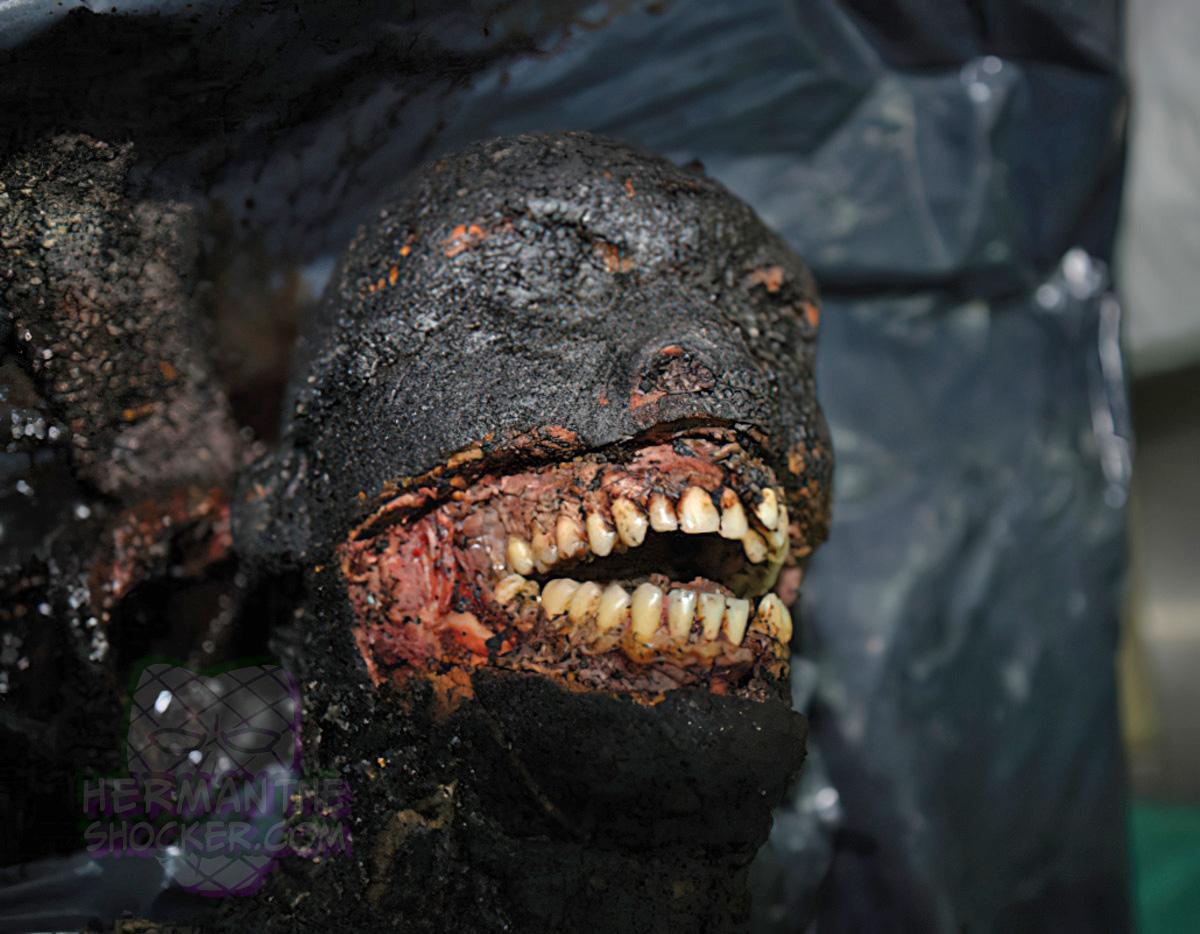 Fig5.1 Carbonized corpse. Carbonized corpse prepared for dental identification. Postmortem identification represents one of the great branches of study and research in forensic dentistry and medicine, considering that both sciences deal with a same material—the human body at different stages, such as ripped, lacerated, carbonized, macerated, putrefied, skeletonized—always with a single objective, that is to say, to establish human identity. - - - Case 6 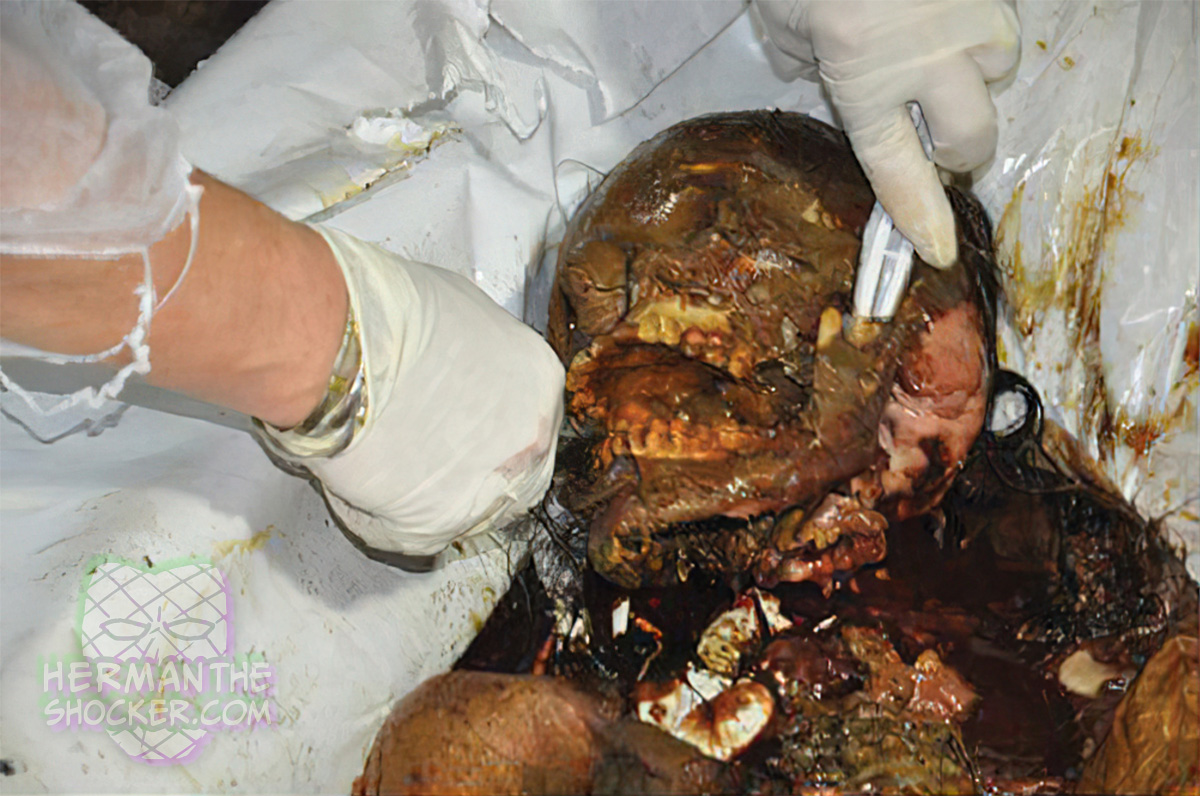 Fig6.1 Putrefying corpse. Deceased individuals that may require identity confirmation include the homeless, illegal/undocumented immigrants, burnt, or decomposed bodies, and disfigured, skeletal remains of individuals. - - - Case 7 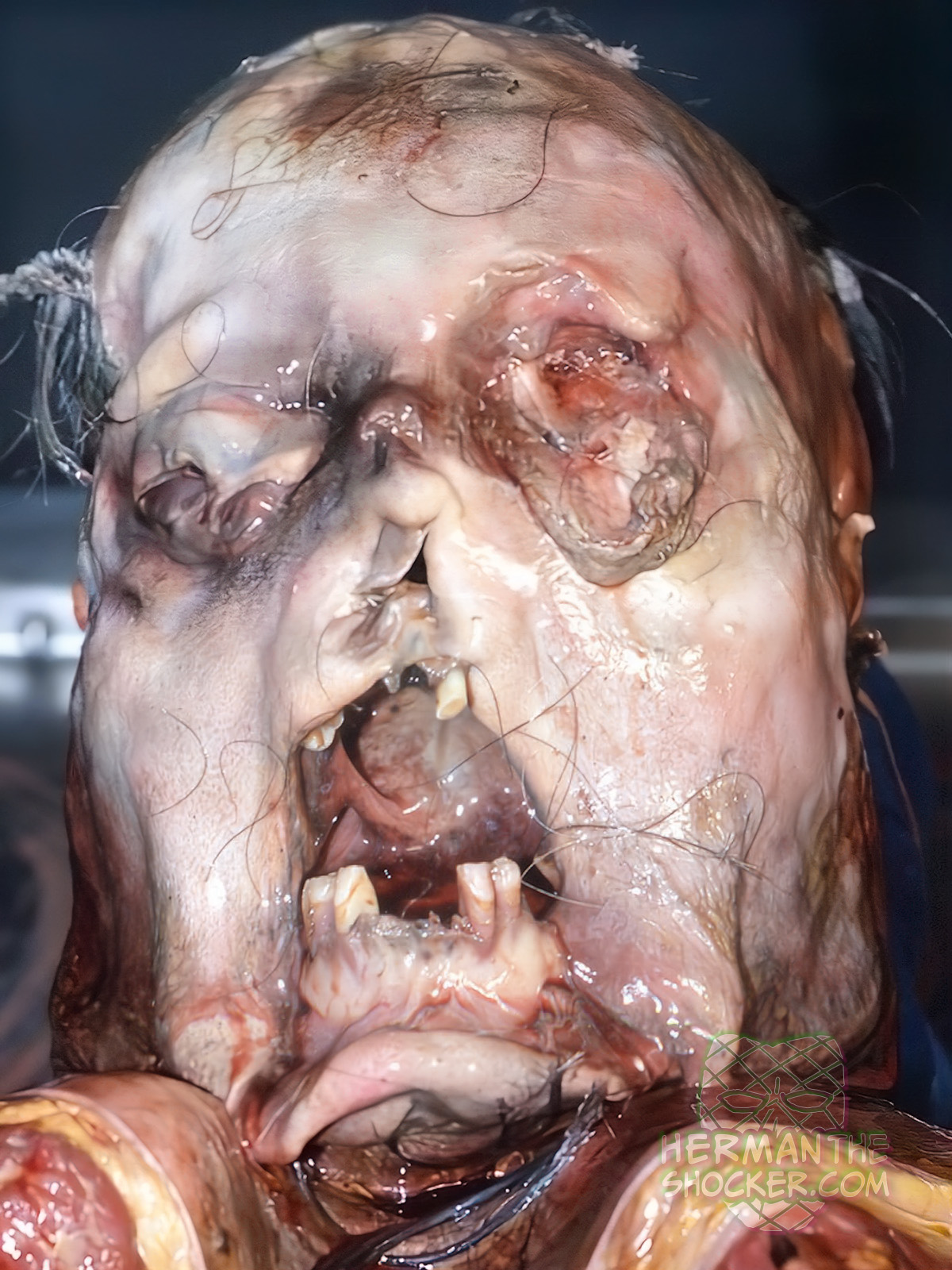 Fig7.1 This adult male was missing for 2 weeks. 2001 - Ventura County, California. This adult male was missing for 2 weeks and was eventually recovered on an ocean beach after drowning. The condition of the facial tissue obviously prevents visual identification as a reliable means of identity determination. The condition of the facial tissues prevented visual identification as a reliable means of identity determination. Dental records (written and X-rays) were obtained by law enforcement and used to compare with dental findings obtained at autopsy. The few teeth remaining in the jaws were consistent with the dental records and the identification was determined by the medical examiner. The cause of death was drowning and the manner of death was accidental. No foul play was suspected. Read about this case here - Part 1 --- Part 2 --- Part 3 --- Part 4 --- Part 5 --- Part 6 --- Part 7 --- Part 8 --- Part 9 --- Part 10 --- Part 11 --- Part 12 --- Part 13 --- Part 14 --- Part 15 --- Part 16 --- Part 17 --- Part 18 --- Part 19 --- Part 20 --- Part 21 --- Part 22 --- Part 23 --- Part 24 --- Part 25 --- Part 26 --- Part 27 --- Part 28 --- Part 29 --- Part 30 --- Part 31 --- Part 32 --- Part 33 --- Part 34 --- Part 35 --- Part 36 --- Part 37 --- Part 38 --- Part 39 --- Part 40 --- Part 41 --- Part 42 --- Part 43 --- Part 44 --- Part 45 --- Part 46 --- Part 47 --- Part 48 --- Part 49 - This post is for educational purposes only and is nonprofit. Under Section 107 of the US Copyright Act of 1976; Allowance is made for "Fair Use" for purposes such as criticism, comment, news reporting, teaching, scholarship, and research. OP is not a medical expert. No copyright infringement intended. This post does not encourage or glorify violence/harassment. Images might have been upscaled and enhanced. Text might have been shortened and simplified/reorganized for online view.
__________________ ⭐️ hermantheshocker.com ⭐️ |
|
#2
●
01-27-2023, 08:28 AM
| ||||||||
 My Rank: FIRST SERGEANT Poster Rank:394 Join Date: Apr 2011 Posts: 3,054 Mentioned: 2 Post(s) Quoted: 276 Post(s)
| ||||||||
|
Re: The Shocker's Mix 50
Yet another forceful shock therapy post  The #3 is strangely heartwarming: aaww, the alligator(s) got to have a feast! The #7 is still my favorite from the bunch. I'm usually quite eloquent but my reaction seeing that pic can be summed up to one emoji: The #3 is strangely heartwarming: aaww, the alligator(s) got to have a feast! The #7 is still my favorite from the bunch. I'm usually quite eloquent but my reaction seeing that pic can be summed up to one emoji:  |
|
#5
●
01-27-2023, 11:45 AM
| ||||||||
 ♚ Legacy Gold Member ♚ Poster Rank:195 Female Join Date: Nov 2009 Posts: 7,761 Mentioned: 5 Post(s) Quoted: 708 Post(s)
| ||||||||
|
Re: The Shocker's Mix 50
Wowwwww. 7 I keep going back to. Thanks Herman. |
|
#7
●
01-27-2023, 02:53 PM
| ||||||||
 BEHEMOTH Poster Rank:53 Blue-Eyes White Dragon Join Date: Apr 2021 Posts: 27,699
Contributions: 21
Mentioned: 322 Post(s) Quoted: 13285 Post(s)
| ||||||||
|
Re: The Shocker's Mix 50
Great stuff Herman! 
__________________ ISRAEL ✔ - PALESTINE ✗ |
|
#8
●
01-27-2023, 03:23 PM
| ||||||||
 ♚ Legacy Gold Member ♚ Poster Rank:26 ㅤㅤ真 Join Date: Apr 2021 Posts: 52,944 Mentioned: 372 Post(s) Quoted: 41105 Post(s)
| ||||||||
|
Re: The Shocker's Mix 50
I always look forward to the shocker mixes. great stuff.
__________________ ᓚᘏᗢ |