|
#1
●
09-22-2022, 08:22 AM
|
 ♚ Legacy Gold Member ♚ Poster Rank:914 Join Date: Jul 2020 Posts: 820
Contributions: 13
820Posts 27,649Thanked 173Quoted 13Mentioned 13Contrib. |
|
The Shocker's Mix 35
Some of the stuff I work on doesn't make the cut so I thought about gathering them up in a single post. So basically it's images I have little or no info about or I've decided that they don't get their own thread, for example, because of low image/content quality, lack of backstory or additional info/knowledge, possibly uninteresting, only one image but not very special. I still do the usual image work including upscaling and color correction as needed, as I prefer to have my content high quality and educational. - - - Case 1 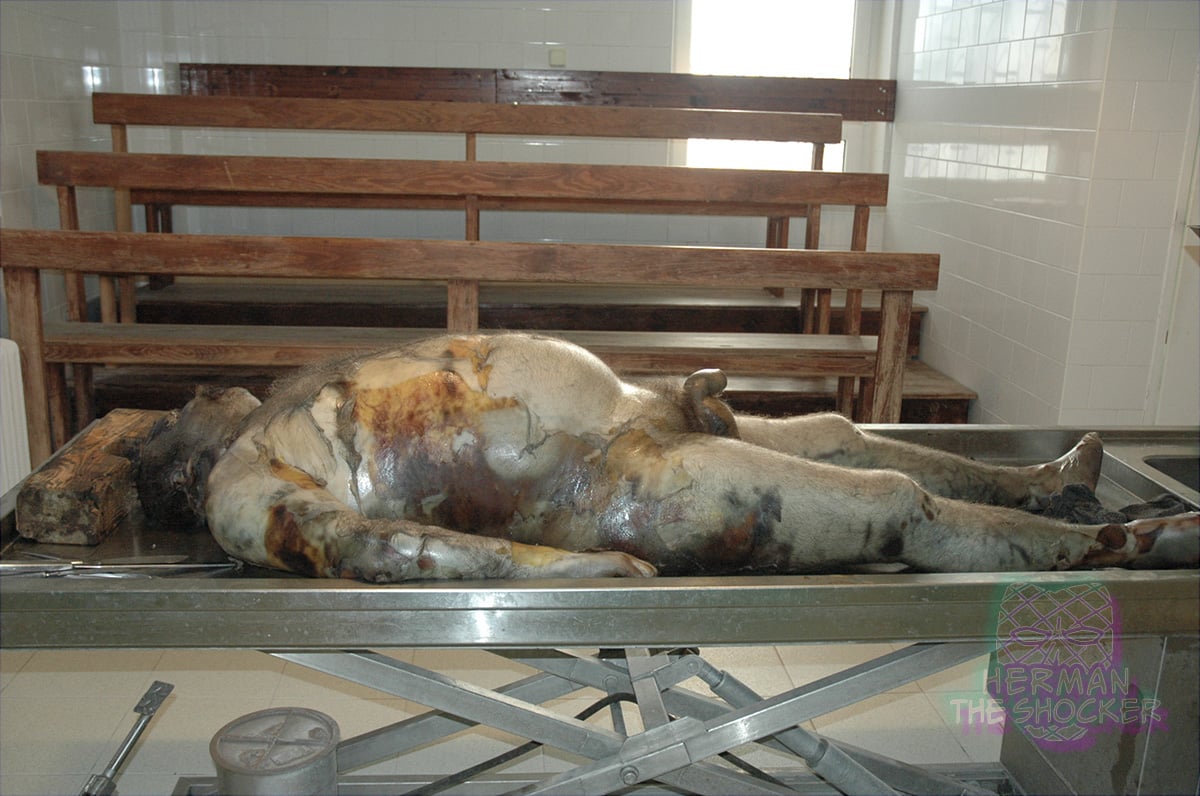 Fig1.1 Decomposing individual. 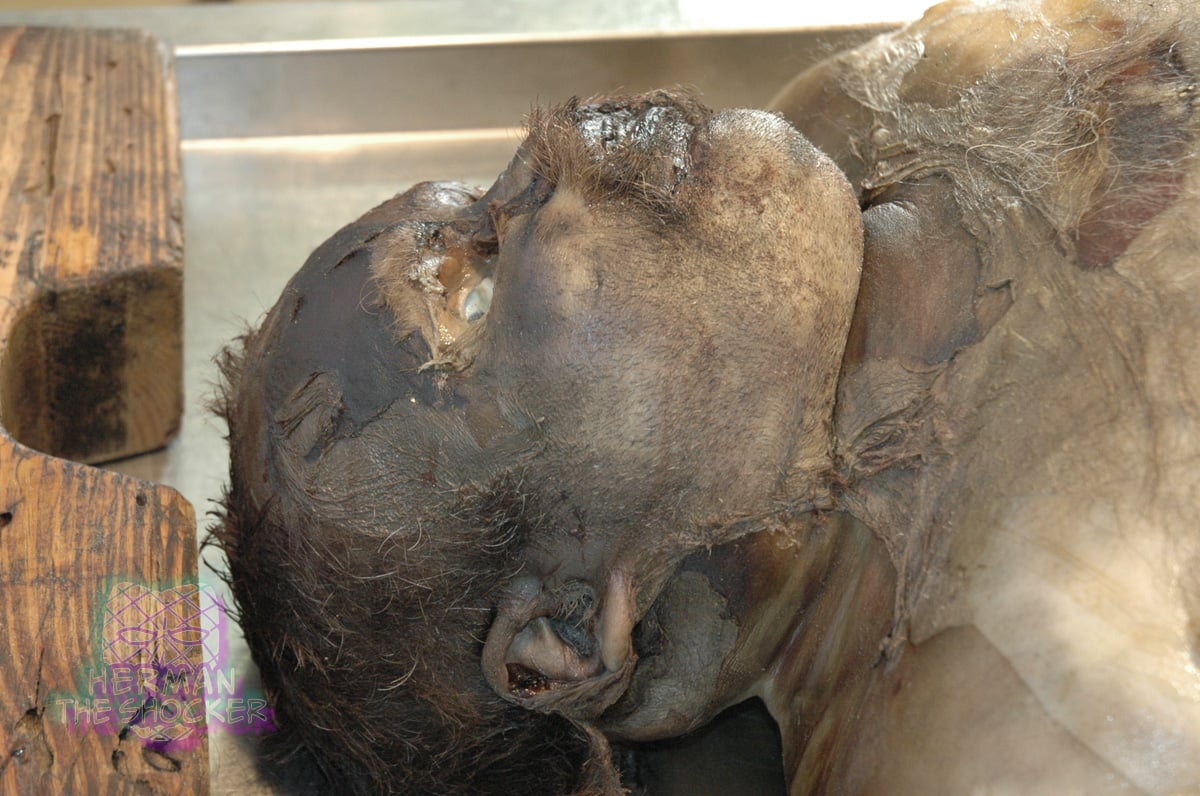 Fig1.2 Decomposing individual. This individual is showing decomposition changes. Decomposition, or putrefaction, is a combination of two processes: autolysis and bacterial action. Autolysis is the breakdown of cells and organs through an aseptic chemical process caused by intracellular enzymes. Because it is a chemical process, it is accelerated by heat, slowed by cold, and stopped by freezing. Bacterial action results in the conversion of soft tissues in the body to liquids and gases. The chemicals produced as a result of putrefaction are cadaverine and putrescine, hydrogen sulfide and other sulfides, which generate a horrible smell. Putrefaction begins immediately upon death and usually becomes noticeable within 24 hours. As soon as death occurs, the bacteria or microorganisms within the intestinal tract escape from the bowel into the other tissues of the body. As they grow, they begin to produce gases and other properties that distort and discolor the tissues of the body. The discoloration is a dark greenish combination of colors and is generally pronounced within 36 hours. As a result, the body begins to swell from the putrefactive gases, emitting an extremely repugnant odor. The rate of decomposition depends on the temperature, ground conditions, amount of clothing, size of the body, etc. For example, a body in a warm climate will not only encourage insect attack from the outside, but will also increase the interior bacteria development and subsequent tissue attack from within. As the tissues inside are destroyed and enzymes released, the gases formed emit a foul and sickening smell. - - - Case 2 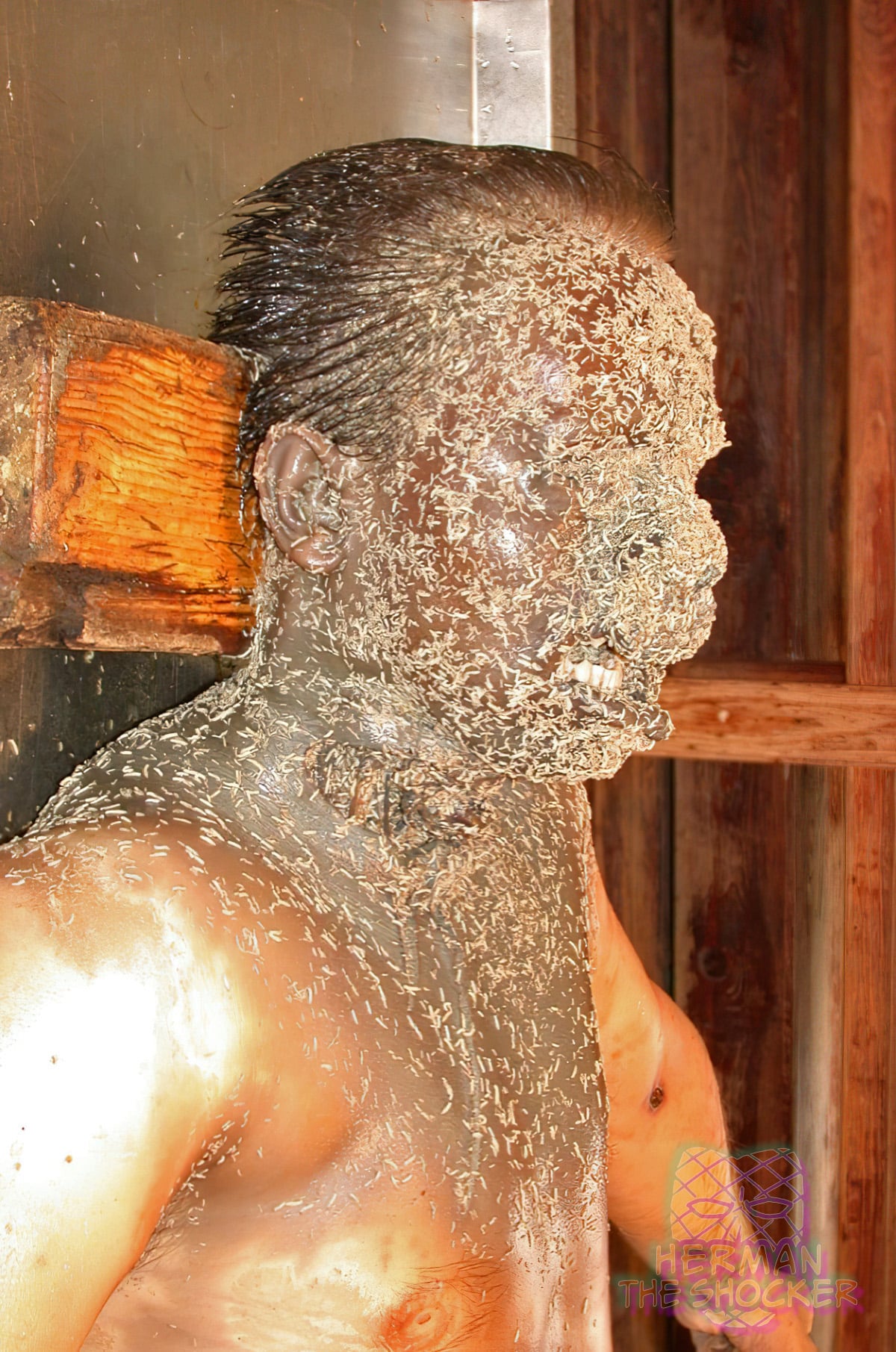 Fig2.1 Maggots on a body. Maggots are the larval form of flies. Flies lay their eggs in small and sometimes large bulky clusters on accessible unsubmerged areas, crevices, and cavities of the body, preferring moist areas such as the eyes, nostrils, scalp, lips, ear canals, and open wounds. Individually, these are tiny, round to ovoid, tan-white structures that resemble seeds or grains of rice. Egg laying occurs within 1–2 hours of death. The mobile larvae will be noted by approximately 24 hours, depending on the species. If undisturbed on land, within 2–3 weeks, they will pupate, forming a hardened brown outer covering remaining on or around the body or burrowed within the surrounding soil. Maggots will enter anatomic openings, wounds, and body cavities and feed off of the body tissues and organs. Maggots feeding on the skin may leave multiple, small, round (2–4 mm in diameter) holes, leaving a lace-like or web-like pattern on the skin that may be misinterpreted as antemortem blunt, sharp, or other penetrating injuries. With time and if left undisturbed, masses of maggots will completely consume the flesh and expose the bones (skeletonization). Their activities constitute a type of anthropophagy. - - - Case 3 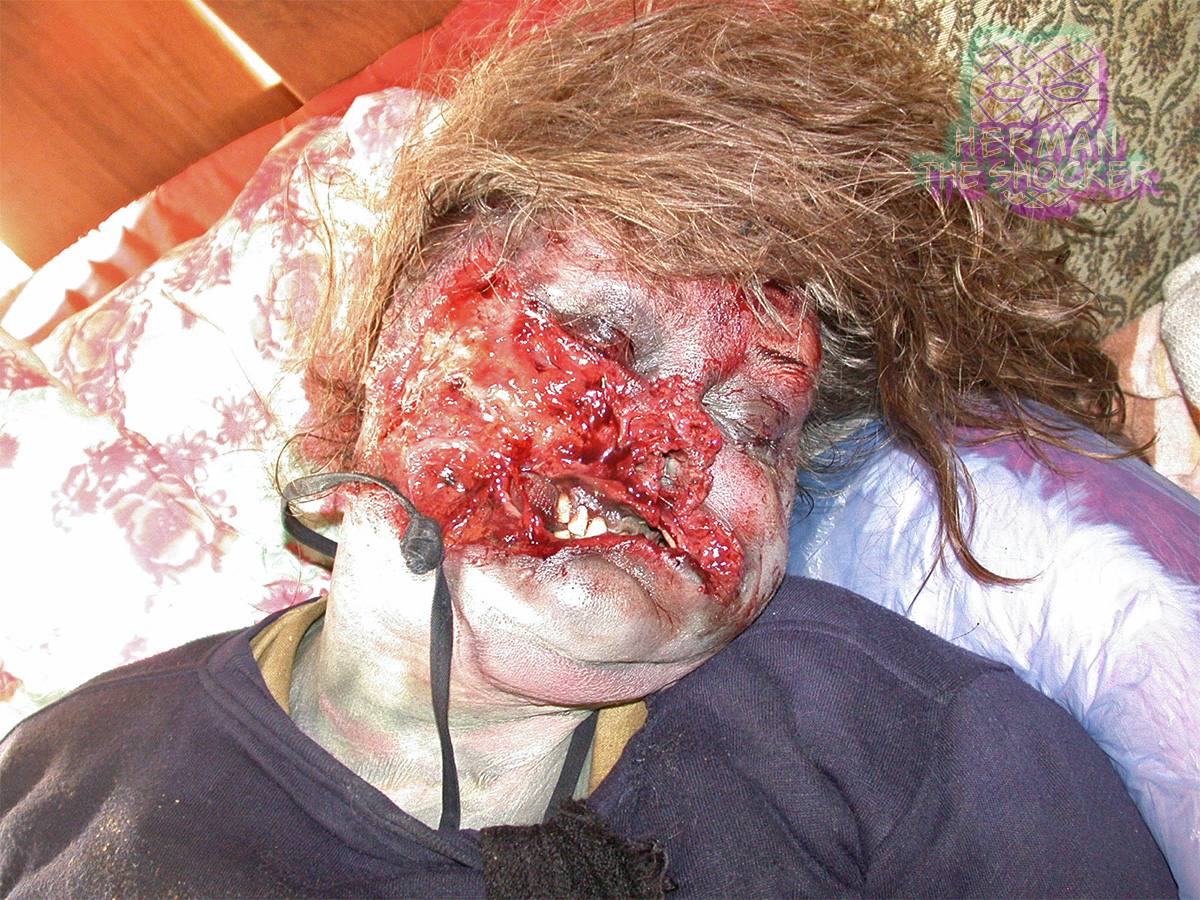 Fig3.1 Woman's face eaten postmortem by an animal. The woman in this photo passed away, and an animal in the household started to eat her face postmortem, no further info. Postmortem animal interference of human corpses or remains is a well known phenomenon to forensic death investigators, the morphological appearance of these injuries can be misinterpreted by police officers investigating the suspected crime scene or by the consulted medical practitioner. Frequently the face, hands, and legs are destroyed by postmortem animal interference as they are unclothed and thus easily accessible. However, there are cases where such lesions have been noted in other areas of the body which have been covered by the cloths including genitals but they are rare. In cases with postmortem animal predation, the psychological state of the animal is a possible reason for its behavior. One possible explanation for such behavior is that a pet will try to help an unconscious owner first by licking or nudging, but when this fails to produce any results the behavior of the animal can become more frantic and in a state of panic can lead to biting. The motive is not to attack the owner but is a kind of ‘‘displacement’’ behavior motivated by confusion and fear. The fact that the efforts of the animal will obviously be fruitless explains why this can easily escalate and culminate in excessive mutilation. - - - Case 4  Fig4.1 Woman commits suicide in a closet. Chicago, Illinois, US. In this case, the female victim’s body was discovered by a relative who went to check on her welfare. The victim had a history of depression and there had been previous suicide attempts. The victim had been dead for some time. Lividity had set in. The victim was pronounced dead by EMS. There was no reason to cut the victim’s body down before the arrival of detectives and it was left intact for the preliminary investigation at the scene. - - - Case 5 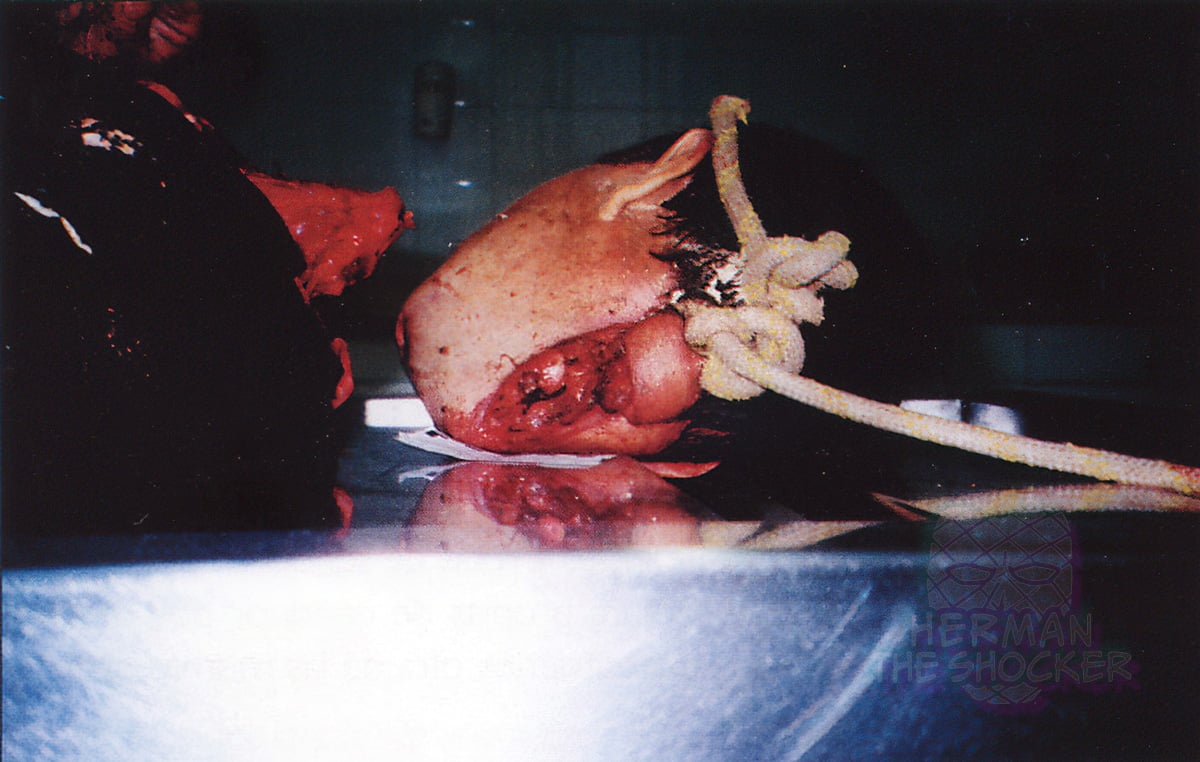 Fig5.1 A suicide that resulted in decapitation. This is the case of a 41-year-old male with a two-year history of depressed mood, for which he had refused psychological treatment. He committed suicide that resulted in complete decapitation. Suicidal hanging is generally associated with soft-tissue injuries only, and osseous lesions of the cervical spine are very unusual. Decapitation represents the most extreme type of those cervical injuries associated with hanging. It seems of excessive rarity whatever the circumstances of hanging – judicial or suicidal. In suicidal hangings, the occurrence of a decapitation is always the consequence of a drop of several meters, generally associated with a relatively thin ligature of poor stretchability. - - - Case 6  Fig6.1 The state in which the woman’s body was found. 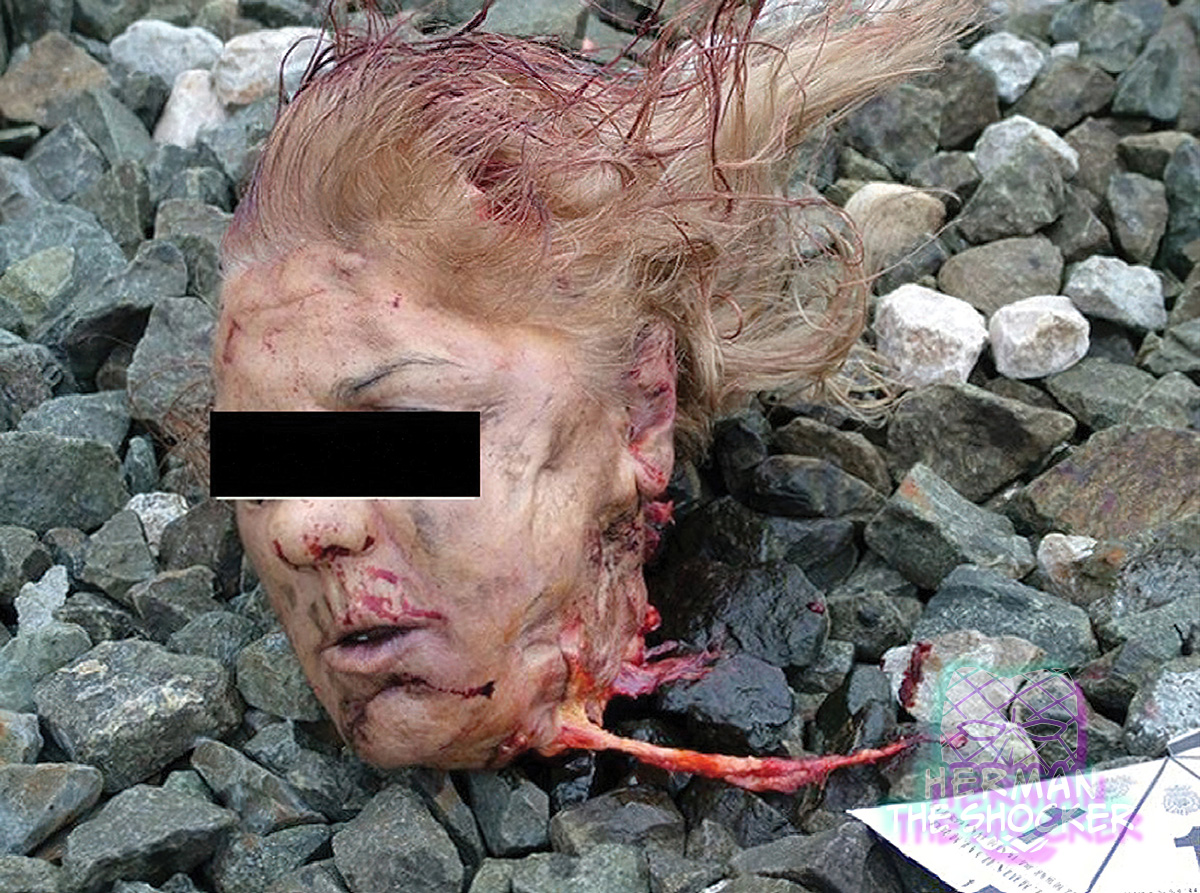 Fig6.2 The state in which the woman’s head was found. Spain. This middle-aged woman with major depressive disorder committed suicide by train. No further info. Railroad deaths in the US totaled 757 in 2020, a decrease of more than 12% from the 2019 revised total of 862 and the lowest since 2015. Nonfatal injuries totaled 5,479, a 33% decrease from the 2019 revised total of 7,983. From 2019 to 2020, fatalities at highway-rail crossings decreased 32%, while fatalities involving other types of incidents decreased 1%. The latter included 529 deaths (94%) attributed to trespassers. Ten employees were killed while on duty, a 25% increase compared to the 2019 death toll. There were two train passenger deaths, up from one death in 2019. - - - Case 7 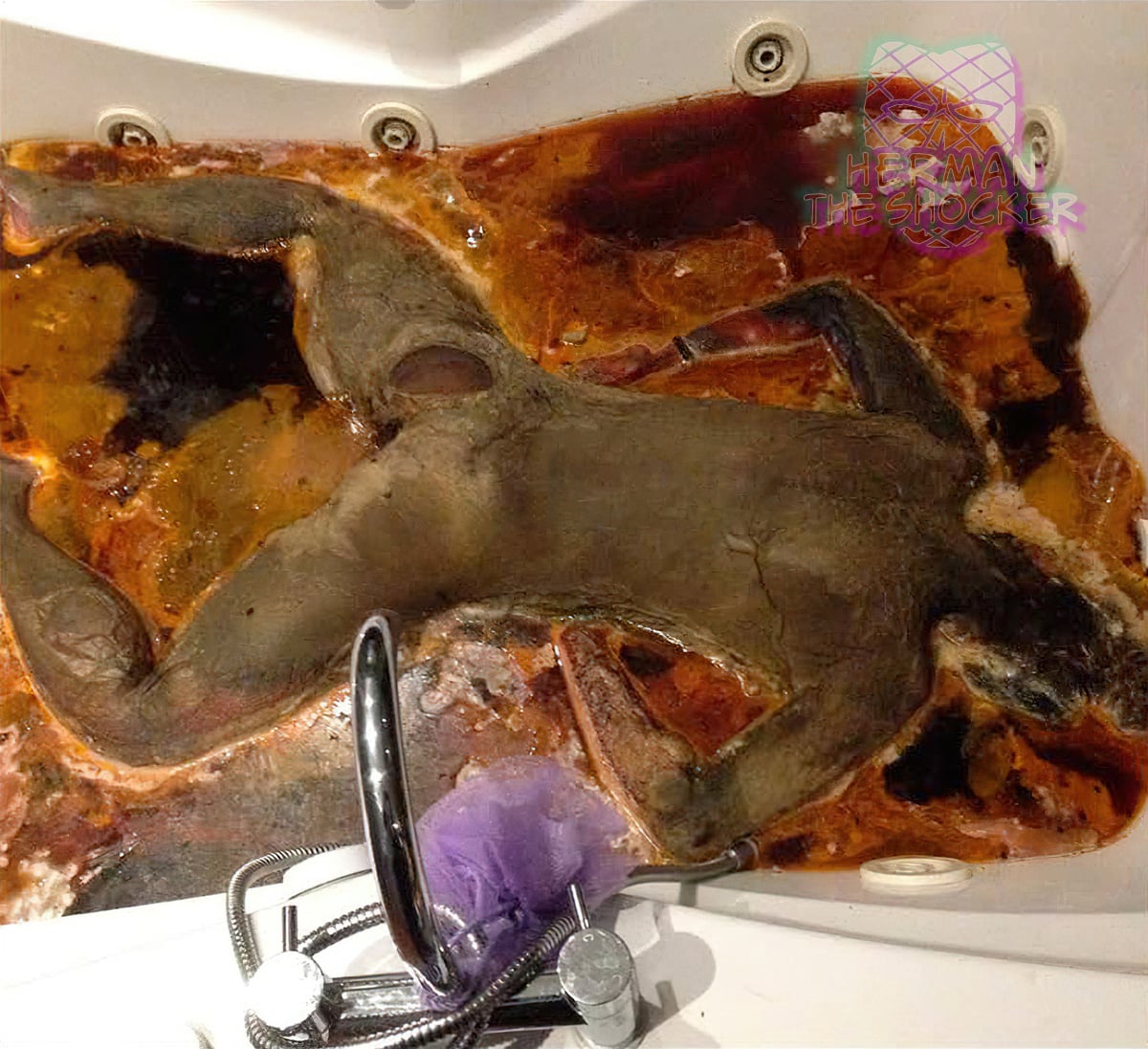 Fig7.1 Decomposing woman in a bathtub. Woman’s body lying face down in a bathtub in an advanced state of decomposition and with no apparent signs of violence. No further info. Decomposition, or putrefaction, is a combination of two processes: autolysis and bacterial action. Autolysis is the breakdown of cells and organs through an aseptic chemical process caused by intracellular enzymes. Because it is a chemical process, it is accelerated by heat, slowed by cold, and stopped by freezing. Bacterial action results in the conversion of soft tissues in the body to liquids and gases. The chemicals produced as a result of the putrefaction are cadaverine and putrescine, hydrogen sulfide and other sulfides, which generate a horrible smell. Putrefaction begins immediately upon death and usually becomes noticeable within 24 hours. As soon as death occurs, the bacteria or microorganisms within the intestinal tract escape from the bowel into the other tissues of the body. As they grow, they begin to produce gases and other properties that distort and discolor the tissues of the body. - Part 1 --- Part 2 --- Part 3 --- Part 4 --- Part 5 --- Part 6 --- Part 7 --- Part 8 --- Part 9 --- Part 10 --- Part 11 --- Part 12 --- Part 13 --- Part 14 --- Part 15 --- Part 16 --- Part 17 --- Part 18 --- Part 19 --- Part 20 --- Part 21 --- Part 22 --- Part 23 --- Part 24 --- Part 25 --- Part 26 --- Part 27 --- Part 28 --- Part 29 ---Part 30 --- Part 31 --- Part 32 --- Part 33 --- Part 34 - This post is for educational purposes only and is nonprofit. Under Section 107 of the US Copyright Act of 1976; Allowance is made for "Fair Use" for purposes such as criticism, comment, news reporting, teaching, scholarship, and research. OP is not a medical expert. No copyright infringement intended. This post does not encourage or glorify violence/harassment. Images might have been upscaled and enhanced. Text might have been shortened and simplified/reorganized for online view.
__________________ ⭐️ hermantheshocker.com ⭐️ |
|
#3
●
09-22-2022, 10:40 AM
|
 ★ Legacy Member ★ Poster Rank:252 So many choices now Join Date: Jul 2015 Posts: 5,542 5,542Posts 19,786Thanked 2,120Quoted 15Mentioned 0Contrib. |
|
Re: The Shocker's Mix 35
Herman,  Case 2 - guy looks like he got caught in a wind tunnel full of Rice-a-Roni. |
|
#4
●
09-22-2022, 12:45 PM
|
 ♚ Legacy Gold Member ♚ Poster Rank:28 ㅤㅤ真 Join Date: Apr 2021 Posts: 52,923 52,923Posts 52,853Thanked 41,105Quoted 372Mentioned 0Contrib. |
|
Re: The Shocker's Mix 35
bathtubs really do just turn people into soup. xD
__________________ ᓚᘏᗢ |
|
#5
●
09-22-2022, 12:57 PM
|
 My Rank: MAJOR Poster Rank:169 Join Date: Jul 2015 Posts: 9,325 9,325Posts 10,833Thanked 1,583Quoted 5Mentioned 0Contrib. |
|
Re: The Shocker's Mix 35
Case 4, its sad her family or loved one's were unable to reach her in time to save her
|
|
#7
●
09-22-2022, 01:35 PM
|
 BEHEMOTH Poster Rank:52 Blue-Eyes White Dragon Join Date: Apr 2021 Posts: 28,116
Contributions: 22
28,116Posts 89,006Thanked 13,507Quoted 337Mentioned 22Contrib. |
|
Re: The Shocker's Mix 35
Great post as always Herman. Always a treat.
__________________ ISRAEL ✔ - PALESTINE ✗ |
|
#9
●
09-22-2022, 05:02 PM
|
 ♚ Legacy Gold Member ♚ Poster Rank:199 Female Join Date: Nov 2009 Posts: 7,749 7,749Posts 11,993Thanked 709Quoted 5Mentioned 0Contrib. |
|
Re: The Shocker's Mix 35
Another informative and totally fascinating post. Thank you. |
|
#10
●
09-22-2022, 05:12 PM
|
 My Rank: STAFF SERGEANT Poster Rank:876 Male Join Date: Jun 2011 Posts: 864 864Posts 2,301Thanked 227Quoted 0Mentioned 0Contrib. |
|
Re: The Shocker's Mix 35
Yet another great and informative post!! Very interesting stuff. Thanks again for your posts.    |