|
#11
●
09-06-2009, 01:41 PM
| ||||||||
 My Rank: FIRST SERGEANT Poster Rank:448 Join Date: Jun 2009 Posts: 2,475 Mentioned: 0 Post(s) Quoted: 20 Post(s)
| ||||||||
|
Re: Bodies From The Franklin Expedition in 1845
Awesome pics!!!  I've often wondered what the bodies of people who went down with the ship looked like. Now I know. I've often wondered what the bodies of people who went down with the ship looked like. Now I know. |
|
#12
●
09-07-2009, 01:11 AM
| ||||||||
 My Rank: PRIVATE Poster Rank:5557 Join Date: Aug 2009 Posts: 44 Mentioned: 0 Post(s) Quoted: 0 Post(s)
| ||||||||
|
Re: Bodies From The Franklin Expedition in 1845
They've actually never found the ships (there were two of them in the expedition) and they were stuck in the ice, they didn't sink until later after everyone had left it, but these guys died on board before others decided to abandon it. They even found that the men had autopsies performed on them right after they died in 1846 by the ship's medical personnel. These men were buried by their shipmates and then later everyone decided to abandon the ships. Inuit indians found many pieces of property from the ship at various campsites the surviving crew members had left and they also found the skeletons that I mentioned that had signs of cannibalism. I've heard stories that when the men left the ship, it's likely they were all lead poisoned because they took silly stuff with them that they wouldn't need and left important survival supplies behind which shows that their brains were being affected. I haven't found this talked about though on any of the websites I've read thus far about it, but I do remember reading that somewhere years ago. Lead poisoning was a big problem pre-mid 20th century because people didn't understand the effects of lead. Lead was used to solder metal used in pots, pans, drinking cups, and other things food was put into and was also a component of women's cosmetics. I toured a plantation house in LA where the wife of the owner died from lead poisoning from years of using lead based make up. |
|
#18
●
02-17-2010, 11:20 PM
| ||||||||
 My Rank: SERGEANT Poster Rank:1056 Join Date: Mar 2009 Posts: 631 Mentioned: 0 Post(s) Quoted: 26 Post(s)
| ||||||||
|
Re: Bodies From The Franklin Expedition in 1845
A allow myself to add a pic of Sir John Torrington's body from Franklin Exp. Petty Officer John Shaw Torrington (1825 — 1 January 1846) was an explorer and Royal Navy stoker. He was part of an expedition to find the Northwest Passage, but along with the rest of the crew, including the leader, Sir John Franklin, mysteriously died early in the trip. His preserved body was exhumed in 1984, to try to determine the cause of death. It was the best preserved example of a corpse since the Tollund Man in the 1950s 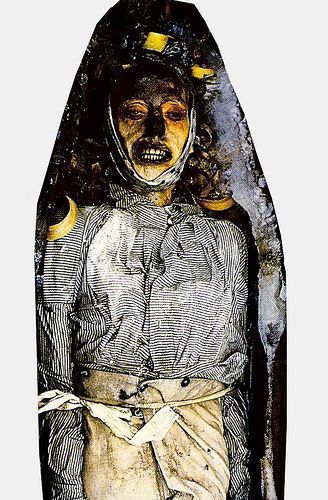 · |