|
#1
●
05-24-2022, 12:57 PM
| ||||||||
 ♚ Legacy Gold Member ♚ Poster Rank:908 Join Date: Jul 2020 Posts: 820
Contributions: 10
Mentioned: 13 Post(s) Quoted: 173 Post(s)
| ||||||||
|
The Shocker's Mix 29
Some of the stuff I work on doesn't make the cut so I thought about gathering them up in a single post. So basically it's images I have little or no info about or I've decided that they don't get their own thread, for example, because of low image/content quality, lack of backstory or additional info/knowledge, possibly uninteresting, only one image but not very special. I still do the usual image work including upscaling and color correction as needed, as I prefer to have my content high quality and educational. - - - Case 1 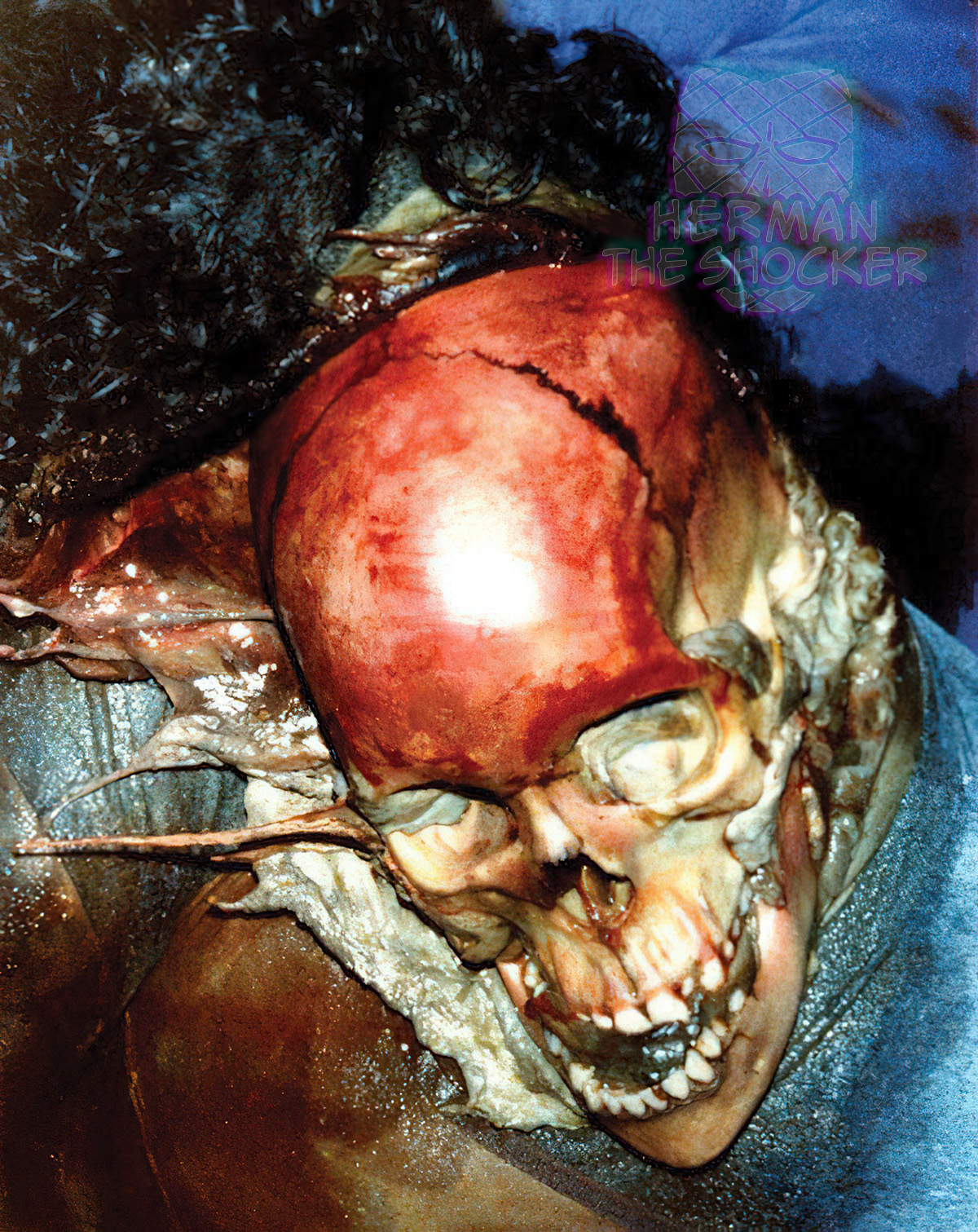 Fig1.1 Woman’s face eaten by the family dog. This woman’s face was eaten by the family dog postmortem, which increased putrefactive changes to the internal components of the body. You can also observe skin slippage on the woman’s scalp, as her hair separated from the skull. Bodies are also subject to animal feeding, indoors as well as outdoors. Animals feed on the remains of a dead human body just as they feed on any other piece of meat. Household pets as well as rats and other rodents often attack the body in indoor locations. Outside locations increase the chances of this occurrence because many wildlife creatures are carnivorous. Ravens, crows, seagulls, and turkey buzzards are just a few of the carrion birds that will feed off a body and may leave wounds that could be initially mistaken as mutilation injuries consistent with some sort of assault. - - - Case 2 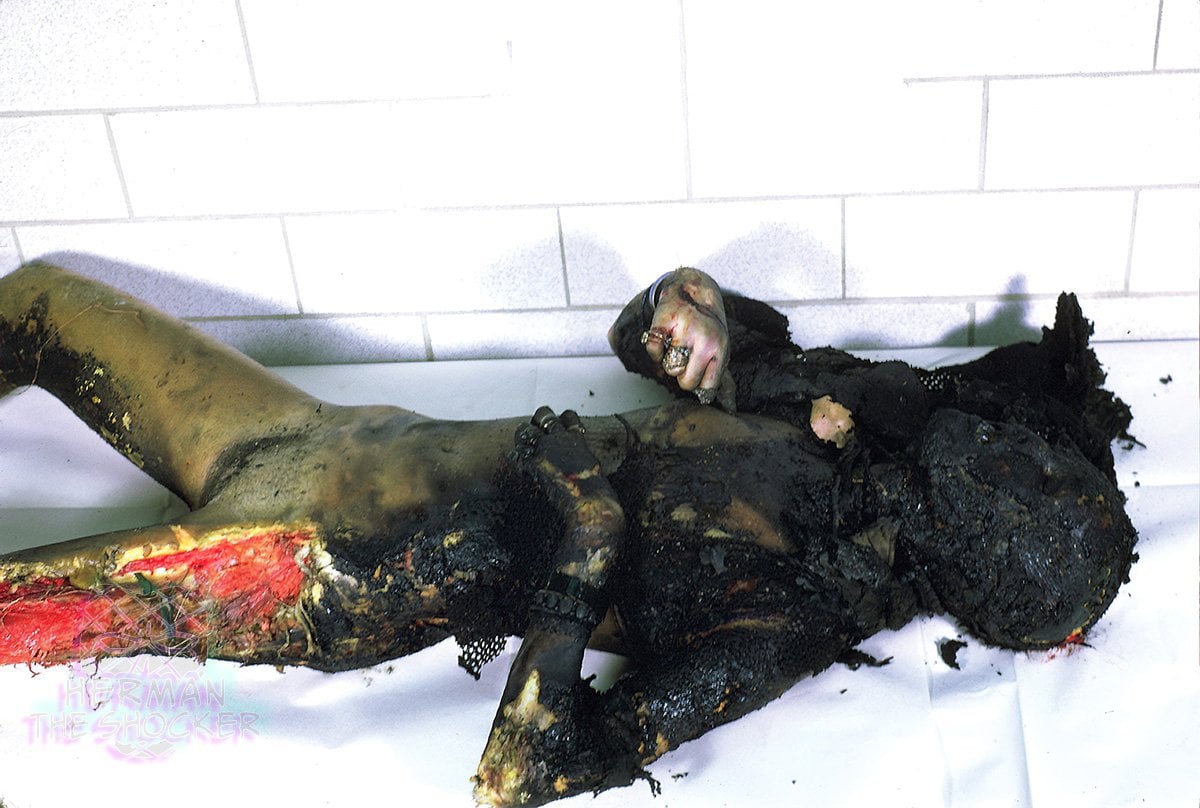 Fig2.1 Animal feeding on badly burned body. Nassau County, New York. This badly burned body had been dumped at an outside location where animals fed on the cadaver. Bodies are also subject to animal feeding, indoors as well as outdoors. Animals feed off the remains of a dead human body just as they feed off any other piece of meat. Bodies that have been mutilated by domestic and wildlife creatures or insect activity may give an appearance of gross injury, which is not necessarily associated with an antemortem attack. In addition, certain portions of the body may have been carried away or be missing from the cadaver due to animal activity. Practically speaking, investigators must be careful not to jump to any false conclusions based on their initial observations at scenes of this type. - - - Case 3 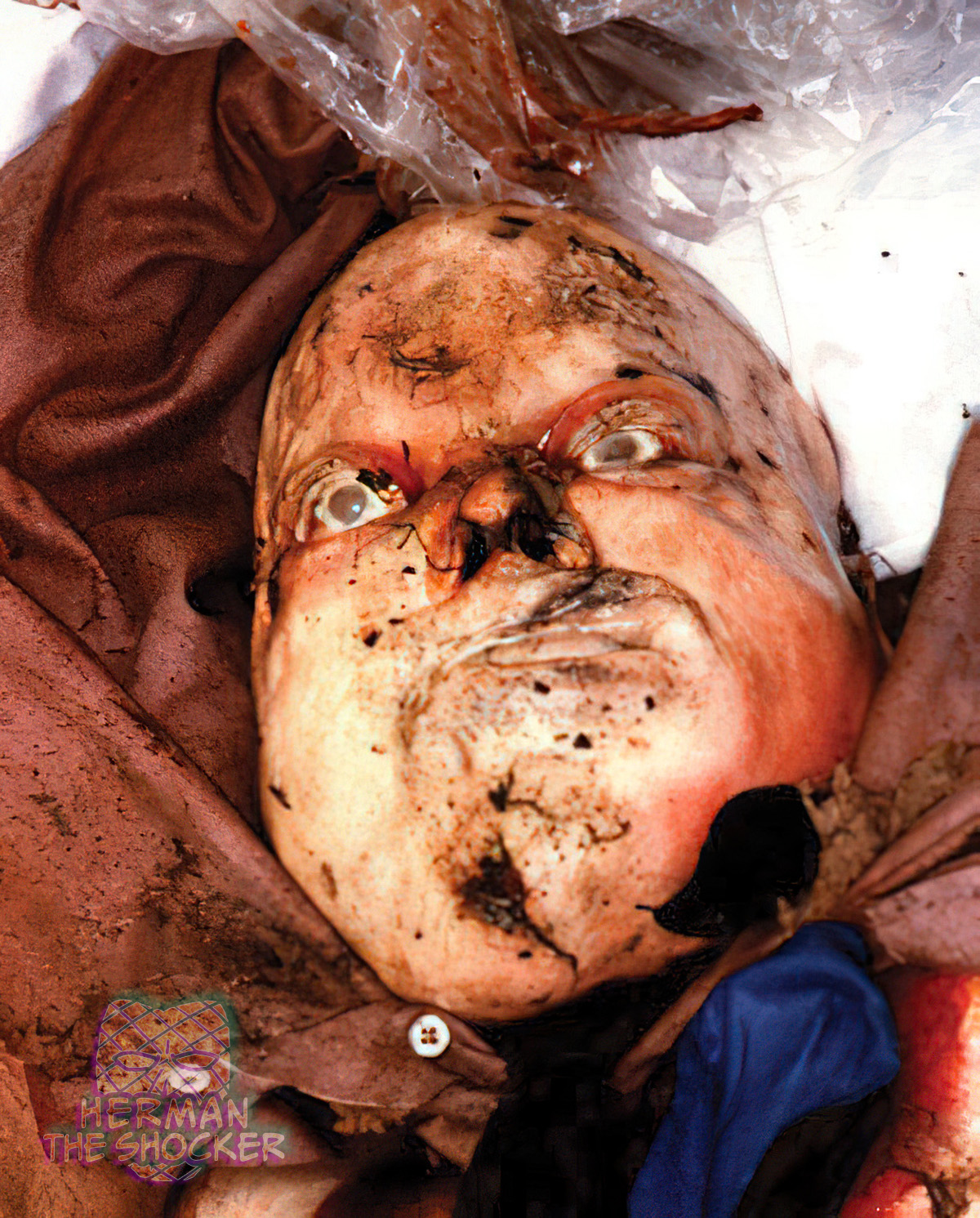 Fig3.1 Bloated floater. The body of this male had been in the water for approximately one week. Notice the effects of submersion and postmortem changes in the tissue. Many times it is difficult to determine the sex of bodies that have been immersed in water. A body in water generally decomposes more slowly due to the colder temperatures as well as the lack of oxygen. However, a body disposed in a septic tank or in waters containing large amounts of chemical waste or bacteria will cause accelerated decomposition. Marine life, especially crabs and lobsters, are known to nibble on “floaters” (bodies in the water). Bodies removed from water show excessive gas production and tissue discoloration, owing to explosive bacterial gas production. The gas causes the bodies to bloat excessively, which can cause an explosion or sudden rupture of the tense abdomen. The pressure may cause the eye globes and tongue to protrude. - - - Case 4 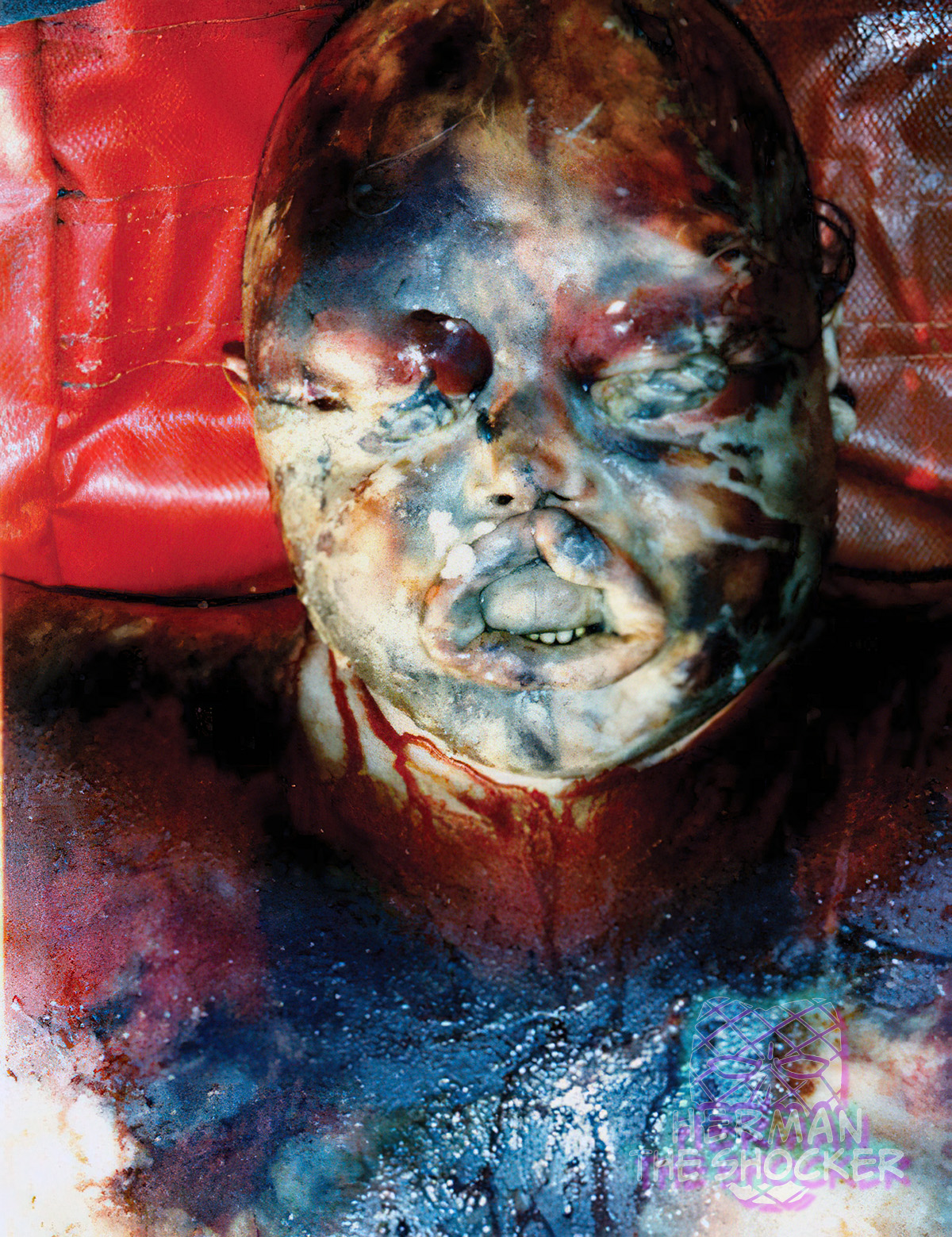 Fig4.1 Bloated body of a woman after one week of submersion. The body of this female had been in the water for approximately one week. - - - Case 5 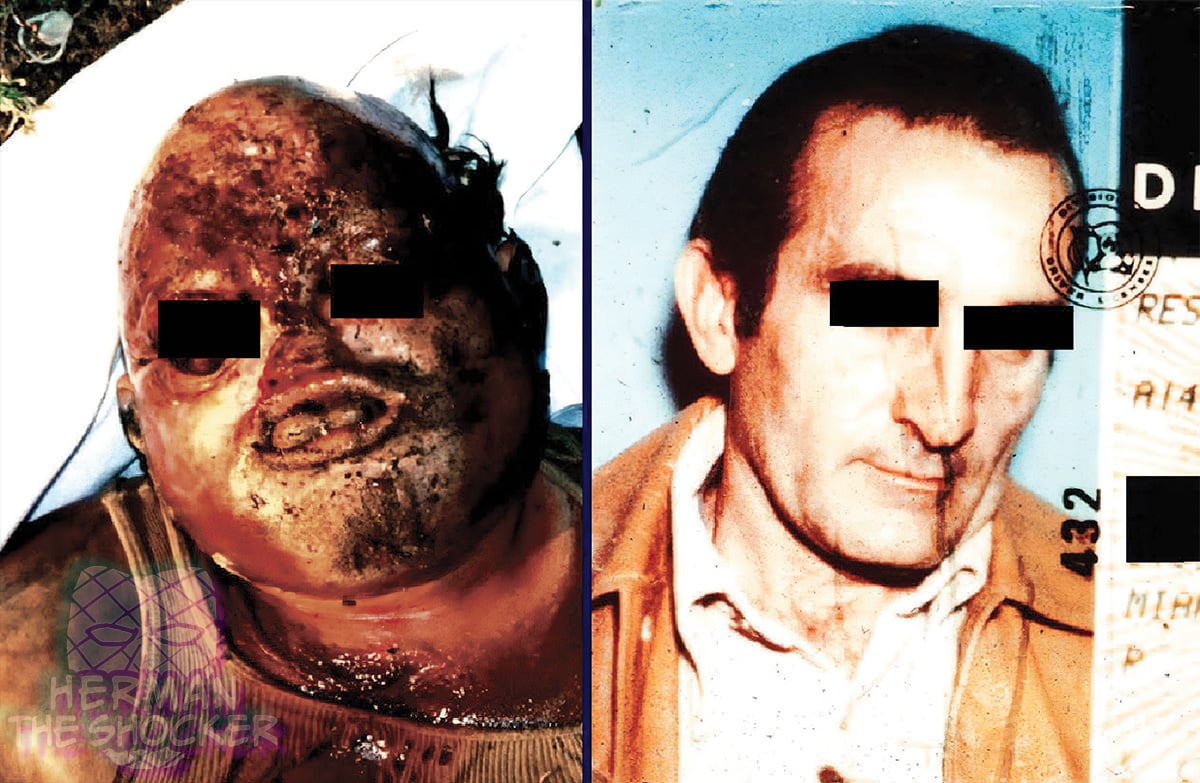 Fig5.1 Identification of bloated bodies in water. Many times it is difficult to make a physical identification of the victim’s bloated body recovered from the water. This photo depicts the victim’s body when removed from the river along with a comparison of the victim’s driver’s license photo recovered from his wallet. The following are some general time spans associated with bodies in water:
- - - Case 6 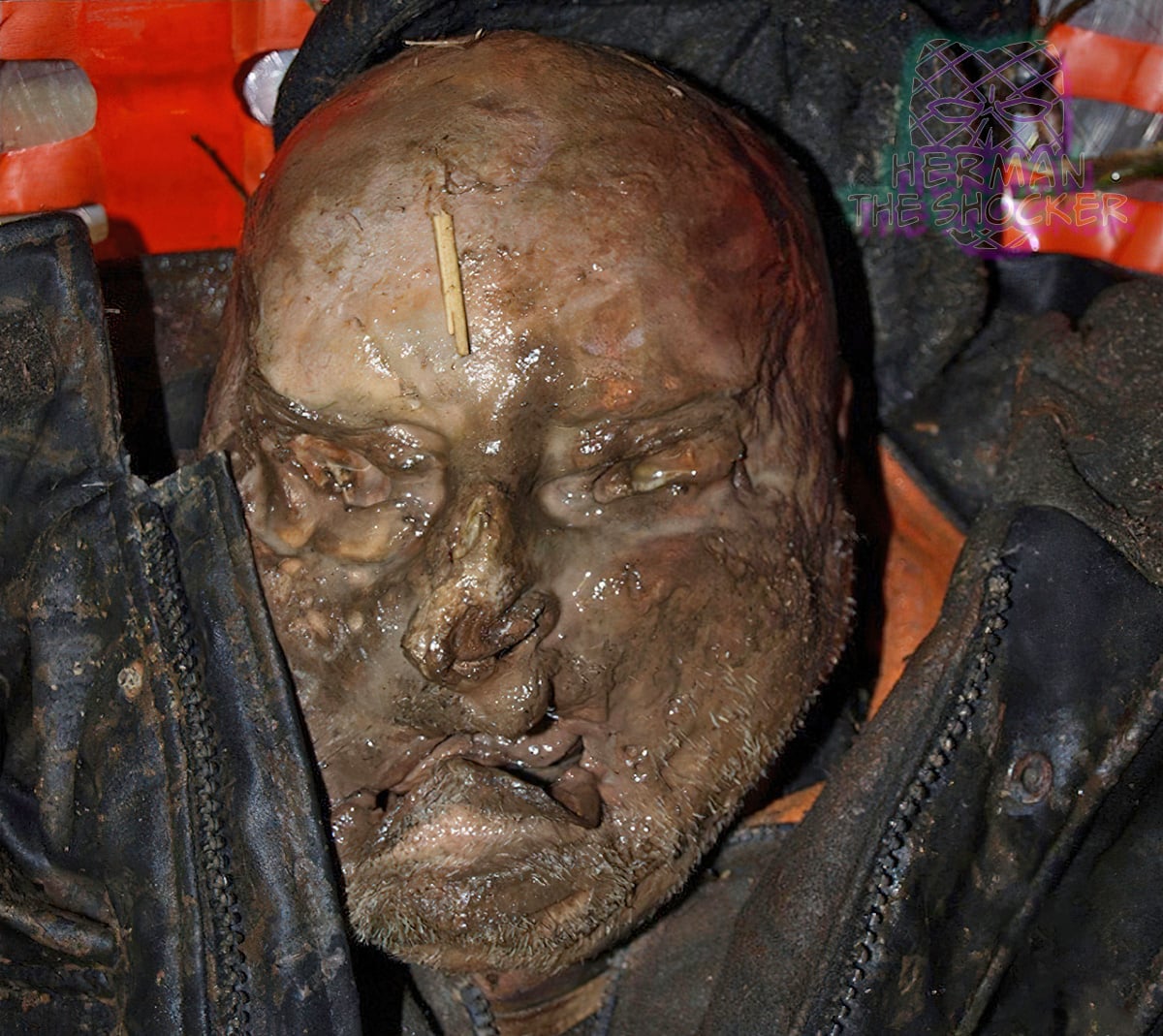 Fig6.1 Body found in the Northern Adriatic Sea. This individual was found in the Northern Adriatic Sea, near Italy. No further info. Many times it is difficult to determine the sex of bodies that have been immersed in water. A body in water generally decomposes more slowly due to the colder temperatures as well as the lack of oxygen. - - - Case 7 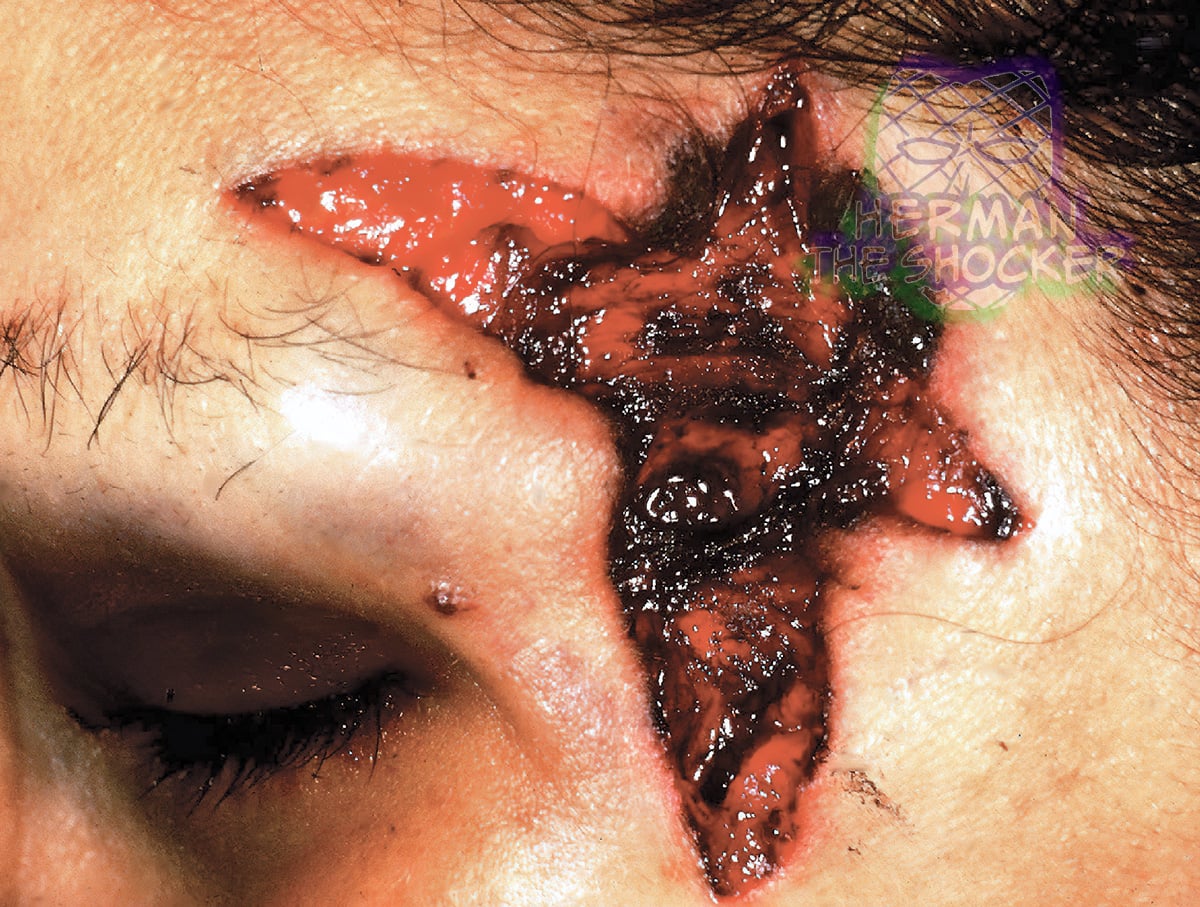 Fig7.1 Particularly large and marked tissue destruction is evident characterized by a cross-shaped or star-shaped wound referred to as stellate-type wound. 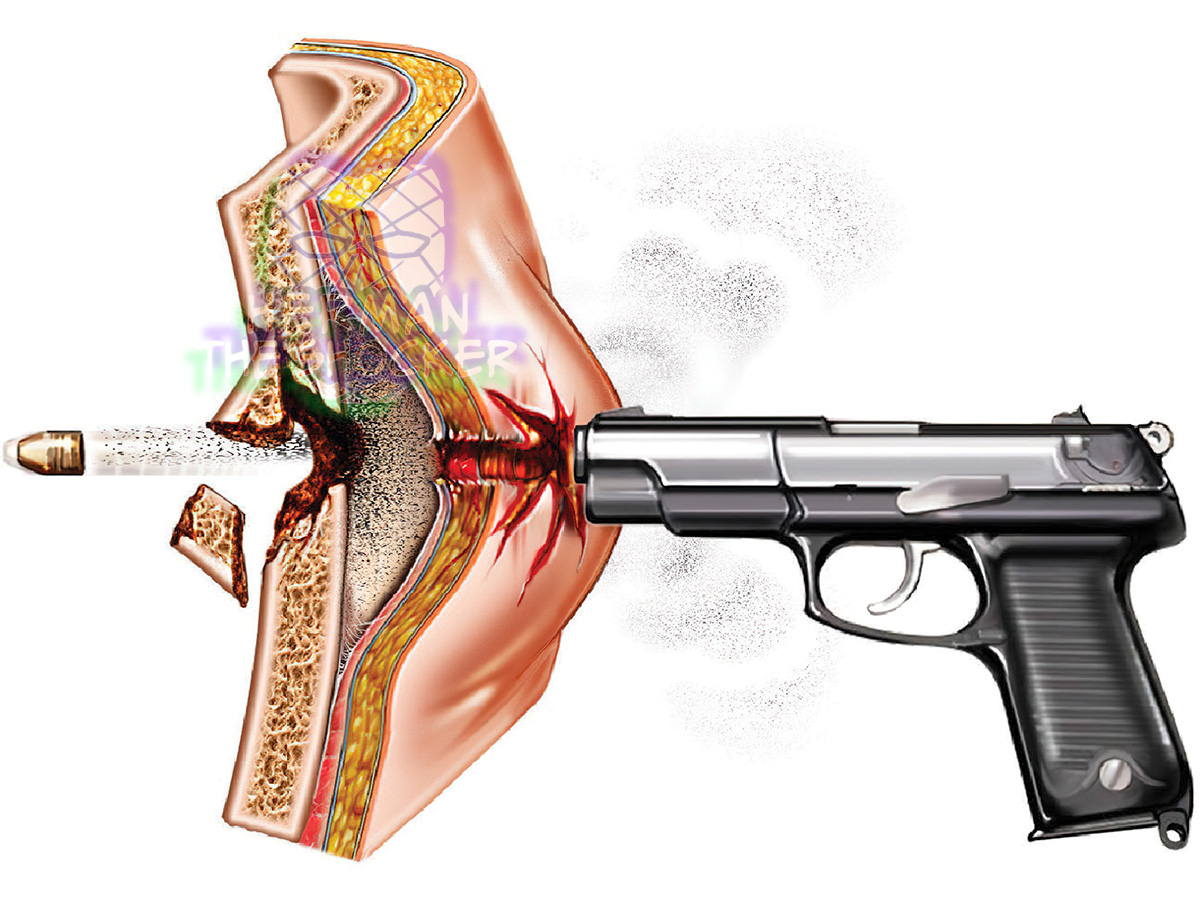 Fig7.2 Diagram representation of a hard contact wound. Contact wounds is when firearm is in contact with the target at the time of discharge. In a hard contact wound, gas expansion within the subcutaneous tissues may result in a muzzle imprint (abrasion resembling the shape of the muzzle = Werkgartner mark) or in an irregular, stellate appearance with a central defect and radiating lacerations (typically seen in gunshot wounds to the head). In the diagram in Fig7.2 the weapon is pressed against the head or body in an area overlying bone surfaces. Subsequently, the gases from the explosion expand between the skin and the underlying bone surfaces producing a bursting effect with a ragged entrance wound. - Part 1 --- Part 2 --- Part 3 --- Part 4 --- Part 5 --- Part 6 --- Part 7 --- Part 8 --- Part 9 --- Part 10 --- Part 11 --- Part 12 --- Part 13 --- Part 14 --- Part 15 --- Part 16 --- Part 17 --- Part 18 --- Part 19 --- Part 20 --- Part 21 --- Part 22 --- Part 23 --- Part 24 --- Part 25 --- Part 26 --- Part 27 --- Part 28 - This post is for educational purposes only and is nonprofit. Under Section 107 of the US Copyright Act of 1976; Allowance is made for "Fair Use" for purposes such as criticism, comment, news reporting, teaching, scholarship, and research. OP is not a medical expert. No copyright infringement intended. This post does not encourage or glorify violence/harassment. Images might have been upscaled and enhanced. Text might have been shortened and simplified/reorganized for online view.
__________________ ⭐️ hermantheshocker.com ⭐️ |
|
#4
●
05-24-2022, 08:09 PM
| ||||||||
 My Rank: CAPTAIN Poster Rank:208 Boob enthusiast Join Date: Jul 2017 Posts: 7,249 Mentioned: 8 Post(s) Quoted: 2713 Post(s)
| ||||||||
|
Re: The Shocker's Mix 29
Case 3 looks like GG All in, probably stinks as much too  |
|
#6
●
05-24-2022, 09:26 PM
| ||||||||
| So Fucking Banned Poster Rank:298 Join Date: Mar 2010 Posts: 4,325
Contributions: 1
Mentioned: 2 Post(s) Quoted: 1445 Post(s)
| ||||||||
|
Re: The Shocker's Mix 29
Mr. HermanTheShocker, I think I speak for many here on this site when I say that we greatly appreciate all of the research and hard work that you put into your posts. Thanks again. |
|
#7
●
05-24-2022, 11:58 PM
| ||||||||
 My Rank: FIRST SERGEANT Poster Rank:440 Mal Join Date: Aug 2021 Posts: 2,597 Mentioned: 2 Post(s) Quoted: 1377 Post(s)
| ||||||||
|
Re: The Shocker's Mix 29
Beautiful..... On nature walks, I love to take pictures of flowers and pretty things, but also rotting tree stumps, fallen trees, fungus, dead animals in different stages of decay. So yeah, in a very morbid, macabre way, these are beautiful. Thank you Herman!!! If you, or anyone here at DR, have any info, or can direct me to anyone or any direction to get more info on case 2  , I would really appreciate it!!! , I would really appreciate it!!!Thank you  |
|
#9
●
05-25-2022, 02:14 PM
| ||||||||
 My Rank: PRIVATE FIRST CLASS Poster Rank:3573 Male Man Join Date: May 2017 Posts: 97 Mentioned: 0 Post(s) Quoted: 15 Post(s)
| ||||||||
|
Re: The Shocker's Mix 29
That dog’s work on the face was CLEAN  . Thank you herman for blessing us with another collection! . Thank you herman for blessing us with another collection!
|