|
#1
●
03-03-2022, 08:37 AM
| ||||||||
 ♚ Legacy Gold Member ♚ Poster Rank:908 Join Date: Jul 2020 Posts: 820
Contributions: 10
Mentioned: 13 Post(s) Quoted: 173 Post(s)
| ||||||||
|
The Shocker's Mix 25
Some of the stuff I work on doesn't make the cut so I thought about gathering them up in a single post. So basically it's images I have little or no info about or I've decided that they don't get their own thread, for example, because of low image/content quality, lack of backstory or additional info/knowledge, possibly uninteresting, only one image but not very special. I still do the usual image work including upscaling and color correction as needed, as I prefer to have my content high quality and educational. - - - Case 1 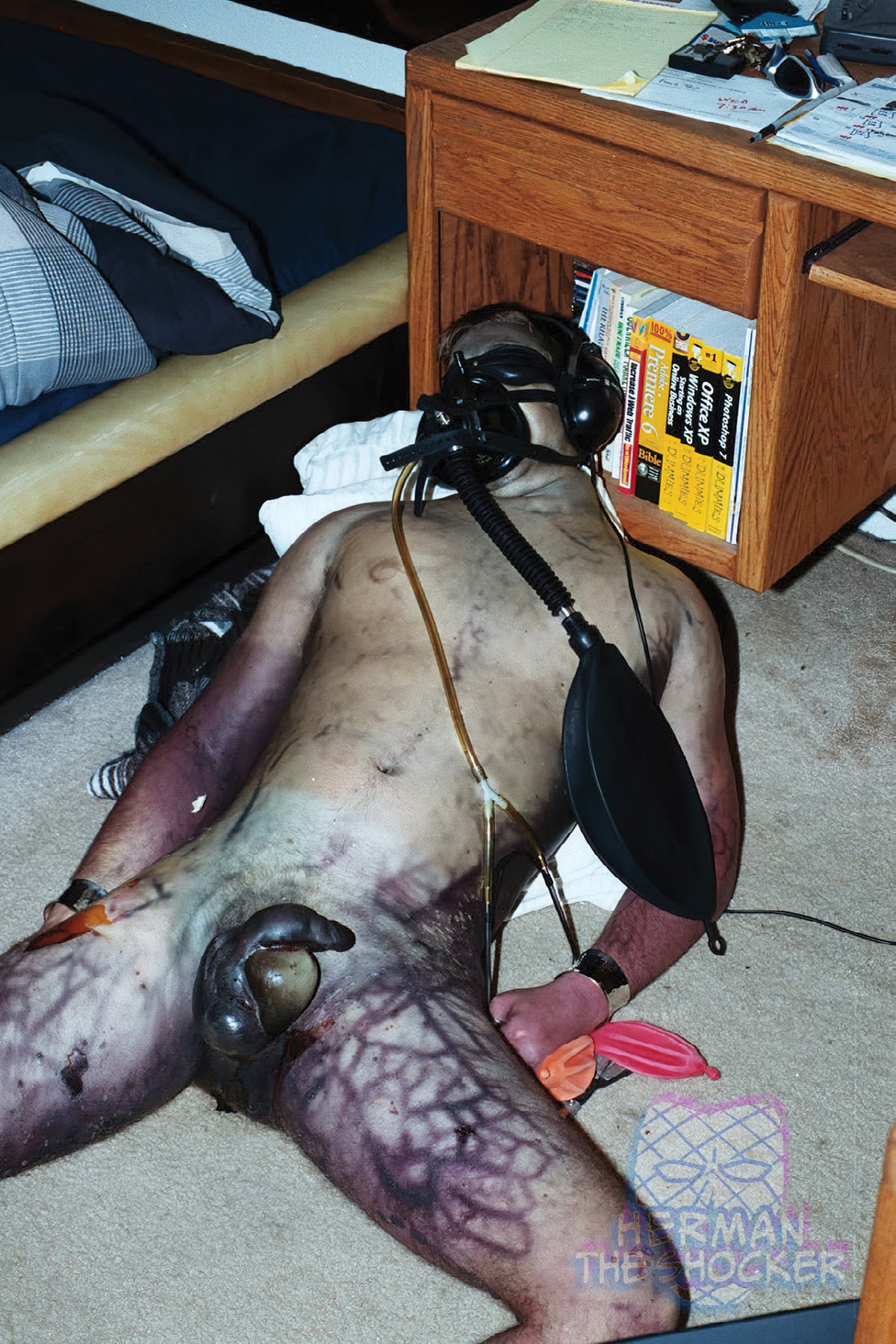 Fig1.1 Nitrous oxide autoerotic death. Huntington Beach, California. The victim was a white male, 37 years of age, living alone in a large apartment complex. The body had begun to decompose and was bloated with skin slippage and swollen genitalia. The officer noted that the victim was wearing a pilot-type oxygen mask, which was attached to his mouth and nose. There was a long black hose that lead from the facemask to a colored balloon. The victim also had a black nontransparent set of goggles covering his eyes. There was a Sony video camera pointed toward the victim, whose body was facing a mirror, as if he was watching himself. The tape showed the victim leaning over and filling up the balloon with gas. An examination revealed that the victim was inhaling nitrous oxide. Autoerotic death refers to the accidental death of individuals of either sex due to failure of devices, or unexpected effects of materials, that were being used to enhance the sexual experience. Although asphyxia from hanging has been described most frequently, a wide variety of other lethal situations have been reported. As there is great variability in the number and types of sexual aids that may be used by individuals, careful death scene examination is essential in helping to exclude suicide and more rarely homicide. The clandestine nature of this paraphilia may, however, make subsequent identification and diagnosis difficult unless the death scene features are typical. This is particularly so in the rare cases involving women. - - - Case 2 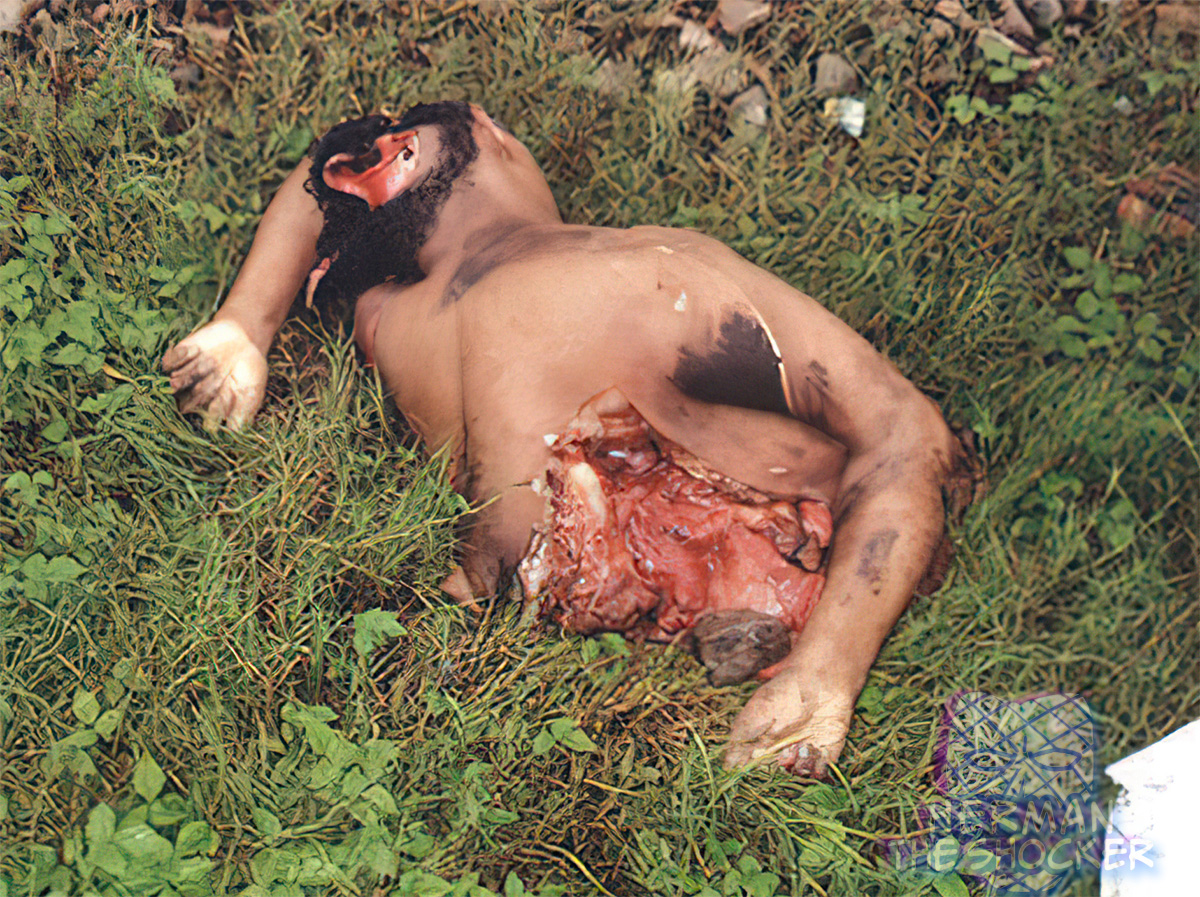 Fig2.1 Man killed by train. 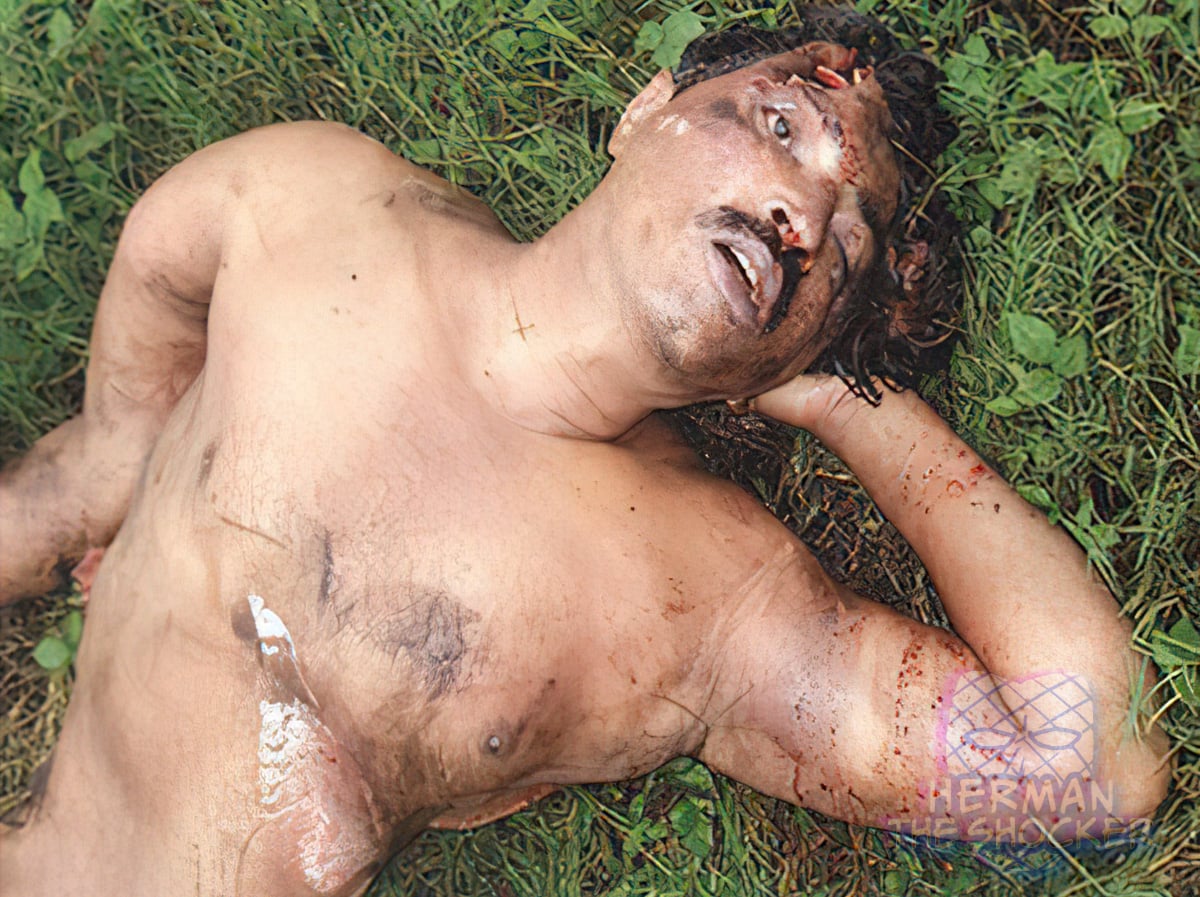 Fig2.2 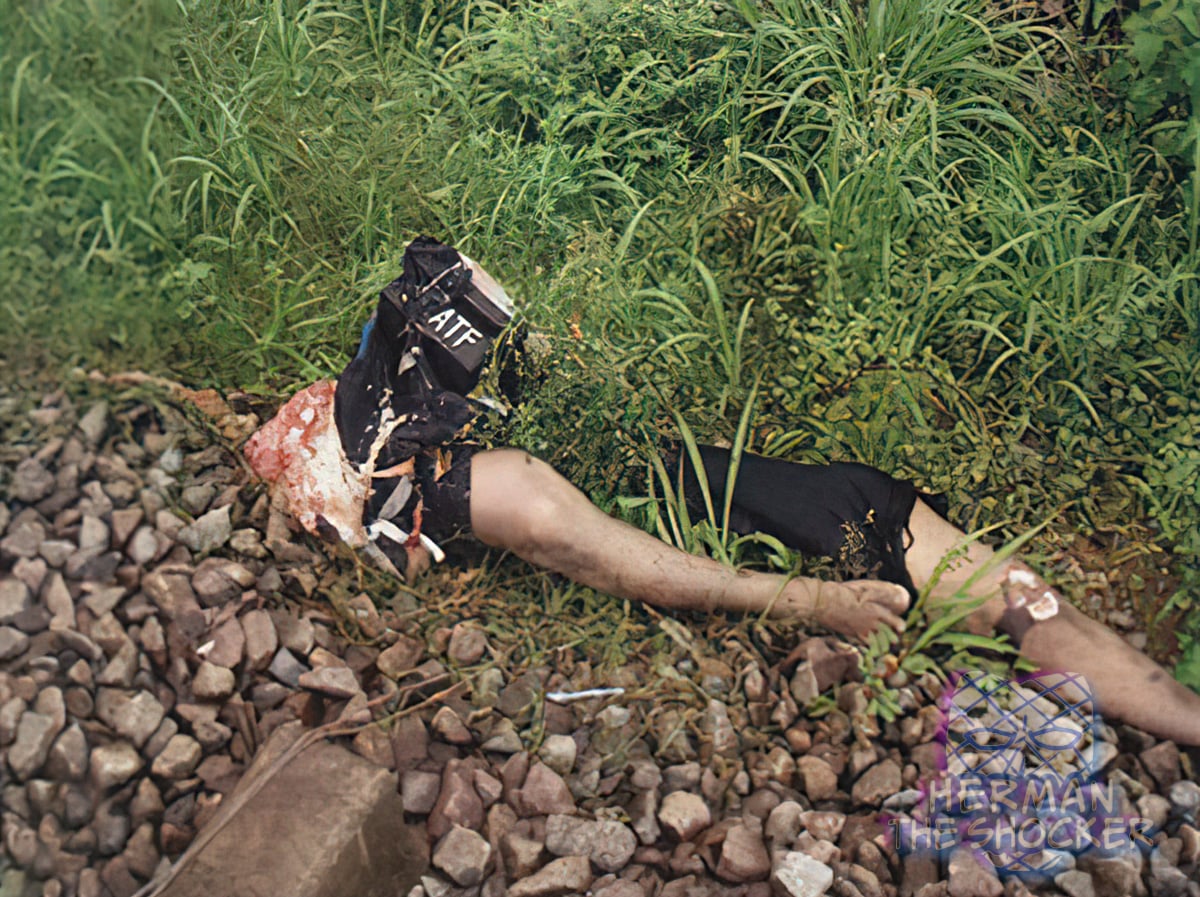 Fig2.3 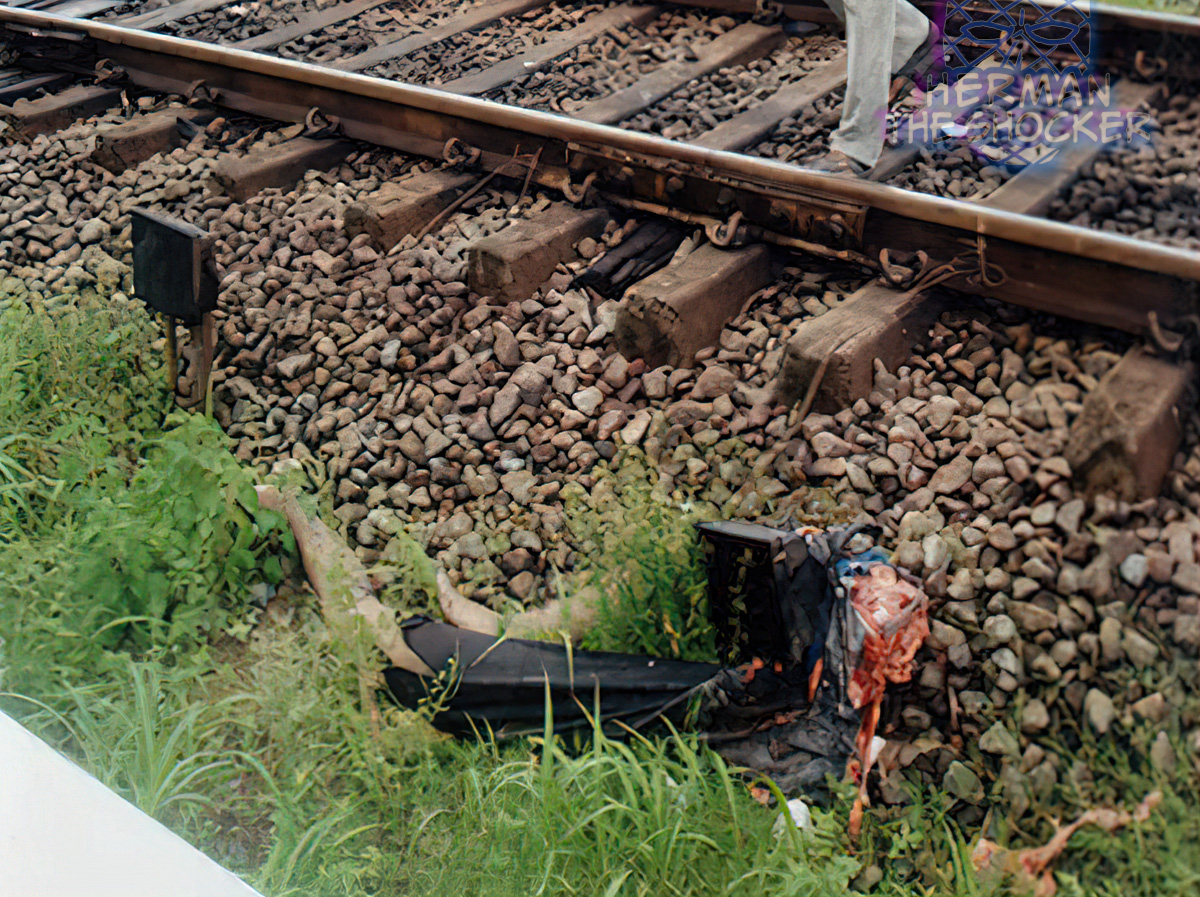 Fig2.4 India. This individual died when he was hit by a train, no further info. In 2020 more than 13,000 train accidents across India have killed nearly 12,000 railway passengers, according to a recent report by the National Crime Records Bureau (NCRB). The latest statistics mean that on average, 32 people lost their lives every day in these accidents in 2020. The report also shows that 8,400 or about 70 per cent of these railway accidents took place as passengers either fell off the train or came in the way while crossing the railway track. However, the report, issued by the central government, also showed that railway accidents reduced significantly in 2020, compared to that of the previous year. According to the NCRB Annual Report 2020, there were 27,987 train accidents in 2019, which declined to 13,018 in 2020. - - - Case 3 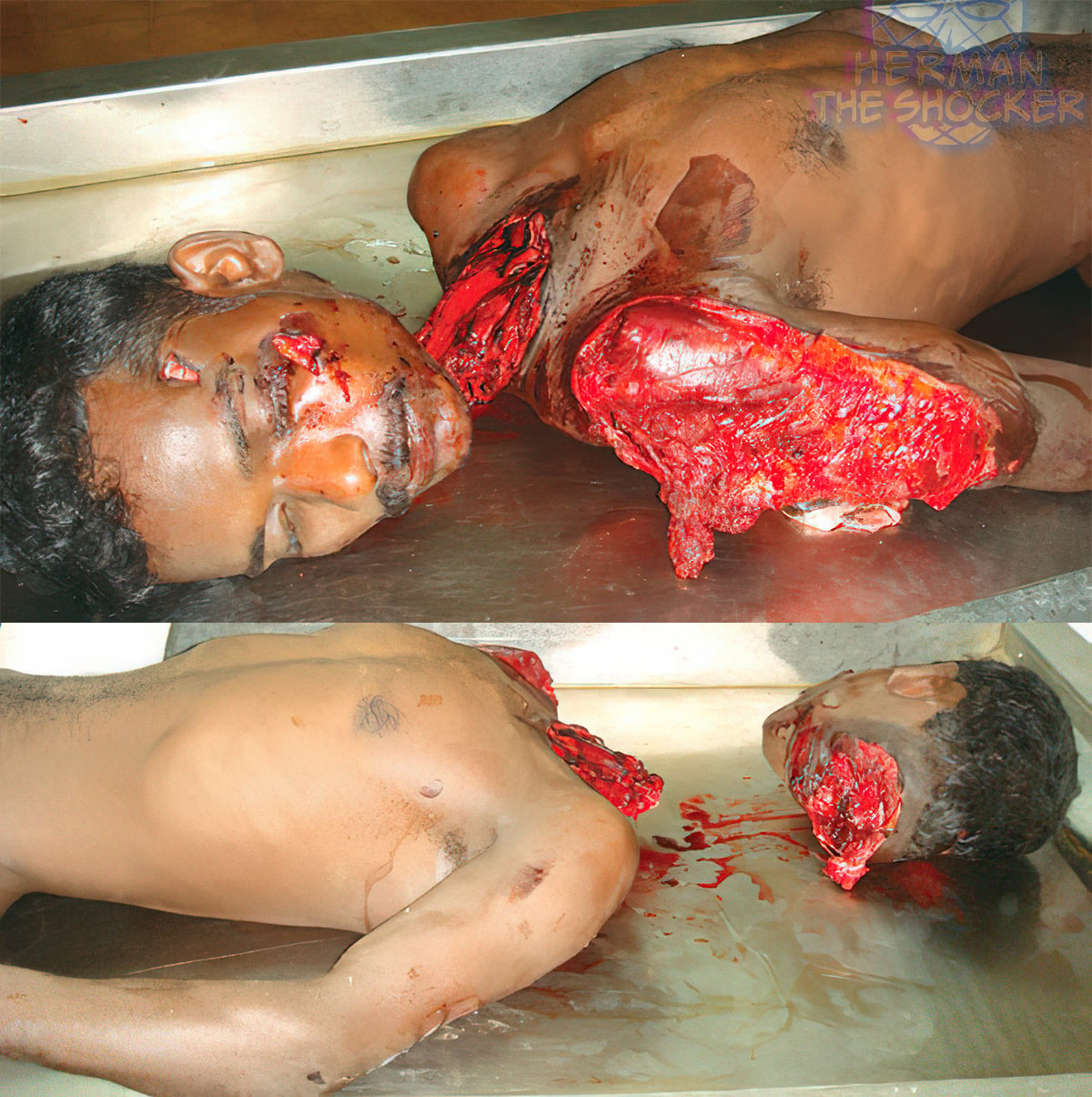 Fig3.1 Man beheaded when hit by a train. India. This individual was beheaded when he got hit by a train, no further info. - - - Case 4 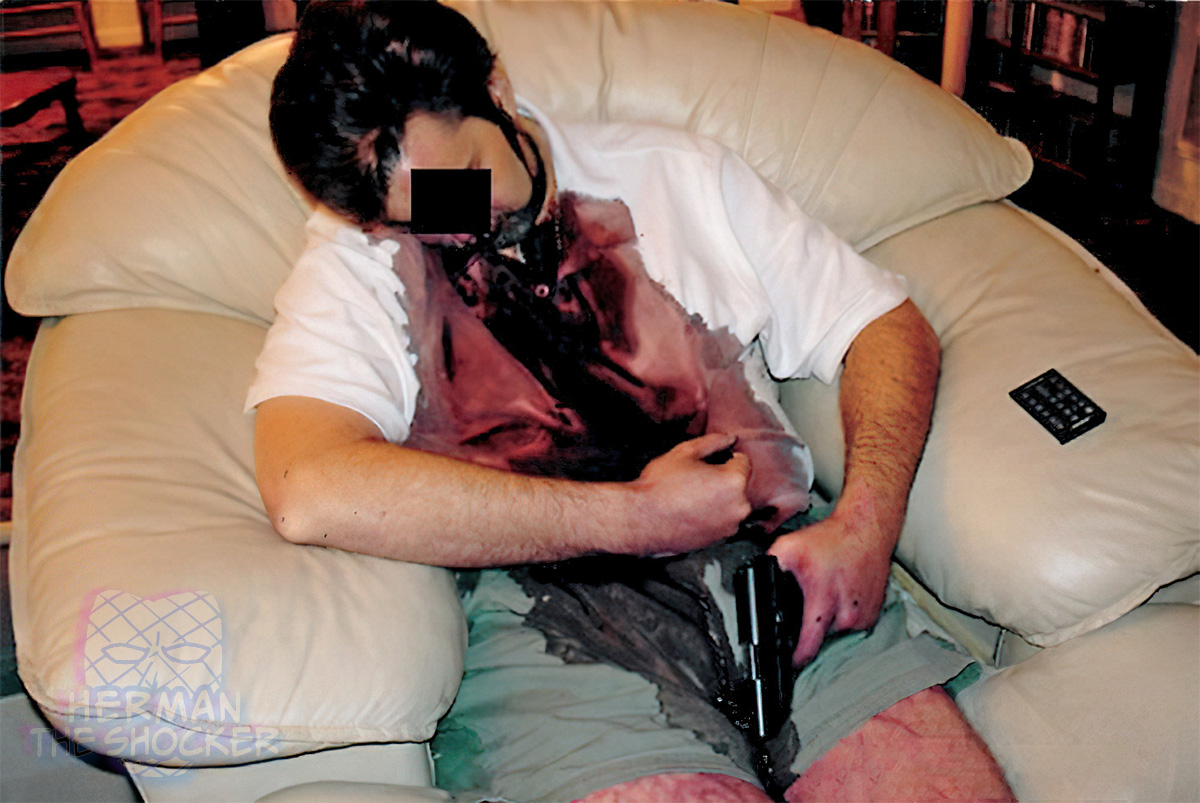 Fig4.1 Suicide with a pistol. This individual has died after a self-inflicted gunshot to the head, no further info. The head is the most common location for a suicidal gunshot wound (74%), followed by the chest (20%) and then the abdomen (6%). In head wounds, the most common location was intraoral (50%), followed by under the chin (19%); side of head, including parietal and temporal wounds (15%); and the face, including the forehead (13%). - - - Case 5 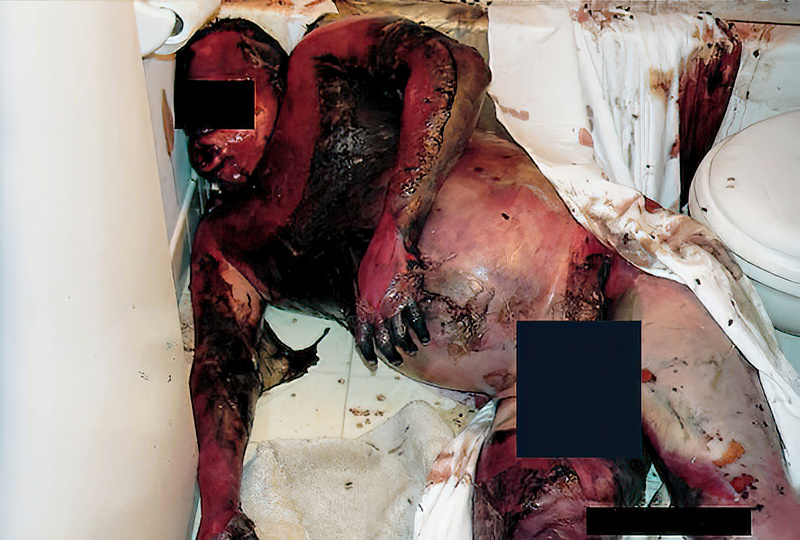 Fig5.1 Advanced stages of decomposition. This individual shown here had been dead approximately two weeks in an unheated, unventilated room. Note the extreme discoloration and swelling of the facial area as well as the abdomen. In general, as rigor passes, skin first turns green at the abdomen. As discoloration spreads to the rest of the trunk, the body begins to swell because of bacterial methane-gas formation. The bacteria are normal inhabitants of the body. They proliferate after death, and their overgrowth is promoted in warm weather and retarded in cold weather. The different rates and types of decomposition a body undergoes depend on the environment. Decomposition may not occur evenly throughout the body. For example, decomposition occurs more rapidly in injured areas. If a person is struck on the head and bleed- ing occurs only in that area, decomposition may be much more advanced on the head than on the remainder of the body. - - - Case 6 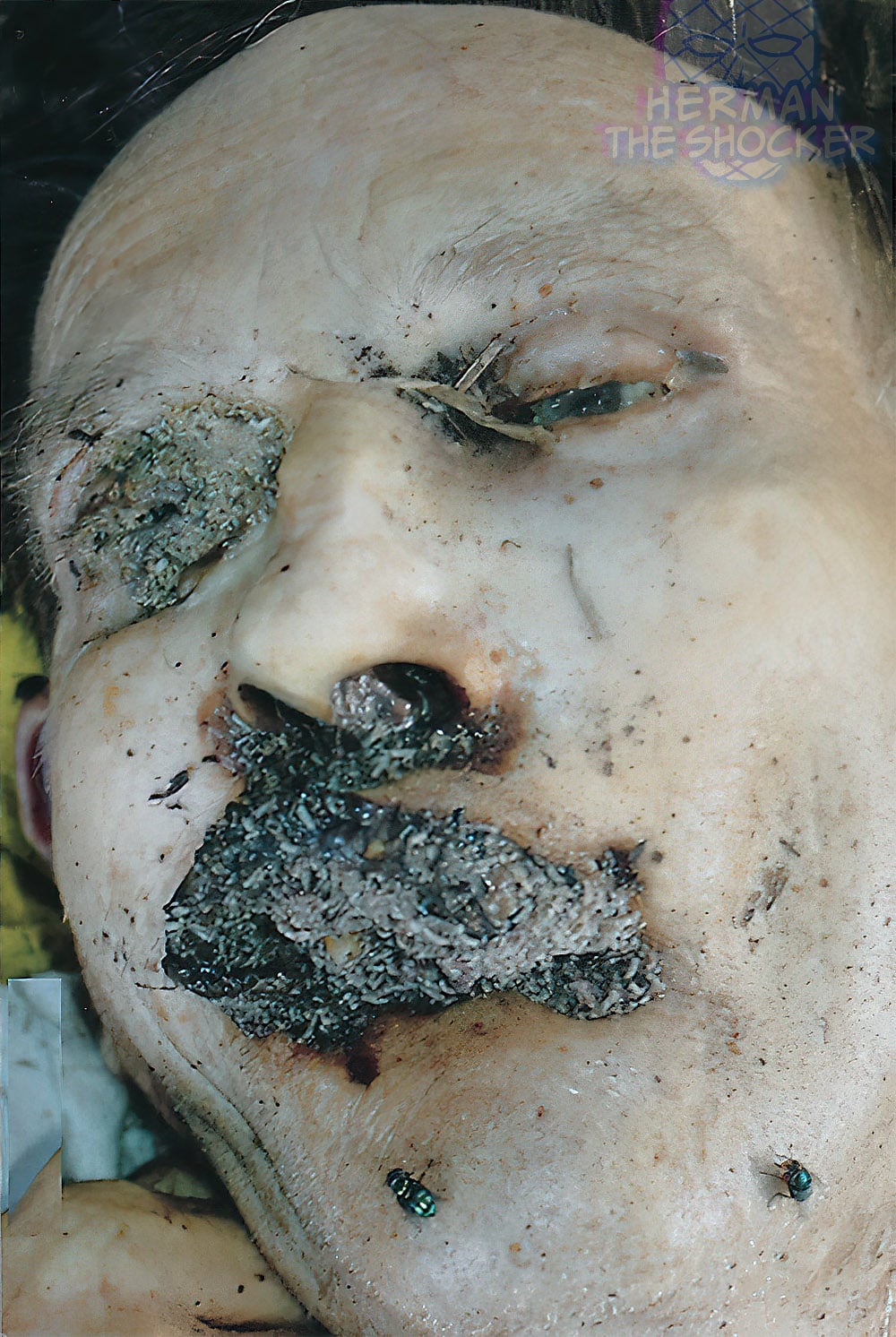 Fig6.1 Fly larvae in the mouth and eyes. This individual had been dead for approximately four days. His body was found in the backyard by neighbors. During this period of time, temperatures had reached into the 90s. Note the fly larvae (maggots) in his eyes, nose, and mouth. Insects are invariably the first witnesses to a crime, arriving within minutes or even seconds after death. There are two ways to use insects to determine time since death. The first method involves using dipteran larval development, and the second involves using insect succession over time. The first method is used in the first hours, days, or weeks after death and can determine the time of death accurate to a day or less, or a range of days. The insects used in this method are those that arrive first on the corpse, that is, the calliphoridae or blow flies (diptera). These flies are attracted to a corpse very soon after death. They lay their eggs on the corpse, usually in a wound, if present, or in any of the natural orifices. Their development follows a set, predictable cycle, and each of these developmental stages takes a set, known time. This time period is based on the availability of food and the temperature. In the case of a human corpse, food availability is not usually a limiting factor. Insects are “cold blooded,” so their development is extremely temperature-dependent. Their metabolic rate increases with increased temperature, which results in a faster rate of development, so that the duration of development decreases in a linear manner with increased temperature, and vice versa. An analysis of the oldest stage of insect on the corpse and the temperature of the region in which the body was discovered allows an entomologist to determine the day or range of days in which the first insects oviposited or laid eggs on the corpse. This, in turn, leads to a day or range of days during which death occurred. - - - Case 7 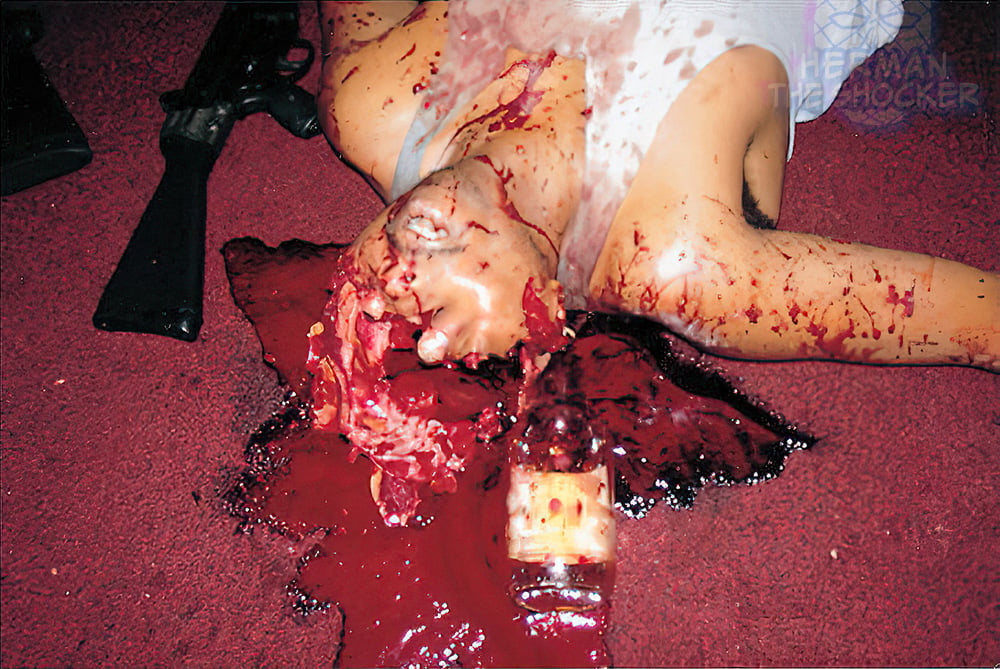 Fig7.1 High velocity rifle wound. This individual was shot in the head one time by a police swat team member. The officer was armed with a .308 Remington 700 rifle. The subject had barricaded himself in a motel room while holding a hostage. He was shot in the head after he made the fatal mistake of slightly opening the door to the motel room and pointing his rifle in the direction of a police swat team member. The rifle the decedent was holding is depicted on the left side of his body. - - - Part 1 --- Part 2 --- Part 3 --- Part 4 --- Part 5 --- Part 6 --- Part 7 --- Part 8 --- Part 9 --- Part 10 --- Part 11 --- Part 12 --- Part 13 --- Part 14 --- Part 15 --- Part 16 --- Part 17 --- Part 18 --- Part 19 --- Part 20 --- Part 21 --- Part 22 --- Part 23 --- Part 24 - This post is for educational purposes only and is nonprofit. Under Section 107 of the US Copyright Act of 1976; Allowance is made for "Fair Use" for purposes such as criticism, comment, news reporting, teaching, scholarship, and research. OP is not a medical expert. No copyright infringement intended. This post does not encourage or glorify violence/harassment. Images might have been upscaled and enhanced. Text might have been shortened and simplified/reorganized for online view.
__________________ ⭐️ hermantheshocker.com ⭐️ |
|
#3
●
03-03-2022, 12:35 PM
| ||||||||
 BEHEMOTH Poster Rank:53 Blue-Eyes White Dragon Join Date: Apr 2021 Posts: 27,708
Contributions: 21
Mentioned: 322 Post(s) Quoted: 13289 Post(s)
| ||||||||
|
Re: The Shocker's Mix 25
Helium.
|
|
#4
●
03-03-2022, 12:43 PM
| ||||||||
 My Rank: STAFF SERGEANT Poster Rank:871 Male Join Date: Jun 2011 Posts: 865 Mentioned: 0 Post(s) Quoted: 226 Post(s)
| ||||||||
|
Re: The Shocker's Mix 25
Thanks Herman! As always very informative as to what we are viewing as well as providing some "interesting" viewing for the day. Keep up the good work!   |
|
#5
●
03-03-2022, 12:54 PM
| ||||||||
| ♚ Legacy Gold Member ♚ Poster Rank:346 "IT"-Species; Genus-genius Join Date: Jan 2013 Posts: 3,614 Mentioned: 0 Post(s) Quoted: 616 Post(s)
| ||||||||
|
Re: The Shocker's Mix 25
It’s like all stages of meat on a slab. You got your fresh, tenderized, blood rare cut of meat. Some medium, juicy, meat. And the well done, steaming aroama, prime rib. hey chef Herman? |
|
#6
●
03-03-2022, 01:43 PM
| ||||||||
 ★ Legacy Member ★ Poster Rank:248 So many choices now Join Date: Jul 2015 Posts: 5,548 Mentioned: 15 Post(s) Quoted: 2120 Post(s)
| ||||||||
|
Re: The Shocker's Mix 25
Herman, The first one will haunt my dreams. Moral, go light on the nitrous oxide and include a friend as an "observer". |
|
#10
●
03-03-2022, 05:27 PM
| ||||||||
 My Rank: GUNNERY SERGEANT Poster Rank:624 Baboso Join Date: Feb 2012 Posts: 1,443 Mentioned: 1 Post(s) Quoted: 210 Post(s)
| ||||||||
|
Re: The Shocker's Mix 25
Case #7 is gnarly. I can't tell what rifle he was pointing; I want to say a FAL knock-off(?) And the SWAT sniper had an excellent rifle. I have a Rem 700 but in a smaller caliber.
|