|
#1
●
02-12-2022, 12:36 PM
|
 ♚ Legacy Gold Member ♚ Poster Rank:914 Join Date: Jul 2020 Posts: 820
Contributions: 13
820Posts 27,646Thanked 173Quoted 13Mentioned 13Contrib. |
|
The Shocker's Mix 22
Some of the stuff I work on doesn't make the cut so I thought about gathering them up in a single post. So basically it's images I have little or no info about or I've decided that they don't get their own thread, for example, because of low image/content quality, lack of backstory or additional info/knowledge, possibly uninteresting, only one image but not very special. I still do the usual image work including upscaling and color correction as needed, as I prefer to have my content high quality and educational. - - - Case 1 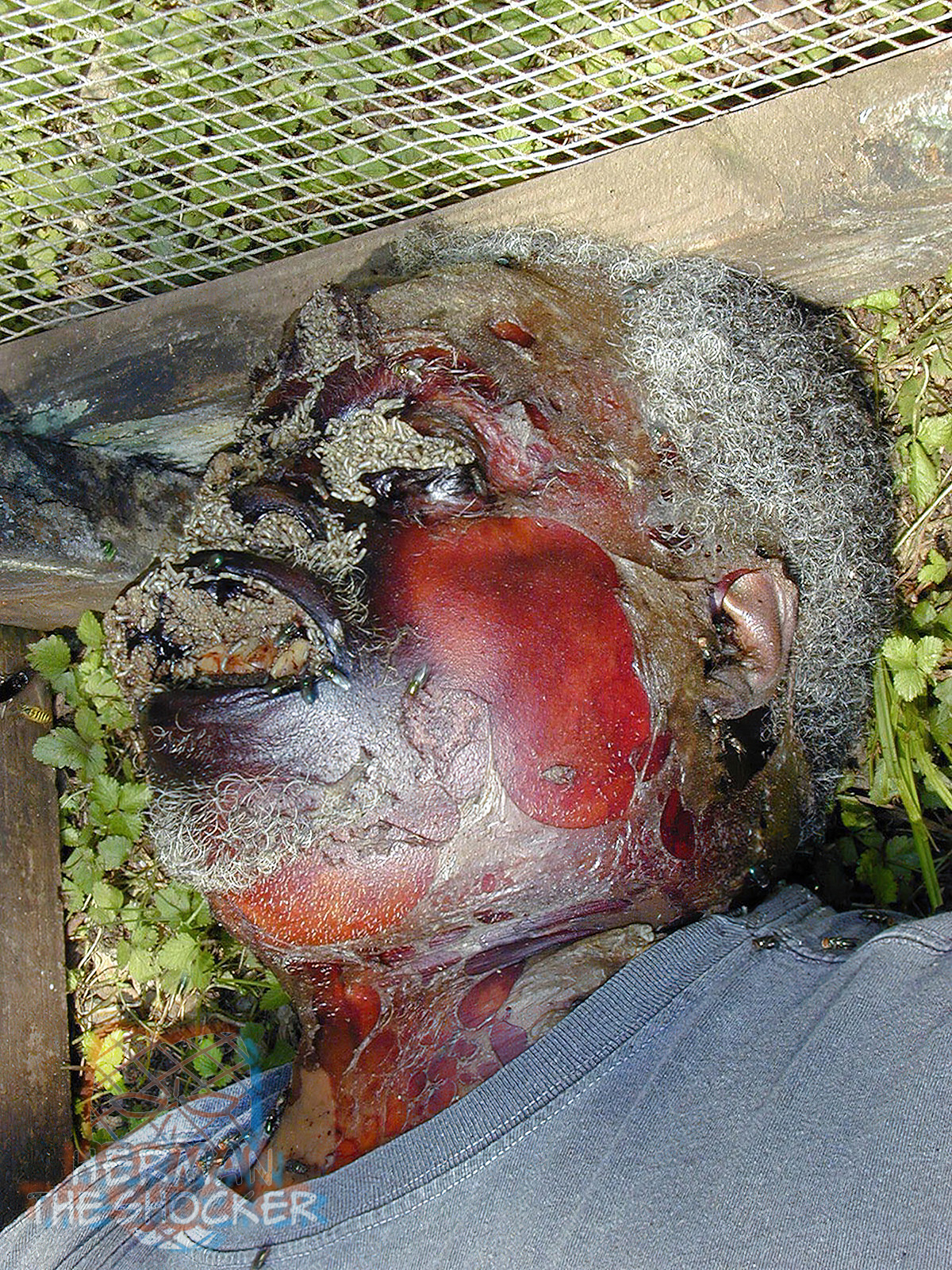 Fig1.1 Bloating, skin slippage, and discoloration on decomposing remains. Associated with putrefaction is the production of gases. These gases, primarily located in the abdomen, cause the body to become distended or bloat. This bloating can cause the affected areas of the body to expand dramatically. Over time the affected areas may rupture or the gas may subside naturally. Skin slippage, or the shedding of the epidermis from the body caused by the deterioration of the junction between the dermis and epidermis, is also associated with early decomposition processes. Many local environmental factors affect the decomposition process, including temperature, moisture, and soil chemistry, but the processes of autolysis and putrefaction are responsible for the chemical breakdown of tissues. - - - Case 2 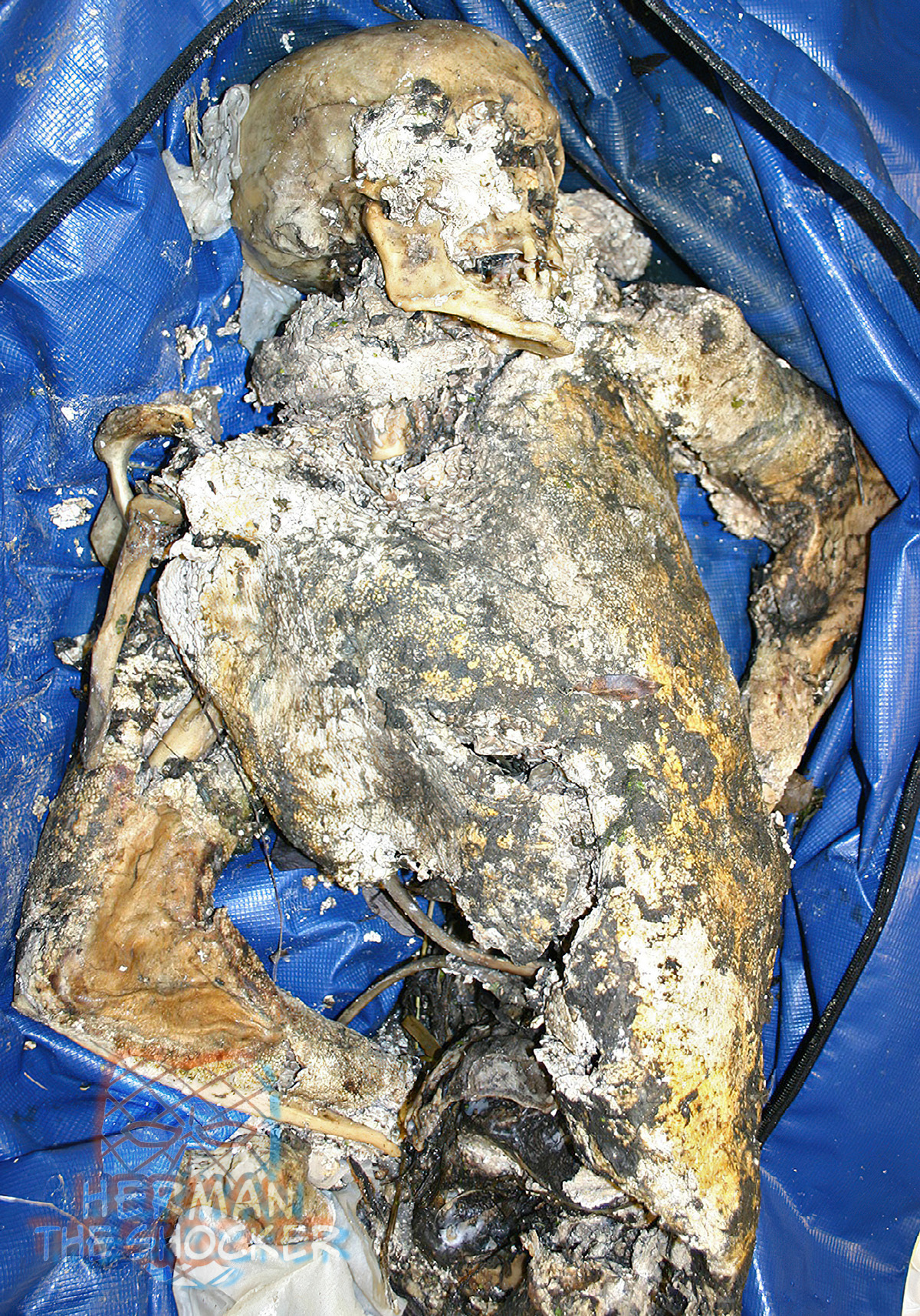 Fig2.1 Adipocere on saponified human remains. Saponification is the process of the conversion of fatty tissue to adipocere. Saponification usually occurs in unoxygenated, alkaline, semimoist to wet environments, and is therefore more likely to occur in remains deposited in water. Saponification can also occur in remains from moist airtight crypts or burials and may be accelerated by bacteria. Adipocere, sometimes called “grave wax,” is typically white in color and waxy in consistency but can vary from white to gray or tan to black, and can be semisoft to hard in consistency. Once formed, adipocere is relatively resistant to subsequent change, and can preserve many of the soft tissues. Saponification can occur in as little as 3 weeks, but onset typically takes place around one to 2 months. - - - Case 3 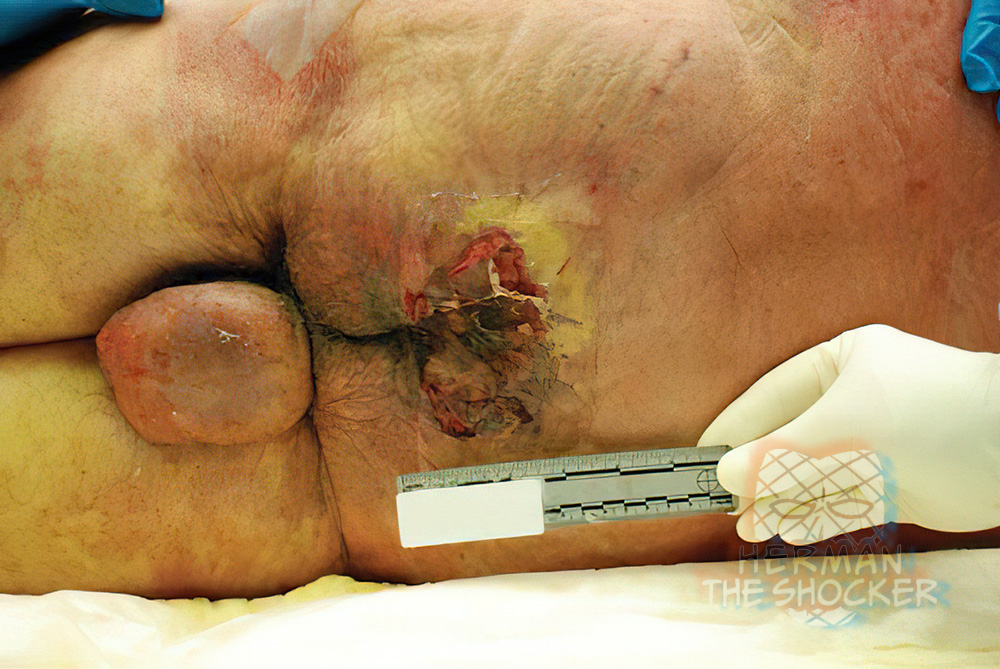 Fig3.1 Sacral Pressure Ulcer. 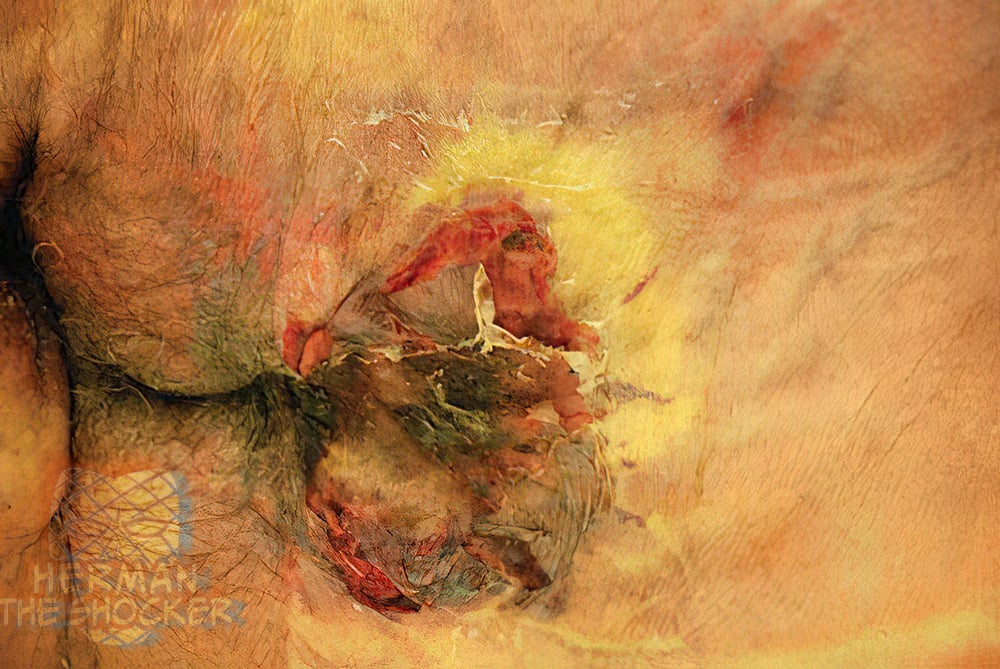 Fig3.2 Sacral Pressure Ulcer. Decubital ulceration or pressure sore. This is often associated with poor nursing care but is also related to the degree of advancing disease associated with poor circulation and organ failure. Pressure ulcers, also known as bedsores or decubitus ulcers, are skin injuries that develop most commonly on bony areas of the body. A sacral pressure ulcer is one of the most common types of these injuries. The sacral region is the area of the lower back near the spine. - - - Case 4 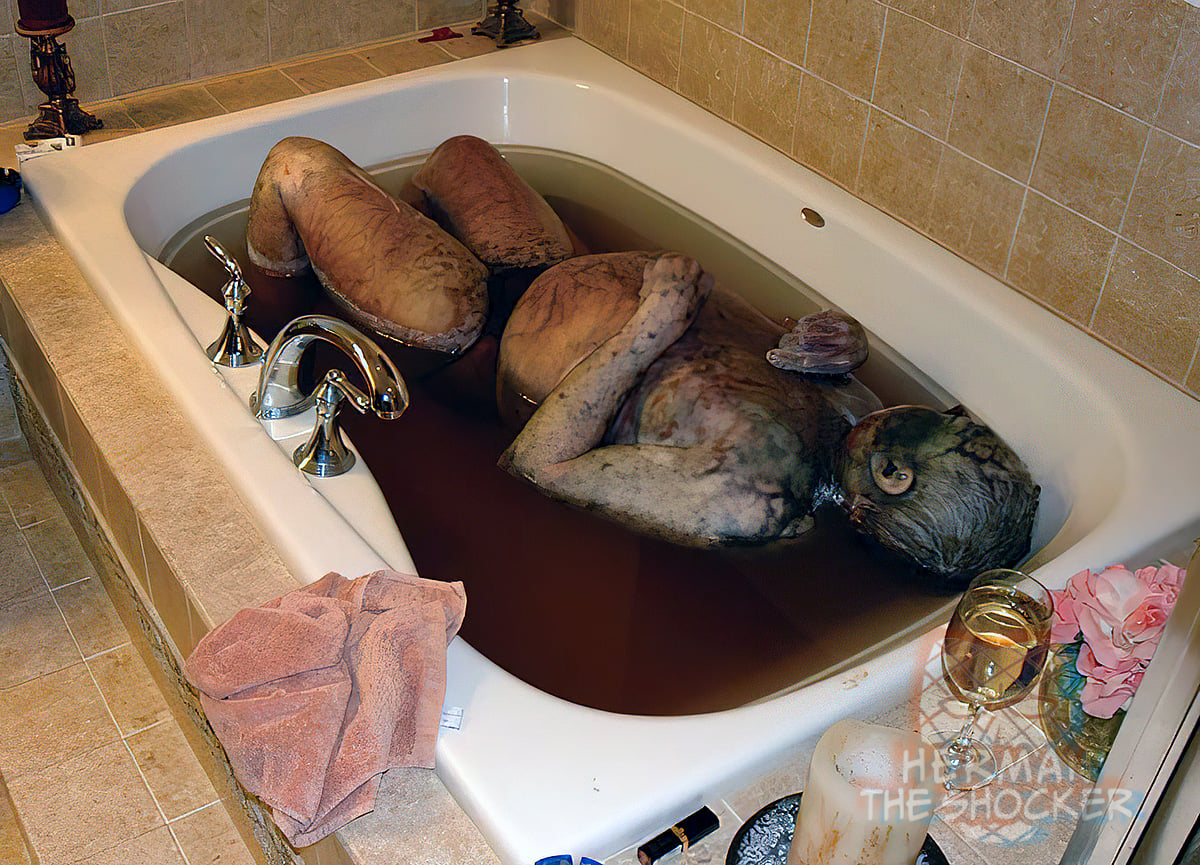 Fig4.1 This decomposing individual died of natural causes while sitting in a warm tub. This decomposing individual died of natural causes while sitting in a warm tub. Note the bloating from putrefactive gases causing the body to float near the surface. People who drown in bathtubs are incapacitated by disease, injury, or intoxication. Sometimes homicide victims are placed in bathtubs to wash evidence off the body. Bodies found in larger areas of water will typically float to the surface as intestinal putrefactive gases increase, causing the rear end to bob up and down with waves similar to an appearance of a tire. - - - Case 5 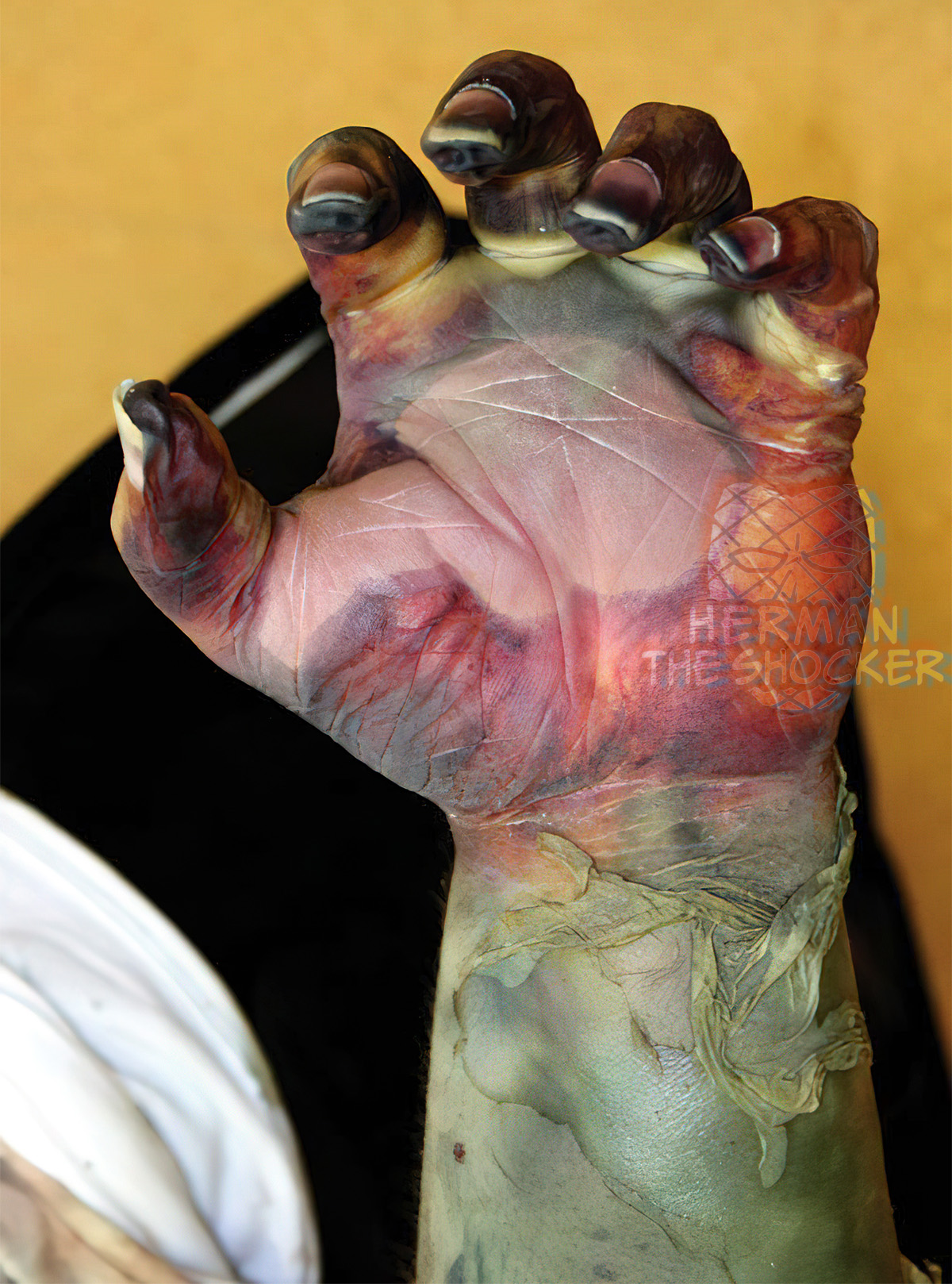 Fig5.1 Mummification of the fingertips and discoloration. In this image you can see mummification of the fingertips with an expanded gas-filled blister and green to brown putrefied fluid in its inferior aspect. The arm shows green discoloration and skin slippage. Putrefaction begins immediately upon death and usually becomes noticeable within 24 hours. As soon as death occurs, the bacteria or microorganisms within the intestinal tract escape from the bowel into the other tissues of the body. As they grow, they begin to produce gases and other properties that distort and discolor the tissues of the body. The discoloration is a dark greenish combination of colors and is generally pronounced within 36 hours. As a result, the body begins to swell from the putrefactive gases, emitting an extremely repugnant odor. Skin slippage is when the superficial layers of the skin “slip” off of the body. It occurs early in decomposition, in temperate conditions usually it starts around the two to three day mark and its appearance can be varied. Usually it starts as a formation of what looks like a blister, then when the roof of the blister ruptures the skin then flops off the body. it can make the body surface that is left very slimy to the touch. - - - Case 6 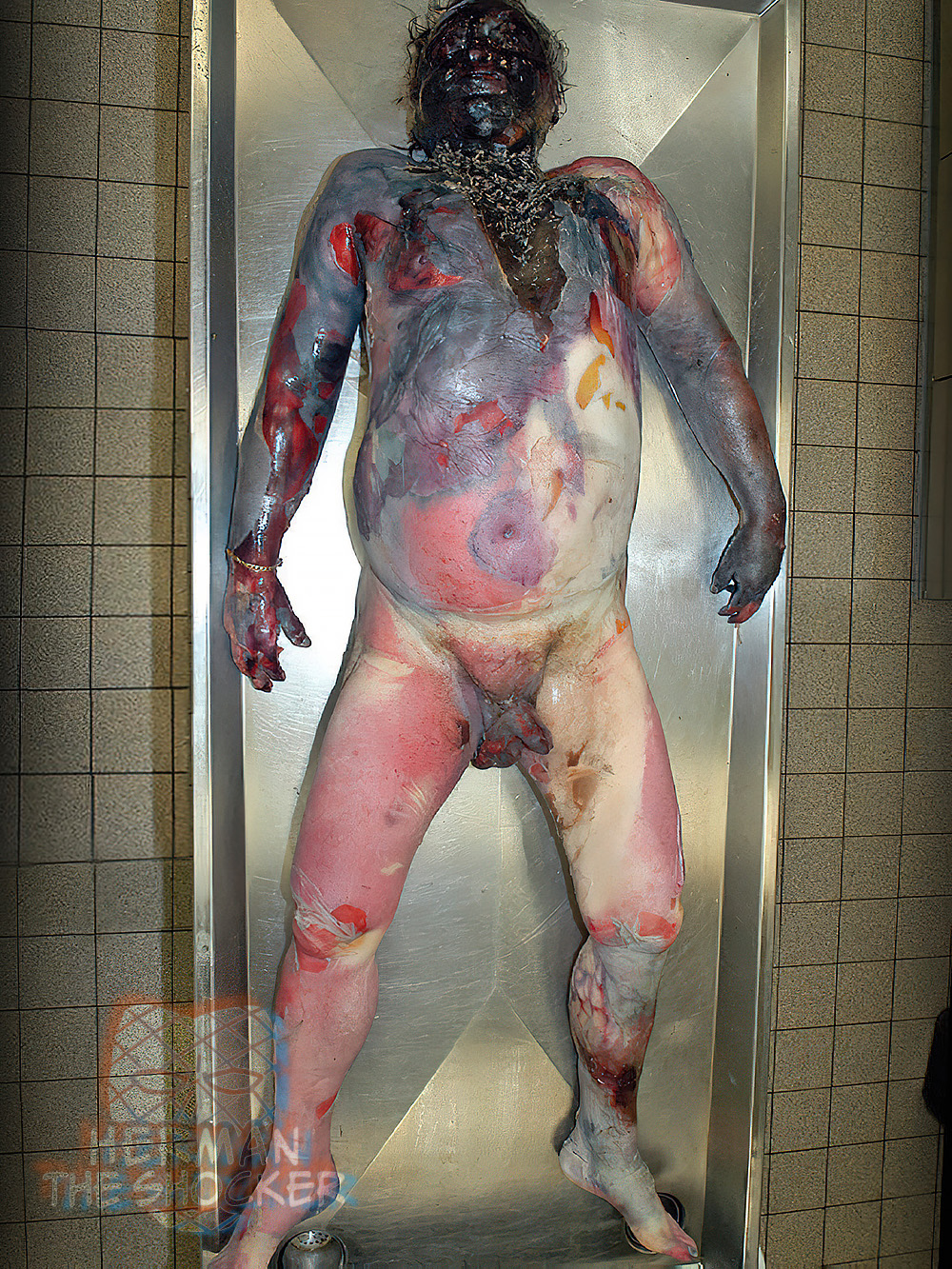 Fig6.1 Post-mortem decomposition showing varying degrees of putrefactive changes. Post-mortem decomposition showing varying degrees of putrefactive changes in the face, trunk and extremities. The image shows the contrast sometimes seen between one part of the body and another, as the right leg and lower left side of the trunk are only slightly affected. The face, neck and hands are swollen with gas. Decomposition, or putrefaction, is a combination of two processes: autolysis and bacterial action. Autolysis is the breakdown of cells and organs through an aseptic chemical process caused by intracellular enzymes. Because it is a chemical process, it is accelerated by heat, slowed by cold, and stopped by freezing. Bacterial action results in the conversion of soft tissues in the body to liquids and gases. The chemicals produced as a result of putrefaction are cadaverine and putrescine, hydrogen sulfide and other sulfides, which generate a horrible smell. - - - Case 7 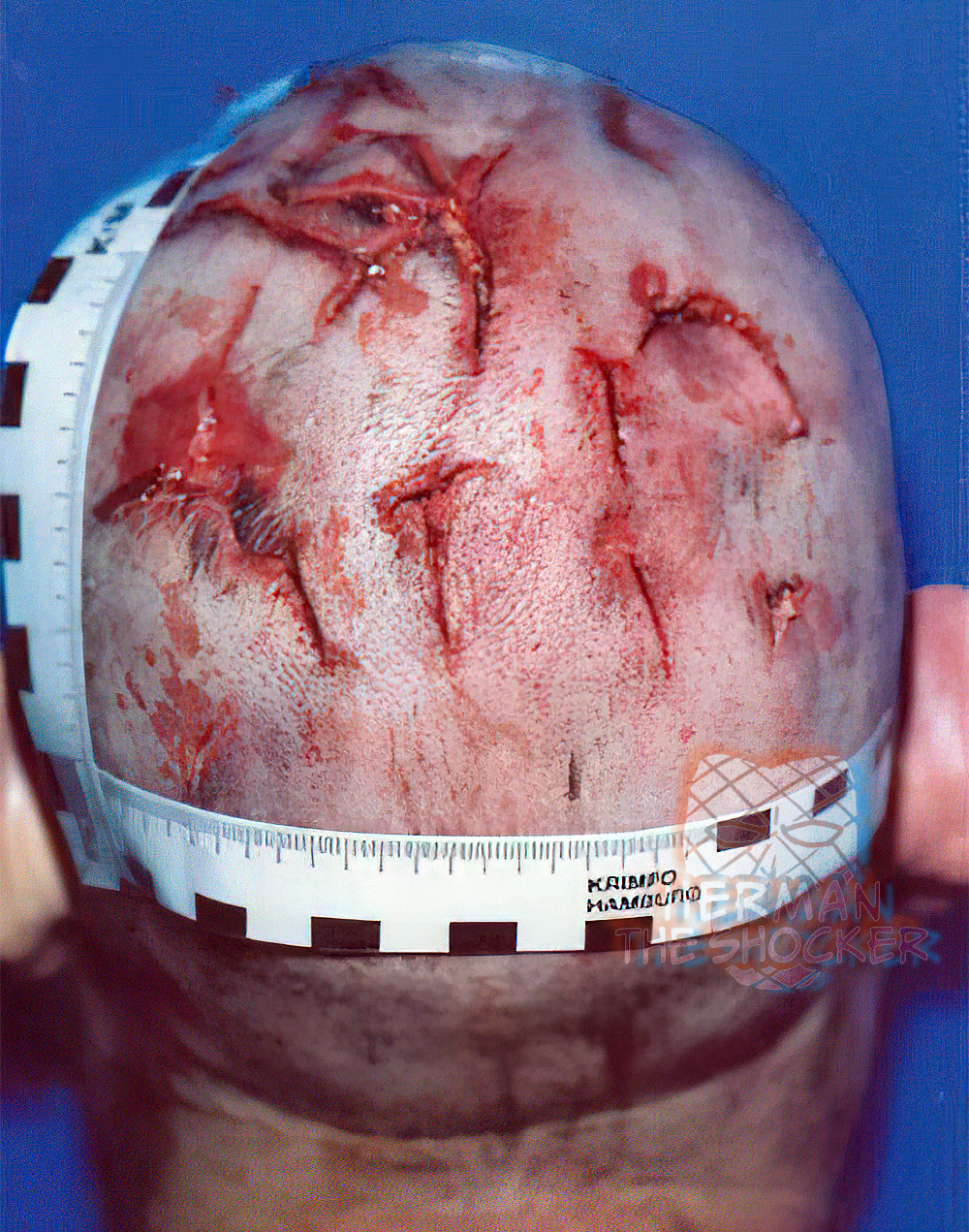 Fig7.1 Multiple lacerations to the back of the head in a homicide. Multiple lacerations to the back of the head in a homicide with a primary attack from behind. The bruises and abrasions represent blunt-force injury. Careful reconstruction of bone fragments may provide information about the size of the weapon. Identification of a specific tool is difficult and discouraged in professional practice in order to avoid providing overreaching conclusions. The extensive distribution, nature, and size of the skull fractures indicated that the degree of force involved in the causation of many of the injuries was severe. - - - Case 8 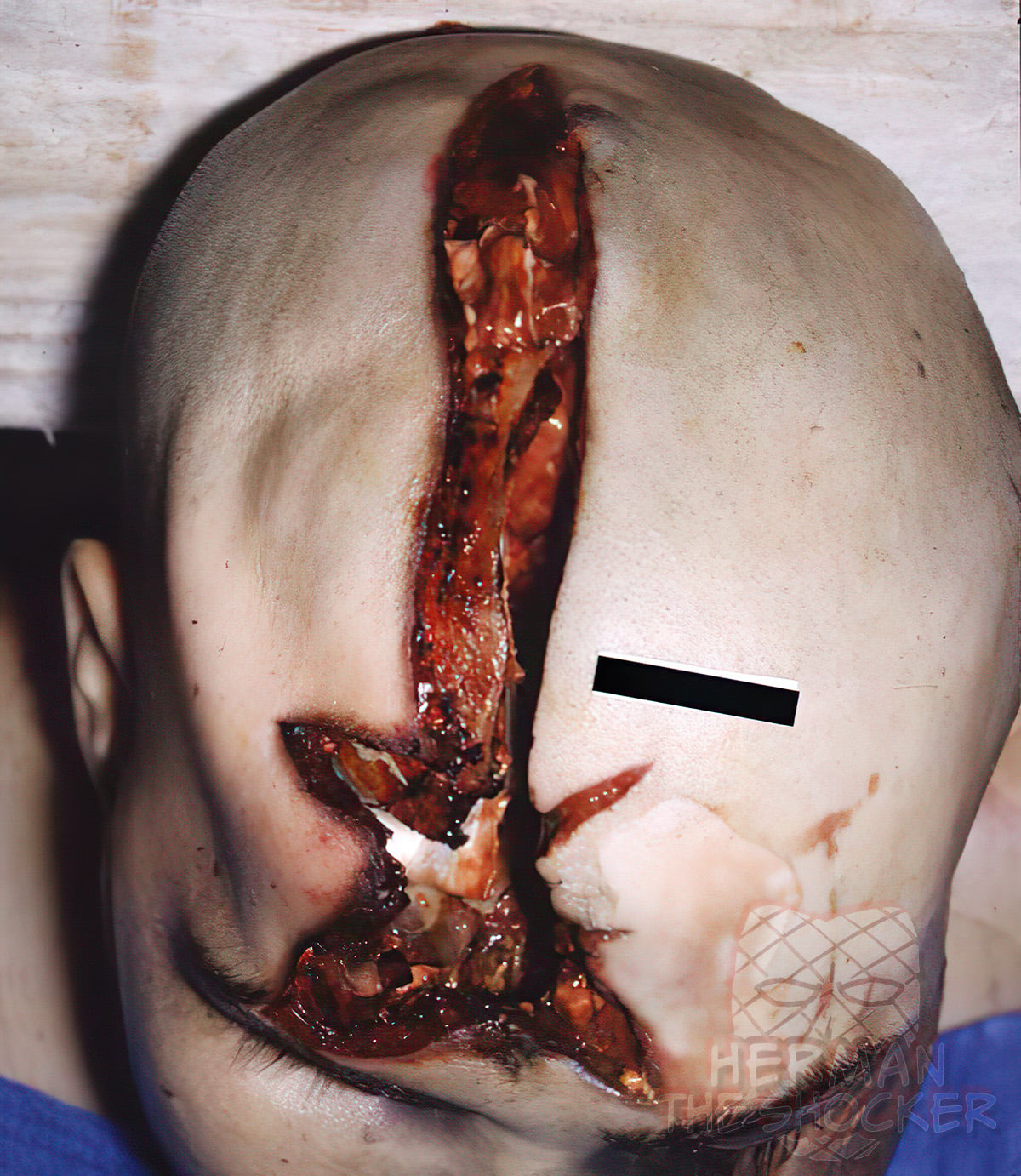 Fig8.1 A gaping stellate wound on the right side of the forehead. 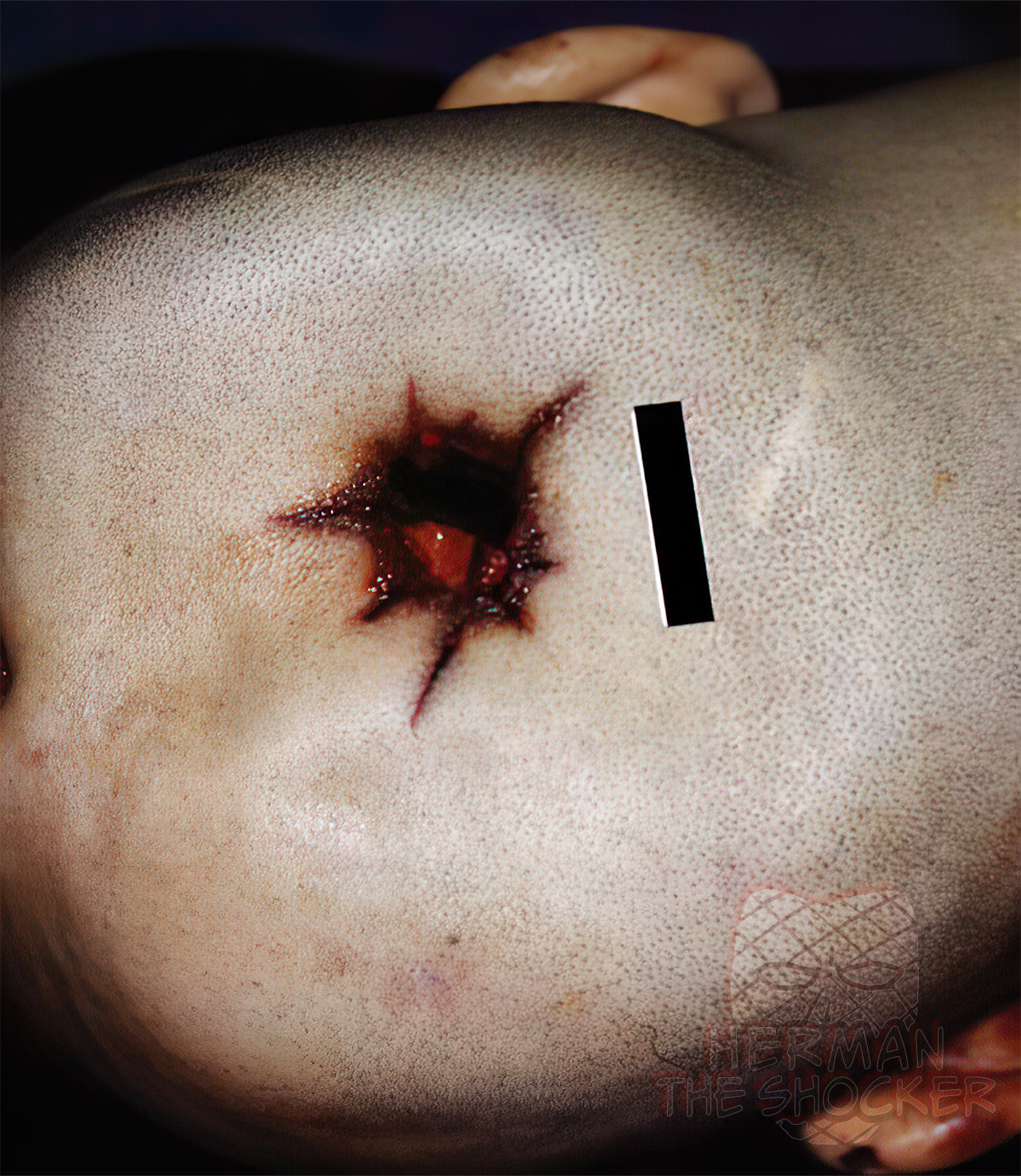 Fig8.2 A smaller stellate wound was on the occipitoparietal region. 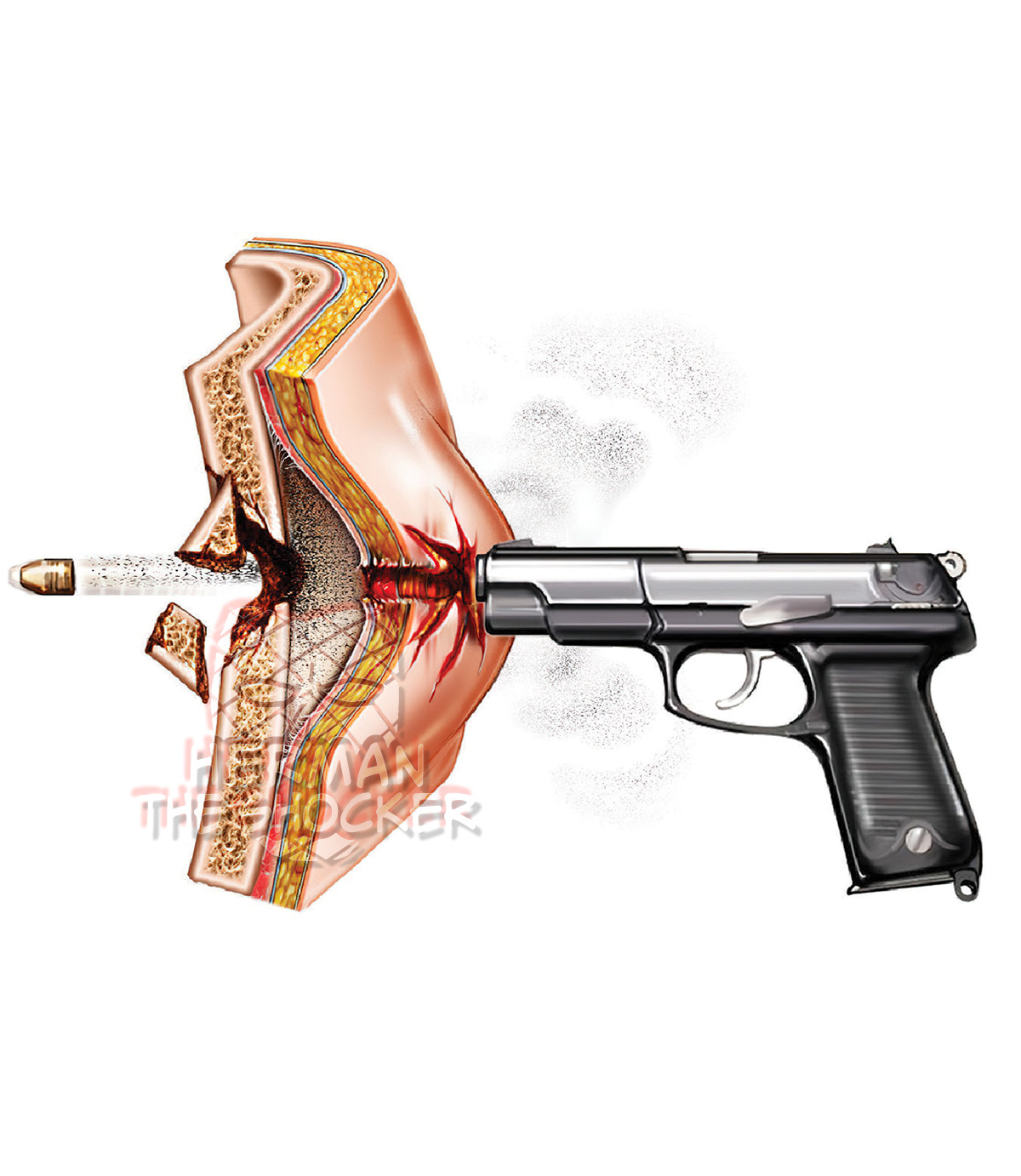 Fig8.3 The discharge of a weapon involves the release not only of a projectile but of hot gas under high pressure as well. The premise that exit wounds are larger than entrance wounds is a generality only. A man was found in early decomposition on his bed with a rifle next to his body. A gaping stellate wound on the right side of the forehead extended posteriorly to the right parietal region (Fig.1). A smaller stellate wound was on the occipitoparietal region (Fig.2). Examination of the right forehead wound disclosed central blackening of the wound edges, consistent with a contact wound. Examination of the calvarium disclosed external beveling of the edges of the skull wound deep to the occipitoparietal scalp wound, confirming that the posterior, smaller wound was the exit. Skull wounds may be comminuted and, as such, require reapproximation of the bony fragments to allow confirmation of the nature of the beveling. In a contact shot fired anywhere on the head, the gases from the firing discharge can enter into the skull. This results in an acute build-up of intracranial pressure with the rigid cranium attempting to accommodate it by expansion. Gases under pressure accumulate inside the cranium and in the process of attempting to release this build-up of pressure, fractures will arise with outward expansion with outwards pushing of the fracture fragments and consent tears (lacerations) through the skin of the face as these sharp and tough bony fragments are pushed outwards. This is seen especially on the face and this produces facial distortion effects. - - - Part 1 --- Part 2 --- Part 3 --- Part 4 --- Part 5 --- Part 6 --- Part 7 --- Part 8 --- Part 9 --- Part 10 --- Part 11 --- Part 12 --- Part 13 --- Part 14 --- Part 15 --- Part 16 --- Part 17 --- Part 18 --- Part 19 --- Part 20 --- Part 21 - This post is for educational purposes only and is nonprofit. Under Section 107 of the US Copyright Act of 1976; Allowance is made for "Fair Use" for purposes such as criticism, comment, news reporting, teaching, scholarship, and research. OP is not a medical expert. No copyright infringement intended. This post does not encourage or glorify violence/harassment. Images might have been upscaled and enhanced. Text might have been shortened and simplified/reorganized for online view.
__________________ ⭐️ hermantheshocker.com ⭐️ |
|
#2
●
02-12-2022, 02:58 PM
|
 ♚ Legacy Gold Member ♚ Poster Rank:199 Female Join Date: Nov 2009 Posts: 7,749 7,749Posts 11,993Thanked 709Quoted 5Mentioned 0Contrib. |
|
Re: The Shocker's Mix 22
Brilliant post again. I’d heard of adipocere but not saponification. I absolutely love the education I get from your posts. Thank you for the time and effort you must expend on these.  |
|
#3
●
02-12-2022, 04:21 PM
|
 My Rank: MASTER GUNNERY SERGEANT Poster Rank:352 Manly Man Join Date: Sep 2017 Posts: 3,601 3,601Posts 12,428Thanked 700Quoted 0Mentioned 0Contrib. |
|
Re: The Shocker's Mix 22
Awesome! I'm always eagerly waiting for the new mix.  |
|
#4
●
02-12-2022, 04:33 PM
|
 ★ Legacy Member ★ Poster Rank:252 So many choices now Join Date: Jul 2015 Posts: 5,542 5,542Posts 19,786Thanked 2,120Quoted 15Mentioned 0Contrib. |
|
Re: The Shocker's Mix 22
The gore is strong with you, Herman. Well done.
|
|
#5
●
02-12-2022, 06:43 PM
|
| ♚ Legacy Gold Member ♚ Poster Rank:92 Male Join Date: Nov 2009 Posts: 17,231 17,231Posts 45,016Thanked 4,711Quoted 8Mentioned 0Contrib. |
|
Re: The Shocker's Mix 22
I applaud your posts, Herman! You should have been teaching at the Colombian School of Forensic Science and Plumbing, except you are too smart! Very informative, and VERY well written! |
|
#7
●
02-13-2022, 10:10 AM
|
 Für Immer Verloren Poster Rank:50 Boredom + Despair Join Date: Sep 2017 Posts: 30,197
Contributions: 743
30,197Posts 192,617Thanked 10,332Quoted 136Mentioned 743Contrib. |
|
Re: The Shocker's Mix 22
Thank you for your great efforts, mate, they're very much appreciated.
__________________ "I'd give the world for the chance just to see your face again. Still I pretend that you're still standing by." |
|
#9
●
02-13-2022, 01:39 PM
|
| My Rank: MASTER GUNNERY SERGEANT Poster Rank:350 "IT"-Species; Genus-genius Join Date: Jan 2013 Posts: 3,611 3,611Posts 5,349Thanked 619Quoted 0Mentioned 0Contrib. |
|
Re: The Shocker's Mix 22
Oh another one of your nasty rotten stinking vile posts, hey Herman.
|
|
#10
●
02-13-2022, 06:41 PM
|
 My Rank: LANCE CORPORAL Poster Rank:2914 Perimenopausal Bitch Join Date: Feb 2016 Posts: 137 137Posts 275Thanked 16Quoted 0Mentioned 0Contrib. |
|
Re: The Shocker's Mix 22
Look at the balls on #3, gadayum!!! Great post, Herman! |