|
#154
●
01-14-2015, 12:20 AM
| ||||||||
 My Rank: SERGEANT Poster Rank:1110 Mademoiselle Join Date: Jan 2014 Posts: 591 Mentioned: 2 Post(s) Quoted: 194 Post(s)
| ||||||||
|
Re: Postmortem Changes and Time of Death
Thank you so much gatogato for this contribution; it is extremely educational.  |
|
#159
●
03-01-2016, 11:15 PM
| ||||||||
| So Fucking Banned Poster Rank:603 N/A Join Date: May 2010 Posts: 1,522 Mentioned: 1 Post(s) Quoted: 484 Post(s)
| ||||||||
|
Re: Postmortem Changes and Time of Death
From the Atlas of Forensic Pathology 1: Postmortem cockroach bite marks. Note the absence of a ‘‘vital tissue reaction’’ (i.e., there is no bleeding) 2: Ants may begin feeding off corpses very soon after death. Here groups of ants can be seen stripping skin from around an ankle. This may result in postmortem seepage of blood in dependent areas that may be confused with antemortem trauma 3: Ants may also target body orifices such as the mouth and nose 4 Lesions left by ants may resemble abrasions, except that they are of uniform depth and have a characteristic winding ‘‘serpiginous’’ pattern, as can be seen on the chest and flank of this body 5: Postmortem fire ant bite marks, with no evidence of a vital tissue reaction 6: Multiple areas of superficial skin loss on the flank of a drowning victim due to postmortem sea lice activity. It is important not to mistake these lesions for antemortem injuries such as abrasions 7: Rodents such as rats and mice tend to concentrate on the soft tissues of the fingers, toes, and the tip of the nose. Bites can be recognized by the paired grooves from the upper and lower incisors and can be seen here on the side of a finger. Postmortem injuries are usually characterized by a lack of blood, although dependent body parts may passively exude blood from postmortem wounds. Occasionally such injuries may occur before death in an unconscious individual. This has been termed the Popiel phenomenon, after a mythical Polish king who was devoured by rats. In these cases a vital reaction may be seen microscopically. This consists of an infiltrate of inflammatory cells in the tissues 8: Relatively extensive skin damage produced by postmortem rat activity. Note the dry, yellow appearance of the defects, indicating that they are postmortem in nature 9 Bite marks on the fingers produced by the feeding activity of mice 10: Toes nibbled by rats after death showing the typical paired gnaw marks with trimming of the toenails 11: Domestic pets, such as dogs, will sometimes feed on a dead body, with large portions of soft tissue being removed 12: Early postmortem predation by a dog with bite marks evident at the edge of the soft tissue defect 13: Postmortem predation by domestic dogs often involves an elderly recluse who has not been seen for some time. Dogs tend to target the face and neck, stripping the skin and subcutaneous tissues 14: Loss of facial features after dog predation may make visual identification impossible 15: Cats may also devour the soft tissues of the face, neck, and hands after death 16: If the genitalia have been targeted by dogs, as in the case of this young adult male, the possibility of a sadistic sexual murder may be considered on initial examination of the scene 17: Removal of a head by a dog has occurred with gnawing through the frontal bone to gain access to the brain 18: A dog has eaten the face, cranial contents, and chest cavity organs. Determining whether organic illness played a role in the death may not be possible given the loss of the heart, lungs and brain 19: In this case, a dog has devoured most of the chest and has started on the upper abdomen exposing the liver and spleen 20: A body found at a beach with the left cheek removed by seabird activity 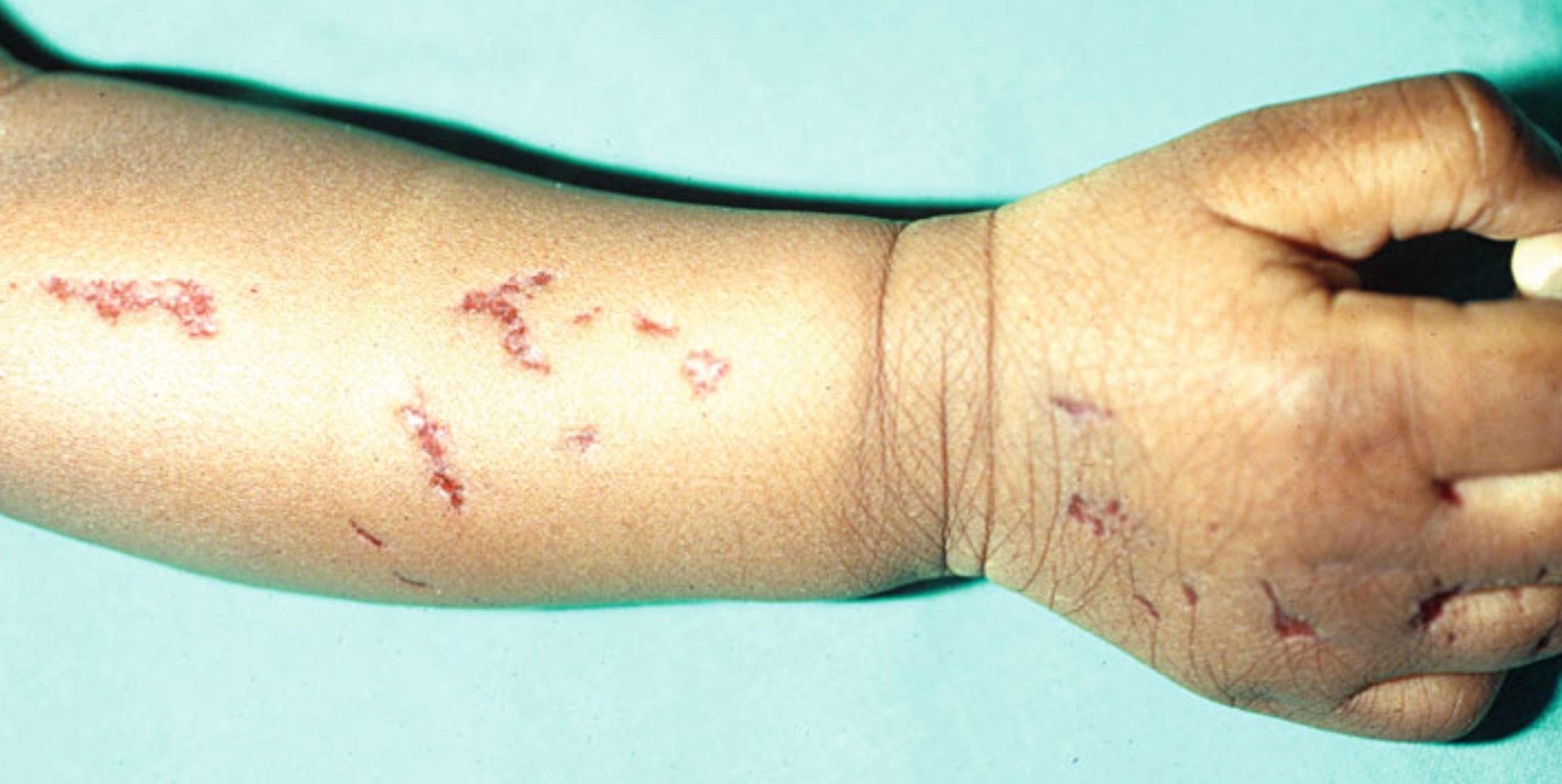 · 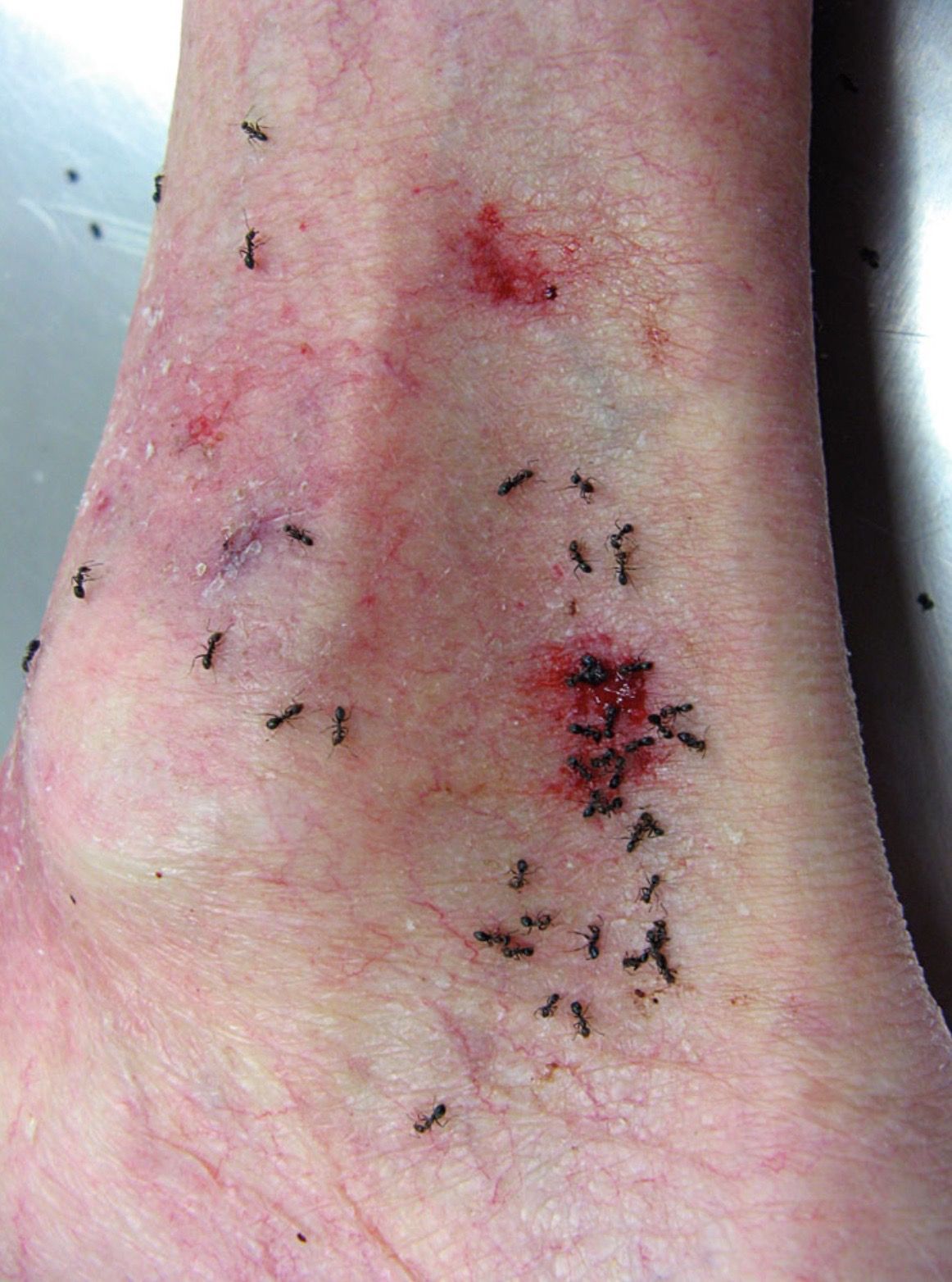 · 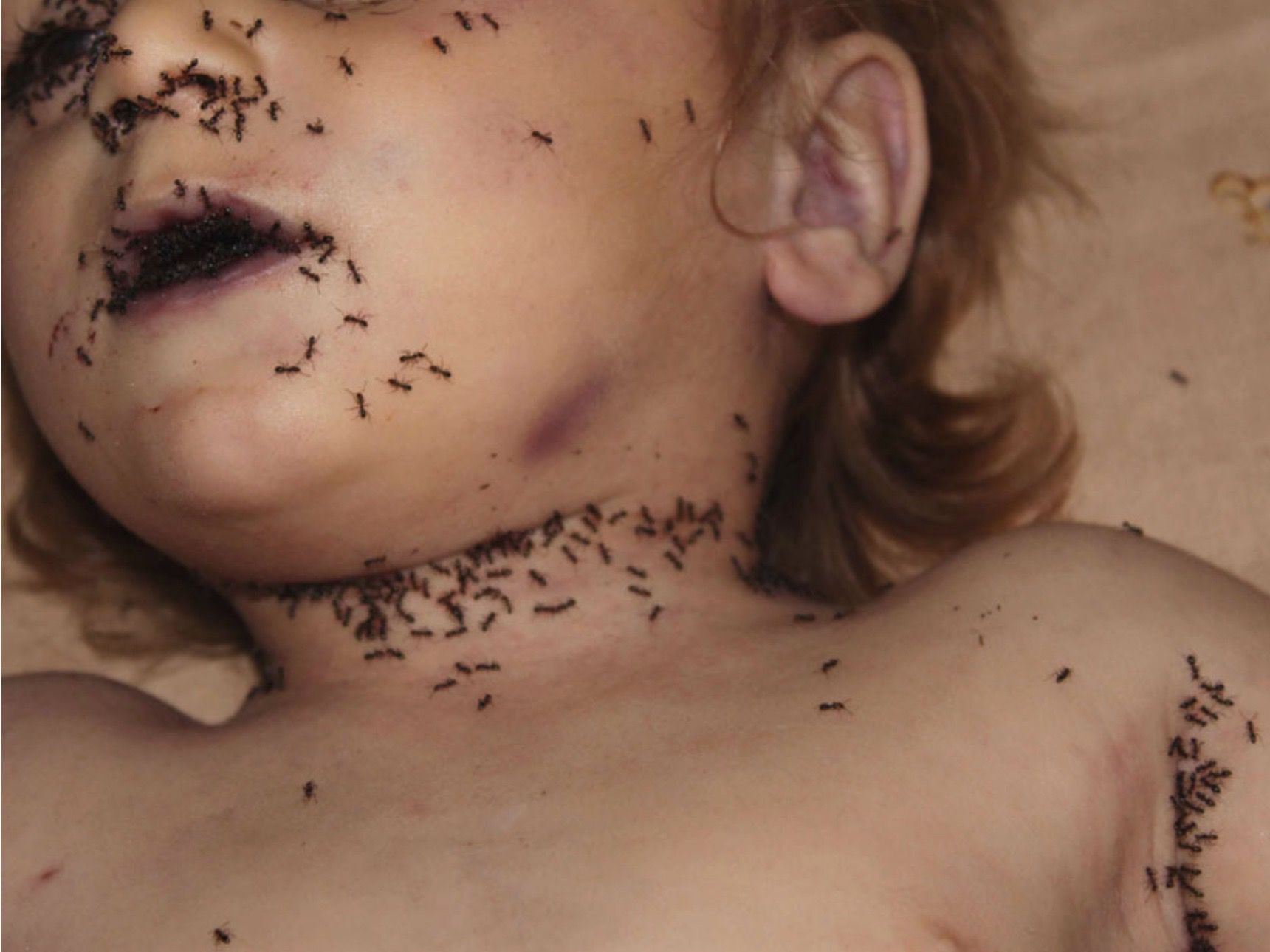 · 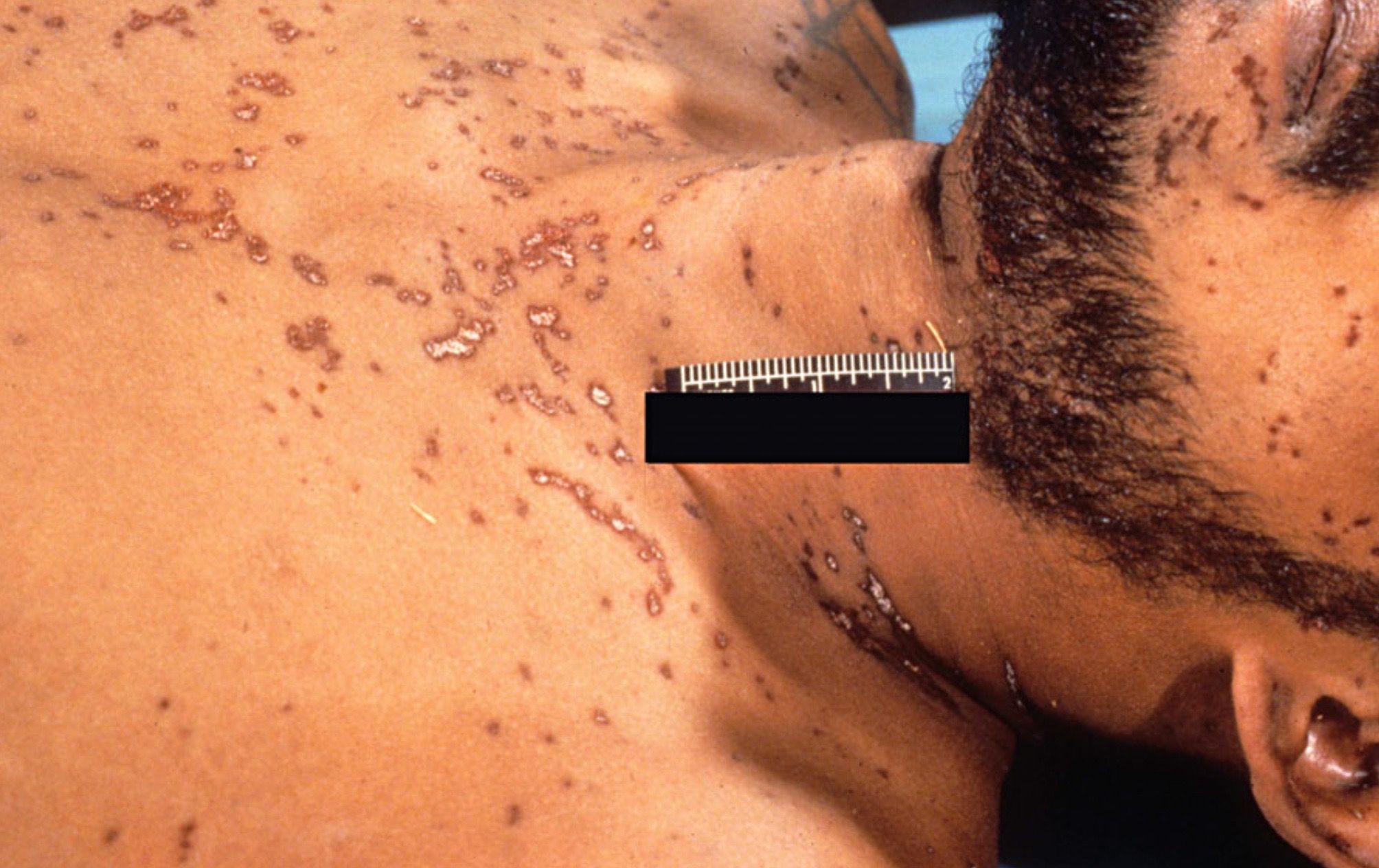 · 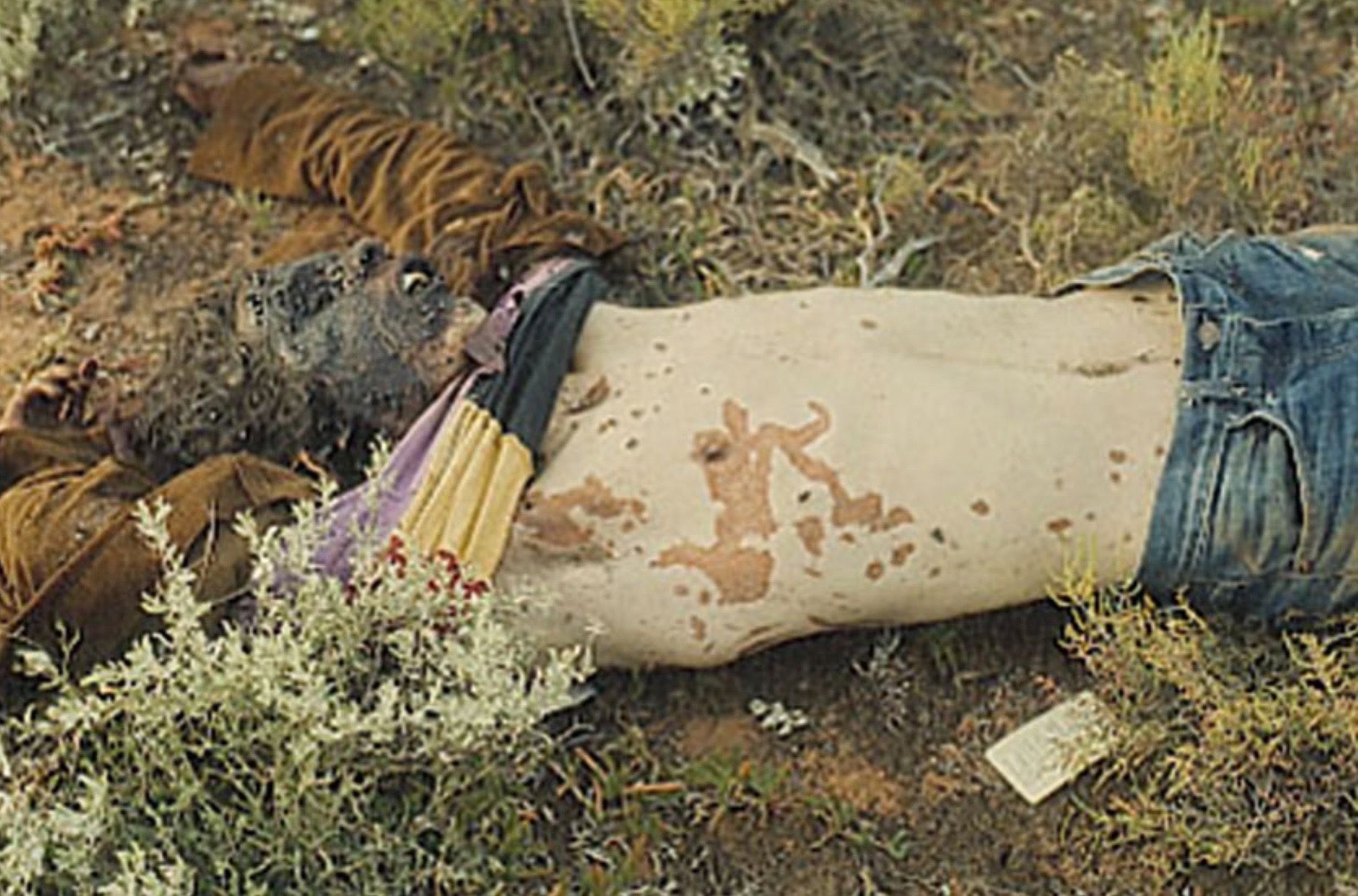 · 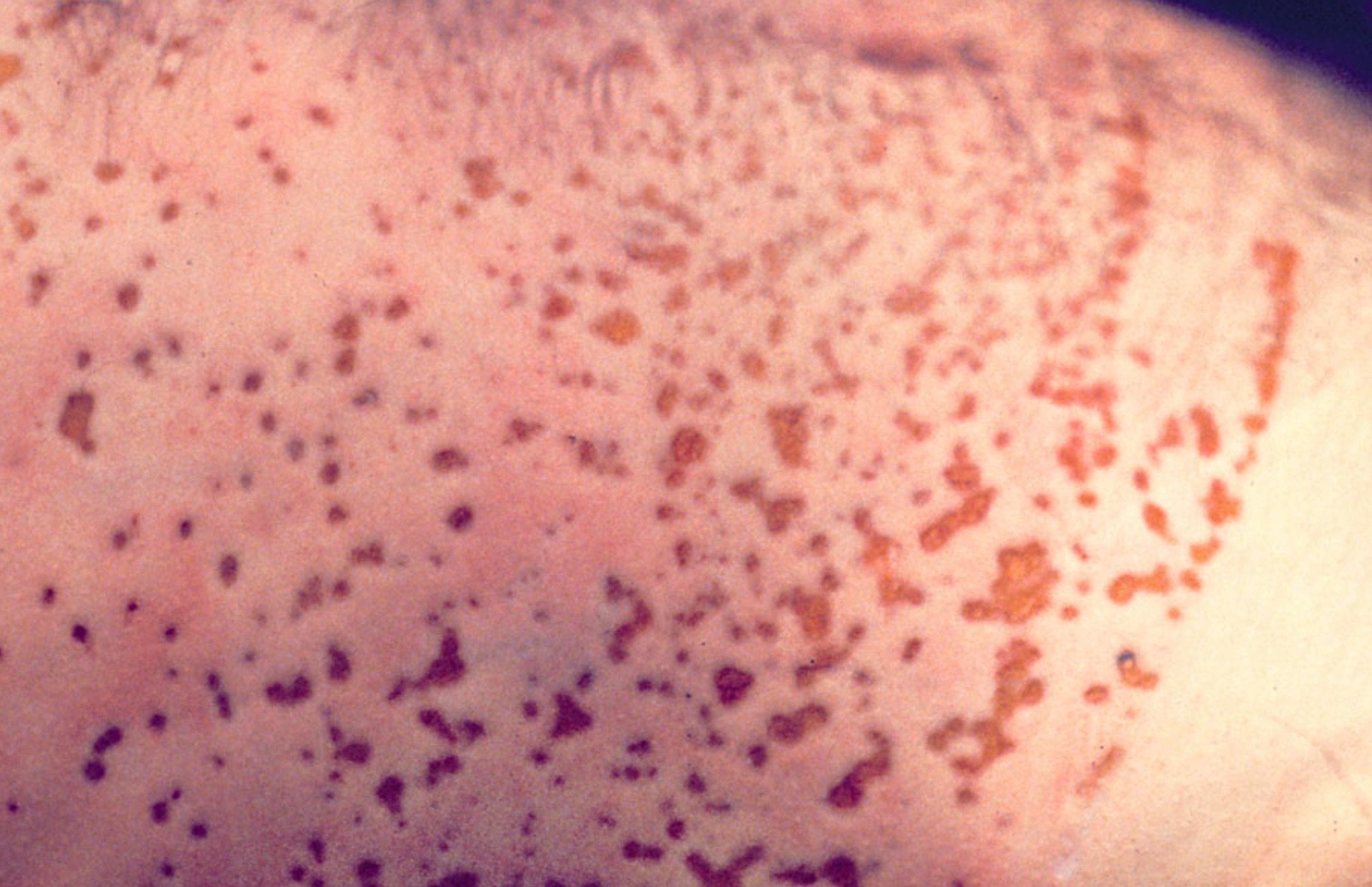 · 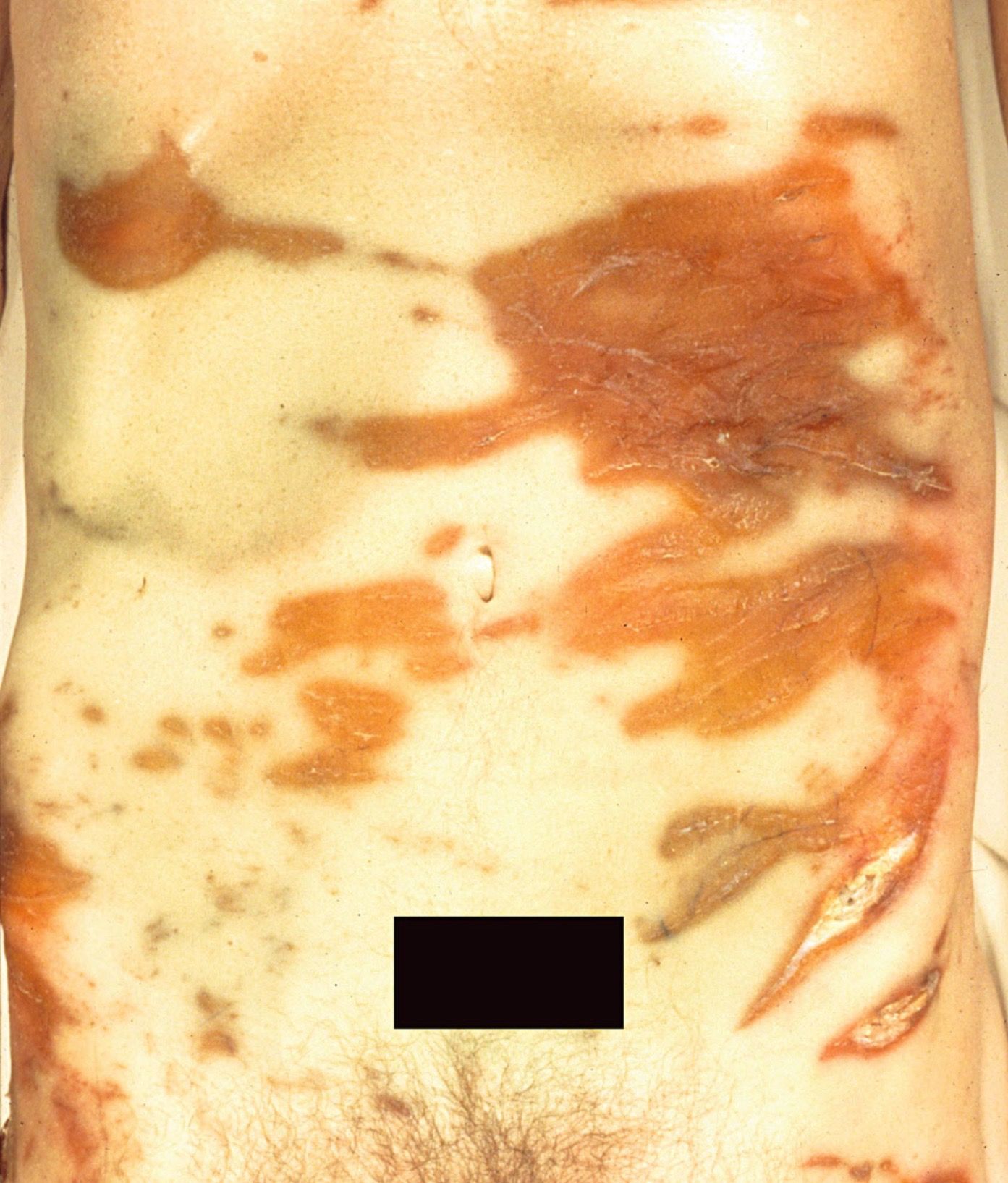 · 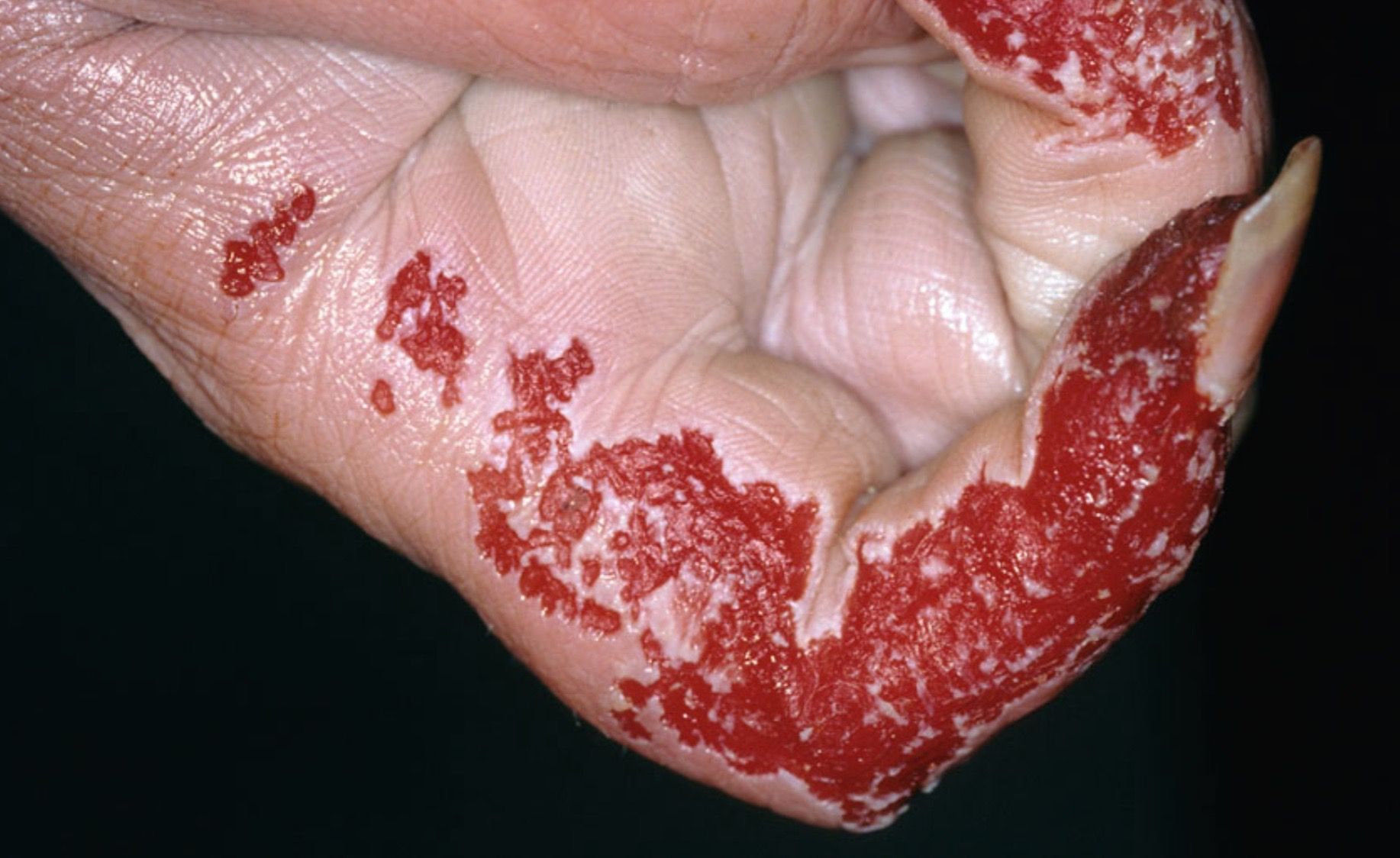 · 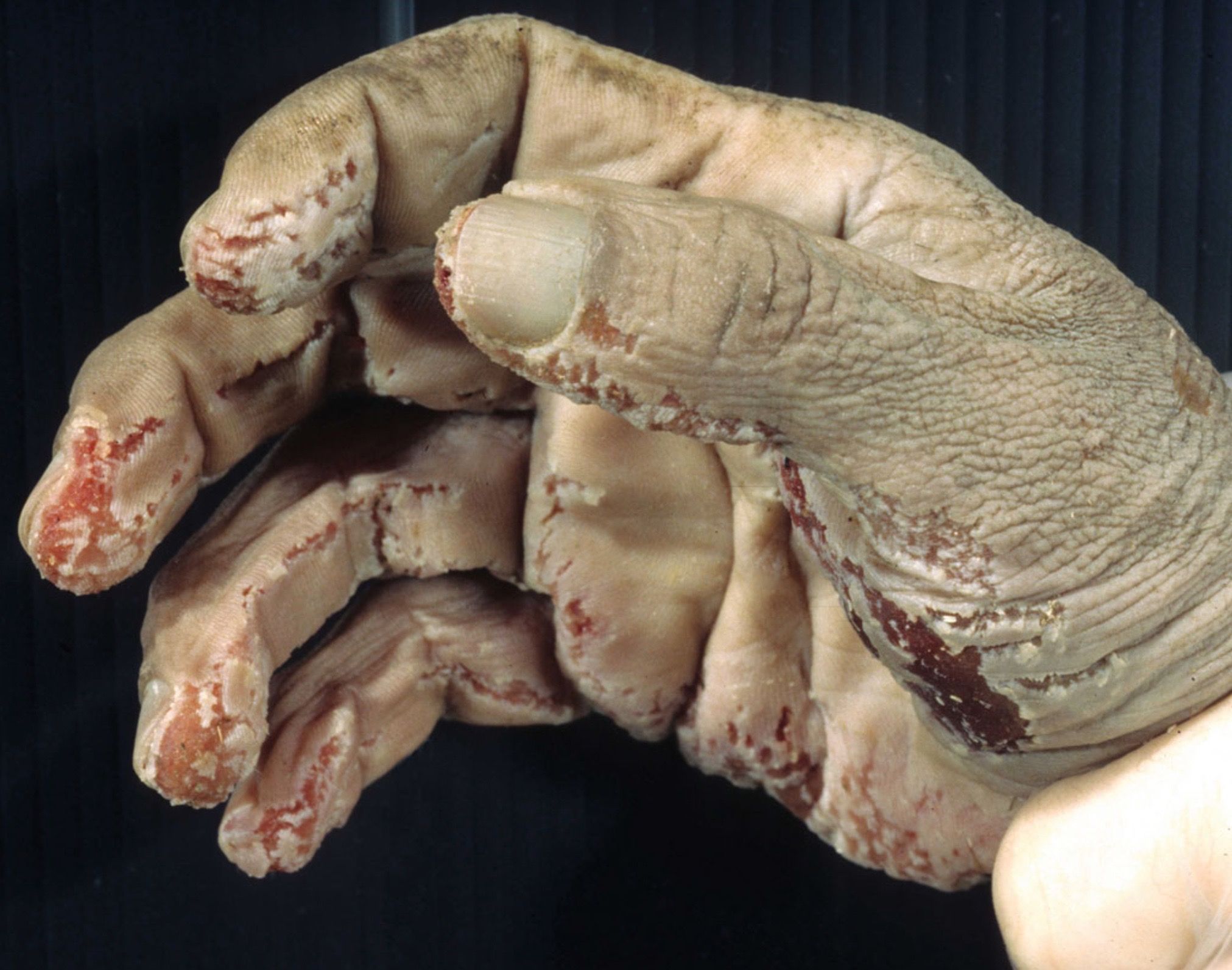 · 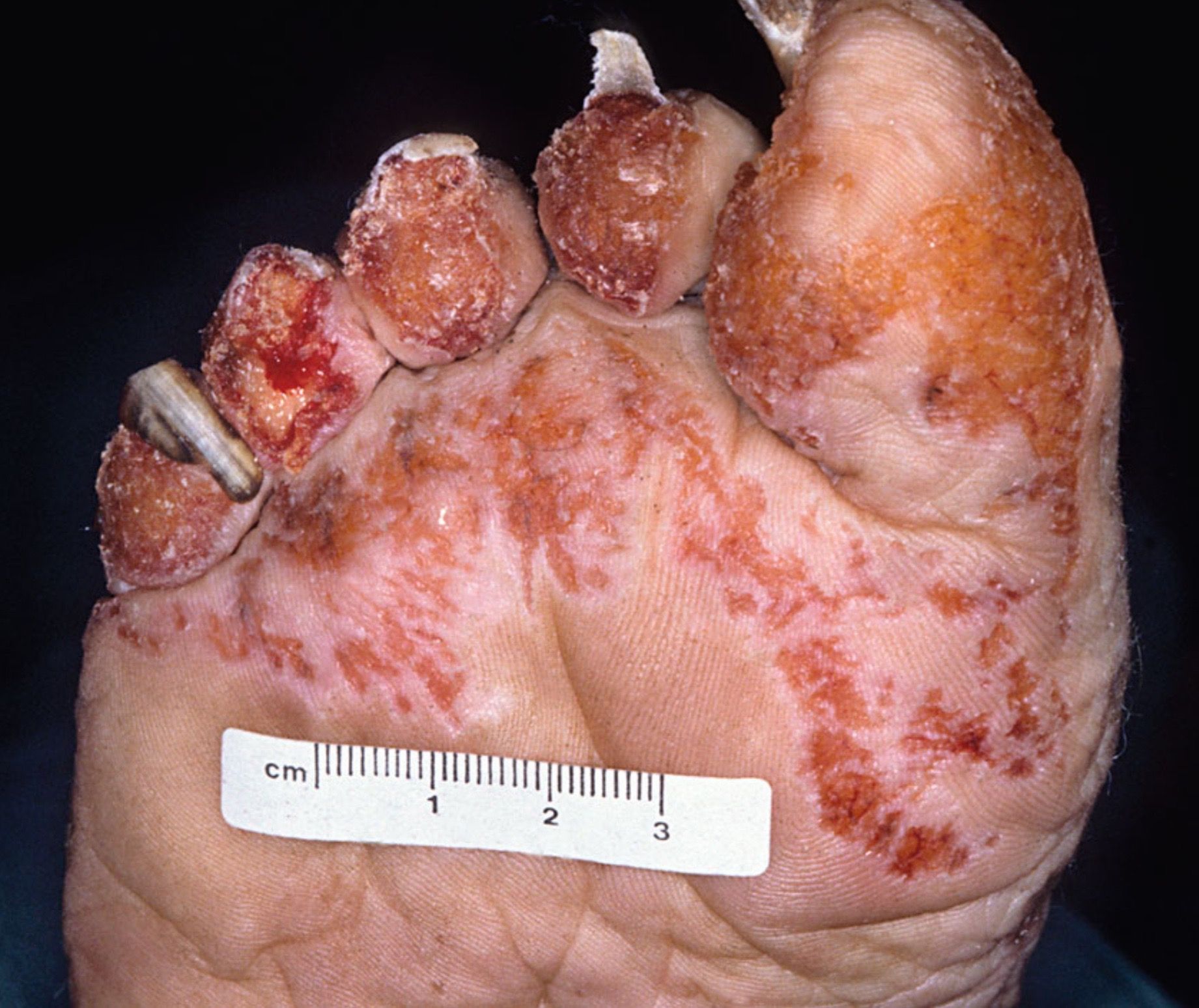 · 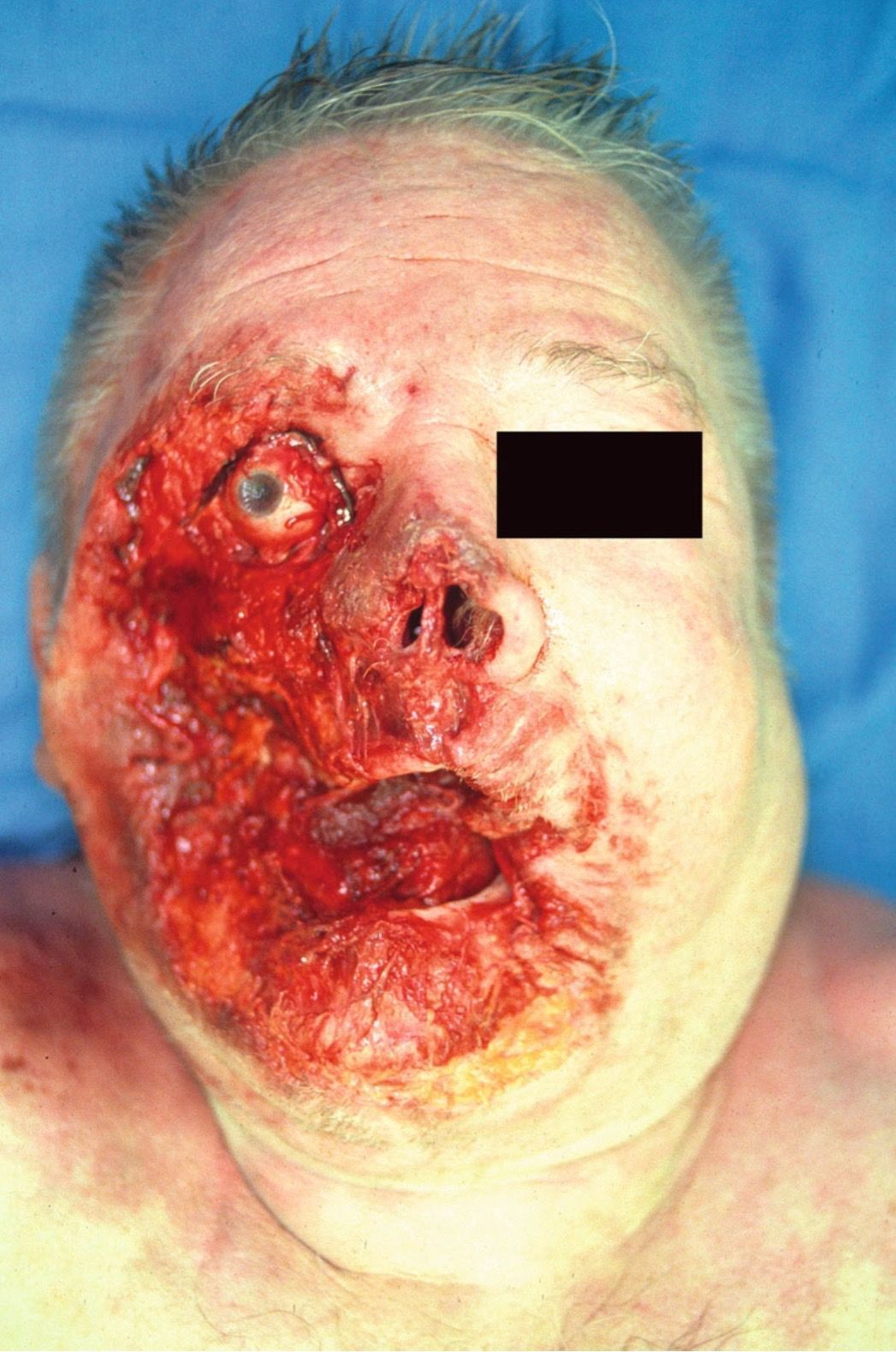 · 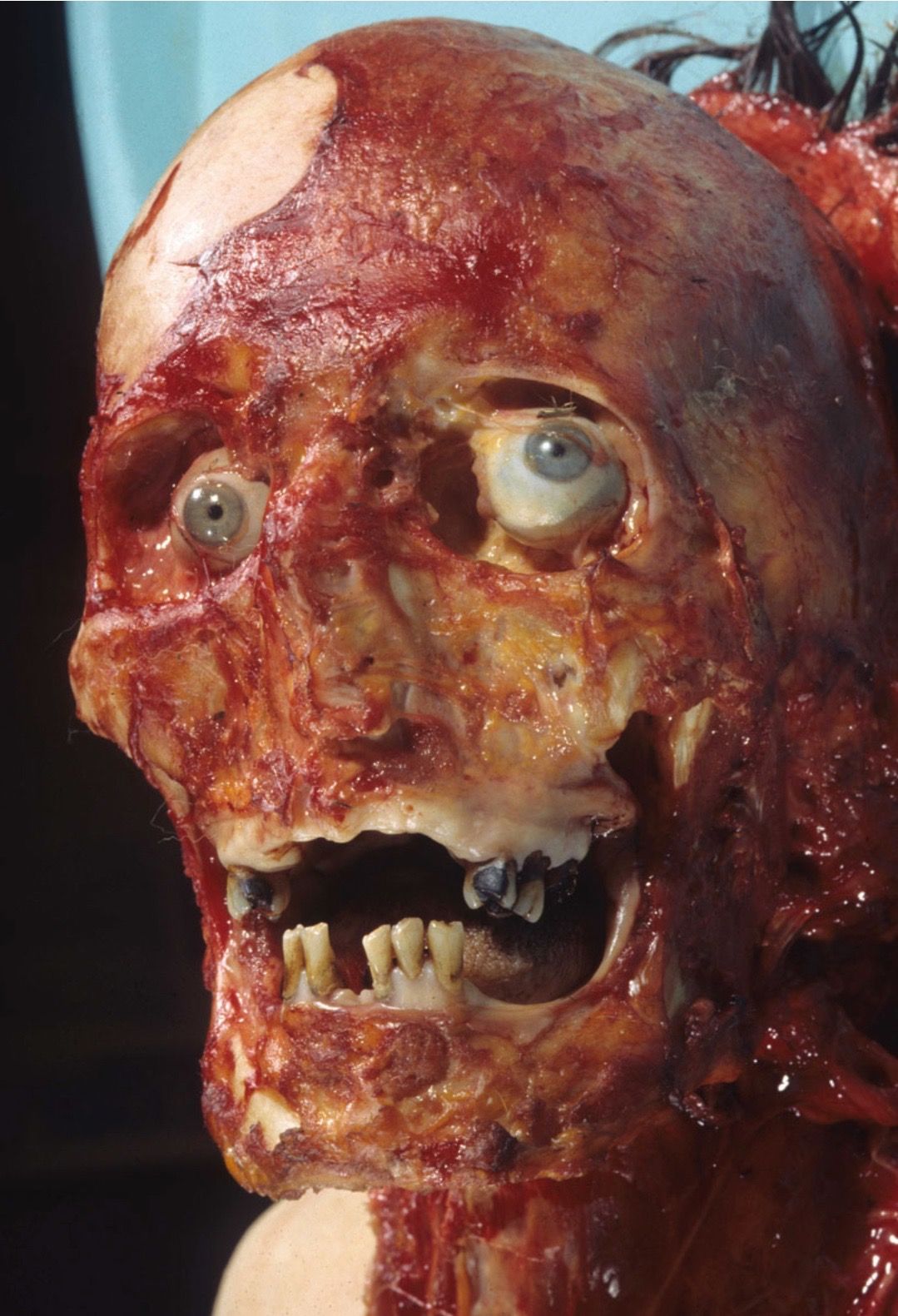 · 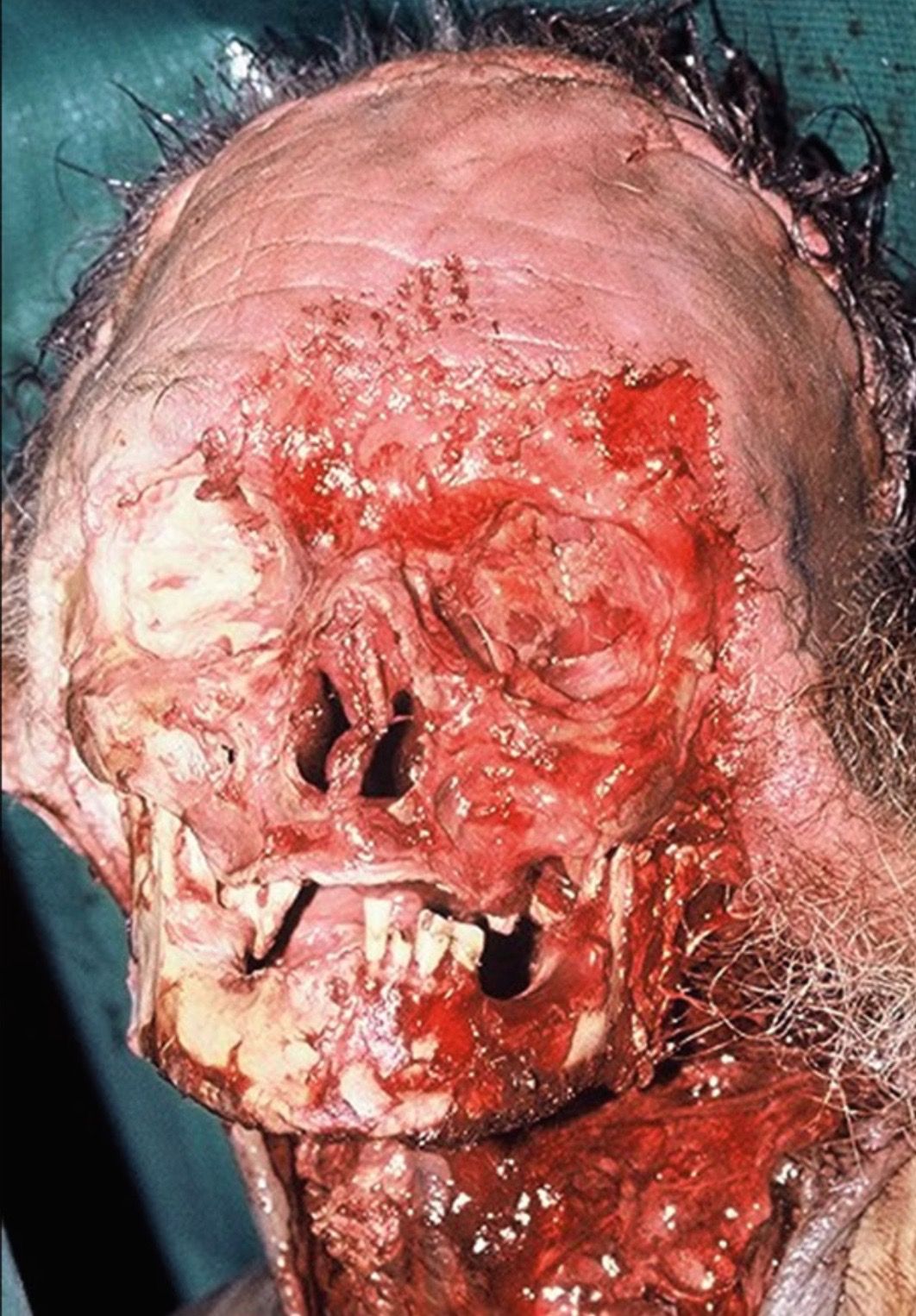 · 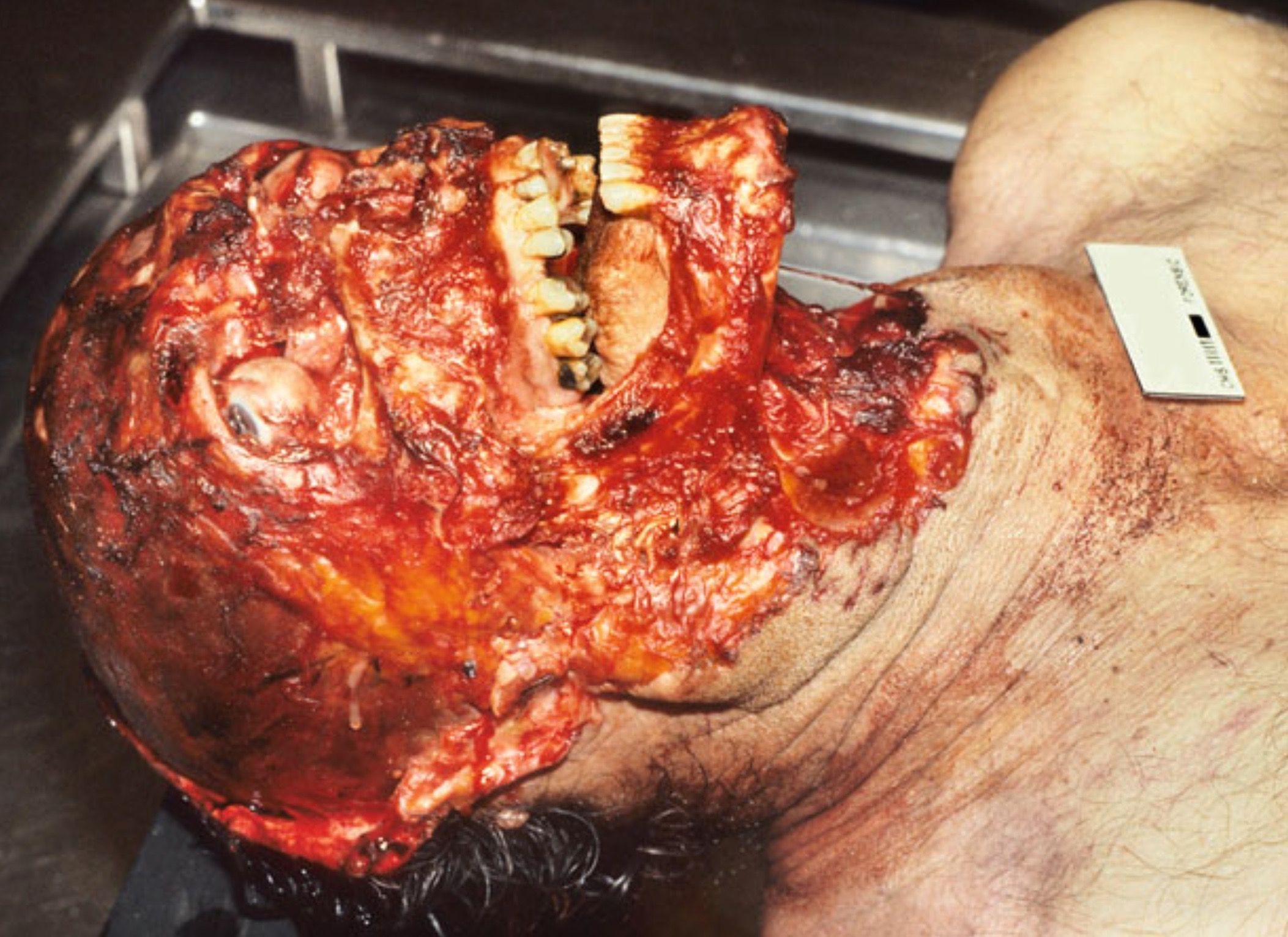 · 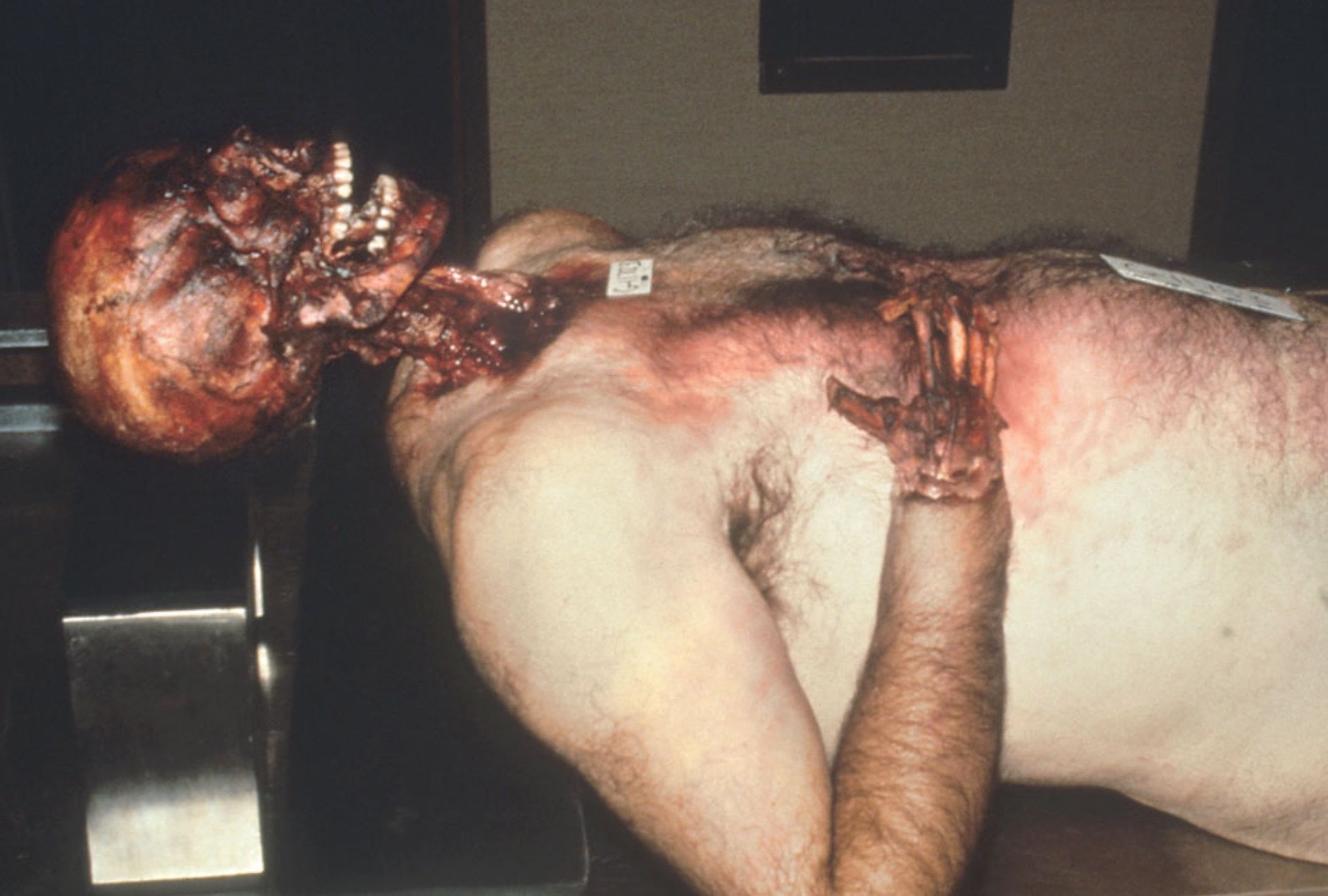 · 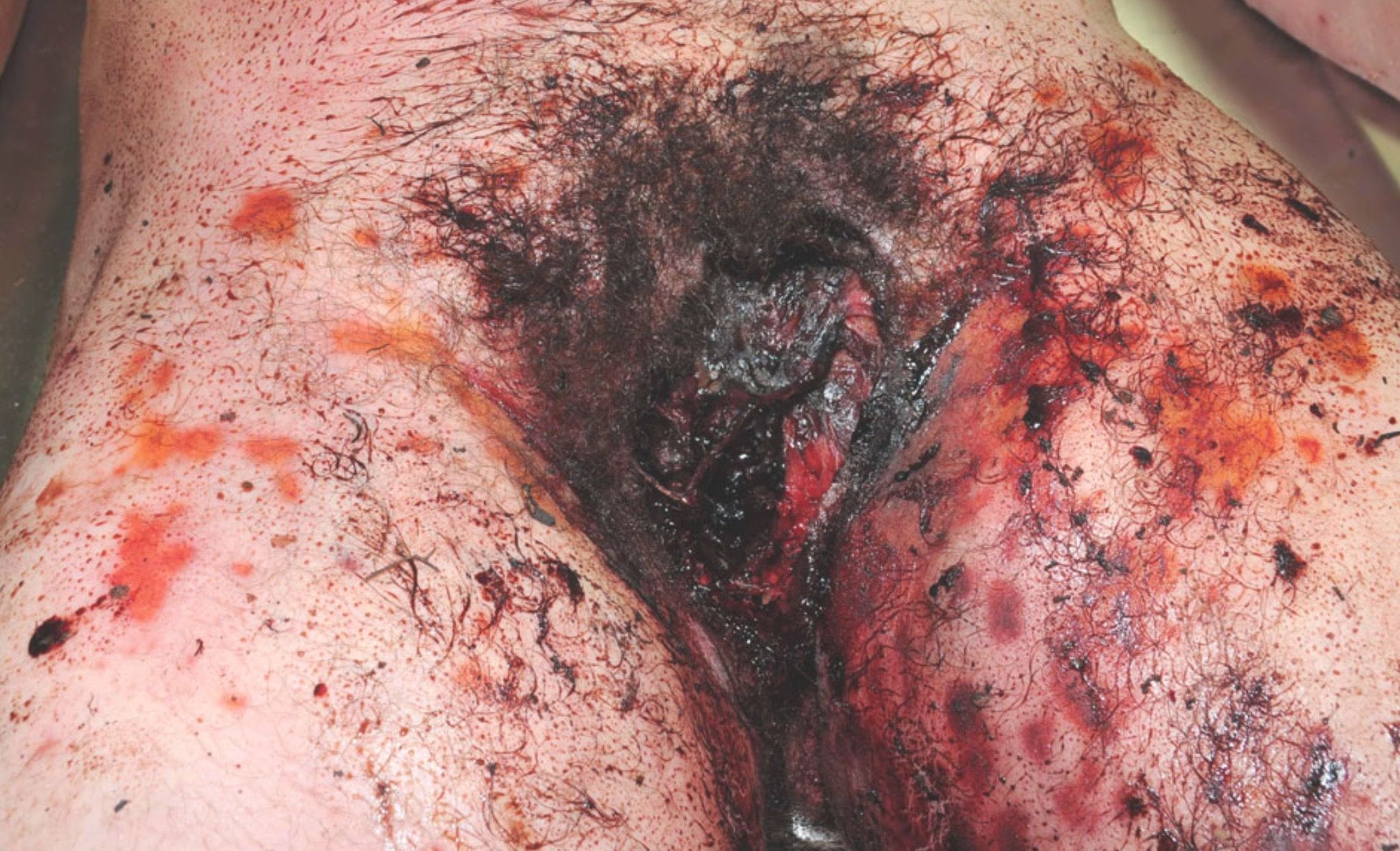 ·  · 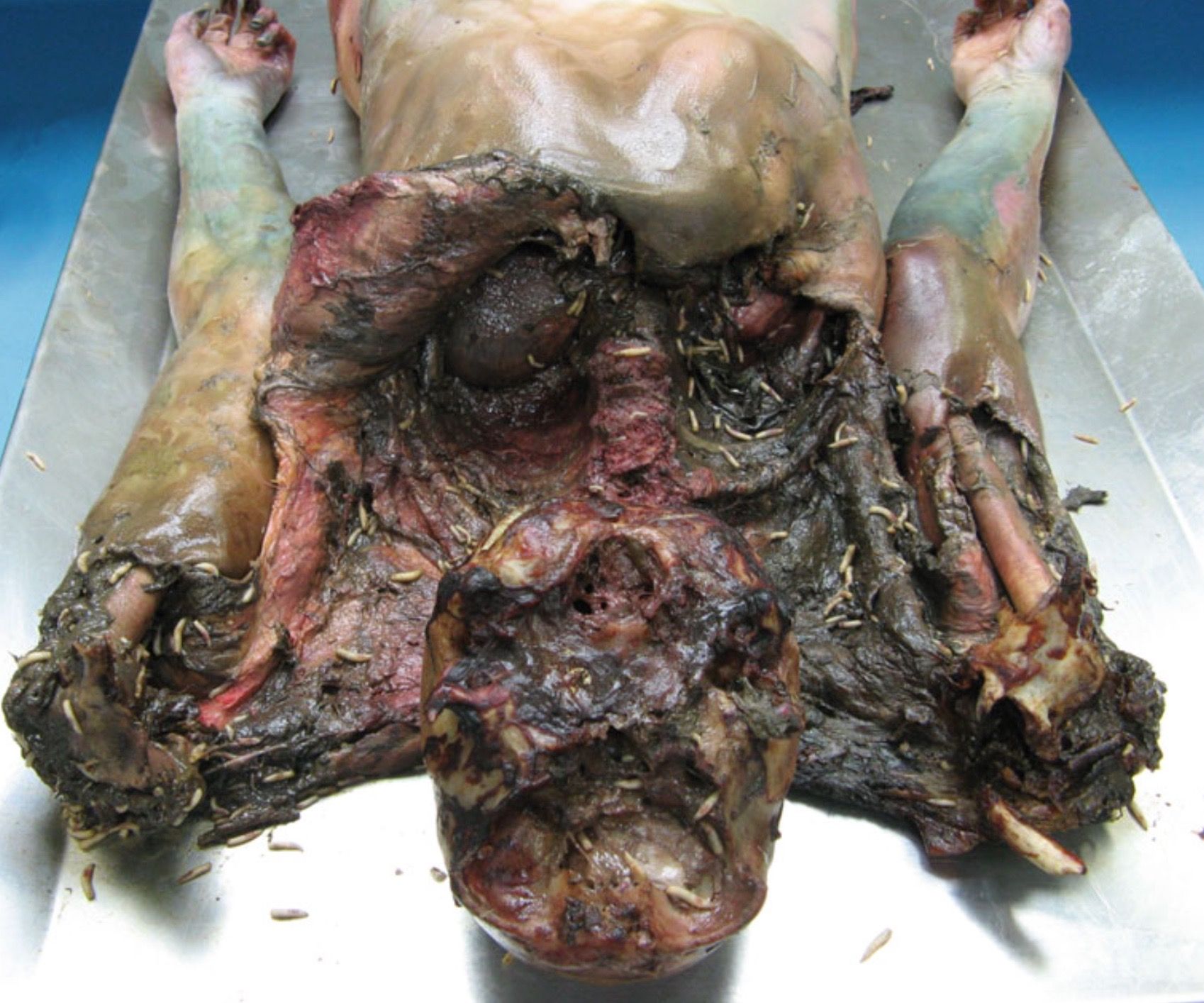 · 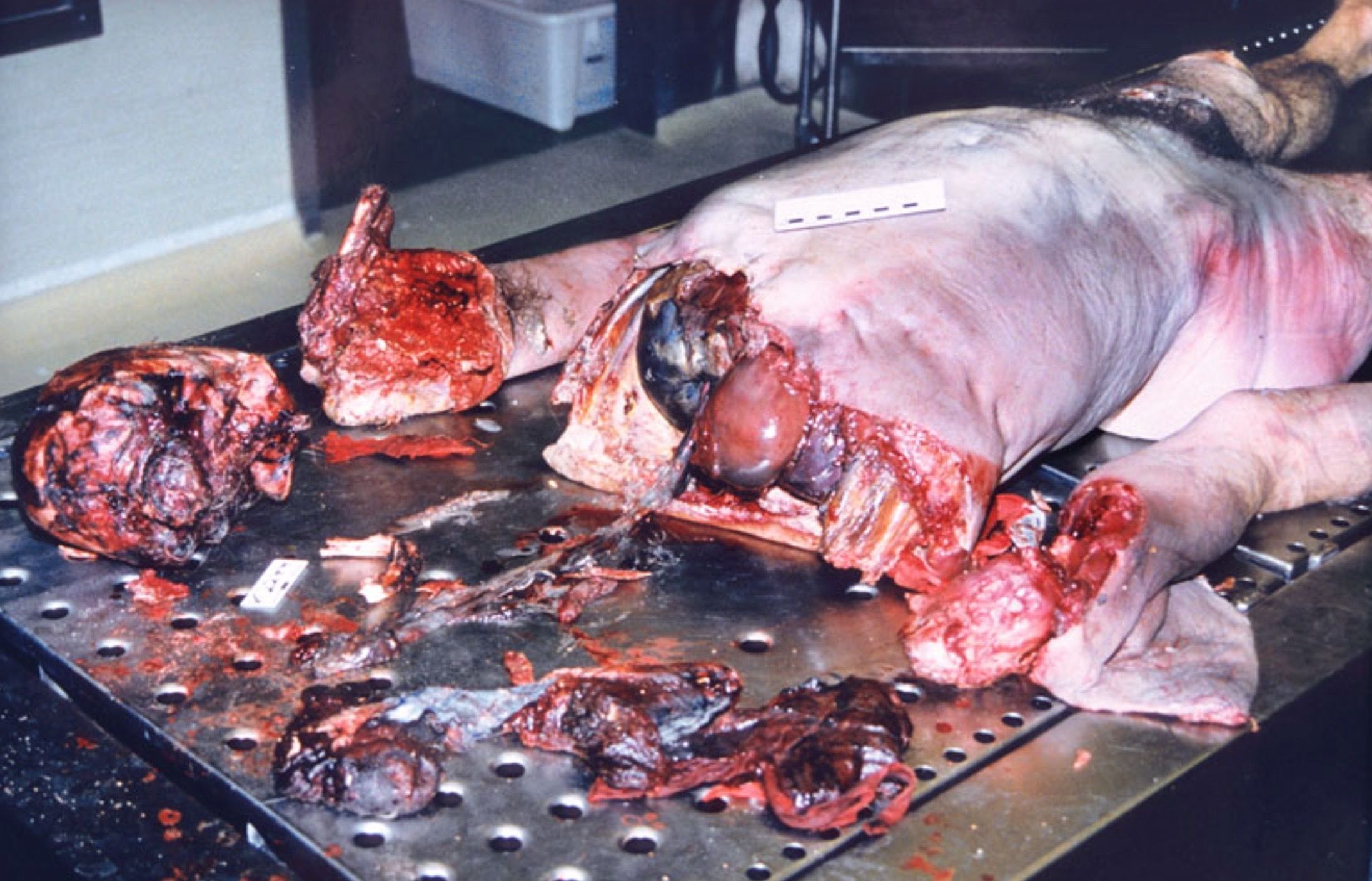 · 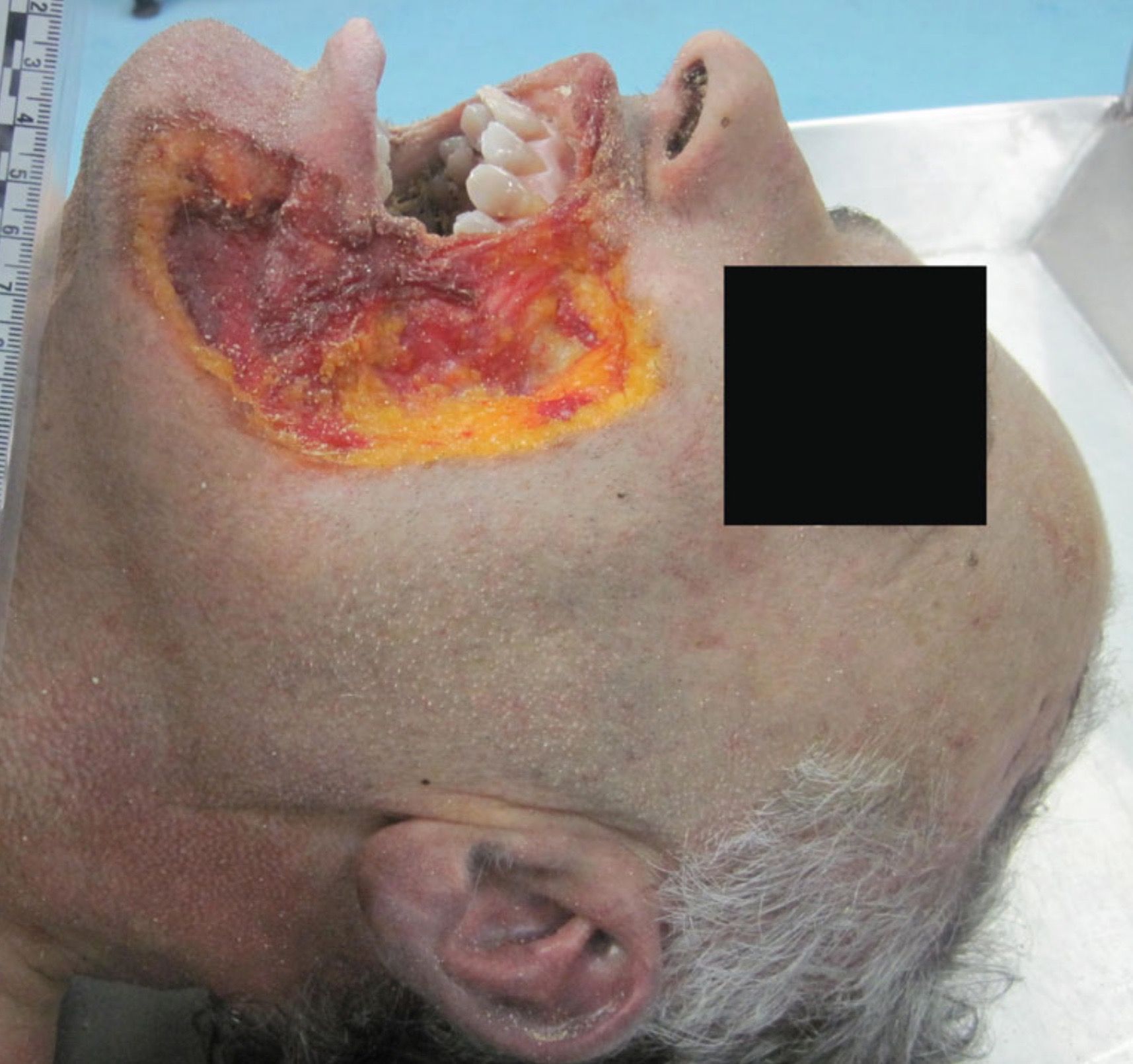 · |