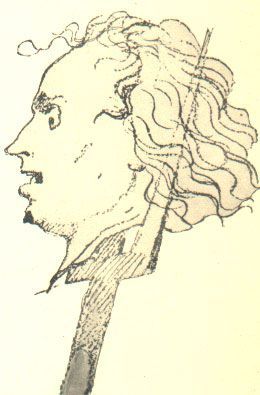
Alfred Rethel (1816 - December 1, 1859) was a German history painter.
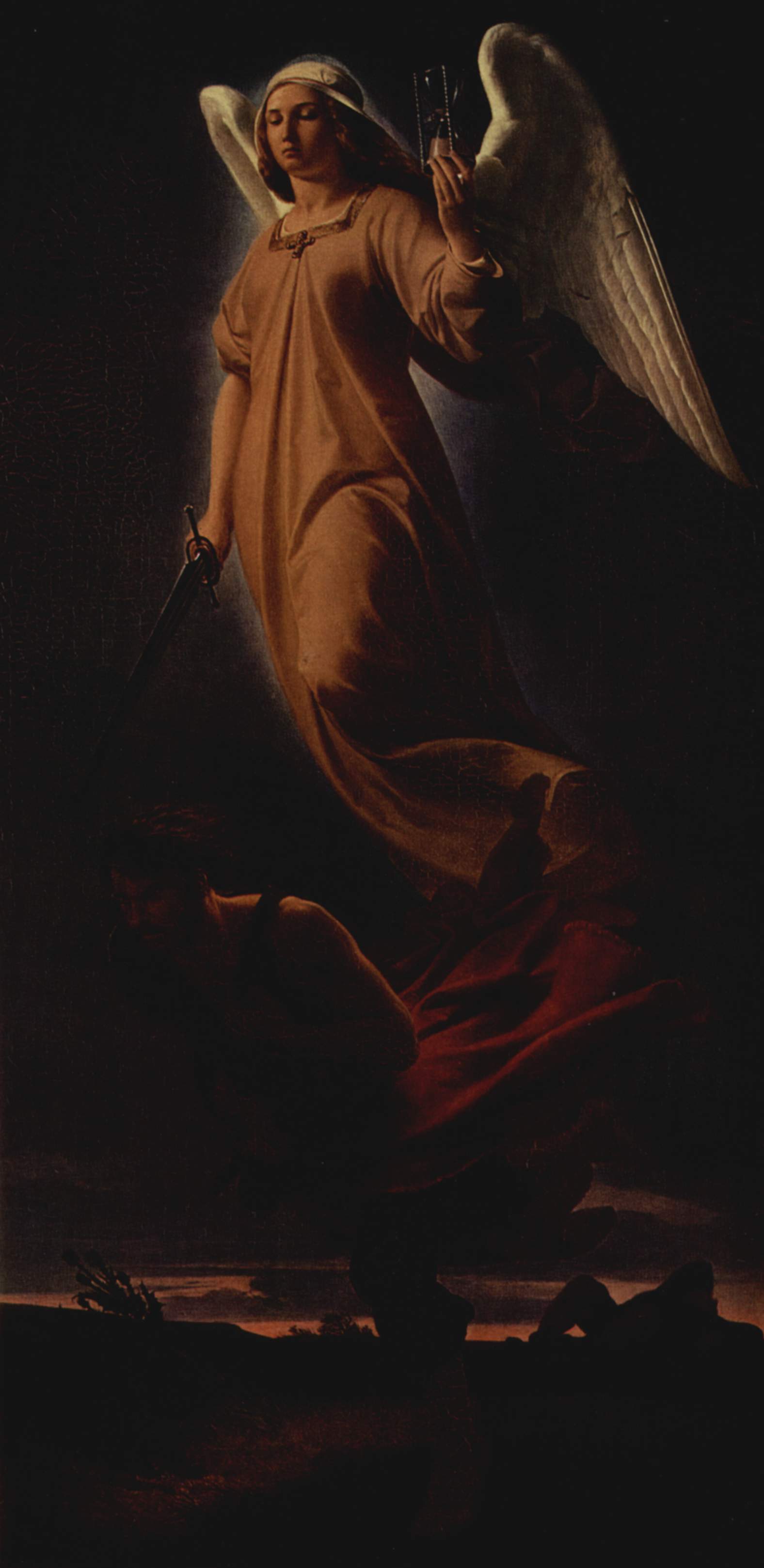
In 1844 Rethel visited Rome, executing, along with other subjects, an altar-piece for one of the churches of his native land. In 1846, he returned to Aachen, and commenced his Charlemagne frescoes. But mental derangement, attributed, it is believed, to an accident that he suffered in childhood, began to manifest itself. While he hovered between madness and sanity, Rethel produced some of the most striking, individual, and impressive of his works. Strange legends are told of the effect produced by some of his weird subjects. He painted Nemesis pursuing a murderer across a flat stretch of landscape. A slaughtered body lies on the ground, while in front is the assassin speeding away into the darkness, and above an angel of vengeance. The picture, so the story goes, was won in a lottery at Frankfurt by a personage of high rank, who had been guilty of an undiscovered crime, and the contemplation of his prize drove him mad.
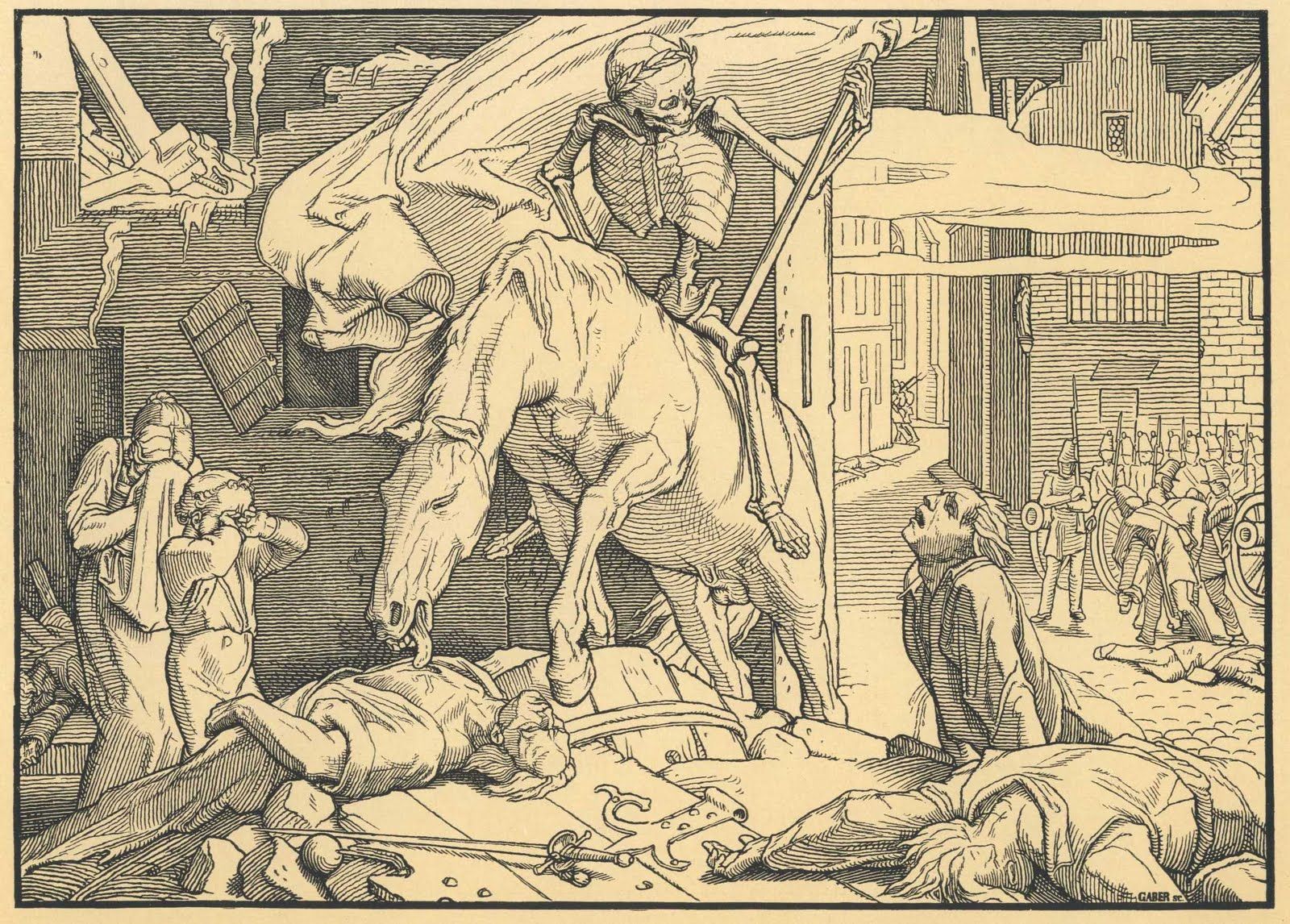
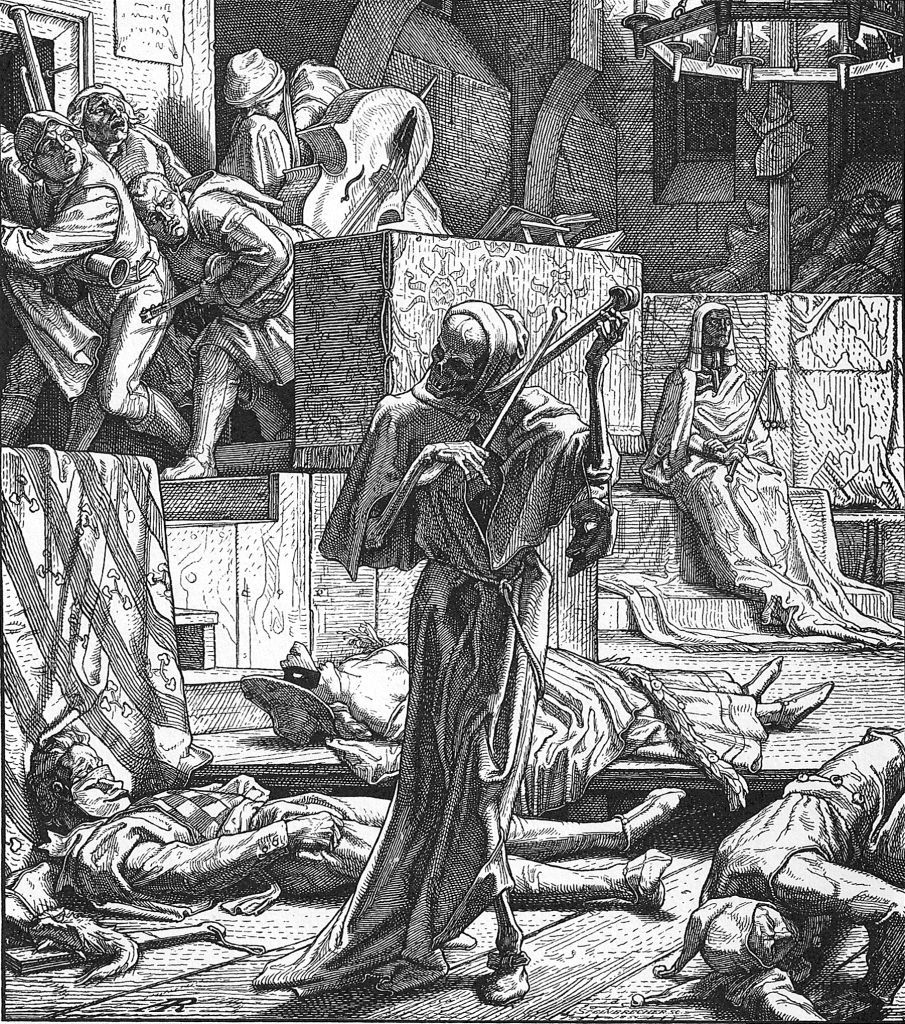
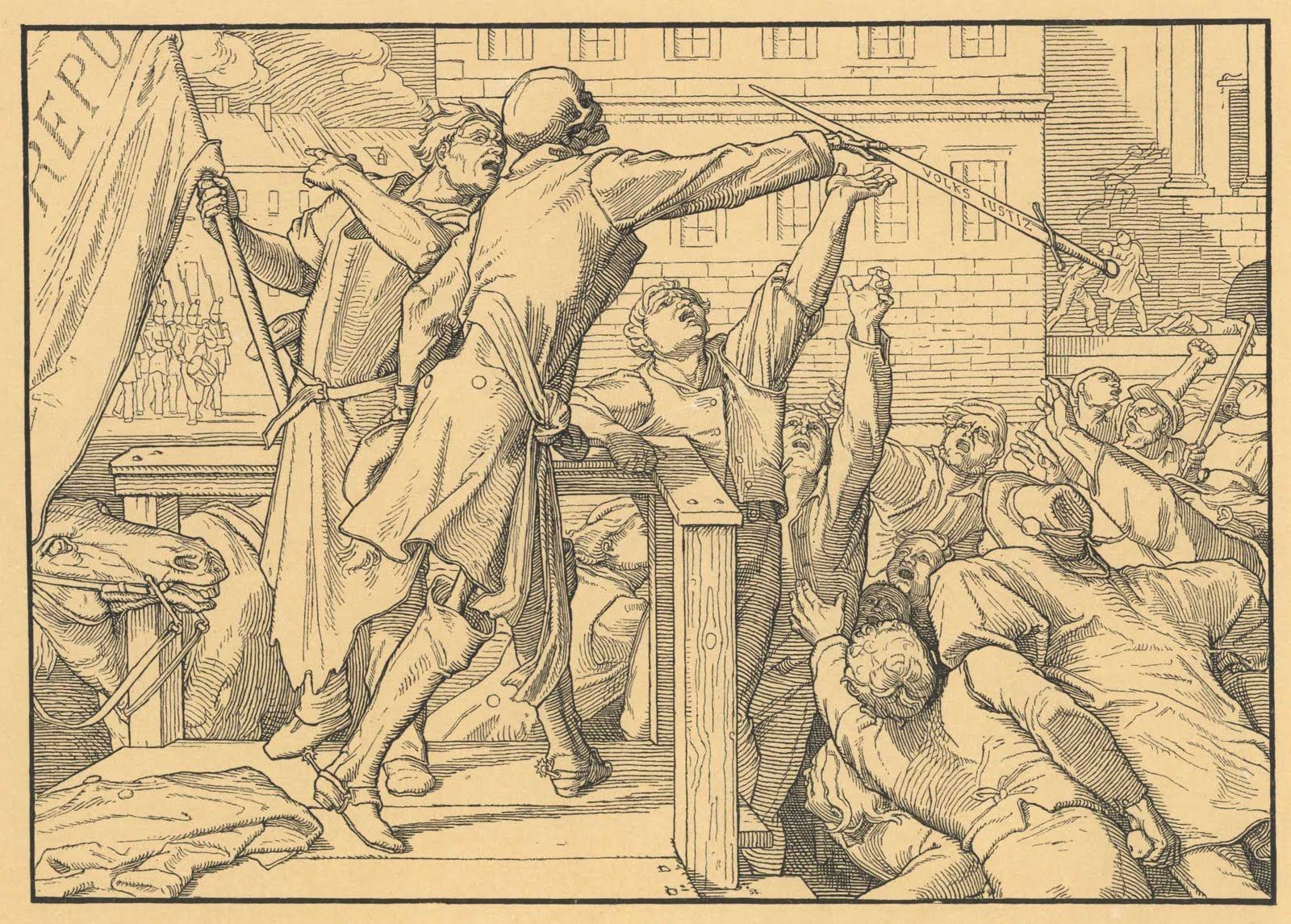
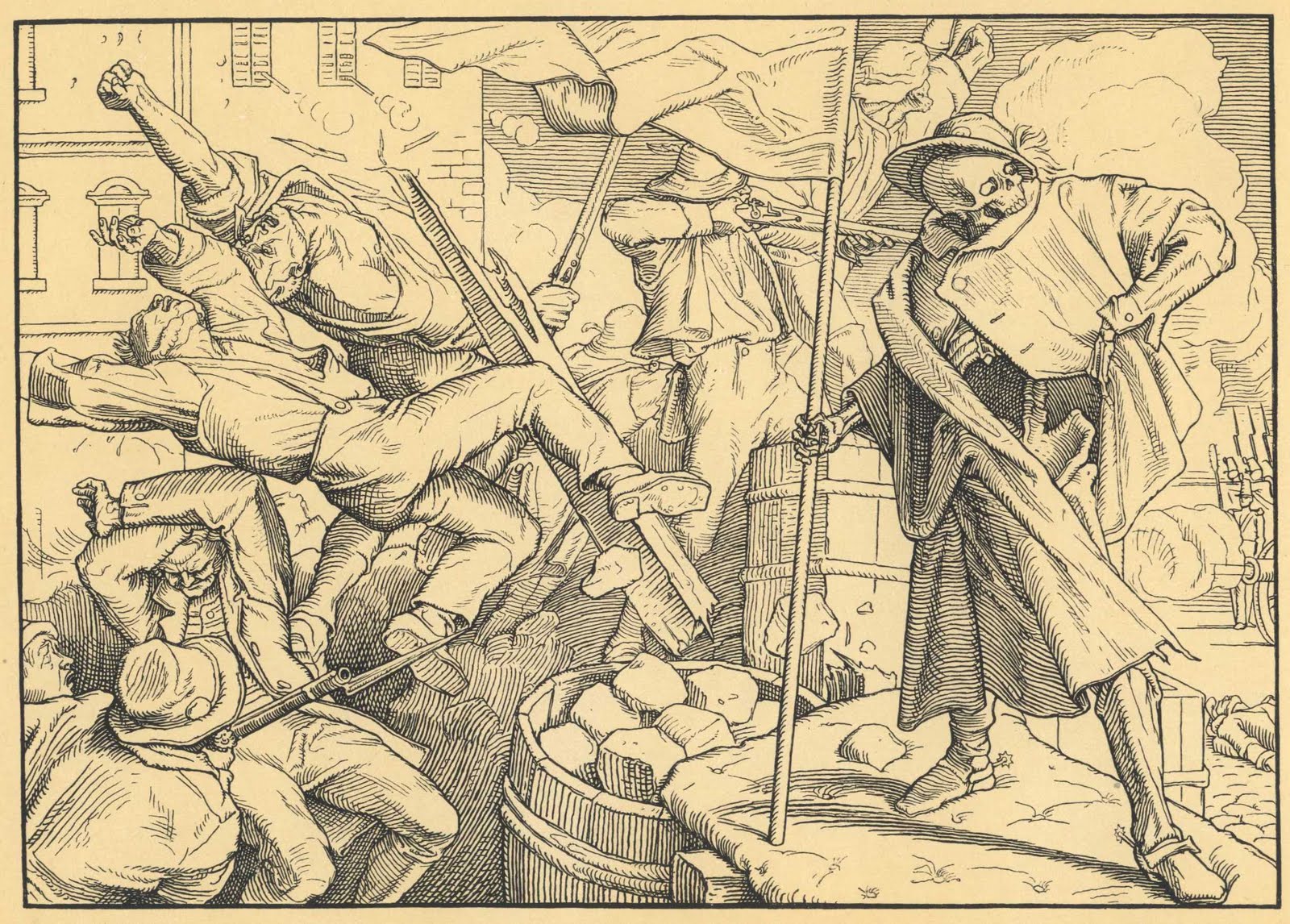
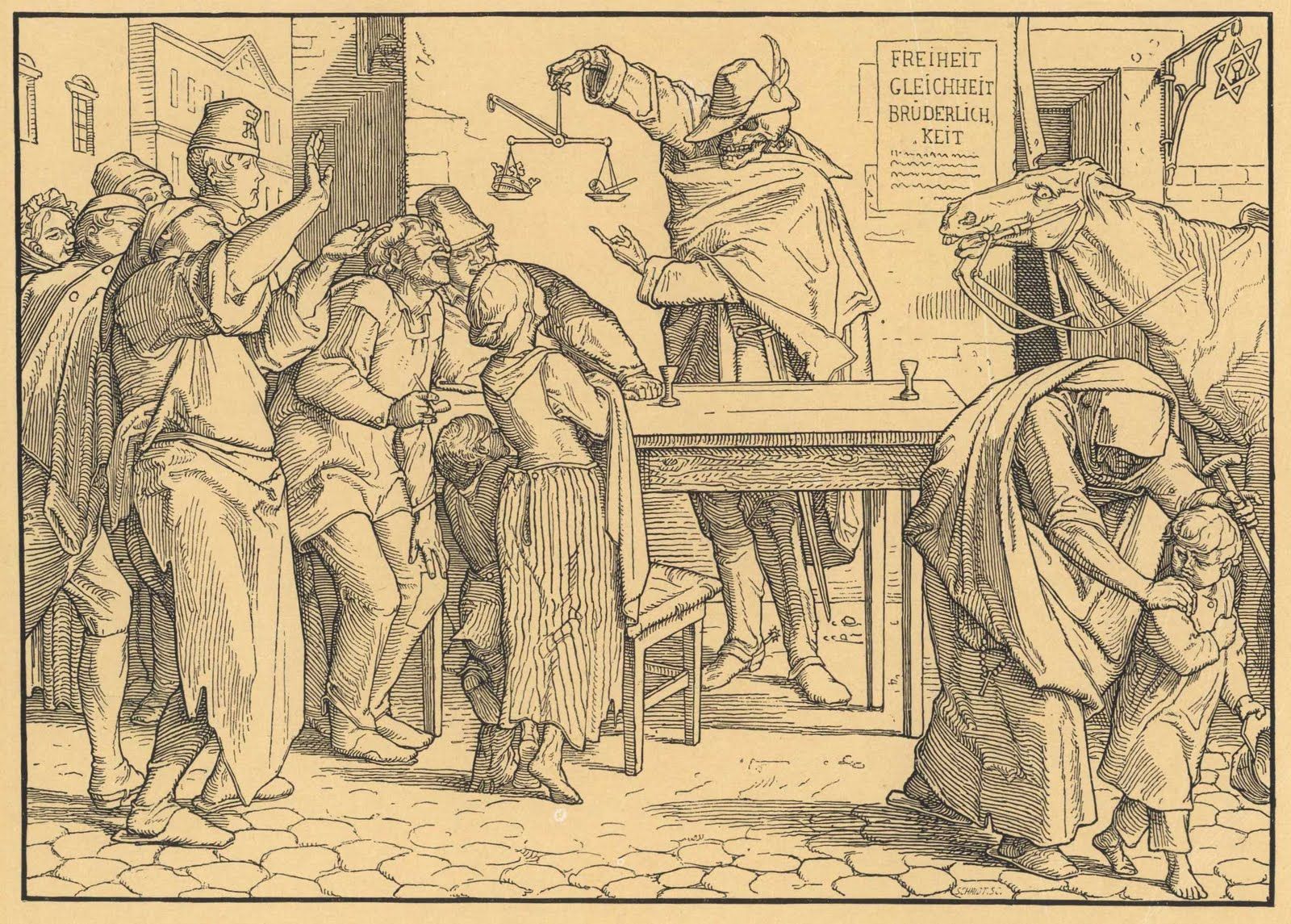
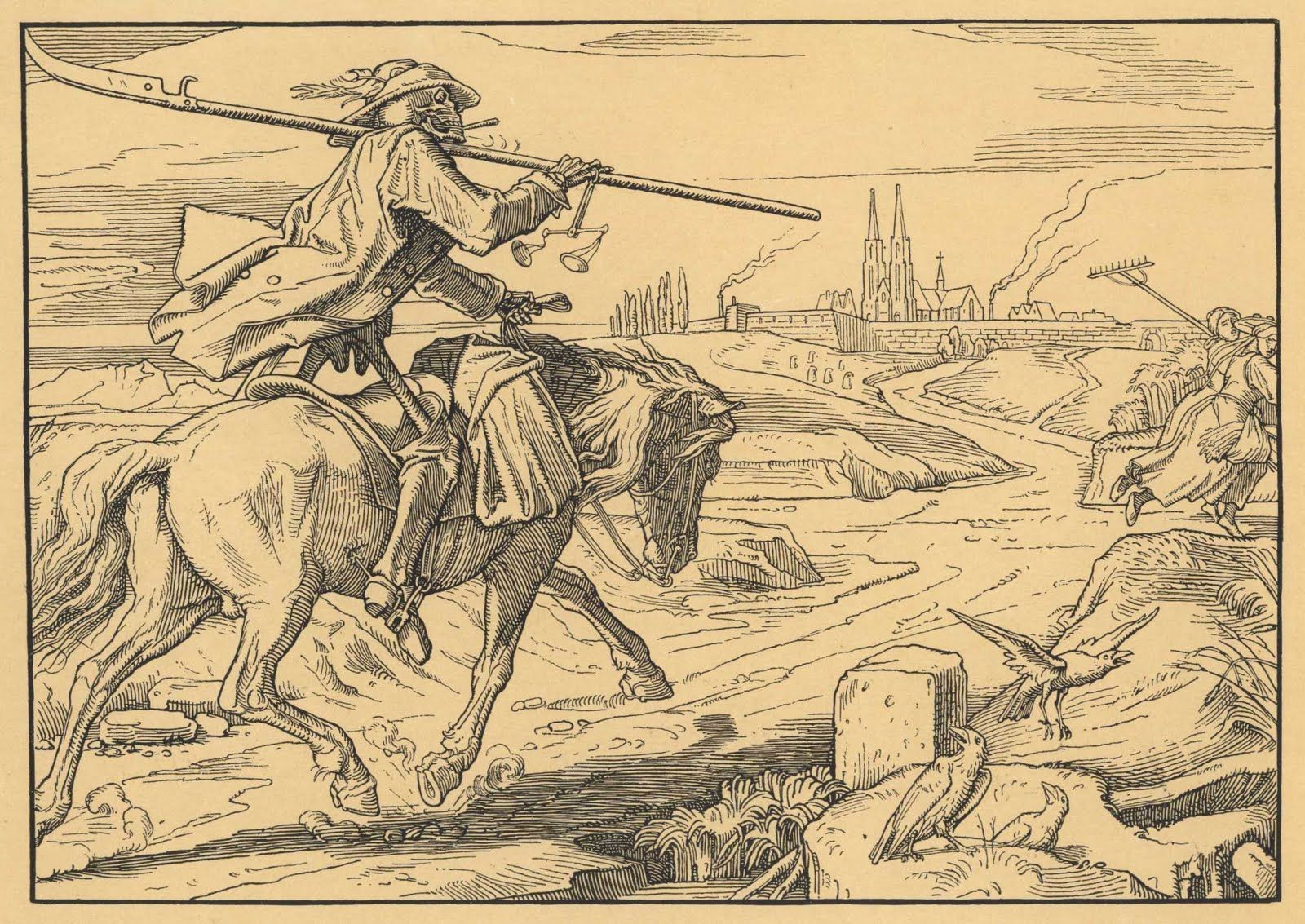
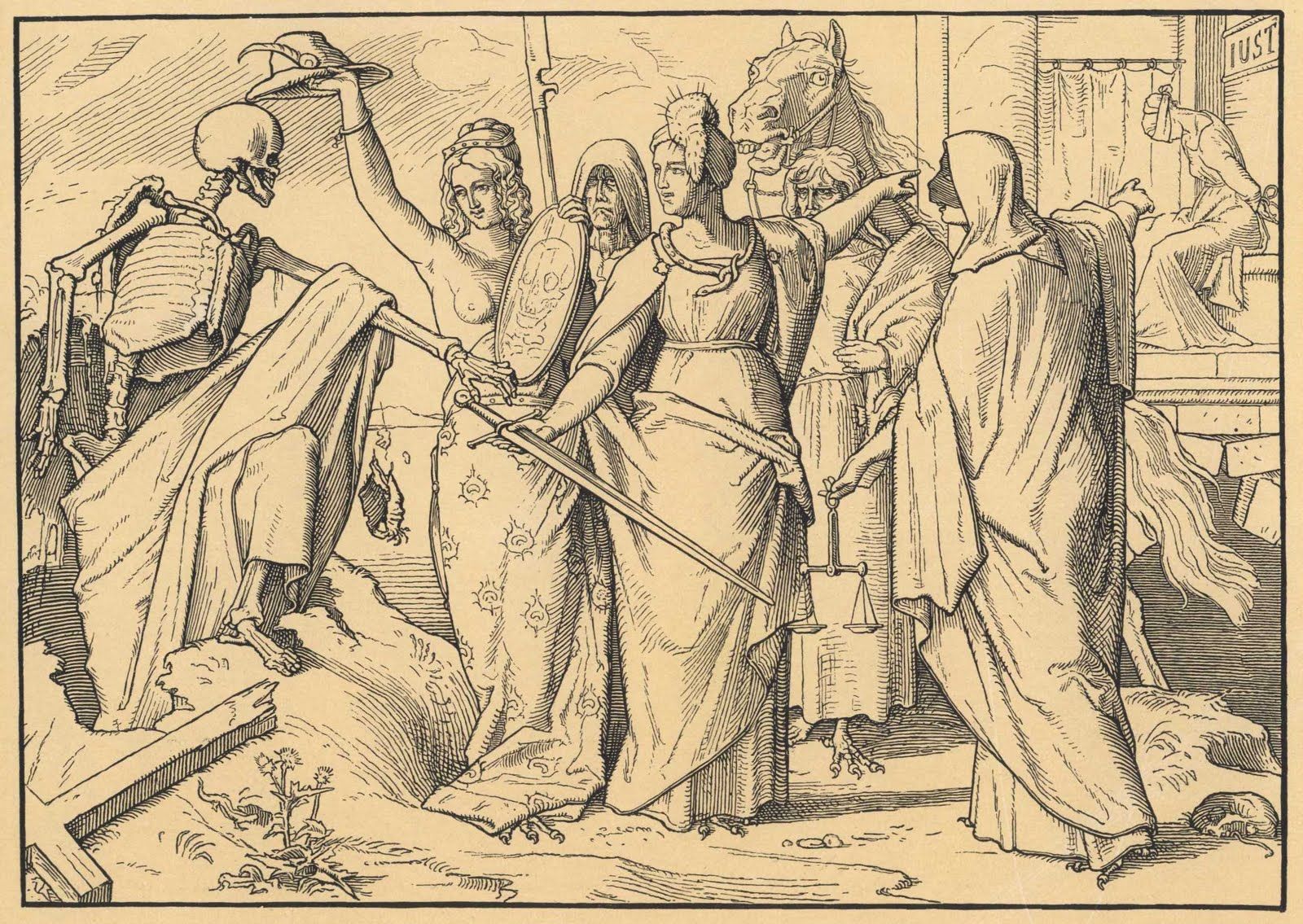
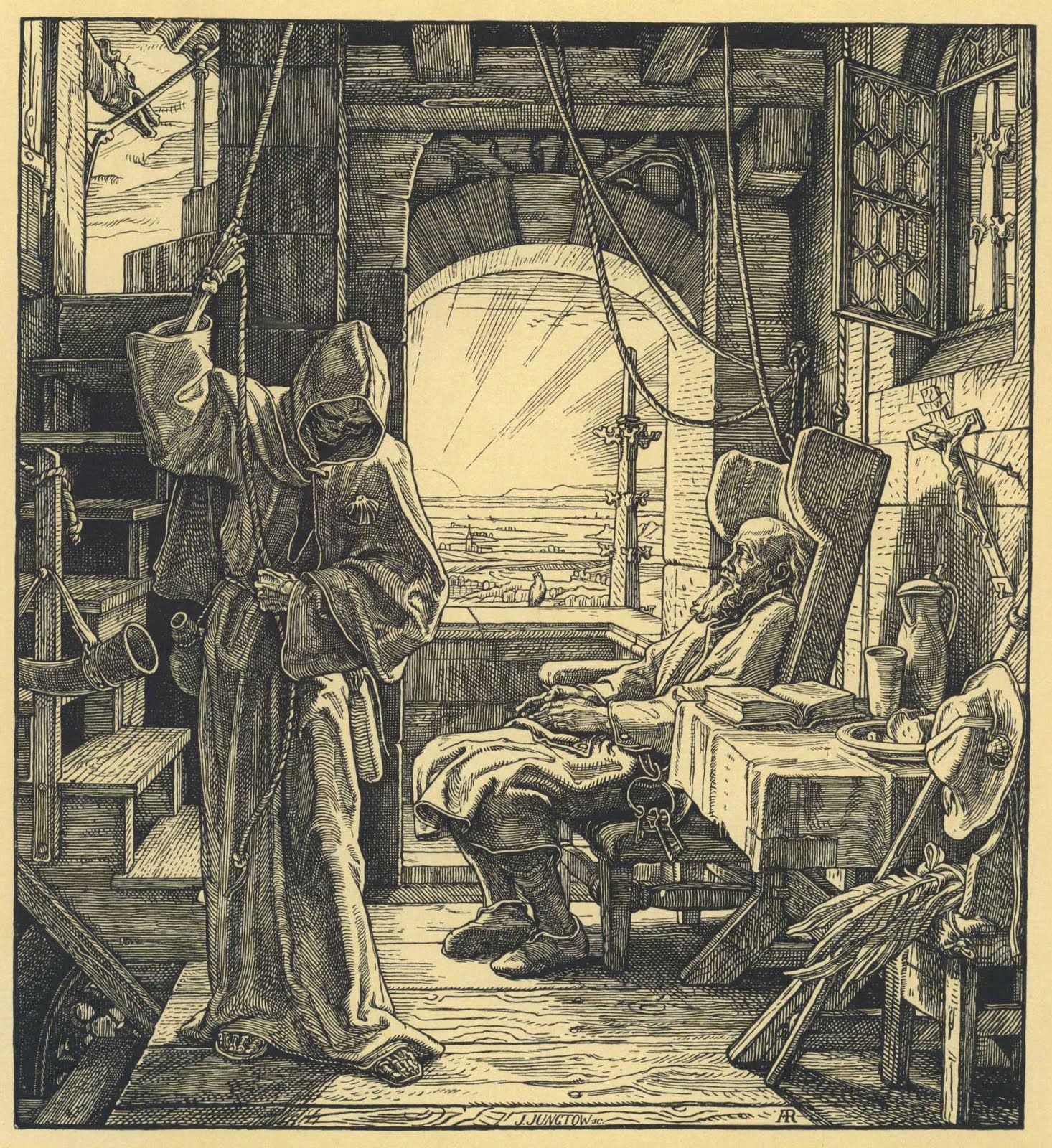
Another design which Rethel executed was "Death the Avenger," a skeleton appearing at a masked ball, scraping daintily, like a violinist, upon two human bones. The drawing haunted the memory of his artist friends and disturbed their dreams; and, in expiation, he produced his pathetic design of "Death the Friend." Rethel also executed a powerful series of drawings "The Dance of Death" suggested by the Belgian insurrections of 1848. It is by such designs as these, executed in a technique founded upon that of Albrecht Dürer, and animated by an imagination akin to that of the elder master, that Rethel is most widely known.