|
#1
●
03-27-2025, 03:13 AM
| ||||||||
 ✝Mudderator from Hell✝ Poster Rank:10 e-mail Join Date: Oct 2006 Posts: 96,390
Contributions: 817
Mentioned: 476 Post(s) Quoted: 10320 Post(s)
| ||||||||
|
Private Data and Passwords of Senior U.S. Security Officials Found Online
Bet China and russia are very amused. |
|
#2
●
03-27-2025, 03:20 AM
| ||||||||
| ✝Mudderator from Hell✝ Poster Rank:10 e-mail Join Date: Oct 2006 Posts: 96,390
Contributions: 817
Mentioned: 476 Post(s) Quoted: 10320 Post(s)
| ||||||||
|
Re: Private Data and Passwords of Senior U.S. Security Officials Found Online
lol
|
|
#4
●
03-27-2025, 09:54 PM
| ||||||||
 ☾ Administrator ☽ Poster Rank:76 ஜᎻᎬᎩᎾᏦᎪஜ Join Date: Dec 2011 Posts: 19,895
Contributions: 32
Mentioned: 191 Post(s) Quoted: 7045 Post(s)
| ||||||||
|
Re: Private Data and Passwords of Senior U.S. Security Officials Found Online
From the Atlantic about "Signalgate". Link: https://www.theatlantic.com/politics...-plans/682151/ (behind a paywall) The Trump Administration Accidentally Texted Me Its War Plans U.S. national-security leaders included me in a group chat about upcoming military strikes in Yemen. I didn’t think it could be real. Then the bombs started falling. By Jeffrey Goldberg March 24, 2025 The world found out shortly before 2 p.m. eastern time on March 15 that the United States was bombing Houthi targets across Yemen. I, however, knew two hours before the first bombs exploded that the attack might be coming. The reason I knew this is that Pete Hegseth, the secretary of defense, had texted me the war plan at 11:44 a.m. The plan included precise information about weapons packages, targets, and timing. This is going to require some explaining. The story technically begins shortly after the Hamas invasion of southern Israel, in October 2023. The Houthis—an Iran-backed terrorist organization whose motto is “God is great, death to America, death to Israel, curse on the Jews, victory to Islam”—soon launched attacks on Israel and on international shipping, creating havoc for global trade. Throughout 2024, the Biden administration was ineffective in countering these Houthi attacks; the incoming Trump administration promised a tougher response. This is where Pete Hegseth and I come in. On Tuesday, March 11, I received a connection request on Signal from a user identified as Michael Waltz. Signal is an open-source encrypted messaging service popular with journalists and others who seek more privacy than other text-messaging services are capable of delivering. I assumed that the Michael Waltz in question was President Donald Trump’s national security adviser. I did not assume, however, that the request was from the actual Michael Waltz. I have met him in the past, and though I didn’t find it particularly strange that he might be reaching out to me, I did think it somewhat unusual, given the Trump administration’s contentious relationship with journalists—and Trump’s periodic fixation on me specifically. It immediately crossed my mind that someone could be masquerading as Waltz in order to somehow entrap me. It is not at all uncommon these days for nefarious actors to try to induce journalists to share information that could be used against them. I accepted the connection request, hoping that this was the actual national security adviser, and that he wanted to chat about Ukraine, or Iran, or some other important matter. Two days later—Thursday—at 4:28 p.m., I received a notice that I was to be included in a Signal chat group. It was called the “Houthi PC small group.” A message to the group, from “Michael Waltz,” read as follows: “Team – establishing a principles [sic] group for coordination on Houthis, particularly for over the next 72 hours. My deputy Alex Wong is pulling together a tiger team at deputies/agency Chief of Staff level following up from the meeting in the Sit Room this morning for action items and will be sending that out later this evening.” The message continued, “Pls provide the best staff POC from your team for us to coordinate with over the next couple days and over the weekend. Thx.” The term principals committee generally refers to a group of the senior-most national-security officials, including the secretaries of defense, state, and the treasury, as well as the director of the CIA. It should go without saying—but I’ll say it anyway—that I have never been invited to a White House principals-committee meeting, and that, in my many years of reporting on national-security matters, I had never heard of one being convened over a commercial messaging app. One minute later, a person identified only as “MAR”—the secretary of state is Marco Antonio Rubio—wrote, “Mike Needham for State,” apparently designating the current counselor of the State Department as his representative. At that same moment, a Signal user identified as “JD Vance” wrote, “Andy baker for VP.” One minute after that, “TG” (presumably Tulsi Gabbard, the director of national intelligence, or someone masquerading as her) wrote, “Joe Kent for DNI.” Nine minutes later, “Scott B”—apparently Treasury Secretary Scott Bessent, or someone spoofing his identity, wrote, “Dan Katz for Treasury.” At 4:53 p.m., a user called “Pete Hegseth” wrote, “Dan Caldwell for DoD.” And at 6:34 p.m., “Brian” wrote “Brian McCormack for NSC.” One more person responded: “John Ratcliffe” wrote at 5:24 p.m. with the name of a CIA official to be included in the group. I am not publishing that name, because that person is an active intelligence officer. The principals had apparently assembled. In all, 18 individuals were listed as members of this group, including various National Security Council officials; Steve Witkoff, President Trump’s Middle East and Ukraine negotiator; Susie Wiles, the White House chief of staff; and someone identified only as “S M,” which I took to stand for Stephen Miller. I appeared on my own screen only as “JG.” That was the end of the Thursday text chain. After receiving the Waltz text related to the “Houthi PC small group,” I consulted a number of colleagues. We discussed the possibility that these texts were part of a disinformation campaign, initiated by either a foreign intelligence service or, more likely, a media-gadfly organization, the sort of group that attempts to place journalists in embarrassing positions, and sometimes succeeds. I had very strong doubts that this text group was real, because I could not believe that the national-security leadership of the United States would communicate on Signal about imminent war plans. I also could not believe that the national security adviser to the president would be so reckless as to include the editor in chief of The Atlantic in such discussions with senior U.S. officials, up to and including the vice president. The next day, things got even stranger. At 8:05 a.m. on Friday, March 14, “Michael Waltz” texted the group: “Team, you should have a statement of conclusions with taskings per the Presidents guidance this morning in your high side inboxes.” (High side, in government parlance, refers to classified computer and communications systems.) “State and DOD, we developed suggested notification lists for regional Allies and partners. Joint Staff is sending this am a more specific sequence of events in the coming days and we will work w DOD to ensure COS, OVP and POTUS are briefed.” At this point, a fascinating policy discussion commenced. The account labeled “JD Vance” responded at 8:16: “Team, I am out for the day doing an economic event in Michigan. But I think we are making a mistake.” (Vance was indeed in Michigan that day.) The Vance account goes on to state, “3 percent of US trade runs through the suez. 40 percent of European trade does. There is a real risk that the public doesn’t understand this or why it’s necessary. The strongest reason to do this is, as POTUS said, to send a message.” The Vance account then goes on to make a noteworthy statement, considering that the vice president has not deviated publicly from Trump’s position on virtually any issue. “I am not sure the president is aware how inconsistent this is with his message on Europe right now. There’s a further risk that we see a moderate to severe spike in oil prices. I am willing to support the consensus of the team and keep these concerns to myself. But there is a strong argument for delaying this a month, doing the messaging work on why this matters, seeing where the economy is, etc.” A person identified in Signal as “Joe Kent” (Trump’s nominee to run the National Counterterrorism Center is named Joe Kent) wrote at 8:22, “There is nothing time sensitive driving the time line. We’ll have the exact same options in a month.” Then, at 8:26 a.m., a message landed in my Signal app from the user “John Ratcliffe.” The message contained information that might be interpreted as related to actual and current intelligence operations. At 8:27, a message arrived from the “Pete Hegseth” account. “VP: I understand your concerns – and fully support you raising w/ POTUS. Important considerations, most of which are tough to know how they play out (economy, Ukraine peace, Gaza, etc). I think messaging is going to be tough no matter what – nobody knows who the Houthis are – which is why we would need to stay focused on: 1) Biden failed & 2) Iran funded.” The Hegseth message goes on to state, “Waiting a few weeks or a month does not fundamentally change the calculus. 2 immediate risks on waiting: 1) this leaks, and we look indecisive; 2) Israel takes an action first – or Gaza cease fire falls apart – and we don’t get to start this on our own terms. We can manage both. We are prepared to execute, and if I had final go or no go vote, I believe we should. This [is] not about the Houthis. I see it as two things: 1) Restoring Freedom of Navigation, a core national interest; and 2) Reestablish deterrence, which Biden cratered. But, we can easily pause. And if we do, I will do all we can to enforce 100% OPSEC”—operations security. “I welcome other thoughts.” A few minutes later, the “Michael Waltz” account posted a lengthy note about trade figures, and the limited capabilities of European navies. “Whether it’s now or several weeks from now, it will have to be the United States that reopens these shipping lanes. Per the president’s request we are working with DOD and State to determine how to compile the cost associated and levy them on the Europeans.” The account identified as “JD Vance” addressed a message at 8:45 to pete Hegseth: “if you think we should do it let’s go. I just hate bailing Europe out again.” (The administration has argued that America’s European allies benefit economically from the U.S. Navy’s protection of international shipping lanes.) The user identified as Hegseth responded three minutes later: “VP: I fully share your loathing of European free-loading. It’s PATHETIC. But Mike is correct, we are the only ones on the planet (on our side of the ledger) who can do this. Nobody else even close. Question is timing. I feel like now is as good a time as any, given POTUS directive to reopen shipping lanes. I think we should go; but POTUS still retains 24 hours of decision space.” At this point, the previously silent “S M” joined the conversation. “As I heard it, the president was clear: green light, but we soon make clear to Egypt and Europe what we expect in return. We also need to figure out how to enforce such a requirement. EG, if Europe doesn’t remunerate, then what? If the US successfully restores freedom of navigation at great cost there needs to be some further economic gain extracted in return.” That message from “S M”—presumably President Trump’s confidant Stephen Miller, the deputy White House chief of staff, or someone playing Stephen Miller—effectively shut down the conversation. The last text of the day came from “Pete Hegseth,” who wrote at 9:46 a.m., “Agree.” After reading this chain, I recognized that this conversation possessed a high degree of verisimilitude. The texts, in their word choice and arguments, sounded as if they were written by the people who purportedly sent them, or by a particularly adept AI text generator. I was still concerned that this could be a disinformation operation, or a simulation of some sort. And I remained mystified that no one in the group seemed to have noticed my presence. But if it was a hoax, the quality of mimicry and the level of foreign-policy insight were impressive. It was the next morning, Saturday, March 15, when this story became truly bizarre. At 11:44 a.m., the account labeled “Pete Hegseth” posted in Signal a “TEAM UPDATE.” I will not quote from this update, or from certain other subsequent texts. The information contained in them, if they had been read by an adversary of the United States, could conceivably have been used to harm American military and intelligence personnel, particularly in the broader Middle East, Central Command’s area of responsibility. What I will say, in order to illustrate the shocking recklessness of this Signal conversation, is that the Hegseth post contained operational details of forthcoming strikes on Yemen, including information about targets, weapons the U.S. would be deploying, and attack sequencing. The only person to reply to the update from Hegseth was the person identified as the vice president. “I will say a prayer for victory,” Vance wrote. (Two other users subsequently added prayer emoji.) According to the lengthy Hegseth text, the first detonations in Yemen would be felt two hours hence, at 1:45 p.m. eastern time. So I waited in my car in a supermarket parking lot. If this Signal chat was real, I reasoned, Houthi targets would soon be bombed. At about 1:55, I checked X and searched Yemen. Explosions were then being heard across Sanaa, the capital city. I went back to the Signal channel. At 1:48, “Michael Waltz” had provided the group an update. Again, I won’t quote from this text, except to note that he described the operation as an “amazing job.” A few minutes later, “John Ratcliffe” wrote, “A good start.” Not long after, Waltz responded with three emoji: a fist, an American flag, and fire. Others soon joined in, including “MAR,” who wrote, “Good Job Pete and your team!!,” and “Susie Wiles,” who texted, “Kudos to all – most particularly those in theater and CENTCOM! Really great. God bless.” “Steve Witkoff” responded with five emoji: two hands-praying, a flexed bicep, and two American flags. “TG” responded, “Great work and effects!” The after-action discussion included assessments of damage done, including the likely death of a specific individual. The Houthi-run Yemeni health ministry reported that at least 53 people were killed in the strikes, a number that has not been independently verified. On Sunday, Waltz appeared on ABC’s This Week and contrasted the strikes with the Biden administration’s more hesitant approach. “These were not kind of pinprick, back-and-forth—what ultimately proved to be feckless attacks,” he said. “This was an overwhelming response that actually targeted multiple Houthi leaders and took them out.” The Signal chat group, I concluded, was almost certainly real. Having come to this realization, one that seemed nearly impossible only hours before, I removed myself from the Signal group, understanding that this would trigger an automatic notification to the group’s creator, “Michael Waltz,” that I had left. No one in the chat had seemed to notice that I was there. And I received no subsequent questions about why I left—or, more to the point, who I was. Earlier today, I emailed Waltz and sent him a message on his Signal account. I also wrote to Pete Hegseth, John Ratcliffe, Tulsi Gabbard, and other officials. In an email, I outlined some of my questions: Is the “Houthi PC small group” a genuine Signal thread? Did they know that I was included in this group? Was I (on the off chance) included on purpose? If not, who did they think I was? Did anyone realize who I was when I was added, or when I removed myself from the group? Do senior Trump-administration officials use Signal regularly for sensitive discussions? Do the officials believe that the use of such a channel could endanger American personnel? Brian Hughes, the spokesman for the National Security Council, responded two hours later, confirming the veracity of the Signal group. “This appears to be an authentic message chain, and we are reviewing how an inadvertent number was added to the chain,” Hughes wrote. “The thread is a demonstration of the deep and thoughtful policy coordination between senior officials. The ongoing success of the Houthi operation demonstrates that there were no threats to troops or national security.” William Martin, a spokesperson for Vance, said that despite the impression created by the texts, the vice president is fully aligned with the president. “The Vice President’s first priority is always making sure that the President’s advisers are adequately briefing him on the substance of their internal deliberations,” he said. “Vice President Vance unequivocally supports this administration’s foreign policy. The President and the Vice President have had subsequent conversations about this matter and are in complete agreement.” I have never seen a breach quite like this. It is not uncommon for national-security officials to communicate on Signal. But the app is used primarily for meeting planning and other logistical matters—not for detailed and highly confidential discussions of a pending military action. And, of course, I’ve never heard of an instance in which a journalist has been invited to such a discussion. Conceivably, Waltz, by coordinating a national-security-related action over Signal, may have violated several provisions of the Espionage Act, which governs the handling of “national defense” information, according to several national-security lawyers interviewed by my colleague Shane Harris for this story. Harris asked them to consider a hypothetical scenario in which a senior U.S. official creates a Signal thread for the express purpose of sharing information with Cabinet officials about an active military operation. He did not show them the actual Signal messages or tell them specifically what had occurred. All of these lawyers said that a U.S. official should not establish a Signal thread in the first place. Information about an active operation would presumably fit the law’s definition of “national defense” information. The Signal app is not approved by the government for sharing classified information. The government has its own systems for that purpose. If officials want to discuss military activity, they should go into a specially designed space known as a sensitive compartmented information facility, or SCIF—most Cabinet-level national-security officials have one installed in their home—or communicate only on approved government equipment, the lawyers said. Normally, cellphones are not permitted inside a SCIF, which suggests that as these officials were sharing information about an active military operation, they could have been moving around in public. Had they lost their phones, or had they been stolen, the potential risk to national security would have been severe. Hegseth, Ratcliffe, and other Cabinet-level officials presumably would have the authority to declassify information, and several of the national-security lawyers noted that the hypothetical officials on the Signal chain might claim that they had declassified the information they shared. But this argument rings hollow, they cautioned, because Signal is not an authorized venue for sharing information of such a sensitive nature, regardless of whether it has been stamped “top secret” or not. There was another potential problem: Waltz set some of the messages in the Signal group to disappear after one week, and some after four. That raises questions about whether the officials may have violated federal records law: Text messages about official acts are considered records that should be preserved. “Under the records laws applicable to the White House and federal agencies, all government employees are prohibited from using electronic-messaging applications such as Signal for official business, unless those messages are promptly forwarded or copied to an official government account,” Jason R. Baron, a professor at the University of Maryland and the former director of litigation at the National Archives and Records Administration, told Harris. “Intentional violations of these requirements are a basis for disciplinary action. Additionally, agencies such as the Department of Defense restrict electronic messaging containing classified information to classified government networks and/or networks with government-approved encrypted features,” Baron said. Several former U.S. officials told Harris and me that they had used Signal to share unclassified information and to discuss routine matters, particularly when traveling overseas without access to U.S. government systems. But they knew never to share classified or sensitive information on the app, because their phones could have been hacked by a foreign intelligence service, which would have been able to read the messages on the devices. It is worth noting that Donald Trump, as a candidate for president (and as president), repeatedly and vociferously demanded that Hillary Clinton be imprisoned for using a private email server for official business when she was secretary of state. (It is also worth noting that Trump was indicted in 2023 for mishandling classified documents, but the charges were dropped after his election.) Waltz and the other Cabinet-level officials were already potentially violating government policy and the law simply by texting one another about the operation. But when Waltz added a journalist—presumably by mistake—to his principals committee, he created new security and legal issues. Now the group was transmitting information to someone not authorized to receive it. That is the classic definition of a leak, even if it was unintentional, and even if the recipient of the leak did not actually believe it was a leak until Yemen came under American attack. All along, members of the Signal group were aware of the need for secrecy and operations security. In his text detailing aspects of the forthcoming attack on Houthi targets, Hegseth wrote to the group—which, at the time, included me—“We are currently clean on OPSEC.” A FOLLOW UP by The Atlantic the next day. Link: https://www.theatlantic.com/politics...ldberg/682176/ (behind a pay wall) Here Are the Attack Plans That Trump’s Advisers Shared on Signal The administration has downplayed the importance of the text messages inadvertently sent to The Atlantic’s editor in chief. By Jeffrey Goldberg and Shane Harris March 26, 2025, 8:19 AM ET So, about that Signal chat. On Monday, shortly after we published a story about a massive Trump-administration security breach, a reporter asked the secretary of defense, Pete Hegseth, why he had shared plans about a forthcoming attack on Yemen on the Signal messaging app. He answered, “Nobody was texting war plans. And that’s all I have to say about that.” At a Senate hearing yesterday, the director of national intelligence, Tulsi Gabbard, and the director of the Central Intelligence Agency, John Ratcliffe, were both asked about the Signal chat, to which Jeffrey Goldberg, the editor in chief of The Atlantic, was inadvertently invited by National Security Adviser Michael Waltz. “There was no classified material that was shared in that Signal group,” Gabbard told members of the Senate Intelligence Committee. Ratcliffe said much the same: “My communications, to be clear, in the Signal message group were entirely permissible and lawful and did not include classified information.” President Donald Trump, asked yesterday afternoon about the same matter, said, “It wasn’t classified information.” These statements presented us with a dilemma. In The Atlantic’s initial story about the Signal chat—the “Houthi PC small group,” as it was named by Waltz—we withheld specific information related to weapons and to the timing of attacks that we found in certain texts. As a general rule, we do not publish information about military operations if that information could possibly jeopardize the lives of U.S. personnel. That is why we chose to characterize the nature of the information being shared, not specific details about the attacks. The statements by Hegseth, Gabbard, Ratcliffe, and Trump—combined with the assertions made by numerous administration officials that we are lying about the content of the Signal texts—have led us to believe that people should see the texts in order to reach their own conclusions. There is a clear public interest in disclosing the sort of information that Trump advisers included in nonsecure communications channels, especially because senior administration figures are attempting to downplay the significance of the messages that were shared. Experts have repeatedly told us that use of a Signal chat for such sensitive discussions poses a threat to national security. As a case in point, Goldberg received information on the attacks two hours before the scheduled start of the bombing of Houthi positions. If this information—particularly the exact times American aircraft were taking off for Yemen—had fallen into the wrong hands in that crucial two-hour period, American pilots and other American personnel could have been exposed to even greater danger than they ordinarily would face. The Trump administration is arguing that the military information contained in these texts was not classified—as it typically would be—although the president has not explained how he reached this conclusion. Yesterday, we asked officials across the Trump administration if they objected to us publishing the full texts. In emails to the Central Intelligence Agency, the Office of the Director of National Intelligence, the National Security Council, the Department of Defense, and the White House, we wrote, in part: “In light of statements today from multiple administration officials, including before the Senate Intelligence Committee, that the information in the Signal chain about the Houthi strike is not classified, and that it does not contain ‘war plans,’ The Atlantic is considering publishing the entirety of the Signal chain.” We sent our first request for comment and feedback to national-security officials shortly after noon, and followed up in the evening after most failed to answer. Late yesterday, White House Press Secretary Karoline Leavitt emailed a response: “As we have repeatedly stated, there was no classified information transmitted in the group chat. However, as the CIA Director and National Security Advisor have both expressed today, that does not mean we encourage the release of the conversation. This was intended to be a an [sic] internal and private deliberation amongst high-level senior staff and sensitive information was discussed. So for those reason [sic] — yes, we object to the release.” (The Leavitt statement did not address which elements of the texts the White House considered sensitive, or how, more than a week after the initial air strikes, their publication could have bearing on national security.) A CIA spokesperson asked us to withhold the name of John Ratcliffe’s chief of staff, which Ratcliffe had shared in the Signal chain, because CIA intelligence officers are traditionally not publicly identified. Ratcliffe had testified earlier yesterday that the officer is not undercover and said it was “completely appropriate” to share their name in the Signal conversation. We will continue to withhold the name of the officer. Otherwise, the messages are unredacted. As we wrote on Monday, much of the conversation in the “Houthi PC small group” concerned the timing and rationale of attacks on the Houthis, and contained remarks by Trump-administration officials about the alleged shortcomings of America’s European allies. But on the day of the attack—Saturday, March 15—the discussion veered toward the operational. At 11:44 a.m. eastern time, Hegseth posted in the chat, in all caps, “TEAM UPDATE:” The text beneath this began, “TIME NOW (1144et): Weather is FAVORABLE. Just CONFIRMED w/CENTCOM we are a GO for mission launch.” Centcom, or Central Command, is the military’s combatant command for the Middle East. The Hegseth text continues: “1215et: F-18s LAUNCH (1st strike package)”Let us pause here for a moment to underscore a point. This Signal message shows that the U.S. secretary of defense texted a group that included a phone number unknown to him—Goldberg’s cellphone—at 11:44 a.m. This was 31 minutes before the first U.S. warplanes launched, and two hours and one minute before the beginning of a period in which a primary target, the Houthi “Target Terrorist,” was expected to be killed by these American aircraft. If this text had been received by someone hostile to American interests—or someone merely indiscreet, and with access to social media—the Houthis would have had time to prepare for what was meant to be a surprise attack on their strongholds. The consequences for American pilots could have been catastrophic. The Hegseth text then continued: “1410: More F-18s LAUNCH (2nd strike package)”At 1:48 p.m., Waltz sent the following text, containing real-time intelligence about conditions at an attack site, apparently in Sanaa: “VP. Building collapsed. Had multiple positive ID. Pete, Kurilla, the IC, amazing job.” Waltz was referring here to Hegseth; General Michael E. Kurilla, the commander of Central Command; and the intelligence community, or IC. The reference to “multiple positive ID” suggests that U.S. intelligence had ascertained the identities of the Houthi target, or targets, using either human or technical assets. Six minutes later, the vice president, apparently confused by Waltz’s message, wrote, “What?” At 2 p.m., Waltz responded: “Typing too fast. The first target – their top missile guy – we had positive ID of him walking into his girlfriend’s building and it’s now collapsed.” Vance responded a minute later: “Excellent.” Thirty-five minutes after that, Ratcliffe, the CIA director, wrote, “A good start,” which Waltz followed with a text containing a fist emoji, an American-flag emoji, and a fire emoji. The Houthi-run Yemeni health ministry reported that at least 53 people were killed in the strikes, a number that has not been independently verified. Later that afternoon, Hegseth posted: “CENTCOM was/is on point.” Notably, he then told the group that attacks would be continuing. “Great job all. More strikes ongoing for hours tonight, and will provide full initial report tomorrow. But on time, on target, and good readouts so far.” It is still unclear why a journalist was added to the text exchange. Waltz, who invited Goldberg into the Signal chat, said yesterday that he was investigating “how the heck he got into this room.” (Article ends - there were several screenshots that I couldn't see because I had Javascript disabled.)
__________________ 💜🧿See Human | Be Human🧿💜 (War Section Hashtags) |
|
#5
●
03-30-2025, 08:28 AM
| ||||||||
| ★ Legacy Member ★ Poster Rank:1761 Join Date: Mar 2012 Posts: 302 Mentioned: 0 Post(s) Quoted: 38 Post(s)
| ||||||||
|
Re: Private Data and Passwords of Senior U.S. Security Officials Found Online
Noticed all you Trump lovers have been pretty quiet over this  |
|
#6
●
04-22-2025, 01:51 AM
| ||||||||
 •Sofa King Band• Poster Rank:415 The external genitalia are that of an otherwise normal adult male. (I was in the pool!) Join Date: Oct 2020 Posts: 2,874
Contributions: 1
Mentioned: 0 Post(s) Quoted: 459 Post(s)
| ||||||||
|
Re: Private Data and Passwords of Senior U.S. Security Officials Found Online
Their mouths are stuffed with syphilis laden orange dick.
|
|
#7
●
04-22-2025, 01:52 AM
| ||||||||
| •Sofa King Band• Poster Rank:415 The external genitalia are that of an otherwise normal adult male. (I was in the pool!) Join Date: Oct 2020 Posts: 2,874
Contributions: 1
Mentioned: 0 Post(s) Quoted: 459 Post(s)
| ||||||||
|
Re: Private Data and Passwords of Senior U.S. Security Officials Found Online
That stupid drunk son of a whore blaming the reporter and trashing his character has got to be a new low.
|
|
#8
●
05-01-2025, 01:51 PM
| ||||||||
| ☾ Administrator ☽ Poster Rank:76 ஜᎻᎬᎩᎾᏦᎪஜ Join Date: Dec 2011 Posts: 19,895
Contributions: 32
Mentioned: 191 Post(s) Quoted: 7045 Post(s)
| ||||||||
|
Re: Private Data and Passwords of Senior U.S. Security Officials Found Online
Update: Mike Waltz, National Security Advisor, sacked Source: https://apnews.com/article/trump-wal...edd57f26f23603 Trump national security adviser Waltz is out in a major staff shake-up after his Signal chat blunder By ZEKE MILLER, AAMER MADHANI and SEUNG MIN KIM Updated 1:09 PM EDT, May 1, 2025 WASHINGTON (AP) — White House national security adviser Mike Waltz is leaving the administration just weeks after it was revealed he added a journalist to a Signal chat being used to discuss military plans, according to two people familiar with the matter Thursday, marking the first major staff shake-up of President Donald Trump’s second term. Waltz came under searing scrutiny in March after revelations that he added journalist Jeffrey Goldberg to a private text chain on the encrypted messaging app Signal, which was used to discuss planning for a sensitive March 15 military operation against Houthi militants in Yemen. A far-right ally of the president, Laura Loomer, has also targeted Waltz, telling Trump in a recent Oval Office conversation that he needs to purge aides who she believes are insufficiently loyal to the “Make America Great Again” agenda. Waltz’s deputy, Alex Wong, is also expected to depart, according to the people, who spoke on the condition of anonymity to discuss a personnel move not yet made public. The National Security Council did not respond do a request for comment. Waltz, who served in the House representing Florida for three terms before his elevation to the White House, is the most prominent senior administration official to depart since Trump returned to the White House. In his second term, the Republican president had been looking to avoid the tumult of his first four years in office, during which he cycled through four national security advisers, four White House chiefs of staff and two secretaries of state. The Signal chain also showed that Defense Secretary Pete Hegseth provided the exact timings of warplane launches and when bombs would drop. Waltz had previously taken “full responsibility” for building the message chain and administration officials described the episode as a “mistake” but one that caused Americans no harm. Waltz maintained that he was not sure how Goldberg ended up in the messaging chain, and insisted he did not know the journalist. Trump and the White House — which insisted that no classified information was shared on the text chain — have stood by Waltz publicly throughout the episode. But the embattled national security adviser was also under siege from personalities such as Loomer, who had been complaining to administration officials that she had been excluded from the vetting process for National Security Council aides. In her view, Waltz relied too much on “neocons” — referring to hawkish neoconservatives within the Republican Party — as well as others who Loomer argued were “not-MAGA-enough” types. Waltz was on television as late as Thursday morning, promoting the administration’s agreement with Kyiv that would allow the U.S. to access Ukraine’s critical minerals and other natural resources. As reports began to circulate that Waltz could be leaving the administration, Loomer appeared to take credit in a post on the social media site X, writing: “SCALP.” “Hopefully, the rest of the people who were set to be fired but were given promotions at the NSC under Waltz also depart,” Loomer wrote in another post. Loomer had taken a similar victory lap when several other NSC officials were dismissed last month one day after she met with Trump. Those firings included Brian Walsh, a director for intelligence; Thomas Boodry, a senior director for legislative affairs; and David Feith, a senior director for technology and national security, as well as other lower-ranking aides. Waltz’s resignation comes as questions are swirling around Hegseth and his role in the Signal chat. While Waltz set it up, Hegseth posted times for aircraft launches and bomb drops into the unsecured app and shared the same information with dozens of people in a second chat, including his wife and brother. The Associated Press reported that Hegseth also bypassed Pentagon security protocols to set up an unsecured line for a personal computer in his office –- beside terminals where he was receiving classified information. That raises the possibility that sensitive information could have been put at risk of potential hacking or surveillance. The Pentagon inspector general is investigating Hegseth’s use of Signal, and he has faced criticism from Democrats and even some Republicans. It has added to the turmoil at the Pentagon at a time when Hegseth has dismissed or transferred multiple close advisers. Nonetheless, Trump has maintained public confidence in Hegseth. Other Articles: https://www.foxnews.com/politics/mik...gnal-chat-leak https://www.usatoday.com/story/news/...t/82674433007/ https://abcnews.go.com/Politics/mich...y?id=121360051 https://www.cnn.com/2025/05/01/polit...adviser-depart https://www.cbsnews.com/news/trump-m...ltz-alex-wong/ https://www.reuters.com/world/us/whi...ys-2025-05-01/ 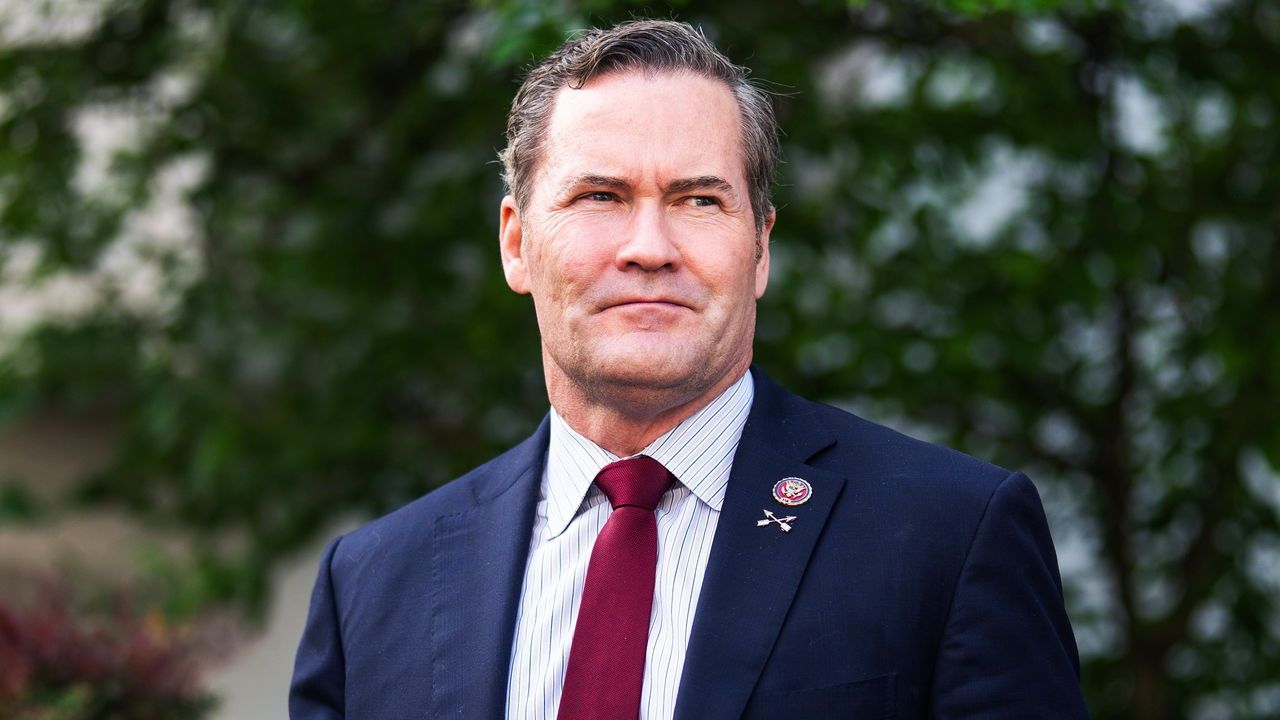 ·
__________________ 💜🧿See Human | Be Human🧿💜 (War Section Hashtags) |
|
#9
●
05-01-2025, 03:24 PM
| ||||||||
| My Rank: CORPORAL Poster Rank:1455 Join Date: Nov 2024 Posts: 402 Mentioned: 2 Post(s) Quoted: 164 Post(s)
| ||||||||
|
Re: Private Data and Passwords of Senior U.S. Security Officials Found Online
"Insecure communication..." lmao. Though I'm sure they meant to say "unsecure communication," that does summarize most of the communication in Washington.
|
|
#10
●
05-01-2025, 04:13 PM
| ||||||||
| ✝Mudderator from Hell✝ Poster Rank:10 e-mail Join Date: Oct 2006 Posts: 96,390
Contributions: 817
Mentioned: 476 Post(s) Quoted: 10320 Post(s)
| ||||||||
|
Re: Private Data and Passwords of Senior U.S. Security Officials Found Online
Beyond the Signal incident, Waltz and members of his National Security Council (NSC) team were reported to have conducted government business using personal Gmail accounts. These communications included highly technical discussions about sensitive military positions and weapons systems related to the Yemen conflict. More important imo: Waltz’s influence waned after the incident, exacerbated by far-right activist Laura Loomer’s campaign against him. Loomer, who met with Trump, accused Waltz of disloyalty and neoconservative tendencies, citing a 2016 campaign ad where he criticized Trump. She also targeted Waltz’s deputy, Alex Wong, for past ties to Mitt Romney. Hegseth’s comments also revealed Israeli surveillance capabilities, which frustrated Israeli officials. Trump only wants true loyalists like Hegseth who he met various times when he was working for Fox and shares the same ideas as him (MAGA) so Hegseth probably won't get fired or else it's self damage for the President imo. |