|
Community Forum · Est. 2006
|
#1351
●
11-15-2012, 11:30 AM
| ||||||||
 My Rank: GUNNERY SERGEANT Poster Rank:629 Join Date: Jul 2009 Posts: 1,418 Mentioned: 0 Post(s) Quoted: 54 Post(s)
| ||||||||
|
Re: Indy/Formula One: Fatal and Non Fatal Crash Photos (Stop Motion, Color, B&W)
Some photo's of the wreck of Jochen Rindt's Lotus 72 at Monza during practice for the Italian GP 1970. The 1970 posthumous World Champion crashed into the guardrail after 'something broke' and the front of the car went under the guardrail, ripping off the front section and as Jochen did not wear his crutch-belt he was dragged down into the car and incured fatal injuries. The first photo shows the belts done up but importantly the crutch-belt undone. The fifth photo shows the gap under guardrail that the Lotus's nose went under. In 1972 the 'Grand Prix Accident Survey1966-72' was published and contained a lengthy report on Jochen's accident. 'The car hit the barrier on the left hand side of the track at an angle of about 20 degrees, and the barrier broke at a joint. These are the butt type, the section's of the barrier do not overlap. The car carried on, hitting the next upright, which was bent backwards and prised upwards by the nose of the car, which then dug underneath the rail, while the rear of the car started to pivot outwards, i.e. to the right. The right front wheel hooked on to the barrier's upright, but the momentum of the rear of the car carried it on spinning. The entire front assembly, comprising the box fabrication carrying the front suspension, the brake discs, and driveshafts, steering, pedals, and the front bulkhead, was wrenched from the front part of the monocoque.' 'Thus far the driver was probably relatively safe, retained in the car by the cockpit sides, which were still intact, and the seat harness. But with no front of the car there was insufficient restraint on him from being thrown forwards and downwards, still within his harness when the momentum of the heavy engine and gearbox end of the car spun it round again. This was the movement that inflicted some of the worst chest, throat and body injuries. The buckle of the harness caught him under the chin, preventing him from being fully ejected by centrifugal force in the spin. It is likely that some of these injuries would have been prevented had Rindt worn crurch straps as well as the four-point fixed belts. Had the crutch been fixed, the terrible leg injuries Rindt suffered might also have been avoided, although it is not clear at what stage of the accident they occured.' 'The right front wheel was wedged under the barrier at the second impact point, i.e. where the front of the car broke off. The front sub-frame was also here, although largely disintegrated. The left front wheel was the one Denny Hulme (who was following close behind Jochen), saw coming out of the dust and it was picked up on the other side of the road.' 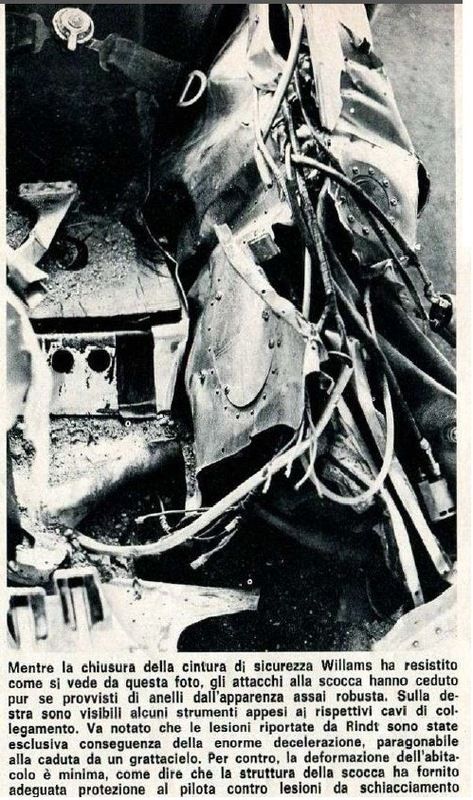 · 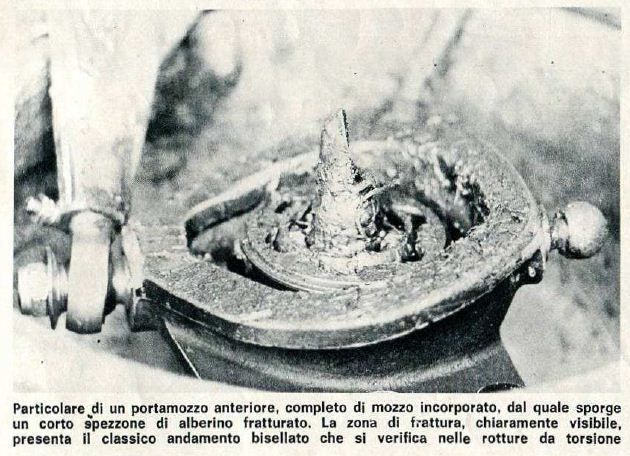 · 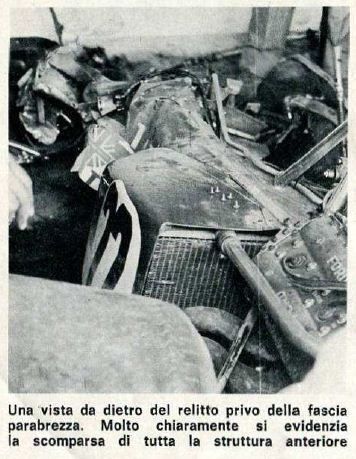 · 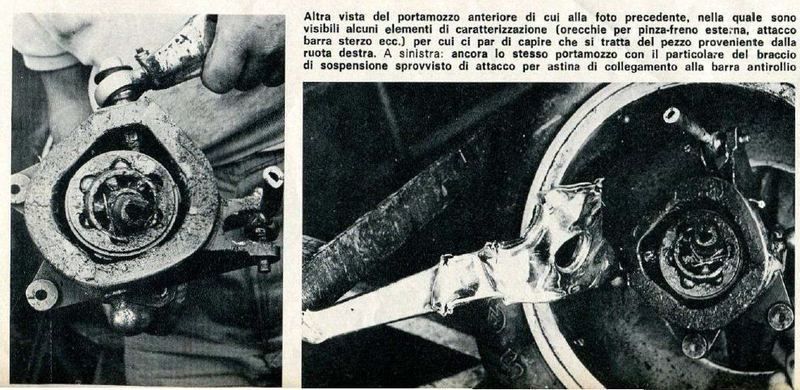 · 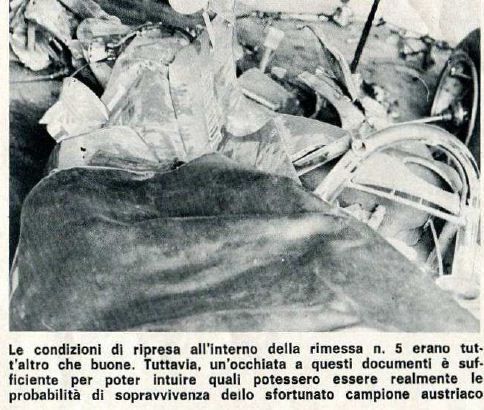 · 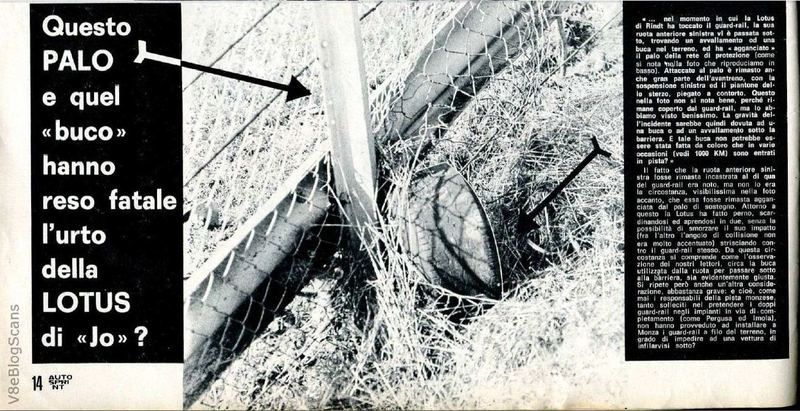 · 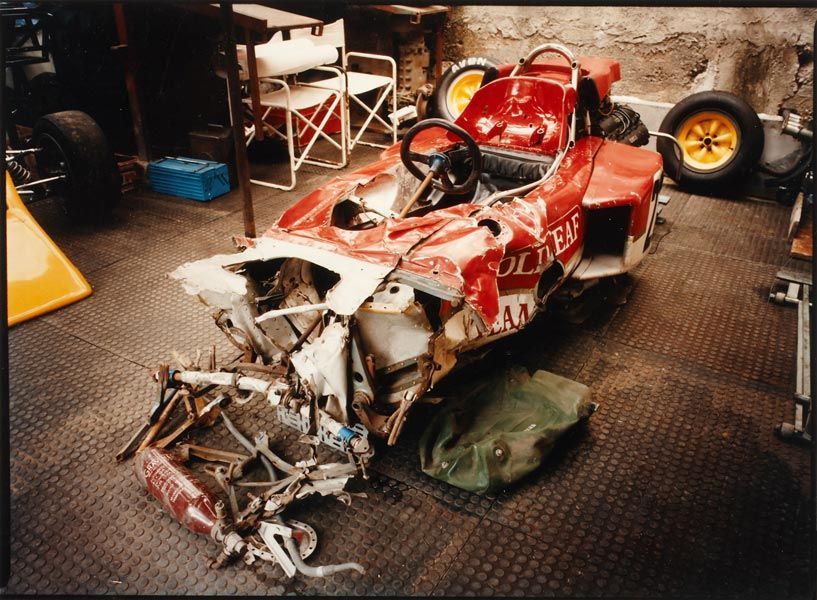 · 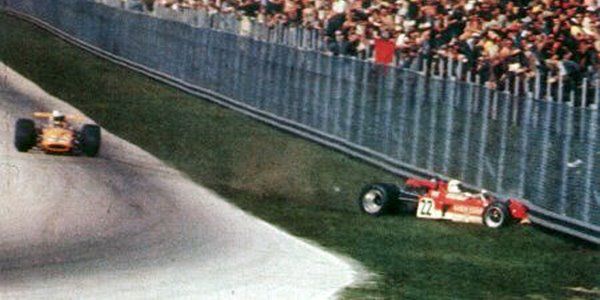 · 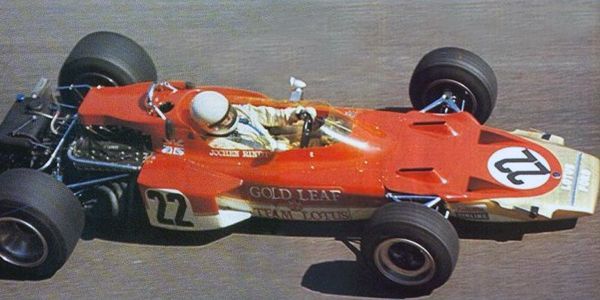 · 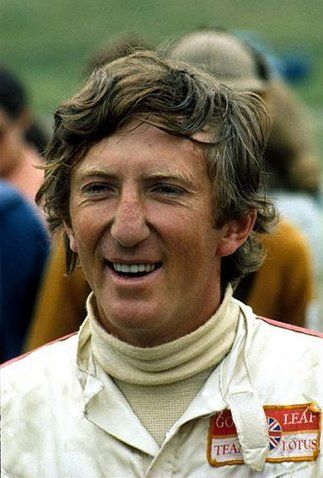 · |
|
#1352
●
11-15-2012, 03:31 PM
| ||||||||
 My Rank: PRIVATE Poster Rank:8120 Female Join Date: Aug 2012 Posts: 22 Mentioned: 0 Post(s) Quoted: 0 Post(s)
| ||||||||
|
Re: Indy/Formula One: Fatal and Non Fatal Crash Photos (Stop Motion, Color, B&W)
Thanks, for clearing that up, I was really confused. |
|
#1353
●
11-15-2012, 03:42 PM
| ||||||||
 ★ Legacy Member ★ Poster Rank:1276 Male Join Date: Sep 2012 Posts: 481 Mentioned: 0 Post(s) Quoted: 5 Post(s)
| ||||||||
|
Re: Indy/Formula One: Fatal and Non Fatal Crash Photos (Stop Motion, Color, B&W)
Please correct me if I am wrong, but my understanding is that Methanol has a higher ignition point than typical gasoline, causing it to take longer in the compression stroke to reach ignition temperature and pressure, thus increasing the compression ratio. Diesel engines work on a similar principle of course.
|
|
#1354
●
11-15-2012, 09:33 PM
| ||||||||
 My Rank: LANCE CORPORAL Poster Rank:2296 Join Date: Sep 2012 Posts: 201 Mentioned: 0 Post(s) Quoted: 6 Post(s)
| ||||||||
|
Re: Indy/Formula One: Fatal and Non Fatal Crash Photos (Stop Motion, Color, B&W)
Well, it doesn't really increase the compression ratio itself, but because of the higher ignition point and being less combustible, it can take higher compression ratios. So, you are correct in your thinking. Methanol engines run a higher compression ratio than a gas engine. Methanol can be hard on engines though. If the fuel mixture is too rich it will actually wash the oil off of the piston rings, which can cause damage. It is also very hard on things if there is any fuel left in the cylinder (pressing the gas pedal with car not started), for the same reason. It will wash the oil from that cylinder. The main advantages of using methanol for racing is it is high octane (about 99), you get more torque and it is MUCH easier to keep a methanol burning car cool. More useless knowledge! lol |
|
#1355
●
11-16-2012, 01:59 AM
| ||||||||
 My Rank: MASTER SERGEANT Poster Rank:577 "Indy500 Or Die" Join Date: May 2012 Posts: 1,679 Mentioned: 2 Post(s) Quoted: 205 Post(s)
| ||||||||
|
Re: Indy/Formula One: Fatal and Non Fatal Crash Photos (Stop Motion, Color, B&W)
I still have tons of clips that dont have names This crash looks to be during practice and is almost the exact same crash in the same place on the Toronto track as Jeff Krosnoff |
|
#1356
●
11-16-2012, 12:50 PM
| ||||||||
| My Rank: GUNNERY SERGEANT Poster Rank:629 Join Date: Jul 2009 Posts: 1,418 Mentioned: 0 Post(s) Quoted: 54 Post(s)
| ||||||||
|
Re: Indy/Formula One: Fatal and Non Fatal Crash Photos (Stop Motion, Color, B&W)
(page 49) More pictures of the horrible aftermath of Rolf Stommelen's crash at the Spanish GP '75. 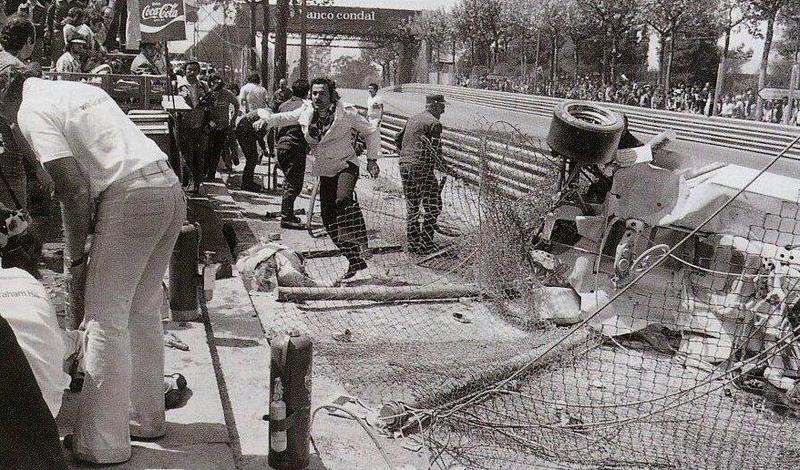 · 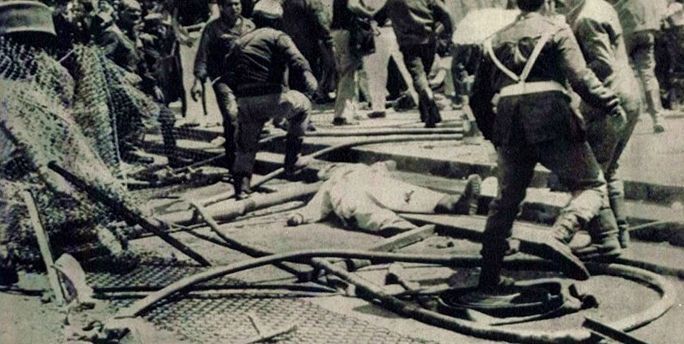 · 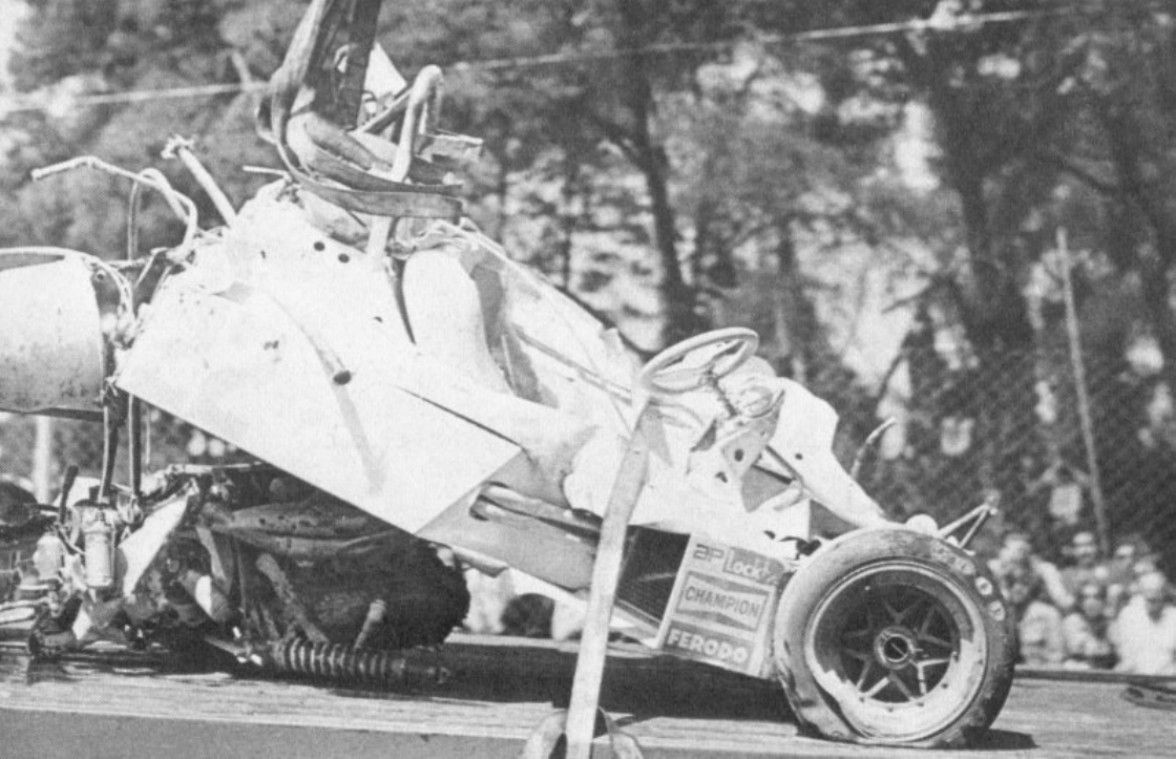 · 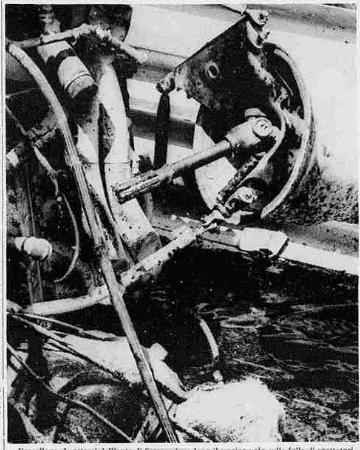 · |
|
#1357
●
11-16-2012, 01:12 PM
| ||||||||
| My Rank: GUNNERY SERGEANT Poster Rank:629 Join Date: Jul 2009 Posts: 1,418 Mentioned: 0 Post(s) Quoted: 54 Post(s)
| ||||||||
|
Re: Indy/Formula One: Fatal and Non Fatal Crash Photos (Stop Motion, Color, B&W)
(page 79) Some much better quality photo's of Hans Klaus Reisch's fatal crash in the Imola 500 km. The first photo shows the drivers body that has been ejected onto the track. The second shows just how badly damaged the front end of the Alfa was, it's completely ripped open. Highly likely poor Hans was dead on impact... 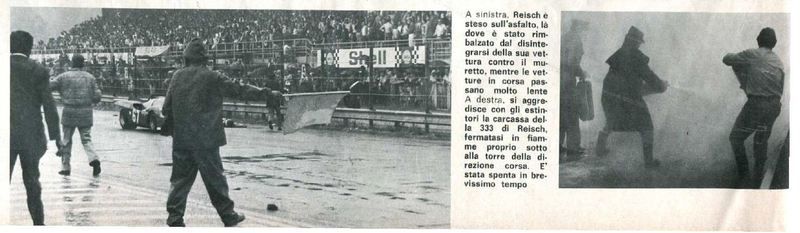 · 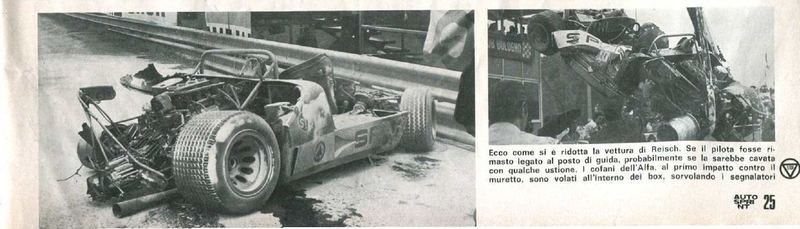 · 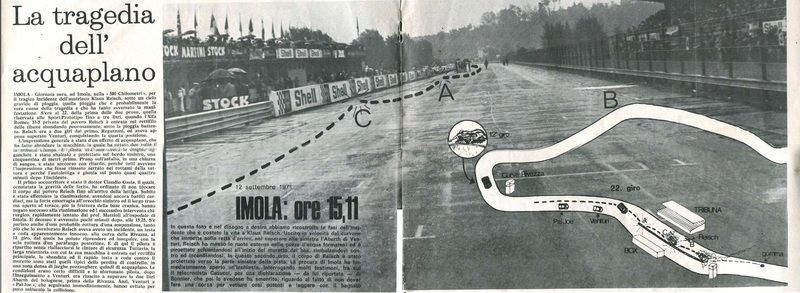 · |
|
#1358
●
11-16-2012, 01:24 PM
| ||||||||
| My Rank: GUNNERY SERGEANT Poster Rank:629 Join Date: Jul 2009 Posts: 1,418 Mentioned: 0 Post(s) Quoted: 54 Post(s)
| ||||||||
|
Re: Indy/Formula One: Fatal and Non Fatal Crash Photos (Stop Motion, Color, B&W)
Indy 500 in 1983 and Johnny Parson's accepted blame for this crash on lap 82 with Mario Andretti.
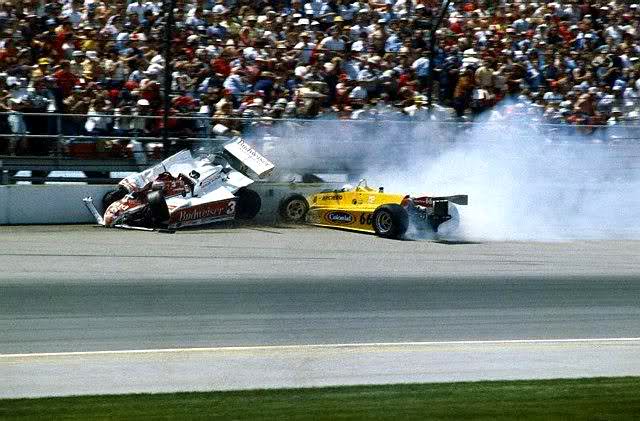 · 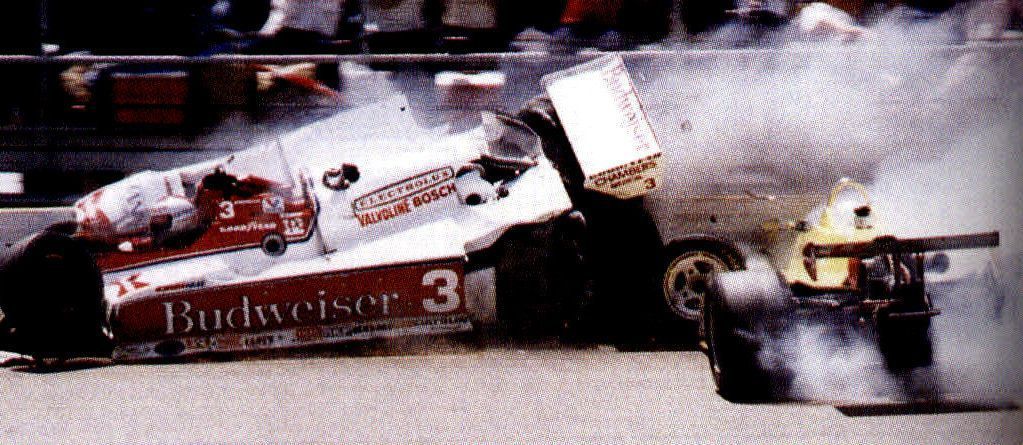 · |
|
#1359
●
11-16-2012, 01:31 PM
| ||||||||
| My Rank: GUNNERY SERGEANT Poster Rank:629 Join Date: Jul 2009 Posts: 1,418 Mentioned: 0 Post(s) Quoted: 54 Post(s)
| ||||||||
|
Re: Indy/Formula One: Fatal and Non Fatal Crash Photos (Stop Motion, Color, B&W)
(page 23) More of the fatal accident of Eugenio Castellotti in testing at the Modena curcuit in 1957. 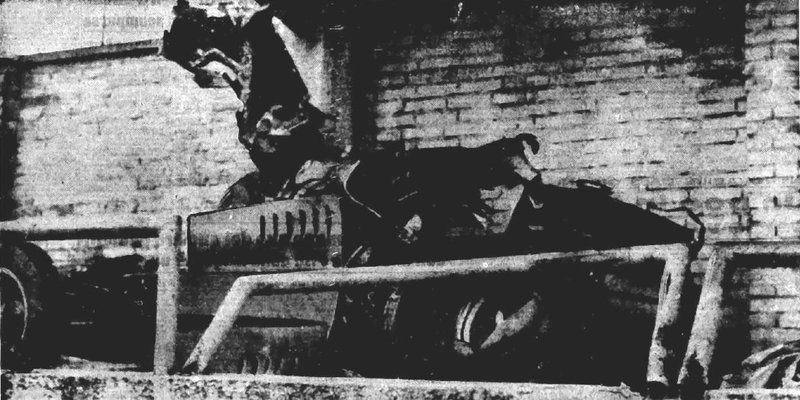 · 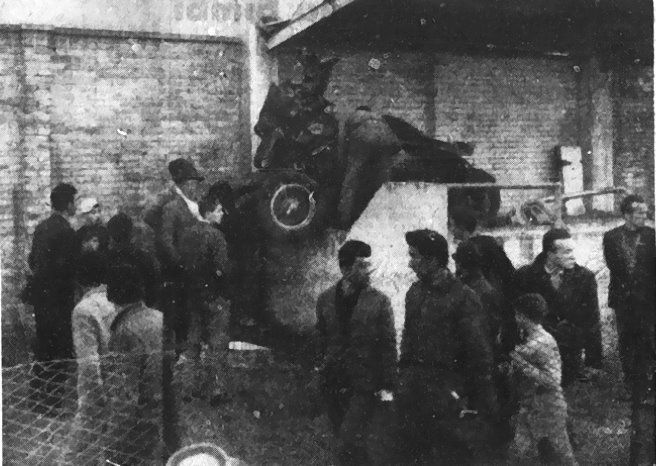 · 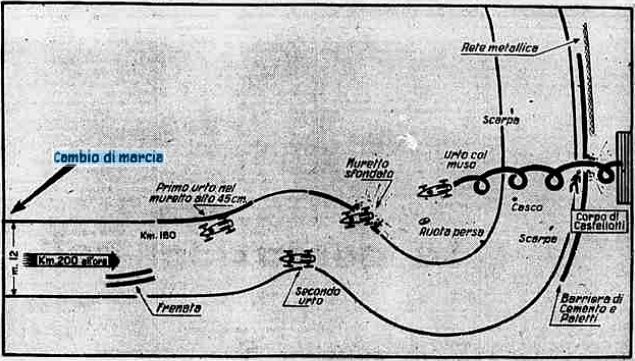 · |
|
#1360
●
11-16-2012, 02:09 PM
| ||||||||
| My Rank: GUNNERY SERGEANT Poster Rank:629 Join Date: Jul 2009 Posts: 1,418 Mentioned: 0 Post(s) Quoted: 54 Post(s)
| ||||||||
|
Re: Indy/Formula One: Fatal and Non Fatal Crash Photos (Stop Motion, Color, B&W)
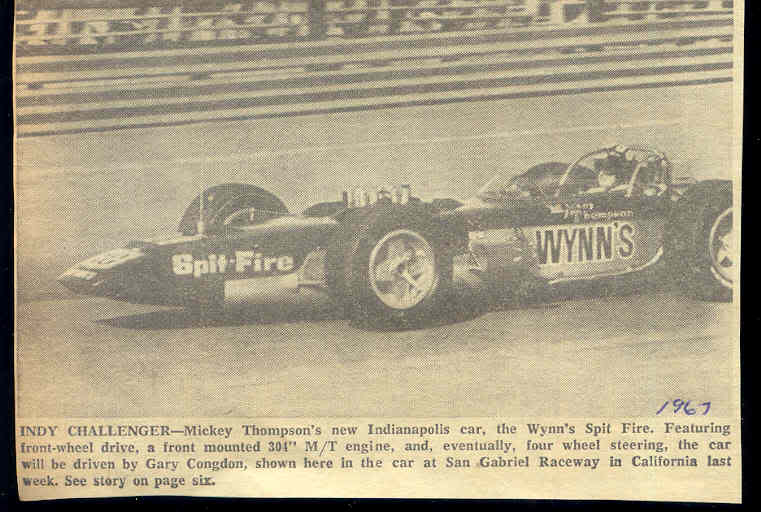
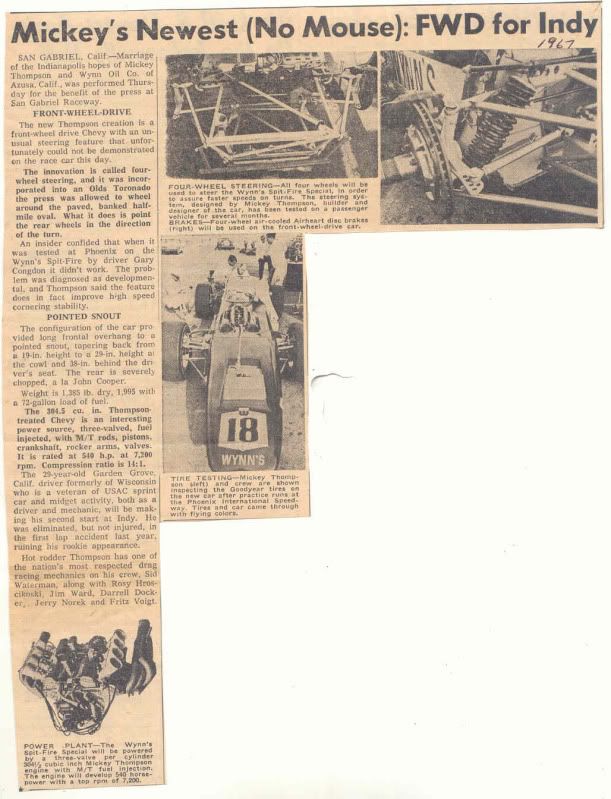
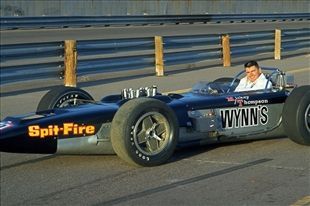
Just when the rest of the racing world was creating smaller rear-engined racers, Mickey Thompson devised this strange beast, the Wynn Spitfire. It was front engined, front wheel drive (!) and he was working on four wheel steering. Sadly it was not a success on the track.
 ·  ·  · |