|
#1
●
06-07-2021, 12:42 PM
|
 ♚ Legacy Gold Member ♚ Poster Rank:914 Join Date: Jul 2020 Posts: 820
Contributions: 13
820Posts 27,652Thanked 173Quoted 13Mentioned 13Contrib. |
|
Robotic Spine Testing System with a Cadaveric Specimen
Procedures that decompress the thoracic spinal cord are common and inevitably convey some degree of change to spinal kinematics at the surgical level. Whether or not to proceed with instrumented fusion following these procedures — to prevent spinal instability or long-term degeneration and pain — is a critically important yet largely unexplored question. Research from Cleveland Clinic’s Spine Research Lab has begun to help quantify the biomechanical effects of these types of procedures in the thoracic region. That research and its potential implications are summarized here. 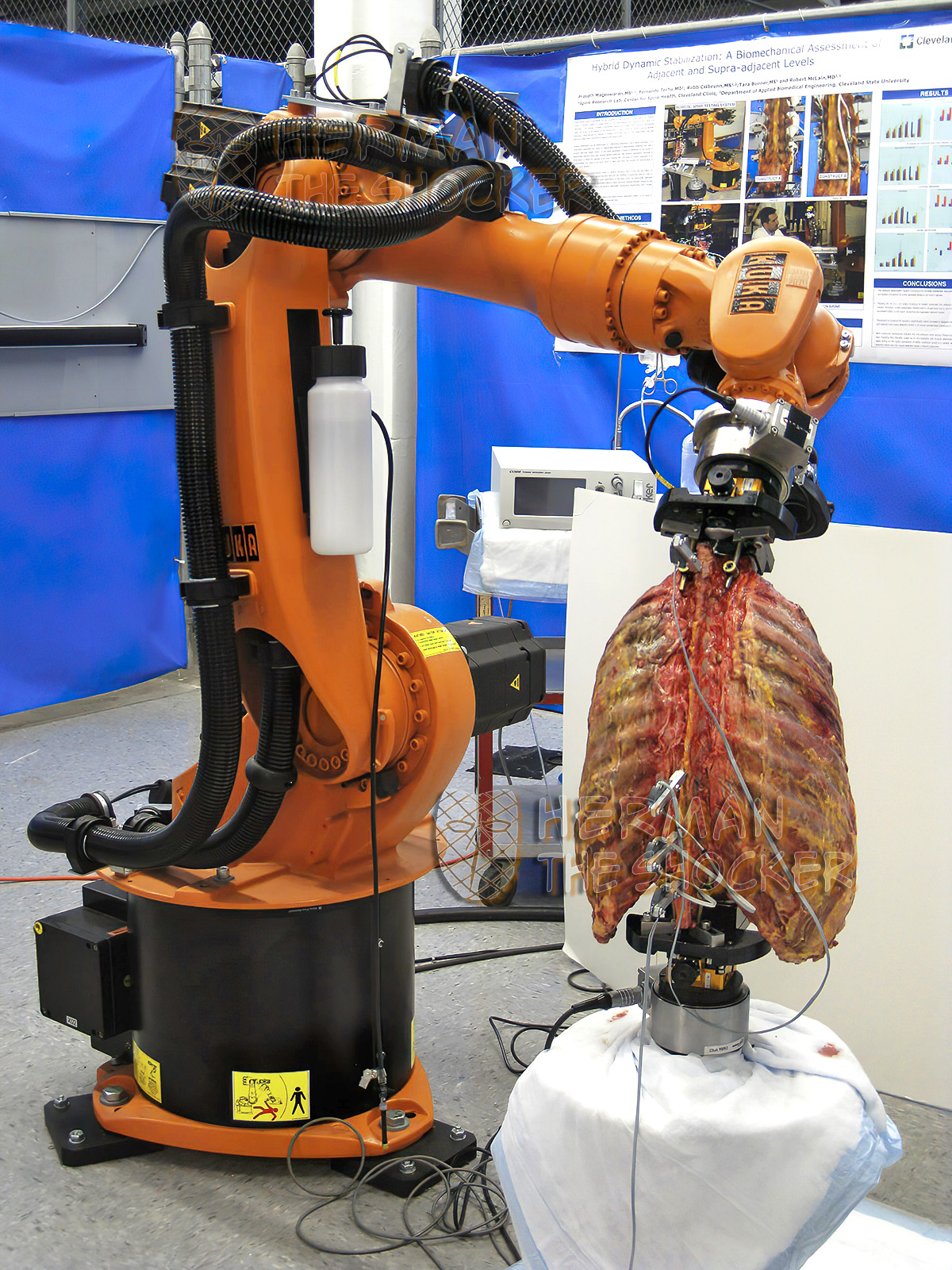 Fig.1 Robotic spine testing system. Pictured in the figure is the Kuka robot with complete thoracic torso fitted with custom fixture at the Spine Research Lab, Cleveland, OH, USA.  Fig.2 The robotic spine testing system with a cadaveric specimen. Despite its specialized and resilient design, the spinal column is a frequent source of pain and disability from degeneration, disk herniation, infection, tumor, and traumatic pathologies. The thoracic spine, as the longest of the spinal segments, frequently incurs these pathologies. Part of what makes the thoracic spine unique are the stenocostovertebral articulations and continuity of the rib cage, which afford increased stiffness and stability relative to the cervical and lumbar spine. As a testament to the contribution of the rib cage, in vitro testing shows that the thoracic spine will achieve over 700 percent greater motion in extension simply if the sternum is removed. 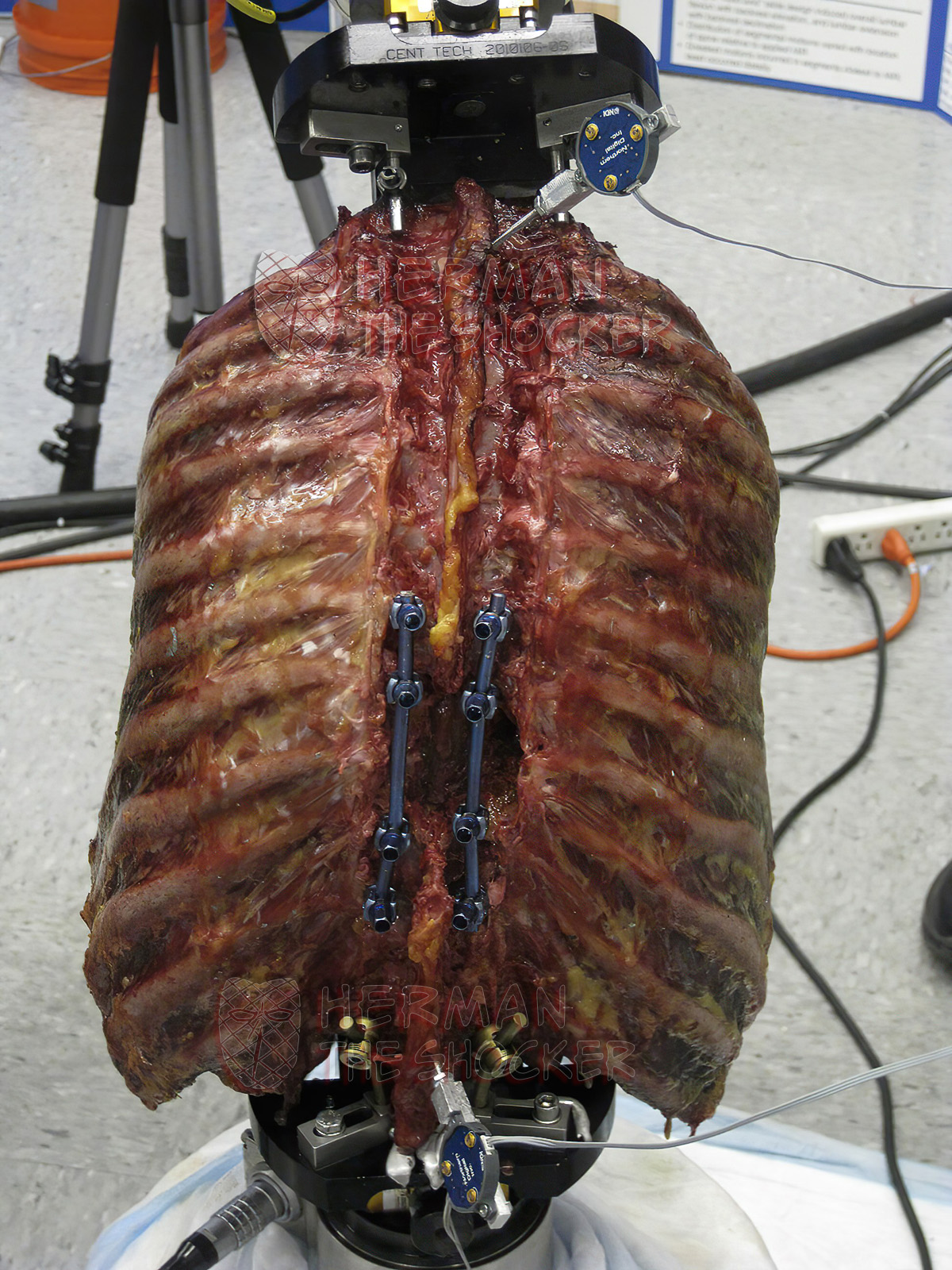 Fig.3 Photograph of a cadaveric thoracic torso with instrumented fusion. 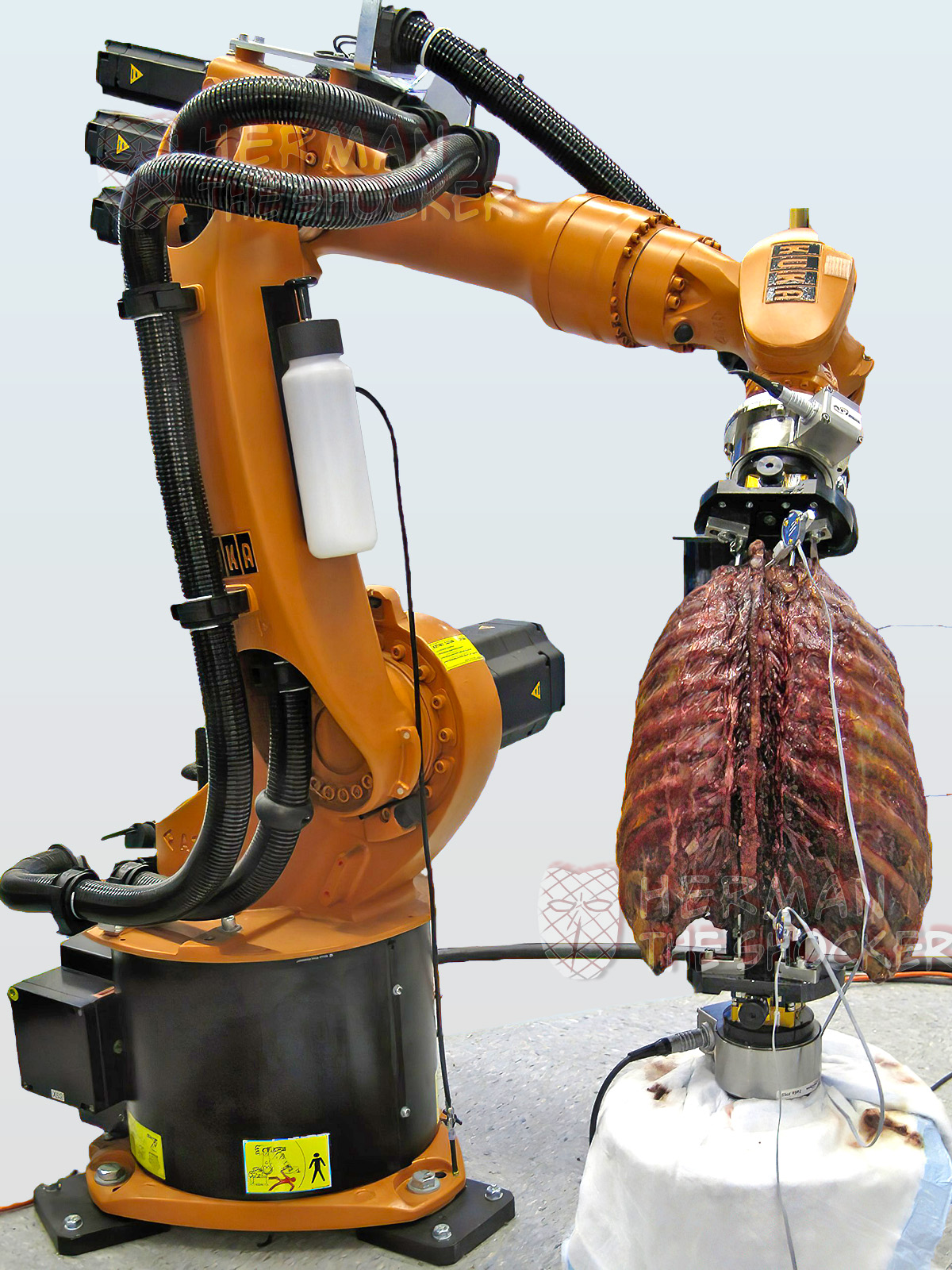 Fig.4 Photograph of the robotic spine testing system (Kuka Robot) along with a cadaveric thoracic torso fitted to the custom fixture. Because previous platforms for cadaveric spinal testing were not equipped to test the full thoracic spine with associated rib cage, the bulk of the historical data on thoracic biomechanics has been obtained by testing specimens disarticulated from the rib cage. Therefore, biomechanical data quantifying the consequences of decompressive procedures on the thoracic spine in the clinically relevant scenario — with an intact rib cage — have been limited, in contrast to biomechanical data regarding the cervical and lumbar spine. In 2013 we set out to fill some of this knowledge gap surrounding the stability of the thoracic spine following decompressive procedures. Specifically, we used an industrial robot manufactured by KUKA Systems GmbH (Augsburg, Germany) to perform multidirectional flexibility tests on 19 fresh-frozen human cadaveric thoracic spine specimens with the rib cage intact. 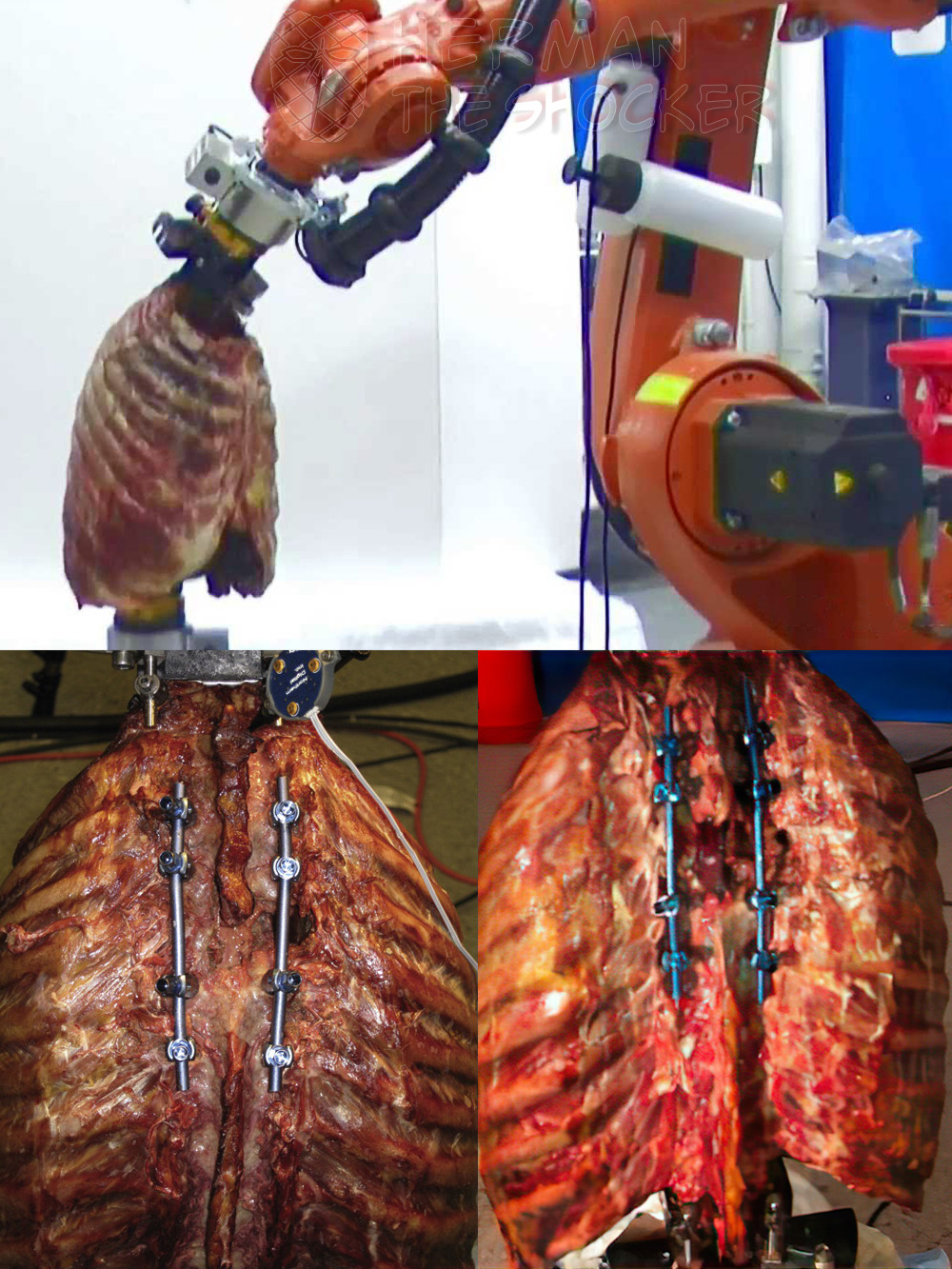 Fig.5 Robotic spine testing system. We found that in all three planes of motion, the sequential decompressive procedures caused no statistically significant change in motion across the surgical level when compared with the intact state, likely due to the tremendous stability afforded by the thoracic rib cage. We also found that despite the presence of the semirigid rib cage, the addition of pedicle screw fixation dramatically and effectively decreased the range of motion across surgical levels if necessary. Complete results are available in our full-length publications. Assessing Thoracic Spine Biomechanics After Decompressive Surgery - This post is for educational purposes only and is nonprofit. Under Section 107 of the US Copyright Act of 1976; Allowance is made for "Fair Use" for purposes such as criticism, comment, news reporting, teaching, scholarship, and research. OP is not a medical expert. No copyright infringement intended. This post does not encourage or glorify violence/harassment. Images might have been upscaled and enhanced. Text might have been shortened and simplified/reorganized for online view. |
|
#2
●
06-12-2021, 11:50 PM
|
 My Rank: CORPORAL Poster Rank:1360 Male Join Date: Jun 2021 Posts: 447 447Posts 813Thanked 90Quoted 0Mentioned 0Contrib. |
|
Re: Robotic Spine Testing System with a Cadaveric Specimen
as someone who has worked in manufacturing around these types of robots, i found this extremely disturbing. Automation in machinery is sometimes creepy, I never knew I would be seeing a robot used for this purpose.
|
|
#3
●
06-13-2021, 03:06 PM
|
| My Rank: SERGEANT Poster Rank:1173 Join Date: Apr 2016 Posts: 547 547Posts 1,221Thanked 107Quoted 0Mentioned 0Contrib. |
|
Re: Robotic Spine Testing System with a Cadaveric Specimen
I read it but I don't understand it. If this is all about a movement thing, I can see room for injuries if we're using R2D2 for therapies.
|
|
#4
●
06-17-2021, 11:02 AM
|
| My Rank: PRIVATE FIRST CLASS Poster Rank:3533 Join Date: Apr 2009 Posts: 98 98Posts 344Thanked 22Quoted 0Mentioned 0Contrib. |
|
Re: Robotic Spine Testing System with a Cadaveric Specimen
Only a matter of time before we get to this;  |
|
#5
●
11-05-2021, 04:11 AM
|
 •Sofa King Band• Poster Rank:402 The external genitalia are that of a normal adult male. (I was in the pool!) Join Date: Oct 2020 Posts: 3,033
Contributions: 1
3,033Posts 3,480Thanked 489Quoted 0Mentioned 1Contrib. |
|
Re: Robotic Spine Testing System with a Cadaveric Specimen
That’s a super elaborate way to hide the fact that this robot, angry at its human captors, ripped its maintenance engineer apart simply for giving it the wrong weight of oil. People think robots don’t hold grudges, but I’m here to tell you they most certainly do.
|
|
#6
●
03-22-2024, 10:00 PM
|
 My Rank: PRIVATE Poster Rank:6183 Idk Join Date: Apr 2017 Posts: 37 37Posts 29Thanked 0Quoted 0Mentioned 0Contrib. |
|
Re: Robotic Spine Testing System with a Cadaveric Specimen
After two prior back surgeries, I finally had a fusion at my L5S1 level as a last ditch effort for degeneration and chronic pain. It hurt me more than it helped, it’s at least comforting to see that the fusion hardware goes through these kinds of durability tests though! Very interesting stuff  |