|
Community Forum · Est. 2006
|
#1
●
05-24-2021, 02:30 PM
|
 ♚ Legacy Gold Member ♚ Poster Rank:914 Join Date: Jul 2020 Posts: 820
Contributions: 13
820Posts 27,606Thanked 173Quoted 13Mentioned 13Contrib. |
|
Fungi Colonization Around Nose and Mouth in a Body Exhumed 4 Months After Death
Although putrefaction is a mainly anaerobic bacterial reduction process, decomposition is dominated by aerobic microbiological processes that may create pungent, rotten odours originating from the metabolic products of oxidation. Decomposition is a dry, acidic process on an oxidative basis, which leads to the splitting off of acids (carbonic acid, phosphoric acid, sulphuric acid). At the beginning of decomposition, large patches of fungus may form on the skin and mucous membranes. There's no background info about the image. Only provided as an example. 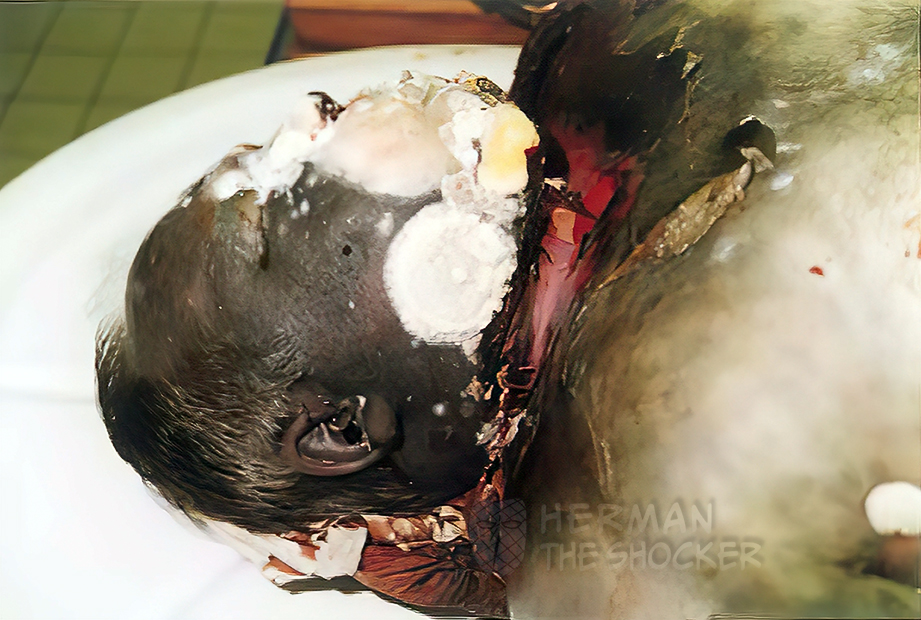 Fig.1 Fungi colonization most prominent around nose and mouth in a body exhumed 4 months after death. Low quality image. Fungi may colonize the body in every possible location and at all times during the postmortem interval. However, the eyes are more often affected by fungal colonization under dry conditions and the mouth and nose are more often colonized with fungi in moist to wet environments (Fig.1). Fungi may mimic antemortem pouring of chemical substances over the body. Fungi can form distinctive mildew spots, ultimately converting bodies into moldy cadavers at the dry stage of decomposition. Heavily decomposed cadavers, in particular those that are highly mummified, often present visible fungal growth. Artificial cultivation has allowed for the morphological identification of the fungi that tend to colonize cadavers. - This post is for educational purposes only and is nonprofit. Under Section 107 of the US Copyright Act of 1976; Allowance is made for "Fair Use" for purposes such as criticism, comment, news reporting, teaching, scholarship, and research. OP is not a medical expert. No copyright infringement intended. This post does not encourage or glorify violence/harassment. Images might have been upscaled and enhanced. Text might have been shortened and simplified/reorganized for online view. Image by Tsokos M. - Elsevier Ltd. 2005. |
|
#2
●
05-24-2021, 04:07 PM
|
 ★ Legacy Member ★ Poster Rank:779 I'm not A bitch.... I'm THE bitch. Join Date: Jul 2012 Posts: 1,030 1,030Posts 1,727Thanked 174Quoted 4Mentioned 0Contrib. |
|
Re: Fungi Colonization Around Nose and Mouth in a Body Exhumed 4 Months After Death
Make that penicillin!!!!!!
|
|
#3
●
05-25-2021, 04:20 AM
|
 ☆☆☆Jumbo Lesbian Cunt☆☆☆ Poster Rank:57 My pronouns are thin/skinny Join Date: Nov 2012 Posts: 25,917
Contributions: 1
25,917Posts 30,808Thanked 13,921Quoted 160Mentioned 1Contrib. |
|
Re: Fungi Colonization Around Nose and Mouth in a Body Exhumed 4 Months After Death
Herman, your posts are always top-notch.  |