|
#221
●
11-23-2024, 08:40 AM
| ||||||||
 ✝Mudderator from Hell✝ Poster Rank:11 e-mail Join Date: Oct 2006 Posts: 95,398
Contributions: 817
Mentioned: 473 Post(s) Quoted: 10154 Post(s)
| ||||||||
|
Re: Whiskey's Briefing Room IV
When the sound of the devastating explosion reaches Ukrainian Igor Lapko (59), who is sitting on his balcony drinking tea five kilometers away, his thoughts quickly turn to microchips and printed circuit boards. Later he will hear that a Russian missile has hit the nearby eastern Ukrainian village of Obukhivka. That seven houses have been destroyed. That a young mother has died that autumn day in 2023. That her daughter happened not to be home, and is therefore still alive. But just after hearing the boom, Lapko, an engineer with decades of experience in the chip industry, can't help but wonder what kind of semiconductors and other electronics were in the missile's head. The electronics that may have directed the projectile hundreds of kilometers through the airspace. To this village near his home in the Dnipropetrovsk region. If the Russian war industry has a shortage of anything, it is microchips. No wonder that President Putin has been trying to boost its own production of these for years. Research by Dutch newspaper, Trouw shows that Russian companies have old machines from ASML in Veldhoven for this production. ASML Holding N.V. (commonly shortened to ASML, originally standing for Advanced Semiconductor Materials Lithography) is a Dutch multinational corporation founded in 1984. ASML specializes in the development and manufacturing of photolithography machines which are used to produce computer chips. And that they can still obtain countless spare parts to keep these machines running, via intermediaries in China. This allows Russia to continue producing some of the chips for the tanks, missiles and drones that it uses every day against Ukrainian soldiers and civilians. ASML itself has not sent any spare parts to Russia for a long time, and in response the company says it is adhering to the sanctions. So how does this equipment get there? The vast majority of news reports about electronics found in Russian weapons in recent years have been about Western chips that Russia has managed to smuggle in despite the sanctions. These are usually high-quality, advanced semiconductors from companies such as Intel or Texas Instruments. But Lapko is also concerned about what Russia itself can produce. “I believe that they have more and more knowledge and production facilities,” he says. He regularly receives photos via Telegram and social media of dismantled missiles and other weapons that the Russians have fired, so that he can discuss with other experts or hobbyists what kind of electronics are in them. Until a year ago, these often contained very old and reused chips. Lapko shows a photo of a Russian Iskander missile, the type that crashed last October while he was drinking tea on his balcony. The control system from the Iskander missile in the photo consists entirely of reused and very dated Soviet chips. “And I know how bad the quality of these is: I had to work with them myself in the past.” It’s a sign that, until recently, Russia really had to scrape together everything to find enough chips for all the drones and missiles it fires across the border. Last year, a member of the US cabinet even said that Russia takes apart washing machines and dishwashers to harvest chips, although it’s not clear how often this has happened in practice. But now Lapko sees less of this kind of tinkering in the photos. And, for example, more newly produced chips from Angstrem, one of the few chip manufacturers Russia has. “I don’t think there’s a single new missile system being made that doesn’t have Angstrem chips in it,” he says. It was precisely a subsidiary of Angstrem that until recently had a so-called ASML PAS 5500 machine. This is evident from the tender documents on a Russian government website. In the meantime, both the subsidiary and the ASML machine have ended up in the hands of the state, according to other documents on the same website. What can a chip manufacturer like Angstrem do with a PAS 5500? The most advanced chips, for example for the latest iPhone, are not produced there. But that is not necessary. For simple applications, the chips from these machines are perfectly usable, says American university lecturer Chris Miller. He is the author of the bestseller Chip War: The Fight for the World’s Most Critical Technology. “Certainly in the army, they use a lot of simple chips. But actually that is the case with all devices.” Take a new car, he says. Nowadays, it contains thousands of chips, of which perhaps only a few are really cutting edge. “The same goes for tanks, planes, drones and missiles.” According to Miller, the Russian chip industry is perfectly capable of producing the kind of simple chips that researchers are now finding on the battlefield in Ukraine. If you look closely, you can see an example of this in a video that appeared on the internet earlier this year. French blogger MSylvian59 likes to take devices apart on his YouTube channel to discuss the electronics, and in this episode he has a control panel from a Russian rocket in front of him. Just before that, the green printed circuit board had been in a projectile weighing hundreds of kilos full of cluster munitions, fired from a Russian Tornado-S installation. While MSylvian59 talks in a heavy French accent about all the chips he encounters, his thumb moves over a few small hammer-and-sickles, no bigger than the edge of his nail: the Angstrem logo. The chips are gold-colored and look new. Could they have been printed with the ASML machine? Can't be proven, but it's quite possible. It is also not entirely clear which other Russian manufacturers have ASML machines. ASML does not respond to questions about this. Before the sanctions, it was not at all forbidden for Russian companies to purchase such a new machine. The question is rather how they manage to keep their ASML equipment running for so long. Without new spare parts, a machine can break down after a year, experts say. Why then is the machine from a company like Angstrem not already in the garbage? A number of small Russian importers will play a role in this. Customs data that Trouw has seen shows that, since the start of the war, they have received spare parts for ASML machines at least 170 times. And that lasted until at least December 2023. Some parts are suitable for different types of ASML PAS 5500 machines, as stated in the product description, others for the somewhat newer ASML Twinscan 1250D machines. These are intermediaries who scour the market for usable components, such as the highly specialized ASML equipment. They then resell the imported goods to manufacturers in Russia. Some of these traders, such as AK Mikrotekh and Ostec-EC, are already on Western sanctions lists because they have proven to be important for the arms and chip industries. Other importers from the customs data that Trouw saw are not yet on sanctions lists. This applies, for example, to Krafftek from Saint Petersburg and to VLK-Logistika from Moscow. According to its own website, Krafftek previously supplied the Angstrem subsidiary with the ASML machine. But also to gas company Gazprom Neft and to one of Russia's most important designers of warships. How do these small importers get their hands on ASML parts? Krafftek director Andrei Vasiliev did not respond to an interview request, nor did several other Russian importers that Trouw contacted. The customs forms do state that the equipment mainly comes from Chinese traders, but these suppliers are not much more transparent. There is almost nothing to be found about them. They do not have a website. They usually do not even have a traceable address. It seems as if they hardly exist, at least online. Some of these exporters are now also on sanctions lists, such as Shenzhen CS IM Exports and Smart Kit Technology. Still others, such as a certain Shanghai Litho-Tec, are not yet. The latter exporter did leave an address on the customs form. But when Trouw sends a message to the company registered there, a certain ‘Mr. He’ replies that he has never heard of Shanghai Litho-Tec. Incidentally, it is not only Chinese parties that supply ASML components. A Serbian trader, MCI Trading, also appears in the customs data. This exporter has also been put on the American sanctions list: it is said to have shipped ‘high-tech’ electronics to the also sanctioned Russian importer AK Mikrotekh. But director Ivan Cvetic is not aware of any wrongdoing, he says in a written response. The Serbian states that he has never done business with AK Mikrotekh, and therefore does not understand why he has been put on a sanctions list. He also claims that he has never shipped ASML equipment, he says. Cvetic confirms that the customs data shows something different. But perhaps unknown parties have posed as his company, he suggests, in order to secretly ship something in his name? “There is something very, very strange going on here,” he ultimately concludes. Both Cvetic and his lawyer declined a request to hand over documents that could support his story, such as correspondence with the US government about his alleged innocence. With a few exceptions, it is mainly Chinese traders who sell ASML equipment to Russia. They are so secretive that they are even difficult to find for Russian buyers, says a former employee of such a Russian import company. Until recently, he personally ordered ASML equipment from China on behalf of this company. For security reasons, he wants to remain anonymous; his name is known to the editors. He laughs at the fact that Trouw can barely find the Chinese companies on the internet. "In China, everything goes via word of mouth. You first ask your Chinese contacts if someone can help you with certain items. They know someone else who might be able to do that, and they refer you to a third party. Sometimes you have to go through ten layers of people." In the end, his former employer hired a Chinese-speaking negotiator especially for this purpose, familiar with the customs and traditions in the country. Olena Bilousova, as a principal researcher within the sanctions department of the Kyiv School of Economics, is increasingly interested in the role that China plays in helping to build a Russian chip industry. She calls it ‘very worrying’ that Chinese parties are helping Russia with ASML parts. Even when it concerns relatively old equipment. China and Russia are therefore increasingly moving towards each other. A few weeks ago, Chinese Prime Minister Li Qiang spoke out in Moscow for more intensive cooperation, with President Putin also being positive about mutual trade relations. China therefore does not endorse the Western sanctions against Russia, and does not seem to be changing its mind about this for the time being. Finally, the question remains how the mainly Chinese suppliers themselves obtain the ASML equipment. They do not come from ASML. The company from Veldhoven only supplies spare parts to companies that have a complete machine and also have a license for it. ASML has not supplied any of the traders that Trouw came across in the customs data, the spokesperson states. Companies sometimes want to sell their old ASML machine after years of use. ASML usually buys the machine back itself, for example because it can still use the parts. But there are also other traders active on this second-hand market, says the ASML spokesperson. They buy such a machine to dismantle the parts and resell them. Another thing that happens, says the former employee of the Russian import company, is that Chinese companies with an ASML machine deliberately order too many spare parts from Veldhoven. Purely with the idea of selling them on to traders. ASML does not explicitly address the question of whether it has also received signals of this in practice. More generally, a spokesperson says that ASML handles orders for spare parts carefully. "We discuss the orders with customers and ask them to show whether orders for spare parts are adequate. We ask questions about the orders, their size and other relevant details if necessary." In any case, American expert Chris Miller believes that this second-hand market should be subject to stricter supervision, especially now that it has become clear how much the Russian chip industry is dependent on spare parts from abroad. “That means even more sanctions against Chinese traders who sell second-hand parts to Russia, but also against Chinese banks that finance this type of trade.” The United States again put a lot of new parties from China on its sanctions list. According to Miller, the EU is less active in this. In the meantime, the Russians have stepped up their attacks on Ukrainian citizens, with a peak of a hundred missiles and a hundred drones in one day last weekend. These exploded, among other places, in the Dnipropetrovsk region of Igor Lapko. He still receives photos of the electronics that the Russians use for this. “I feel that their missiles are becoming more and more precise. This is bad news for us.” How is a chip made? There are only a few companies worldwide that produce chip machines. In addition to the Dutch ASML, these are the Japanese companies Nikon and Canon. They are as big as a classroom, which they sell to chip manufacturers. These manufacturers, such as the Taiwanese TSMC, use these machines to print chips. In turn, on behalf of chip designers such as Intel or Nvidia. In Russia, there are only a few chip manufacturers, including the company Angstrem, and a few chip design companies, such as Milandr. The ASML machines that Russia has date from the late nineties (PAS 5500) and early nineties (Twinscan). They are perfectly usable for chips in everyday devices and weapons, but not for the most advanced applications such as artificial intelligence. For this purpose, ASML now has machines that work with extreme ultraviolet light (EUV). These are so valuable that China is also not allowed to import them. |
|
#222
●
11-24-2024, 06:30 AM
| ||||||||
| ✝Mudderator from Hell✝ Poster Rank:11 e-mail Join Date: Oct 2006 Posts: 95,398
Contributions: 817
Mentioned: 473 Post(s) Quoted: 10154 Post(s)
| ||||||||
|
Re: Whiskey's Briefing Room IV
President Joe Biden has approved the transfer of antipersonnel land mines to Ukraine, reversing earlier US policy and sparking criticism from arms control advocates. The move was reported by The Washington Post on November 19 and aligns with recent decisions to loosen restrictions on long-range strikes into Russia. The US mines being sent to Ukraine are designed to self-deactivate or self-destruct within days, addressing concerns about long-term civilian harm. Ukrainian officials have pledged not to deploy these weapons in densely populated areas. This decision is seen as a response to escalating Russian offensives, including relentless troop assaults in eastern Ukraine. These mines are intended to bolster Ukrainian defenses against mass infantry attacks, particularly where Russian forces are advancing regardless of high casualties. The US, which holds a stockpile of 3 million mines, has not used these weapons widely since 1991. |
|
#223
●
11-24-2024, 06:43 AM
| ||||||||
| ✝Mudderator from Hell✝ Poster Rank:11 e-mail Join Date: Oct 2006 Posts: 95,398
Contributions: 817
Mentioned: 473 Post(s) Quoted: 10154 Post(s)
| ||||||||
|
Re: Whiskey's Briefing Room IV
The Telegram channel Spy Dossier (dosye_shpiona), known for its insider information, reported that the attack on the command post in the russian Presidential Affairs Directorate in Maryino, Kursk Oblast killed 18 military personnel and injured 33 others. Among the wounded were three North Korean military representatives: two male officers and a female medic, although it is more plausible that she was serving as a translator. The casualties reportedly included numerous russian officers from the Southern and Eastern Military Districts. Among them was Lieutenant General Valery Solodchuk, First Deputy Commander of the Leningrad Military District and former commander of the 1st Army Corps of the so-called DPR in 2014. Furthermore, during an effort to neutralize unexploded ordnance, 13 russian sappers were injured, including the deputy chief of staff of the 88th Mechanized Brigade. The presence of such high-ranking personnel during the post-strike cleanup may indicate that the casualties extended beyond officers and a single general. 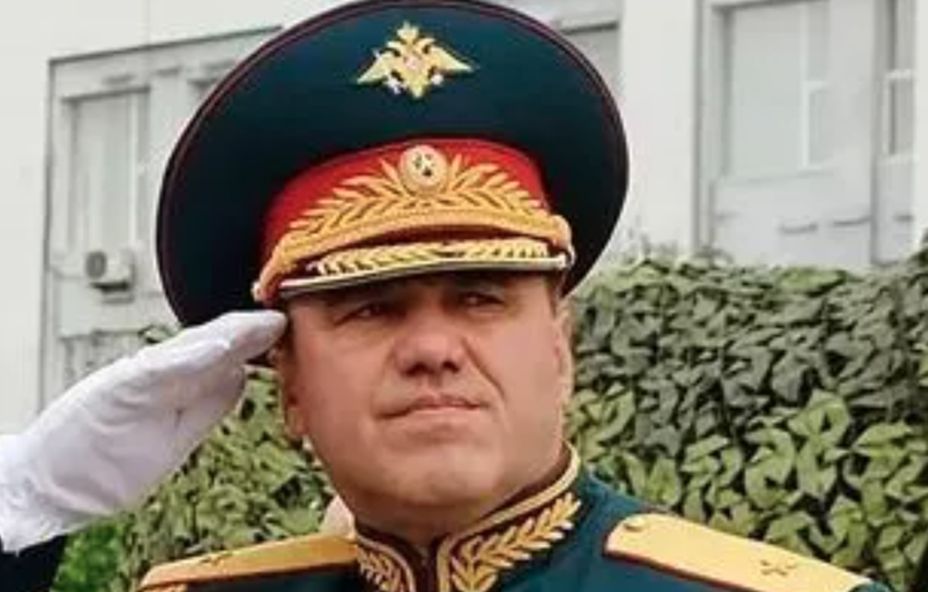 · |
|
#225
●
11-24-2024, 08:58 AM
| ||||||||
| ✝Mudderator from Hell✝ Poster Rank:11 e-mail Join Date: Oct 2006 Posts: 95,398
Contributions: 817
Mentioned: 473 Post(s) Quoted: 10154 Post(s)
| ||||||||
|
Re: Whiskey's Briefing Room IV
July 26, 2024. The use of anti-personnel landmines, which litter territories in Ukraine formerly and currently occupied by Russian forces, continue to pose a deadly threat to civilians and must be subject to a prompt, thorough, independent and impartial investigation, Amnesty International said in a public statement released today. According to Landmine Monitor 2023, Ukraine recorded 608 landmine casualties in 2022, more than any country in the world bar Syria. Data gathered by humanitarian mine clearance organizations working in Ukraine shows most casualties come from anti-personnel mines, which are inherently indiscriminate weapons, and as such prohibited by international humanitarian law. “Mines are scattered across the territory of Ukraine previously and currently occupied by Russian troops. They are a daily, deadly threat to civilians. Some have been deliberately placed in civilian homes where they maim and kill,” said Patrick Thompson, Ukraine Researcher at Amnesty International. “There must be an effective investigation into all such incidents as possible war crimes. In every region in Ukraine that was formerly occupied by Russia, we have seen evidence of civilians killed and injured by anti-personnel mines left behind by Russian forces.” Anti-personnel mines have been used regularly in Ukraine since Russia’s full-scale invasion in 2022, and to a lesser extent since 2014. There was a noticeable spike in civilian casualties following the Russian retreat from Mykolaiv, Kherson and Kharkiv oblasts in late 2022, as civilians returned to their houses, homesteads and farms. In March 2022, Russian forces evicted Oleksandr* (not his real name) and his mother from their flat in Snihurivka, in the region of Mykolaiv. A Russian military unit took over the entire apartment block until it was forced to withdraw following fierce fighting around Snihurivka in November 2022. After the Russian retreat, Oleksandr returned to the apartment block to assess how badly it had been damaged. Upon entering the basement, he stepped on a disguised PFM-1 anti-personnel mine that had been placed under wooden planks. The mine exploded, Oleksandr fell, and landed on other disguised mines that had apparently, had been deliberately placed to injure or kill anyone entering the building. He lost both his left leg and arm in the incident. Despite the horrific episode, his story is not unique. Amnesty International researchers documented other incidents of Russian forces laying anti-personnel mines in residential areas in Kherson and Kharkiv oblasts. “The deminers working to clear Ukraine of this threat are carrying out painstaking, dangerous work every day. While the scale of the problem is undeniably huge, the biggest obstacle to clearing Ukraine of landmines is Russia’s ongoing aggression,” Patrick Thompson said. “The international community must commit to sustained financial and technical assistance to help Ukraine get rid of a danger that continues to wreck lives and livelihoods.” Ukraine has itself pledged to investigate its own forces’ use of anti-personnel mines. Anti-personnel mines deployed today will continue to impact civilians long into the future. “Countries must uphold the ban on the use, production, stockpiling and transfer of anti-personnel mines worldwide. There must be an end to the use of such indiscriminate weapons,” Patrick Thompson said. |
|
#226
●
11-26-2024, 04:03 AM
| ||||||||
| ✝Mudderator from Hell✝ Poster Rank:11 e-mail Join Date: Oct 2006 Posts: 95,398
Contributions: 817
Mentioned: 473 Post(s) Quoted: 10154 Post(s)
| ||||||||
|
Re: Whiskey's Briefing Room IV
The UK imposed sanctions on 30 vessels in Russia’s shadow fleet responsible for transporting billions of pounds worth of oil and petroleum products over the past year, according to an official announcement. A shadow fleet consists of tankers and ships that operate outside Western regulations to transport oil while evading sanctions. These vessels, often older and potentially underinsured, allow countries like Russia to continue oil exports with less transparency and oversight than conventional fleets. Except of avoiding Western sanctions, this also raises concerns about potential environmental disasters including major oil spills. According to a Kyiv School of Economics report, Russian oil exports through the so-called shadow fleet have nearly doubled over the past year, reaching 4.1 million barrels per day. Half of the sanctioned vessels transported oil and petroleum products worth over $4.3 billion in the last year alone. Accordign to the UK government, it marks the Britain’s largest sanctions package to date. Britain now leads with 73 sanctioned oil tankers – more than any other country. The announcement coincides with the British Foreign Secretary’s push at the G7 foreign ministers meeting in Italy for increased pressure on Russia’s military capabilities alongside enhanced military and financial support for Ukraine. The UK Treasury has also sanctioned Russian companies Alfastrakhovanie and VSK Insurance House, freezing their UK assets and prohibiting transactions, as they are deemed to be “either funding the war in Ukraine or benefiting from supporting the Russian government.” |
|
#227
●
11-26-2024, 06:04 AM
| ||||||||
 ♚ Legacy Gold Member ♚ Poster Rank:68 Join Date: Jul 2008 Posts: 23,299 Mentioned: 94 Post(s) Quoted: 12138 Post(s)
| ||||||||
|
Re: Whiskey's Briefing Room IV
For reference: https://www.bbc.com/news/business-68018660 What you quoted is basically all for show as Britain needs the oil and keeps buying it at even higher prices |
|
#228
●
11-30-2024, 03:02 PM
| ||||||||
 My Rank: STAFF SERGEANT Poster Rank:720 Join Date: Jul 2009 Posts: 1,140 Mentioned: 2 Post(s) Quoted: 573 Post(s)
| ||||||||
|
Re: Whiskey's Briefing Room IV
Yes, they will buy the oil in the end, as they have done so for all this time. The difference is that by banning these vessels, the logistics for russia gets more expensive and what they can keep per-barrel sold is less. It will also raise the threat of secondary sanctions for other russian oil consumers/carriers.
|
|
#229
●
12-01-2024, 02:46 AM
| ||||||||
 My Rank: MASTER GUNNERY SERGEANT Poster Rank:370 Join Date: Feb 2010 Posts: 3,202 Mentioned: 4 Post(s) Quoted: 553 Post(s)
| ||||||||
|
Re: Whiskey's Briefing Room IV
The old "Art of War" tactic.  ie, Shaking ones hand while you stab him with the other, as you have drawn his attention away from what you're really doing.   |
|
#230
●
12-01-2024, 01:42 PM
| ||||||||
| ✝Mudderator from Hell✝ Poster Rank:11 e-mail Join Date: Oct 2006 Posts: 95,398
Contributions: 817
Mentioned: 473 Post(s) Quoted: 10154 Post(s)
| ||||||||
|
Re: Whiskey's Briefing Room IV
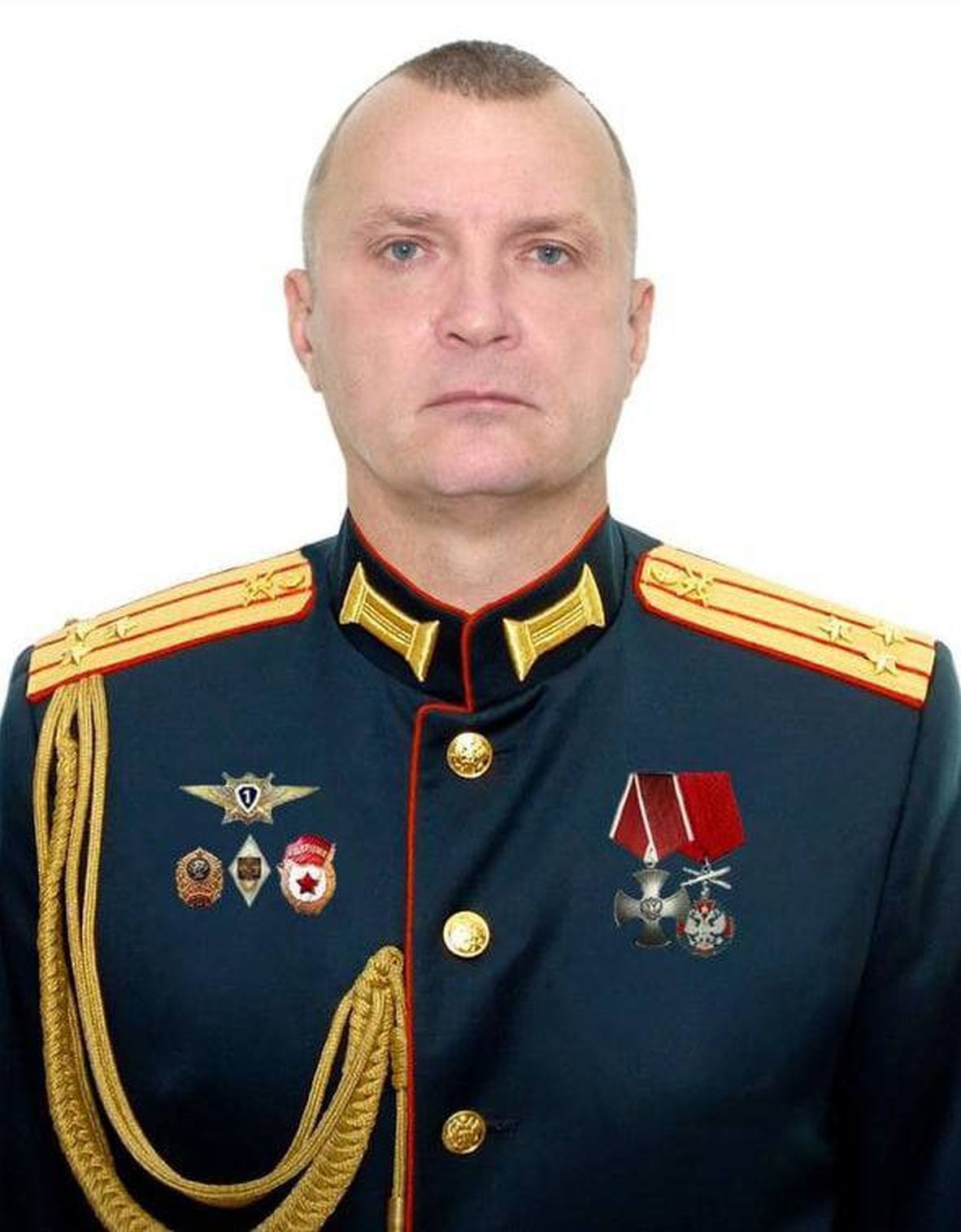
In the Donetsk region, the deputy brigade commander of the 9th Motorized Rifle Brigade of the 51st Army of the Russian Armed Forces, Colonel Alexander Lebedev, was eliminated.
 · |