|
#371
●
12-01-2022, 01:38 AM
| ||||||||
 ♚ Legacy Gold Member ♚ Poster Rank:71 Join Date: Jul 2008 Posts: 21,932 Mentioned: 76 Post(s) Quoted: 11504 Post(s)
| ||||||||
|
Re: Whiskey's Briefing Room
https://www.reuters.com/world/europe...al-2022-11-10/ https://en.wikipedia.org/wiki/Mark_Milley Yesterday it was clueless clueless EU bureaucrats, but last month is was Mark Milley. I understand the ISW provides more depth so I want to see any implications or something but I believe their search function is broken. So if anybody can remember the ISW report with those numbers, please list it. As ISW reports are shared in this thread this should be the place to discuss it right? |
|
#372
●
12-01-2022, 02:31 AM
| ||||||||
 ♚ Legacy Gold Member ♚ Poster Rank:207 Former US Soldier Join Date: Aug 2019 Posts: 7,262 Mentioned: 65 Post(s) Quoted: 3245 Post(s)
| ||||||||
|
Re: Whiskey's Briefing Room
RUSSIAN OFFENSIVE CAMPAIGN ASSESSMENT, NOVEMBER 30 November 30, 8:00 pm ET Russian efforts around Bakhmut indicate that Russian forces have fundamentally failed to learn from previous high-casualty campaigns concentrated on objectives of limited operational or strategic significance. Russian forces have continually expended combat strength on small settlements around Bakhmut since the end of May; in the following six months, they have only secured gains on the order of a few kilometers at a time.[1] As ISW has previously observed, Russian efforts to advance on Bakhmut have resulted in the continued attrition of Russian manpower and equipment, pinning troops on relatively insignificant settlements for weeks and months at a time.[2] This pattern of operations closely resembles the previous Russian effort to take Severodonetsk and Lysychansk earlier in the war. As ISW assessed throughout June and July of this year, Ukrainian forces essentially allowed Russian troops to concentrate efforts on Severodonetsk and Lysychansk, two cities near the Luhansk Oblast border of limited operational and strategic significance, in order to capitalize on the continued degradation of Russian manpower and equipment over the course of months of grinding combat.[3] Russian troops eventually captured Lysychansk and Severodonetsk and reached the Luhansk Oblast border, but that tactical success translated to negligible operational benefit as the Russian offensive in the east then culminated. Russian efforts in this area have remained largely stalled along the lines that they reached in early July. Even if Russian troops continue to advance toward and within Bakhmut, and even if they force a controlled Ukrainian withdrawal from the city (as was the case in Lysychansk), Bakhmut itself offers them little operational benefit. The costs associated with six months of brutal, grinding, and attrition-based combat around Bakhmut far outweigh any operational advantage that the Russians can obtain from taking Bakhmut. Russian offensives around Bakhmut, on the other hand, are consuming a significant proportion of Russia’s available combat power, potentially facilitating continued Ukrainian counteroffensives elsewhere. Russian state nuclear power company Rosatom stated that the former chief engineer of the Zaporizhzhia Nuclear Power Plant (ZNPP) has become the new director of the ZNPP. Rosatom advisor Renat Karchaa announced on November 30 that Yuriy Chernichuk has become the new ZNPP director and the first deputy general director of the Joint Stock Company “Operating Organization of the ZNPP,” which is the entity that Rosatom formed on October 3 to essentially replace Ukrainian company Energoatom as the plant’s operator and to oversee the “safe operation” of the ZNPP and manage personnel activities within the plant.[4] Karchaa also noted that the entire management company of the ZNPP is formed of existing members of ZNPP staff who have signed a new employment contract.[5] Rosatom‘s direct role in appointing and overseeing ZNPP management is consistent with previous efforts to install and maintain Russian control of the ZNPP in a way that is likely intended to force the International Atomic Energy Agency (IAEA) to de facto accept Russian claims over the plant by interacting with Russian-controlled ZNPP staff.[6] The Kremlin continues efforts to stifle domestic dissent through legislation that broadens the definition of “foreign agents” and those amenable to foreign influence. Russian media began reporting on November 23 that the Russian government approved new restrictions on the ability of those deemed “foreign agents” to post materials created by foreign-influenced sources and conduct public activities, which will enter into effect on December 1.[7] The Russian Ministry of Justice expanded the list of “individual-foreign agents” on November 27 on the basis of those individuals conducting unspecified political activities.[8] The United Kingdom Ministry of Defense (UK MoD) also noted that Russian President Vladimir Putin has approved amendments to the 2012 ”Foreign Agents Law” that extends the original definition of ”foreign agents” to anyone who is under undefined ”influence or pressure” from foreign actors.[9] The amendments also afford the Russian Ministry of Justice the purview to publish the personal details of designated foreign agents, opening them up to public harassment.[10] These measures are likely intended to crack down on increasing instances of domestic dissent about the Kremlin’s conduct of the war. By broadening the definition of those classified as foreign agents, the Kremlin can expand its weaponization of this designation to ratchet up censorship measures and exert increased control over the information space. The Belarusian Minster of Defense made comments likely in support of ongoing information operations, and some Russian sources reframed those comments so as to place further pressure on Belarusian officials to support Russia’s war in Ukraine. Belarusian Minister of Defense Lieutenant General Viktor Khrenin stated on November 30 that the actions of bordering NATO members suggest that preparations are underway to conduct military operations in the eastern direction (i.e., against Belarus).[11] While Khrenin’s comments incorporate several possible types of military operations, Russian media and a milblogger reported his comments as saying explicitly that NATO is preparing for offensive operations in the eastern direction (which is a nonsensical accusation).[12] Khrenin likely made the comments about NATO military activities on the borders with Belarus in support of what ISW has previously assessed is an ongoing information operation aimed at fixing Ukrainian forces on the border with Belarus in response to the threat of Belarus entering the war.[13] ISW has also previously assessed that Belarus is highly unlikely to enter the war.[14] Russian sources likely framed Khrenin’s comments to be more inflammatory in order to support the information operation about Belarus entering the war but also to set more escalatory information conditions that may place more pressure on Belarusian officials to further support the Russian offensive campaign in Ukraine. Russian opinion polling suggests that the Russian public may be tiring of Russia’s war in Ukraine. Russian opposition media outlet Meduza reported on November 30 that it had gained access to the results of an opinion poll commissioned by the Kremlin for internal use that shows that 55 percent of Russians favor peace talks with Ukraine and 25 percent favor continuing the war.[15] Russian independent polling organization Levada’s October polling shows a similar breakdown with 34 percent favoring continuing military actions in Ukraine and 57 percent favoring negotiations.[16] Internal Kremlin polling reportedly placed the percentage of Russians supporting negotiations with Ukraine at 32 percent in July and the percentage favoring the continuation of the war at 57 percent.[17] Meduza reported that the director of the Levada Center Denis Volkov stated that the share of Russians likely to support peace talks with Ukraine began to grow rapidly following Russian President Vladimir Putin’s partial mobilization decree.[18] Disruptions associated with partial mobilization and Russian setbacks on the battlefield have likely contributed to an increasing war weariness among the Russian public, as reflected in the polling. Key Takeaways The Russian military’s efforts around Bakhmut suggest that Russian forces failed to learn from previous costly campaigns focused on operationally insignificant settlements. Russian state nuclear company Rosenergoatom appointed a new director for the Zaporizhzhia Nuclear Power Plant. The Kremlin continues efforts to stifle domestic dissent through an expansion of measures ostensibly aimed against “foreign agents.” Russian opinion polling suggests that the Russian public may be growing tired of Russia’s war in Ukraine. Russian forces continued efforts to defend against Ukrainian counteroffensive operations along the Svatove-Kreminna line. Russia forces continued to make incremental gains around Bakhmut and to conduct offensive operations in the Avdiivka-Donetsk City area. A Ukrainian official acknowledged that Ukrainian forces are conducting an operation on the Kinburn Spit. Russian and Ukrainian sources indicated that Russian officials are continuing to conduct partial mobilization measures. Russian officials’ ongoing efforts to integrate illegally annexed territories into the Russian Federation are likely very disorganized. |
|
#373
●
12-01-2022, 10:22 AM
| ||||||||
 My Rank: STAFF SERGEANT Poster Rank:735 Military Aged Male Join Date: Mar 2010 Posts: 1,105 Mentioned: 2 Post(s) Quoted: 313 Post(s)
| ||||||||
|
Re: Whiskey's Briefing Room
 press event for things that they should just have, or new delivery to regiment command for "distribution" press event for things that they should just have, or new delivery to regiment command for "distribution"
|
|
#374
●
12-02-2022, 11:16 AM
| ||||||||
| ♚ Legacy Gold Member ♚ Poster Rank:207 Former US Soldier Join Date: Aug 2019 Posts: 7,262 Mentioned: 65 Post(s) Quoted: 3245 Post(s)
| ||||||||
|
Re: Whiskey's Briefing Room
Situations at Bakhmut and Zaporizhia oblast. It would appear that some Russian units are leaving the Zaporizhia frontline area for more advantageous positions to the south near Tokmak. I believe the Ukr buildup of forces in Zaporizhia for a pending offensive southward to the Black Sea is setting the stage to fully isolate Crimea. Divide and conquer. 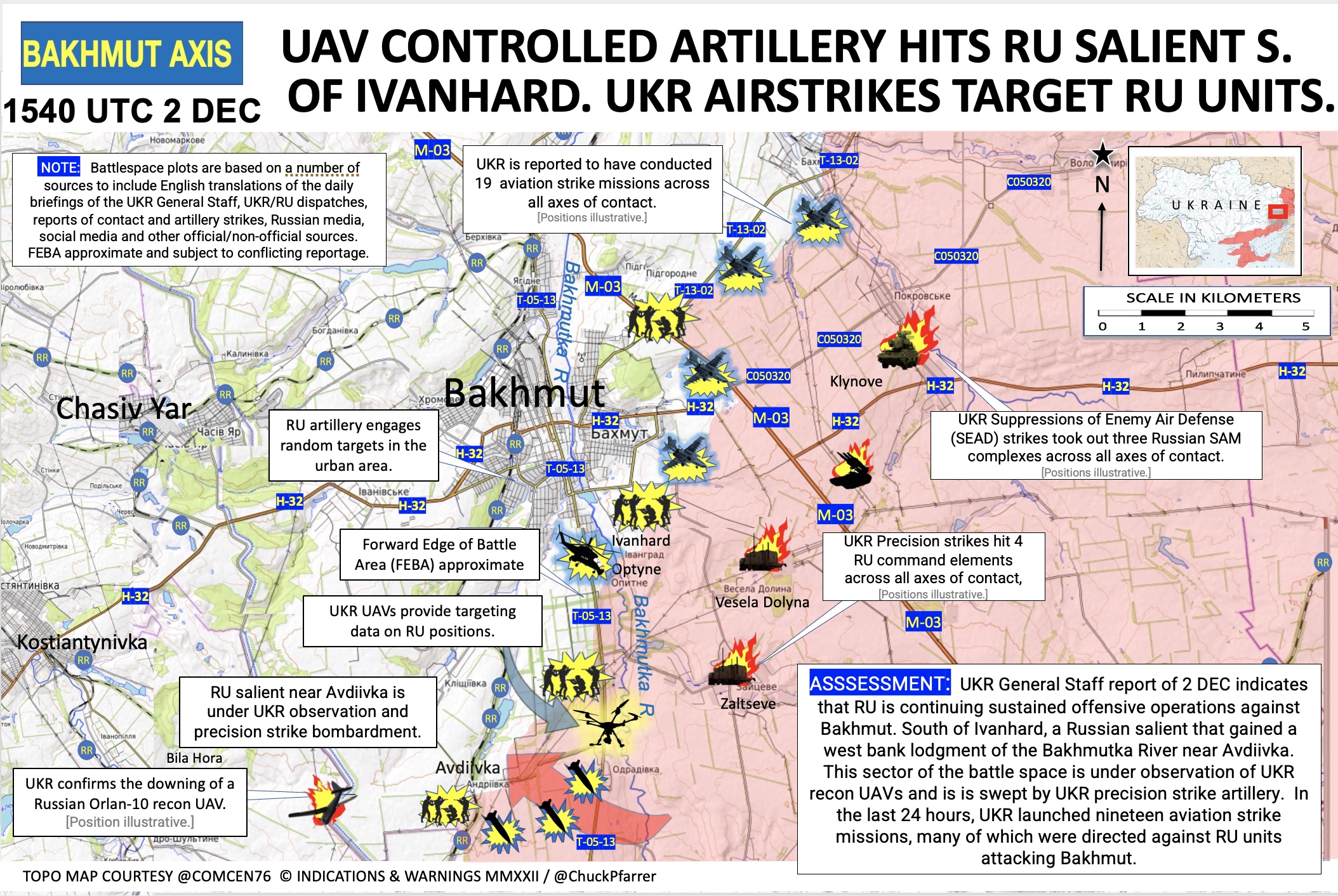 · 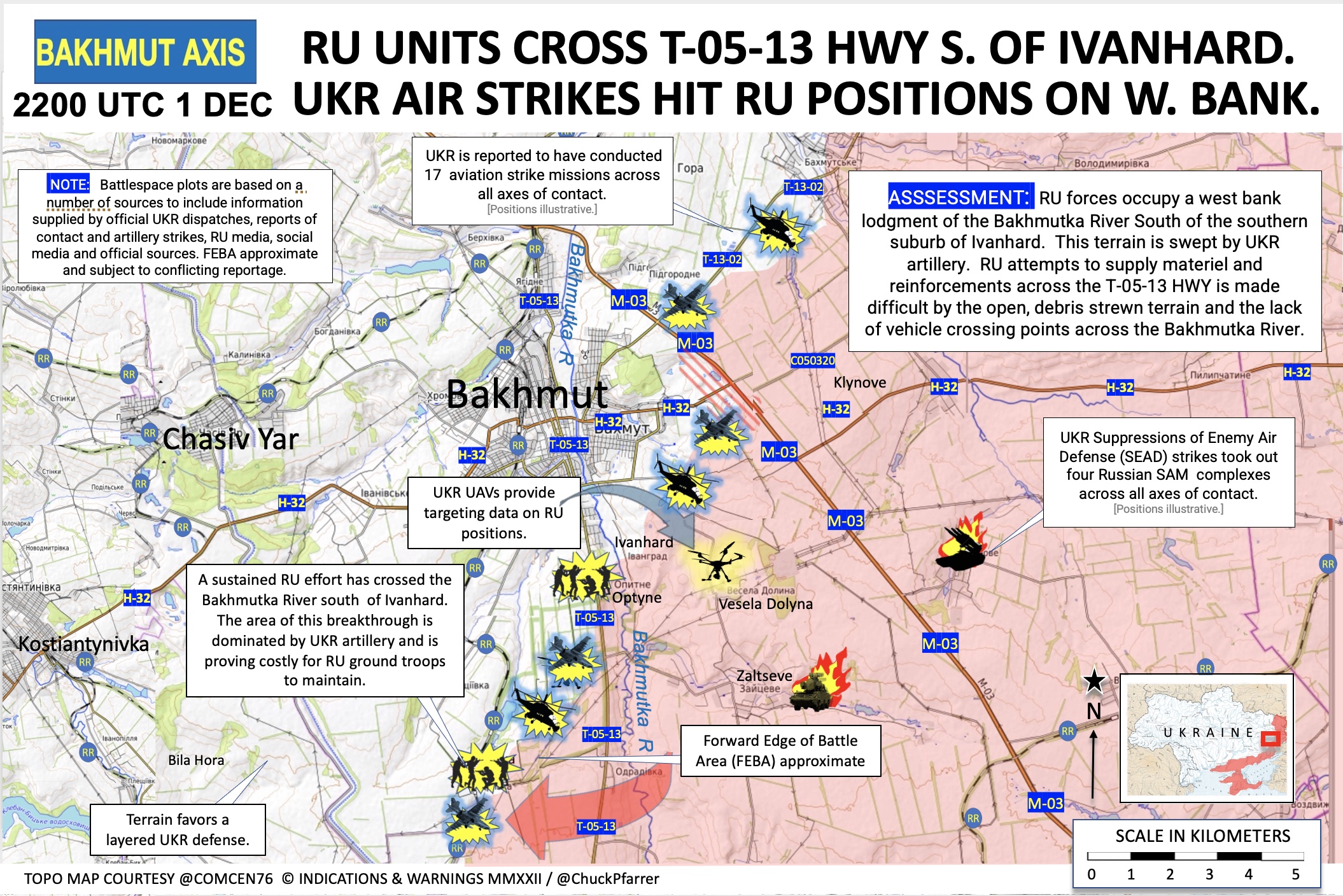 · |
|
#375
●
12-02-2022, 03:47 PM
| ||||||||
 ☾ Administrator ☽ Poster Rank:77 ஜᎻᎬᎩᎾᏦᎪஜ Join Date: Dec 2011 Posts: 19,442
Contributions: 32
Mentioned: 169 Post(s) Quoted: 6799 Post(s)
| ||||||||
|
Re: Whiskey's Briefing Room
So are there any indications that UA has officially taken Bakhmut back? I've been seeing video of them walking around freely... but no official announcement... I know there are surrounding settlements that are still in Russian control... so maybe that's the reason they haven't said it yet. I dunno...
__________________ 💜🧿See Human | Be Human🧿💜 (War Section Hashtags) |
|
#376
●
12-02-2022, 04:47 PM
| ||||||||
| ♚ Legacy Gold Member ♚ Poster Rank:207 Former US Soldier Join Date: Aug 2019 Posts: 7,262 Mentioned: 65 Post(s) Quoted: 3245 Post(s)
| ||||||||
|
Re: Whiskey's Briefing Room
Russia never had Bakhmut to my knowledge. At one point several weeks ago they tried to drive straight into Bakhmut but were beat back like 3 or 4 times when Ukr forces counterattacked from the west or southwest. What they have done is taken a town or two south of Bakhmut. The good thing is, to envelope the whole city would be very difficult due to the local geography and strong Ukrainian force presence in and west of the city. Since ~Nov 26th the Russians have taken Kurdiumkivka and recently Andriivka. To the south. |
|
#377
●
12-02-2022, 05:06 PM
| ||||||||
| ♚ Legacy Gold Member ♚ Poster Rank:207 Former US Soldier Join Date: Aug 2019 Posts: 7,262 Mentioned: 65 Post(s) Quoted: 3245 Post(s)
| ||||||||
|
Re: Whiskey's Briefing Room
The Russians are adopting a very similar approach to taking Bakhmut as they did Severodonyetsk. But they've been working on Bakhmut for longer, with less to show for it and likely higher casualties. Since the Russian military seems to have a hard time learning, this isn't really surprising. Especially the mystery why they have such a hard on for Bakhmut when it doesn't even hold a significant strategic advantage for whoever controls it. Just like Severodonyetsk. |
|
#378
●
12-02-2022, 07:11 PM
| ||||||||
| ☾ Administrator ☽ Poster Rank:77 ஜᎻᎬᎩᎾᏦᎪஜ Join Date: Dec 2011 Posts: 19,442
Contributions: 32
Mentioned: 169 Post(s) Quoted: 6799 Post(s)
| ||||||||
|
Re: Whiskey's Briefing Room
Kherson, excluding Mariupol) was probably the most legitimate strategic city for them in the south and look what happened there.  I posted a video of someone driving through Sievierodonetsk the other day... and the devastation there was shocking. I used to stream a live skyline view camera from that city... when it was still intact. Kramatorsk as well... Marhanets... Kryvyi Rih... none of those cameras are still functioning. 
__________________ 💜🧿See Human | Be Human🧿💜 (War Section Hashtags) |
|
#379
●
12-02-2022, 07:48 PM
| ||||||||
| ☾ Administrator ☽ Poster Rank:77 ஜᎻᎬᎩᎾᏦᎪஜ Join Date: Dec 2011 Posts: 19,442
Contributions: 32
Mentioned: 169 Post(s) Quoted: 6799 Post(s)
| ||||||||
|
Re: Whiskey's Briefing Room
1. New trends in model collecting 2. Test of the TOLUN minibomb launched from the Turkish Bayraktar Akıncı UAV
__________________ 💜🧿See Human | Be Human🧿💜 (War Section Hashtags) |
|
#380
●
12-02-2022, 09:31 PM
| ||||||||
| ☾ Administrator ☽ Poster Rank:77 ஜᎻᎬᎩᎾᏦᎪஜ Join Date: Dec 2011 Posts: 19,442
Contributions: 32
Mentioned: 169 Post(s) Quoted: 6799 Post(s)
| ||||||||
|
Re: Whiskey's Briefing Room
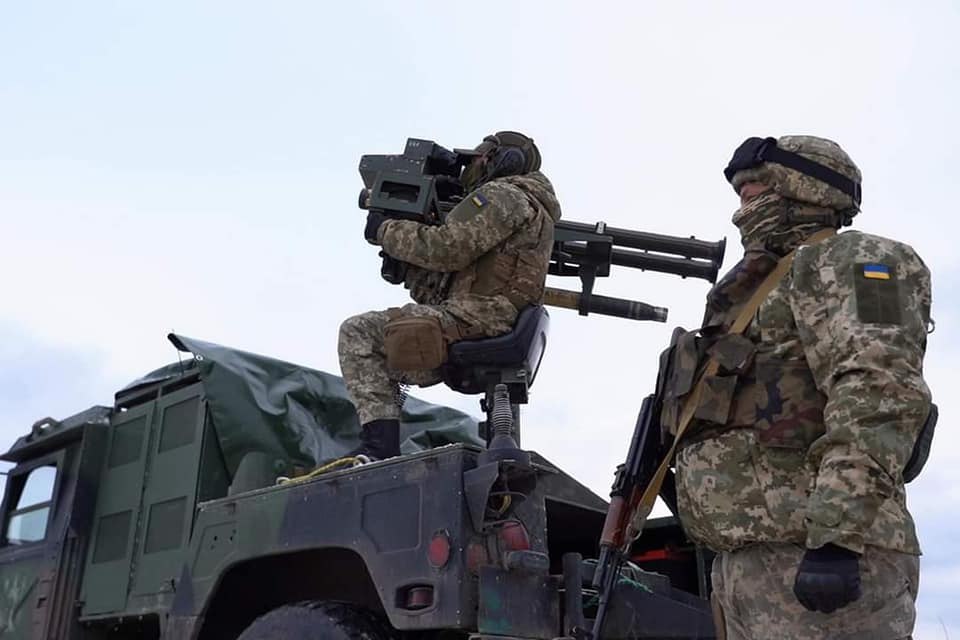
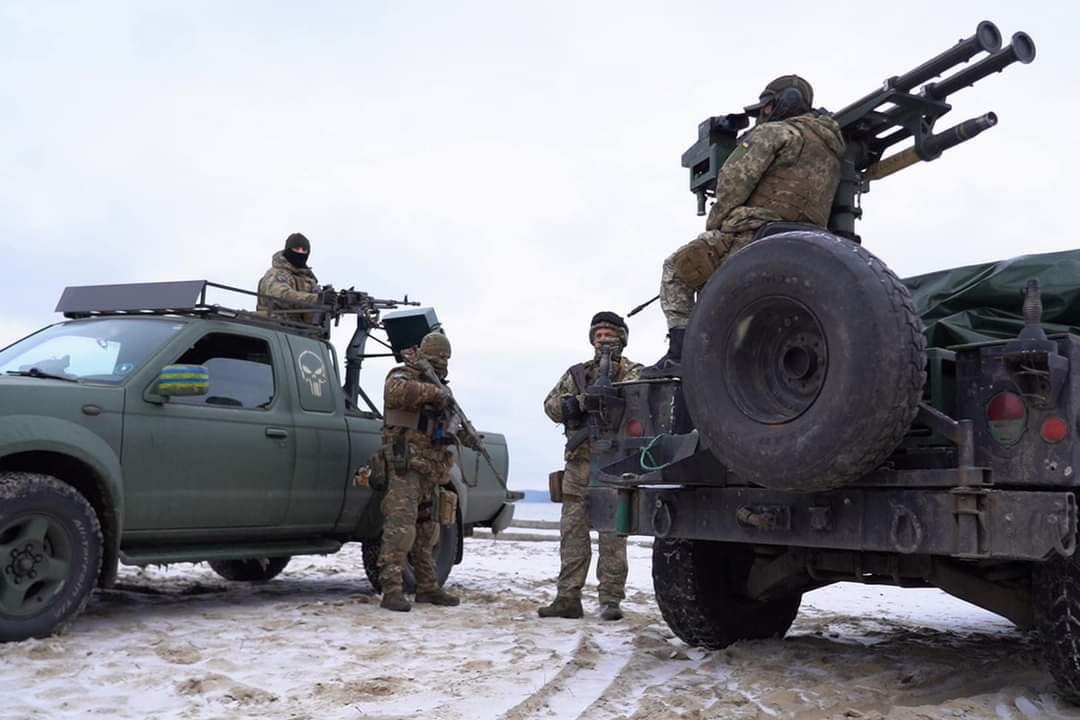
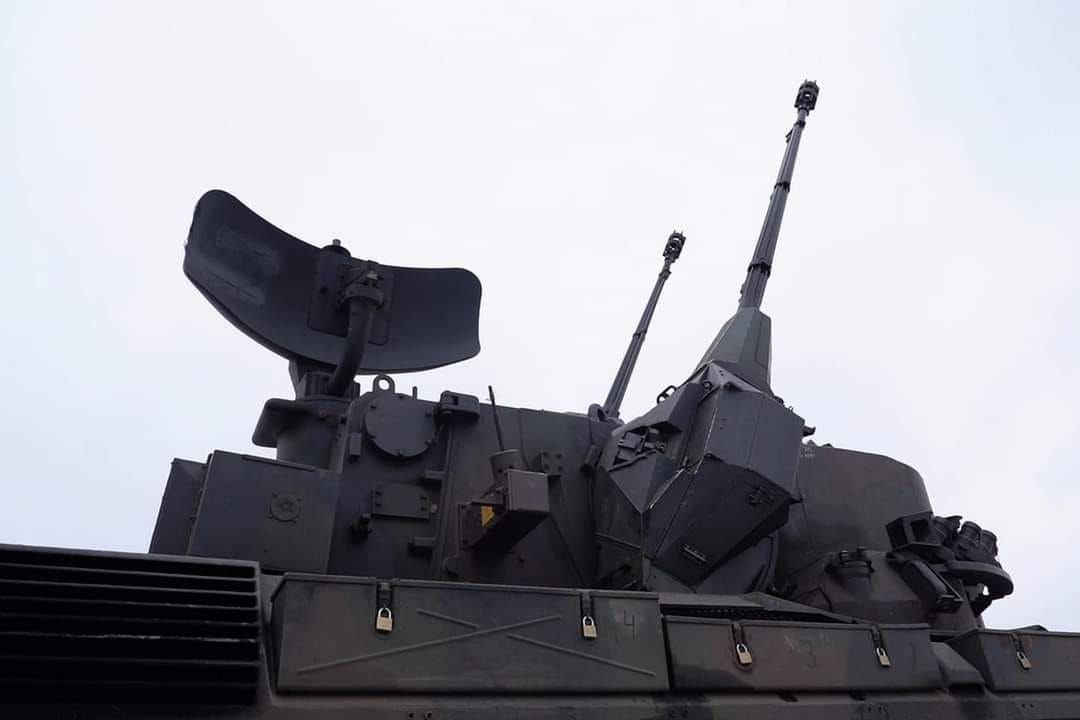
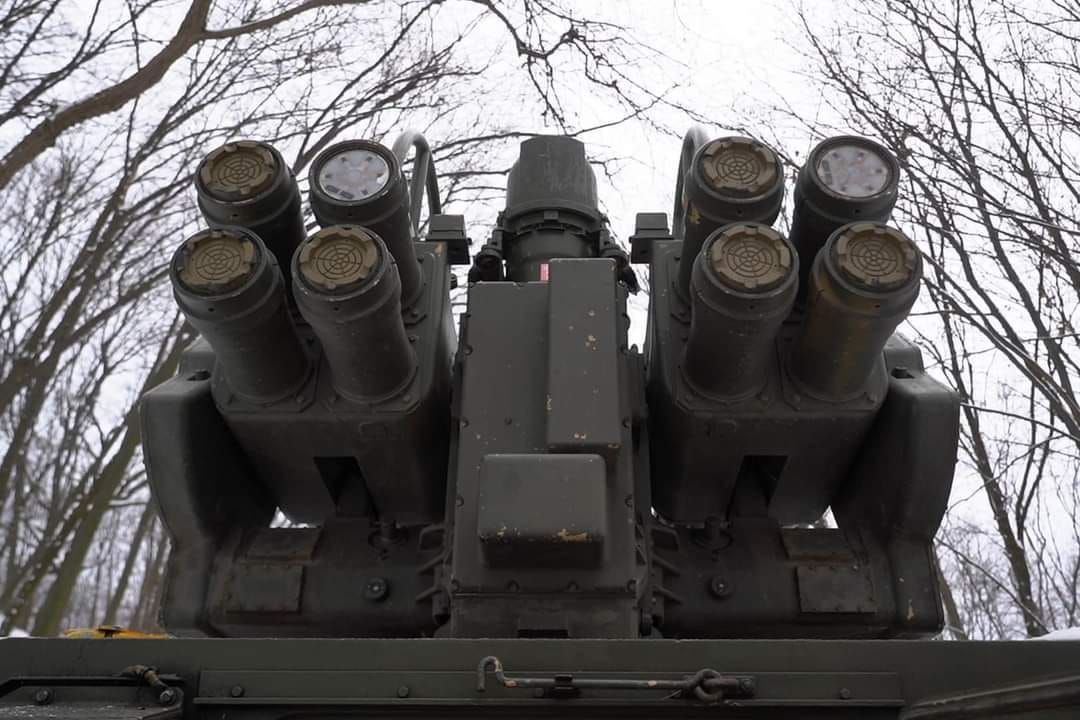
Part of the air defense of Ukraine. In the photo MANPADS "Stinger", FV4333 "Stormer HVM", ZSU "Gepard".
 ·  ·  ·  ·
__________________ 💜🧿See Human | Be Human🧿💜 (War Section Hashtags) |