|
#1
●
09-15-2022, 12:10 PM
| ||||||||
 ♚ Legacy Gold Member ♚ Poster Rank:210 Former US Soldier Join Date: Aug 2019 Posts: 7,285 Mentioned: 66 Post(s) Quoted: 3252 Post(s)
| ||||||||
|
Azerbaijan/Armenia War Media
These appear to be dead/captured Armenians judging from the camouflage patterns. Perhaps someone can clarify and translate what's being said.
|
|
#2
●
09-15-2022, 01:16 PM
| ||||||||
| So Fucking Banned Poster Rank:47 Join Date: Oct 2010 Posts: 31,832 Mentioned: 76 Post(s) Quoted: 17437 Post(s)
| ||||||||
|
Re: Azerbaijan/Armenia War Media
Just start the WWIII thread
|
|
#3
●
09-15-2022, 04:09 PM
| ||||||||
| So Fucking Banned Poster Rank:47 Join Date: Oct 2010 Posts: 31,832 Mentioned: 76 Post(s) Quoted: 17437 Post(s)
| ||||||||
|
Re: Azerbaijan/Armenia War Media
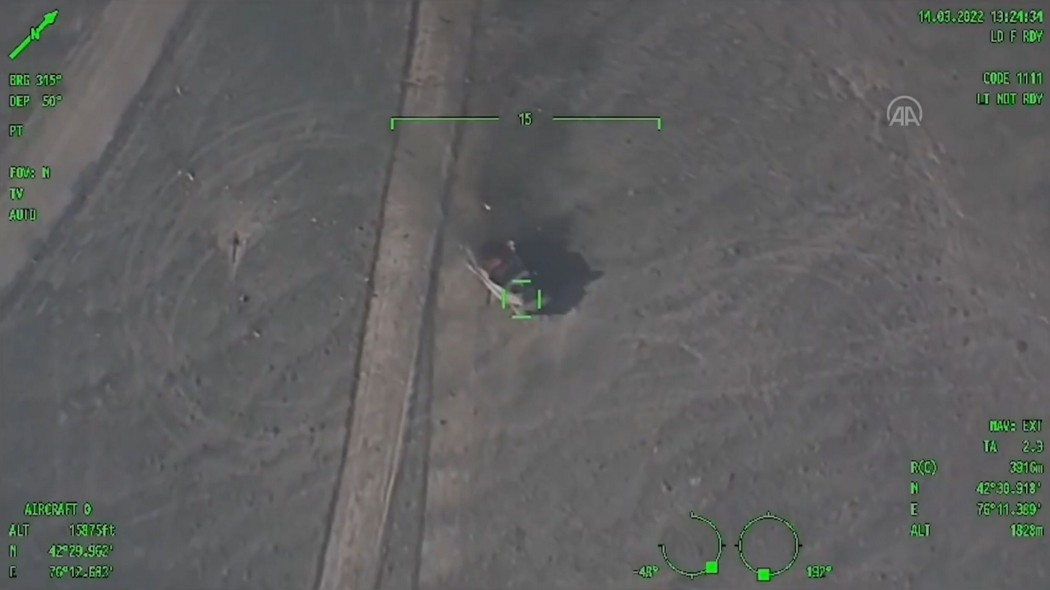
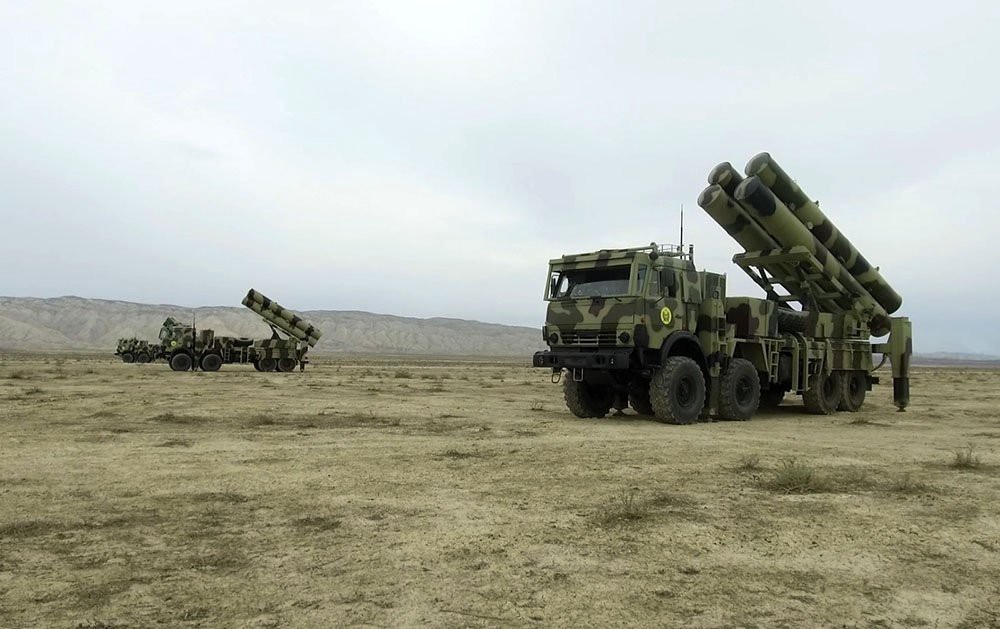
https://medium.com/@x_TomCooper_x/ar...2-3b6a2360b0a2 Armenia vs. Azerbaijan, 12–14 September 2022 Hello everybody! Before I return to my reporting about the War in Ukraine, let me have a look at another, ‘indirectly related’ affair: a ‘little bit overshadowed’ by developments in Ukraine of the last few days, the 30-years- (and more) -old war between Armenia and Azerbaijan re-ignited on Monday, 12 September 2022. A truck of the Armenian Armed Forces after receiving a hit from a TB.2 Bayraktar UCAV of the Azerbaijan Armed Forces. The story of ‘how comes’ is quite complex, thus let me summarise only the latest developments very briefly. During the 2020 Nagorno-Karabakh War, Azerbaijan defeated Armenia, compelling it to withdraw its forces from four districts it used to occupy since the 1990s. The Armenian defeat imposed the question of demarcation of the border between the two countries — which is not only including areas from which Armenian forces withdrew or were yet to withdraw, but also Qazakh District of Azerbaijan, the village of Karki in Nakhichevan Autonomous Republic, and an Armenian exclave (the village of Arsvashen), too. Since May 2021, both sides complained about multiple violations of the border by other party’s armed forces: several of these resulted in clashes with dozens of deaths. As tensions rose, in August this year Azerbaijani Armed Forces run the Operation Revenge, during which they took control of several strategic heights in Karabakh. On 26 August, they also took full control of the Lachin Corridor — and area between the (still) Armenian-controlled Nagorno-Karabakh, in which local Armenians declared an independent ‘Republic Artsakh’. This was along the cease-fire agreement that ended the war of 2020, though. Therefore, on 31 August, Prime Minister of Armenia, Nikol Pashinyan, and President of Azerbaijan, Ilham Aliyev, met in Brussels to negotiate the future of relations between their countries. Crucial issues were such like Armenian refusal to withdraw its armed forces from the Nagorny Karabakh area: Armenia promised to do so in the cease-fire agreement that ended the war of September-October 2020. Officially at least, Armenia says it has no forces there: however, the local Armenians, who are maintaining quasi-armed forces supported by Armenia insist on their ‘independent Republic of Artsakh’, insist on maintaining their own armed forces, and that all the agreements including ‘Artsakh’ as a part of Azerbaijan are null and void. Indeed, although the UN has clearly recognised the area as a part of Azerbaijan, they insist that the sole solution for the issue of Nagorny Karabakh/Artsakh is an international recognition and independence of their ‘republic’. Other issues discussed between Pashinyan and Aliyev were a demarcation of borders between the two countries, mutual recognition of each other’s territorial integrity, renouncement of all the related claims; opening of the border and communications, and an end of military provocations. Mediated by the President of European Council, Charles Michel, the meeting ended with an ‘agreement on the further course of work’ and ‘preparations for negotiations’: essentially, it ended without results. Under the usual (and fierce) pressure from chauvinists in his own country, Pashinyan turned down all of Aliyev’s proposals, in turn accusing the latter of demanding the impossible… According to Azerbaijan, on 12 September, troops of the Armed Forces of Azerbaijan then caught troops of the Armed Forces of Armenia as these were planting mines along paths used by the former in the so-called Lachin Corridor. Early on 13 September, Azerbaijan Armed Forces then launched a series of air- and artillery strikes on selected units of the Armenian Armed Forces, this time inside Armenia. Known to have been hit were (from north to south), Artanish, Sotk, Martouni, Jermouk, Lac Sev, Goris, and Kapan. The operation began by another onslaught on Armenian air defences: these were hit by a mix of UCAVs and loitering ammunition, with, apparently, devastating results. Here few examples: Hit on a P-18 early warning radar; https://twitter.com/Caucasuswar/stat...77668337405952 Hit on 5N63S radar of the S-300SP SAM-system; https://twitter.com/clashreport/stat...89554399547392 Hit on a launcher of the S-300SP SAM-system; https://twitter.com/clashreport/stat...92118603890690 another hit on an Armenian S-300 SAM-system (this time by an IAI Harop loitering weapon); https://twitter.com/Caucasuswar/stat...01551740342272 one more hit on S-300 SAM-system (possibly, this is the same attack like the one above); and https://twitter.com/gdhdefence/statu...70320768208897 at least one hit on an Armenian R-300zh Resident electronic warfare system. https://twitter.com/Caucasuswar/stat...76488630702082 Once Armenian air defences were suppressed, Azeris went over to ‘plinking’ artillery pieces, bunkers, and single military vehicles — by UCAVs, and by their own artillery and multiple rocket launchers. This prompted Armenians into complaining about lots of civilian casualties. So far, I was only able to find evidence for injured civilians. Armenians retaliated by shelling Kalbajar, Lachin, and Dashkesen. Azerbaijani TRG-300 multiple rocket launchers. Finally, Azerbaijani ground forces advanced into Armenian proper near Vardenis, Goris, Sotk, and Jermuk. While some claimed they were about to create a land corridor to the Nakhichevan Autonomous Republic, apparently, they limited their actions to securing selected Armenian positions along the (non-demarcated) border. The last evening, a new cease-fire was negotiated, and the fighting — apparently — stopped. In a rough summary, it can be said that according to Azerbaijani releases, Armenia suffered over 200 casualties and at least 30 Armenian troops were taken prisoner; according to Armenians, Azerbaijan should have lost 50 killed (of which some 7–8 special forces operators were confirmed so far). Why all of this? Some say it’s Putin who is attempting to distract from his defeat in eastern Kharkiv, in Ukraine. Considering his preference for subversion, wouldn’t be surprise. However, most likely is that Aliyev decided to ‘teach Armenians a lesson’. Armenian armed forces were devastated during the last war, and thus his armed forces are enjoying vast military superiority. Furthermore, because Armenians not only failed to fulfill their promise about a complete withdrawal of their armed forces from Azerbaijan (of course, Armenians in Azerbaijan claim these would be ‘armed forces of the Republic of Artsakh’), because Armenia is thus still making claims on the territory of Azerbaijan, because Armenia is refusing to make peace, demarcate and open borders, and a mutual recognition of sovereignty, and an end of military provocations… he’s making them (painfully) aware of the consequences. Now the question is going to be whether the government in Yerevan can, finally, bring the local chauvinists to their senses — or not. (Ah yes…few notes for the end… ) While Azerbaijan is not only a close ally of Israel for years already, and is a big customer for Israeli arms, it has improved its relations to the EU over the last two years, too. At the same time, it is a close ally of Turkey, too. In turn, Armenia not only moved yet closer to Putin, but is receiving serious offers for an alliance from the IRGC in Iran, which — whenever Armenia is in trouble — is publishing threats against Azerbaijan. 3.) Over the last two months, Aliyev has signed a number of contracts for gas exports to the EU. Whenever these might be realised (which is depending on an expansion of existing pipelines connecting Baku with Supsa in Georgia and Ceyhan in Turkey), Azerbaijan is likely to become a major gas-supplier for the European Union. The EU — the leaders of which were completely indifferent towards this conflict for ages, if not openly supporting Armenia (see: France) — now has a crucial interest in preventing a war between Azerbaijan and Armenia — and that while having to decide whether it prefers to cooperate with a dictatorship that is, legally, ‘right’ (and then for same reasons why the EU feels ‘right’ to support Ukraine), or a chauvinism-driven Armenian quasi-democracy that is, legally, ‘not the least right’, and a close ally of Putin, but also under a threat of a coup from own armed forces and extremist nationalists….) |
|
#6
●
09-16-2022, 02:33 AM
| ||||||||
 ☾ Administrator ☽ Poster Rank:76 ஜᎻᎬᎩᎾᏦᎪஜ Join Date: Dec 2011 Posts: 19,988
Contributions: 46
Mentioned: 196 Post(s) Quoted: 7094 Post(s)
| ||||||||
|
Re: Azerbaijan/Armenia War Media

__________________ 💜🧿See Human | Be Human🧿💜 (War Section Hashtags) |
|
#7
●
09-16-2022, 02:46 AM
| ||||||||
| ☾ Administrator ☽ Poster Rank:76 ஜᎻᎬᎩᎾᏦᎪஜ Join Date: Dec 2011 Posts: 19,988
Contributions: 46
Mentioned: 196 Post(s) Quoted: 7094 Post(s)
| ||||||||
|
Re: Azerbaijan/Armenia War Media
I only watch local news (weather) if I watch any at all, so I don't know if it's being covered in the American news media at all but I'm not surprised that the first time I hear of it was here. I think Rfneimad is correct... we need a bigger, all inclusive thread as shit is poppin' off. 
__________________ 💜🧿See Human | Be Human🧿💜 (War Section Hashtags) |
|
#9
●
09-17-2022, 05:40 AM
| ||||||||
| ♚ Legacy Gold Member ♚ Poster Rank:3512 Join Date: Mar 2018 Posts: 100 Mentioned: 0 Post(s) Quoted: 53 Post(s)
| ||||||||
|
Re: Azerbaijan/Armenia War Media
https://oc-media.org/footage-appears...enian-soldier/ Footage appears to show desecration of female Armenian soldier Footage circulating online appears to show the mutilation of a female Armenian soldier by Azerbaijani troops during fighting this week. [Warning: This article contains graphic descriptons of violence.] On Friday, the Armenian Ministry of Defence confirmed that the woman in question was killed during the clashes on 13–14 September along the Armenia-Azerbaijan border. The footage, ostensibly filmed by an Azerbaijani soldier, shows a number of bodies of Armenian soldiers, including two women. One of the women has been stripped naked with text written across her breasts and stomach. A stone has been placed in her eye socket and a severed finger in her mouth. The man filming the scene comments in Azerbaijani: ‘look at the bitch, there are two women. She became a rock.’ The Chief of the General Staff of the Armenian Armed Forces spoke about the footage during a visit by foreign diplomats to the resort town of Jermuk in the southern Vayots Dzor Province on Friday. The town was subject to Azerbaijani shelling, with Azerbaijani troops taking control of positions near the town during the fighting. ‘They committed atrocities in our combat positions against our servicemembers, including women servicemembers’, Edward Asryan told the diplomats. ‘I can’t find words to describe how they dismembered a female soldier, cut off her legs, and fingers, stripped her naked, this is the ultimate level of cruelty’, he added, promising to show the video to them. Fighting erupted on the Armenia–Azerbaijan border at around midnight on the night of 12–13 September, as Azerbaijani forces launched strkes and ground assaults into Armenia, targeting military positions and civilian settlements across much of their shared border. Azerbaijan claimed the attacks were a response to Armenian ‘provocations’. It came to an end after Armenia announced that a ceasefire had been agreed. Yerevan has claimed that the US government ‘played a huge role’ in bringing an end to the fighting. The Azerbaijani side has not officially acknowledged the agreement. The two-day war differed from many previous battles between the two countries in that it did not involve Nagorno-Karabakh. Unlike in previous clashes, much of the international community, particularly Western countries, also appeared to single out Azerbaijan as being responsible, calling on them to cease their attacks. As the fighting continued Wednesday, US Secretary of State Antony Blinken called for Azerbaijani President Ilham Aliyev to ‘cease the hositilites’ and ‘disengage military forces’, condeming the attacks inside Armenia. In a phone conversation with Armenian Prime Minister Nikol Pashinyan, Blinken promised to ‘deal with the issue’ personally and help to normalise the situation. Another high-ranking US official, House Speaker Nancy Pelosi, will also reportedly visit Armenia this weekend to ‘express support’ to the country. She has not announced any other visits in the region. France has also criticised Azerbaijan. At a meeting of the UN Security Council on Thursday, the French representative urged Azerbaijan to withdraw its troops from Armenian territory and ‘respect Armenia’s territorial integrity’. Armenia’s Deputy Foreign Minister Paruyr Hovhannisyan told Armenpress that the adoption of a Security Council resolution was currently being discussed. Armenia’s traditional strategic ally, Russia, remained more muted in their response, urging ‘both sides’ to cease hostilities. Russia is treaty-bound to assist Armenia militarily in the event of an attack on its territory, both under a bilateral treaty as well as through their membership of the Collective Security Treaty Organisation (CSTO). Despite Armenia’s call for aid, the CSTO sent only a fact-finding mission, which arrived in Armenia on Friday. The Secretary of the Armenian Security Council, Armen Grigoryan, said the country ‘does not have any more hope’ that the defence mechanisms of the treaty would be activated to help Armenia. |
|
#10
●
09-17-2022, 05:52 AM
| ||||||||
| ♚ Legacy Gold Member ♚ Poster Rank:210 Former US Soldier Join Date: Aug 2019 Posts: 7,285 Mentioned: 66 Post(s) Quoted: 3252 Post(s)
| ||||||||
|
Re: Azerbaijan/Armenia War Media
Maybe we should. All the former Soviet states are getting wise now that Russia can't sent "peacekeepers" as they've done in the past.
|