|
#1
●
07-21-2026, 04:50 PM
| ||||||||
 ★ ★ GENERAL ★ ★ Poster Rank:37 male Join Date: Oct 2006 Posts: 42,046
Contributions: 35
Mentioned: 2256 Post(s) Quoted: 21186 Post(s)
| ||||||||
|
The Murder of Maggie Long
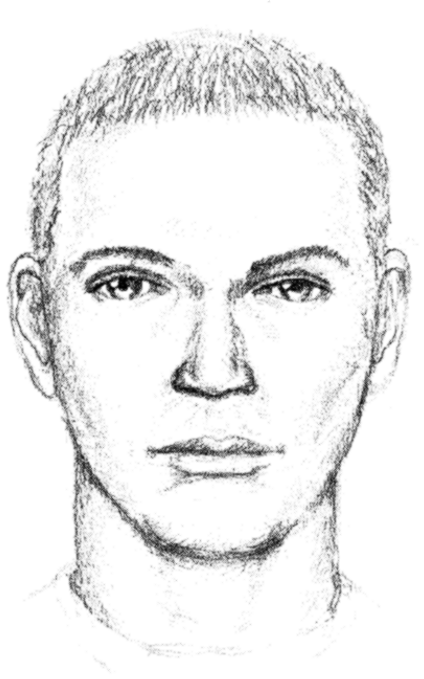
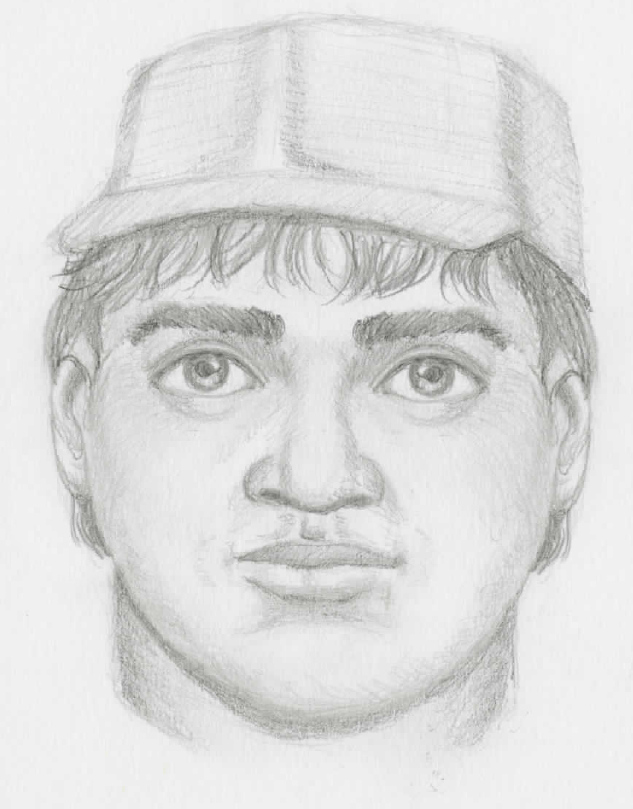
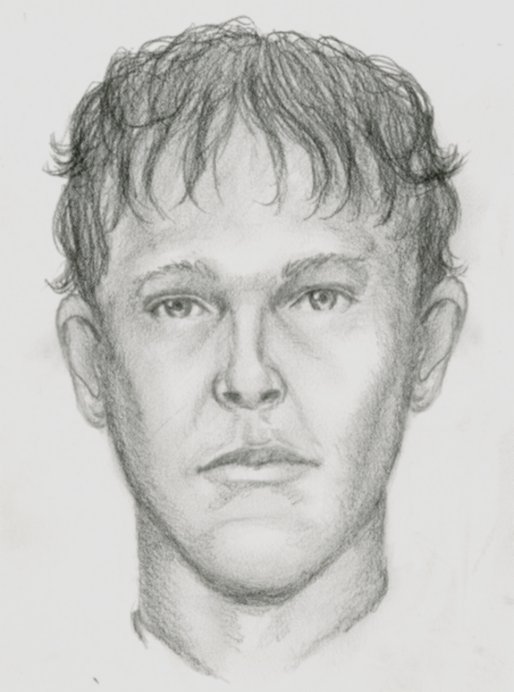
On the afternoon of Friday, December 1, 2017, Maggie Long left Platte Canyon High School and drove home to pick up a few things for that night's winter concert. She was a 17-year-old senior, and she had a small job at the show: a change of clothes to bring back, and cookies for the audience. Her family's house sat on County Road 43 near Bailey, Colorado, up in the mountains southwest of Denver. She made the short trip out to the house and never came back to the concert. By about 7:00 that evening, Park County Sheriff's deputies were headed toward that same address for a house fire, and a 911 caller was telling them that people at the home were arguing, throwing things around, and trying to set the place on fire, with a man somewhere on the property. Who she was Maggie Long was 17 and a senior at Platte Canyon High School, on track to graduate in the spring of 2018. She was Asian American, of Chinese descent, and her family was one of only a few Asian families in that part of the mountains. They had immigrated to the United States decades earlier and built a life around local business, running several Chinese restaurants and investing in real estate. At school she was well liked and heavily involved. She played softball, and after her death the team retired her jersey number in her memory. The last day The concert Maggie was helping run was at the school that night, and the errand home should have taken no time at all. Instead, the next thing anyone outside the house knew of it was the fire. When deputies reached 3763 County Road 43, the home was burning. The 911 call that brought them had described people at the address arguing, throwing things around, and trying to set the house on fire. Inside the burned home, investigators found Maggie Long. Her remains were recovered at the scene. The house had been burglarized and the fire had been set on purpose, and the El Paso County Coroner's Office ruled her death a homicide. The evidence Two of the things investigators have said publicly sit at the center of the case, and both are grim. The first is that a physical altercation took place between Maggie and her assailants before the fire was set. The second came from Park County Sheriff Tom McGraw, who said that she had been "purposely set on fire and burned alive." In plain terms, that means she was still alive when the fire was lit. Those are the sheriff's words, and the coroner's homicide ruling is the official manner of death. Everything else about that evening is either physical evidence or an open question. What the burglars took reads like a strange shopping list. According to the FBI, the suspects made off with a Beretta handgun, an AK-47-style rifle, roughly 2,000 rounds of ammunition, a green safe, and a set of jade figurines. The guns and the ammunition point one way; the jade figurines and the safe point somewhere else entirely, toward someone who knew or guessed what the family kept in that house. Investigators also put out a bulletin for two vehicles seen leaving the area around the time of the crime: a light-colored Chevrolet Astro van from the late 1990s or 2000, and a Ford pickup described as a Ranger. The closest thing to a face in this case is a set of three composite sketches. Authorities released drawings of three men they believe were involved, and those sketches are still the only likenesses the public has ever been given. The first shows a white man of average build with short hair. The second is a larger man with shaggy hair under a baseball cap. The third, released on April 2, 2019, is a thinner man with a long, narrow face and a prominent chin. No name has ever been attached to any of them. The investigation The case is worked by a multi-agency group called the Maggie Long Task Force, made up of the Park County Sheriff's Office, the Colorado Bureau of Investigation, the FBI's Denver Field Office, and the ATF. Special Agent Michael Schneider of the FBI's Denver office has been named publicly in connection with the work. The task force came together in early 2019, and the sketches came with it: drawings of two suspects went out around the launch, and the third followed on April 2 of that year. The reward has climbed over time. It started at $50,000 in 2019 and now stands at $75,000, put up jointly by the Park County Sheriff's Office, the Long family, the ATF, the FBI, and the CBI. Tips have come in steadily. According to CNN, investigators had logged about 415 of them as of January 2025. One piece of the case's public footprint did disappear along the way. The original MaggieLongTaskForce.com website went dark in 2021. The CBI has since said that this was an administrative change and not a sign the case had gone cold, and that the investigation moved to a dedicated state-led task force. The theories No one has been charged, so everything in this section is a theory. The leading one, and the way the case was first understood, is a burglary that went catastrophically wrong. The idea is that the house was targeted for the valuables inside, that Maggie walked in on the intruders while they were robbing the place, and that they killed her and set the fire to cover it. Early on it was treated as a crime of opportunity. That is still the shape of the leading theory, and no arrest has ever confirmed it. In 2021 a second line opened. The FBI began looking at whether Maggie's murder might have been a hate crime, given that she was Asian American. It has always been framed carefully. Sheriff McGraw called it "an option we have never explored before, but we're looking at now to see if it is a real possibility," and news coverage has described it as a potential hate crime the FBI is examining rather than a settled motive. The most recent official statements cut against reading too much into it: the CBI's releases in November 2025 and February 2026 describe a burglary-homicide and use no hate-crime language at all. The hate-crime angle is an FBI investigative line, hedged and attributed, and not an established finding. Maggie's sister Connie Long has spoken to that question from the family's side. She has said that her sister's race and gender were among the "contributing factors" in the killing: "Her race, her gender, you know, all of those are contributing factors for why these perpetrators thought it was okay to do that to her." That is a family member's view, offered on the record, and not a conclusion any agency has reached. Where it stands As of 2026 the case is unsolved. No one has been arrested, and no suspect has ever been publicly named. What exists is the physical record, the three sketches, and a reward that has grown rather than shrunk. On February 20, 2026, the CBI put out a statement to say the Maggie Long Task Force is still active and aggressively pursuing justice, and to warn the public about something that had grown up around the case in the meantime: unauthorized flyers and social-media groups posing as the task force and spreading false information. The agency was blunt that the official Maggie Long Task Force has never operated a Facebook page. Sheriff McGraw has kept returning to the same point in every appeal. "We believe someone knows something that could help solve this case and bring a measure of justice to Maggie's family and the Bailey community," he said. Anyone with information is asked to contact the Maggie Long Task Force tip line at (303) 239-4243, or the Colorado Bureau of Investigation. Tips can be given anonymously, and a $75,000 reward is available for information leading to an arrest and conviction.
__________________ Support the site and our continued existance by upgrading to a Green Name |