|
#11
●
04-12-2017, 07:34 PM
| ||||||||
 idiot savant with a ban stick Poster Rank:24 Join Date: Oct 2006 Posts: 54,336
Contributions: 29
Mentioned: 62 Post(s) Quoted: 237 Post(s)
| ||||||||
|
Re: A British Airways Flight BA-2276 Catches Fire at Las Vegas Airport
On Apr 12th 2017 the NTSB opened their public docket. The documents available suggest that the crew reacted within one second after the left hand engine's N2 dropped from stable 113% to 98% with increasing fuel flow. The #1 engine fuel cut off lever was moved to off within one second, the right hand engine's thrust lever was brought to idle at the same time. 6 seconds after the N2 dropped the engine fire warning became active followed by a engine #1 overheat warning. The aircraft came to stop, the crew radioed their were stopping and initiated the engine fire checklist. The crew announced to the passengers to remain seated. 26 seconds after the captain called "STOP" the crew radioed Mayday and requested fire services. Smoke was observed on board of the aircraft, however, it was believed for some time the fire had gone out. 150 seconds after N2 dropped the captain instructed the cabin to evacuate right hand side, 4 seconds later the crew informed ATC about the evacuation. 192 seconds after N2 dropped a forward cargo smoke warning became active. The crew discussed engine shut down checklists and evacuation checklists and read the evacuation checklist (until end of CVR recording). The powerplant group reported in their chairman's report: The pieces of the high pressure compressor recovered on site were first sent to the NTSB material laboratory for initial metallurgical examination. The received pieces accounted for less than 50% of the stage 8 outer rim. One of the recovered pieces with the dovetail slot and forward seal teeth still attached exhibited a hemi-elliptical shaped flat-fracture region that initiated in fatigue on the aft face of the web and transitioned circumferentially in both directions. A field emission scanning electron microscope was used to examine the surface in greater detail and the fracture region revealed an intergranular appearance near the initiation site and striations in the transgranular region of the fracture where striation density measurements could be taken to estimate the number of flight cycles from initiation/detection to failure. The NTSB materials laboratory estimated the number of flight cycles from detection to separation to be approximately 5,400 cycles. The last inspection of the event high pressure compressor spool was conducted by GE Wales 3,943 cycles prior to the failure. After the initial examination of the high pressure compressor stage 8 pieces by the NTSB materials laboratory, they were sent to the GE Aviation Material Laboratory for further evaluation along with the stage 8 disk that was removed during the engine disassembly. Over several weeks, persons from the NTSB and FAA participated and oversaw much of the additional examination and testing. With all the recovered parts of the high pressure compressor stage 8 disk put together, it appeared that the entire disk rim and web was accounted for. GE’s analysis of the stage 8 disk concluded: 1) the crack initiation propagated with intergranular features with local variations consistent with hold-time, high-alternating stress, low cycle fatigue (hold-time low cycle/sustained-peak, low cycle) consistent with the NTSB finding, 2) no microstructural anomalies or detrimental species in the grain boundaries were found near the fracture origin, 3) the material composition, hardness, and grain structure were as specified, 4) multiple secondary cracks were found, but only within 0.016 inches radially of the fatigue region, 5) just like the primary fracture, no microstructural anomalies were found at the secondary crack locations, and 6) the shot peening appearance on the forward web face had more pronounced peening dimples than the web aft face. GE also performed their own striation density calculation and they estimated the number of flight cycles from detection to separation to be between approximately 5,000 – 5,700 cycles, consistent with the NTSB finding. In order to better understand how the crack could have initiated in the web of the stage 8 disk, GE performed a series of additional hardware testing (for example residual stress and strain distortion), computational analysis (reevaluated the LCF lifing based on the actual event hardware, including all the material review board accepted allowable deviations and under the worst material property conditions) and operation mission profile review (verify stresses during taxing time, takeoff thrust rating, shutdown, core speeds and temperatures, ambient takeoff temperature, etc.). All the predictive calculations that GE performed could not close on the event crack location at the number of cycles it was thought to have initiated the crack; however, the striation density curves that were developed for the event spool match well with the analytical predictive crack propagation rate. Based on this event, GE developed and incorporated into the engine maintenance manual a set of unique non-destructive inspections for the HPC stage 8-10 spool focusing on the event crack location. These inspections can be performed at the piece part, rotor and module levels, as well as on-wing. Along with the addition of the engine manual non-destructive inspections, GE released three separate service bulletins (SB 72-1145, SB 72-1146, and SB 72-1151) to inspect all the GE90 HPC stage 8-10 spools with part number 1694M80G04 (failure event spool part number) and a selected number of spools part numbers 1844M90G01 & G02. The Federal Aviation Administration mandated those inspections by issuing airworthiness directives AD 2015-27-01 and AD 2016-13-05. 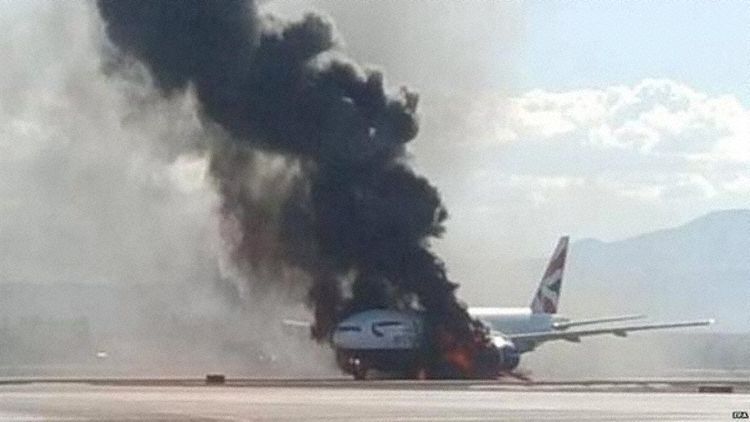 · 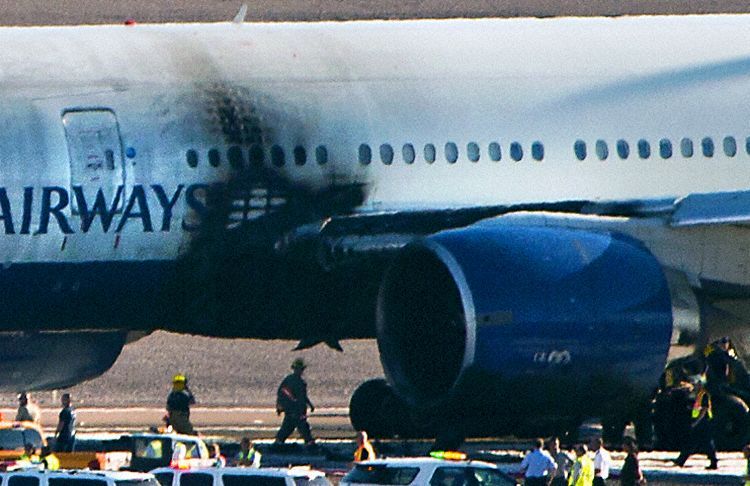 · 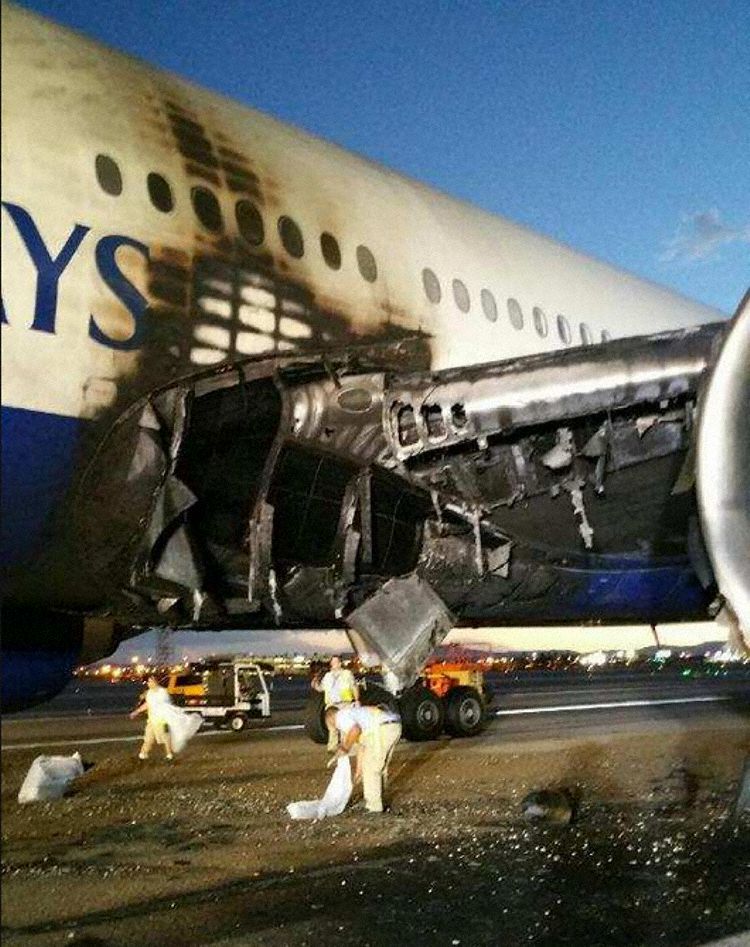 · 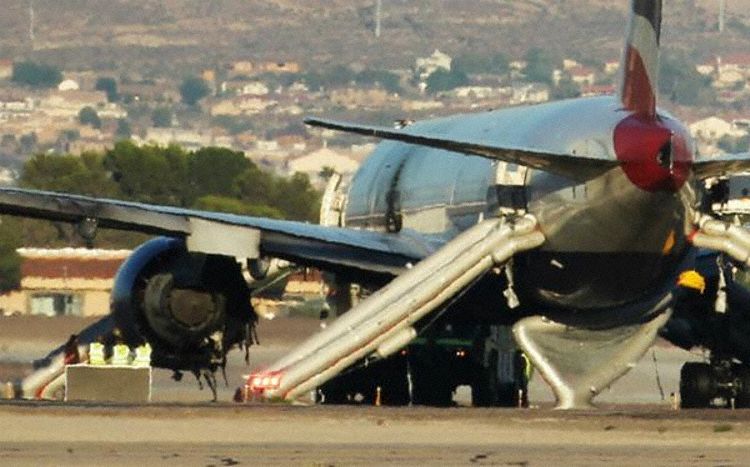 · 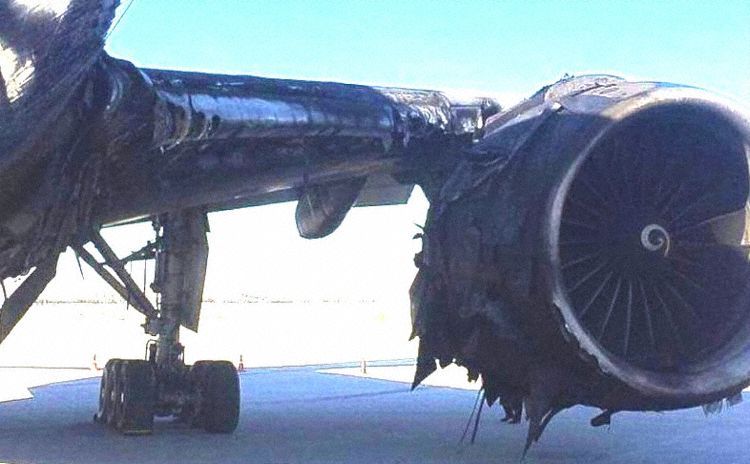 ·  ·
__________________ "Knowledge is often mistaken for intelligence. This is like mistaking a cup of milk for a cow" |