|
#1
●
09-01-2023, 07:24 AM
|
 ✝Mudderator from Hell✝ Poster Rank:10 e-mail Join Date: Oct 2006 Posts: 96,741
Contributions: 902
96,741Posts 544,069Thanked 10,377Quoted 479Mentioned 902Contrib. |
|
Prehistoric Bird, Once Thought Extinct, Returns to New Zealand Wild
The takahē: a large, flightless bird, that was believed for decades to be extinct. Eighteen of the birds were released in the Lake Whakatipu Waimāori valley, an alpine area of New Zealand’s South Island last week, on to slopes they had not been seen roaming for about 100 years. For Ngāi Tahu, the tribe to whom the lands belong, and who faced a long legal battle for their return, it is particularly significant, marking the return to the wild of the birds that their ancestors lived alongside, in lands that they had fought to regain. 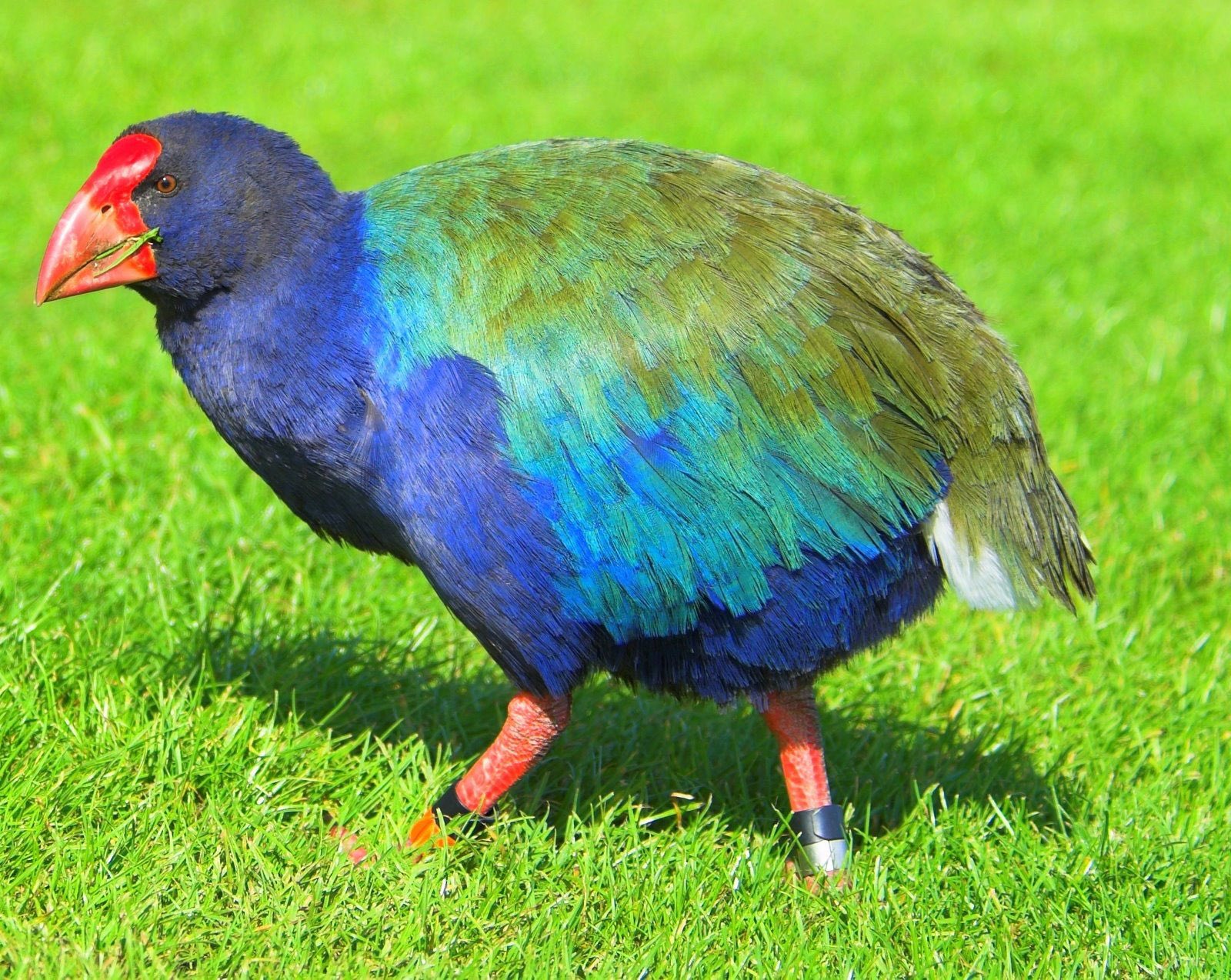 Takahē are unusual creatures. Like a number of New Zealand birds, they evolved without native land mammals surrounding them, and adapted to fill the ecosystem niches that mammals would occupy. They are flightless, stand at around 50cm tall, and live in the mountains. Their presence in Aotearoa dates back to at least the prehistoric Pleistocene era, according to fossil remains. “They’re almost prehistoric looking,” says Tūmai Cassidy, of Ngāi Tahu. “Very broad and bold.” Front-on, their bodies can appear almost perfectly spherical – coupled with the blue-green plumage, they look like a model planet Earth perched atop two long, bright red legs. “Someone once called us, the land of the birds that walk,” says O’Regan, a Ngāi Tahu rangatira (elder). “There are few things more beautiful than to watch these large birds galloping back into tussock lands where they haven’t walked for over a century.” In New Zealand, the return of wild takahē populations marks a cautiously celebrated conservation victory, and the return of one of the world’s rarest creatures. The birds had been formally declared extinct in 1898, their already-reduced population devastated by the arrival of European settlers’ animal companions: stoats, cats, ferrets and rats. After their rediscovery in 1948, their numbers are now at about 500, growing at about 8% a year. Initially, conservationists gathered and artificially incubated the eggs, to prevent them being eaten by predators. As they hatched, the chicks were fed and raised by workers wearing sock puppets with the birds’ distinctive red beaks. After switching to breeding the birds in captivity, the Department of Conservation (DOC) gradually introduced them to a few island sanctuaries and national parks, investing heavily in trapping and pest-elimination to try to protect the birds. “Trapping of stoats, ferrets and feral cats has knocked down predator numbers,” said DOC Takahē recovery operations manager Deidre Vercoe. “Continuing to keep them low … is crucial.” If the just-released pairs adjust to their new home, the hope is to release another seven birds in October and up to 10 juvenile takahē early next year. Vercoe was cautiously hopeful. “After decades of hard work to increase the takahē population, it’s rewarding to now be focusing on establishing more wild populations, but it comes with challenges – establishing new wild native species populations can take time and success is not guaranteed,” she said. Their work to sustain takahē is part of a far wider effort in New Zealand to protect its unique, threatened birds. The country is in the midst of a national effort to wipe out its worst introduced predators – rats, possums and stoats – by 2050. As trapping efforts have expanded, rare species are being re-introduced outside sanctuary fences: last year kiwi, the national birds, were reintroduced to wild spaces on the outskirts of the city for the first time in generations. |
|
#2
●
09-02-2023, 02:45 AM
|
 My Rank: MASTER GUNNERY SERGEANT Poster Rank:352 Manly Man Join Date: Sep 2017 Posts: 3,601 3,601Posts 12,427Thanked 700Quoted 0Mentioned 0Contrib. |
|
Re: Prehistoric Bird, Once Thought Extinct, Returns to New Zealand Wild
They look so cute running off.
|
|
#3
●
09-02-2023, 09:52 PM
|
 ✖ The Antique Christ ✖ Poster Rank:106 Gonzo Punk Join Date: Jan 2009 Posts: 15,478
Contributions: 62
15,478Posts 39,156Thanked 2,046Quoted 23Mentioned 62Contrib. |
|
Re: Prehistoric Bird, Once Thought Extinct, Returns to New Zealand Wild
I bet they taste like chicken.
|
|
#4
●
09-03-2023, 01:45 AM
|
| My Rank: MASTER GUNNERY SERGEANT Poster Rank:352 Manly Man Join Date: Sep 2017 Posts: 3,601 3,601Posts 12,427Thanked 700Quoted 0Mentioned 0Contrib. |
|
Re: Prehistoric Bird, Once Thought Extinct, Returns to New Zealand Wild
Like prehistoric chicken.
|
|
#5
●
09-03-2023, 04:29 PM
|
 ★ Legacy Member ★ Poster Rank:109 Secret Agent Join Date: Dec 2009 Posts: 14,883 14,883Posts 49,425Thanked 3,066Quoted 6Mentioned 0Contrib. |
|
Re: Prehistoric Bird, Once Thought Extinct, Returns to New Zealand Wild
How very cool…  Thanks for sharing this! |
|
#6
●
09-04-2023, 06:10 PM
|
 My Rank: MAJOR Poster Rank:198 male Join Date: Mar 2021 Posts: 7,757
Contributions: 1
7,757Posts 16,743Thanked 1,468Quoted 2Mentioned 1Contrib. |
|
Re: Prehistoric Bird, Once Thought Extinct, Returns to New Zealand Wild
Breaks my heart to think of the day the takahē learned that their parents were sock puppets.  |
|
#7
●
10-29-2023, 03:41 AM
|
 ☾ Administrator ☽ Poster Rank:75 ஜᎻᎬᎩᎾᏦᎪஜ Join Date: Dec 2011 Posts: 20,059
Contributions: 46
20,059Posts 80,248Thanked 7,118Quoted 200Mentioned 46Contrib. |
|
Re: Prehistoric Bird, Once Thought Extinct, Returns to New Zealand Wild
How did I miss this?  What a cool story! What a cool story!
__________________ 💜🧿See Human | Be Human🧿💜 (War Section Hashtags) |