|
#1
●
09-08-2013, 03:37 PM
|
 So Fucking Banned Poster Rank:342 Male Join Date: May 2010 Posts: 3,734
Contributions: 28
3,734Posts 3,223Thanked 32Quoted 1Mentioned 28Contrib. |
|
Lab Grown Sapphire
This Sapphire was created using the Czochralski process. That is, it was started with a seed of Sapphire crystal that was dipped in a crucible of molten Alumina and then slowly pulled upward as the crystal grew. I was sold the crystal as a remnant of a much larger boule. I was told it was part of a military research project exploring a specific doping recipe. I did examine it closely and it conformed to all other crystals created using that process. It even included the original starter crystal at it's apex. Since there was a fracture at the starting point I carefully ground that off and polished it so I could have a look inside and see what the internal structure looked like. There seemed to be two stopping points. One was shortly after the crystal had begun and resulted in a small cloud of mismatched crystal grain around that point. Later there seemed to be a pause in the growth about the middle of the crystal and resulted in a barely noticeable boundary in the matrix.. Other than that, it seemed almost flawless. I checked it in bright sunlight, incandescent, bright LED and black light under a magnifying glass. It has color changes in different lights. In bright sun you can see a purple glow in the stone. Under incandescent it's almost black with a few reflections tossed out. Under black light it becomes almost clear. So I wonder if it was made for some ultraviolet application. The cut is my own invention so it's really unorthodox. Please, no blame on the guy who did the actual work. He just tried to cooperate with me and he understood I was looking for something to be used in a pendant. I have to give him credit for doing a great job at interpreting my specifications to something he could actually do. You will notice that the light drops out severely in the bottom cut. My fault. Maybe that's why it's so dark under incandescent lighting. I do find it odd how it reacts with black light. Almost like it was made for that. These photos were taken in full sunlight. I'll try for some black light later. I'm not really wanting to recut this stone now but I might consider it at some later time. 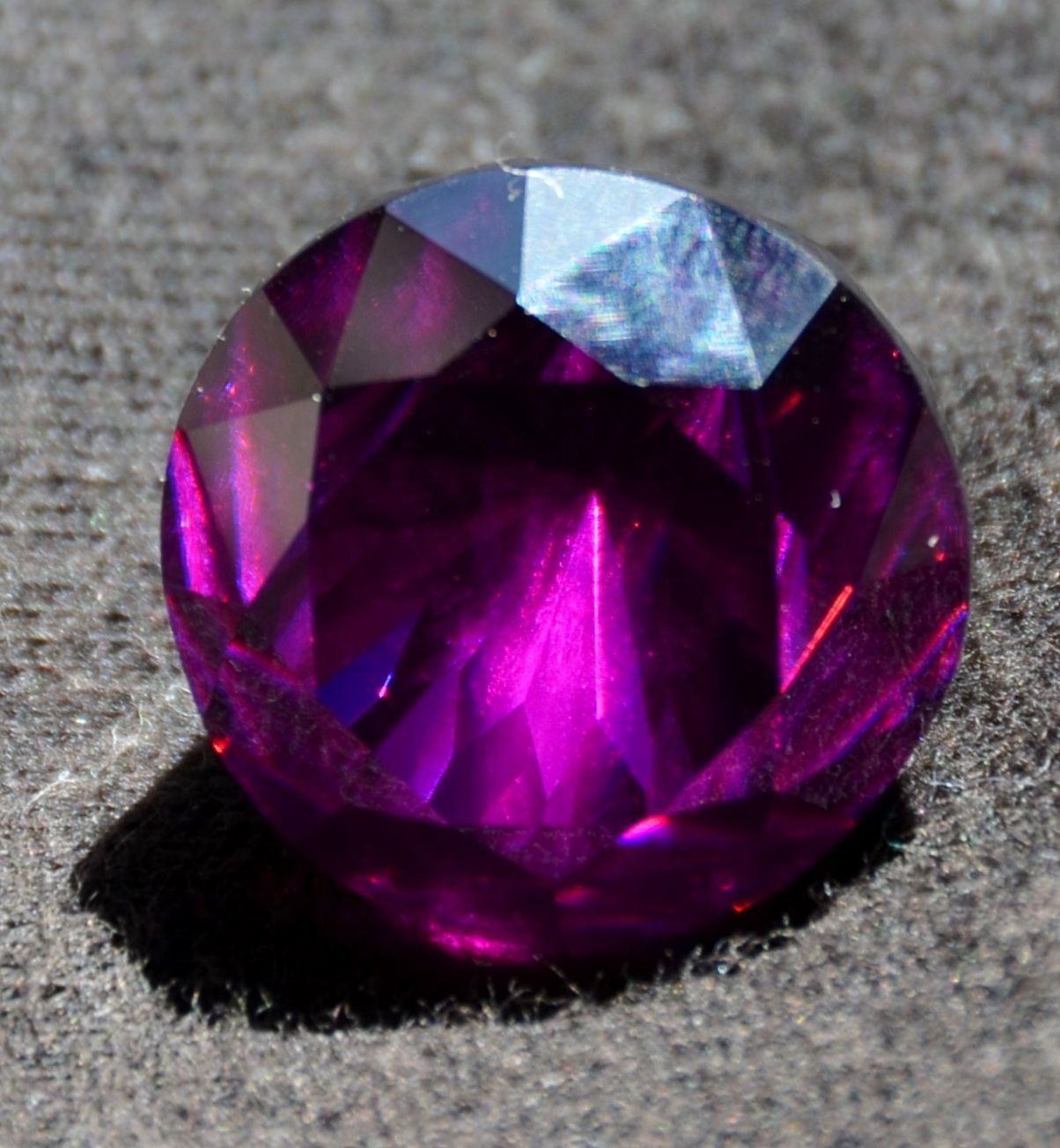 · 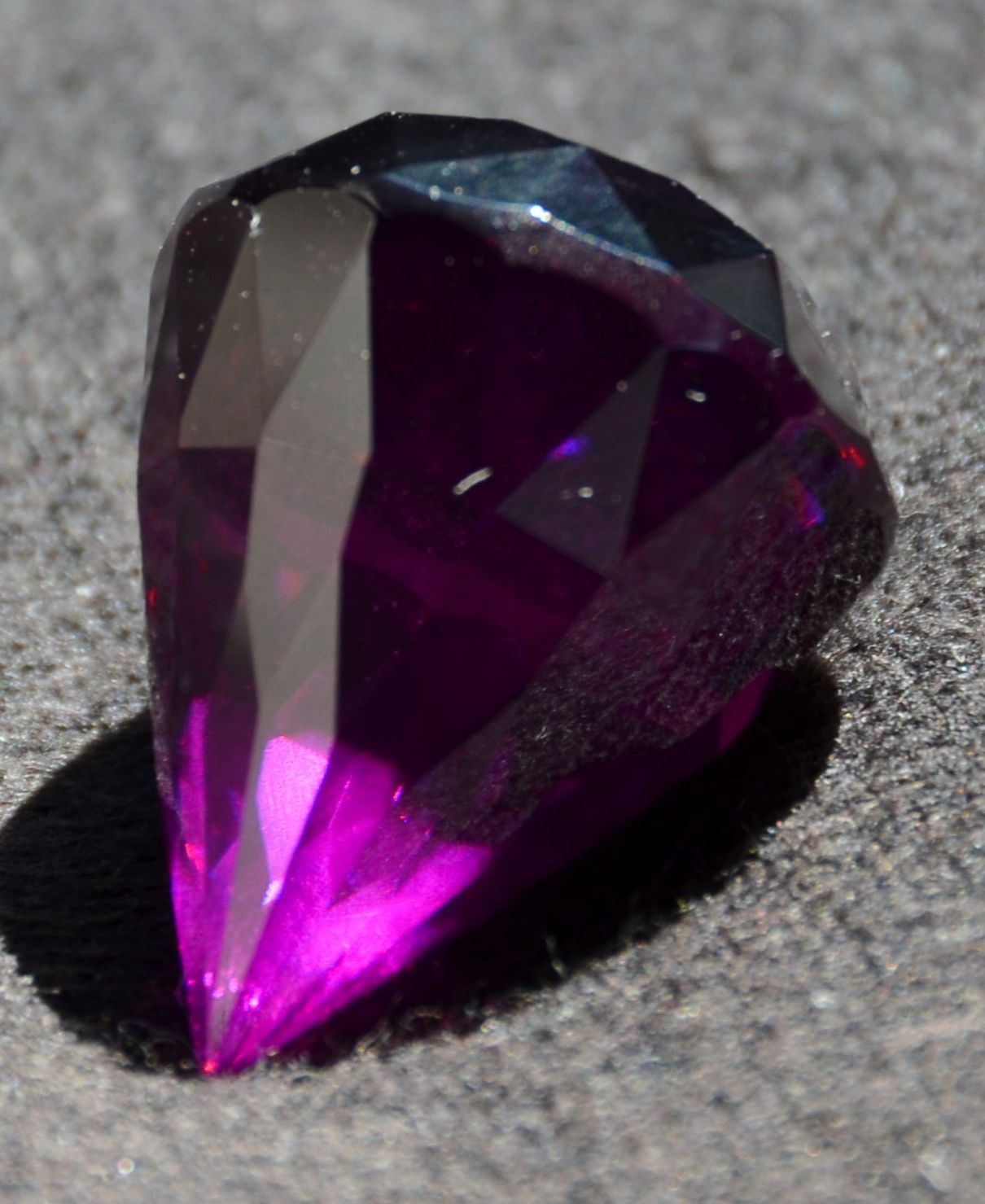 · 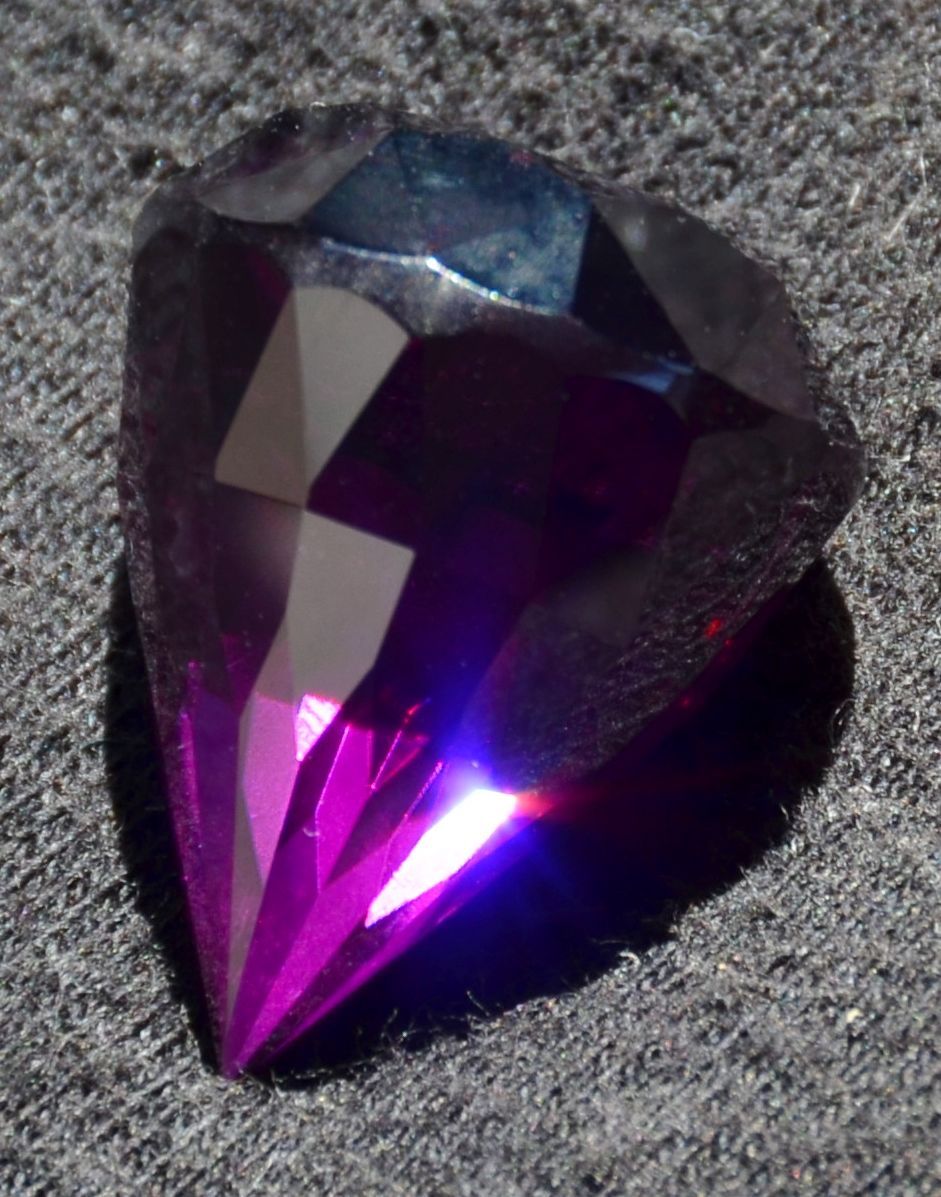 · 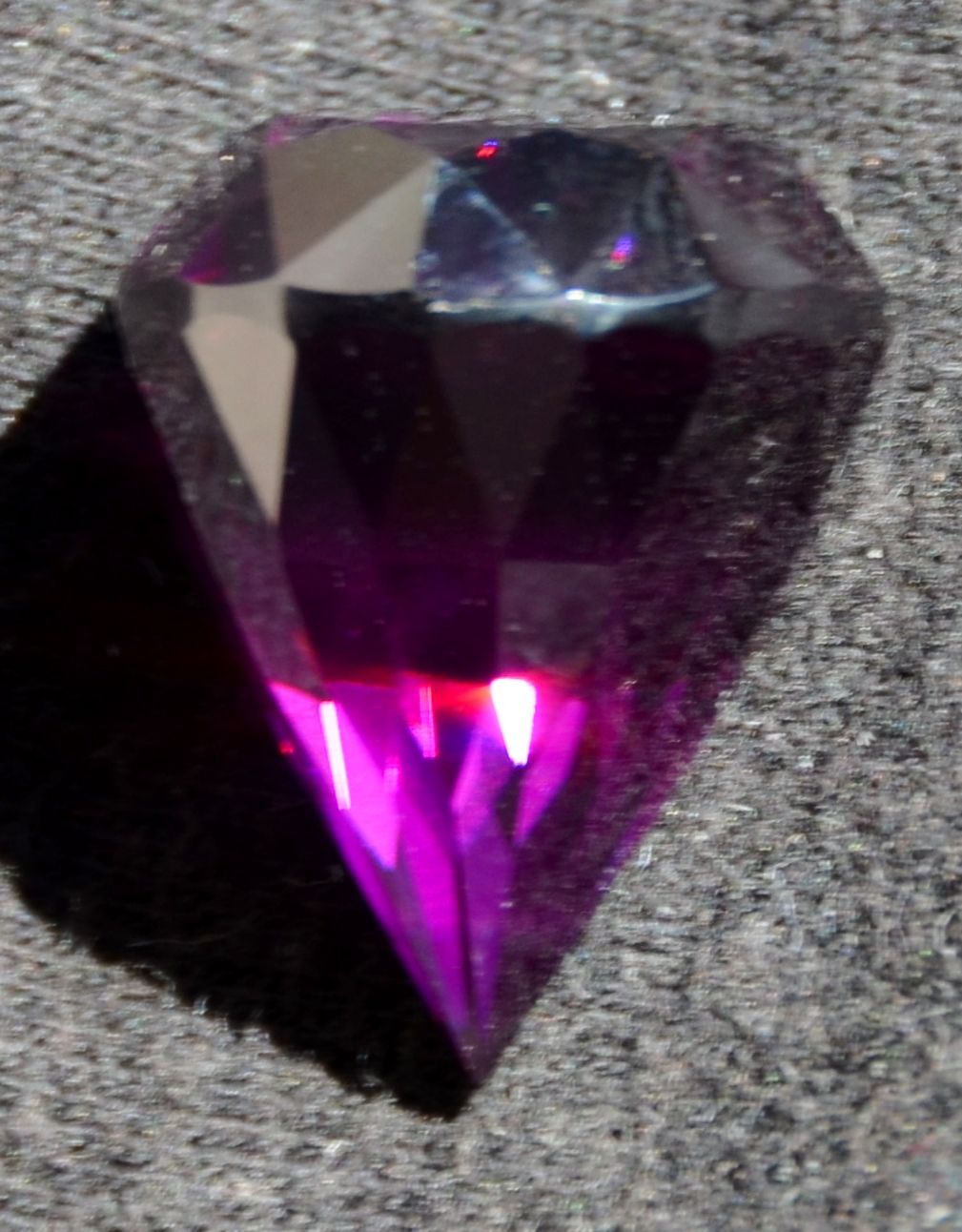 · 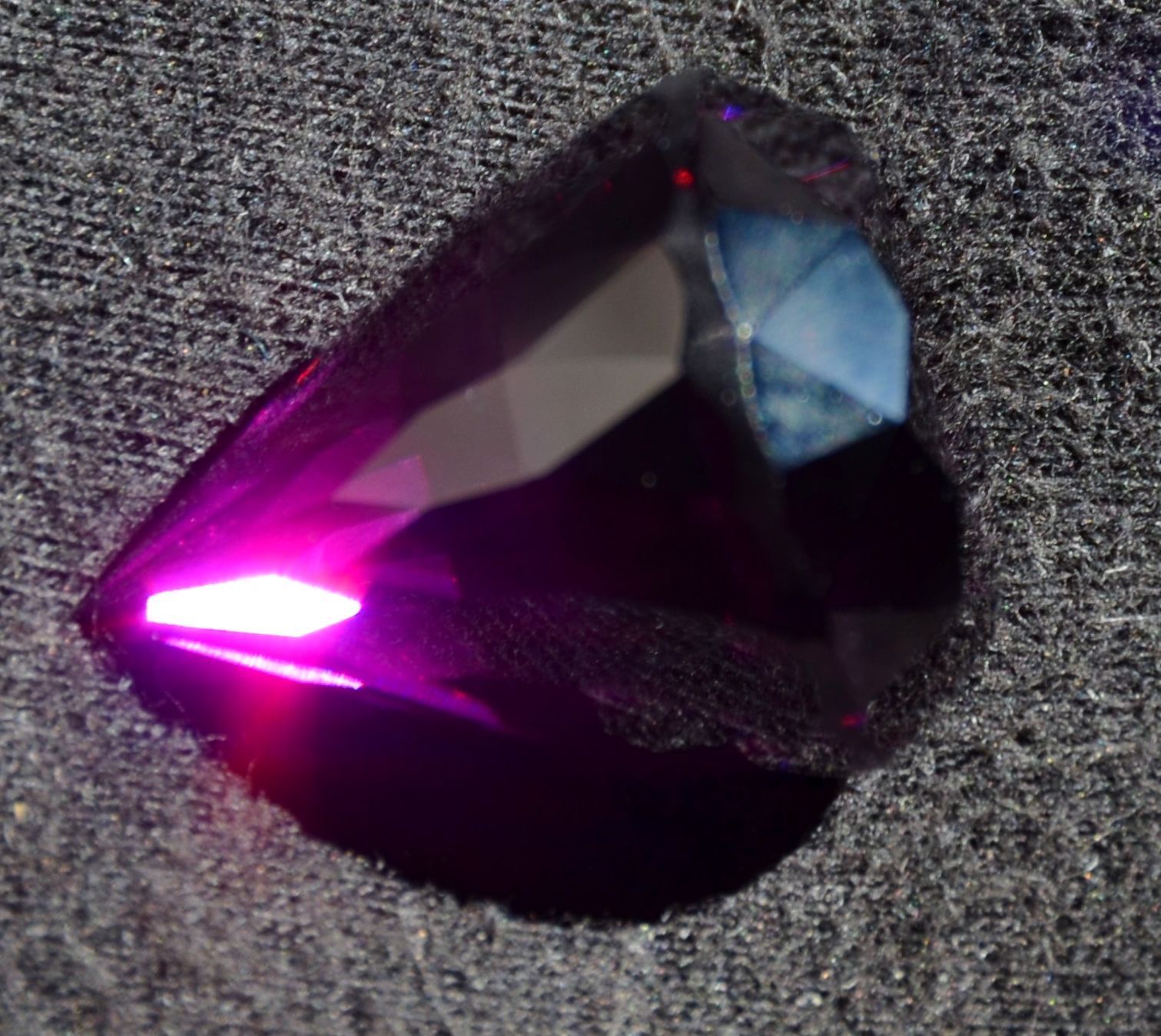 · 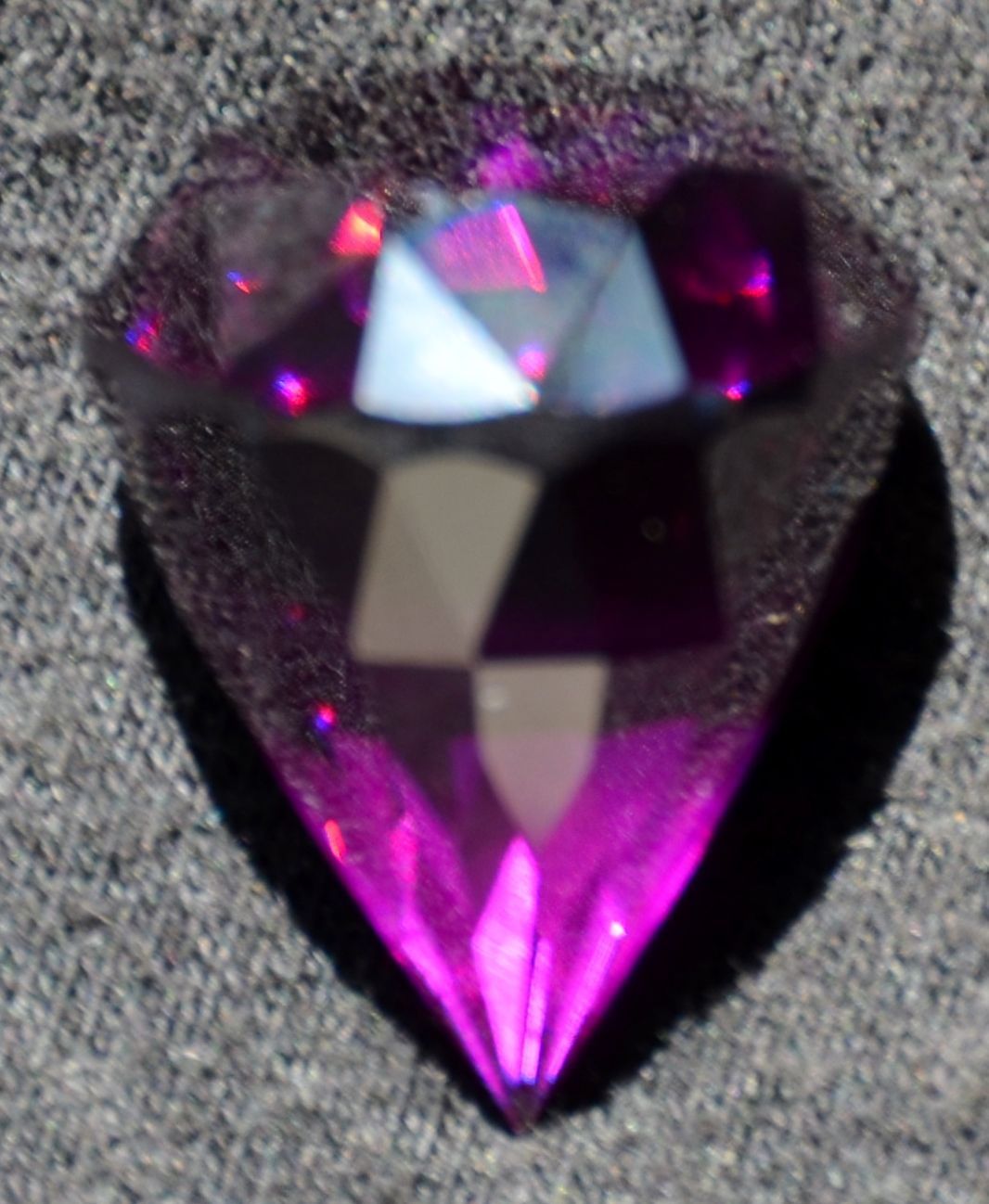 · |
|
#3
●
09-09-2013, 06:45 PM
|
| So Fucking Banned Poster Rank:342 Male Join Date: May 2010 Posts: 3,734
Contributions: 28
3,734Posts 3,223Thanked 32Quoted 1Mentioned 28Contrib. |
|
Re: Lab Grown Sapphire
nLab sapphires can be worse or better. Depending on the method and the reason they are created. The Verneuil method of creating Sapphire with powdered Alumina dropped onto a seed crystal with a torch to melt it produces the most stress and gas bubbles. It also has the most disorganized crystal matrix. So I don't prefer it. However, produced with a good system it has been used successfully in many applications. So it has merit. But in my opinion, not as a jewel. The Czochralski process seems to produce much better crystal matrix with less internal stress. It is slower but more similar to the natural processes. That is how this crystal was formed. What the rod was used for after it was cut off the boule I have no idea. I was just happy to get the remnant for a cheap price. I also took a nice aquamarine in the same lot that I had cut in a teardrop. I was happy to save about a third of that stone in the finished product. I thought it could be larger but the cutter had other ideas and wanted a perfect stone. I would of been happy to have the inclusions on a larger stone. Anyway, I'm happy with this jewel as well. As for the dirty war, the real dirty war is "natural" stones. If you have a stone then it is almost certainly heat treated or worse. Rubies are almost all heat treated. Some are glass filled as well to erase any feathers. Now that is a real dirty war. Also, the flux grown rubies are identical to "real" rubies and in fact reach a size and perfection unknown in nature. Yesterday I saw a manufactured ruby the size of a hen's egg. It goes for fractions of what a "natural" stone would sell for and you would never see one that size in nature. EVER. Of course I have seen some mega emeralds but they are freaks and opaque. Not even as good as high quality jade. |
|
#7
●
09-12-2013, 02:54 PM
|
| So Fucking Banned Poster Rank:342 Male Join Date: May 2010 Posts: 3,734
Contributions: 28
3,734Posts 3,223Thanked 32Quoted 1Mentioned 28Contrib. |
|
Re: Lab Grown Sapphire
You have a point. The lab created diamonds are now very good. And they have a new deposition technique that doesn't need high heat and pressure and makes even purer perfect diamonds. In fact, the first time it became successful they thought the diamond seeds had dissolved and when they stirred up the solution they discovered that the diamonds were so perfect they had not been able to see them until closer inspection. I am sure that soon the created specimens will surpass natural ones in size as well and make owning a large diamond affordable to the average person. The new deposition specimens are now almost identical in structure to natural specimens. But there will always be a difference on the atomic level. The lab grown ones are much cleaner and more ordered in crystal structure. They can spot them in the DeBeers lab. The new flux method for rubies is bound to cause an upset since they can make perfect specimens bigger than a hen's egg. I saw this on a video. It's amazing. |
|
#8
●
09-12-2013, 03:47 PM
|
| So Fucking Banned Poster Rank:342 Male Join Date: May 2010 Posts: 3,734
Contributions: 28
3,734Posts 3,223Thanked 32Quoted 1Mentioned 28Contrib. |
|
Re: Lab Grown Sapphire
Thanks. I like it too. I did kinda know it would leak light but I just wanted to see how it looks. Now I know. I may recut it to direct the light back up from the pavilion to the table. As you can see it drops a large portion of light out the pavilion.
|
|
#9
●
09-12-2013, 04:01 PM
|
| So Fucking Banned Poster Rank:342 Male Join Date: May 2010 Posts: 3,734
Contributions: 28
3,734Posts 3,223Thanked 32Quoted 1Mentioned 28Contrib. |
|
Re: Lab Grown Sapphire
I never was interested in stones as a child but one of my uncles bought out the tools from a collector. He got into rock polishing and I came by a few times. I watched various family members cutting stones as a hobby. Still didn't bite. Then one day I saw a rock by a drive way and it had a gem stone in it. Turned out it was an Indian Tear Drop. I didn't know a thing but I hand cut and polished a few facets in it just to see inside. Took hours and hours without anything more than sand paper. And if you know about gems, you know I went through a lot of sand paper. Gems are hard. From there I have gone online and read and listened to people. Occasionally I come across stones in the oddest places and times. Like this gem. I took it to a friend who cuts stones and he did the work for me. One year I bought an old van and stuck in part of the dash was a large Garnet. Unfortunately it was stolen along with my entire gem set. I used to have two boxes of cut gems I got at an auction. I even had a few small diamonds. So I guess you could say it's a hobby or interest. I think it's amazing when it's a natural stone. And it's a rush when you accidently come on a raw uncut stone and then get a good friend to cut it for you and find a gem inside. Really, it's just a stone until it's cut. And then it's a gem to be treasured. BTW, if you buy a "natural" gem at a franchise, the chance that it's actually natural is about next to 0. I don't trust them liars. Go in and look at what they have. What they call natural. Some will tell you the truth and some will play you. Personally, I do like a natural stone. I will buy natural stone if I like it and the price is right. But I have to look and look to make sure of what I have. The aqua marine I just got and had cut had marks of being in a river for a long time. It had definite wear patterns and signs of long term grinding. Then it had a couple feathers that showed some severe impact where it lost a few chips from two sides. Inside I found a couple small inclusions. So it was real and authentic and it's weak color confirmed to me it hadn't been treated with heat. So it was good. Unfortunately my friend decided he didn't want ANY inclusions since it had a nice space for a tear drop cut. So I am happy even though it lost almost two thirds of original weight. It is now a perfect cut. |