|
#1
●
02-02-2014, 01:43 PM
| ||||||||
 ♚ Legacy Gold Member ♚ Poster Rank:35 Female Join Date: Nov 2008 Posts: 43,396
Contributions: 204
Mentioned: 95 Post(s) Quoted: 2282 Post(s)
| ||||||||
|
Inside A Chicken
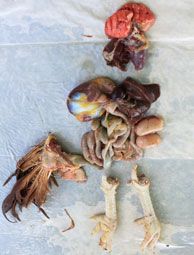 Complete set of (in this case) male chicken organs. These are what are removed from the oven-ready/frozen/fresh birds that we buy in stores/butchers. 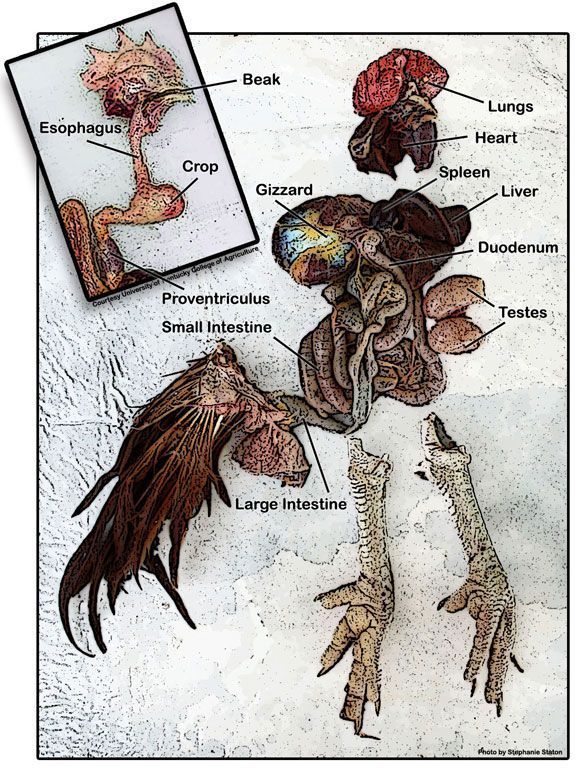 Diagram indicating what organ is what. (if you find a bag of giblets, see if you can recognise any  ) ) Beak Chickens use their beaks to pick up food. Here, saliva is secreted to moisten the food and make it easier to swallow because chickens have no teeth with which to chew  Esophagus The esophagus carries food from the chicken’s beak to the crop, located at the beginning of the digestive tract  Crop The crop is the part of the chicken’s digestive tract that stores food and water coming from the esophagus prior to digestion in the proventriculus. An empty crop signals hunger in the chicken’s brain 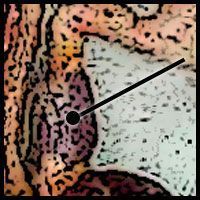 Proventriculus Digestion begins in the proventriculus, otherwise known as the chicken’s “true stomach.” Hydrochloric acid and digestive enzymes are added here to food coming from the crop, but the food is not yet ground up. The proventriculus passes food to the gizzard  Gizzard The gizzard, or ventriculus, grinds food traveling from the proventriculus, where digestion began. It contains a thick lining to protect the chicken’s muscles. Gizzards are edible to humans, offering a boost of protein and potassium  Lungs Two symmetrical lungs are connected to the chicken’s trachea. The lungs contain parabronchi, which allow air to flow through in one direction, and blood capillaries, where gases are exchanged. The lungs are small and don’t expand  Heart The heart pumps and supplies oxygen to the chicken’s muscles. It is edible to humans as a source of B vitamins, riboflavin and folate  Spleen The chicken’s spleen is a secondary lymphoid organ that functions as part of the immune system  Liver The chicken’s liver supplies bile to the duodenum via the gall bladder to allow the digestion of lipids and absorption of fat-soluble vitamins. Chicken liver is edible to humans, rich in vitamins A and B12, riboflavin and folate 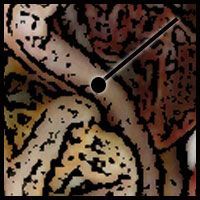 Duodenum The duodenum is the first part of the chicken’s small intestine. It receives digestive enzymes and bicarbonate from the pancreas and bile from the liver. Digestion is completed here before the food moves to the lower small intestine for nutrient absorption  Small Intestine Made of the lower small intestine and the duodenum, the small intestine is the part of the chicken’s digestive tract where vitamins are absorbed and digestion is completed. Although not a popular dish, chicken intestines are edible 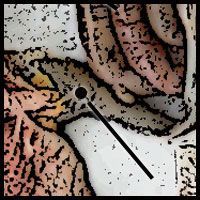 Large Intestine The large intestine, or colon, is the part of the chicken’s digestive tract where water is absorbed 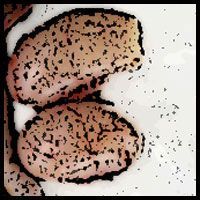 Testes Located along the chicken’s back near the kidneys, the testes are a male chicken’s reproductive glands. (Female chickens have an ovary located in the same area.) Testes are frequently eaten throughout Asia |
|
#4
●
02-02-2014, 07:16 PM
| ||||||||
| ♚ Legacy Gold Member ♚ Poster Rank:35 Female Join Date: Nov 2008 Posts: 43,396
Contributions: 204
Mentioned: 95 Post(s) Quoted: 2282 Post(s)
| ||||||||
|
Re: Inside A Chicken
Not forgetting the Chinese and their fondness for a nibble of chicken's feet. The world food superstore down nearby sells them in big bags  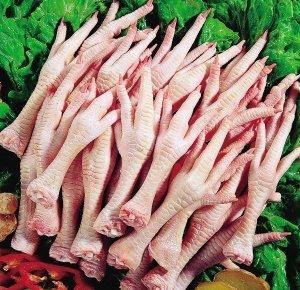 · |





 cool
cool