|
#1
●
08-01-2015, 10:11 PM
| ||||||||
 They Lied. There ALL LIES Poster Rank:305 <--We Did It. So Can You Join Date: Mar 2013 Posts: 4,213
Contributions: 48
Mentioned: 23 Post(s) Quoted: 894 Post(s)
| ||||||||
|
If the 1st Moon Landing Failed
The just in case speech
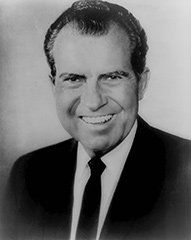
President Richard Nixon in the event of a disaster besetting Apollo 11. Fate has ordained that the men who went to the moon to explore in peace will stay on the moon to rest in peace. These brave men, Neil Armstrong and Edwin Aldrin, know that there is no hope for their recovery. But they also know that there is hope for mankind in their sacrifice. These two men are laying down their lives in mankind’s most noble goal: the search for truth and understanding. They will be mourned by their families and friends; they will be mourned by their nation; they will be mourned by the people of the world; they will be mourned by a Mother Earth that dared send two of her sons into the unknown. In their exploration, they stirred the people of the world to feel as one; in their sacrifice, they bind more tightly the brotherhood of man. In ancient days, men looked at stars and saw their heroes in the constellations. In modern times, we do much the same, but our heroes are epic men of flesh and blood. Others will follow, and surely find their way home. Man’s search will not be denied. But these men were the first, and they will remain the foremost in our hearts. For every human being who looks up at the moon in the nights to come will know that there is some corner of another world that is forever mankind. |
|
#2
●
09-01-2016, 11:30 PM
| ||||||||
| ♚ Legacy Gold Member ♚ Poster Rank:93 Male Join Date: Nov 2009 Posts: 17,012 Mentioned: 8 Post(s) Quoted: 4661 Post(s)
| ||||||||
|
Re: If the 1st Moon Landing Failed
Very interesting, I understand that Eisenhower also had 2 speeches written for the D-Day invasion. One if it was a success, and one if it failed and the troops had to be withdrawn. |
|
#3
●
09-02-2016, 12:18 AM
| ||||||||
| They Lied. There ALL LIES Poster Rank:305 <--We Did It. So Can You Join Date: Mar 2013 Posts: 4,213
Contributions: 48
Mentioned: 23 Post(s) Quoted: 894 Post(s)
| ||||||||
|
Re: If the 1st Moon Landing Failed
Message Drafted by General Eisenhower in Case the D-Day Invasion Failed and Photographs Taken on D-Day Background U.S. President Franklin D. Roosevelt, Soviet leader Joseph Stalin, and British Prime Minister Winston Churchill were responsible for leading their nations to victory and jointly planned strategies for the cooperation and eventual success of the Allied armed forces. Roosevelt and Churchill had already agreed early in the war that Germany must be stopped first if success was to be attained in the Pacific. They were repeatedly urged by Stalin to open a "second front" that would alleviate the enormous pressure that Germany's military was exerting on Russia. Large amounts of Soviet territory had been seized by the Germans, and the Soviet population had suffered terrible casualties from the relentless drive towards Moscow. Roosevelt and Churchill promised to invade Europe, but they could not deliver on their promise until many hurdles were overcome. Initially, the United States had far too few soldiers in England for the Allies to mount a successful cross-channel operation. Additionally, invading Europe from more than one point would make it harder for Hitler to resupply and reinforce his divisions. In July 1942 Churchill and Roosevelt decided on the goal of occupying North Africa as a springboard to a European invasion from the south. In November American and British forces under the command of U.S. General Dwight D. Eisenhower landed at three ports in French Morocco and Algeria. This surprise seizure of Casablanca, Oran, and Algiers came less than a week after the decisive British victory at El Alamein. The stage was set for the expulsion of the Germans from Tunisia in May 1943, the Allied invasion of Sicily and Italy later that summer, and the main assault on France the following year. Because of this success, Eisenhower was named commander of all Allied forces in Europe in 1943. When in February 1944 he was ordered to invade the continent, planning for "Operation Overlord" had been under way for about a year. Hundreds of thousands of troops from the United States, Great Britain, France,Canada, and other nations were assembled in southern England and intensively trained for the complicated amphibious action against Normandy. In addition to the troops, supplies, ships, and planes were also gathered. One photograph featured with this lesson (Document 2) shows some of the equipment that was stockpiled in this manner. Countless details about weather, topography, and the German forces in France had to be learned before Overlord could be launched in 1944. General Eisenhower's experience and the Allied troops' preparations were finally put to the test on the morning of June 6, 1944. An invasion force of 4,000 ships, 11,000 planes, and nearly three million soldiers, marines, airmen, and sailors was assembled in England for the assault. Eisenhower's doubts about success in the face of a highly-defended and well-prepared enemy led him to consider what would happen if the invasion of Normandy failed. If the Allies did not secure a strong foothold on D-Day, they would be ordered into a full retreat, and he would be forced to make public the message he drafted for such an occasion (Document 1). As the attack began, Allied troops did confront formidable obstacles. Germany had thousands of soldiers dug into bunkers, defended by artillery, mines, tangled barbed wire, machine guns, and other hazards to prevent landing craft from coming ashore. Document 3 featured with this lesson shows some of the ferocity of the attack they faced. About 4,900 U.S. troops were killed on D-Day, but by the end of the day 155,000 Allied troops were ashore and in control of 80 square miles of the French coast. Eisenhower's letter was not needed, because D-Day was a success, opening Europe to the Allies and a German surrender less than a year later. |
|
#5
●
09-03-2016, 11:24 PM
| ||||||||
 My Rank: SERGEANT Poster Rank:1054 Male Join Date: Dec 2013 Posts: 635 Mentioned: 2 Post(s) Quoted: 302 Post(s)
| ||||||||
|
Re: If the 1st Moon Landing Failed
If you enjoy talking about the subject, as I see you put some work into your post there. I enjoyed browsing it and you have a decent idea of what went on with Operation Overlord, so if you would like to discuss it and talk about that and all the aspects and variables of the second world war with all of its enormous history and greatness, I invite you to come to AxisHistory Forums, we are large website dedicated to that part of the second world war but everything WWII is covered there, not just the Axis. I spend a lot of time there learning and discussing the second world war, so maybe you'd enjoy it. Just saying  |