|
#1
●
09-10-2014, 06:56 PM
| ||||||||
 They Lied. There ALL LIES Poster Rank:305 <--We Did It. So Can You Join Date: Mar 2013 Posts: 4,213
Contributions: 48
Mentioned: 23 Post(s) Quoted: 894 Post(s)
| ||||||||
|
How 11 Friends Ages 14-55 Kill a Freind
The sound of a dog barking around noon wakes Jane Doe, who rose that Sunday, March 17, to peer out the front screen door of her home in the 1100 block of West Donovan Road in Santa Maria. Coming briskly up the walkway is a man she knows as Ramon “Crazy Ray” Maldonado, a known Santa Maria North West gang member. Following him is a line of three men she does not know. All of them wear the same noticeable combination of gloves — a blue latex pair beneath black or dark blue cotton gloves. They walk in uninvited, joined shortly after by four more men and a woman wearing the same gloves. Crazy Ray instructs Jane Doe and her brother, John Doe, to sit on a couch in the living room. He orders Jane Doe to lure her friend, 28-year-old Anthony Ibarra, over to the one-story house in the neighborhood of single-family homes. The ruse is set as Jane Doe tells Ibarra, a known drug dealer, that she wants to buy some methamphetamine, something she has done in the past. She knows, however, that Ibarra is in trouble with the gang for not paying his “drug taxes.” On top of not giving a percentage of his drugs sales to the gang — he owed at least $1,200 — Ibarra also has sold drugs from the gang without paying for them. Fearing for her life, Jane Doe makes the call before Verenisa “Veri” Aviles snatches the phone, imitates her voice and sets up the meeting. Jane Doe and her brother are then shoved into side bedrooms. 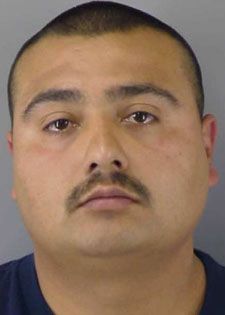 this is the dead dude. this is the dead dude.Crazy Ray, the local gang tax collector, sends his then-14-year-old son, Ramon “Little Ray” Maldonado Jr., and Robert “Tito” Sosa (the only person Jane Doe knows) on an errand, and they leave. Everyone else is hiding when Ibarra arrives, knocks on the door and enters when no one answers his calls. “What’s up, mother f*****?” Crazy Ray says, reminding Ibarra of his debt. Initial confusion turns to fear as Crazy Ray stabs Ibarra with what looks like a knife, eliciting a scream. The others join in the kicking and beating as Ibarra begs for time to explain. He never gets the chance. 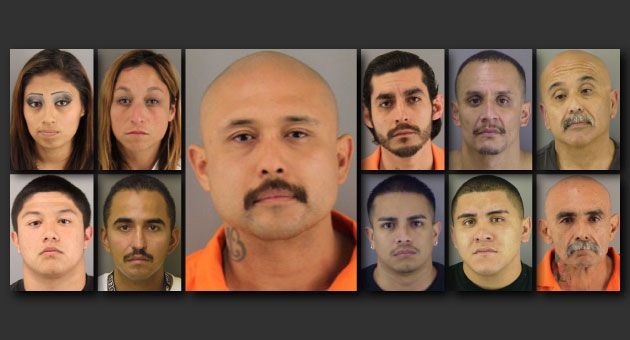 • • • Moments later, Ibarra is walked down a hallway to the back master bedroom, where Crazy Ray orders him to take off his clothes. Ibarra is forced to sing the “A, B, C’s” in Spanish — a language his friend, Jane Doe, knows he doesn’t speak — as Crazy Ray accuses him of sleeping with his girlfriend. Reyes “Pumpkin” Gonzalez returns to the living room, making sure Jane Doe and her brother don’t try to leave. Jane Doe hears someone pushed to the wall. Someone removes a belt from pants. Amid grunting and taunting, Ibarra begs for his life. “Everybody get a piece of that,” Crazy Ray says. Stomping, kicking and punching ensue. Over a 20-minute period — that to witnesses feels like forever — assailants stab Ibarra 11 times. Some of the wounds are inflicted with a Phillips screwdriver, and some come after his heart stops beating due to blood loss. Then silence.  Jane Doe and her brother are moved back to the sofa, and Little Ray and Sosa return just before Crazy Ray emerges from the bedroom. He takes off his shirt, caked in sweat. Crazy Ray tells the witnesses that they will meet a similar fate if they tell anyone what happened. He offers to pay Jane Doe for the blood-soaked carpet, new couches and cleanup costs. He thanks them for the use of the house. Then Crazy Ray announces that he and his son must leave to attend church, where they are supposed to be for St. Patrick’s Day. He lifts his pants leg to reveal a GPS tracking bracelet on his ankle stemming from an unrelated criminal matter. His father, David “Pops” Maldonado, leaves soon after with Aviles, who has been in a bathroom for the duration of the incident. Those who don’t leave — Sosa, Santos “Little Tuffy” Sauceda, Anthony Solis and Jason Castillo — are left to deal with the mess. • • • The cleanup crew gets to work drinking beer, listening to music, even dancing. Sosa, who is in charge of the witnesses, takes Jane Doe with him to Crazy Ray’s residence, and tells her brother to stay put and to make sure no one else enters the house. A man who rents a room in Jane Doe’s home returns as she is leaving, and is told that there was a fight. Police are involved, Sosa lies, and the renter needs to find somewhere else to stay for the night. At Crazy Ray’s house, his girlfriend, Carmen Cardenas, is cooking, and everyone else is partying and doing drugs. Pedro Torres Jr. arrives and speaks with Crazy Ray before leaving. Terrified, Jane Doe sets an early alarm and escapes Monday morning to a relative’s house, where she hides out with her brother, who has also fled. They don’t call the police. • • • On the morning of Monday, March 18, the man who rents a room from Jane Doe returns to the residence before heading to work at Kmart. No one seems to be home. He can see someone lying on the floor of the master bedroom, and he grabs a flashlight for a closer look. The beam shines on the bloody face and neck of a dead person with injuries from head to toe. The renter also doesn’t call police. Instead, he goes to work but later becomes so disturbed by what he saw that he breaks down and tells his manager what happened. He is driven to the Santa Maria police station, and officers are dispatched to the Donovan Road residence. What they find is blood. Blood on the walls of the master bedroom. Blood soaked so far through the carpet that detectives are tracking red footprints through the house — more than 24 hours after the murder was committed. So much blood that somebody must have died in the room, except police don’t find a body. They see the blade of a knife with a broken handle, a Phillips screwdriver, and blue latex and cotton gloves thrown in the bushes. Inside is a garbage bag filled with bloody clothes. • • • Earlier that same Monday, at around 10 a.m., sheriff’s Detective Neil Gowing is conducting undercover surveillance for an unrelated narcotics investigation in the parking lot of Rancho Bowl, 128 E. Donovan Road, about a mile to the east of the murder scene. A car approaches the vehicle he has been monitoring. Gowing recognizes Torres, Crazy Ray’s associate, but isn’t sure of his name. Torres shares a brief exchange before leaving in his car right behind a U-Haul truck that has arrived with him. Gowing decides to follow, but loses the vehicles briefly after Torres runs a red light. He spots the U-Haul again as it backs up to the Donovan Road house. Making note of the address, Gowing returns to the station and identifies Torres from records shortly before hearing on the radio that Santa Maria police are investigating a possible homicide. Out of curiosity, Gowing calls police detectives to see what other details they might have. He hangs up before remembering the U-Haul and wonders if it has anything to do with the case. A detective confirms his suspicions when he texts Gowing the address of the crime scene. Police use GPS to locate, or “ping,” a cell phone number in the system for Torres, who on Monday afternoon is in the parking lot of the emergency room at Marian Regional Medical Center. Torres is waiting for Cardenas; she is inside with her young son who is being treated after putting his fingers too close to an oscillating fan. Detectives put surveillance on Torres and decide to take him and Cardenas in for questioning when they learn they’re waiting for Crazy Ray to arrive. Crazy Ray is located via his GPS bracelet and they bring him in, too. The tracking device shows Crazy Ray at the Donovan residence on Sunday afternoon, and when the U-Haul would have been there Monday morning. Detectives still don’t have the truck or a body. An exhaustive search for the U-Haul continues into the morning of Tuesday, March 19. On his own, Gowing scours the streets for nearly three hours before deciding to return to the station. While on his way back, he finally gets a break, passing a U-Haul parked on a residential street in Orcutt. The license plate matches a missing truck rented under Cardenas’ name. Blood is visible on the bumper, and a lock is on the back door. Gowing requests a police unit that can cut the lock, and is the detective who opens the door to make sure no one inside needs help. A lifeless leg and foot are visible beneath blankets and other furniture. The man does not have a pulse, but Gowing observes a tattoo across his back that reads, “Ibarra.” • • • Most of the gang assailants deny involvement during initial interviews with police, but eventually change their stories to admit having been at the Donovan Road residence at some point during the incident. They all downplay their roles. Crazy Ray is the only suspect who appears unafraid during questioning. He nods when asked if he knows anything about Ibarra’s murder. Then he chuckles, and asks for a cigarette. ......... It’s been said that dead men tell no tales, but days after Anthony Ibarra was killed, his battered body gave investigators a disturbing account of his slow and deliberately painful death at the hands of his fellow Santa Maria street-gang members. The gruesome details of his injuries and slaying are included in the transcript of the criminal grand jury hearings that led to the indictments of 11 people in connection with the torture and murder of Ibarra, 28, on March 17, 2013. Ibarra, whose body was discovered March 19 in the back of a U-Haul truck abandoned on an Orcutt street. After several days of testimony, 11 people were indicted by the 19-member grand jury on charges including murder, conspiracy, torture, kidnapping and gang enhancements. Prosecutors have decided not to seek the death penalty, but several defendants face life in prison without parole if convicted. Under methodical questioning by Senior Deputy District Attorney Ann Bramsen, Anthony gave the grand jurors a blow-by-blow accounting of Ibarra’s injuries, many of which apparently were intended to inflict as much pain as possible on the drug dealer, whom the gang believed had cheated them on his “drug taxes.” Ibarra ultimately bled to death after being stabbed in the neck with what almost certainly was a Phillips-head screwdriver, Anthony testified. Ibarra suffered five such wounds to his neck, Anthony testified. One or two of the stabbings punctured his jugular vein, which caused nearly all of the blood in his body to slowly drain out onto the floor of a house in the 1100 block of West Donovan Road in northwest Santa Maria. “He has what I feel is a lethal injury in his neck,” Anthony testified. “He does not have a lot of blood in his body (at the time of autopsy), he does not have a lot of lividity (pooling of blood in the body after death). “So, therefore, where did all that blood go? Obviously it leaked out, and he died from blood loss.” Police who converged on the home where Ibarra was attacked described a rear bedroom with bloody walls, and with carpet so saturated with blood that detectives couldn’t help tracking it through the single-story house. “You can state with reasonable medical certainty that the jugular vein was damaged by whatever it was that punctured through that skin, and that that was a very significant injury because the jugular vein is responsible for taking blood from the brain back toward the heart so it can be recirculated and re-oxygenated,” Anthony testified. He explained that the jugular vein is a “low-pressure” blood vessel, compared to the carotid artery, which is high pressure. “Unlike the movies, there was no explosion of blood, there was no chicken with their head cut off from this kind of an injury ...,” Anthony testified. “What happened is blood would ooze from this kind of an injury ... “It is going to be a continuous flow of blood out of those holes and into the surrounding soft tissue, and out along the surface of the neck ... It is very significant because it is unrelenting.” Eventually, nearly all the blood leaked out of Ibarra’s body, a process Anthony said could have taken 30 minutes to an hour or more. Before, during and after, prosecutors say, Ibarra was assaulted in numerous ways, including being beaten, kicked, stabbed, struck with a belt, and cut with broken glass. In addition to the neck wounds, the screwdriver was used to inflict numerous less-serious injuries to various parts of Ibarra’s body, Anthony said. The puncture wounds “looked like little crosses, every one of them,” he testified. Pointing to the autopsy photos, Anthony said, “You can see the cross shape. You can see how the edges are irregular, and that day when I saw those injuries, the first thing I thought of was Phillips head screwdriver.” Ibarra suffered 11 stab wounds that Anthony told the jury were inflicted using a single-edge implement, such as a pocket knife, kitchen knife or steak knife. The blade, he said, would have to have been at least 3 inches long. One wound, inflicted early in the attack, caused one of Ibarra’s lungs to collapse, making it more difficult for him to fight back against his assailants. All the stab wounds undoubtedly were painful, Anthony said, but none would likely have caused his death. Ibarra also suffered a number of more-superficial stab wounds that Anthony said appeared to have been inflicted just with the tip of a knife. “These are a whole series of injuries that I associate with a knife, but it is a knife that is just cutting on the surface,” he said. A pair of 7-inch-long parallel wounds found on Ibarra’s back were consistent with him being cut by a piece of broken glass while he was seated in a chair, Anthony testified. The condition of Ibarra’s body led Anthony to believe that he was killed before being placed in the U-Haul truck. He also indicated that some of the injuries occurred after Ibarra had died, possibly as he was being dragged from the house and into the rental truck. Toxicology tests revealed that Ibarra had a large amount of methamphetamine in his system at the time of this death. Because meth is a stimulant, this could have caused him to bleed out faster, Anthony testified, but also could have prolonged his suffering. “Since it is not a sedative, it is not going to put him to sleep, it is going to keep him awake,” he said. “So he is going to be probably more, rather than less, sensitive to inflicted injury.” Part of Anthony’s testimony goes to a key aspect of the prosecution’s case — the allegation that he was tortured prior to being killed. Bramsen repeatedly asked whether a particular wound would have been fatal, and also how much pain Ibarra would have felt. She also asked if Ibarra could have survived the injury to his jugular vein with appropriate medical treatment. “Yes,” Anthony said, “because we are dealing with an injury that with sufficient pressure against it ,and then getting him to a trauma center, they could replace the blood that is coming out, they could then go in and repair the injury and a person can be saved.” But evidence in the case indicates no one called 9-1-1. No one applied pressure. No one took Ibarra to the hospital. Saving him clearly was not part of the plan. As a member of a criminal street gang, Anthony Ibarra no doubt was familiar with society’s laws and the repercussions of breaking them. He was no stranger to California’s criminal-justice system. But Ibarra also was subject to “laws” of a different sort — those imposed and enforced by a gang hierarchy that starts at the local level and leads right into the state prison system. Santa Barbara County prosecutors believe it was that phantom legal system that led to Ibarra, 28, being lured to a Santa Maria house, where he was tortured and killed by gang members for failing to pay “drug taxes.” Ironically, a main reason for Ibarra to share a percentage of his drug sales profits with the gang was for protection. This structure and motivation are discussed at length in the transcript of the criminal grand jury hearings that led to the indictments of 11 people in connection with Ibarra’s March 17, 2013, murder at a nondescript one-story house in the 1100 block of West Donovan Road. The 932-page transcript of the proceedings, obtained by Noozhawk in partnership with KEYT News, includes testimony from Detective Michael Parker, lead investigator for the Santa Maria Police Department’s gang unit. Although parts of the document were redacted to protect the safety of four civilian witnesses, Parker is able to paint a clear picture of why 11 individuals associated with the Surenos street gang — more specifically, Santa Maria’s North West street gang — would silence an associate for failing to follow rules that have governed gang members for decades. The tale is one involving respect and reputation — two things that mean life or death in the organized, business world of criminal street gangs, Parker explained under questioning by Senior Deputy District Attorney Ann Bramsen. Ibarra, unfortunately, was found lacking on both accounts. • • • Gangs thrive because they make money and commit violent, criminal acts, perpetuating the fear that earns their members respect and upstanding reputations. How the framework of today’s gang culture originated depends on whom you talk to. The most widespread version of the story claims the criminal organization began as a startup in a California prison in the 1950s, when violent prisoners formed a group called the Mexican Mafia, according to Parker. Gangs quickly expanded to the entire system, and those who adhered to the membership rules — instilling fear and refusing to cooperate with law enforcement as key cornerstones — were called Surenos, which is Spanish for southern. All Hispanic gangs in Southern California, including the North West in Santa Maria (started in the 1970s) and others in Santa Barbara County, are bound by the rules of the Mexican Mafia, Parker explained. Over time, prison rules spilled out onto the streets, with taxes imposed on criminal activities that occur within a gang’s territory among them. “Taxing is money that was given to representatives of the gang for the honor of selling drugs,” Parker said. “So if you were a drug dealer and gang member, you are expected to give a part of your proceeds to the gang at large for the honor of dealing drugs, and for the protection for dealing drugs, and if you don’t give that, there are penalties and punishment for not providing that money.” Whether gangs began on the streets or in prison reminds Santa Barbara police Sgt. Mike Lazarus of the which-came-first, “chicken and the egg” argument. In either case, the strong connection between incarcerated and at-large gang members is well documented, said Lazarus, an SBPD gang unit detective. In a line of work in which murder can be considered a mere cost of doing business, gang members bank on that guarantee of protection when they inevitably end up in prison for committing crimes that further solidifies their reputations. “If you decide not to pay those taxes, you may get away for a while on the streets, but you are a criminal,” Parker explained to the grand jury. “You are going to end up in the state prison system, and it is the Mexican Mafia and their friends who control ... how you are going to be received once you get there. “If you have a reputation that you have broken all the rules, you haven’t paid your taxes, you have cooperated with law enforcement, or done other things to break the rules, they are going to punish you, and these punishments are often serious injury or death.” • • • Investigators believe Ibarra owed at least $1,200 in back taxes to the Surenos gang in Santa Maria, including an incident in which he sold drugs from the gang without paying for them. In the weeks prior to Ibarra’s death, Parker said, Ramon “Crazy Ray” Maldonado, the local Surenos tax collector, put a “flag out” on Ibarra — meaning he wasn’t supposed to buy or sell drugs in the county until his debt was paid. But Parker said Ibarra continued to sell drugs, a move that could easily have been interpreted in the gang world as disrespect. If left unchecked, the blatant disregard could also have damaged the reputation of Crazy Ray, who was supposed to give the drug money to another Surenos gang member in Santa Maria. That gang member pays the tax collector for the county, who then gets the money to a Mexican Mafia member based in Riverside. “Reputation is how that individual is viewed by members of his own gang, members of rival gangs, the police and the public,” Parker said. “Reputation is behind a lot of the violence involved in gangs, whether it is an insult to somebody’s reputation or protecting their own reputation.” Prosecutors say Crazy Ray was the ringleader in Ibarra’s homicide. He is what Parker referred to as “shot caller,” a known gang member who commanded a higher level of respect because of his known willingness to commit violent crime. Parker compared Ibarra’s actions to an ordinary citizen evading the Internal Revenue Serivice. “We all pay our own taxes because we are afraid the IRS or some other government agency is going to come after us,” he said. “People who don’t pay taxes are not afraid of the IRS coming after them. “Similar in the gang world, you pay your taxes because you are afraid that if you don’t pay your taxes, there is going to be a consequence. And if you are not paying your taxes, you are basically saying ‘I am not afraid of this individual’s response. I am not afraid of what they can do to me.’” Ibarra’s death seems to have essentially been used as currency to square his debt and to continue cultivating the fear that keeps gangs in control. • • • Reasons that could explain why 11 individuals, ranging in age from 14 to 55, would so willingly comply with such gruesome orders are likely as varied as the members themselves, Lazarus told Noozhawk, speaking in generalities about gang culture. Loyalty, peer pressure, financial gain and fear are among common incentives for individuals who often use the gang as a substitute for family, he said. Members constantly “put in work” — a term used to describe the criminal activities associates take part in — by doing something as small as leaving prominent graffiti on claimed territory to commanding respect or loitering in a public space to intimidate locals. “It’s not a structure like a normal work environment,” said Lazarus, noting that members of the public help displace some gang activity when they use community spaces. Participating in a murder that furthers the efforts of a gang would help solidify a member’s reputation, he said. A calculated homicide could even earn gang members new status symbols — a new tattoo or the honor of running drugs or collecting taxes among them. What the 11 people charged with Ibarra’s homicide will gain seems much more dubious. One very real possibility is a prison term of life without parole. ........................... Eleven people face charges in connection with the March 17, 2013, torture and murder and torture of Anthony Ibarra, 28, of Santa Maria. The suspects include: » Ramon “Crazy Ray” Maldonado, 37, known Santa Maria gang member and local drug tax collector » Reyes “Pumpkin” Gonzales, 42, of Guadalupe, known gang member » Santos “Little Tuffy” Sauceda, 33, known Santa Maria gang member » Robert “Tito” or “Tru” Sosa, 19, known Santa Maria gang member » David “Pops” Maldonado, 55, of Santa Maria, Crazy Ray’s father, gang associate » Anthony “A.J.” Solis, 28, of Santa Maria, gang associate » Ramon “Little Ray” Maldonado Jr., 15, Crazy Ray’s son, gang associate » Jason Castillo, 29, gang associate » Verenisa “Veri” Aviles, 19, of Santa Maria, gang associate » Carmen Cardenas, 28, Crazy Ray’s girlfriend, gang associate, accessory after the fact » Pedro Torres Jr., 54, gang associate, accessory after the fact ............................... A criminal grand jury handed down indictments Wednesday against nine people who prosecutors say are responsible for the brutal torture and slaying of a Santa Maria gang member earlier this year. Santa Barbara County District Attorney Joyce Dudley announced the indictments Thursday, along with her decision not to seek the death penalty against any of those accused in the torture and killing of Anthony Ibarra. Indicted for murder and conspiracy to commit murder were Ramon Maldonado, Reyes Gonzales Jr., Santos Sauceda, David Maldonado, Robert Sosa, Anthony Solis, Verenisa Aviles, Ramon Maldonado Jr. and Jason Castillo, Dudley said. Seven of the defendants — Ramon and David Maldonado, Gonzales, Sauceda, Sosa, Solis and Castillo — also were indicted on special allegations of lying in wait, torture, kidnapping, and for committing the crimes in furtherance of a criminal street gang. Ramon Maldonado faces an additional count for witness intimidation with a gang enhancement. Two other suspects — Carmen Cardenas and Pedro Torres — were indicted for being accessories after the fact to murder with the gang enhancement. Ramon Maldonado Jr. is a new suspect in the case, and is a 14-year-old who is being tried as an adult, Dudley said. He is the son and grandson of two other suspects, and turned himself in to Santa Maria police on Wednesday. The investigation into Ibarra’s death began the evening of March 18, when officers were called to the 1100 block of Donovan Road near Blosser Road in Santa Maria after a citizen reported a “possible violent crime” had taken place at a residence there, according to Santa Maria police. No body was found at that time, and the investigation continued into the following morning, when sheriff’s personnel located a vehicle believed to be involved — a U-Haul truck — on Los Padres Street in Orcutt. Ibarra’s body was found inside. The slaying, which is believed to have taken place on Sunday, March 17, was carried out by “very violent street-gang members,” according to Santa Maria Police Chief Ralph Martin. Ibarra, 28, appeared to have been tortured over a two- to three-hour period, Martin said, and an autopsy showed he died of a stab wound. Martin did not describe the nature of the torture, although sources have told Noozhawk that Ibarra was attacked with a screwdriver. Authorities have not offered a possible motive for the killing, but have said it was carried out for the benefit of the Sureno criminal street gang. Sources also have told Noozhawk that investigators are looking at several possible motives relating to gangs, drugs and a lover’s triangle. Dudley said she chose to go to the grand jury for indictments because a preliminary hearing — held to determine if there is enough evidence to warrant a trial — would have been slow and unwieldy with the large number of defendants in the case. “With that many attorneys, there could be multiple requests for continuances, and with a case like this, justice delayed would feel like justice denied to this community,” she said. The 19-member criminal grand jury met in secret earlier this week, hearing the allegations from prosecutors and testimony from witnesses. The defendants and their attorneys did not attend. If convicted of the charges against them, Ramon and David Maldonado, Gonzales, Sauceda, Sosa, Solis and Castillo face possible sentences of life without the possibility of parole, Dudley said. Ramon Maldonado and Aviles face possible sentences of 25 years to life if convicted. Cardenas faces a maximum sentence of seven years and Torres faces a maximum term of 10 years. Dudley said she considered “the underlying facts and factors” of the case in deciding not to seek the death penalty. “Those factors included the prior criminal history of the defendants, their ages, and their relationship to Anthony Ibarra,” Dudley said. She declined to elaborate. Dudley did note that life without parole “is a significant punishment,” adding that the death penalty “is rarely executed, causing the victim’s families to be denied any sense of closure; and, instead be subjected to decades of appeals and mounting frustration.” 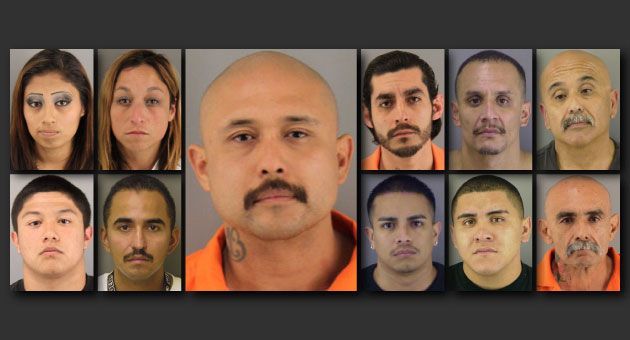 · 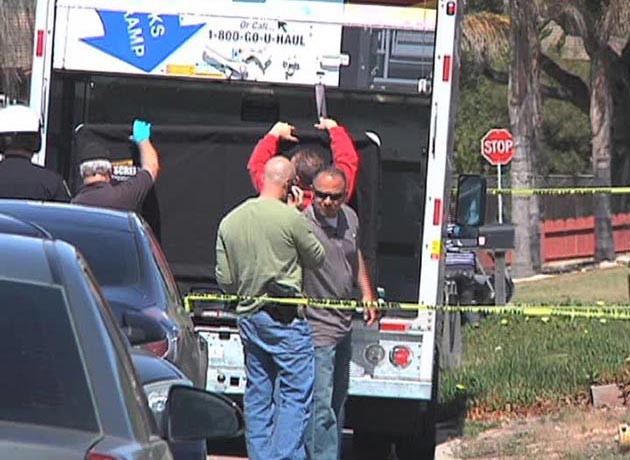 ·  · 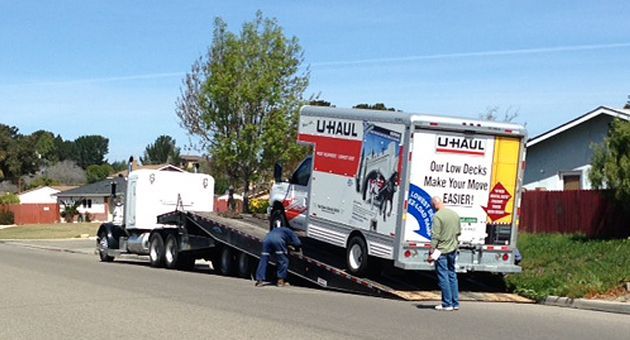 · 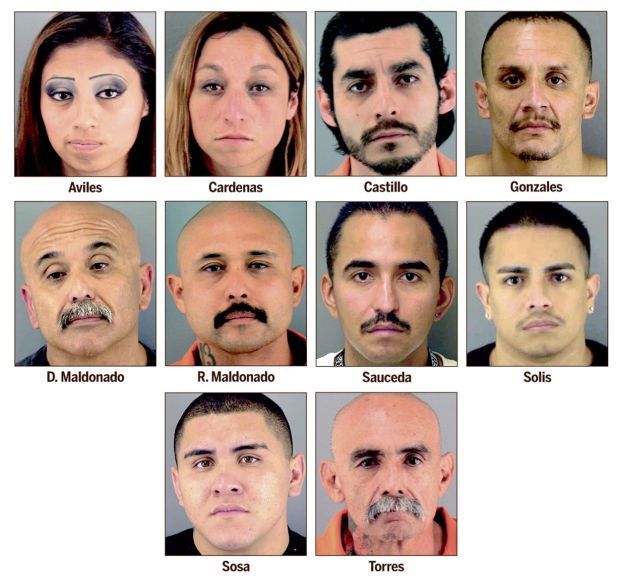 · 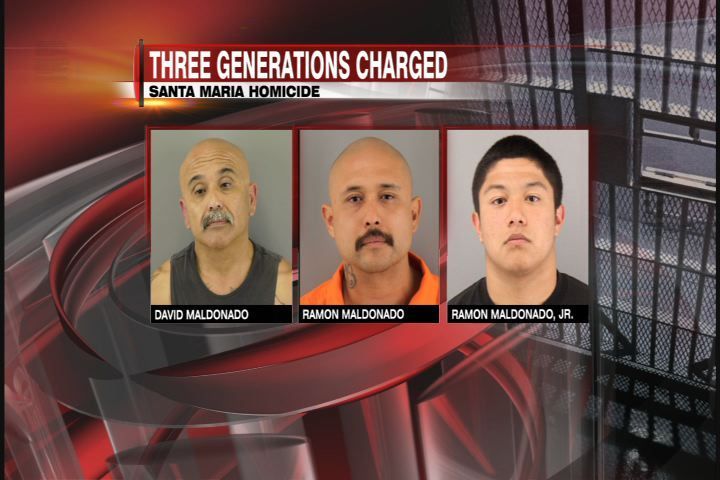 · 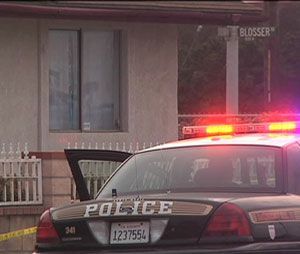 · |
|
#2
●
10-05-2014, 08:42 AM
| ||||||||
 ★ Legacy Member ★ Poster Rank:1352 Yes Join Date: Aug 2009 Posts: 447 Mentioned: 1 Post(s) Quoted: 49 Post(s)
| ||||||||
|
Re: How 11 Friends Ages 14-55 Kill a Freind
I will NEVER understand how these guys think double-crossing or refusing to pay their 'bosses' is going to work out for them.While I get that even the most model drug cartel employee might be killed by a rival gang,why the eff do they think their own boss is going to be any more forgiving? Surely they know what happens if you cheat the boss? Was a lousy $1300 worth his life?
|
|
#5
●
10-14-2014, 05:32 PM
| ||||||||
 Sexican Poster Rank:225 Resident Nympho Join Date: Dec 2013 Posts: 6,409
Contributions: 1
Mentioned: 25 Post(s) Quoted: 3970 Post(s)
| ||||||||
|
Re: How 11 Friends Ages 14-55 Kill a Freind
I don't go to Santa Maria unless I have to. It's the LA of the Central Coast.
|