for more threads like this one :
http://www.documentingreality.com/fo...me-line-45276/ 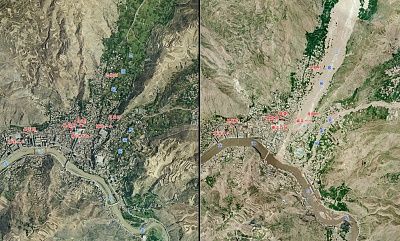
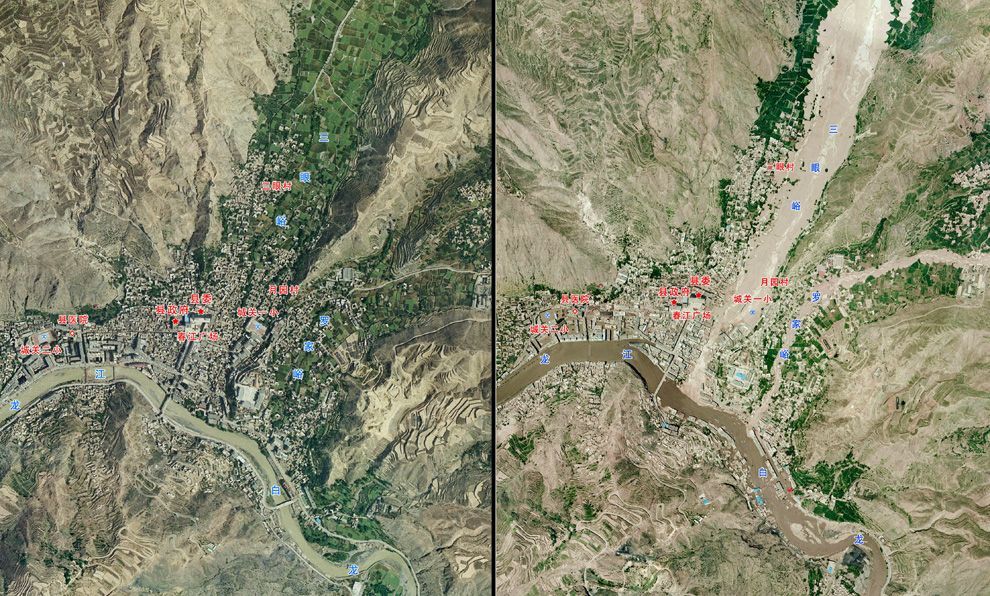
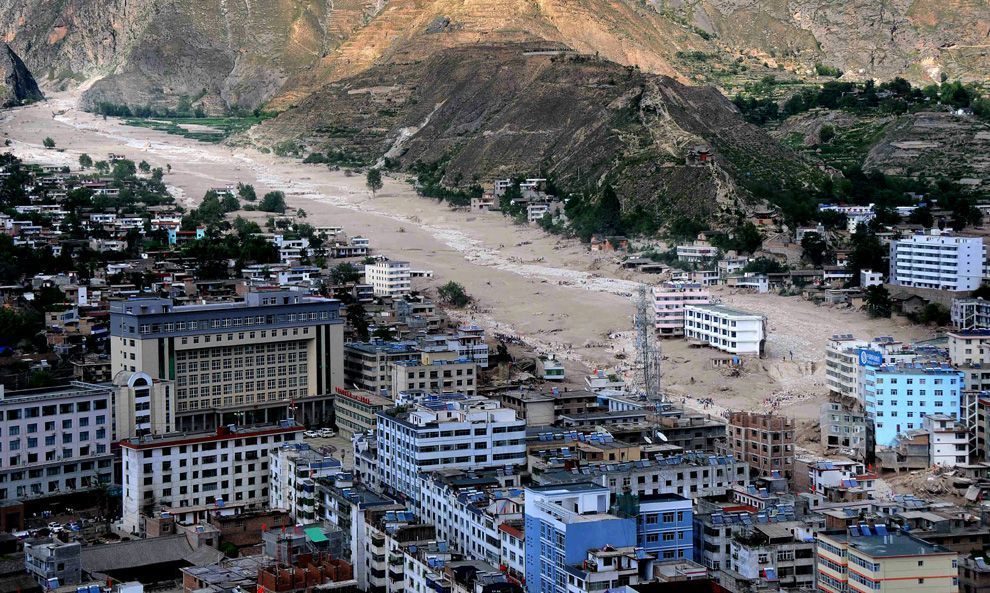
A handout photo received on August 11, 2010 from the State Bureau of Surveying and Mapping shows a combo of satellite images showing Zhouqu before (left) in July, 2008 and after the recent landslide (right), taken on August 8, 2010.

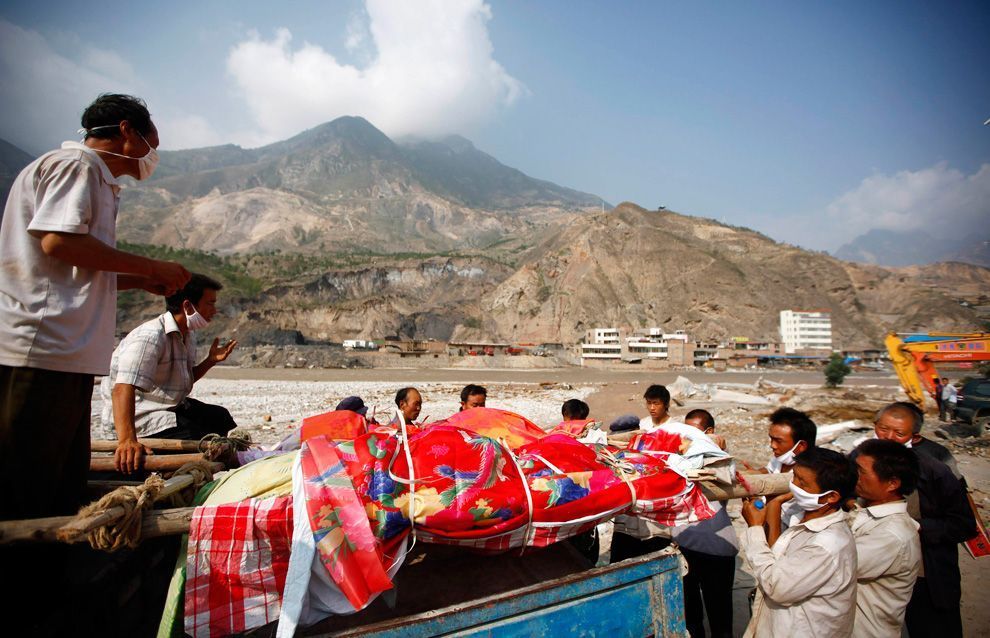
Residents carry a landslide victim to a truck in Zhouqu County on August 10, 2010.
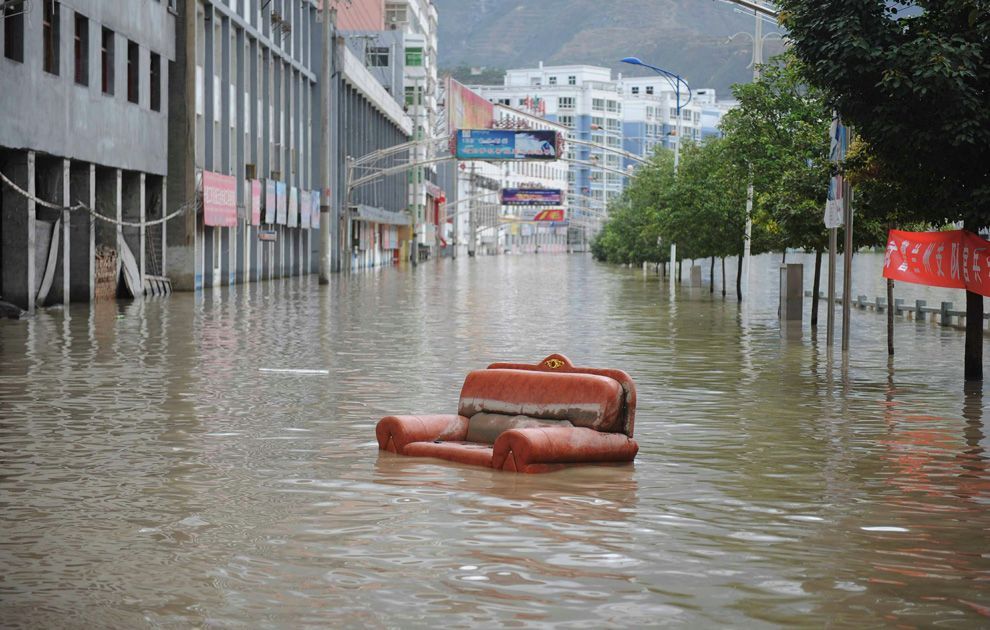
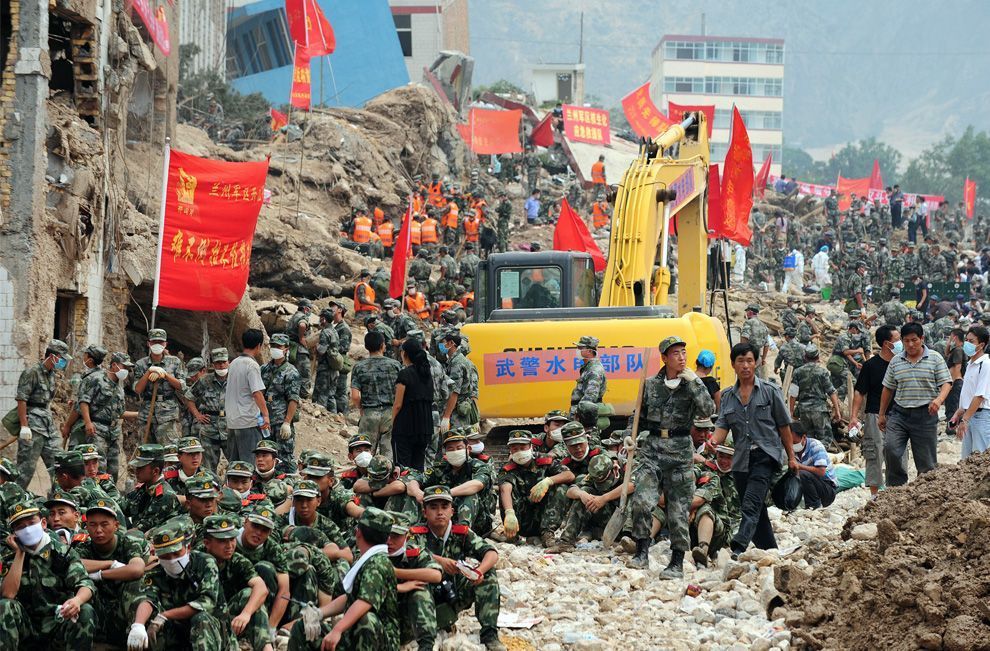
The 2010 Gansu mudslide was a deadly mudslide in Zhugqu County in Gannan TAP in China that occurred at 12 midnight on 8 August 2010. It was caused by heavy rainfall and flooding in Gansu Province. It was the most deadly individual disaster among the 2010 China floods as of 19 August 2010. The mudslides killed more than 1,364 people as of 20 August 2010, while 1,243 others have been rescued and 358 remain missing. Over 1,700 peoplr evacuated have been living in schools.
Cause
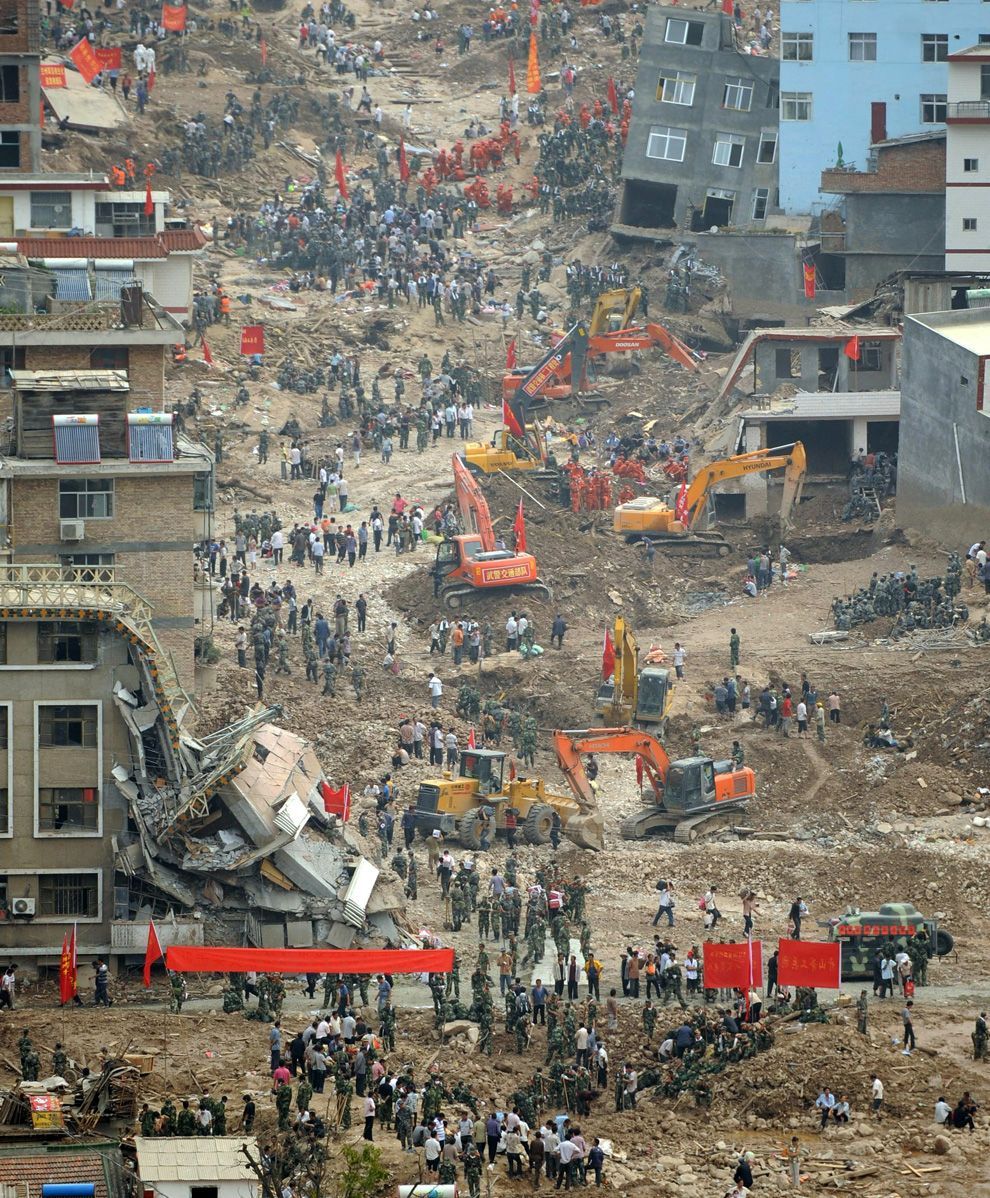
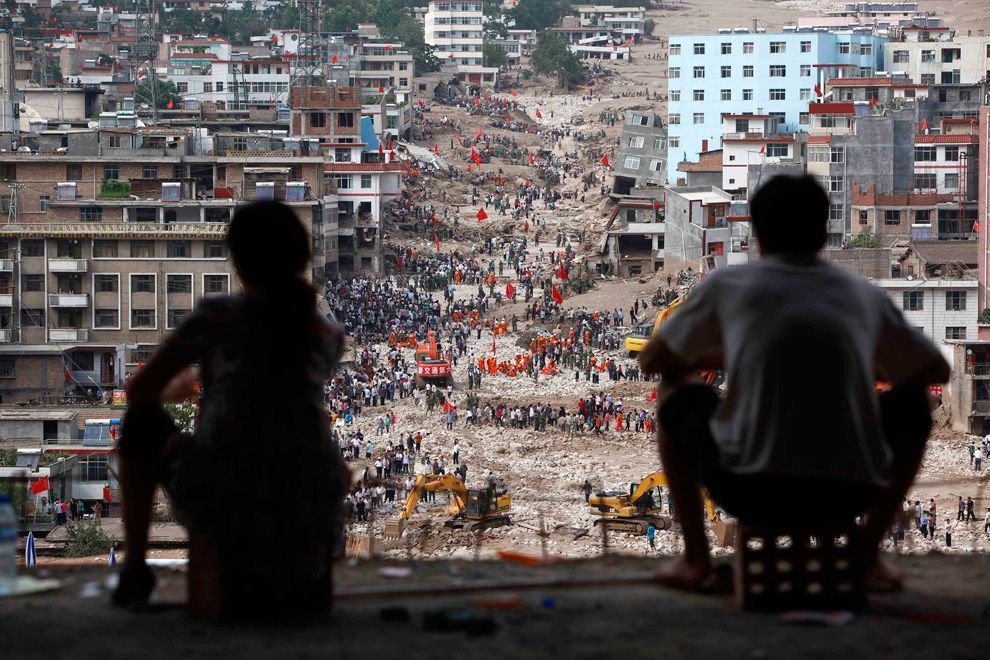
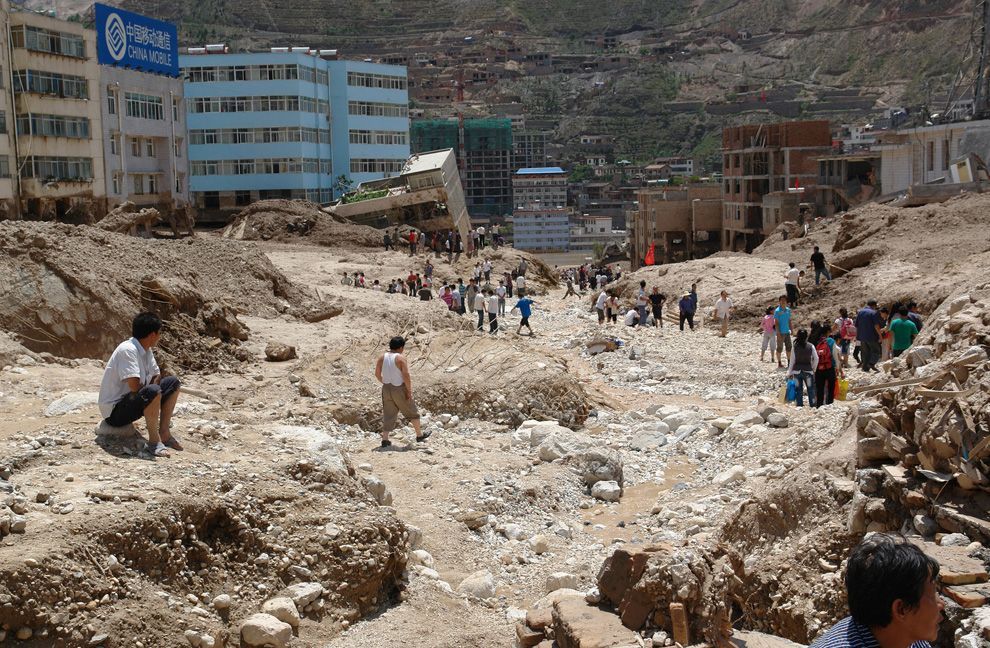
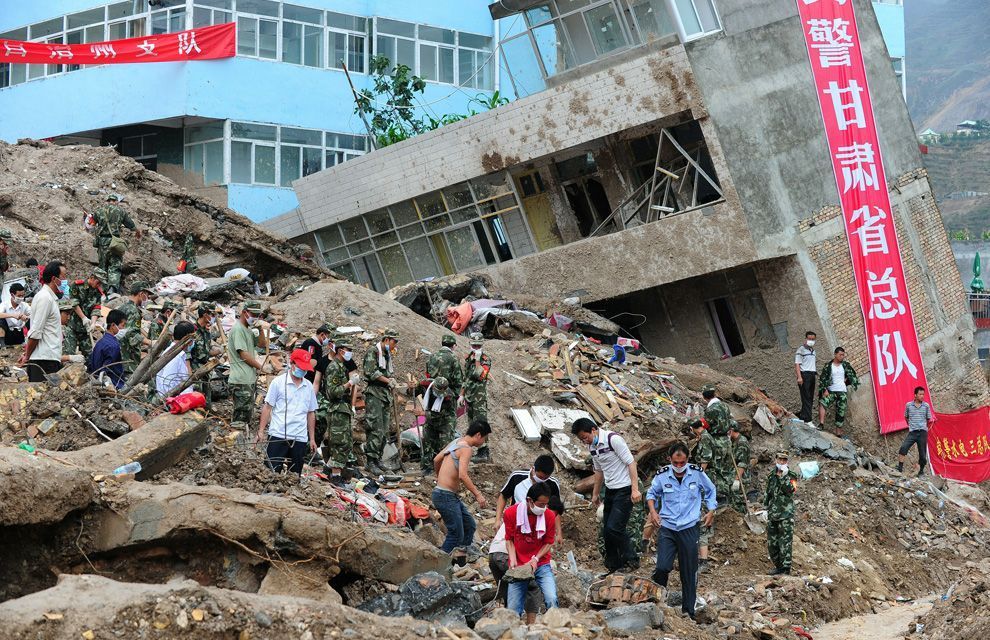
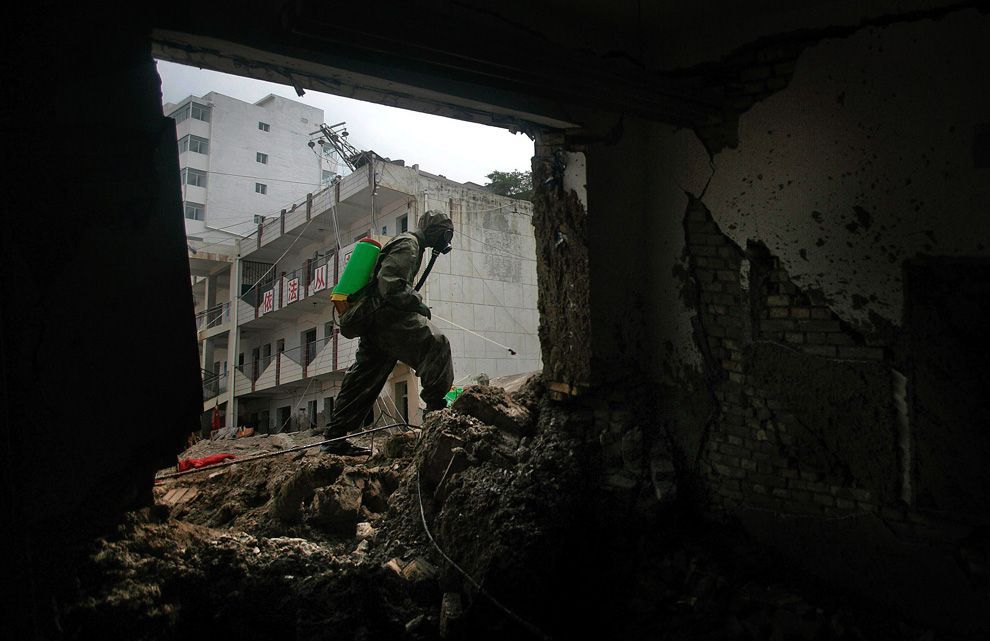
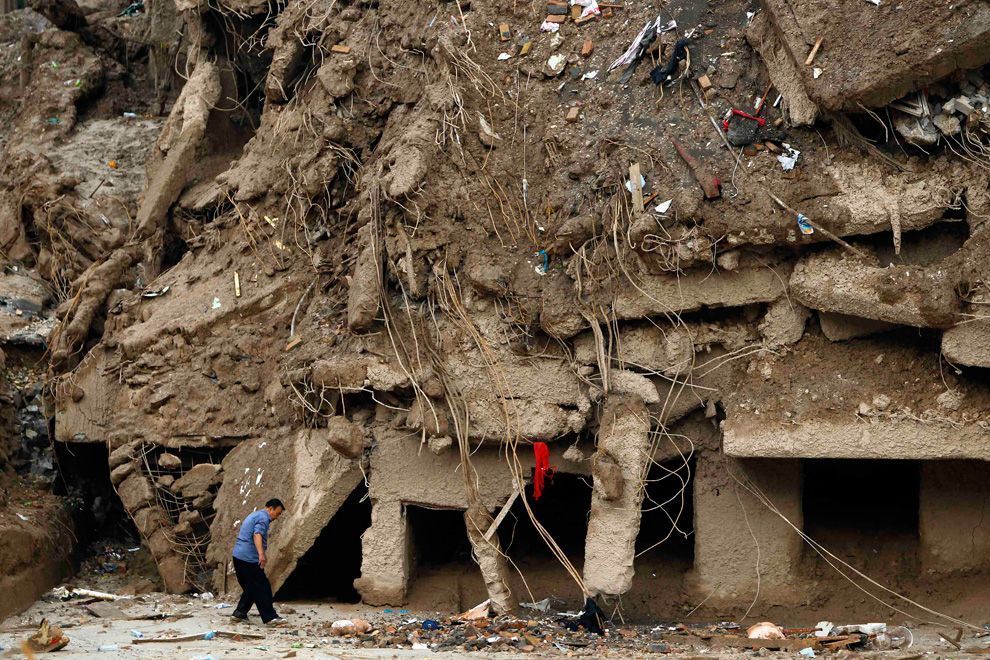
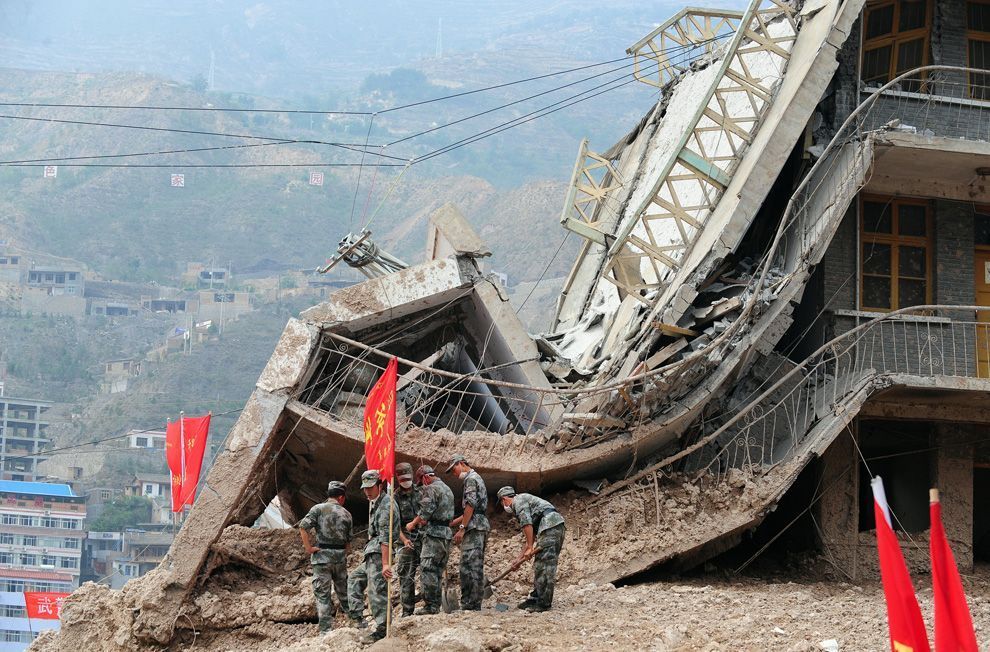
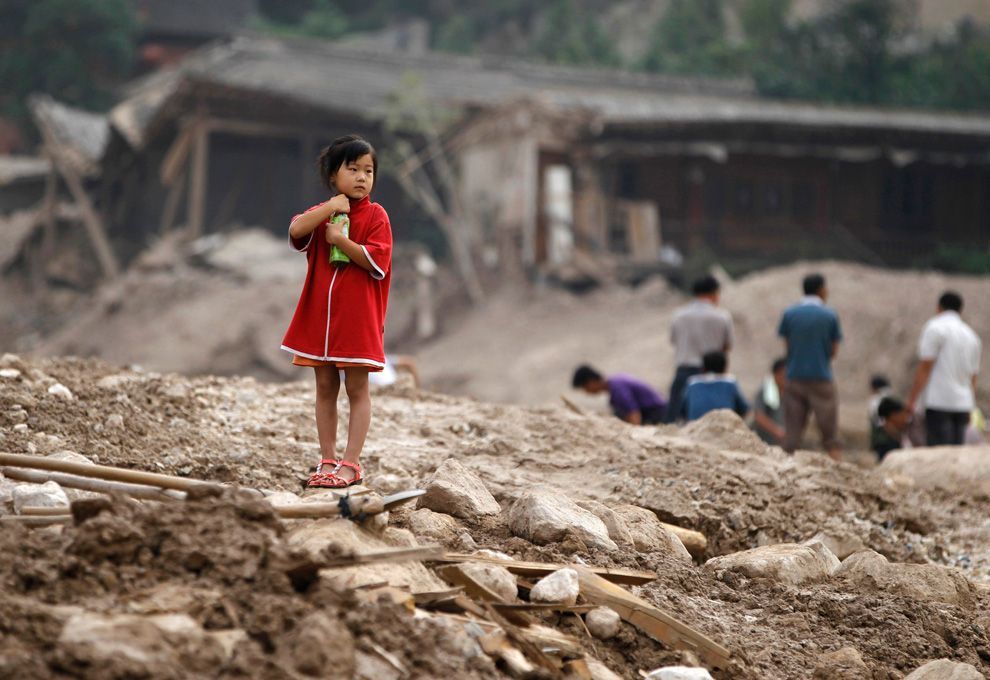
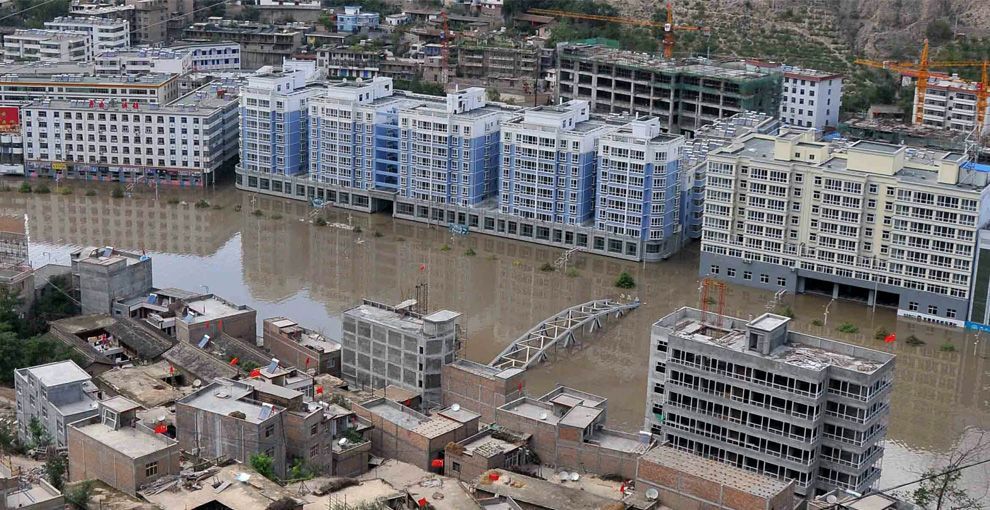
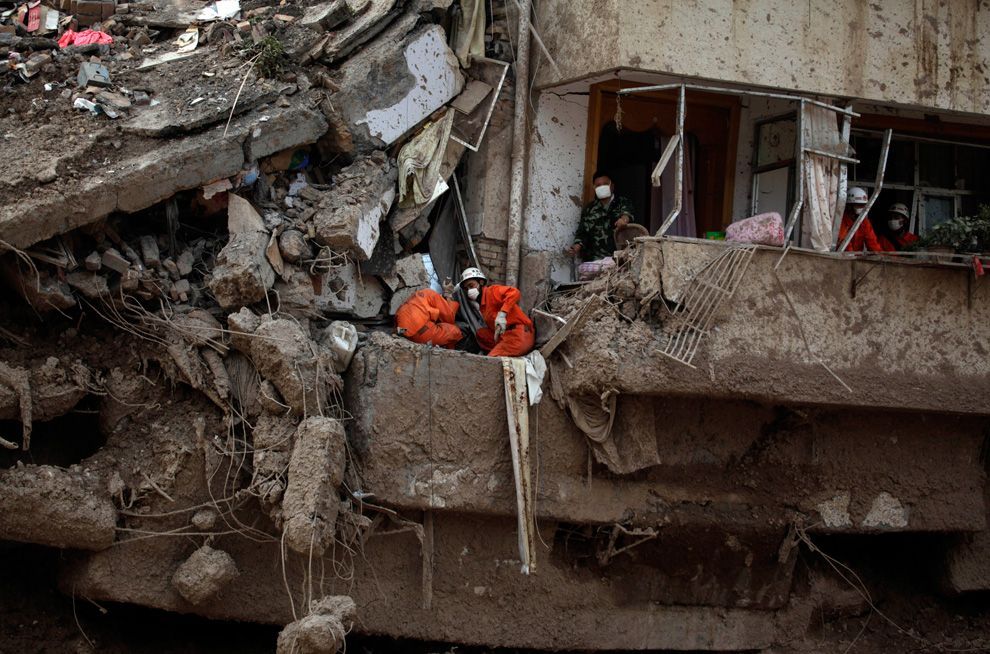
The worst hit location was Zhugqu County, where mud submerged houses and tore multi-story blocks of flats to pieces. The seat of Zhouqu County was densely populated, with 50,000 people (42,000 of them are permanent population) and an area of 2 km2. After the heavy rain, there was a buildup of water behind a dam of debris blocking a small river to the north of the city of Zhugqu; when the dam broke, around 1.8 million cubic metres of mud and rocks swept through the town, in a surge reported as up to five storeys high, covering more than 300 low-rise homes and burying at least one village entirely. The mudslide left an area 5 km long, 300 meters wide in average leveled by mud with average thickness of 5 meters. An image of the disaster region is at
http://spacegizmo.livingdazed.com/20...hina-mudslide/ - note that north is to the right in that image.
According to Gyurme Dorje's Tibet Handbook, the forest region of Zhugqu has, since the 1950s, "shrunk by 30% and the reserve of timber reduced by 25% due to overfelling. The sand in the river water has increased by 60%, and the water volume has reduced by 8%, resulting in increased flooding and drought." Furthermore, in this county there were between 47 to 53 hydroelectric construction projects in recent years, with 41 completed and 12 approaching deadline, according to government data. These together have caused 749,000 tons of water and soil erosion and over 3,000,000 cubic meters of bulldozed material. Four years ago, a Lanzhou University report concluded that these projects have made the whole area a volatile danger-zone. The Christian Science Monitor reported that two science researchers had predicted the mudslides in 1997.
The People's Daily has argued that the mudslide was due to a “perfect storm” of natural events, including “soft” “weathered” rock, heavy rainfall and drought and the Sichuan earthquake two years ago. Authorities dismissed claims that the mudslides were "man-made".
source :
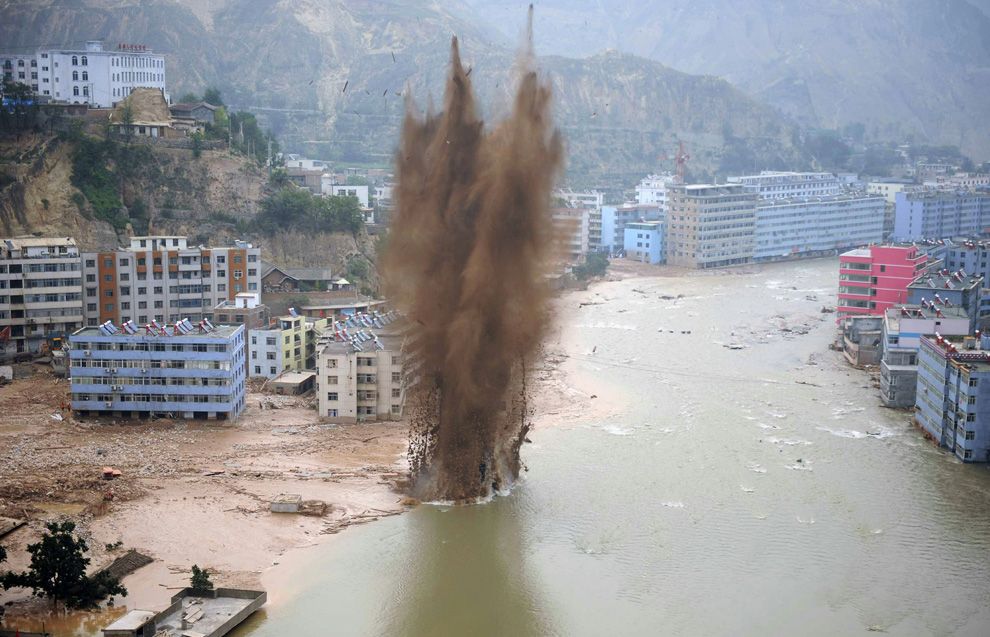
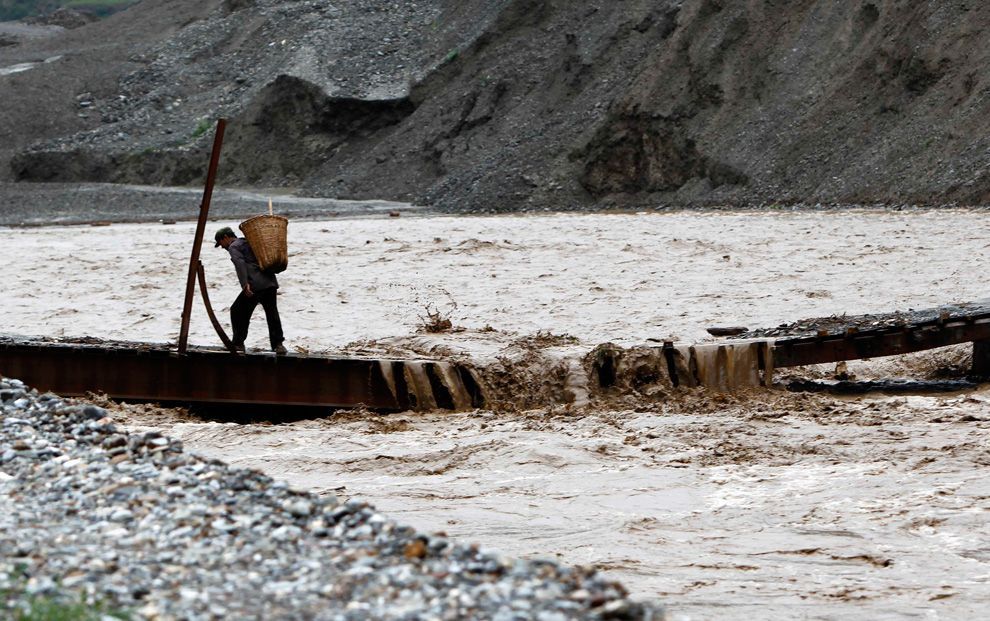
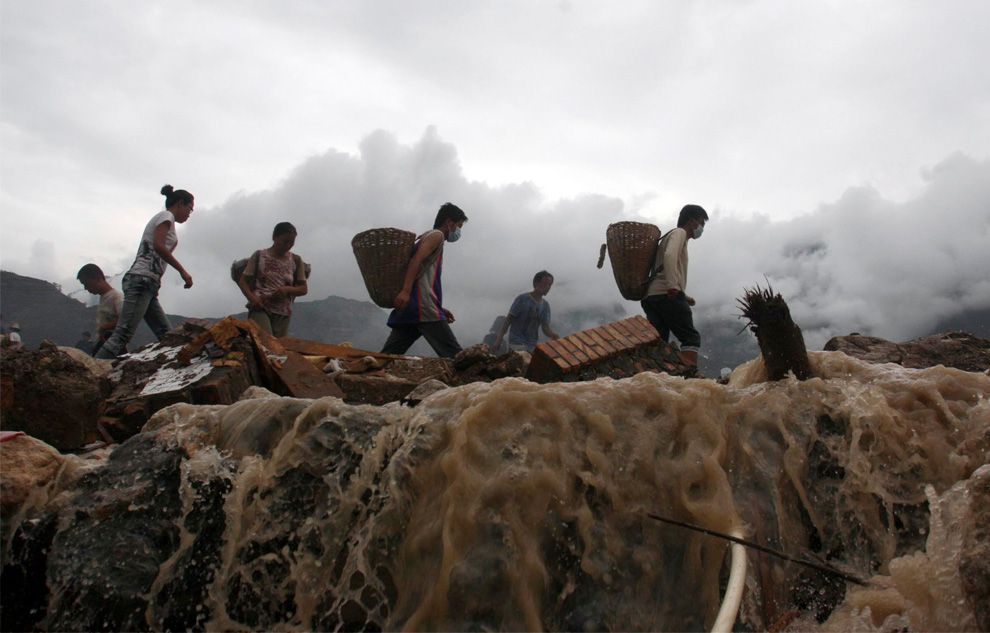
http://www.boston.com/bigpicture/201...uqu_count.html Chinese rescuers use explosives in an attempt to clear blockages and release the water of Bailong River in Zhouqu, China on August 11, 2010.
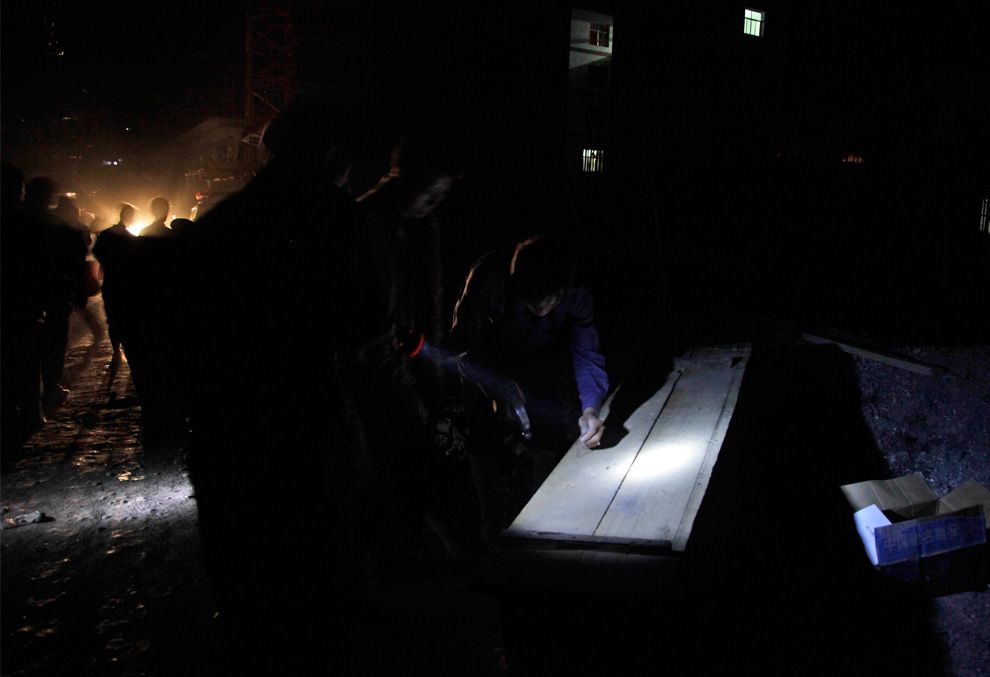
Residents nail a coffin shut in Zhouqu on Monday, Aug. 9, 2010.
Residents are carried by a bulldozer across a landslide-hit street in Zhouqu County on August 9, 2010.
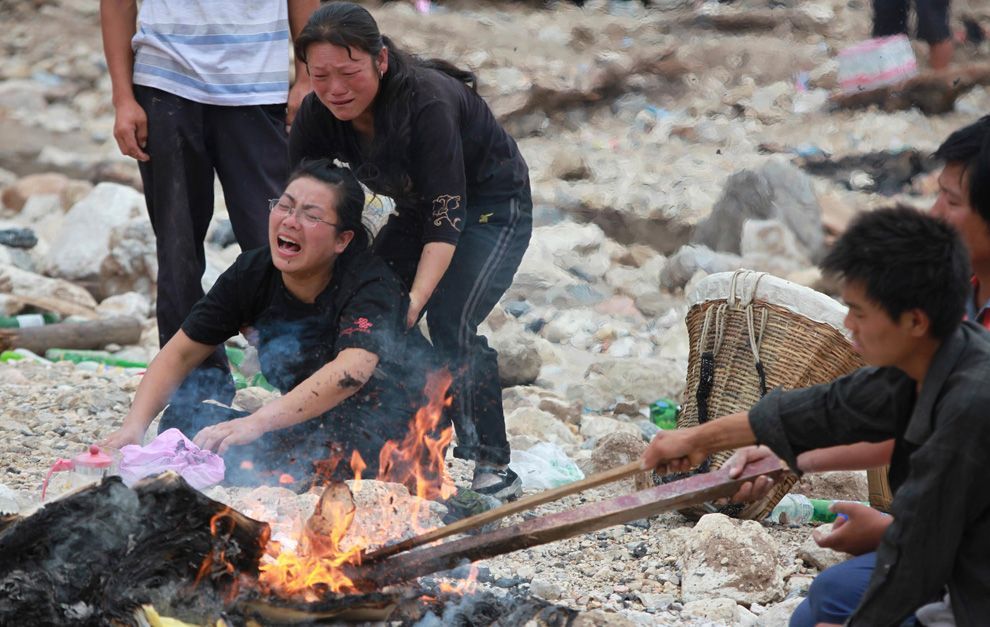
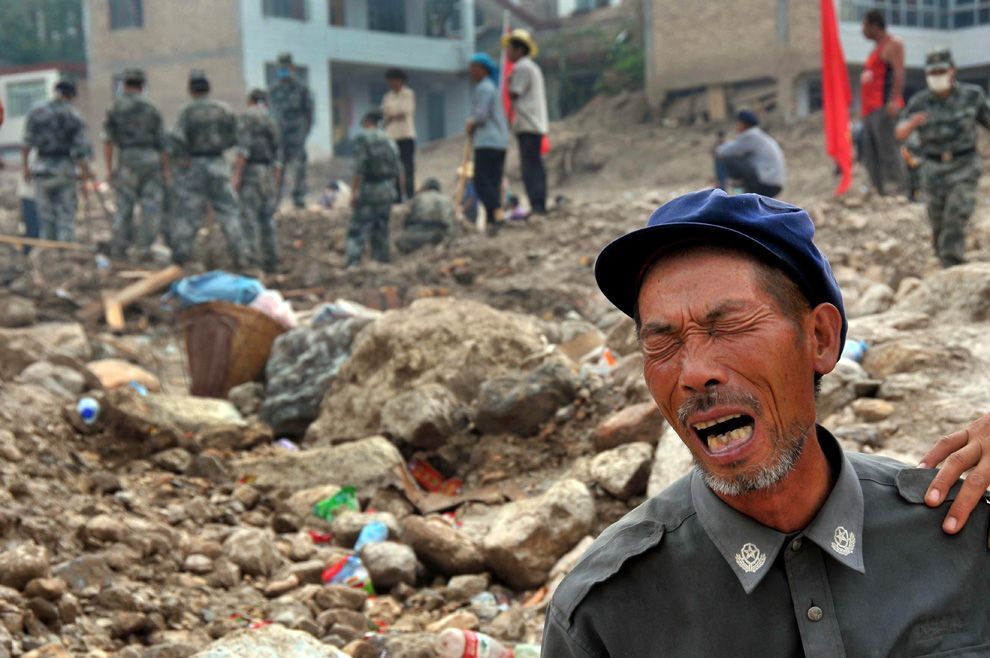
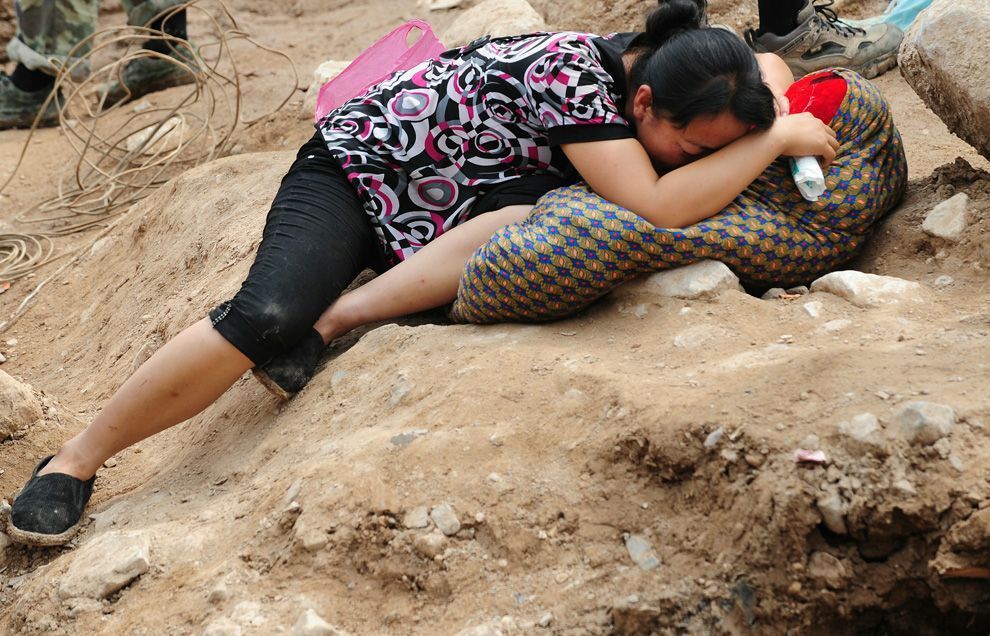
A resident cries for her relative killed by landslide in Zhouqu County on Aug. 12, 2010. Many people held memorial ceremonies for their killed or missing relatives at the landslide area to express their grief on Thursday.
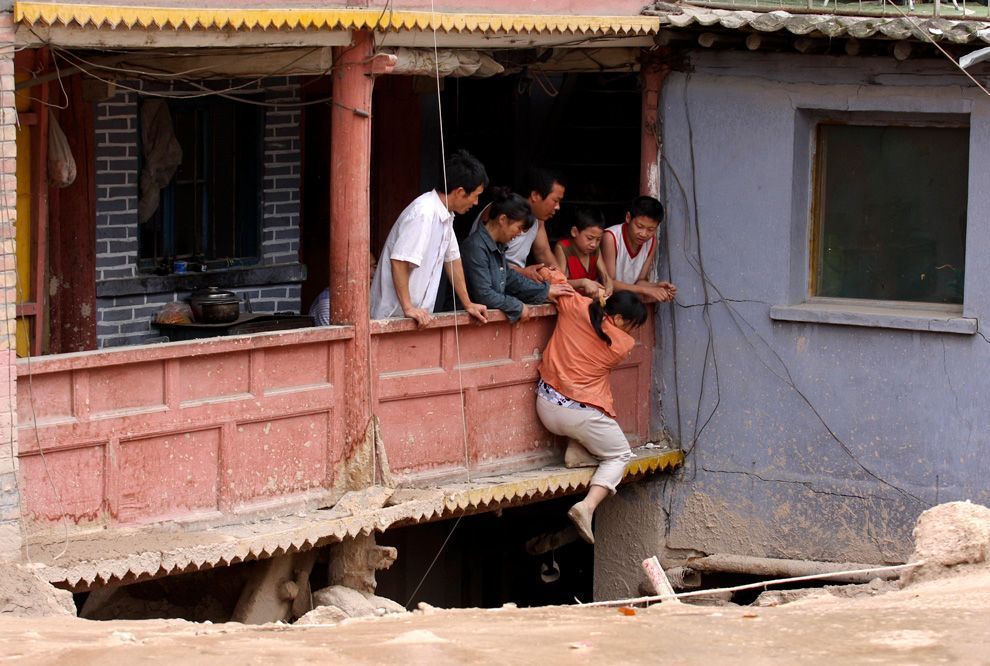
People on a second-floor balcony help a woman who tries to reach the lower floor, partially buried in mud, to fetch belongings after a mudslide in Zhouqu county on Monday, Aug. 9, 2010.
Residents carry a landslide victim to a truck in Zhouqu County on August 10, 2010.
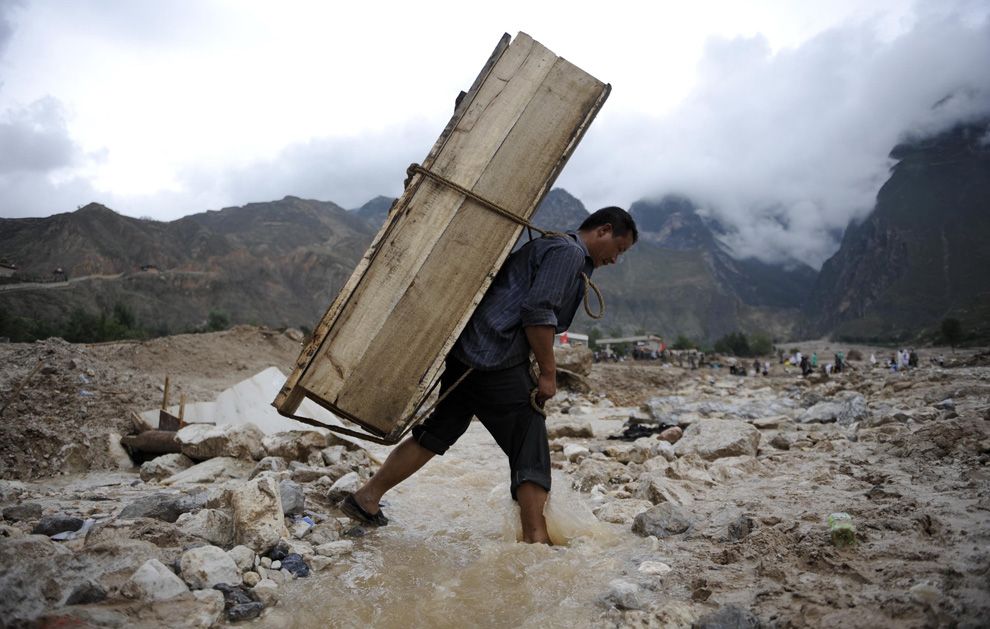
Villager Wang Xidai carries a coffin that will be used for his niece who was killed after a mudslide swept through the town of Zhouqu in northwestern China on Thursday, Aug. 12, 2010.
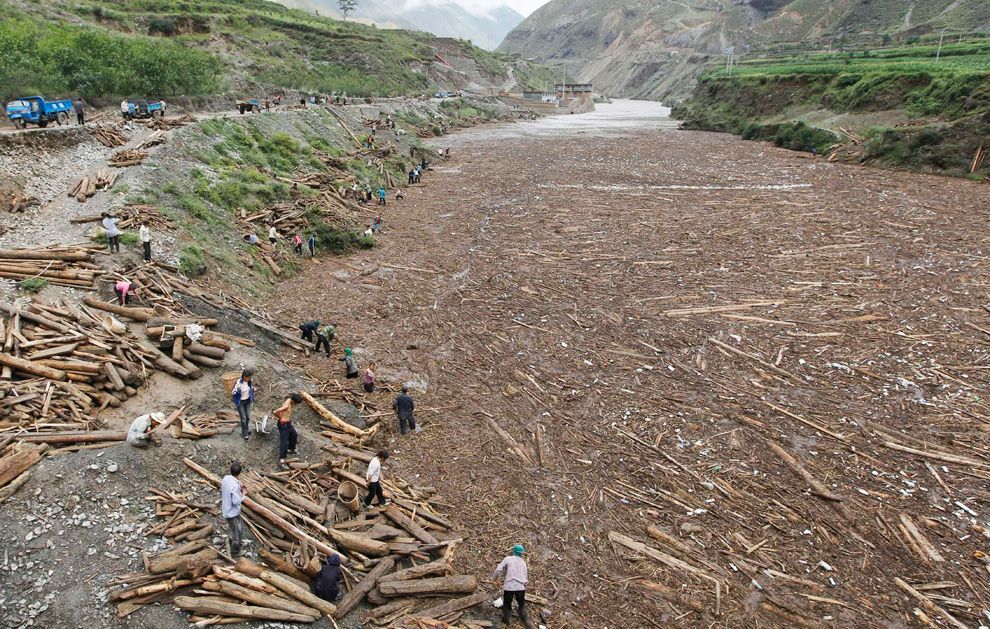
Residents collect wood and logs, washed down by the recent downpours, from the Bailong River near the landslide which devastated Zhouqu county on August 12, 2010.
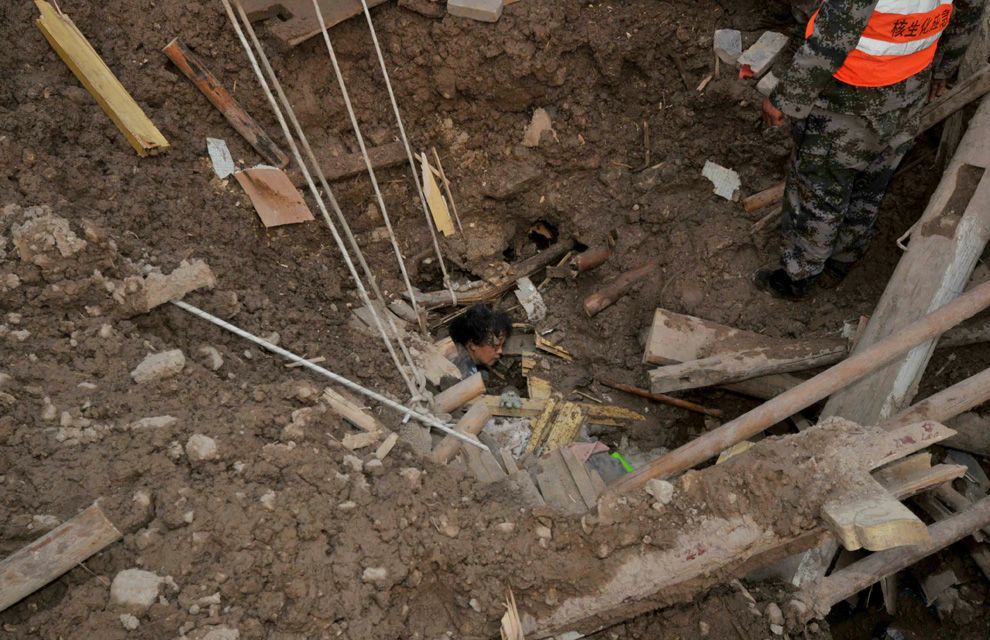
Liu Ma Shindan is transported by rescuers in Zhouqu County, China on Tuesday, Aug. 10, 2010. Liu Ma Shindan, 52, was rescued after being trapped for 50 hours following landslide, Xinhua reported.
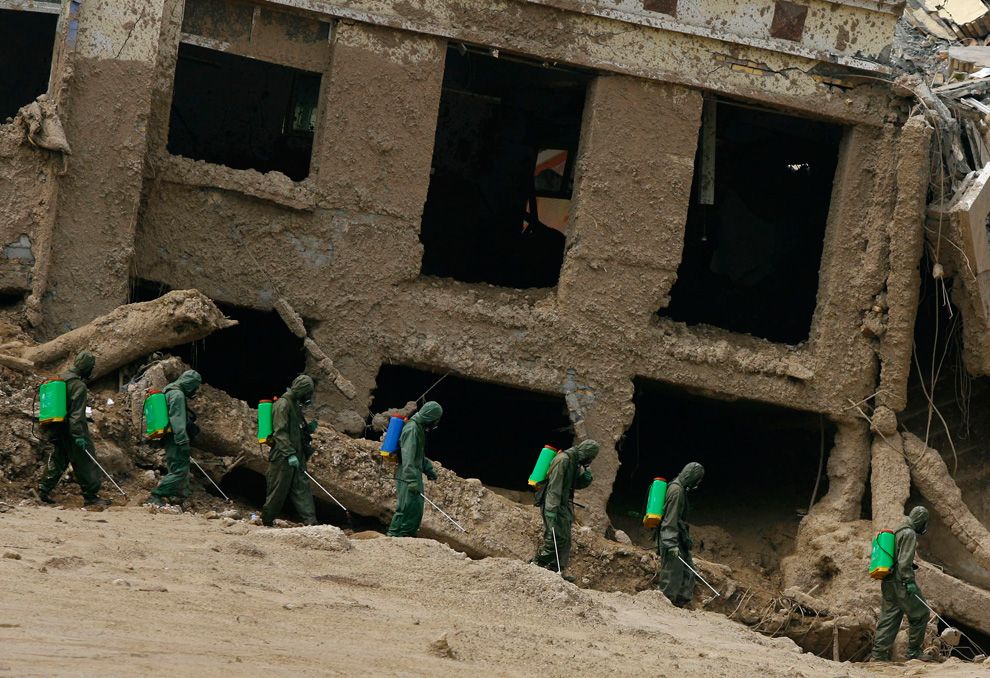
A member of the military in protective gear pours disinfectant over body bags containing the remains of victims of a landslide in Zhouqu on August 12, 2010 in northwest China.
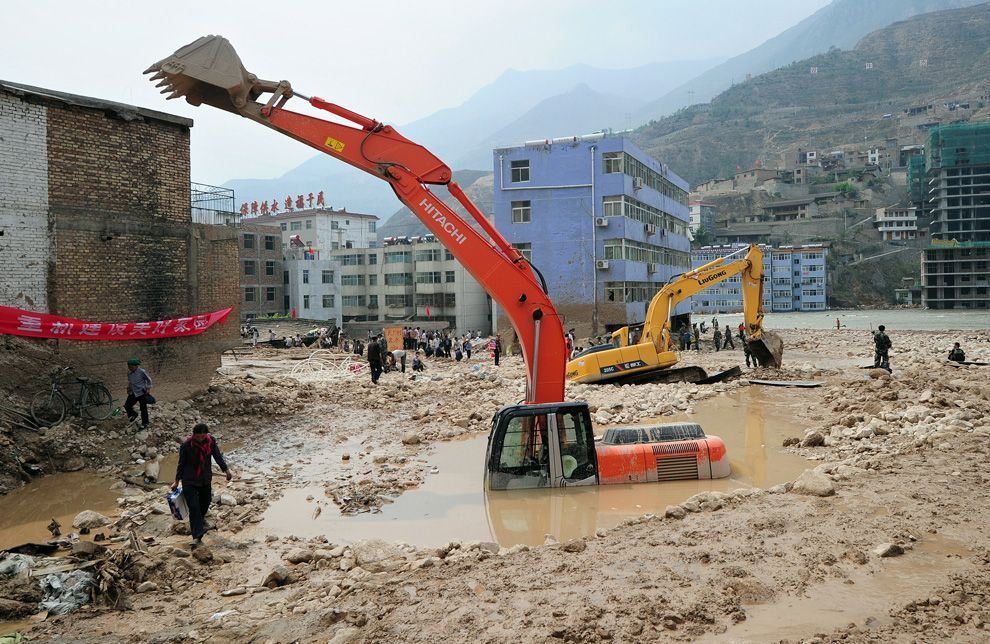
A woman walks past a sunken excavator stuck in the mud amid the remains of landslide devastation while rescue efforts continue in Zhouqu on August 11, 2010.