|
#1
●
11-26-2014, 12:59 PM
| ||||||||
 So Fucking Banned Poster Rank:528 Join Date: Jul 2014 Posts: 1,963
Contributions: 57
Mentioned: 9 Post(s) Quoted: 576 Post(s)
| ||||||||
|
Beast from the Middle Ages Called a “rat King.”
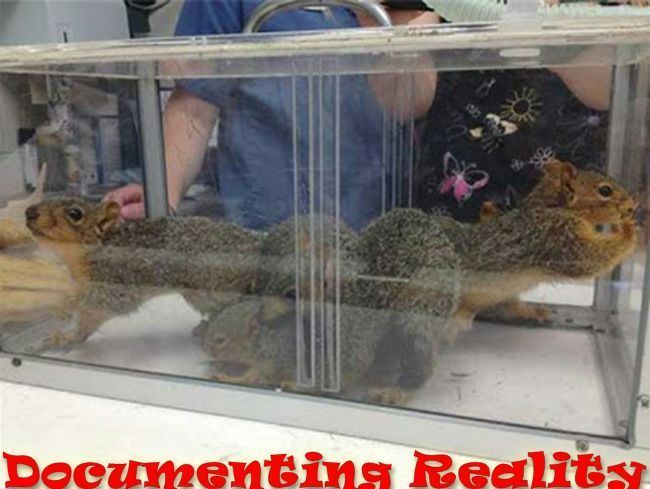
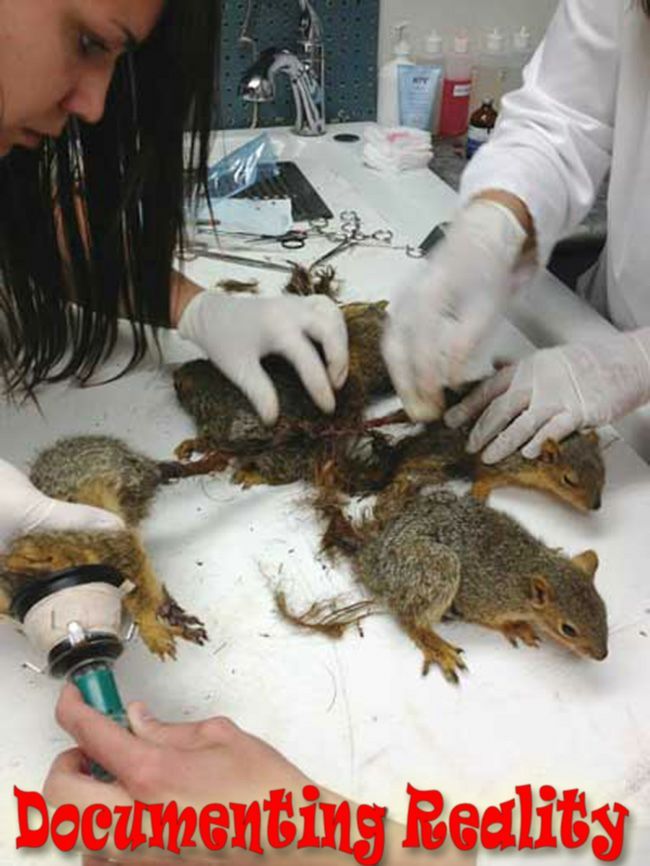
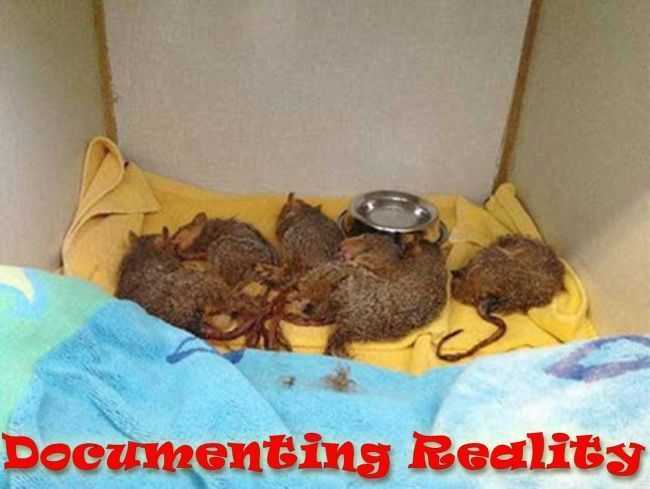
Several museums around the world contain bizarre once-living artifacts of a pseudo, legendary beast from the Middle Ages called a “rat king.” A rat king is formed when several rats have their tails fused together, whether by knotting or being somehow glued together. The result is a small horde of rats all facing outward from the central knot, presumably forced to act as one composite beast. The more fanciful accounts hold that one leader rat is suspended in the middle and acts as the “head” who directs the rest, va nightmarish notion, especially considering the fears of plague that rats conjure up. The largest of these disturbing artifacts contains 32 of the little horrors and resides at the Mauritianum Museum in Altenburg, Germany.Some existing rat kings are mummified, while others are preserved in jars. Rat kings have been found in Germany, France, Poland, the Netherlands, Belgium, and Indonesia. In every case except Indonesia, the rats were black. In the case of Indonesia, they were small field rats. As recently as 2005, a farmer named Rein Koiv found a rat king consisting of 16 individuals (nine of which were already dead) underneath the floorboards of his farm in Estonia, their tails glued together by frozen sand. Rat kings aren’t always composed of rats; mice kings and even squirrel kings have also been reported. In June 2013, an animal clinic in Canada received quite a shock when a city worker brought in six squirrels fused to each other’s tails by tree sap. They managed to save the plucky squirrels their tails were partially shaved but they were otherwise intact. 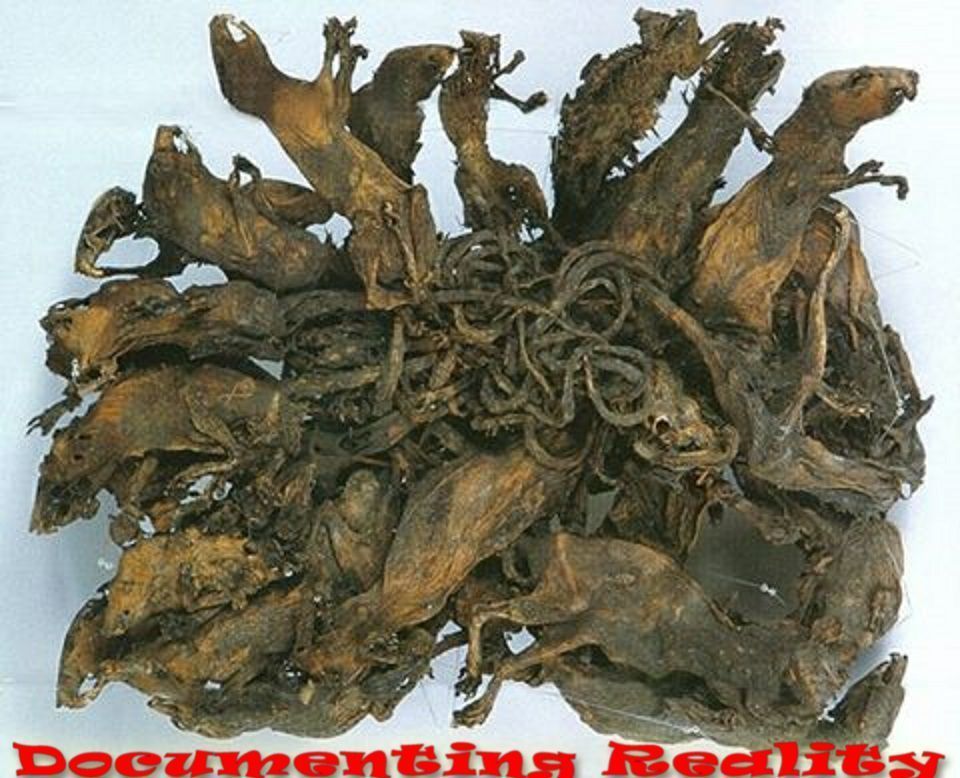 · 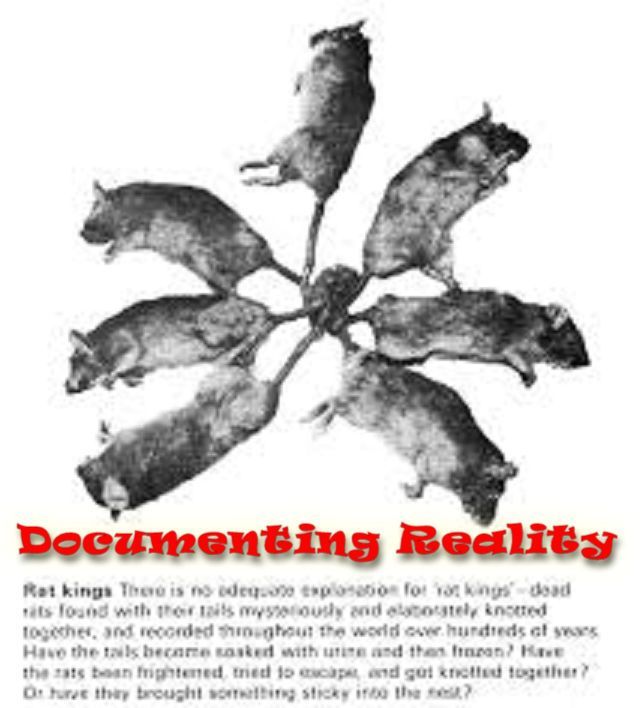 · 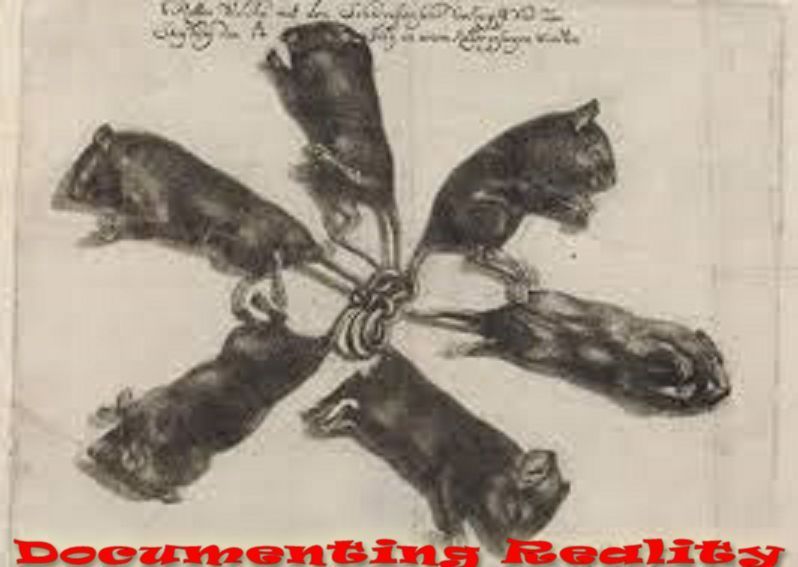 · 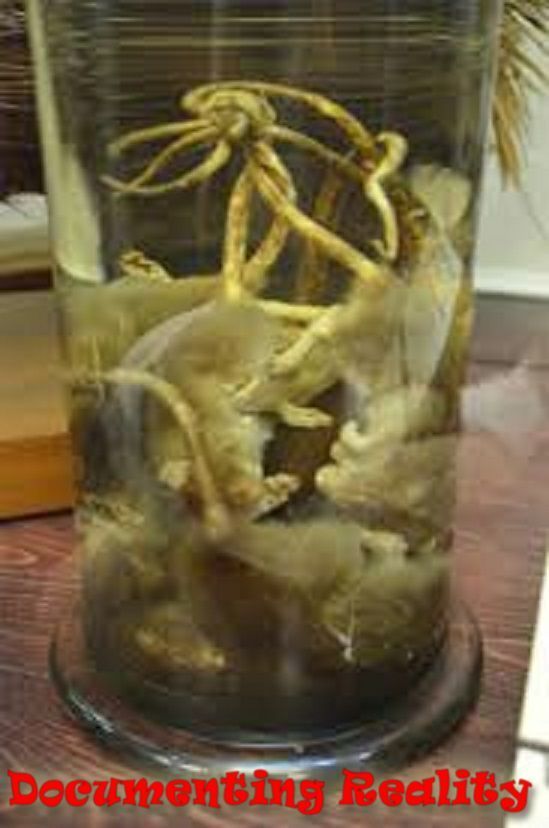 · 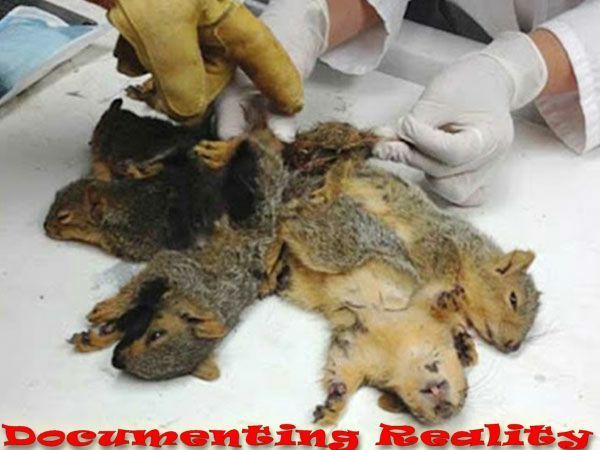 · |
|
#3
●
11-26-2014, 01:30 PM
| ||||||||
 My Rank: GUNNERY SERGEANT Poster Rank:655 Join Date: Aug 2010 Posts: 1,341 Mentioned: 0 Post(s) Quoted: 200 Post(s)
| ||||||||
|
Re: Beast from the Middle Ages Called a “rat King.”
The tails fuse per rigor and moisture/drying dynamics after death, the animals clustering in a huddle prior death in hibernaculum or other environmental factor. There are no collective en mass behaviors of the living "fused." |
|
#5
●
11-26-2014, 04:49 PM
| ||||||||
| My Rank: GUNNERY SERGEANT Poster Rank:655 Join Date: Aug 2010 Posts: 1,341 Mentioned: 0 Post(s) Quoted: 200 Post(s)
| ||||||||
|
Re: Beast from the Middle Ages Called a “rat King.”
That they were tangled physically doesnt mean they were a fused mass of single mindedness. In effect it is an anomolous (Physical)accident of hibernaculum effect. |
|
#6
●
11-26-2014, 04:52 PM
| ||||||||
| My Rank: GUNNERY SERGEANT Poster Rank:655 Join Date: Aug 2010 Posts: 1,341 Mentioned: 0 Post(s) Quoted: 200 Post(s)
| ||||||||
|
Re: Beast from the Middle Ages Called a “rat King.”
Read: "No en mass behaviors of the living "fused" Behaviors. Try to read stuff. It helps understand science  |
|
#9
●
11-26-2014, 05:09 PM
| ||||||||
| My Rank: GUNNERY SERGEANT Poster Rank:655 Join Date: Aug 2010 Posts: 1,341 Mentioned: 0 Post(s) Quoted: 200 Post(s)
| ||||||||
|
Re: Beast from the Middle Ages Called a “rat King.”
 What - did Shrek tell you to be careful of the Rat King? Or the Tangled Sub Adult Squirrels that are out to steal your almond milk? |
|
#10
●
11-27-2014, 07:52 AM
| ||||||||
 ✝Mudderator from Hell✝ Poster Rank:10 e-mail Join Date: Oct 2006 Posts: 96,469
Contributions: 817
Mentioned: 476 Post(s) Quoted: 10328 Post(s)
| ||||||||
|
Re: Beast from the Middle Ages Called a “rat King.”
now that's weird but interesting. |