|
#1
●
02-03-2010, 04:40 PM
| ||||||||
 TROLLBEGONE!!!!! Poster Rank:23 female Join Date: Feb 2009 Posts: 59,620 Mentioned: 70 Post(s) Quoted: 10860 Post(s)
| ||||||||
|
Asian Carp & Invasive Species
They're here. Well, maybe. Asian carp DNA — but thankfully, no actual fish — has been found in water samples taken from the Chicago river near a pumping station in the Chicago suburb of Wilmette, Ill. 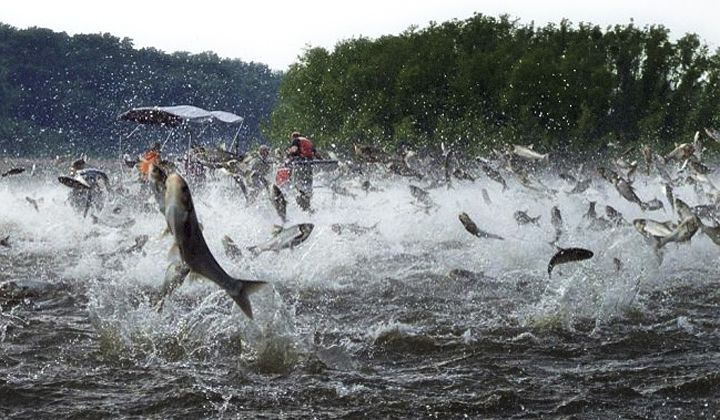 · 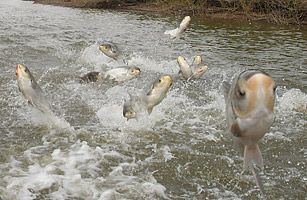 · |
|
#2
●
02-03-2010, 04:42 PM
| ||||||||
| TROLLBEGONE!!!!! Poster Rank:23 female Join Date: Feb 2009 Posts: 59,620 Mentioned: 70 Post(s) Quoted: 10860 Post(s)
| ||||||||
|
Re: Asian Carp & Invasive Species
 Feb. 11 will mark the 20th anniversary of Nelson Mandela's release from prison on Robben Island, the tiny piece of land just off South Africa's southwestern coast. Since 1997 the site has been a museum and World Heritage site frequented by thousands of tourists every year. But who really runs this place? The rabbits. A recent New York Times report revealed that up until last October, rabbits — probably brought to the island 300 years ago by Dutch explorers — have lived there unchecked, burrowing holes under buildings and depleting grassy areas. That's when Chris Wilke, a real-life version of cartoon bunny hunter Elmer Fudd, was hired to help tame the population — the female bunnies can have eight babies at least six times a year. So far, 5,300 rabbits have been killed and estimated 8,000 more will need to be exterminated. Perhaps when Wilke is done on Robben Island, he can meet with the Foundation for a Rabbit-Free Australia, where European rabbits have run amok for decades, causing millions of dollars in damage and threatening the country's delicate ecosystem. |
|
#3
●
02-03-2010, 04:43 PM
| ||||||||
| TROLLBEGONE!!!!! Poster Rank:23 female Join Date: Feb 2009 Posts: 59,620 Mentioned: 70 Post(s) Quoted: 10860 Post(s)
| ||||||||
|
Re: Asian Carp & Invasive Species
 Originally introduced to control pests, the cane toad has become a pest of its own. Native to Central America, the toads were brought to Australia in 1935 in an attempt to control the cane beetle population in sugar plantations. Ultimately there was no evidence they killed a single beetle. Instead, the toads took over. Cane toads have few natural enemies outside of Central America, and when other animals try to eat them, sacs that run down their sides secrete a poison that kills predators in minutes. The toads' voracious appetite depletes resources for other native animals, and they're even known to steal pet food from bowls left outside houses. Weighing up to 3lb. (1.3 kg) and measuring up to 6 in. (15 cm) long, these toads are serious threats to ecosystems in not only Australia, where they number in the hundreds of millions, but also in Florida and parts of Texas. |
|
#4
●
02-03-2010, 04:45 PM
| ||||||||
| TROLLBEGONE!!!!! Poster Rank:23 female Join Date: Feb 2009 Posts: 59,620 Mentioned: 70 Post(s) Quoted: 10860 Post(s)
| ||||||||
|
Re: Asian Carp & Invasive Species
 Some call it "the vine that ate the South." It grows up to 1 ft. (30 cm) every day in the summer months, and can break power lines, kill trees and collapse buildings. Used for decorative and medicinal purposes in Asia, kudzu was first seen in the U.S. when the Japanese made it part of a garden at the Centennial Exposition in Philadelphia in 1876. Americans fell in love with the vine's bright green leaves and fragrant flowers; in the 1930s, the government paid farmers to plant it to prevent soil erosion. But kudzu grew too well outside its natural habitat; it thrives in the hot summers and mild winters of the southern states, is difficult to uproot and has no natural predators outside of Asia. It now covers seven million acres of the Southeast. |
|
#5
●
02-03-2010, 04:46 PM
| ||||||||
| TROLLBEGONE!!!!! Poster Rank:23 female Join Date: Feb 2009 Posts: 59,620 Mentioned: 70 Post(s) Quoted: 10860 Post(s)
| ||||||||
|
Re: Asian Carp & Invasive Species
 You wouldn't guess to look at it, but the deceptively adorable gray squirrel could be the most loathed animal in Britain. Grays, which are native to North America, carry deadly squirrel pox, to which they are immune but native red squirrels are vulnerable. They also eat seven times more food per hectare than their scarlet cousins, crowding out any competitors who manage to survive the squirrel plague. Even Prince Charles has weighed in on their villainy. "The red squirrel is one of the most utterly charming and irresistible of British native mammals," he said in a statement to the Red Squirrel Survival Trust. "I cannot bear the thought that one day they might disappear for ever, driven out by the relentless northern march of the grays." His Highness can take comfort that popular resistance to the fluffy menace is growing. In 2008 the Guardian dubbed gray squirrels "the ultimate ethical meal," noting that butchers could hardly keep up with demand. One game-shop owner speculated that patriotism played a part. "Eat a gray and save a red. That's the message," he said. |
|
#6
●
02-03-2010, 04:48 PM
| ||||||||
| TROLLBEGONE!!!!! Poster Rank:23 female Join Date: Feb 2009 Posts: 59,620 Mentioned: 70 Post(s) Quoted: 10860 Post(s)
| ||||||||
|
Re: Asian Carp & Invasive Species
 In 1957, a beekeeper in São Paulo, Brazil, accidentally released 26 Tanzanian queen bees who went on to launch an agricultural calamity, a horror-movie franchise and a whole new level of melissophobia. The queens mated with native European honeybees to create so-called killer bees, or Africanized bees — an especially aggressive species. Africanized honeybee swarms have been known to stage coups where they invade European honey hives, kill the European queen and install their own leader. The bees first infiltrated the U.S. in 1990 and have since spread to the southern parts of many states, including California, Nevada, Utah, Arizona, New Mexico, Texas, Oklahoma, Louisiana, Arkansas and Florida. Though movies such as the 1974 film Killer Bees have succeeded in instilling fear, the bees' venom is no more toxic than that of the European honeybee. They are, however, known to sting many more times, with some victims receiving more than 1,000 stings. In addition to being a threat to humans, they are also relatively lousy at producing honey — making them a threat to agriculture as well. |
|
#9
●
02-03-2010, 04:49 PM
| ||||||||
| TROLLBEGONE!!!!! Poster Rank:23 female Join Date: Feb 2009 Posts: 59,620 Mentioned: 70 Post(s) Quoted: 10860 Post(s)
| ||||||||
|
Re: Asian Carp & Invasive Species
 In 1890 New York drug manufacturer Eugene Schieffelin released some 60 European starlings in Central Park. His dream was to introduce every bird mentioned by Shakespeare into North America — an intent that proved to be more Hitchcock than Bard. Schieffelin hoped the songbirds would prosper in their new home in ways the skylarks and song thrushes had not, and they certainly did. Now the purple-green iridescent birds roost in hordes of up to 1 million; they can devour up to 20 tons of potatoes in one day and their droppings are believed to be vectors of several infectious diseases. Numerous inventive attempts have been made to eradicate the birds — including strategies involving itching powder, live wires, poisoned pellets, cobalt 60 and Roman candles. Even a jetliner couldn't stop them. In 1960, a flock of some 10,000 starlings flew straight into a Lockheed Electra, crippling its engine and causing the plane to crash. Sixty-two people were killed |
|
#10
●
02-03-2010, 04:51 PM
| ||||||||
| TROLLBEGONE!!!!! Poster Rank:23 female Join Date: Feb 2009 Posts: 59,620 Mentioned: 70 Post(s) Quoted: 10860 Post(s)
| ||||||||
|
Re: Asian Carp & Invasive Species
 THIS thing could RUIN the fishing industry. It sounds like the plot of a horror movie — or a very stressful nature special. The northern snakehead fish has teeth like a shark and the ability to walk on land. The carnivorous fish hails from Asia but in 2002 it appeared in a small Maryland town, where it promptly obliterated wildlife in the local pond. While other invasive fish species can only travel as far as the waterways will take them, the snakehead, sometimes called "Fishzilla," can survive for up to four days out of the water and travels across land by wiggling its body back and forth like a snake. The fish has since been spotted everywhere from New York to California. So how did it get to Maryland in the first place? A local resident ordered two snakeheads from a fish market in New York City's Chinatown neighborhood and then released them |