|
#1
●
07-25-2010, 08:44 AM
| ||||||||
 ★ Legacy Member ★ Poster Rank:79 Male Join Date: Nov 2009 Posts: 19,416
Contributions: 1
Mentioned: 7 Post(s) Quoted: 717 Post(s)
| ||||||||
|
Archaeologists Discover Stonehenge Twin Circle.
Stonehenge twin discovered stone's throw away New wooden henge, a circular ditch that aligns with world-famous monument, deemed site's most exciting find in a lifetime Without a sod of earth being dug up, a new henge, a circular ditch which probably enclosed a ring of timber posts and may have been used for feasting, has been discovered within sight of Stonehenge.  Professor Vince Gaffney, of Birmingham university, described the discovery of the new monument, only 900 metres away and apparently contemporary to the 5,000-year-old stone circle, as the most exciting find at Stonehenge in a lifetime. "This finding is remarkable. It will completely change the way we think about the landscape around Stonehenge. "People have tended to think that as Stonehenge reached its peak, it was the paramount monument, existing in splendid isolation. This discovery is completely new and extremely important in how we understand Stonehenge and its landscape. "Stonehenge is one of the most studied monuments on Earth but this demonstrates that there is still much more to be found." Midsummer revellers coming to Stonehenge for the solstice have probably trampled unwittingly across the grass hiding the henge.  The henge was revealed within a fortnight of an international team beginning fieldwork on the three-year Stonehenge Hidden Landscape project, which aims to survey and map 14 sq km of the sacred landscape around the world's most famous prehistoric monument, which is studded with thousands more monuments from single standing stones to ploughed out burial mounds. Amanda Chadburn, the archaeologist responsible for Stonehenge at English Heritage, said: "This new monument is part of a growing body of evidence which shows how important the summer and winter solstices were to the ancient peoples who built Stonehenge. The discovery is all the more remarkable given how much research there has been in the vicinity of Stonehenge, and emphasises the importance of continuing research within and around the world heritage site." The survey suggests that the henge was on the same alignment as Stonehenge, and comprised a segmented ditch with north-east and south-west entrances, enclosing internal pits up to a metre in diameter believed to have held massive timbers.  For the last fortnight curious tourists have watched scientists trundling what look like large lawnmowers around the nearby field. The geophysical equipment can peer under the surface of the earth using techniques like ground-penetrating radar, revealing structures now invisible to the human eye.  The new discovery was hidden in the landscape: nothing remains above ground. The international team includes scientists and archaeologists from Birmingham University, Bradford, St Andrews, and the Ludwig Boltzmann Institute for Virtual Archaeology in Austria, as well as teams from Germany, Norway and Sweden. Professor Wolfgang Neubauer, director of the Ludwig Boltzmann Institute, said: "This is just the beginning. We will now map this monument using an array of technologies that will allow us to view this new discovery, and the landscape around it, in three dimensions. This marks a new departure for archaeologists and how they investigate the past." The work of other teams suggests that timber and stone monuments were separate parts of the same Stonehenge story. Professor Mike Parker Pearson, an archaeologist who has been excavating for many seasons at Durrington Walls, another nearby timber henge site, has already suggested that timber henges and structures were associated with feasting for the living, and stone circles with the realms of the dead. Work continues and the team expects to uncover many more secrets in the landscape. The discovery sharpens the disappointment of the partners working on the Stonehenge Project, an ambitious scheme which has already absorbed millions of pounds in planning work, intended to reunite the stone circle with the surrounding landscape, most of which is owned by the National Trust and leased to farmers. The plan to bury in a tunnel the traffic choked trunk road that runs within yards of the monument has been abandoned on cost grounds. Last month the government announced it was scrapping the promised £25m contribution towards a new visitor centre, replacing the present facilities damned by the parliamentary public accounts committee as "a national disgrace". 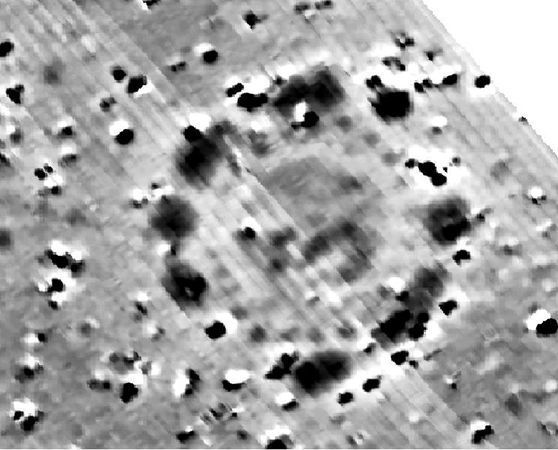 · |
|
#2
●
07-25-2010, 08:59 AM
| ||||||||
 Super ********* Poster Rank:89 Join Date: Nov 2008 Posts: 17,425 Mentioned: 5 Post(s) Quoted: 99 Post(s)
| ||||||||
|
Re: Archaeologists Discover Stonehenge Twin Circle.
is there no date or source to go with the discovery? saw a documentary a few years ago where they discovered the base of a town/village right by stonehenge, about 2000 houses if i remember right. |
|
#4
●
07-25-2010, 09:02 AM
| ||||||||
| Super ********* Poster Rank:89 Join Date: Nov 2008 Posts: 17,425 Mentioned: 5 Post(s) Quoted: 99 Post(s)
| ||||||||
|
Re: Archaeologists Discover Stonehenge Twin Circle.
nice, one, i think it's important to put sources & dates with posts about discoveries. wish i could track down the documentary about the discovery of those homes by stonehenge, it was summer 2008 i saw it, i think the archaeological expedition was around 2007 for that discovery. but it's a fair while ago and cant really remember for sure  |
|
#5
●
07-25-2010, 09:09 AM
| ||||||||
| ★ Legacy Member ★ Poster Rank:79 Male Join Date: Nov 2009 Posts: 19,416
Contributions: 1
Mentioned: 7 Post(s) Quoted: 717 Post(s)
| ||||||||
|
Re: Archaeologists Discover Stonehenge Twin Circle.
Agreed, I'm too busy thinking about my lunch  Is this what you're referring too ? 31st March 2008 Excavation Starts at Stonehenge 9th April 2008 'Breakthrough' at Stonehenge dig 29th May 2008Stonehenge 'Royal Cemetry' Claim |
|
#6
●
07-25-2010, 10:22 AM
| ||||||||
| Super ********* Poster Rank:89 Join Date: Nov 2008 Posts: 17,425 Mentioned: 5 Post(s) Quoted: 99 Post(s)
| ||||||||
|
Re: Archaeologists Discover Stonehenge Twin Circle.
nah, but i saw it in the related stories in one of your links Stonehenge's huge support settlement Last Updated: Monday, 5 November 2007, 09:05 GMT   ·  ·  ·  · |