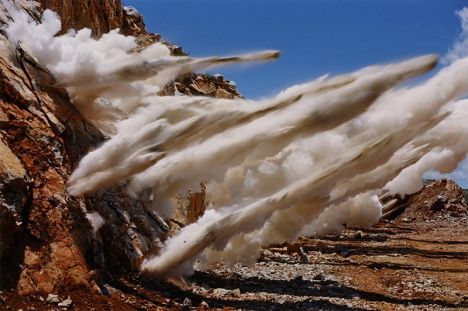
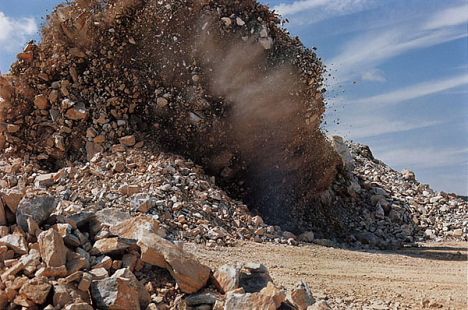
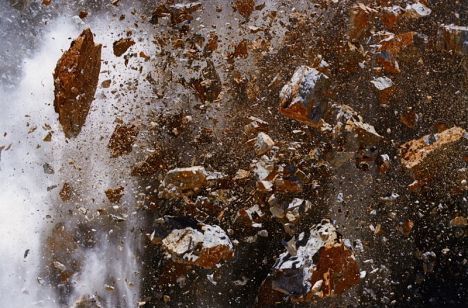
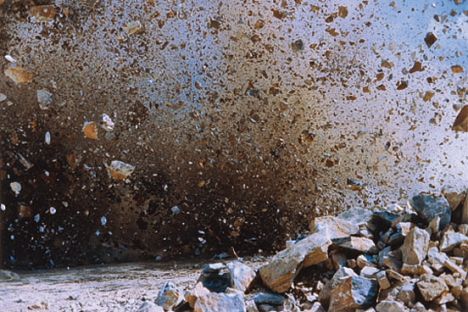
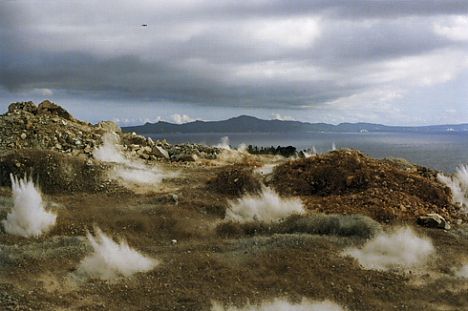
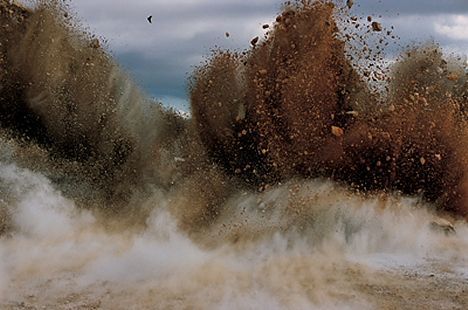
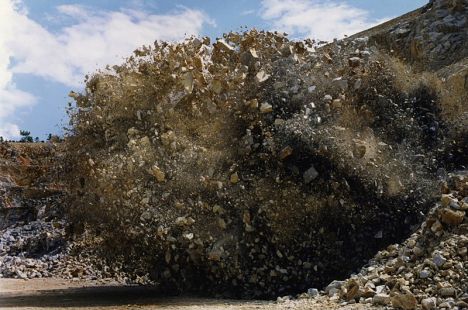
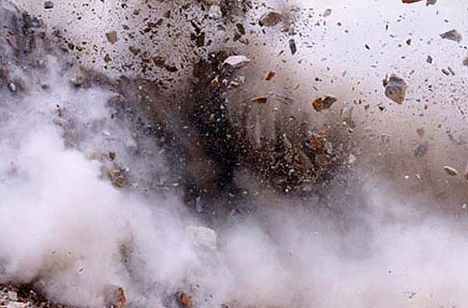
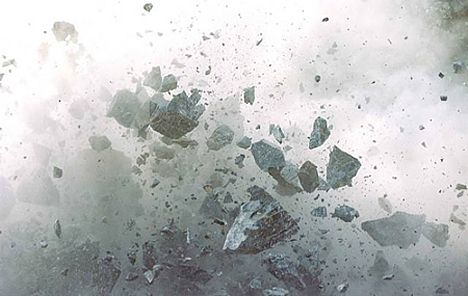
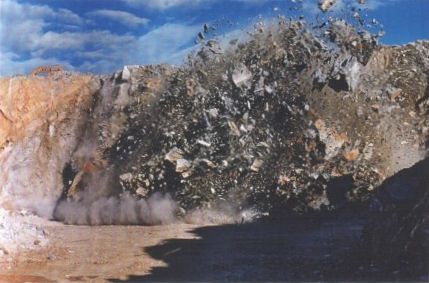
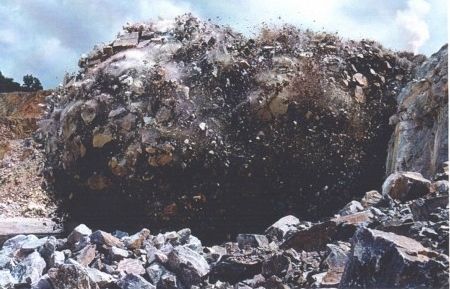
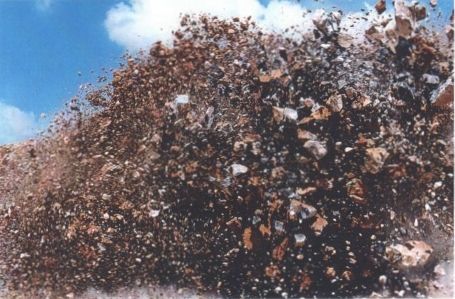
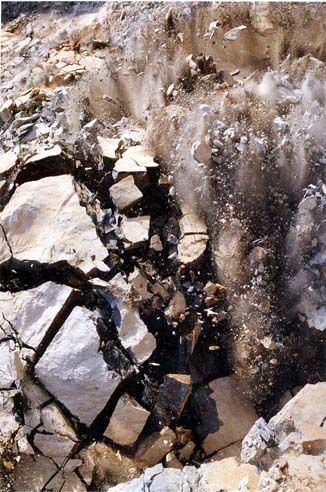
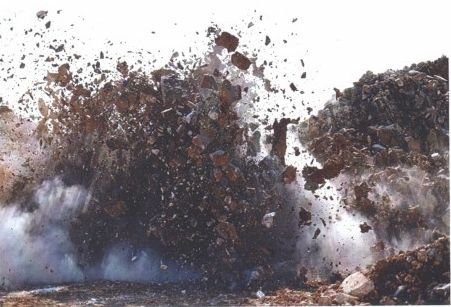
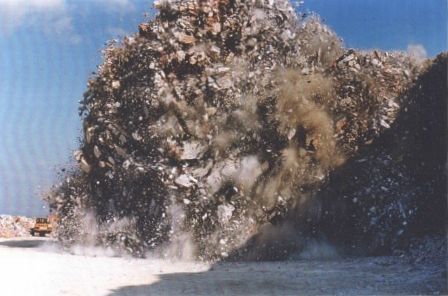
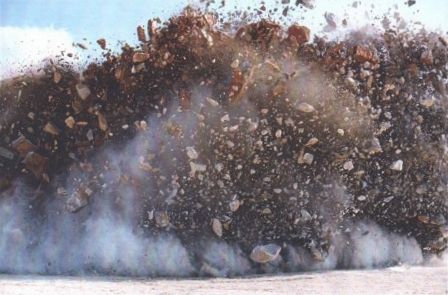
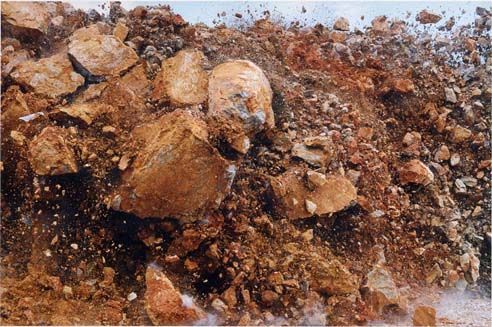
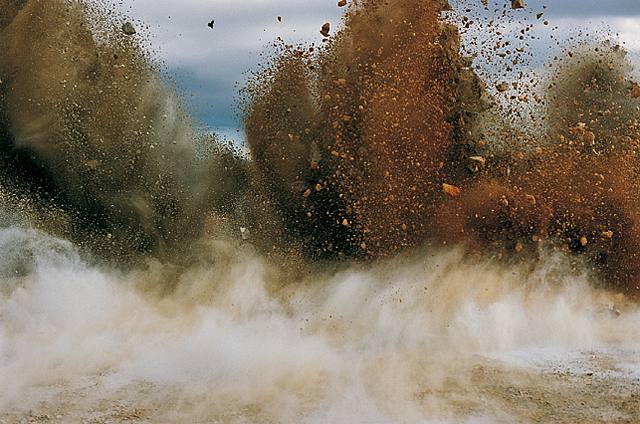
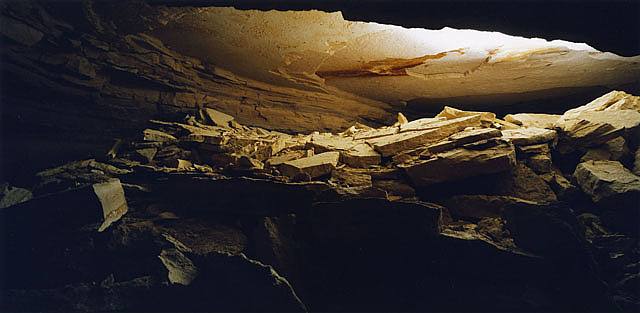
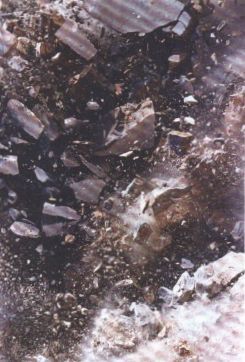
In his “Blast” series of photographs, Naoya Hatakeyama uses remote-control cameras to capture the drama and destruction of Japan’s limestone blasting operations from point-blank range.
The dangerous, close-up views of exploding debris inspire the viewer to consider the human capacity for destruction, while providing a unique perspective on the instant obliteration of these ancient rock formations.
Hatakeyama began photographing Japan’s limestone mining operations in the early 1980s. In 1994, he published Lime Works, a photo book focused on limestone processing facilities.
In 1995, he turned his camera toward the detonation side of the mining process, which he has been photographing ever since.
Limestone, a sedimentary rock consisting mainly of calcium carbonate (CaCO3), is one of the few natural resources in which Japan is totally self-sufficient.
It can be argued that Japan’s (and the world’s) entire way of life is dependent on limestone, a key ingredient in the production of concrete, steel, glass, plastic, and even medicine.
Japan extracts about 200 million tons of limestone from quarries each year, scarring countless mountainsides in the process.
The nation is believed to have an additional 10 billion tons of limestone deposits at its disposal — enough to last another 50 years at the current rate of consumption.