
| Go to Page... |
|
| Current Rating: | |
Community Forum · Est. 2006
|
#1
●
06-12-2008, 04:08 PM
| ||||||||
 ★ ★ GENERAL ★ ★ Poster Rank:41 male Join Date: Oct 2006 Posts: 34,363
Contributions: 35
Mentioned: 2142 Post(s) Quoted: 20673 Post(s)
| ||||||||
|
Charles Manson Case Summary
November 12, 1934 Charles Manson is born in Cincinnati, the illegitimate son of a sixteen-year-old girl named Kathleen Maddox. His father, who Manson never met, was a "Colonel Scott" from Ashland, Kentucky. 1939 Manson's mother, a heavy drinker, is sentenced to prison for armed robbery. 1947 Manson's mother tries to send Charles to a foster home. A court orders him sent to the Gibault School for Boys in Terre Haute, Indiana. 1948 Manson commits his first known crime, the burglary of a grocery store. He is caught and sent to a juvenile detention center. He escapes and commits two armed robberies. Apprehended again, Manson is sent to the Indiana School for Boys in Plainfield, where he spends the next three years--except for brief periods of freedom during eighteen escapes. 1951 Manson escapes from the School for Boys and heads west in a stolen car, burglarizing 15 to 20 gas stations along the way. He is caught in Utah and sent to the National Training School for Boys in Washington, D. C. A psychiatrist calls Manson a "slick" but "extremely sensitive" boy. 1952 In his last act of criminal violence before the 1969 murders, Manson sodomizes a boy while holding a razor to his throat. He is transferred to Federal Reformatory at Petersburg, Virginia. Later in 1952, Manson is moved to a more secure reformatory at Chillicothe, Ohio. 1955 Manson marries Rosalie Willis, a waitress from Wheeling. The couple produces a child, Charles, Jr. Manson works as a parking-lot attendant and busboy--and steals cars. In October, he is arrested for auto theft and sentenced to five years probation 1956 Manson is sentenced to three years imprisonment at San Pedro, California for violating the terms of his 1955 probation. 1958 Manson is divorced. His ex-wife retains custody of their child. Manson is released on parole and becomes a pimp in southern California. 1959 Manson is arrested for forging a treasury check. He is given a ten-year suspended sentence. 1960 In January, Manson marries again--this time, a nineteen-year-old. In April, he is indicted on federal Mann Act charges. He is arrested in Laredo, and brought back to California where is ordered to prison to serve the ten-year sentence that had been suspended in 1959. 1961 Manson is transferred to a federal penitentiary at McNeil Island, Washington. He claims to be a Scientologist. Prison psychiatrists say he has "deep-seated personality problems." 1963 After fathering a second child, Charles Luther Manson, Manson is again divorced. 1964 Manson becomes obsessed by the music of the Beatles. He learns to play a steel guitar. 1966 Manson aspires to be a song writer, and devotes most of his spare time in prison to the task. March 21, 1967 Manson asks prison officials to let him remain in prison, but having completed a ten-year prison term, he is released. He heads for San Francisco. Summer 1968 Manson and a number of his followers, now called "The Family," move into Spahn ranch in southern California. December 1968 The Beatles release their White Album, which proves to be a great influence Manson's thinking. March 23, 1969 Manson visits 10050 Cielo Drive (the Tate residence) looking for Tony Melcher, who he hoped might publish his music. Tate's photographer curtly tells Manson to leave by "the back alley," possibly supplying a motive for the later attack at the Tate home. July 31, 1969 A music teacher named Gary Hinman is stabbed to death. On the wall near the body, in Hinman's blood, was printed "political piggy." August 8, 1969 Manson tells Family members, "Now is the time for Helter Skelter." That evening he tells Patricia Krenwinkel, Susan Atkins, Tex Watson, and Linda Kasabian to get knives and changes of clothes. As he sends them from the ranch on their mission, he tells them "to leave a sign --something witchy." Watson drives to the Tate residence. August 9, 1969 Shortly after midnight, the brutal attack on residents at the Tate residence begins. In all, 102 stab wounds are inflicted on four victims; a fifth victim is shot. Left dead are actress Sharon Tate, Jay Sebring, Voytek Frykowski, Abigail Folger, and Steven Parent. The murders are discovered by housekeeper Winifred Chapman the next morning. The four Family members return to Spahn ranch, where Manson criticizes them for doing a messy job. That night, Manson, along with Patricia Krenwinkel, Tex Watson, Leslie Van Houten, Linda Kasabian cruise around, looking for potential victims. August 10, 1969 In the early morning hours, Family members stab to death Leno and Rosemary LaBianca. The words "Death to Pigs" and "Healter [sic] Skelter" are found printed on a wall and a refrigerator door. September 1, 1969 Under a bush near his home, a ten-year-old boy finds the gun used in the Tate murders. The boy's father turns the gun over to the LAPD. The LAPD fails to do a proper investigation. October 12, 1969 Manson is arrested at Barker Ranch in Death Valley and charged with grand theft auto. He is put in jail in Independence. November 6, 1969 While incarcerated in Los Angeles on other charges, Susan Atkins tells a fellow inmate, Virginia Castro (Graham), that she participated in the Tate murders. She tells Castro of a "death list" of celebrities targeted by the Family, including Elizabeth Taylor, Richard Burton, Tom Jones, Steve McQueen, and Frank Sinatra. November 12, 1969 Al Springer, a visitor to the Spahn ranch, tells LAPD detectives that on August 11 or 12 Charles Manson had bragged about "knocking off five" pigs the other night. November 17, 1969 Danny DeCarlo implicates Manson in the Spahn ranch murder of Shorty Shea, and also suggests that persons at the Spahn ranch might also have been responsible for the Tate murders--but, he tells detectives, he would be afraid to testify. November 18, 1969 Prosecutor Vincent Bugliosi is assigned the Tate-LaBianca case. July 24, 1970 The Tate-LaBianca murder trial, with defendants Charles Manson, Susan Atkins, Patricia Krenwinkel, and Leslie Van Houten, opens in Los Angeles. August 10, 1970 Judge Older grants Linda Kasabian immunity from prosecution for the Tate-LaBianca murders in return for agreeing to appear as the prosecution's star witness at the Manson trial. November 16, 1970 The state rests its case in the Manson trial. November 19, 1970 The defense announces, without having presented any evidence, that it also rests. November 20, 1970 Manson announces that he wishes to testify. He makes a strange statement, saying "The children that come at you with knives are your children. You taught them. I didn't teach them. I just tried to help them stand up...." On cross-examination, Bugliosi asks Manson if he thinks he is Jesus Christ. November 30, 1970 Defense attorney Ronald Hughes fails to show up in court. He is never seen again, leading to speculation he was murdered by The Family. January 15, 1971 Vincent Bugliosi presents the prosecution's closing argument in the Manson trial. January 25, 1971 The jury convicts all Tate-LaBianca defendants of first-degree murder. March 29, 1971 Concluding the penalty phase of the trial, the jury fixes the penalty as death for all four Tate-LaBianca defendants. April 19, 1971 Judge Older sentences Manson to death. Manson is ordered sent to San Quenton's death row. October 1971 Charles "Tex" Watson is convicted on seven counts of first-degree murder. February 18, 1972 The California Supreme Court declares the death penalty unconstitutional and Manson's sentence is automatically reduced to life in prison. October 1972 Manson is transferred to Folsom Prison. May 1976 Manson is sent to Vacaville prison, where he remains for the next nine years. September 25, 1984 Another inmate, claiming "God told me to kill Manson," sets Manson on fire, causing serious burns on large parts of his body. July 1985 Manson is transferred to San Quentin Prison 1988 In a televised interview with Geraldo Rivera, Manson warns, "I'm going to chop up more of you m-----f----ers. I'm going to kill as many of you as I can. I'm going to pile you up to the sky." March 1989 Manson is transferred to Corcoran Prison. 1994 The house at 10050 Cielo Drive, formerly rented by Sharon Tate and Roman Polanski, is demolished. March 1997 Manson is denied parole (for the ninth time) in a hearing broadcast live on Court TV. Manson responds by saying, "That's cool....I'm not saying I wasn't involved [in Helter Skelter]. I'm just saying that I did not break God's law....Thank you." April 2002 Manson is refused parole for the tenth time at a hearing he refused to attend. Manson, now 67, will next be up for parole in 2007. 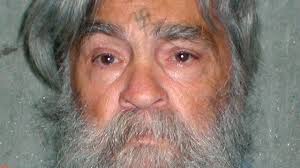 7.1 KB ·2316 views
__________________ Support the site and our continued existance by upgrading to a Green Name |
|
▼ PROMO FROM DOCUMENTING REALITY
 We don't judge Join Now Hidden for upgraded members. |
|
#2
●
06-12-2008, 04:10 PM
| ||||||||
| ★ ★ GENERAL ★ ★ Poster Rank:41 male Join Date: Oct 2006 Posts: 34,363
Contributions: 35
Mentioned: 2142 Post(s) Quoted: 20673 Post(s)
| ||||||||
|
Re: Charles Manson Case Summary
Charles Milles Manson (born November 12, 1934) is an American criminal who led the "Manson Family," a quasi-commune that arose in the U.S. state of California in the later 1960s. He was found guilty of conspiracy to commit the Tate-LaBianca murders, which members of the group carried out at his instruction. Through the joint-responsibility rule of conspiracy, he was convicted of the murders themselves. Manson is associated with "Helter Skelter", the term he took from the Beatles song of that name and construed as an apocalyptic race war that the murders were intended to precipitate. This connection with rock music linked him, from the beginning of his notoriety, with pop culture, in which he became an emblem of insanity, violence, and the macabre. Ultimately, the term was used as the title of the book that prosecutor Vincent Bugliosi wrote about the Manson murders. At the time the Family began to form, Manson was an unemployed ex-convict, who had spent half his life in correctional institutions for a variety of offenses. In the period before the murders, he was a distant fringe member of the Los Angeles music industry, chiefly via a chance association with Beach Boy Dennis Wilson. After Manson was charged with the crimes, recordings of songs written and performed by him were released commercially; artists including Guns 'N' Roses and Marilyn Manson have covered his songs in the decades since. Manson's death sentence was automatically reduced to life imprisonment when a decision by the Supreme Court of California temporarily eliminated the state's death penalty. California's eventual reestablishment of capital punishment did not affect Manson, who is an inmate at Corcoran State Prison. Testimony of Charles Manson There has been a lot of charges and a lot of things said about me and brought against the co-defendants in this case, of which a lot could be cleared up and clarified. . . . I never went to school, so I never growed up to read and write too good, so I have stayed in jail and I have stayed stupid, and I have stayed a child while I have watched your world grow up, and then I look at the things that you do and I don't understand. . . . You eat meat and you kill things that are better than you are, and then you say how bad, and even killers, your children are. You made your children what they are. . . . These children that come at you with knives. they are your children. You taught them. I didn't teach them. I just tried to help them stand up. . . . Most of the people at the ranch that you call the Family were just people that you did not want, people that were alongside the road, that their parents had kicked out, that did not want to go to Juvenile Hall. So I did the best I could and I took them up on my garbage dump and I told them this: that in love there is no wrong. . . . I told them that anything they do for their brothers and sisters is good if they do it with a good thought. . . . I was working at cleaning up my house, something that Nixon should have been doing. He should have been on the side of the road, picking up his children, but he wasn't. He was in the White House, sending them off to war. . . . I don't understand you, but I don't try. I don't try to judge nobody. I know that the only person I can judge is me . . . But I know this: that in your hearts and your own souls, you are as much responsible for the Vietnam war as I am for killing these people. . . . I can't judge any of you. I have no malice against you and no ribbons for you. But I think that it is high time that you all start looking at yourselves, and judging the lie that you live in. I can't dislike you, but I will say this to you: you haven't got long before you are all going to kill yourselves, because you are all crazy. And you can project it back at me . . . but I am only what lives inside each and everyone of you. My father is the jailhouse. My father is your system. . . I am only what you made me. I am only a reflection of you. I have ate out of your garbage cans to stay out of jail. I have wore your second-hand clothes. . . I have done my best to get along in your world and now you want to kill me, and I look at you, and then I say to myself, You want to kill me? Ha! I'm already dead, have been all my life. I've spent twenty-three years in tombs that you built. Sometimes I think about giving it back to you; sometimes I think about just jumping on you and letting you shoot me . . . If I could, I would jerk this microphone off and beat your brains out with it, because that is what you deserve, that is what you deserve. . . . If I could get angry at you, I would try to kill everyone of you. If that's guilt, I accept it . . .These children, everything they done, they done for the love of their brother. . . . If I showed them that I would do anything for my brother--including giving my life for my brother on the battlefield--and then they pick up their banner, and they go off and do what they do, that is not my responsibility. I don't tell people what to do . . . . These children [indicating the female defendants] were finding themselves. What they did, if they did whatever they did, is up to them. They will have to explain that to you. . . . It's all your fear. You look for something to project it on, and you pick out a little old scroungy nobody that eats out of a garbage can, and that nobody wants, that was kicked out of the penitentiary, that has been dragged through every hellhole that you can think of, and you drag him and put him in a courtroom. You expect to break me? Impossible! You broke me years ago. You killed me years ago. . . . [Judge Older asked Manson if he had anything further to say.] I have killed no one and I have ordered no one to be killed. I may have implied on several different occasions to several different people that I may have been Jesus Christ, but I haven't decided yet what I am or who I am. Some called him Christ, Manson said. In prison his name was a number. Some now want a sadistic fiend, and so they see him as that. So be it. Guilty. Not guilty. They are only words. You can do anything you want with me, but you cannot touch me because I am only my love. . . If you put me in the penitentiary, that means nothing because you kicked me out of the last one. I didn't ask to get released. I liked it in there because I like myself. [ Judge Older told Manson, "You seem to be getting far afield." He told Manson to stick to the issue raised in the trial.] The issues? . . . Mr. Bugliosi is a hard-driving prosecutor, polished education, a master of words, semantics. He is a genius. He has got everything that every lawyer would want to have except one thing: a case. He doesn't have a case. Were I allowed to defend myself, I could have proven this to you. . .The evidence in this case is a gun. There was a gun that laid around the ranch. It belonged to everybody. Anybody could have picked that gun up and done anything they wanted to do with it. I don't deny having that gun. That gun has been in my possession many times. Like the rope was there because you need rope on a ranch. . . .It is really convenient that Mr. Baggot found those clothes. I imagine he got a little taste of money for that. . . .They put the hideous bodies on [photographic] display and they imply: If he gets out, see what will happen to you. . . .[Helter Skelter] means confusion, literally. It doesn't mean any war with anyone. It doesn't mean that some people are going to kill other people. . . Helter Skelter is confusion. Confusion is coming down around you fast. If you can't see the confusion coming down around you fast, you can call it what you wish. . Is it a conspiracy that the music is telling the youth to rise up against the establishment because the establishment is rapidly destroying things? Is that a conspiracy? The music speaks to you every day, but you are too deaf, dumb, and blind to even listen to the music. . . It is not my conspiracy. It is not my music. I hear what it relates. It says "Rise," it says "Kill." Why blame it on me? I didn't write the music. . . . Danny DeCarlo. . .said that I hate black men, and he said that we thought alike. . . But actually all I ever did with Danny DeCarlo or any other human being was reflect him back at himself. If he said he did not like the black man, I would say 'O.K.' So consequently he would drink another beer and walk off and say 'Charlie thinks like I do.' But actually he does not know how Charlie thinks because Charlie has never projected himself. I don't think like you people. You people put importance on your lives. Well, my life has never been important to anyone. . . . [Linda Kasabian] gets on the stand and she says when she looked in that man's eyes that was dying, she knew that it was my fault. She knew it was my fault because she couldn't face death. And if she can't face death, that is not my fault. I can face death. I have all the time. In the penitentiary you live with it, with constant fear of death, because it is a violent world in there, and you have to be on your toes constantly. . . . [I taught the Family] not to be weak and not to lean on me. . . .I told [Paul Watkins],"To be a man, boy, you have to stand up and be your own father." So he goes off to the desert and finds a father image in Paul Crockett. . . . I do feel some responsibility. I feel a responsibility for the pollution. I feel a responsibility for the whole thing. . . .To be honest with you, I don't recall ever saying "Get a knife and a change of clothes and go do what Tex says." Or I don't recall saying "Get a knife and go kill the sheriff." In fact, it makes me mad when someone kills snakes or dogs or cats or horses. I don't even like to eat meat-that is how much I am against killing. . . . I haven't got any guilt about anything because I have never been able to see any wrong. . . I have always said: Do what your love tells you, and I do what my love tells me . . . Is it my fault that your children do what you do? What about your children? You say there are just a few? There are many, many more, coming in the same direction. They are running in the streets-and they are coming right at you! Cross-examination by Vincent Bugliosi: Q. You say you are already dead, is that right, Charlie? A. Dead in your mind or dead in my mind? Q. Define it any way you want to. A. As any child will tell you, dead is when you are no more. It is just when you are not there. If you weren't there, you would be dead. Q. How long have you been dead? . . To be precise about it, you think you have been dead for close to 2,000 years, don't you? A. Mr. Bugliosi, 2,000 years is relative to the second we live in. Q. Suffice it to say, Department 104 is a long way from Calvary, isn't that true?... Q. The jury in this case never heard a single, solitary word you said. . .Mr. Manson, are you willing to testify in front of the jury and tell them the same things that you have testified to here in open court today? [ Kanarek objected and Judge Older sustained the objection. Older asked Manson if he now wished to testify before the jury. He replied, "I have already relieved all the pressure I had." Manson left the stand. As he walked by the counsel table, he told his three co-defendants, "You don't have to testify now."] Susan Atkins aka Sadie Mae Glutz (Manson Family Member) As a young teen, Susan Atkins sang in her church choir in San Jose, California and nursed her mother, who was dying of cancer. After her mother's death, however, her life went seriously off course. She fought with her father, dropped out of high school, and moved to San Francisco where she became a topless dancer, hustler, and gun moll. While living in San Francisco's Haight-Ashbury district in 1967, Atkins met Charles Manson. In her grand jury testimony, Atkins said Manson "gave me the faith in myself to be able to know that I am a women....I gave myself to him." Atkins said there was "no limit" to what she would do for "the only complete man I have ever met." To Atkins, Manson "represented a Jesus Christ-like person." Atkins spent a year-and-a-half traveling around the Southwest with other Manson Family members on an old school bus, taking lots of LSD, and practicing free love with Manson Family members of both sexes. In 1968, she bore a child, who Manson helped deliver, named Zezozose Zadfrack Glutz. Atkins moved into the Family's Spahn Ranch in 1969. On August 8 of that year, she obeyed Manson's order to join in the what would be the bloody attack that left five dead at the home of actress Sharon Tate. Atkins later admitted stabbing Voytek Frykowski and holding down Tate while she was stabbed repeatedly by Tex Watson. She also said she wrote "PIG" using Tate's blood on a door of the residence. While being held on other charges in 1969, Atkins explained her decision to participate in the massacre at the Tate residence to another inmate, Virginia Graham: "You have to have real love in your heart to do this for people." The LAPD proposed granting Atkins prosecutorial immunity in return for her testimony that could convict Manson and other Family members. Prosecutor Vincent Bugliosi objected, saying "We don't give that gal anything!" In the end, the prosecution offered not to seek the death penalty in return for her trial testimony--an offer which Atkins, after testifying before the Grand Jury, refused. Atkins, then twenty-two, was convicted of first-degree murder and sentenced to death in 1970. Her sentence was reduced to life imprisonment when the California Supreme Court declared the state's death penalty unconstitutional. Atkins continues to reside at this writing at the California Institution for Women in Frontero. In September 1974, Atkins said her cell door opened and "a brilliant light poured over her." Describing the experience in her 1977 book Child of Satan, Child of God, Atkins said she believed the light was Jesus, telling her she had been forgiven. Like the other two female Tate-LaBianca defendants, Atkins has had an exemplary prison record, but faces no immediate likelihood of parole.
__________________ Support the site and our continued existance by upgrading to a Green Name |
|
#3
●
06-12-2008, 04:15 PM
| ||||||||
| ★ ★ GENERAL ★ ★ Poster Rank:41 male Join Date: Oct 2006 Posts: 34,363
Contributions: 35
Mentioned: 2142 Post(s) Quoted: 20673 Post(s)
| ||||||||
|
Re: Charles Manson Case Summary
Manson Family Member 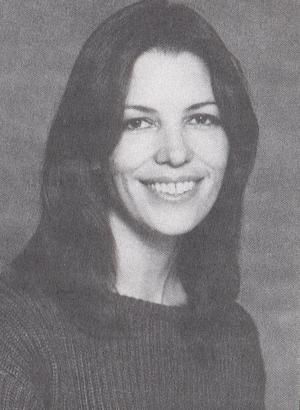 Leslie Van Houten # 13378 #LB314U 16756 Chino Corona Road Frontera, CA 91720 <hr> Leslie Louise Van Houten was born on August 23, 1949 in Los Angeles, California. By all accounts, her auctioneer father and schoolteacher mother were doting, altruistic parents who did everything they could for young Leslie and her brother Paul; their kindness showed even further when they adopted two Korean orphans years later. When Jane and Paul Van Houten divorced, though, Leslie took it extremely hard and immediately started going down a destructive path. She began dating classmate Robert Mackie and became sexually active at age fourteen. She became pregnant that same year and had an abortion; she also began experimenting heavily with LSD, dropping acid with her boyfriend at least once a week. Upon graduating from Monrovia High School in 1967, she enrolled in secretarial school. It was during this period that Leslie, always prone to extremes, became a self-proclaimed "nun" in the Self-Realization Fellowship, a sect that focused on spiritual betterment through yoga techniques. Leslie soon tired of the nun thing, though, and at the age of 18 began wandering around California, seeking fulfillment in sex and drugs. Her travels led her to cross paths with handsome musician Bobby Beausoleil in 1968; the soon became lovers but Leslie still felt empty inside. When she heard of Manson through Beausoleil friend Catherine Share (or Family member Paul Watkins, according to his book) she immediately went to go meet the man in person. It didn't take long for her to become a believer. Despite her big smile and model-good looks, Leslie remained somewhat distant from Manson himself. She was never one of his favorites; even Charlie has said that she was more "Tex's girl" than his. Perhaps this sense of isolation was what led Leslie to try to "prove herself" to the Family on August 10, 1969 by accompanying Manson and several others on a second night of murder following the horrific massacre of five people on the 9th. Around two in the morning Manson dropped off Leslie, Charles Watson and Patricia Krenwinkel to the home of grocery chain owner Leno LaBianca and his shop owner wife Rosemary. Once inside the house Van Houten and Krenwinkel took 38-year-old Rosemary into the master bedroom, put a pillowcase over her head, and wrapped an electrical cord around her neck. Leslie then held the petrified woman down and watched as first Krenwinkel and then Watson stabbed her numerous times. After Watson was done, he told Leslie to stab the woman... and stab her she did, sixteen times in the back. Van Houten has said that she thought Mrs. LaBianca was already dead at the time but was not sure. Whatever the case may have been, there is no doubt that she was dead once Leslie was finished with her. After a California state law overturned her death sentence in 1972, Leslie began to slowly separate herself from Manson's influence. She began taking college course and wrote prolifically. One of her short stories was even published in an anthology of prisoners' writings called "Prose and Cons" in 1976. For a short time she was engaged to the book's editor, an fellow criminal by the name of Frank Earl Andrews. Her next brush with infamy came that same year, when she won a new trial due to ineffective counsel during the initial Tate-LaBianca trial (her lawyer, Ronald Hughes, had been found dead in late 1970). Her first retrial in 1977 ended in a hung jury. Leslie was then released on bail for six months before a second retrial found her guilty of first-degree murder. Since then she has been more or less a model prisoner, with her one downfall being a short-lived jailhouse marriage to an ex-con who allegedly tried to break her out of prison (though it should be noted that Van Houten probably knew nothing of his plan). Her next parole hearing is in 2002. A psychiatrist, after evaluating Leslie Van Houten, described her as "a psychologically loaded gun which went off as a consequence of the complex intermeshing of highly unlikely and bizarre circumstances." The psychiatrist saw Van Houten as "a spoiled little princess" who, from childhood on, was impulsive, easily frustrated, and prone to displays of temper. She admitted, for example, to having beaten her adopted sister with a shoe. Although described as being the least committed to Manson of the three female defendants, Van Houten nonetheless agreed to participate in the murderous raid on the LaBianca home on August 10, 1969. She helped hold down Rosemary LaBianca while Tex Watson stabbed her to death. In a November 1969 interview with police, Van Houten admitted to knowledge of the Tate-LaBianca murders, but denied participation. Van Houten's first attorney, Donald Barnett, was dismissed after crossing Manson. Her second lawyer, Marvin Part, wanted to show that Van Houten was "insane in a way that is almost science fiction." Part saw her crime as influenced by LSD and Charles Manson, but Van Houten saw it differently: "I was influenced by the war in Viet Nam and TV." At Manson's urging, Van Houten fired Part and yet another attorney was appointed. When Van Houten's third attorney, Ronald Hughes, also began pursuing a strategy that ran counter to that favored by Manson (Manson opposed any strategy that suggested the other defendants acted under his influence), the Family had him killed. No one has ever been charged with his murder. Van Houten's first-degreee murder conviction in the Tate-LaBianca trial was overturned by a state appellate court in 1976 on the ground that Judge Older erred in not granting Van Houten's motion for a mistrial following the disappearance of attorney Ronald Hughes. In her first re-trial, the jury was unable to reach a verdict. Released on bond for a few months, Van Houten lived with a former writer for the Christian Science Monitor. She was tried a third time in 1978 and convicted of first-degree murder after the jury rejected her defense of diminished capacity as the result of prolonged use of hallucinogenic drugs. In prison at the California Institution for Women , Van Houten accepted responsibility for her crime: "Being a follower does not excuse." She earned a degree from a correspondence school (with a major in English Lit), edited the prison paper, sewed for the homeless, and wrote short stories. Although no one could find fault with her prison record, she was again denied parole in 2002. Van Houten's life in prison is described in a recent book by Karlene Faith, The Long Prison Journey of Leslie Van Houten (2001). Prior to his representation of Leslie Van Houten in the Tate-LaBianca murder trial, Ronald Hughes had never tried his case. His inexperience showed frequently early on in the trial, but by the trial's midpoint, Prosecutor Vince Bugliosi though he was doing "damn well." Hughes, called "the hippie lawyer" by some, had an intimate knowledge of the hippie subculture that sometimes served his client well. For example, he was able to raise questions about Linda Kasabian's credibility by asking her about hallucinogenic drugs, her belief in ESP, her thoughts that she might be a witch, and her experiencing "vibrations" from Charles Manson. Hughes was among the first lawyers to meet with Charles Manson in December, 1969. Initially signed on as the attorney for Charles Manson, Hughes was replaced by Irving Kanarek two weeks before the start of the trial. As attorney for defendant Leslie Van Houten, Hughes tried to separate the interests of his client from those of Charles Manson. He hoped to show that Van Houten was not acting independently, but was completely controlled in her actions by Manson. Hughes decision to pursue an independent strategy almost certainly cost him his life. On the last weekend of November, 1970, Hughes disappeared while camping in a remote area near Sespe Hot Springs. His badly decomposed body was not discovered until four months later. Although no one was ever charged with the murder of Hughes, at least two Family members have admitted that the killing of Hughes was a "retaliation murder" by Manson. After Hughes disappeared, police searched the garage behind a friend's house that was Hughes's home. In the dirty garage, police saw the mattress Hughes used as his bed and his framed bar certificate on the wall, but no clues that might explain what happened to him.
__________________ Support the site and our continued existance by upgrading to a Green Name |
|
#4
●
06-12-2008, 04:17 PM
| ||||||||
| ★ ★ GENERAL ★ ★ Poster Rank:41 male Join Date: Oct 2006 Posts: 34,363
Contributions: 35
Mentioned: 2142 Post(s) Quoted: 20673 Post(s)
| ||||||||
|
Re: Charles Manson Case Summary
Defendant Patricia Krenwinkel (Manson Family Member) September 1967, twenty-year-old Patricia Krenwinkel joined the Family, leaving behind her Manhattan Beach apartment, her car, her job, and even her last paycheck. She joined many other Family members on a drug-and-sex-filled eighteen-month tour of the American West in an old school bus, before settling into Spahn ranch in 1969. At her sentencing, Krenwinkel idealized the Family's early days: "We were just like wood nymphs and wood creatures. We would run through the woods with flowers in our hair, and Charles would have a small flute." In August 1969, Krenwinkel participated in the murders at the Tate and LaBianca residences. At the Tate home, Krenwinkel dragged Abigail Folger from her bedroom to the living room, fought with her, and stabbed her. Later she would say, "I stabbed her and I kept stabbing her." Asked about how it felt, she replied, "Nothing--I mean, what is there to describe? It was just there, and it was right." The next night, Krenwinkel stabbed Rosemary LaBianca and carved the word "WAR" on Leno LaBianca's stomach. Krenwinkel was arrested near her aunt's home in Mobile, Alabama on December 1, 1969. Krenwinkel had gone to Alabama, she said much later, because she feared Manson would find her and kill her. In February, she waived extradition proceedings and voluntarily returned to California to stand trial with the other defendants. Her trial attorney, Paul Fitzgerald, offered only a weak defense. At one point, Fitzgerald suggested that although Krenwinkel's fingerprints were found inside the Tate home, she might just have been "an invited guest or friend." Krenwinkel spent much of the trial drawing doodles of devils and other satanic figures. At the California Institution for Women in Frontero, Krenwinkel has been a model prisoner. She has, with Leslie Van Houten, counseled young drug offenders, completed a course in data processing, and played on the prison softball team. She has expressed deep remorse for her role in the killings. In a 1994 interview broadcast on ABC, Krenwinkel said, "I wake up every day and know that I'm a destroyer of life, and living with that is the most difficult thing of all. That's what I deserve--to wake up every morning and know that."
__________________ Support the site and our continued existance by upgrading to a Green Name |
|
#5
●
06-12-2008, 04:19 PM
| ||||||||
| ★ ★ GENERAL ★ ★ Poster Rank:41 male Join Date: Oct 2006 Posts: 34,363
Contributions: 35
Mentioned: 2142 Post(s) Quoted: 20673 Post(s)
| ||||||||
|
Re: Charles Manson Case Summary
Defendant Charles "Tex" Watson (Manson Family Member) One of Charles "Tex" Watson's former neighbors in Collin County, Texas described him as "the boy next door." Watson was an "A" student in a high school and a sports star. He held the state record in the low hurdles. According to his uncle, Watson's problems started when he began taking drugs in college. In 1966, he dropped out of college and the next year he was in California, using and dealing drugs. Watson joined the "Family" in 1967, and soon became Manson's right-hand man. Family member Al Springer told police that "Charlie and Tex are the brains out there" on the ranch. Springer described Watson as "just like a college student." He said Watson "kept his mouth shut" and enjoyed working on dune buggies. In August 1969, Watson became the principal killer in the Tate-LaBianca murders. Announcing his arrival at the Tate residence, Watson said, "I am the Devil and I'm here to do the Devil's business." He shot Steven Parent and Jay Sebring, and stabbed to death Voytek Frykowski, Abigail Folger, Sharon Tate, and Leno LaBianca. After the Tate murders, Watson told Manson, "Boy, it sure was helter skelter." Watson returned to McKinney, Texas after the Tate-LaBianca murders. He was arrested in Texas on November 30, 1969, after local police were notified by California investigators that his fingerprints were found to match a print found on the front door of the Tate home. Watson fought extradition to California long enough that he was not included among the three defendants tried with Manson. Instead, Watson went on trial separately in August 1971. His defense attorneys produced eight psychiatrists to prove the glassy-eyed Watson was insane at the time of the murders--or at least suffered from severely diminished capacity. On the witness stand, Watson tried to portray himself as Manson's unthinking slave. (He also testified that the victims at the Tate residence were "running around like chickens with their heads cut off.") The jury convicted Watson of first-degree murder. Watson, who now resides at the Mule Creek State Prison in Ione, California, has renounced Manson and expressed "deepest remorse" to his "many victims." In 1975, Watson became a born-again Christian and, in 1983, an ordained minister. He married a Norwegian wife and has three children. In 1978 he co-wrote a book, Will You Die For Me?
__________________ Support the site and our continued existance by upgrading to a Green Name |
|
#6
●
06-12-2008, 04:23 PM
| ||||||||
| ★ ★ GENERAL ★ ★ Poster Rank:41 male Join Date: Oct 2006 Posts: 34,363
Contributions: 35
Mentioned: 2142 Post(s) Quoted: 20673 Post(s)
| ||||||||
|
Re: Charles Manson Case Summary
Witness Linda Kasabian (Manson Family Member) Linda Kasabian grew up in broken home with a stepfather she strongly disliked. At age 16, she left her mother's home in New Hampshire and headed west "looking," she said, "for God." Instead, she found lots of drugs, lots of sex, and--on July 4, 1969--Charles Manson. Married, mother of a two-year-old girl and pregnant at the time, Kasabian learned from a friend about "this beautiful man named Charlie" and the idyllic life his followers led at Spahn Ranch. To Kasabian, it was the "answer to an unspoken prayer." Soon after arriving at Spahn, Kasabian made love to Manson. She said later that she thought Manson "could see inside her." She soon fell in love with the man who would send her on a mission of death. Kasabian had only been a member of the Family for six weeks when Manson announced, on August 8, 1969, "Now is the time for Helter Skelter." Kasabian joined Tex Watson, Susan Atkins, and Patricia Krenwinkel in traveling to the Tate home, where she witnessed the shooting of Steven Parent and the vicious attacks on Abigail Folger and Voytek Frykowsi. Kasabian did not directly participate in the murders, later telling Manson, "I'm not you, Charlie--I can't kill anybody." The next night Kasabian rode with Manson and other Family members to the LaBianca home, but did not enter the home or see either of the murders. Three days after the LaBianca murders, Kasabian slipped out of Spahn Ranch in a borrowed car and headed for Taos, New Mexico, where she rejoined her husband. After returning to California to retrieve her child, Tanya, Kasabian hitchhiked first to Florida and then to her mother's home in New Hampshire. California authorities issued a warrant for Kasabian's arrest on December 1, 1969. Kasabian voluntarily surrendered to police in Concord, New Hampshire and was flown back to California. She wanted to tell her story. Almost immediately, her attorney, Gary Fleishman, proposed to prosecutors a deal whereby Kasabian would testify against other Family members in return for complete immunity. Having previously made a deal with Susan Atkins, Prosecutor Vince Bugliosi initially rejected the proposal. When Atkins changed her mind and announced she would not testify at the trial, Bugliosi quickly negotiated a deal with Kasabian's attorney: the prosecution would petition for immunity after she testified. Kasabian turned out to be a great witness--brutally frank and very believable. She left the stand after eighteen days of testimony. In his closing argument, Bugliosi said Charles Manson "sent out from the fires of hell at Spahn Ranch three heartless, bloodthirsty robots and--unfortunately for him--one human being, the hippie girl Linda Kasabian." After completing her testimony, Kasabian rejoined he husband and children, moving into a small farm in New Hampshire. She moved to the Pacific Northwest for awhile, living under an assumed name. Later, she left her husband and returned to New Hampshire, where she lived a rough, rather down-and-out life in the 1980s.
__________________ Support the site and our continued existance by upgrading to a Green Name |
|
#7
●
06-12-2008, 04:25 PM
| ||||||||
| ★ ★ GENERAL ★ ★ Poster Rank:41 male Join Date: Oct 2006 Posts: 34,363
Contributions: 35
Mentioned: 2142 Post(s) Quoted: 20673 Post(s)
| ||||||||
|
Re: Charles Manson Case Summary
Vincent Bugliosi Chief Prosecutor (At The Manson Family Case) Bugliosi, chief prosecutor in the Tate-LaBianca murder trials, was born in the northern Minnesota town of Hibbing (also the childhood home of musician Bob Dylan and basketball star Kevin McHale). His family moved to southern California, where Bugliosi graduated from Hollywood High School before attending Miami University on a tennis scholarship. After graduating from UCLA Law School in 1964, Bugliosi took a job in the office of the Los Angeles District Attorney. Bugliosi quickly developed a strong reputation, winning convictions in 103 of 104 felony jury trials. On November 18, 1969, Bugliosi learned that he had been given his greatest responsibility to date: trying the Tate-LaBianca murder case. Bugliosi threw himself into the case, working 100-hour weeks for the almost two years between assignment and sentencing. Unlike many prosecutors, Bugliosi became very involved in the investigation, accompanying detectives on searches of Spahn and Barker ranches, checking on leads, and interviewing key witnesses. Bugliosi's chief goal in the Tate-LaBianca case was securing a first-degree murder conviction of Charles Manson. He identified the key to the case as proving that Manson had total dominion over other Family members. With the important testimony of Linda Kasabian and others, he was successful in doing so. During the course of the trial, Charles Manson told the bailiff, "I am going to have Bugliosi and the judge killed." Knowing Manson's record, officials did not take this to be an idle threat and a bodyguard was assigned to accompany Bugliosi during the remainder of the trial. Bugliosi received numerous hang-up calls during the middle of the night (even when he changed to an unlisted number), but no attempts were made on his life. After Manson's sentencing, Bugliosi had, at Manson's request, a ninety-minute conversation with Manson, in which the convicted killer told him, "I don't have hard feelings" and that he did "a fantastic" job in convicting him. After the Manson trials, Bugliosi took to almost full-time writing. His book about the Manson trial, Helter Skelter, was published in 1974. Other subjects of his writing include the war on drugs, the Kennedy assassination, and a 1996 book on the O. J. Simpson trial, Outrage: The Five Reasons Why O. J. Simpson Got Away With Murder. Two of his most recent books are No Island of Sanity: Paula Jones v Bill Clinton (1998) and The Betrayal of America (2001), a book criticizing the Supreme Court decision handing the presidency to George W. Bush.
__________________ Support the site and our continued existance by upgrading to a Green Name |
|
#8
●
06-12-2008, 04:27 PM
| ||||||||
| ★ ★ GENERAL ★ ★ Poster Rank:41 male Join Date: Oct 2006 Posts: 34,363
Contributions: 35
Mentioned: 2142 Post(s) Quoted: 20673 Post(s)
| ||||||||
|
Re: Charles Manson Case Summary
Irving Kanarek Attorney for Charles Manson Even before his remarkable performance as the defense attorney for Charles Manson in the Tate-LaBianca murder case, Irving Kanarek earned a reputation as an obstructionist of the first order. He was frequently censured by judges. One judge bluntly called him "the most obstructionist man I have ever met." Kanarek has a purpose for his obstructionism tactics: his goal seemed to be to confuse juries and knock opposing attorneys off stride, especially in cases where the evidence against his client was overwhelming. In March 1970, Ronald Hughes--Manson's first attorney--suggested to Manson that Kanarek enter the case as his attorney. Although calling Karerek "the worst man in town I could pick," Manson requested that Kanarek be substituted as his attorney two weeks before the start of trial. Prosecutor Vince Bugliosi strongly objected to the substitution of Kanarek as Manson's attorney, but Judge Older found no legal ground for denying Manson's request and Kanarek. Kanarek may have established some sort of record for objections in the Manson trial. He objected nine times during the prosecution's opening statement, and by the third day of trial had registered more than 200 objections when the press stopped counting. Frequently, Kanarek's objection were made in "shotgun" form, including many suggested grounds that were totally inapplicable: "Leading and suggestive; no foundation; conclusion and hearsay." Other times his objections were intended to influence the jury. For example, he objected to the testimony of Linda Kasabian by declaring, "Object, Your Honor, on the grounds this witness is not competent because she is insane!" Kanarek also bombarded the court with motions, many of them novel to say the least, such as a motion to have "Mr. Manson suppressed from evidence" as the product of an illegal search. Kanarek raised eyebrows for asking bizarre questions, such as when he asked Kasabian (during his seven-day cross-examination after Kasabian's direct testimony in which she revealed she had taken LSD about fifty times), "Describe what happened on trip number twenty-three." Kanarek was found guilty of contempt four times during the Manson trial. The first contempt came when Judge Older found Kanarek guilty of "directly violating my order not to repeatedly interrupt." On two occasions, Kanarek was ordered to overnight in the county jail. Near the end of the long trial, Older told Kanarek he was "totally without scruples, ethics, and professional responsibility." Despite his aggressive representation, Kanarek's work did not always please his client. At one point, Manson was ready to dismiss Kanarek when the defense attorney begged on his knees to keep him. Manson reportedly also threatened at various times to have Kanarek killed. In his seven-day summation--which Judge Older called not an "argument but a filibuster"--, Kanarek argued that the female defendants killed their victims not for Manson, but out of love for Tex Watson. Despite the press's view of Kanarek as something of a joke, Prosecutor Vince Bugliosi had a different opinion. Bugliosi wrote in his book Helter Skelter that Kanarek "frequently scored points." Kanarek was ordered to be inactive by the California State Bar in 1990.
__________________ Support the site and our continued existance by upgrading to a Green Name |
|
#9
●
06-12-2008, 04:30 PM
| ||||||||
| ★ ★ GENERAL ★ ★ Poster Rank:41 male Join Date: Oct 2006 Posts: 34,363
Contributions: 35
Mentioned: 2142 Post(s) Quoted: 20673 Post(s)
| ||||||||
|
Re: Charles Manson Case Summary
Map Showing Key Locations
 193.0 KB ·9160 views
__________________ Support the site and our continued existance by upgrading to a Green Name |
|
#10
●
06-12-2008, 04:37 PM
| ||||||||
| ★ ★ GENERAL ★ ★ Poster Rank:41 male Join Date: Oct 2006 Posts: 34,363
Contributions: 35
Mentioned: 2142 Post(s) Quoted: 20673 Post(s)
| ||||||||
|
Re: Charles Manson Case Summary
Witness Testimony : Linda Kasabian (Manson Family Member) On the influence of Charles Manson over Family members: Direct examination by Vincent Bugliosi: "Did you ever see or observe any members of the Family refuse to do anything that Manson told him or her to do?" "No, nobody did. We always wanted to do anything and everything for him." On the Tate Murders: Direct examination by Vincent Bugliosi: [Departure from Spahn ranch:] "The night of the afternoon that Mr. Manson said 'Now is the time for Helter Skelter,' were you still at the ranch that night?" "Yes." "Was this the evening of August the eighth, 1969?" "I believe so." "What took place that evening, Linda, at the ranch?" "I remember I was standing out front at this one point and Charlie came up to me and pulled me off the porch, and I was standing at the very end of the porch, closest to George Spahn's house, and he told me that-" "He told you what?" "He told me to get a change of clothing, a knife, and my driver's license." "Did Mr. Manson tell you to change the clothing you already had on or to bring an additional change of clothing?" "To bring an additional." "To bring an additional change of clothing?" "Yes." "Now, when you walked up to the car, you say Katie and Sadiethat is Patricia and Susan-were inside the car. Where was Tex?" "He was standing over by the driver's side." "Was he talking to anyone?" "I think he was talking to Charlie." "What is the next thing that happened?" "Tex got in the car, and we started-" "What happened at that point?" "We got about to the middle of the driveway, you know, and Charlie called us and told us to stop, and he came to the car to my side of the window, stuck his head in, and told us to leave a sign. He said, 'You girls know what I mean, something witchy,' and that was it." [Description of the murders] ...."We climbed over a fence and then a light started coming toward us and Tex told us to get back and sit down....A car pulled up, in front of us and Tex leaped forward with a gun in his hand and stuck his hand with the gun at this man's head. And the man said, 'Please don't hurt me, I won't say anything.' And Tex shot him four times." "Did you actually see Tex point the gun inside the window of the car and shoot the man?" "Yes, I saw it clearly" "About how far away were you from Tex at the time that he shot the driver of the car?" "Just a few feet." "After Tex shot the driver four times what happened next?" "The man just slumped over. 1 saw that, and then Tex put his head in the car and turned the ignition off. He may have taken the keys out, I don't know, and then he pushed the car back a few feet and then we all proceeded toward the house and Tex told me to go in back of the house and see if there were open windows and doors, which I did." "Did you find any open doors or windows in the back of the house?" "No, there was no open windows or doors." "What is the next thing that happened, Linda?" "I came around from the back, and Tex was standing at a window, cutting the screen, and he told me to go back and wait at the car, and he may have told me to listen for sounds, but I don't remember him saying it." "While you were down by the car do you know where Tex, Sadie, and Katie were?" "No, I didn't see them." "Did either of those three come down to the car?" "Yes, Katie came down at one point." "Did Katie say anything to you?" "Yes, she asked for my knife, and 1 gave it to her, and she told me to stay there and listen for sounds, and I did, and she left." "When she left, did she walk in the direction of the residence?" "Yes." "Did you see either Patricia Krenwinkel or Susan Atkins or Tex walk into the residence?" "No, I didn't." "Were you all alone by the car?" "Yes." ...."I heard a man scream out 'No. No.' Then I just heard screams. I just heard screams at that point. I don't have any words to describe how a scream is. I never heard it before." "How long did the screaming continue?" "Oh, it seemed like forever, infinite. I don't know." "Was the screaming constant or was it in intervals?" "It seemed constant, I don't know." "Now, what did you do when you heard these screams?" "I started to run toward the house." "Why did you do that?" "Because I wanted them to stop." "What happened after you ran toward the house?" "There was a man just coming out of the door and he had blood all over his face and he was standing by a post, and we looked into each other's eyes for a minute, and I said, 'Oh, God, I am so sorry. Please make it stop.' And then he just fell to the ground into the bushes. And then Sadie came running out of the house, and I said, 'Sadie, please make it stop.' And then I said, 'I hear people coming.' And she said, 'It is too late.' And then she told me that she left her knife and she couldn't find it, and I believe she started to run back into the house. While this was going on the man had gotten up, and I saw Tex on top of him, hitting him on the head and stabbing him, and the man was struggling, and then I saw Katie in the background with the girl, chasing after her with an upraised knife, and I just turned and ran to the car down at the bottom of the hill." "Now, when you told Sadie that people were coming, was that the truth?" "No." "Why did you tell her that?" "Because I just wanted them to stop." "You said you saw Katie. That is Patricia Krenwinkel?" "Yes." "Was she chasing someone?" "Yes." "Was it a man or a woman?" "It was a woman in a white gown." [After the Tate murders] ...."Did Katie and Sadie say anything as you were driving off from the residence?" "Yes." "What did they say?" "They complained about their heads, that the people were pulling their hair, and that their heads hurt. And Sadie even came out and said that when she was struggling with a big man, that he hit her in the head. And also Katie complained of her hand, that it hurt." "Did she say why her hand hurt?" "Yes." "What did she say?" "She said when she stabbed, that there were bones in the way, and she couldn't get the knife through all the way, and that it took too much energy or whatever, I don't know her exact words, but it hurt her hand." ...."Did Tex eventually stop the car?" "Yes, he did." "Do you know where he stopped the car?" "I don't know the names or anything, but it was a street-we had spotted a hose coming out from a house, and we went up the hill and turned around and parked and walked up to the house." "Would you relate what happened, Linda?" "An older woman came running out of the house." "This is the house where the hose was?" "Yes." "All right, what happened next?" "And I don't remember her exact words, but she said, Who is there?' or Who is that, what are you doing?' And Tex said, 'We are getting a drink of water.' Then she got sort of hysterical and she said, 'My husband is a policeman; he is a deputy,' or something like that. And then her husband came out and he said, 'Is that your car?' And Tex said, 'No, we are walking.' " "What is the next thing that happened?" "And we started to walk toward the car." "All four of you?" "Yes. And the man was behind us." "Did the man follow you all the way to the car?" "Yes, he did." "Do you recall what the man looked like?" "I just remember he was old and he had white hair, that is all I remember." "What is the next thing that happened?" "The man was right behind us and he came to the driver's seat and he started to put his hand in the car to reach for the keys and Tex blocked him, grabbed his hand and just jammed, you know." "What is the next thing that happened?" "I remember we came to sort of a level part of the road and through a dirt shoulder, and he pulled off and handed me the clothing and told me to throw them out, which I did." "What clothing are you talking about?" "The clothing that the three, Tex, Katie, and Sadie had changed from." [Return to Spahn ranch] "Was there anyone in the parking area at Spahn Ranch as you drove in the Spahn Ranch area?" "Yes." "Who was there?" "Charlie." "Was there anyone there other than Charlie?" "Not that I know of" "Where was Charlie when you arrived at the premises?" "About the same spot he was in when he first drove away." "What happened after you pulled the car onto the parking area and parked the car?" "Sadie said she saw a spot of blood on the outside of the car when we were at the gas station." "Who was present at that time when she said that?" "The four of us and Charlie." "What is the next thing that happened?" "Well, Charlie told us to go into the kitchen, get a sponge, wipe the blood off, and he also instructed Katie and I to go all through the car and wipe off the blood spots." "What is the next thing that happened after Mr. Manson told you and Katie to check out the car and remove the blood?" "He told us to go into the bunk room and wait, which we did." ...."When was the first time you learned the identity of those five people [killed at the Tate residence]?" "The following day on the news." "On television?" "Yes." "In Mr. Spahn's trailer?" "Yes." "Did you see Tex, Sadie, and Katie during the day following these killings, other than when you were watching television with them?" "Well, I saw Sadie and Katie in the trailer. I cannot remember seeing Tex on that day." On the LaBianca murders "After dinner what did you do, if you recall?" "Charlie came in and called Katie and Leslie and myself aside and told us to get a change of clothes and meet him at the bunk room, which we did." "Did Mr. Manson say anything to you and the others, once you were all together in the bunk house?" "Yes, he did." "What did he say?" "He said we were going to go out again tonight. Last night was too messy and that he was going to show us how to do it." "Now, Linda, you testified that the first night you had the idea that you were going on a creepy-crawly mission; you did not know there was going to be any killing, is that correct?" "Yes, that's right." "The second night did you know what was going to happen?" "Yes." "Did you want to go along with Mr. Manson and the others on the second night?" "No." "Why did you go along if you didn't want to?" "Because Charlie asked me and I was afraid to say no." [In search of victims] ...."What happened after you stopped in front of this house?" "Charlie got out of the car and told me to drive around the block." "Did he get out of the car by himself?" "Yes, he did." "Did you in fact drive around the block?" "Yes, I did." "With the other people?" "Yes." "Did you come back to the front of the house?" "Charlie was standing in approximately the same spot I left him, and he got back in the car." ...."Charlie told us that when he had walked up to the house and looked into the window that he saw pictures of children on the wall, and he said he couldn't do it, he couldn't go in, but he said later on that we shouldn't let children stop us for the sake of the children of the future." "Was Mr. Manson continuing to give you directions?" "Yes, he was." "Where did he direct you to drive at that point?" "I don't know the district or the areas, but residential areas, houses, and we came to one point, I remember I was really tired, I just could not drive anymore, so he just took over the driving and then I remember we started driving up a hill with lots of houses, nice houses, rich houses, and trees. We got to the top of the hill and turned around and stopped in front of a certain house and we all looked at the house." ...."Did anything unusual happen while you were driving east on Sunset Boulevard in the residential area?" "Yes, after I had been driving for a few minutes there was a small white sports car in front of us and there [were] stoplights here and there, and Charlie-" "Do you know who was in the car?" "I believe it was a man, one person." "No one else was in the car with him?" "No, I don't think so." "Did Mr. Manson say anything to you with respect to that car?" "Yes, he did." "What did he say to you?" "He told me to follow it and at the next stoplight when it was green to pull up beside it." "When the stop light was green?" "I mean, excuse me, red, I get my colors mixed up. So that we were stopped. It would have been red, excuse me. Charlie wanted me to pull up beside the car, and Charlie was going to get out and kill the man, shoot the man, whatever." "Did you in fact pull up next to this white sports car at a red light?" "Yes, I did." "Did Mr. Manson get out of the car or start to get out of the car?" "He proceeded to get out of the car, yes." "And what happened at that point?" "The light turned green, so the car left." [At the LaBianca home] ...."When had you been parked in front of that home prior to this occasion?" "A year before, approximately, in July of 1968." "What was the occasion for your being in that particular location a year earlier?" "My husband and I and friends were on our way down from Seattle, Washington, to New Mexico and we stopped off in Los Angeles, and this one particular person knew Harold True, so we went to his house and had a party." "Is this the house in front of which Manson told you to stop the car?" "Yes, it is." "Now, when Manson directed you to stop in front of Harold True's place, did you recognize the spot?" "Yes, I did right away." "Did you say anything to Manson with respect to this?" "Yes." "What did you say to him?" "Charlie, you are not going into that house, are you?" "Did he say anything to you when you said that to him?" "Yes, he did, he said, 'No, I'm going next door.' " "What was the next thing that happened?" "He got out of the car alone." "Did all of you remain in the car?" "Yes, we did." "What is the next thing that happened?" "I saw him put something in his pants, an object, I don't know what it was." "What is the next thing that he did?" "He disappeared up the walkway, the driveway leading toward Harold's house, and 1 could not follow him any longer. He just disappeared." "Several minutes?" "Yes." "What happened after Mr. Manson returned to the car?" "He called Leslie and Katie and Tex out of the car." "Was he out of the car at that point, too?" "Yes." "What happened next?" "Sadie-excuse me-Clem [Tufts] jumped in the backseat with Sadie and I pushed over on the passenger side, and I heard bits and pieces of the conversation that he had with Tex and Katie." "What did you hear him say?" "I heard him say that there was a man and a woman up in the house, and that he had tied their hands and that he told them not to be afraid; that he was not going to hurt them." "Did he say anything else to Leslie, Katie, and Tex?" "Yes, at one point he instructed them, for Leslie and Tex, to hitchhike back to the ranch, and for Katie to go to the waterfall." [After the LaBianca murders] ...."Did he tell you to do anything with respect to this wallet after he handed it to you?" "Yes, he did." "What did he tell you?" "He told me to take the change out of the wallet and to wipe off the fingerprints, and then-this is while we were driving off-and we drove a few blocks, and he told me that he would stop, and he wanted me to throw it out on the sidewalk." "Well, when he gave you those instructions about wiping the fingerprints off the wallet, did you do that?" "Yes, I did." "Did you remove the change from the wallet?" "Yes, I did." "What did you do with the change?" "I believe I put it in the glove compartment." ...."Did he tell you why he wanted you to throw the wallet out of the window?" "Yes, he did. He said he wanted a black person to pick it up and use the credit cards so that the people, the establishment would think it was some sort of an organized group that killed these people." ...."What happened after you stopped the car?" "We all got out of the car, started walking toward the beach, we got down to the beach, walked on the sand, and Charlie told Clem and Sadie to stay a little bit behind us. And Charlie and I started walking hand in hand on the beach, and it was sort of nice, you know, we were just talking, and I gave him some peanuts, and he just made me forget about everything, just made me feel good....I told him I was pregnant and started walking. We got to a side street, a corner, and a police car came by and stopped and asked what we were doing. And Charlie said, 'We are just going for a walk.' Charlie said something like, 'Don't you know who I am?' or 'Don't you remember my name?' They just said no. It was a friendly conversation. It just lasted for a minute. Then they walked back to the car." "With respect to this conversation with the policemen, did they write your names down?" "Not that I saw, no." [Searching for still more victims] ...."Then he looked at me and he said, 'What about that man you and Sandy met?' He said, 'Isn't he a piggy?' I said, 'Yes, he is an actor.' And then he further questioned me and he asked me if the man would let him in. And I said, 'Yes.' And he asked me if the man would let my friends in, Sadie and Clem. And I said, 'Yes.' And he said, 'Okay. I want you to kill him,' and he gave me a small pocket knife. And at this point I said, 'Charlie, I am not you, I cannot kill anybody.' And I don't know what took place at that moment, but I was very much afraid. And then he started to tell me how to go about doing it, and I remember I had the knife in my hand, and I asked him, With this? 'And he said, 'Yes,' and he showed me how to do it. He said, 'As soon as you enter the residence, the house, as soon as you see the man, slit his throat right away.' And he told Clem to shoot him. And then, also, he said if anything went wrong, you know, not to do it." "What happened after you arrived at this man's apartment?" "Charlie wanted me to show him where he lived." "Did you do that?" "Yes, I did." "Did you get out of the car with Charlie?" "Yes." "What about Sadie and Clem?" "No, they stayed behind." "What is the next thing that happened?" "We entered the building and we walked up the stairs. I am not sure in took him to the top floor-I am not sure exactly what floor I took him to. Then I pointed out a door which was not his door." "Which was not the actor's door?" "Yes." "What is the next thing that happened?" "Then we walked back downstairs to the car, and he gave Clem a gun." "Charlie Manson gave him a gun?" "Yes. At this point he said something--" "When you say 'he,' you are talking about Charles Manson?" "Yes. He said that if anything went wrong, you know, don't do it; and of course, to hitchhike back to the ranch, and for Sadie to go to the waterfall." ...."Did either Clem or Sadie say anything to Mr. Manson at this point?" "No, not that I know of" "Then you say Charlie drove off?" "Yes." "What is the next thing that happened?" "Clem, Sadie, and myself walked up-I believe I took them to the fourth floor, because I know I didn't go all the way to the top, and I went-as I entered the hallway, whatever it is, where all the doors are, I went straight to-to the first door, and I knocked. They hid behind the corner." "When you say 'they,' you are referring to whom?" "Sadie and Clem. And I knocked on the door, which I knew wasn't the door, and a man said, 'Who is it?' And I said, 'Linda.' And he sort of opened the door and peeked around the corner, and Ij ust said, 'Oh, excuse me. Wrong door.' " "And that was it? How long did you look at this man who opened the door?" "Just for a split second."
__________________ Support the site and our continued existance by upgrading to a Green Name |


