|
#1
●
01-08-2014, 04:57 PM
| ||||||||
| My Rank: CORPORAL Poster Rank:1597 Female Join Date: Mar 2010 Posts: 349 Mentioned: 3 Post(s) Quoted: 210 Post(s)
| ||||||||
|
*Update* Brain-dead Woman Kept Alive Only to Incubate Her Baby
http://www.nytimes.com/2014/01/08/us...port.html?_r=2 FORT WORTH — The diagnosis was crushing and irrevocable. At 33, Marlise Munoz was brain-dead after collapsing on her kitchen floor in November from what appeared to be a blood clot in her lungs. But as her parents and her husband prepared to say their final goodbyes in the intensive care unit at John Peter Smith Hospital here and to honor her wish not to be left on life support, they were stunned when a doctor told them the hospital was not going to comply with their instructions. Mrs. Munoz was 14 weeks pregnant, the doctor said, and Texas is one of more than two dozen states that prohibit, with varying degrees of strictness, medical officials from cutting off life support to a pregnant patient. More than a month later, Mrs. Munoz remains connected to life-support machines on the third floor of the I.C.U., where a medical team monitors the heartbeat of the fetus, now in its 20th week of development. Her case has become a strange collision of law, medicine, the ethics of end-of-life care and the issues swirling around abortion — when life begins and how it should be valued. “It’s not a matter of pro-choice and pro-life,” said Mrs. Munoz’s mother, Lynne Machado, 60. “It’s about a matter of our daughter’s wishes not being honored by the state of Texas.” Mrs. Munoz’s father, Ernest Machado, 60, a former police officer and an Air Force veteran, put it even more bluntly. “All she is is a host for a fetus,” he said on Tuesday. “I get angry with the state. What business did they have delving into these areas? Why are they practicing medicine up in Austin?” Mrs. Munoz’s parents said they wanted to see the law overturned, but they have not sought any legal action against the hospital, though they have not ruled it out either. The hospital maintains that it is following the law, although several experts in medical ethics said they believed the hospital was misinterpreting it. A crucial issue is whether the law applies to pregnant patients who are brain-dead as opposed to those in a coma or a vegetative state. The law, first passed by the Texas Legislature in 1989 and amended in 1999, states that a person may not withdraw or withhold “life-sustaining treatment” from a pregnant patient. Mr. and Mrs. Machado said the hospital had made it clear to them that their daughter was brain-dead, but hospital officials have declined to comment on Mrs. Munoz’s care and condition, creating uncertainty over whether the hospital has formally declared her brain-dead. A spokeswoman for the J.P.S. Health Network, the publicly financed hospital district in Tarrant County that runs the 537-bed John Peter Smith Hospital, defended the hospital’s actions. “In all cases, J.P.S. will follow the law as it applies to health care in the state of Texas,” the spokeswoman, Jill Labbe, said. “Every day, we have patients and families who must make difficult decisions. Our position remains the same. We follow the law.” Ms. Labbe said that neither she nor the doctors could answer questions about Mrs. Munoz’s condition because her husband had not signed the paperwork allowing them to speak to the news media about his wife’s care. At least 31 states have adopted laws restricting the ability of doctors to end life support for terminally ill pregnant women, regardless of the wishes of the patient or the family, according to a 2012 report from the Center for Women Policy Studies in Washington. Texas is among 12 of those states with the most restrictive such laws, which require that life-support measures continue no matter how far along the pregnancy is. Legal and ethical experts, meanwhile, said they were puzzled by the conflicting accounts of her condition. Brain death, an absence of neurological activity, can be readily determined, they said. It is legally death, even if other bodily functions can be maintained. “If she is dead, I don’t see how she can be a patient, and I don’t see how we can be talking about treatment options for her,” said Thomas W. Mayo, an expert on health care law and bioethics at the Southern Methodist University law school in Dallas. Arthur L. Caplan, director of medical ethics at NYU Langone Medical Center in Manhattan, agreed. “The Texas Legislature can’t require doctors to do the impossible and try to treat someone who’s dead,” Mr. Caplan said. “I don’t think they intended this statute the way the hospital is interpreting it.” Critics of the hospital’s actions also note that the fetus has not reached the point of viability outside the womb and that Ms. Munoz would have a constitutional right to an abortion. The restrictive measures were largely adopted in the 1980s, with the spread of laws authorizing patients to make advance directives about end-of-life care like living wills and health care proxies, said Katherine A. Taylor, a lawyer and bioethicist at Drexel University in Philadelphia. The provisions to protect fetuses, she said, helped ease the qualms of the Roman Catholic Church and others about such directives. “These laws essentially deny women rights that are given others to direct their health care in advance and determine how they want to die,” Ms. Taylor said. “The law can make a woman stay alive to gestate the fetus.” In Texas, the law and the hospital’s efforts to abide by it have drawn support among opponents of abortion. “The unborn child should be recognized as a separate person,” said Joe Pojman, executive director of Texas Alliance for Life. He added, “I would say that, even if she were brain-dead, I would favor keeping treatments going to allow the child to continue to survive, with the hope the child could be delivered alive.” Jeffrey P. Spike, professor of clinical ethics at the University of Texas medical school in Houston, said there were some known examples of fetuses having been kept alive while a terminally ill or brain-dead mother was on a respirator. But in every case he knew of, he said, those steps were in line with the family’s wishes. Mrs. Munoz’s parents and her husband, Erick Munoz, 26, remain in limbo, even as they and other relatives help care for the Munozes’ 15-month-old son, Mateo.Mr. Munoz has returned to his job as a firefighter but continues to sit by his wife’s side at the hospital. She had been due to give birth in mid-May, but the hospital’s plans for the fetus — as well as its health and viability — remain unknown. Mr. Machado said he had been told by the hospital’s medical team that his daughter might have gone an hour or longer without breathing before her husband woke and discovered her, a situation he believes has seriously impaired the fetus. “We know there’s a heartbeat, but that’s all we know,” he said. Mrs. Machado said the doctors had told her that they would make a decision about what to do with the fetus as it reached 22 to 24 weeks, and that they had discussed whether her daughter could carry the baby to full term to allow for a cesarean-section delivery. “That’s very frustrating for me, especially when we have no input in the decision-making process,” Mr. Machado added. “They’re prolonging our agony.” On Tuesday afternoon, in the rural community about 30 minutes outside downtown Fort Worth where they live, Mr. Machado and his wife took care of Mateo while the boy’s father was at work in Crowley. As he held Mateo in his arms, Mr. Machado recalled touching his daughter’s skin as she lay in the hospital. “She felt more like a mannequin,” Mr. Machado said. “That makes it very hard for me to go up and visit. I don’t want to remember her as a rubber figure.” 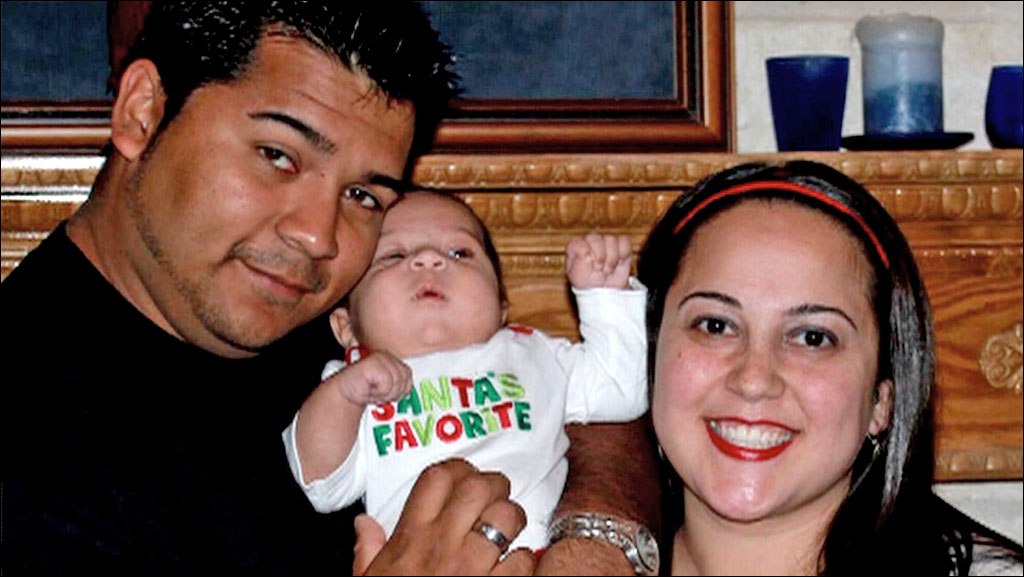 · |
|
#2
●
01-09-2014, 05:34 AM
| ||||||||
 My Rank: MAJOR Poster Rank:94 Male Join Date: Aug 2009 Posts: 16,998 Mentioned: 9 Post(s) Quoted: 1899 Post(s)
| ||||||||
|
Re: *Update* Brain-dead Woman Kept Alive Only to Incubate Her Baby
So the baby should be denied life because of the Mothers wishes?
|
|
#4
●
01-09-2014, 08:50 AM
| ||||||||
 ★ Legacy Member ★ Poster Rank:52 Join Date: Mar 2013 Posts: 28,076
Contributions: 37
Mentioned: 175 Post(s) Quoted: 11875 Post(s)
| ||||||||
|
Re: *Update* Brain-dead Woman Kept Alive Only to Incubate Her Baby
I wonder if when the mother put together her wishes, she ever contemplated being pregnant? That certainly puts a different spin on this. Personally, I think it's crappy that her family would even consider taking her off life support and basically killing that baby. That baby is the only living part of their now dead mother, and you would think that family would be so happy to have some part of their daughter/wife left to carry on.  |
|
#5
●
01-09-2014, 12:25 PM
| ||||||||
 ♚ Legacy Gold Member ♚ Poster Rank:35 Female Join Date: Nov 2008 Posts: 43,394
Contributions: 204
Mentioned: 95 Post(s) Quoted: 2282 Post(s)
| ||||||||
|
Re: *Update* Brain-dead Woman Kept Alive Only to Incubate Her Baby
Wow, that's a very difficult one. The family would terminate a child and grandchild. I'd have thought the dad would want that? Very hard choice  |
|
#7
●
01-09-2014, 02:59 PM
| ||||||||
 My Rank: FIRST SERGEANT Poster Rank:414 Female Join Date: Dec 2009 Posts: 2,881
Contributions: 6
Mentioned: 11 Post(s) Quoted: 692 Post(s)
| ||||||||
|
Re: *Update* Brain-dead Woman Kept Alive Only to Incubate Her Baby
But what if the baby was without oxygen for too long? What if the baby suffered severe brain damage or some other severe impairment?
|
|
#8
●
01-09-2014, 09:12 PM
| ||||||||
| My Rank: PRIVATE FIRST CLASS Poster Rank:4311 Join Date: Dec 2013 Posts: 70 Mentioned: 4 Post(s) Quoted: 27 Post(s)
| ||||||||
|
Re: *Update* Brain-dead Woman Kept Alive Only to Incubate Her Baby
I would think they would want to have the baby. I find it weird that that seemed against it kind of, but then again maybe they were just pissed that they felt like the hospital was telling them what to do. I wonder at 24 weeks if they can tell anything is wrong with the baby? If the baby is brain dead I know it could still have a heartbeat, but I wonder if it would stop moving around in the womb, and not be active like regular babies are. |
|
#9
●
01-09-2014, 10:07 PM
| ||||||||
 My Rank: CORPORAL Poster Rank:1743 male Join Date: Mar 2013 Posts: 307 Mentioned: 0 Post(s) Quoted: 95 Post(s)
| ||||||||
|
Re: *Update* Brain-dead Woman Kept Alive Only to Incubate Her Baby
Does the fetus have brain activity, or is it also dead, being kept alive by a machine. Want to take bets which one dies first, this woman or that fat girl? |
|
#10
●
01-10-2014, 01:48 AM
| ||||||||
 I POOP ON U Poster Rank:130 Female Join Date: Oct 2009 Posts: 12,645
Contributions: 3
Mentioned: 12 Post(s) Quoted: 1263 Post(s)
| ||||||||
|
Re: *Update* Brain-dead Woman Kept Alive Only to Incubate Her Baby
What fucking bullshit. Her wishes and her family's wishes should be honored. It's creepy as hell to keep a body alive as an incubator; the only time it is remotely okay is when the mother has specifically requested it (and even then it's still creepy). If the baby can survive if removed from the body, take it out. If not, it dies with the mother when she's taken off life support, because that is what she requested happen to her body. To use another person's body as a life support system without their knowledge or consent (or expressly against their wishes) is to deny them the basic right of ownership and sovereignty of their own body. I hope all of you who support this realise the full implications of it. |