|
#32
●
10-08-2011, 01:41 AM
| ||||||||
 ★ Legacy Member ★ Poster Rank:6 What we've got here is failure to communicate. Join Date: Aug 2009 Posts: 103,591
Contributions: 3
Mentioned: 111 Post(s) Quoted: 43397 Post(s)
| ||||||||
|
Re: Michael Jackson Trial
Baby photos everywhere? fucking disgusting.  I am tired of hearing what a shitty upbringing he had, some of us have had much much worse, he was a filthy human being hiding behind his fame and money so he could be a perve with impunity. I am tired of hearing what a shitty upbringing he had, some of us have had much much worse, he was a filthy human being hiding behind his fame and money so he could be a perve with impunity.
|
|
#33
●
10-08-2011, 03:28 PM
| ||||||||
 ♚ Legacy Gold Member ♚ Poster Rank:34 Female Join Date: Nov 2008 Posts: 43,403
Contributions: 204
Mentioned: 95 Post(s) Quoted: 2281 Post(s)
| ||||||||
|
Re: Michael Jackson Trial
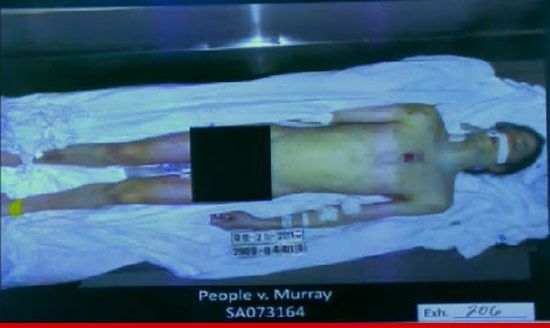
Interesting case  That picture on the trolley is very sad That picture on the trolley is very sad  Wonder what the verdict will be? Can't wait, I predict "manslaughter". |
|
#34
●
10-08-2011, 03:29 PM
| ||||||||
| ♚ Legacy Gold Member ♚ Poster Rank:34 Female Join Date: Nov 2008 Posts: 43,403
Contributions: 204
Mentioned: 95 Post(s) Quoted: 2281 Post(s)
| ||||||||
|
Re: Michael Jackson Trial
I 100% agree there Steve, millions have shitty upbringings. This is all Liberal bollocks trying to justify people's behaviour.
|
|
#37
●
10-10-2011, 01:32 AM
| ||||||||
 ★The Queen★ Poster Rank:67 Female Join Date: Jun 2011 Posts: 23,498
Contributions: 120
Mentioned: 95 Post(s) Quoted: 3083 Post(s)
| ||||||||
|
Re: Michael Jackson Trial
No ifs, ands or buts, the, "doctor", is a murderer. I was convinced before hearing any of Michael's words or seeing the above picture. I read the autopsy a few months ago. I was not a fan, although the man was extremely talented, but, it is so sad to hear how concerned he was with pleasing his fans. It just wasn't my type of music. I hope he will rest in peace and that they lock up his murderer. Any idiot, (the "doctor"), who would give drugs to a person who was as out of it as Michael was before his death, doesn't deserve freedom. He should rot in Hell with Casey Anthony and all of the others.
|