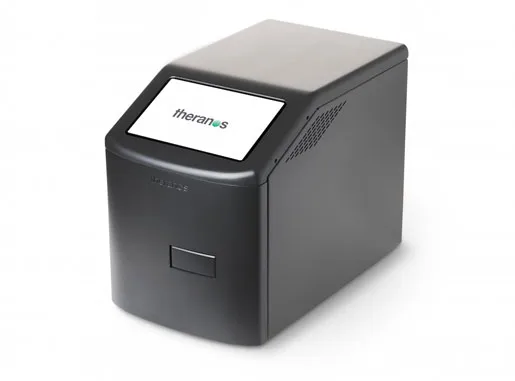
|
#1
●
09-03-2026, 07:04 PM
| ||||||||
| My Rank: STAFF SERGEANT Poster Rank:763 Join Date: Jun 2020 Posts: 1,064 Mentioned: 1 Post(s) Quoted: 440 Post(s)
| ||||||||
|
This Makes Me Think of Star Trek
It makes me think of the Tricorder in Star Trek give it a few years and the advent of quantum processors and what takes six days now could possibly take 6 seconds What times we are living in the are some very cool things being discovered https://news.sky.com/video/share-13579846 |
|
#2
●
09-04-2026, 02:09 AM
| ||||||||
| ♚ Legacy Gold Member ♚ Poster Rank:490 Join Date: Jan 2010 Posts: 2,162
Contributions: 3
Mentioned: 2 Post(s) Quoted: 492 Post(s)
| ||||||||
|
Re: This Makes Me Think of Star Trek
Kinda reminds me of this.  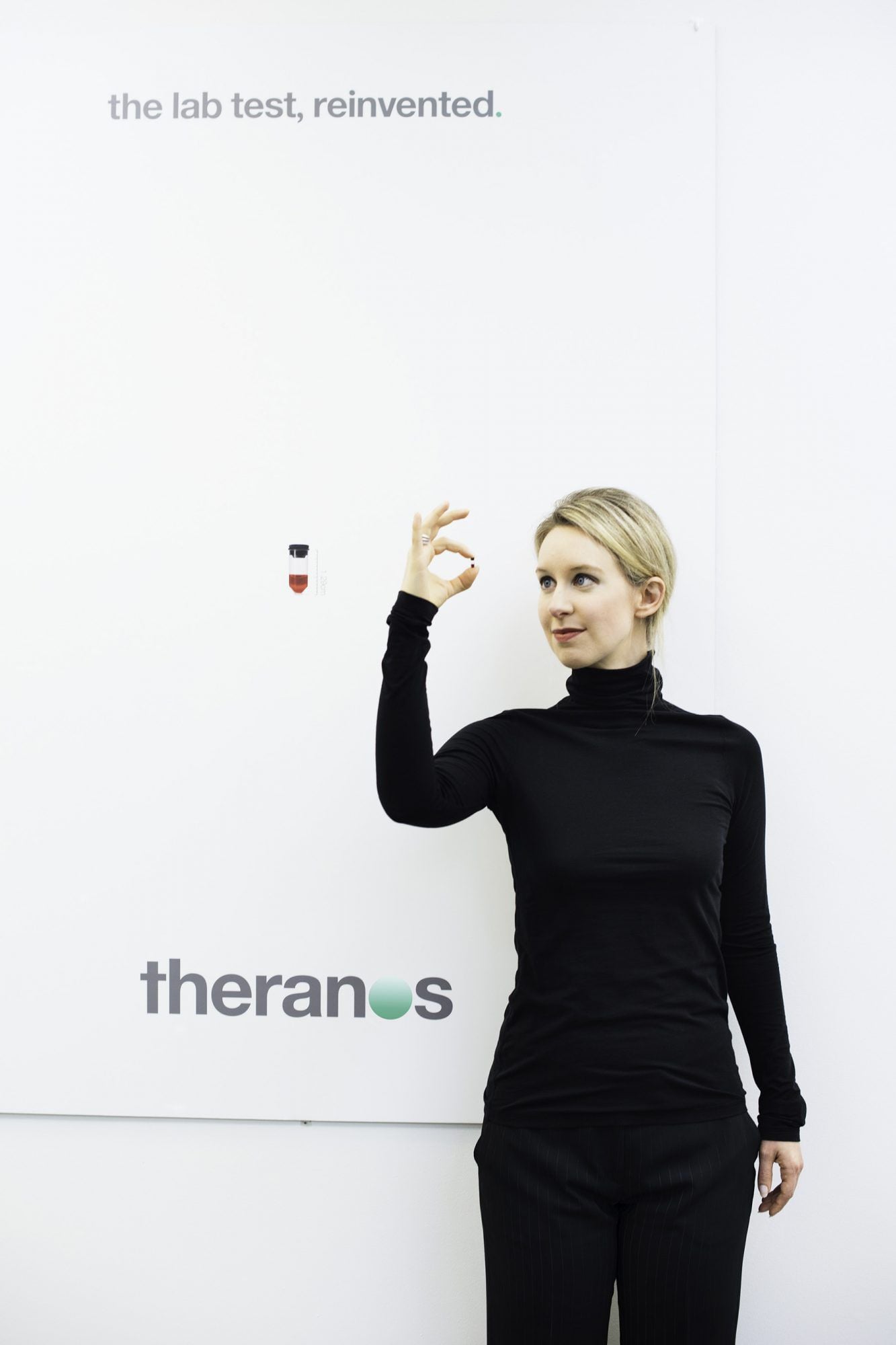 · |
|
#4
●
09-04-2026, 03:22 AM
| ||||||||
 ✝Mudderator from Hell✝ Poster Rank:10 e-mail Join Date: Oct 2006 Posts: 96,382
Contributions: 817
Mentioned: 476 Post(s) Quoted: 10320 Post(s)
| ||||||||
|
Re: This Makes Me Think of Star Trek
12 years ago this test took 2-7 days and nowadays 6-12 hours  There are plans/tests to speed this up to minutes which is even cooler. Extracting DNA from f.i. a sticky respiratory sample, cleaning it and destroying the human DNA, so you only look at the virus/bacteria, takes up to 2 hours. It also takes up to 2 hours for the machine to generate a sufficient volume of data to give doctors a mathematically 90%+ accurate answer before a computer script filters out billions of human DNA and map the leftover codes to identify the pathogen. Engineers have created automated microfluidic lab-on-a-chip cartridges. Instead of a lab robot moving liquids back and forth through multiple steps, a tiny enclosed cartridge will use chemical and physical forces to isolate and clean pathogen DNA automatically. This will cut sample preparation down from hours to less than 15 minutes. Actually those microfluidic cartridges are widely used today, but only for simpler, targeted tests like a rapid Covid-19, flu or strep PCR test, the provider will often drop your swab into a sealed plastic cartridge. The cartridge automatically extracts the genetic material and gives an answer in 15 to 30 minutes. However metagenomics is way more complex than a standard PCR test, preventing it from being easily shrunken onto a cheap disposable chip. In a respiratory or blood sample, 99% of the DNA is human. Before sequencing, the system must chemically target, filter and destroy the human DNA while leaving the fragile virus or bacteria DNA intact. To feed DNA into a advanced sequencer, the DNA fragments must have specific chemical adapters physically glued to their ends. Doing this delicate molecular chemistry inside microscopic fluid channels at a mass-manufactured scale is incredibly difficult. Currently, the computer waits to gather a substantial amount of data before it gives a highly accurate answer. In the future, specialized AI algorithms can recognize a deadly pathogen from just the first few fragments of DNA that pass through the nanopore, allowing the computer to flag a diagnosis within 10 to 30 minutes of the sequencing starting. By shrinking the 2-hour prep time down to 15 minutes, and using smart AI to read the real-time data streaming out of the nanopore device almost instantly, the total 6-hour process will eventually shrink to an under-an-hour test. The moment DNA strands slide through a nanopore, the machine, even using AI, starts generating massive streams of digital data. A classical computer must then take those billions of individual genetic code letters and perform pairwise sequence analysis. It manually compares the patient’s live data against giant reference databases containing millions of known mutations for every virus, bacterium and fungus on Earth. Traditional microchips process these searches line-by-line or in parallel batches. Because pathogens mutate constantly, mapping highly complex, overlapping or completely new viral strains creates a mathematical matrix so huge that it stretches classical hardware to its absolute limit. It takes time to find the exact match. And now the catch: Instead of checking DNA sequences one-by-one against a database, a quantum algorithm (like Grover's search or Quantum image representation frameworks applied to genomics) can evaluate millions of potential genetic combinations simultaneously. Because a quantum processor can cross-reference data instantly, it doesn't need to wait for a Nanopore machine to sequence an entire long strand of viral DNA. The moment the very first few letters of a pathogen's code stream out of the pore, a quantum-enhanced algorithm can identify the match. This already began actually. https://www.quantinuum.com/blog/quan...r-in-genomics# When this tech matures, hospitals won't have massive quantum computers in the basement. Instead, a compact desktop sequencer will stream raw data directly to a cloud-based quantum computer. Minute 1–2: The sample is prepped on a rapid cartridge. Minute 3: The sequencer starts reading the DNA. Minute 4: The cloud-based quantum processor instantly filters the human DNA and identifies the pathogen out of a billion possibilities. Minute 5: The doctor reads the exact name of the virus on his iPad. To match the Star Trek tricorder speed, solid-state electronic biosensors and direct optical scanning are going to be the next thing to get in in seconds. Future devices won't extract DNA at all, instead, they will use graphene field-effect transistors. Graphene is a layer of carbon just one atom thick that conducts electricity perfectly. Scientists can coat a graphene chip with specific bio-receptors. When a pathogen (like a virus particle from the saliva/blood or breath) touches the chip, it instantly alters the electrical current of the graphene. The chip registers the infection electronically in milliseconds, completely skipping the need for chemical mixing. Future handheld devices will use neuromorphic chips, microchips that physically mimic the neural architecture of the human brain, or compact, room-temperature diamond quantum processors built directly inside the handheld scanner. This means the AI and quantum-matching power won't live in the cloud as it will live inside the device in your hand. The second the electronic sensor detects a viral particle, the internal chip matches the pattern and flashes the name of the illness on the screen in real-time. In Star Trek doctor McCoy never even poked the patient with a needle, he just waved the scanner over them. hmmm. We are already experimenting with Raman spectroscopy and mid-infrared laser scanning meaning when you shine a highly specific, harmless laser through a patient's skin or onto their breath, the light bounces off the molecules inside their body. Every virus, bacteria and blood biomarker alters the light waves in a highly unique way, creating a molecular fingerprint. An advanced internal AI can interpret these light patterns instantly, giving a full diagnostic readout in less than 2 seconds just by looking at you. |
|
#5
●
09-04-2026, 04:03 AM
| ||||||||
 My Rank: MAJOR Poster Rank:57 Join Date: Jul 2008 Posts: 25,817 Mentioned: 136 Post(s) Quoted: 13190 Post(s)
| ||||||||
|
Re: This Makes Me Think of Star Trek
I will always say that Elizabeth Holmes was right. In theory it can work and it within 2 decades that tech will exist like they promised. I’m pretty sure those patents would be defined as FRAND (same with Apple potentially developing accurate non invasive blood glucose monitoring) those patens will be so necessary for any onward product to even exit that they have to license that stuff out |
|
#6
●
09-04-2026, 10:48 AM
| ||||||||
| ♚ Legacy Gold Member ♚ Poster Rank:93 Male Join Date: Nov 2009 Posts: 17,080 Mentioned: 8 Post(s) Quoted: 4676 Post(s)
| ||||||||
|
Re: This Makes Me Think of Star Trek
Well, it looks like the FINAL END to burning witches at the stake to see if they are real or not!  These wacky technology folks are ALWAYS coming up with something new! |
|
#7
●
09-05-2026, 05:11 PM
| ||||||||
 ♚ Legacy Gold Member ♚ Poster Rank:5006 (=^x^=)… Join Date: May 2019 Posts: 54 Mentioned: 1 Post(s) Quoted: 17 Post(s)
| ||||||||
|
Re: This Makes Me Think of Star Trek
It does. But what she was proposing was widely and scientifically flawed as junk science and she lacked any skills or knowledge in the laboratory to pull this off. Thank god she’s in prison (I think), skanky c-word!
|
|
#8
●
09-05-2026, 05:14 PM
| ||||||||
| ♚ Legacy Gold Member ♚ Poster Rank:5006 (=^x^=)… Join Date: May 2019 Posts: 54 Mentioned: 1 Post(s) Quoted: 17 Post(s)
| ||||||||
|
Re: This Makes Me Think of Star Trek
Go to NIH, PubMed… What she suggested has never been scientifically confirmed. You simply cannot diagnose or do a complete blood test with one drop of blood. I have worked with companies who have tried this and the results were all over the place vs the standard phlebotomy required for normal blood testing. If one has never worked in a lab or processed specimens of this sort, one cannot truly understand, and I have. Thank you. |
|
#10
●
09-09-2026, 08:14 PM
| ||||||||
 Feet Like Pigs Trotters Poster Rank:106 DOWNUNDER STILL RAPES TODDLERS Join Date: May 2010 Posts: 15,460 Mentioned: 54 Post(s) Quoted: 7742 Post(s)
| ||||||||
|
Re: This Makes Me Think of Star Trek
Faust I can't believe you're actually trying to argue the toss with somebody who is qualified and experienced in that field of biological analysis. JFC man  You've posted a link to medical publication that I know for a fact you don't have the slightest chance of understanding. But posting the link might fool some readers here into thinking you DO have knowledge on this subject, but the truth is you don't. For the benefit of the other people in this thread, I am just going to point out that Faust is well known for feeding people's comments into an AI prompt and then asking AI to come up with a valid counterpoint, which he sometimes will then copy verbatim into his response, but (more often than not), he will just post links, especially if the subject matter is something that goes straight over his head. |