|
#1
●
02-03-2012, 08:22 AM
| ||||||||
 My Rank: MASTER SERGEANT Poster Rank:587 Male Join Date: Feb 2011 Posts: 1,633 Mentioned: 1 Post(s) Quoted: 53 Post(s)
| ||||||||
|
GJ 667Cc: Fourth Planet That Could Support Life Found
GJ 667Cc: fourth planet that could support life found February 3, 2012 - 7:40AM International astronomers say they have found the fourth potentially habitable planet outside our solar system with temperatures that could support water and life about 22 light-years from Earth. The team analysed data from the European Southern Observatory about a star known as GJ 667C, which is known as an M-class dwarf star and puts out much less heat than our Sun. However, at least three planets are orbiting close to the star, and one of them appears to be close enough that it likely absorbs about as much incoming light and energy as Earth, has similar surface temperatures and perhaps water. The new rocky planet, GJ 667Cc, orbits its star every 28.15 days - meaning its year equals about one Earth month - and has a mass at least 4.5 times that of Earth, according to the research published in Astrophysical Journal Letters. "This planet is the new best candidate to support liquid water and, perhaps, life as we know it," said Guillem Anglada-Escud who was with the Carnegie Institution for Science when he conducted the research but has since moved on to the University of Gottingen in Germany. The theory about water, however, cannot be confirmed until astronomers learn more about the planet's atmosphere. Other planets circling the same star - which is part of a three-star system - could include a gas-giant and an additional super-Earth with an orbital period of 75 days, but more observations are needed to confirm that. Some experts have been skeptical that M-class dwarf stars could have planets that support life because they are too dim and tend to have lots of solar flare activity, which could send off lethal radiation to nearby planets. And even though this star, GJ 667C, has a much lower abundance of elements heavier than helium, such as iron, carbon, and silicon - the building blocks of terrestrial planets - than our Sun, astronomers are intrigued by the possibilities. "This was expected to be a rather unlikely star to host planets. Yet there they are, around a very nearby, metal-poor example of the most common type of star in our galaxy," said co-author Steven Vogt, a professor of astronomy and astrophysics at University of California Santa Cruz. "The detection of this planet, this nearby and this soon, implies that our galaxy must be teeming with billions of potentially habitable rocky planets." French astronomers in May last year confirmed the first exoplanet, Gliese 581d, to meet key requirements for sustaining life. It is a rocky planet about 20 light-years away. Swiss astronomers reported in August that another planet, HD 85512 b, about 36 light-years away seemed to be in the habitable zone of its star. The US space agency NASA confirmed its first such planet late last year, Kepler 22b, about 600 light-years away. http://www.smh.com.au/technology/sci...203-1qw53.html 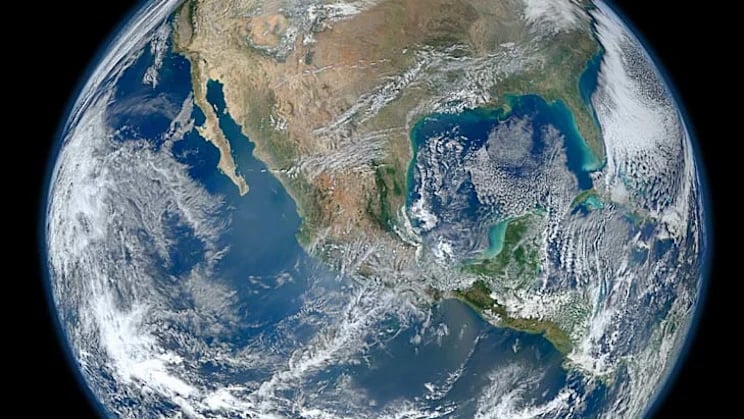 · |
|
#3
●
05-07-2026, 07:07 AM
| ||||||||
 ✝Mudderator from Hell✝ Poster Rank:10 e-mail Join Date: Oct 2006 Posts: 96,382
Contributions: 817
Mentioned: 476 Post(s) Quoted: 10320 Post(s)
| ||||||||
|
Re: GJ 667Cc: Fourth Planet That Could Support Life Found
In 2013, researchers initially suggested the system might be packed with up to 7 planets, incl. 3 in the habitable zone. However, subsequent analyses in 2014 concluded that most of these signals—specifically for planets d, e, f, and g—were likely false positives caused by the star's own magnetic activity and rotation. Only two planets, GJ 667Cb and GJ 667Cc, are currently considered truly confirmed by most of the scientific world. Research in late 2013/2014 highlighted a major threat, tidal heating. Due to its eccentric orbit, the planet experiences internal friction 300 times greater than Earth's. This could lead to a molten mantle, potentially turning the surface into a lava world and significantly lowering its chances of being habitable. Instead of being perfectly tidally locked (1:1), simulations suggest GJ 667Cc is likely trapped in a 3:2 resonance which similar to Mercury, meaning it rotates 3 times for every 3 orbits around its star. Studies in 2023, using new age-rotation relations estimate the system is approximately 6.1 billion years old. This is older than our solar system, which theoretically allows more time for complex life to evolve, provided the atmosphere survived earlier, more active stages of the star. Data from telescopes like Chandra and Hubble show the planet is hit by X-ray and UV radiation much more intensely than Earth. This high-energy bombardment is detrimental to atmospheric retention and water inventories unless the planet possesses a very strong magnetic field. https://phl.upr.edu/hwc Based on the most recent data and the refined 2026 shortlists, here are the 10 exoplanets with the highest Earth Similarity Index (ESI) and temperatures most likely to support liquid water. 1. Teegarden's Star b at a distance of 12.5 light-years. It currently holds the highest ESI (0.95). It has a very high probability of a mild, Earth-like temperature. 2. TOI-700 d at a distance of 101.4 light-years. A standout discovery by NASA's TESS mission. It orbits a relatively quiet star, increasing its chances of keeping an atmosphere. 3. K2-72e at a distance of 217light-years and is a small, rocky world that receives almost the exact same amount of starlight as Earth does from the Sun. 4. TRAPPIST-1 e at a distance of 39.5 light-years. Widely considered the most habitable of the 7 TRAPPIST planets due to its density and position in the system. 5. The wellknown Proxima Centauri b at a distance of 4.2 light-years being our closest neighbor. Despite solar flares from its star, it remains a top candidate for liquid water. 6. Luyten b (GJ 273b) at a distance of 12.2 light-years and is located in the habitable zone and a primary target for Messaging Extraterrestrial Intelligence efforts. 7. Ross 128 b at a distance of 11 light-years. It orbits a very quiet red dwarf, meaning it is less likely to be blasted by life-killing radiation. 8. Kepler-1649c at a distance of 301 light-years and was discovered in 2020. This planet is almost a twin of Earth in both size and temperature. 9. GJ 667Cc at a distance of 23.6 light-years and is mention in the OP post above. 10. Wolf 1061c at a distance of 13.8 light-years. Situated on the inner edge of its habitable zone, it is often described as a warm Earth or super-Venus. The James Webb Space Telescope is currently performing transmission spectroscopy on planets TRAPPIST-1 e and Luyten b to see if they contain oxygen, carbon dioxide or methane. =============================================== New things coming up: 1. Exoplanet-hunting telescope to begin search for another Earth in 2026. Europe's next big space mission -- a telescope that will hunt for Earth-like rocky planets outside of our solar system is on course to launch at the end of 2026. PLATO, or PLAnetary Transits and Oscillations of stars, is being built to find nearby potentially habitable worlds around Sun-like stars that we can examine in detail. PLATO isn't just an exoplanet hunter, however. It is also a stellar science mission. Unlike most space telescopes, PLATO has multiple cameras -- including a UK-named one called ArthurEddington, after the famous astronomer and physicist who won the Royal Astronomical Society's Gold Medal in 1924. It has 24 'Normal' cameras (N-CAMs) and 2 'Fast' cameras (F-CAMs). The N-CAMs are arranged into four groups of six cameras, with the cameras in each group pointing in the same direction but the groups slightly offset. This gives PLATO a very large field of view, improved scientific performance, redundancy against failures, and a built-in way to identify 'false positive' signals that might mimic an exoplanet transit. 2. ARIEL by ESA in 2029 This is a dedicated mission to survey the chemical makeup of roughly 1,000 exoplanet atmospheres, providing the first large-scale census of alien air. 3. The Extremely Large Telescope (ELT) will be ready in 2030 and is currently under construction in Chile. This will be the world's largest optical telescope. Its ANDES instrument is specifically built to search for signs of life in the atmospheres of Earth-like planets. https://www.cam.ac.uk/research/news/...-other-planets 4. Terra Hunting Experiment (2025/2026) This is a new robotic telescope in the Canary Islands tasked with a 10-year search specifically for Earth twins orbiting Sun-like stars. 5. Nancy Grace Roman Space Telescope by NASA in 2027. This will use a coronagraph to block out starlight, allowing for direct imaging of planets that are otherwise hidden by their star's glare. 6. Habitable Worlds Observatory by NASA in 2040's and currently in early development, this will be the ultimate Super-Hubble designed specifically to identify and image at least 25 potentially habitable worlds and search for chemical biosignatures. https://habitableworldsobservatory.org/home Also cool projects to get there. Breakthrough Starshot aka The Laser Sail. This is currently the most credible near-future project. Instead of a massive ship, it proposes using ultra-light Starchips (gram-scale cameras and sensors) attached to light sails. A massive 100-gigawatt ground-based laser array would blast the sail for a few minutes. This could accelerate the probes to 20% the speed of light (\(60,000\) km/s). At this speed, we could reach Proxima Centauri in 20 years and GJ 667Cc in about 120 years. In 2024–2025, researchers successfully tested new silicon-nitride sail materials that can withstand the intense heat of the laser without melting. For larger, crewed ships, traditional chemical rockets are useless. NASA and DARPA are currently focusing on the DRACO Project in 2027. This mission will test nuclear thermal propulsion in Earth's orbit. While intended for Mars, it's a stepping stone toward faster interstellar engines. Research into compact fusion reactors could potentially provide the constant acceleration needed to shave centuries off interstellar travel times. If we could build a ship that travels at 90% the speed of light, a trip to GJ 667Cc would take about 24 years for those on Earth. However, for the travelers on the ship, the journey would feel like only about 10 years due to Einstein's theory of relativity. While a Star Trek style warp drive is still theoretical, physicists like Erik Lentz have published new models for solitonic"warp bubbles. Previous models required negative energy (which might not exist). New calculations suggest that warp bubbles could potentially be created using standard high-density matter, though the energy required is still more than our entire planet produces. So Proxima b with Breakthrough Starshot lasts 20 years to reach but with Warp Drive 4.2 years. |
|
#4
●
05-07-2026, 09:41 PM
| ||||||||
| ♚ Legacy Gold Member ♚ Poster Rank:93 Male Join Date: Nov 2009 Posts: 17,080 Mentioned: 8 Post(s) Quoted: 4676 Post(s)
| ||||||||
|
Re: GJ 667Cc: Fourth Planet That Could Support Life Found
Fuck Me! A NEW YEARS DAY Celebration EVERY MONTH?!?!? That's a LOT of drinking!  |
|
#5
●
05-08-2026, 10:59 AM
| ||||||||
 ★ Legacy Member ★ Poster Rank:522 Male Join Date: Jul 2010 Posts: 1,985 Mentioned: 1 Post(s) Quoted: 245 Post(s)
| ||||||||
|
Re: GJ 667Cc: Fourth Planet That Could Support Life Found
Hee hee! AND, humanity seems to just lately be grasping that life comes in many forms that don't require liquid water, too: it's likely literally EVERYwhere, to some degree or other. With the Pantygon's starting to release more UFO/UAP stuff (today), plus 'Disclosure Day' coming out next month... Well maybe, finally, things are about to get interesting? Only drawback (for me) is that it could happen during the reign of the great orange asshat (literally one of the worst human beings that ever drew breath), so he'd 'get credit'. Still, fingers crossed, yo.  |
|
#6
●
05-10-2026, 12:01 PM
| ||||||||
 ★ Legacy Member ★ Poster Rank:111 Secret Agent Join Date: Dec 2009 Posts: 14,397 Mentioned: 6 Post(s) Quoted: 2994 Post(s)
| ||||||||
|
Re: GJ 667Cc: Fourth Planet That Could Support Life Found
We think we’re so intelligent but in reality are still pretty much cavemen. When humanity figures out how to enjoy our neighboring countries instead of wanting to conquer them we might have a chance. Until then our lack of intelligence will keep us grounded for another billion years.  |