|
#1
●
03-08-2023, 10:13 PM
| ||||||||
 These are the rooms Poster Rank:26 of ruin. Join Date: Sep 2014 Posts: 54,011 Mentioned: 145 Post(s) Quoted: 30403 Post(s)
| ||||||||
|
Symmetrical Peripheral Gangrene
Source. This case is out of Ireland: A previously well 28-year-old female patient of Mexican origin presented to the emergency department with a 24-hour history of persistent vomiting, diarrhoea, rigours and epigastric pain. On further questioning, the patient admitted to generalized neck pain in the previous 24 hours but denied photophobia, headaches or rashes. She returned from a trip to Spain five days prior to her presentation and reported no sick contacts before or during her trip. The patient was lethargic and hemodynamically unstable on arrival - heart rate 138 bpm, blood pressure 64/30 mmHg, respiratory rate 22/min and temperature 37.6 degrees Celsius. Soft epigastric tenderness was demonstrated on physical examination with no guarding or rebound tenderness on deeper palpation. Initial laboratory studies yielded severe metabolic acidosis characterized by an arterial blood gas pH of 7.21 and lactate of 10.5mmol/l. Further laboratory investigations revealed a white blood cell count of 1.7 x10⁹/l, a platelet count of 20 x109/l, C-reactive protein (CRP) level of 374 mg/l, creatinine level of 357 umol/l, urea level of 12.5 mmol/l, international normalized ratio (INR) of 2.6, D dimer of >4400 ng/ml and fibrinogen of 1.27 g/l. The results of an initial portable chest X-ray and dipstick urinalysis were normal. Blood cultures were taken immediately and broad-spectrum antibiotics with fluid resuscitation were promptly commenced. She was urgently transferred to the intensive care unit (ICU) where her condition significantly deteriorated requiring emergency intubation to protect her airway. The patient remained hypotensive, warranting significant vasopressor and inotropic support. She initially required vasopressin 0.04 units/min (2.4 units/hr) that was weaned off over 17 hours, noradrenaline 0.65 mcg/kg/min (40 mcg/min) that was weaned to 0.16 mcg/kg/min by 24 hours, and adrenaline 0.65 mcg/kg/min (40 mcg/min) that was weaned off by 30 hours. The patient was also transfused with four pools of platelets in the first 24 hours. An initial differential diagnosis of septic shock secondary to meningococcal meningitis was considered based on her recent travel and symptoms, however, a lumbar puncture was contraindicated due to her severe thrombocytopenia. Peripheral pallor and cyanosis were noted bilaterally in her hands and feet on day one. On examination, her fingertips and feet were cold to touch and her capillary refill time was prolonged at >3-4 seconds. Bilateral radial pulses were present, however, posterior tibial pulses and dorsalis pedis pulses were diminished. At this stage, the suggestion of acute bilateral upper limb and lower limb ischemia secondary to DIC was considered. At 48 hours, her blood cultures grew meningococcus that was sensitive to ceftriaxone and meropenem, which she was started on, and the public health department was notified as per national guidelines [6]. Prophylaxis was also provided to close contacts and the staff caring for her. The bilateral peripheral pallor and cyanosis progressed to a dusky violet colour by day two (Figure 1). Her peripheral pulses were present and confirmed with a handheld bedside Doppler ultrasonography and a diagnosis of impending vascular ischemia was still being considered. The patient’s platelet count remained critical and thus heparinization was still contraindicated at this stage. Vascular surgical consult opted for conservative management and a wait-and-watch policy until the patient’s sepsis had fully resolved. Her platelet count slowly recovered by day three and continuous venovenous hemofiltration therapy was initiated to manage her persistent acidotic state and unresolving anuria. The patient improved significantly over the course of day three and was weaned from vasopressin. Although still intubated, she became more alert and engaged with staff at times. She began to show signs of severe pain in her upper and lower limbs, with a visible extension of the dusky violet to her limbs (Figure 2). Dialysis was ceased on day four and all inotropic support was weaned by day five. Her peripheries deteriorated further with vesicles and bullae developing on her feet by day five. The tips of all 10 digits of both upper and lower limbs had progressed to demarcated areas of dry gangrene at this stage (Figure 3, Figure 4). She was extubated on day seven, and by day nine, the patient’s platelets had fully recovered and a conservative treatment plan of neuropathic analgesia, prophylactic low molecular weight heparin and daily dressings was implemented, with optimal pain control by the specialist pain team. A spontaneous detachment of her necrotic fingertips occurred with minimal cosmetic and neuropathic injury. Her lower limbs continued to demonstrate significant gangrenous changes with areas of severe skin desquamation and blistering changes that remained warm to touch. The ischemic changes localised to her toes while the rest of her feet improved with healthy pink tissue appearing from the previously blistered areas. The patient remained an inpatient receiving intense physiotherapy, pain management and psychiatric assessment. There was total regression of necrotic tissue on all her fingertips by day 70 and the dry gangrenous area of all 10 digits on the feet had become clearly demarcated and ceased to improve (Figure 5). During week 10, the patient underwent an elective bilateral amputation of all the toes at the metatarsophalangeal joints and a vacuum dressing was applied (Figure 6), as her toes were deemed unsalvageable and became malodorous, suggesting a deep soft tissue infection. She required a total of three further wound debridements under general anaesthetic and application of vacuum-assisted closure (VAC) dressing, as this was deemed unsuitable at a ward level at the present time. At seven weeks post-operative, the dressings were changed on a biweekly basis, with weekly input from the plastic surgery team. She continued with extensive physiotherapy and rehabilitation, and following a full resolution of all infection, underwent a reconstructive free flap three months following her initial amputation procedure. 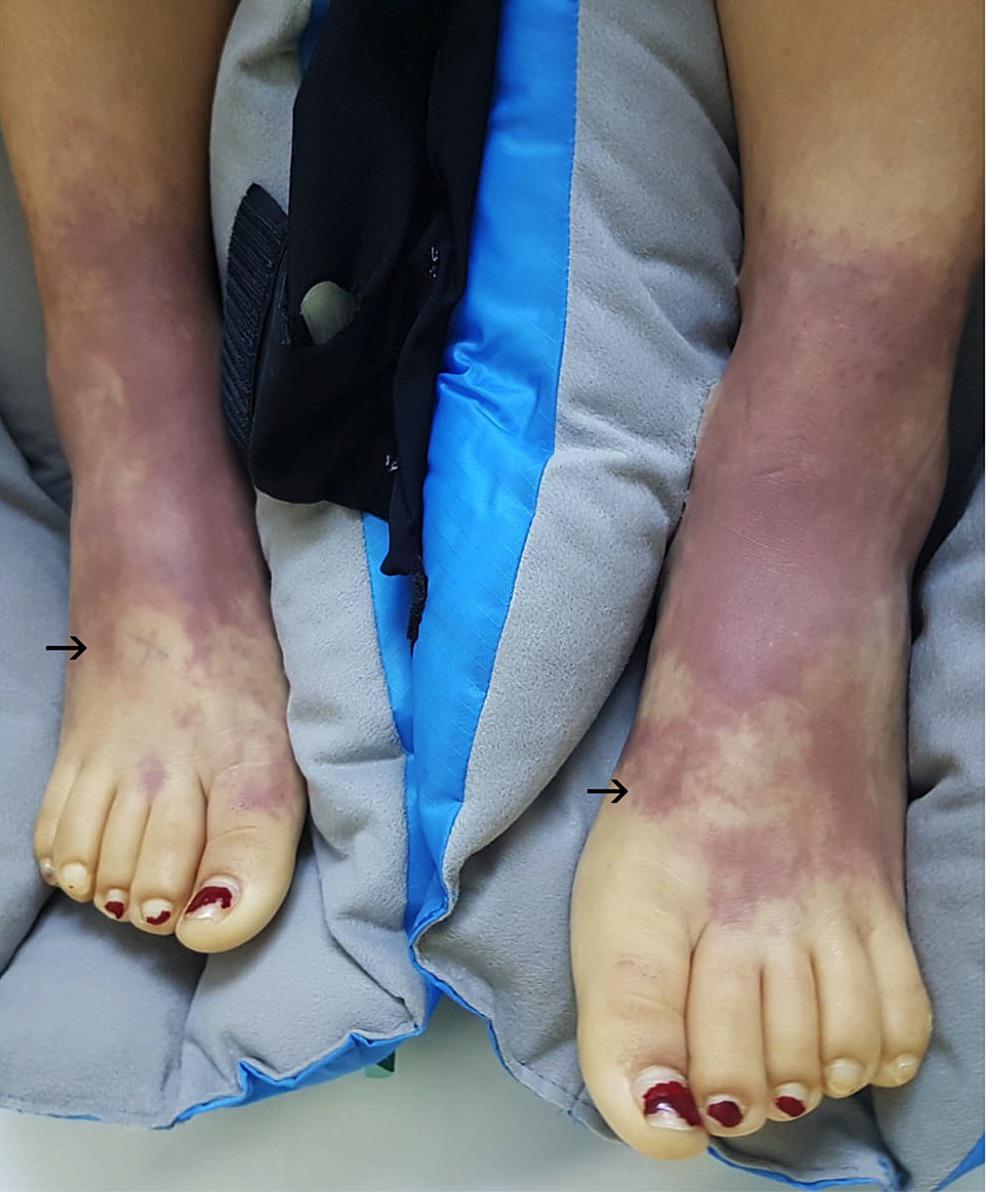 · 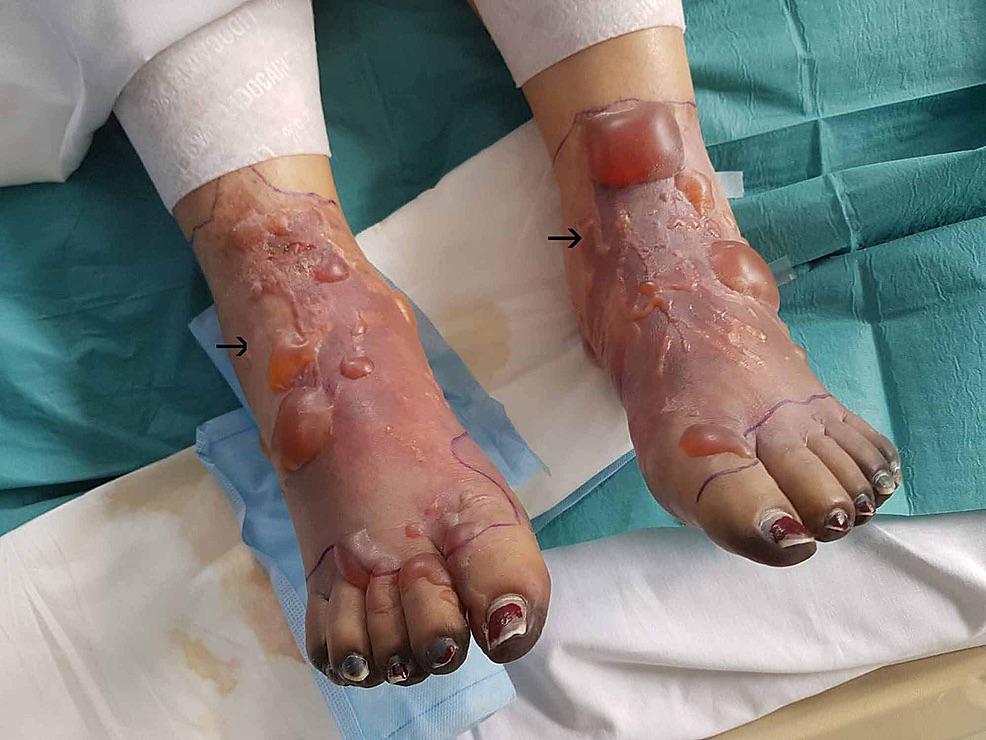 · 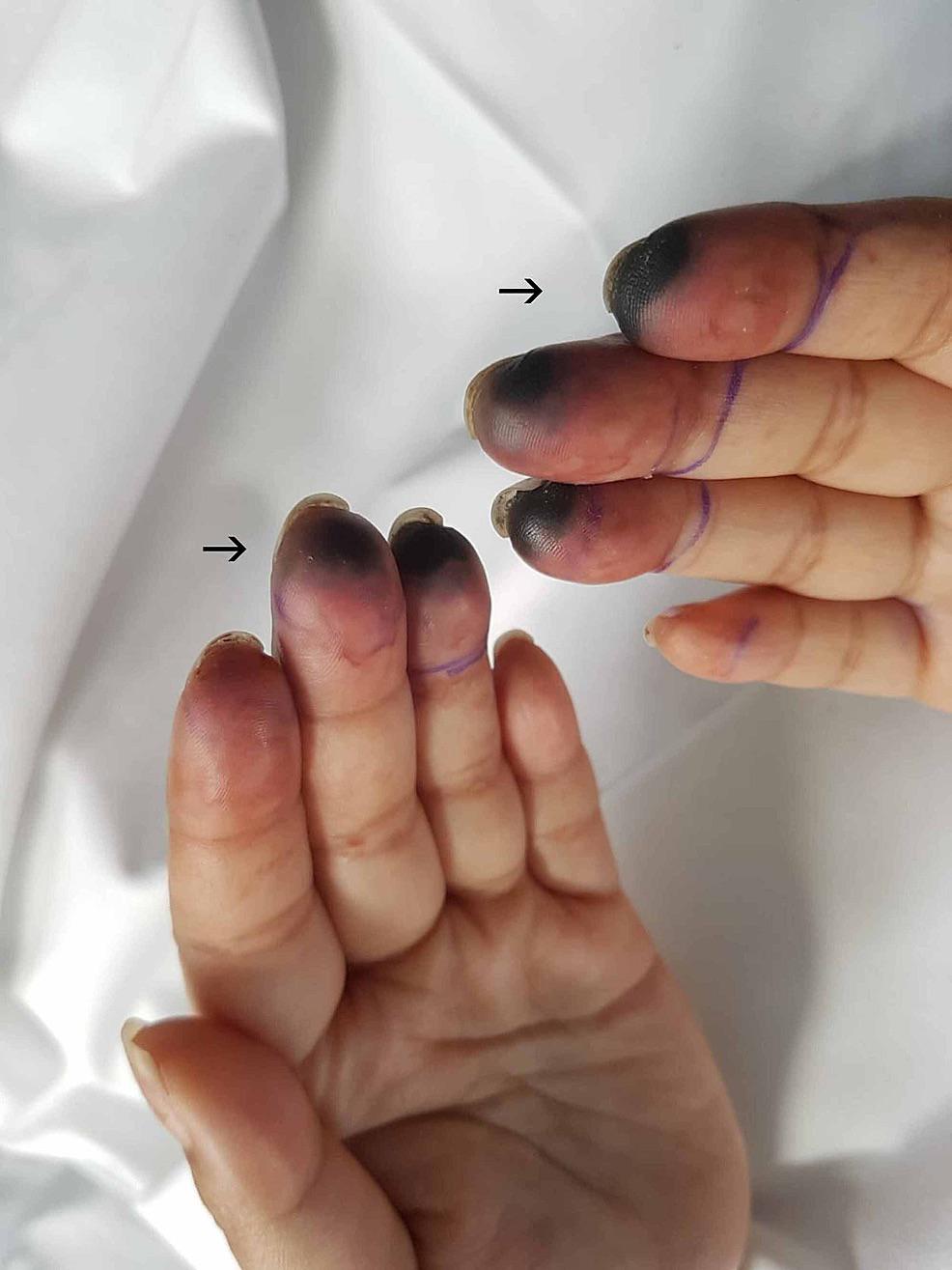 · 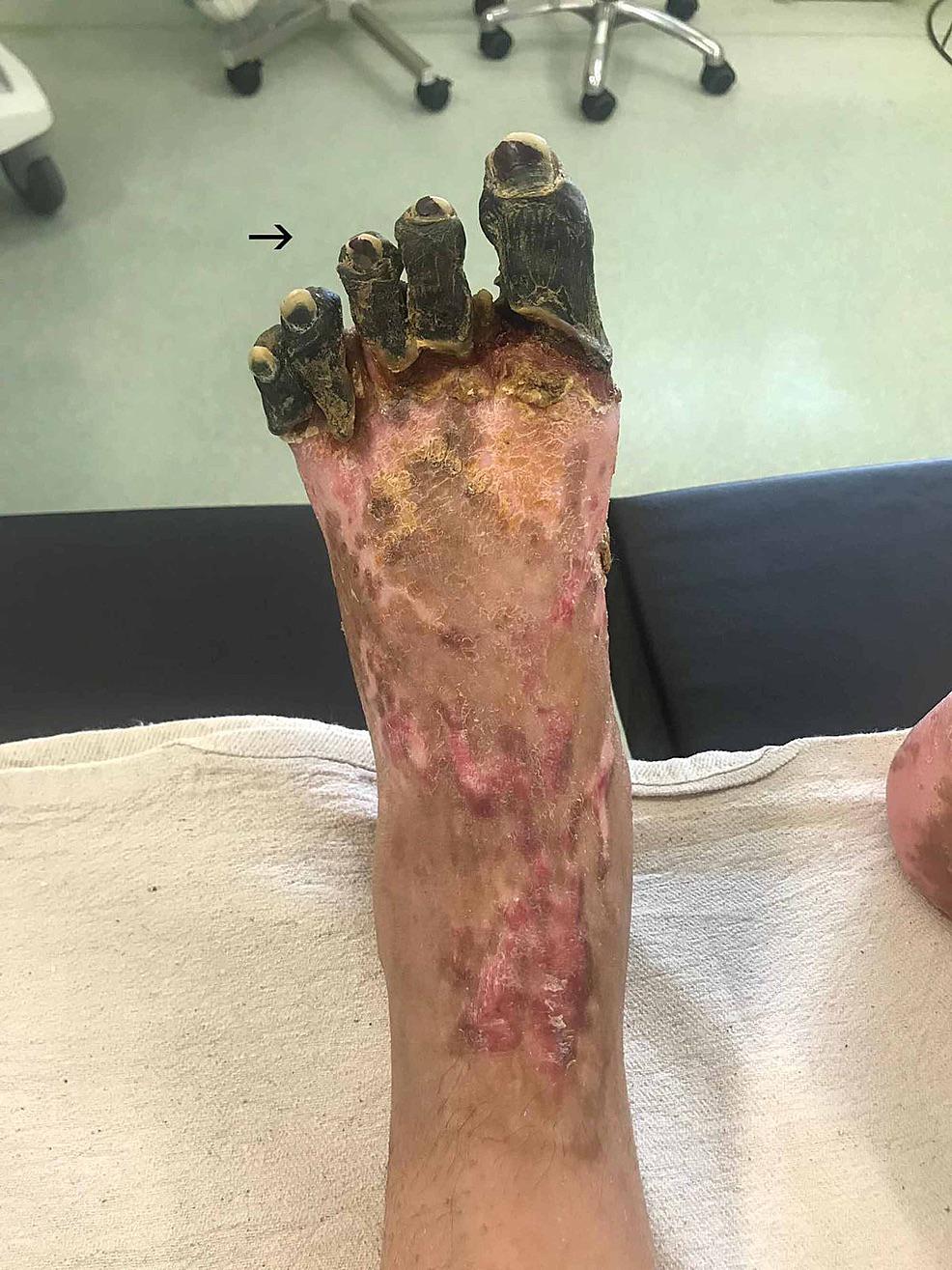 · 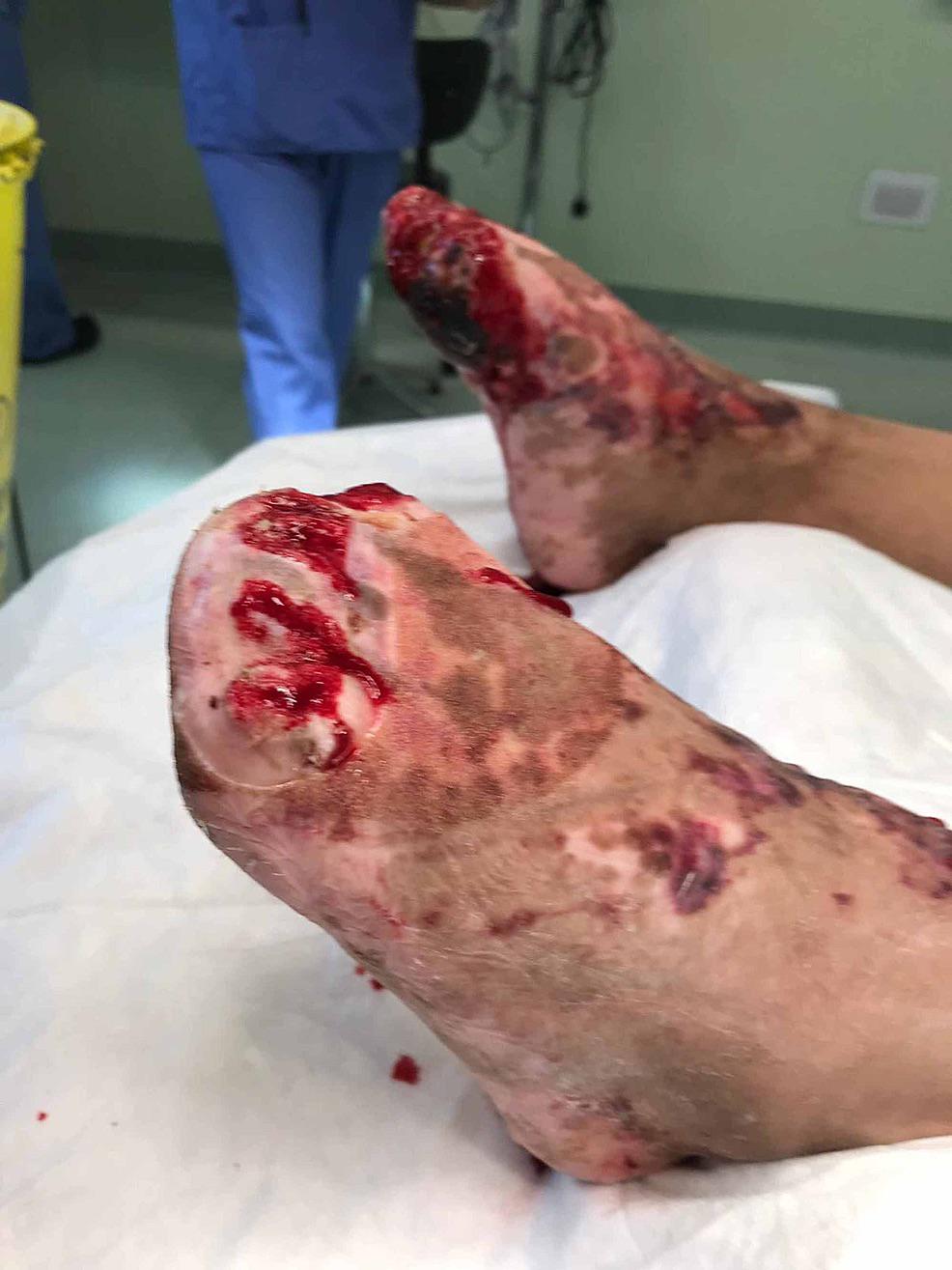 · |
|
#2
●
03-08-2023, 10:57 PM
| ||||||||
 ★ OG Member ★ Poster Rank:629 Join Date: Nov 2010 Posts: 1,445
Contributions: 42
Mentioned: 10 Post(s) Quoted: 427 Post(s)
| ||||||||
|
Re: Symmetrical Peripheral Gangrene
.
|
|
#3
●
03-08-2023, 11:20 PM
| ||||||||
 ★ Legacy Member ★ Poster Rank:252 So many choices now Join Date: Jul 2015 Posts: 5,548 Mentioned: 15 Post(s) Quoted: 2120 Post(s)
| ||||||||
|
Re: Symmetrical Peripheral Gangrene
Good news: Reduction of two shoe sizes! A little foot make-up and she could be a foot-binding fetish model on Only Fans.  Bad news: Flip-flops in summer are no longer an option.  |
|
#5
●
03-08-2023, 11:39 PM
| ||||||||
| ★ OG Member ★ Poster Rank:629 Join Date: Nov 2010 Posts: 1,445
Contributions: 42
Mentioned: 10 Post(s) Quoted: 427 Post(s)
| ||||||||
|
Re: Symmetrical Peripheral Gangrene
I always look forward to reading the humor you find in the OP  |