
|
#1
●
09-25-2024, 09:52 PM
|
 These are the rooms Poster Rank:26 of ruin. Join Date: Sep 2014 Posts: 54,008 54,008Posts 87,658Thanked 30,403Quoted 145Mentioned 0Contrib. |
|
Severe Burn Contracture
A 22 year old pregnant lady in the third trimester came to the emergency with absent fetal heart sounds in the third trimester in a government general hospital. Absent fetal heart sounds, meconium stained liquor and non progressive labour were the basis for considering the patient for emergency caesarean. The prognosis of the patient and the baby were explained clearly to the patient attendants. The patient in addition had severe post burn scarring due to burns in childhood and it extended from the chest region to the abdomen and perineal region with supra-clitoral hooding deformity. The left breast nipple-areolar complex was partially buried. Realizing the severity of contracture of the lower abdomen and perineum with distorted anatomy, the umbilicus lying very close to the mons region, the obstetrician realized the possible need for a plastic surgeon to reconstruct the huge defect once an incision for the caesarean section would be given which would not have been easy to close primarily. A combined multi-speciality expertise was involved including a plastic surgeon, an obstetrician and a pediatrician and an anesthetist. The patient was given spinal anaesthesia after optimizing her for surgery. An inverted t-shaped skin incision was planned in the lower abdomen region horizontally extending as far as the contracture and vertically extending as low as possible just stopping short of the clitoris when normal tissue was encountered and then the incision was converted to an inverted y-shape along both the sides of the remnant labias [Figure 1]. The rest of the caesarean section was completed in the usual way and a full born female baby weighing 2.75 kg was delivered. The baby was shifted to NICU for further observation. The anterior abdominal wall was closed in the usual way after delivering the placenta and the repaing the uterus. The mons pad of fat was found displaced and was recontoured to give the mound its normal shape. The skin defect extending from the lower abdomen to the upper thighs and anterior perineum [Figure 2] was resurfaced with skin grafts harvested from the thighs [Figure 3 and 4]. After infiltration of local anaesthetic, the left side nipple was everted along with the release of the gland tissue with skin graft cover as far as possible. But owing to the chronicity of the burns, the left breast had not attained the larche and hence she could lactate from the right breast only which seemed sufficient for the baby. She did not develop any breast engorgement on the left side however. The total operative time was 4 hours from the time of incision which included 20 minutes for the delivery of the baby. She received 3 units of packed red blood cells and 4 units of fresh frozen plasma in the peri-operative period. Custom made splintage that extended from the abdomen to the thighs was provided for her for maintaining the thighs in the extended and abducted position. The baby was eventually handed over to the mother after sufficient monitoring. The graft take was satisfactory in spite of the initial maceration near the perineal areas. The patient can now walk with a near normal posture and has regained height postoperatively as compared to her previous stance as she used to walk in a crouched manner due to the severe post-burn contracture between the lower part of her body and the thighs. The patient was able to breastfeed her baby with her baby gaining weight in a normal manner 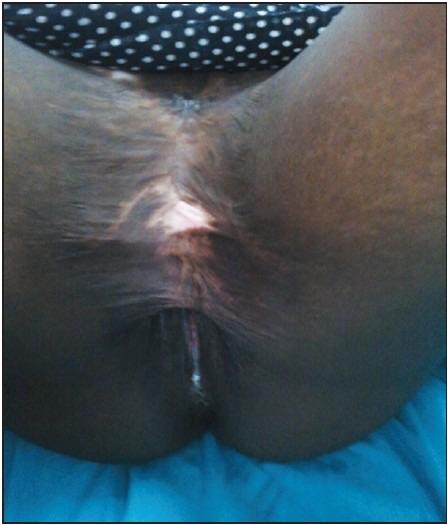 · 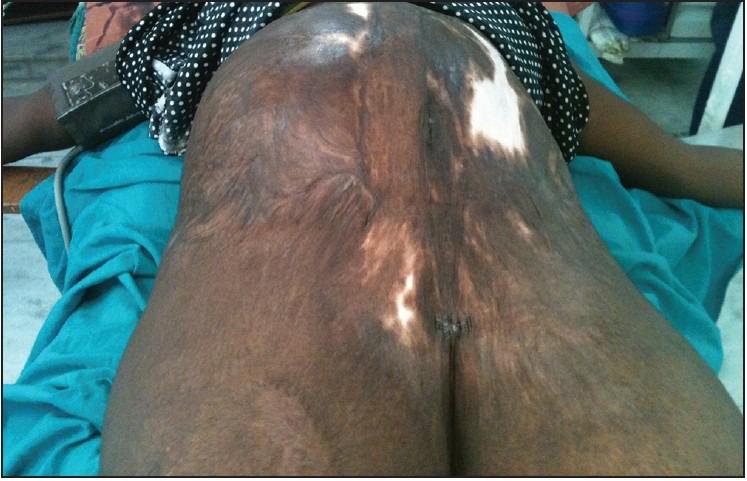 · 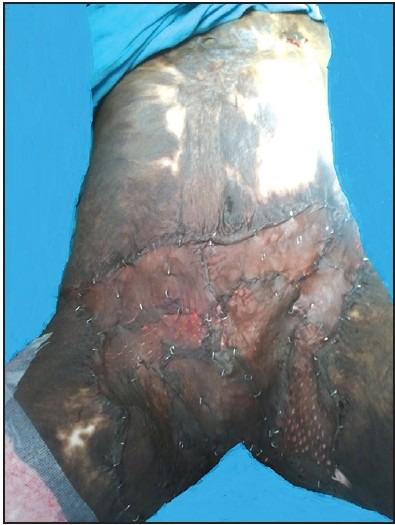 · 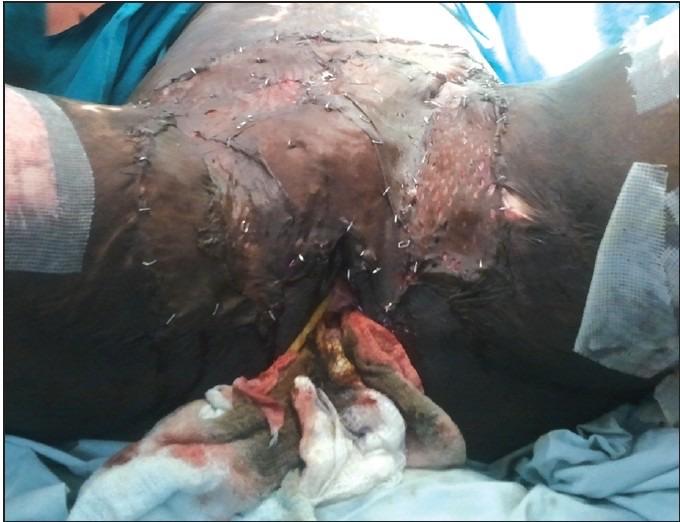 · |
|
#3
●
09-26-2024, 07:08 AM
|
 The Devil's Left Hand Poster Rank:70 Male Join Date: May 2012 Posts: 22,202 22,202Posts 43,089Thanked 9,551Quoted 21Mentioned 0Contrib. |
|
Re: Severe Burn Contracture
Some guys truly will fuck anything. 
__________________ Why so sad? Your tears are no match for mine. |
|
#5
●
09-27-2024, 02:41 AM
|
 ♚ Legacy Gold Member ♚ Poster Rank:1299 Femme fatale Join Date: May 2024 Posts: 474 474Posts 825Thanked 191Quoted 1Mentioned 0Contrib. |
|
Re: Severe Burn Contracture
Poor girl, she's only 22 and had her whole childhood basically disfigured and pain. That is sure a nasty scar they had to work through to get the baby out.  |


 That poor woman.
