|
#1
●
05-06-2024, 09:39 PM
| ||||||||
 These are the rooms Poster Rank:25 of ruin. Join Date: Sep 2014 Posts: 54,011 Mentioned: 145 Post(s) Quoted: 30403 Post(s)
| ||||||||
|
Release of Face/neck Burn Contracture
>>A 33-year-old woman admitted to the plastic surgery department, with a severe neck scar contracture developed slowly over a year. 13 months earlier, she was exposed to a burn injury that affected most of her body while she was cooking, that treated conservatively and she later developed scar contractures. The patient was unable to access proper medical care in her area due to the war conditions, which led to this presentation. >>The contractures cover the neck and extend widely to the chin, mandible, chest and laterally to the upper limbs. Although the burn covered a large area [Fig. 1], the damage did not exceed the superficial layer and did not affect deeper structures such as the trachea, nerves, and thyroid gland. The basic investigations show that the patient had anemia, she was continuously drooling and could not eat because of the shrinkage. There were no previous chronic diseases, no history of drug allergy, and no surgical history. >>Laboratory tests including Complete Blood Count (CBC) show that the red blood cells (RBC) and hemoglobin (hg) were below the normal range. However, other blood tests, including Prothrombin time (PT), International Normalized Ratio (INR), Glucose test; Urea and Liver Function Tests (LFT) were within the normal limits. >>In light of our case, the patient underwent contracture release and reconstruction by a specialized team. Before the surgery, the excision site was precisely located and the graft was designed. During the surgery, the patient was placed on the operation table with a neck hyperextension position. Initially, the surgeon made a transverse incision on the scar along the width of the shrunken neck (due to difficulty in intubation). After that, the patient was intubated as shown in Fig. 2. The split-thickness skin grafts were taken from the skin of both thighs. The patient was kept in the hyperextension position, subsequently platysma was carefully excised due to the presence of large vessels, then the Split-thickness skin grafts were placed and fixed [Fig. 2]. >>The Fucidin ointment was applied to the surgical site before the bandage implementation [Fig. 3]. The first bandage was removed after 6 days, after that a supportive cervical collar was put on [Fig. 4]. After a month, the patient was given cervical physiotherapy to improve the neck movement [Fig. 5]. >>The patient stayed for a month in the hospital and was discharged when her general condition became good. A follow-up of the case was not possible, as the patient did not return for routine follow-ups, and we could not contact her. 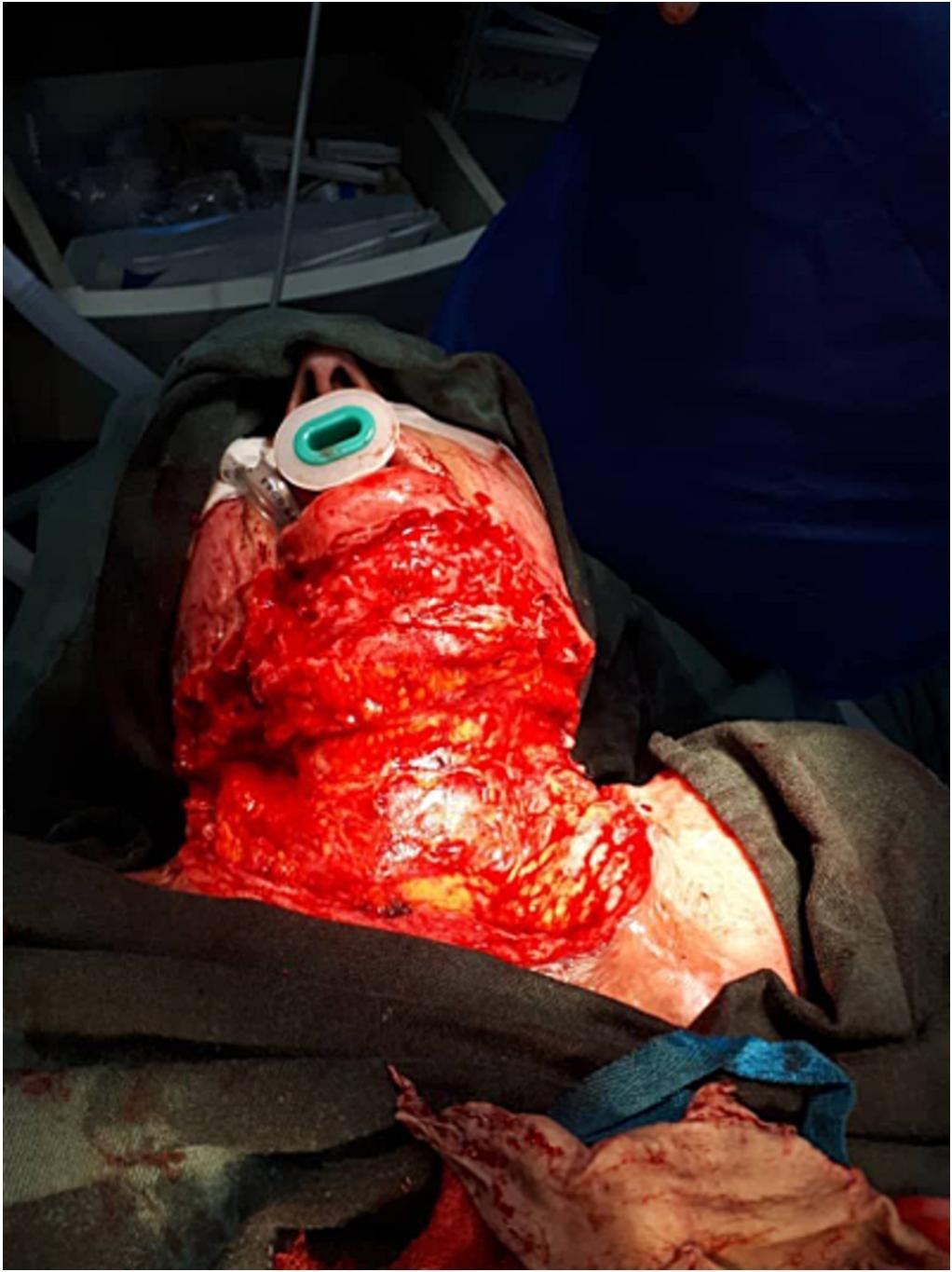 · 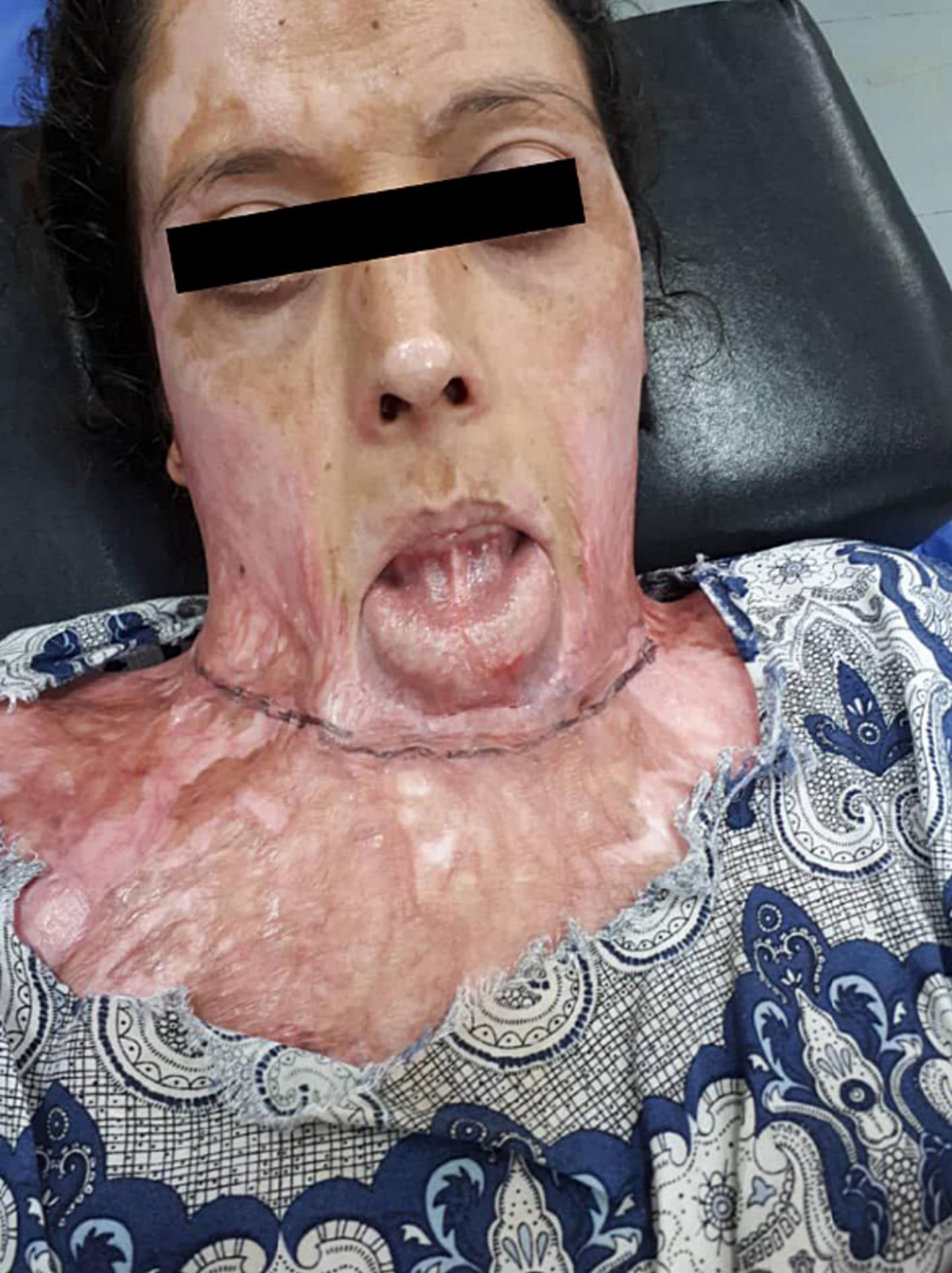 · 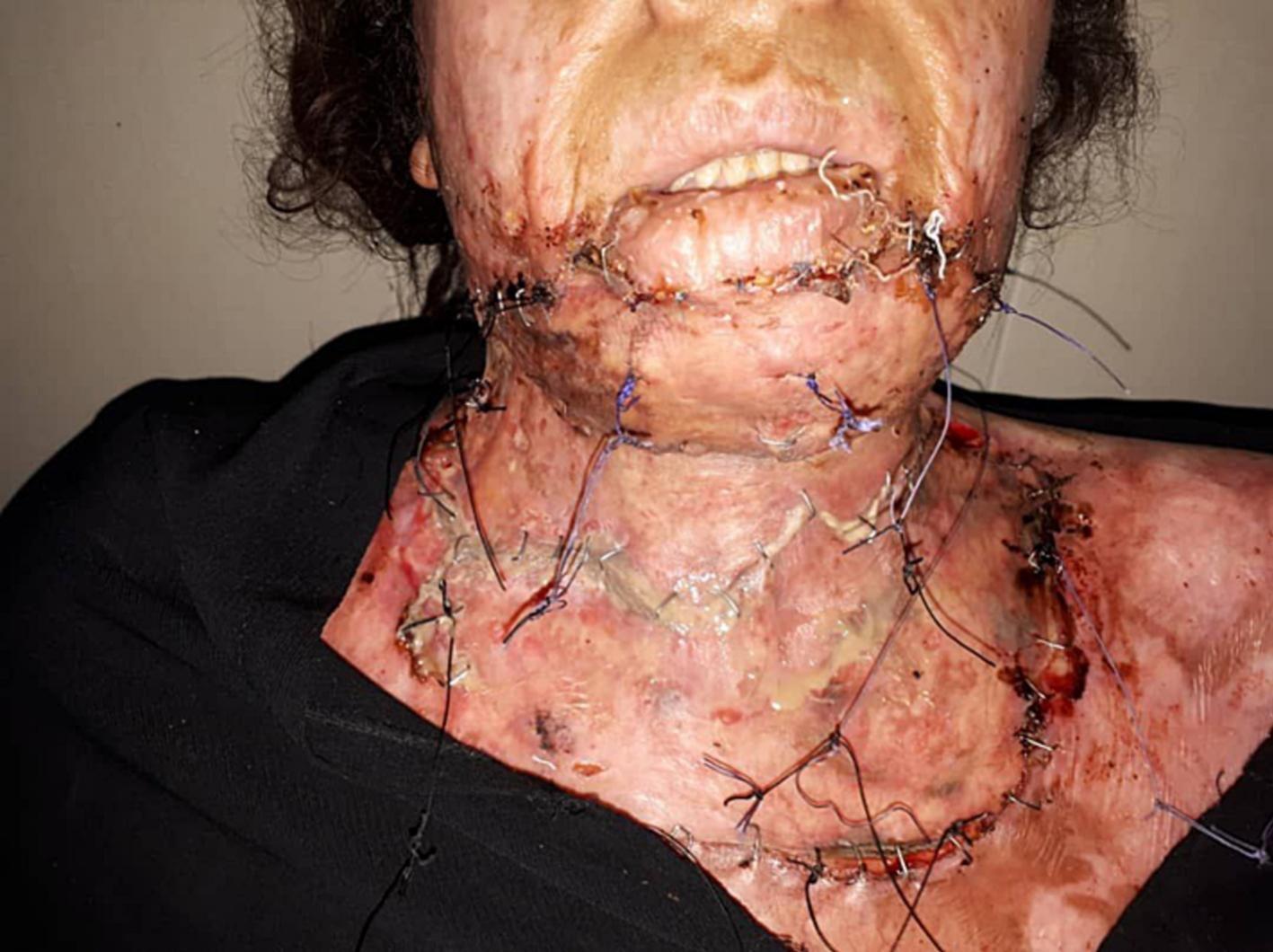 · 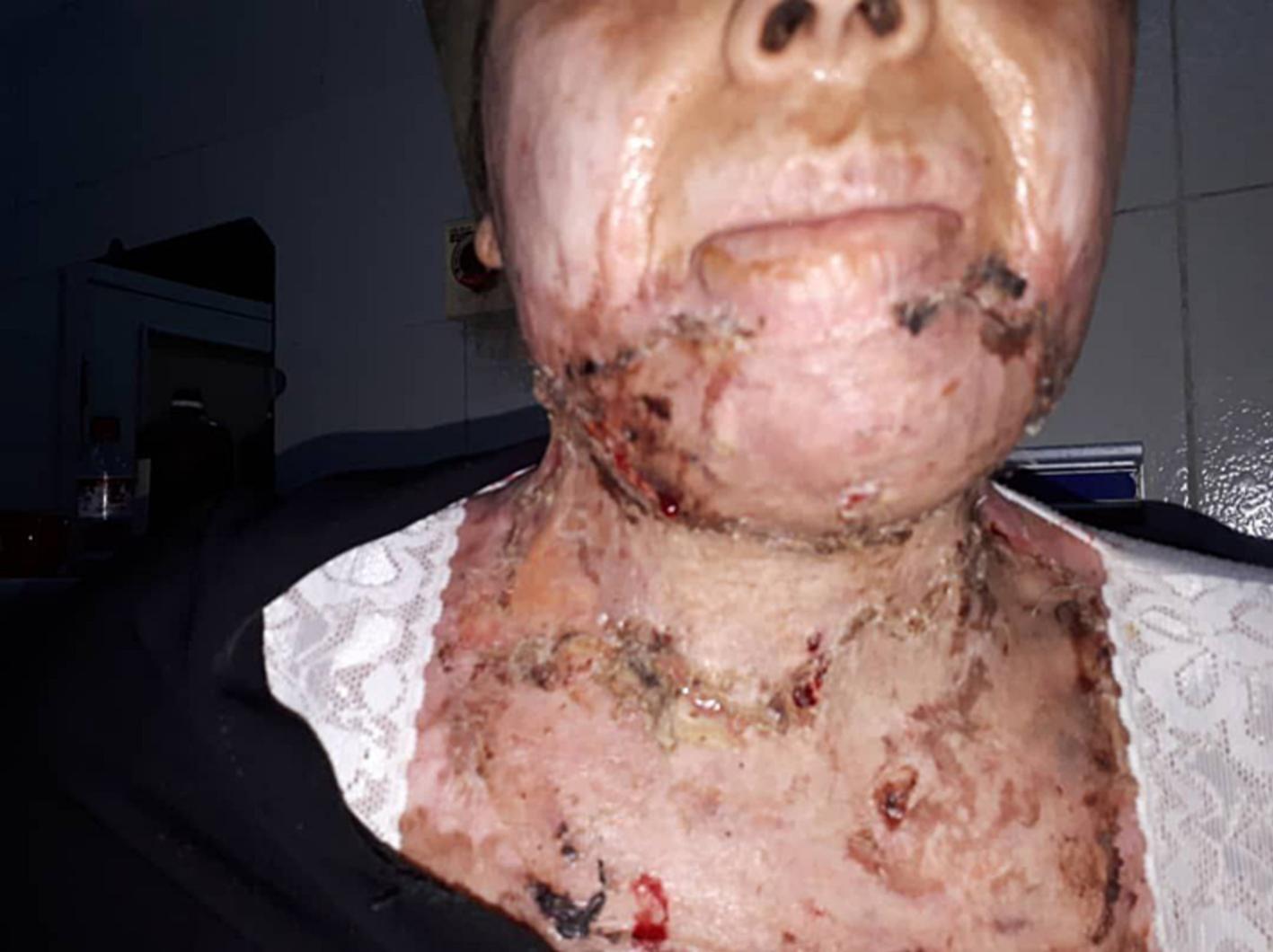 · 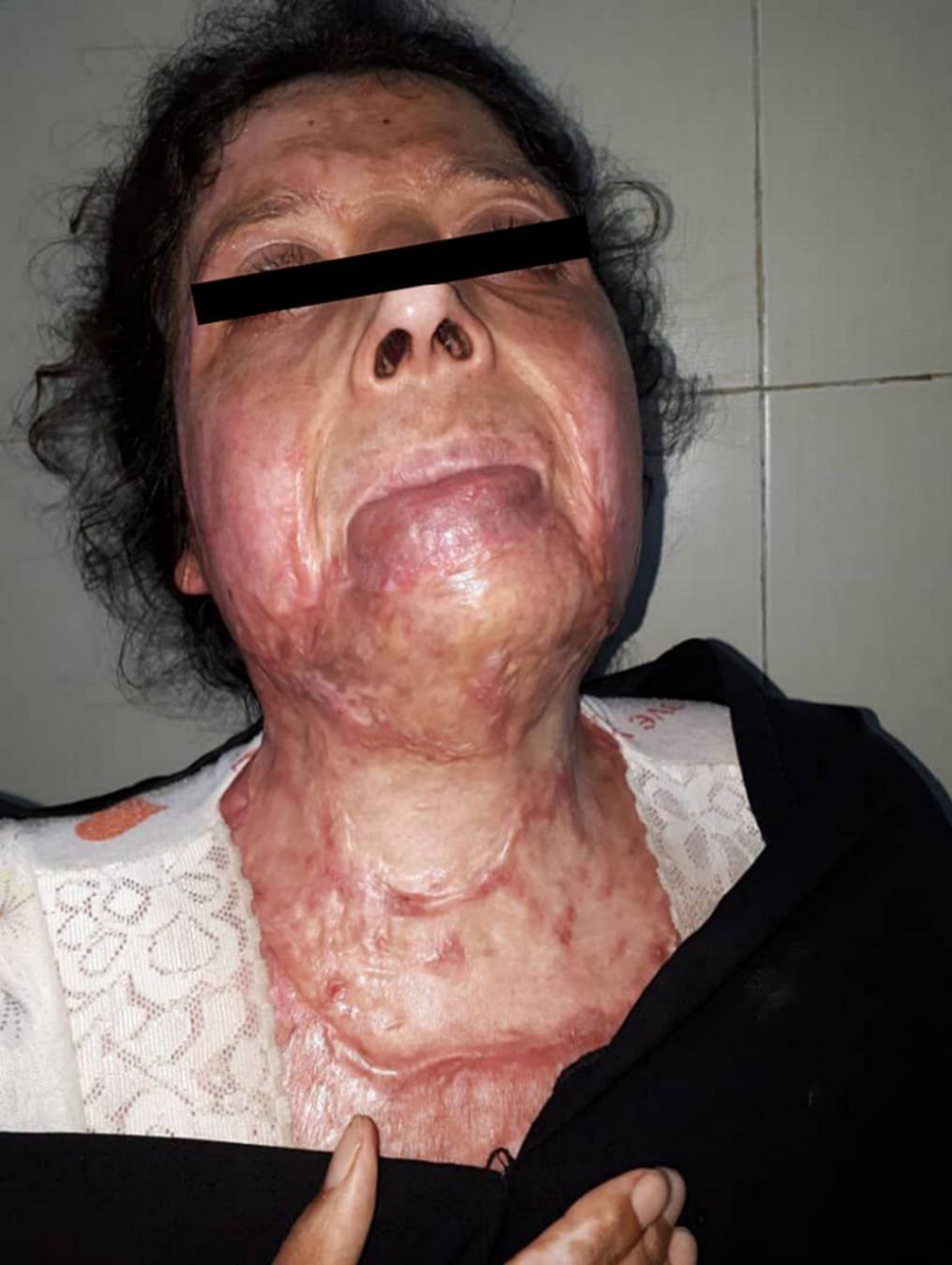 · |
|
#2
●
05-06-2024, 10:16 PM
| ||||||||
 My Rank: MASTER GUNNERY SERGEANT Poster Rank:327 I am Join Date: Aug 2012 Posts: 3,897 Mentioned: 6 Post(s) Quoted: 2467 Post(s)
| ||||||||
|
Re: Release of Face/neck Burn Contracture
The second picture. God damn. She literally looks like she is melting.
|
|
#3
●
05-06-2024, 10:19 PM
| ||||||||
 ★ Legacy Member ★ Poster Rank:247 So many choices now Join Date: Jul 2015 Posts: 5,548 Mentioned: 15 Post(s) Quoted: 2120 Post(s)
| ||||||||
|
Re: Release of Face/neck Burn Contracture
Betcha she won't try to put out that grease fire with her chin next time.
|
|
#4
●
05-07-2024, 01:06 AM
| ||||||||
 Vertically Challenged Poster Rank:177 Female Join Date: Mar 2014 Posts: 8,507
Contributions: 3
Mentioned: 21 Post(s) Quoted: 3707 Post(s)
| ||||||||
|
Re: Release of Face/neck Burn Contracture
Looks excruciatingly painful 
__________________ "The only normal people are the ones you don't know very well." -Alfred Adler |
|
#5
●
05-07-2024, 04:11 AM
| ||||||||
 ✝Mudderator from Hell✝ Poster Rank:10 e-mail Join Date: Oct 2006 Posts: 94,983
Contributions: 817
Mentioned: 472 Post(s) Quoted: 10078 Post(s)
| ||||||||
|
Re: Release of Face/neck Burn Contracture
don't know if i could ever look into a mirror again  |
|
#6
●
05-07-2024, 05:00 AM
| ||||||||
 Fuck WonderMomma Poster Rank:23 Your and idiot Join Date: Aug 2009 Posts: 55,781 Mentioned: 157 Post(s) Quoted: 31677 Post(s)
| ||||||||
|
Re: Release of Face/neck Burn Contracture
Your mirror is prolly in pain everytime you step in front of it  |
|
#7
●
05-08-2024, 02:07 AM
| ||||||||
 My Rank: MASTER GUNNERY SERGEANT Poster Rank:347 Manly Man Join Date: Sep 2017 Posts: 3,601 Mentioned: 0 Post(s) Quoted: 700 Post(s)
| ||||||||
|
Re: Release of Face/neck Burn Contracture
Poor lady. I hope this gives her some relief.
|
|
#9
●
05-16-2024, 01:36 PM
| ||||||||
 My Rank: MAJOR Poster Rank:92 Male Join Date: Aug 2009 Posts: 16,925 Mentioned: 9 Post(s) Quoted: 1885 Post(s)
| ||||||||
|
Re: Release of Face/neck Burn Contracture
Burns have to be some of the worst shit to deal with.
|
|
#10
●
05-19-2024, 06:10 PM
| ||||||||
 ♚ Legacy Gold Member ♚ Poster Rank:131 Happy Happy Happy Join Date: Dec 2009 Posts: 12,378 Mentioned: 20 Post(s) Quoted: 4080 Post(s)
| ||||||||
|
Re: Release of Face/neck Burn Contracture
Bitch looks like the melty zombie from return of the living dead 3
|