Polycystic kidney disease (PKD) is passed down through families (inherited). About 90 percent of all PKD cases are autosomal dominant PKD. One parent carries the gene, the children have a 50% chance of developing the disorder. Many people with autosomal dominant PKD live for several decades without developing symptoms. For this reason, autosomal dominant PKD is often called “adult polycystic kidney disease.” Yet, in some cases, cysts may form earlier in life and grow quickly, causing symptoms in childhood.
According to the National Kidney Foundation, about 50 percent of people with the autosomal dominant form of PKD progress to kidney failure, or end-stage renal disease (ESRD), by age 60. About 60 percent will have kidney failure by age 70.
Because kidneys are essential for life, people with ESRD must seek one of two options for replacing kidney functions: dialysis or transplantation. In hemodialysis, blood is circulated into an external filter, where it is cleaned before re-entering the body; in peritoneal dialysis, a fluid is introduced into the abdomen, where it absorbs wastes and is then removed. Transplantation of healthy kidneys into ESRD patients has become a common and successful procedure. Healthy-non-PKD-kidneys transplanted into PKD patients do not develop cysts.
The cysts grow out of nephrons, the tiny filtering units inside the kidneys. The cysts eventually separate from the nephrons and continue to enlarge. The kidneys enlarge along with the cysts-which can number in the thousands-while roughly retaining their kidney shape. In fully developed autosomal dominant PKD, a cyst-filled kidney can weigh as much as 20 to 30 pounds.
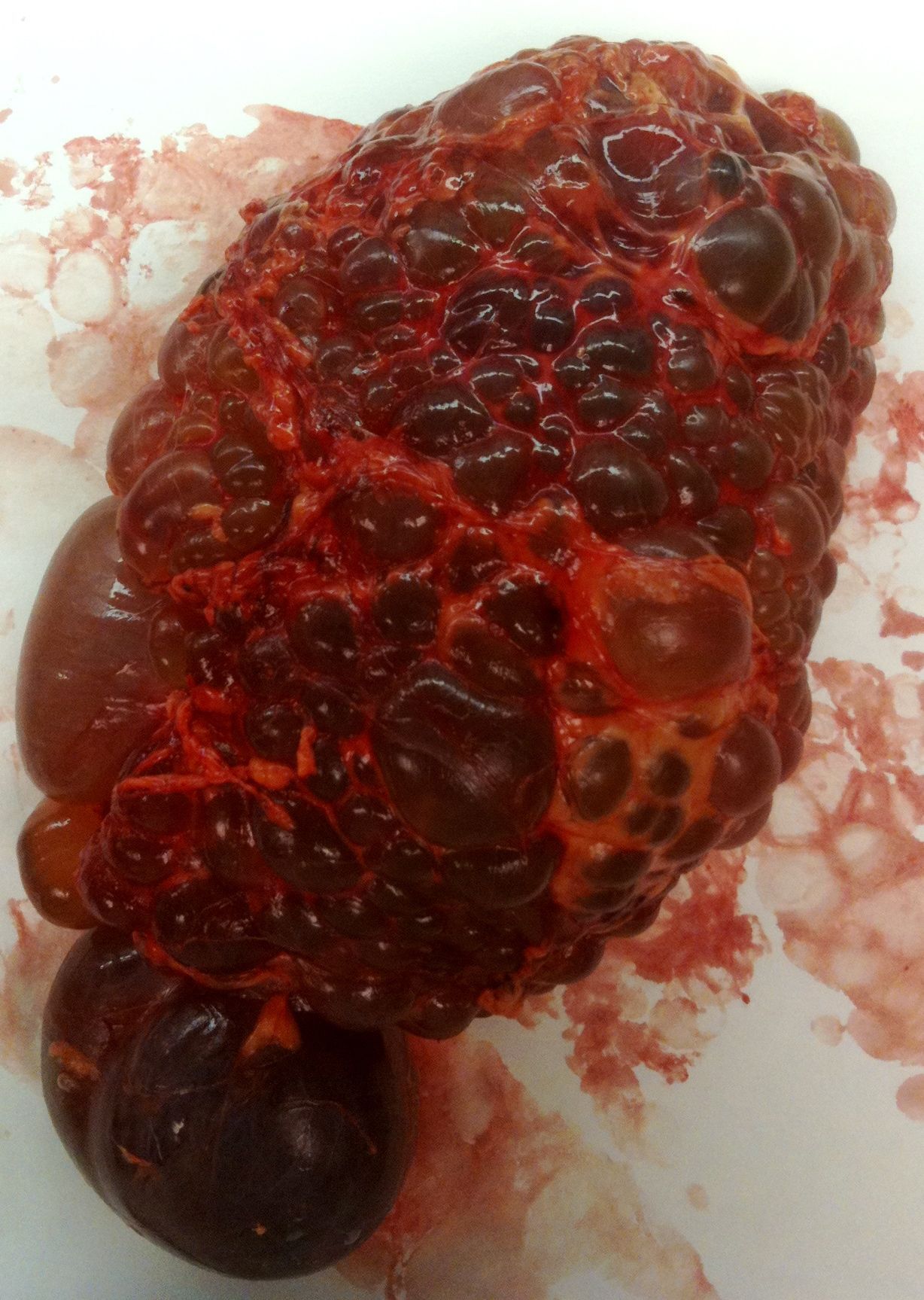
This is an example of how extreme PKD can be. A bilateral nephrectomy with a subsequent kidney transplantation is a must.
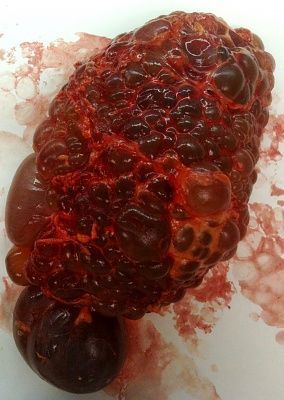
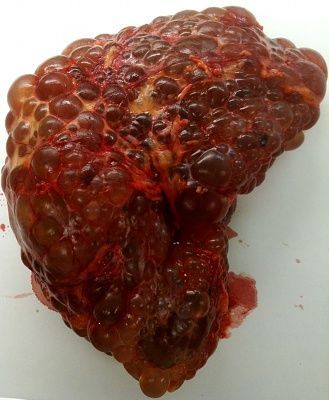
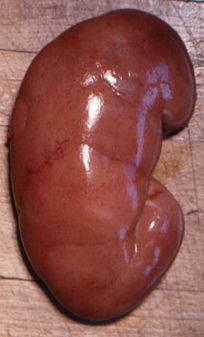
Here you can see both kidneys, which were greater than the size of footballs. All of the normal kidney parenchyma has been replaced by cysts. These kidneys are totally non-functioning and by their appearence you can see why they are incompatible with life. Compare the 2 kidneys we received with the normal kidney (about the size of your fist) in the 3rd photo.
An autosomal recessive form of PKD also exists. It appears in infancy or childhood. This form is much less common than autosomal dominant PKD, but it tends to be very serious and gets worse quickly. It can cause serious lung and liver disease, end-stage kidney disease, and it usually causes death in infancy or childhood. Symptoms of autosomal recessive PKD can begin in the earliest months of life, even in the womb.
PKD has been known to be associated with aortic aneurysms, brain anyeurysms (Berry), cysts in the liver, pancreas and testes, diverticula of the colon, urinary tract infections-specifically, in the kidney cysts, abnormal heart valve, high blood pressure and kidney stones.