|
#41
●
05-05-2015, 12:57 AM
| ||||||||
 facta non verba Poster Rank:65 Join Date: Feb 2012 Posts: 23,922
Contributions: 56
Mentioned: 37 Post(s) Quoted: 8496 Post(s)
| ||||||||
|
Re: Pants Rabbits, Crotch Crickets, Body Buddies, And Other Tiny Livestock...
Stop trolling her threads. This isn't the WC.
|
|
#42
●
05-05-2015, 01:14 AM
| ||||||||
 ☆☆☆Jumbo Lesbian Cunt☆☆☆ Poster Rank:56 My pronouns are thin/skinny Join Date: Nov 2012 Posts: 25,925
Contributions: 1
Mentioned: 160 Post(s) Quoted: 13914 Post(s)
| ||||||||
|
Re: Pants Rabbits, Crotch Crickets, Body Buddies, And Other Tiny Livestock...
Go suck off Ed.
|
|
#43
●
05-05-2015, 01:48 AM
| ||||||||
| facta non verba Poster Rank:65 Join Date: Feb 2012 Posts: 23,922
Contributions: 56
Mentioned: 37 Post(s) Quoted: 8496 Post(s)
| ||||||||
|
Re: Pants Rabbits, Crotch Crickets, Body Buddies, And Other Tiny Livestock...
Dafuq, loving your threads woman! Keep them coming  |
|
#44
●
05-05-2015, 02:07 AM
| ||||||||
 Curmudgeonly Jackwagon Poster Rank:181 Country Trash Join Date: Dec 2009 Posts: 8,293
Contributions: 281
Mentioned: 198 Post(s) Quoted: 3659 Post(s)
| ||||||||
|
Re: Pants Rabbits, Crotch Crickets, Body Buddies, And Other Tiny Livestock...
Three goddam pages of petty pissing matches, arguments, shit-slinging, and trolling. I came here to look at tapeworms and thought I'd wandered into the bloody Water Cooler by mistake. All of you, knock it the fuck off. I don't care who's trolling who, but keep the discussion ON TOPIC and take the rest of your incessant fighting to the WC or the elementary school playground. Responding to trolling just adds to the problem and bogs the thread down even further. If a Mod has to come in here again and gentle y'all down, Infractions will be administered in liberal measure. There's a place for this petty bullshit and the Medical forum is NOT it. |
|
#45
●
05-05-2015, 02:11 AM
| ||||||||
| facta non verba Poster Rank:65 Join Date: Feb 2012 Posts: 23,922
Contributions: 56
Mentioned: 37 Post(s) Quoted: 8496 Post(s)
| ||||||||
|
Re: Pants Rabbits, Crotch Crickets, Body Buddies, And Other Tiny Livestock...
Thank you Vedderman. Well said  |
|
#47
●
05-06-2015, 09:31 PM
| ||||||||
 ★ Legacy Member ★ Poster Rank:40 lady Join Date: Jul 2009 Posts: 37,489 Mentioned: 40 Post(s) Quoted: 3618 Post(s)
| ||||||||
|
Re: Pants Rabbits, Crotch Crickets, Body Buddies, And Other Tiny Livestock...
Wow, this whole initial post is EXCELLENT. Very informative -- I learned so much. Thank you DaFuq??? That red portion above is heartbreaking. Eight cents a pill.  Also, I accidentally deleted the part about dust mites, but I am ORDERING NEW PILLOWS!!!!   |
|
#48
●
05-08-2015, 09:10 AM
| ||||||||
| So Fucking Banned Poster Rank:759 ~Blut und ehre~ Join Date: Dec 2014 Posts: 1,058 Mentioned: 9 Post(s) Quoted: 588 Post(s)
| ||||||||
|
Re: Pants Rabbits, Crotch Crickets, Body Buddies, And Other Tiny Livestock...
...My deepest apologies to those of you who read this thread. I am very sorry about how I let it deteriorate these past few pages. I am an adult and should have handled the situation in a more adult fashion. And I do thank Vedderman for stepping in to knock our heads together. That being said, let's move on now, shall we? |
|
#49
●
05-08-2015, 09:14 AM
| ||||||||
| So Fucking Banned Poster Rank:759 ~Blut und ehre~ Join Date: Dec 2014 Posts: 1,058 Mentioned: 9 Post(s) Quoted: 588 Post(s)
| ||||||||
|
Re: Pants Rabbits, Crotch Crickets, Body Buddies, And Other Tiny Livestock...
Thanks, Az! I'm so glad you're finding the thread useful and interesting! I have a feeling that by the time we're through, you'll be wanting a new bed, shoes made of Gortex, and full body condoms, too! |
|
#50
●
05-08-2015, 09:22 AM
| ||||||||
| So Fucking Banned Poster Rank:759 ~Blut und ehre~ Join Date: Dec 2014 Posts: 1,058 Mentioned: 9 Post(s) Quoted: 588 Post(s)
| ||||||||
|
Re: Pants Rabbits, Crotch Crickets, Body Buddies, And Other Tiny Livestock...
Dracunculiasis, also known as Guinea worm disease (GWD), is an infection caused by the parasite Dracunculus medinensis. A parasite is an organism that feeds off of another to survive. GWD is spread by drinking water containing Guinea worm larvae. Larvae are immature forms of the worm. GWD affects poor communities in remote parts of Africa that do not have safe water to drink. GWD is considered by global health officials to be a neglected tropical disease (NTD) – the first parasitic disease slated to be eradicated. Many federal, private, and international agencies are helping the countries that still have local GWD cases to eradicate this disease. During 2014, only four countries had local GWD cases: Chad, Ethiopia, Mali, and South Sudan. Cases have gone from 3.5 million per year in 1986 to 126 in 2014. How does Guinea worm disease spread? People become infected with Guinea worm by drinking water from ponds and other stagnant water containing tiny "water fleas" that carry the Guinea worm larvae. The larvae are eaten by the water fleas that live in these water sources. Once drunk, the larvae are released from copepods in the stomach and penetrate the digestive track, passing into the body cavity. During the next 10-14 months, the female larvae grow into full-size adults. These adults are 60-100 centimeters (2-3 feet) long and as wide as a cooked spaghetti noodle. When the adult female worm is ready to come out, it creates a blister on the skin anywhere on the body, but usually on the legs and feet. This blister causes a very painful burning feeling and it bursts within 24-72 hours. Immersing the affected body part into water helps relieve the pain. It also causes the Guinea worm to come out of the wound and release a milky white liquid into the water that contains millions of immature larvae. This contaminates the water supply and starts the cycle over again. For several days, the female worm can release more larvae whenever it comes in contact with water. What are the signs and symptoms of Guinea worm disease? People do not usually have symptoms until about one year after they become infected. A few days to hours before the worm comes out of the skin, the person may develop a fever, swelling, and pain in the area. More than 90% of the worms come out of the legs and feet, but worms can appear on other body parts too. People in remote rural communities who have Guinea worm disease often do not have access to health care. When the adult female worm comes out of the skin, it can be very painful, slow, and disabling. Often, the wound caused by the worm develops a secondary bacterial infection. This makes the pain worse and can increase the time an infected person is unable to function to weeks or even months. Sometimes, permanent damage occurs if a person’s joints are infected and become locked. What is the treatment for Guinea worm disease? There is no drug to treat Guinea worm disease and no vaccine to prevent infection. Once part of the worm begins to come out of the wound, the rest of the worm can only be pulled out a few centimeters each day by winding it around a piece of gauze or a small stick. Sometimes the whole worm can be pulled out within a few days, but this process usually takes weeks. Medicine, such as aspirin or ibuprofen, can help reduce pain and swelling. Antibiotic ointment can help prevent secondary bacterial infections. The worm can also be surgically removed by a trained doctor in a medical facility before a blister forms. 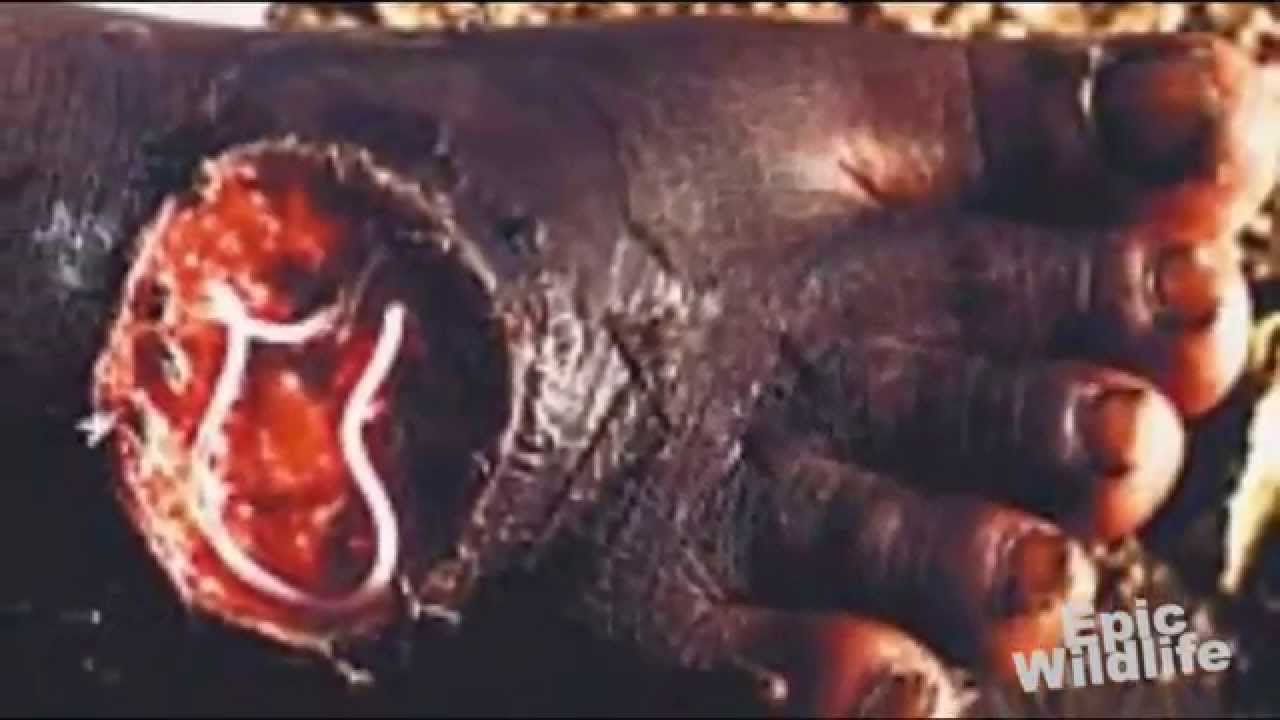 · 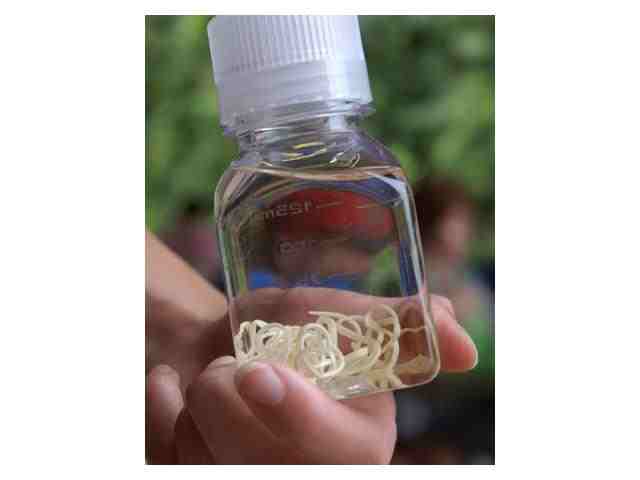 · 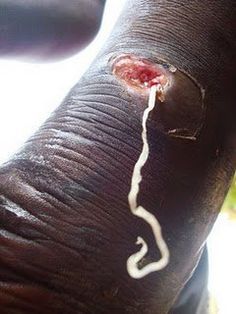 · 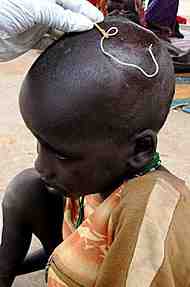 · 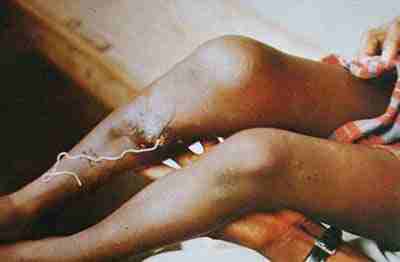 · |