|
#1
●
07-21-2024, 06:32 PM
|
 These are the rooms Poster Rank:26 of ruin. Join Date: Sep 2014 Posts: 54,008 54,008Posts 87,658Thanked 30,403Quoted 145Mentioned 0Contrib. |
|
Mycosis Fungoides
A 68-year-old female with a history of MF presented to the emergency department with weakness lasting one week and painful soft tissue lesions that had been worsening over the past three months. She lived independently and was forced to call emergency medical services after falling. While her cardiovascular and pulmonary exams were unremarkable, integumentary physical examination revealed erythematous, atrophic, and hyperkeratotic lesions on her abdomen, back, proximal arms, chest, and proximal legs. Notably, she had two large erythematous circular lesions with active purulence on her right lower abdomen (Figure 1) and purulent lesions overlying plaques on her back (Figure 2). The patient was diagnosed with MF four years ago, which at that time consisted of patches without any purulence. Her lesions were initially controlled with topical steroids, with subsequent recommendations by oncology for more targeted therapy with gemcitabine followed by bexarotene. However, she was lost to follow-up during the COVID-19 pandemic and did not receive any medications beyond topical steroids. Currently, she was not receiving any MF treatment, and her lesions had worsened over the past three months, notably after swimming in the Atlantic Ocean. Laboratory results showed a white blood count of 13,400/mcL with an absolute lymphocyte count of 0.9x10^3/mcL, absolute neutrophil count of 10.7x10^3/mcL, and absolute eosinophil count of 0.89x10^3/mcL. Cultures of the largest lesion on the right abdomen (Figure 1, circled) grew Morganelli morganii, Pseudomonas aeruginosa, Enterococcus avium, and Enterococcus faecalis. Although the patient was also found to have blood and urinalysis cultures positive for methicillin-resistant Staphylococcus aureus (MRSA), MRSA was absent from all wound cultures. Treatment involved intravenous (IV) vancomycin 1,000 mg every eight hours and IV piperacillin-tazobactam 3,375 mg every eight hours for 15 days, resulting in mild improvement in the dermatological manifestation of the disease. Surgical consultation was considered for possible debridement, but she was not deemed a surgical candidate, as her wounds were not necrotic. She was discharged on day 15 of hospitalization with instructions to initiate a gemcitabine cycle followed by bexarotene as per oncology. 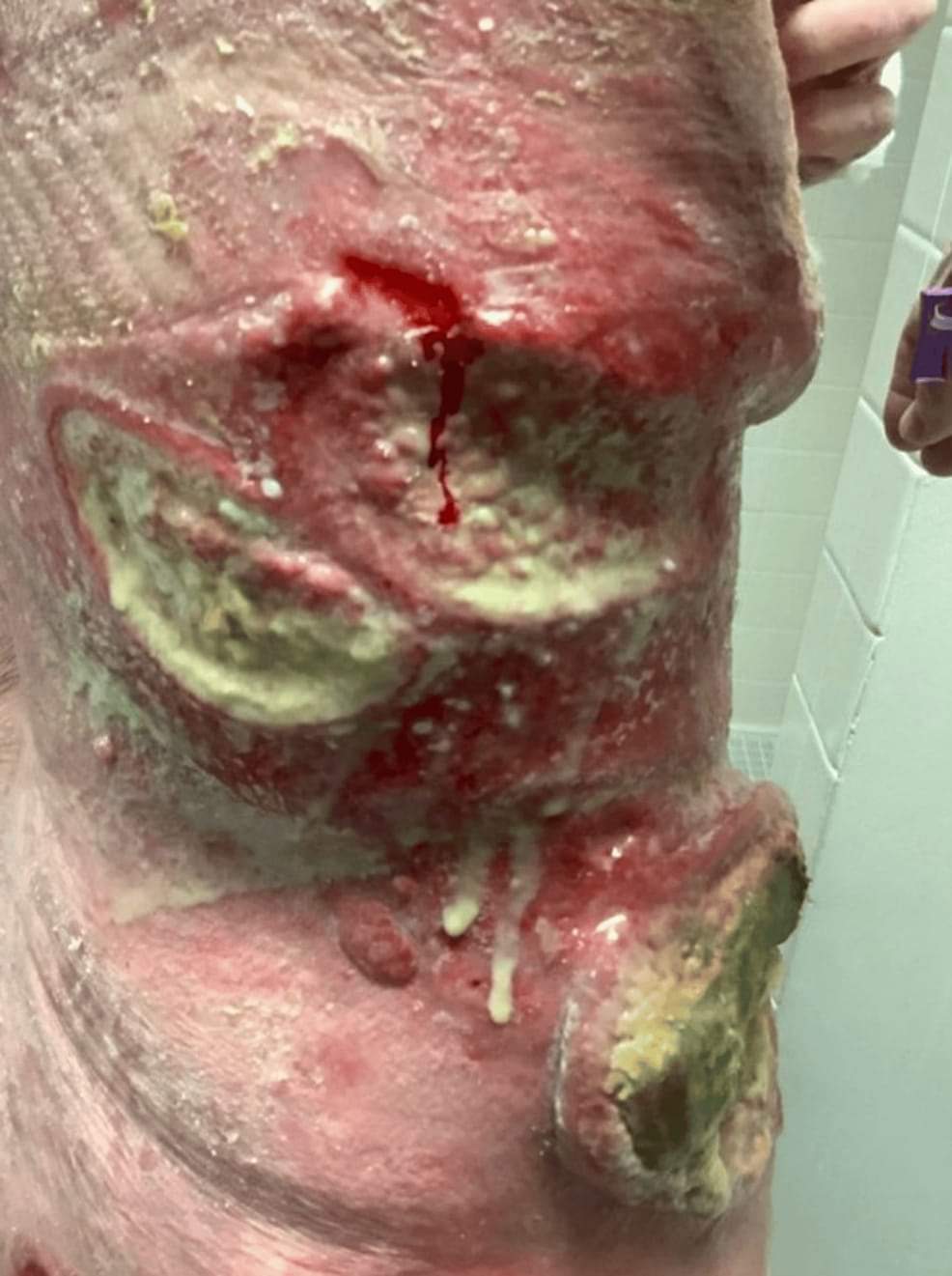 · 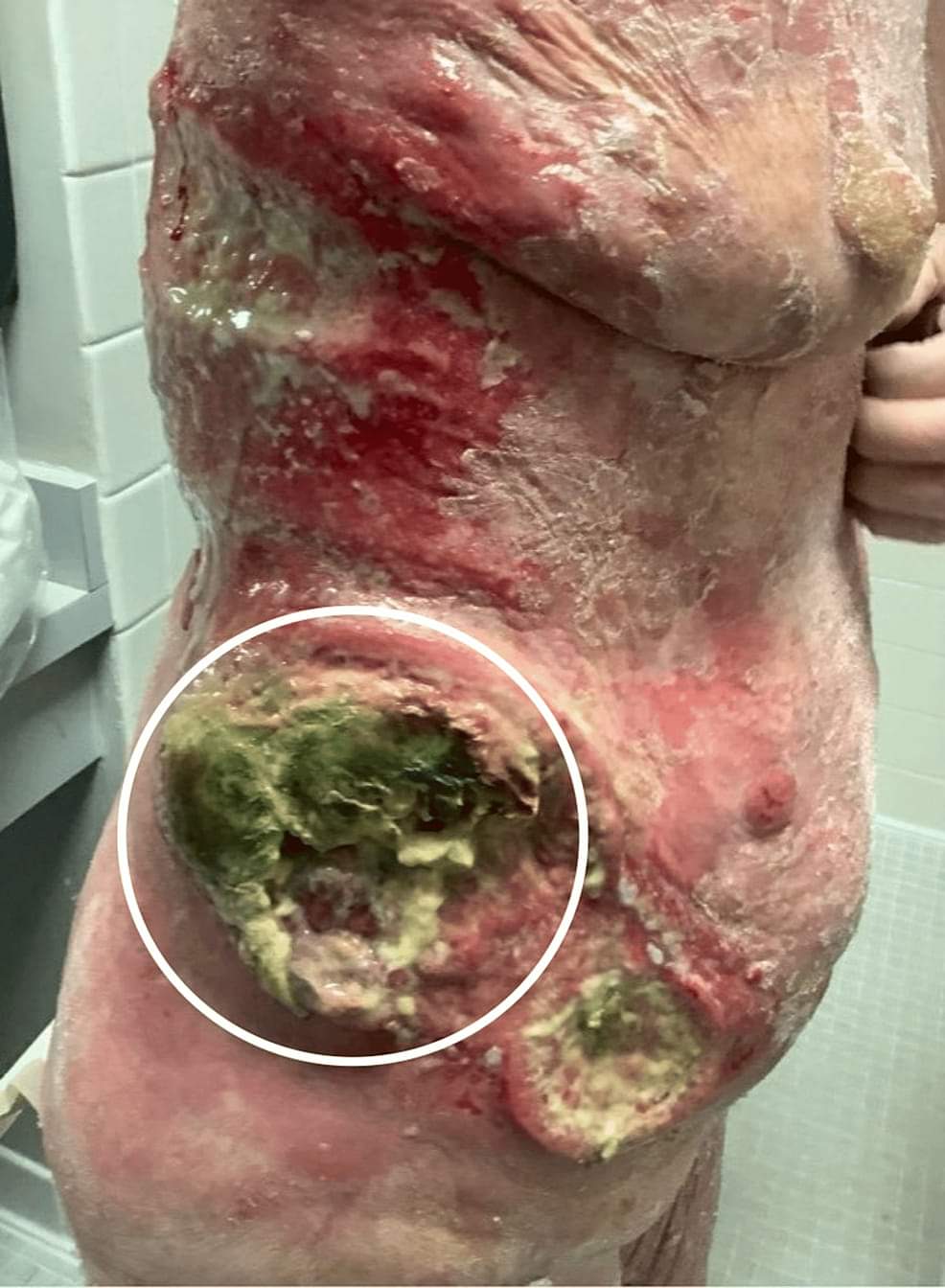 · |
|
#4
●
07-22-2024, 03:49 AM
|
 ★ Legacy Member ★ Poster Rank:110 Secret Agent Join Date: Dec 2009 Posts: 14,839 14,839Posts 49,313Thanked 3,059Quoted 6Mentioned 0Contrib. |
|
Re: Mycosis Fungoides
 That’s horrible. How fucking sad that some poor old woman would have to suffer something like that or anyone really. That’s horrible. How fucking sad that some poor old woman would have to suffer something like that or anyone really.  |