|
#1
●
11-10-2022, 11:24 PM
| ||||||||
 These are the rooms Poster Rank:25 of ruin. Join Date: Sep 2014 Posts: 54,011 Mentioned: 145 Post(s) Quoted: 30403 Post(s)
| ||||||||
|
Fungating Ductal Cell Carcinoma of the Breast.
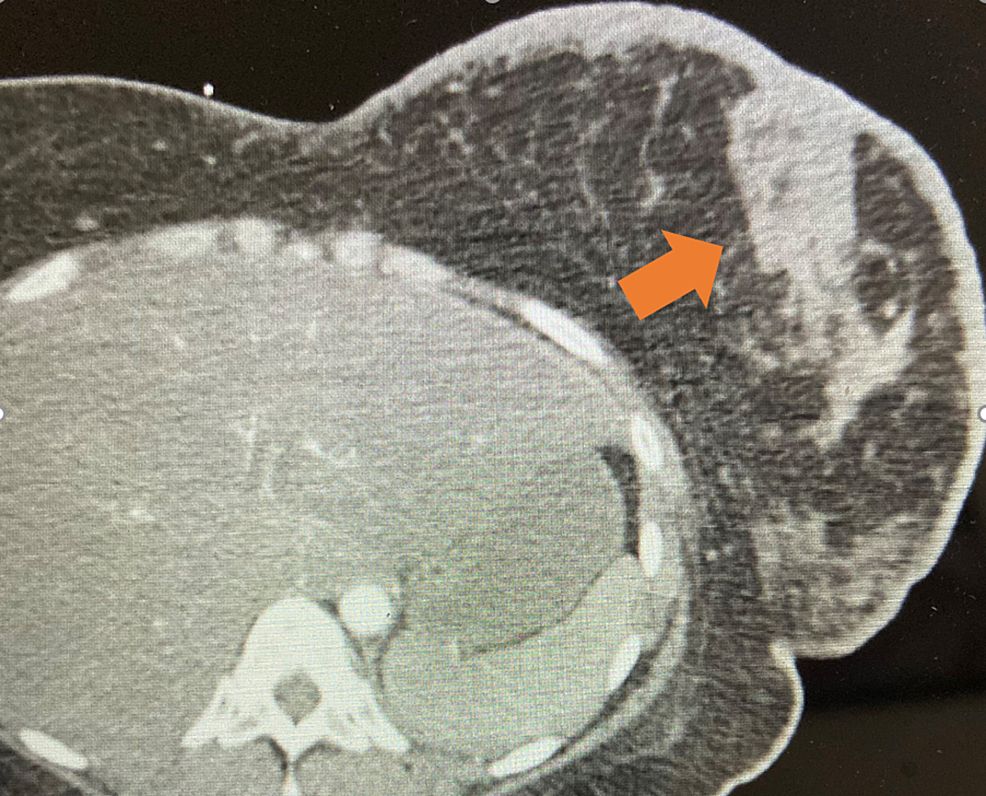
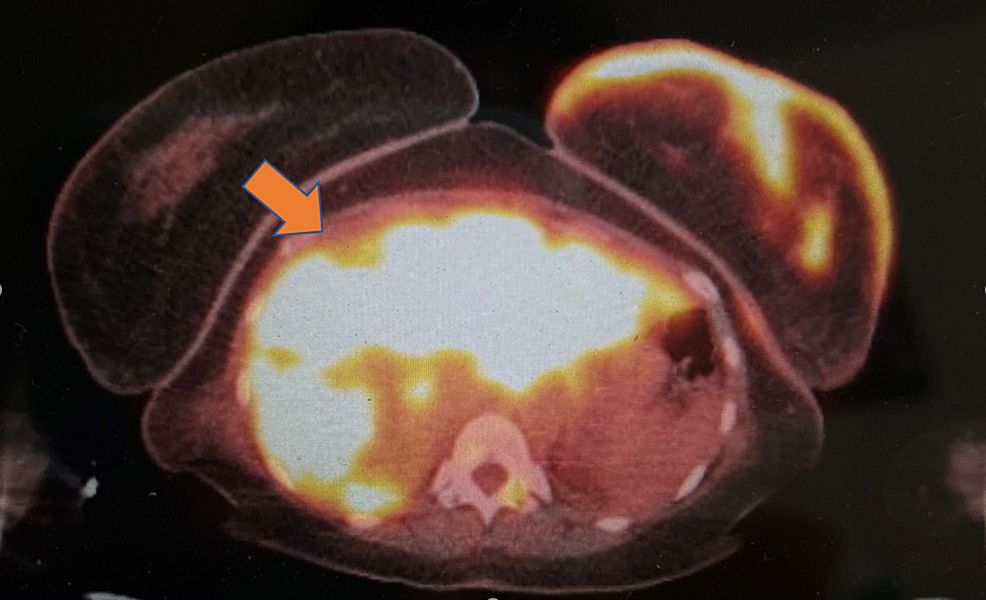
A 36-year-old Caucasian female with no significant past medical history presented to the Emergency Department (ED) with a several month history of shortness of breath, pleuritic chest pain, and nonproductive cough. Two weeks before this admission, she presented to the hospital after a mass in her left breast had eroded and broke through her skin. A core biopsy at that time had confirmed an estrogen-receptor-positive (ER +), progesterone receptor-positive (PR +), and human epidermal growth factor receptor-2 positive (HER2 +) Grade 4 left invasive ductal cell carcinoma of the left breast with perineural and lymphatic invasion, for which she had not yet initiated treatment. The patient presented to the ED due to worsening exertional shortness of breath and severe, non-radiating, pleuritic chest pain. There was no surgical history and family history was significant for a history of prostate cancer in her uncle. Social history was negative for tobacco use, ethanol use, or illicit drug use. On exam, she was lethargic, tired, tachycardic to the 140s, tachypneic, febrile at 101° F, and hypoxic to 87% on room air, requiring oxygen via nasal cannula. The cardiovascular, pulmonary, and neurological examinations were grossly normal. The entire left breast was firm and had extensive skin thickening with a reddish discoloration. Overlying erythema, necrotic tissue, and foul-smelling purulent discharge were present (Figure 1). There was significant left axillary lymphadenopathy. An electrocardiogram was nonischemic in nature and troponins were nondetectable. A Doppler ultrasound of the bilateral lower extremities was negative for deep venous thrombosis (DVT). A computed tomogram (CT) scan of the chest with contrast did not reveal a pulmonary embolism but did reveal bilateral pulmonary nodules, basal consolidation, and bilateral axillary, left supraclavicular, and hilar adenopathy. There was abnormal skin thickening of the left breast, along with a 4.2 x 1.9 cm mass-like thickening involving the left pectoralis muscle (Figure 2). A CT of the abdomen and pelvis with contrast showed diffuse hepatic masses concerning for metastases. The patient was treated with antibiotics for possible pneumonia. Mammography confirmed a poorly defined a 6 - 7 cm mass extending into the left breast with a Breast Imaging-Reporting and Data System (BI-RADS®) assessment category of 5. F-18 fluorodeoxyglucose positron emission tomography and computerized tomography (FDG PET/CT) scan revealed an abnormal uptake in the T10 vertebra, along with diffusely intense uptake in the liver, left pectoralis minor muscle, left supraclavicular, bilateral hilar, and axillary and retroperitoneal lymph nodes, all concerning for metastasis (Figure 3). At this time, she was found to be in tumor lysis with a lactate dehydrogenase (LDH) level of 937 U/L, uric acid 13.4 mg/dL, potassium 6.5 mEq/L, phosphorus 4.7 mg/dL, and creatinine 1.4 mg/dL. An ultrasound of the kidneys was negative for obstructive uropathy. Aggressive supportive measurements with high-flow intravenous fluids and rasburicase were initiated. With the eventual resolution of her pneumonia and improvement of renal function, allopurinol was initiated for prophylaxis. With clinical and laboratory improvement, one dose of chemotherapy, including an HER-2 targeting agent, was administered before she was discharged for further outpatient management.  · |
|
#2
●
11-11-2022, 01:36 AM
| ||||||||
 ★ Legacy Member ★ Poster Rank:247 So many choices now Join Date: Jul 2015 Posts: 5,548 Mentioned: 15 Post(s) Quoted: 2120 Post(s)
| ||||||||
|
Re: Fungating Ductal Cell Carcinoma of the Breast.
That looks just like a cheese and pepperoni stuffed tomato I made for dinner last week
|
|
#6
●
11-11-2022, 04:47 PM
| ||||||||
 ✝Mudderator from Hell✝ Poster Rank:10 e-mail Join Date: Oct 2006 Posts: 94,983
Contributions: 817
Mentioned: 472 Post(s) Quoted: 10078 Post(s)
| ||||||||
|
Re: Fungating Ductal Cell Carcinoma of the Breast.
 ·  · |
|
#7
●
11-11-2022, 07:13 PM
| ||||||||
| These are the rooms Poster Rank:25 of ruin. Join Date: Sep 2014 Posts: 54,011 Mentioned: 145 Post(s) Quoted: 30403 Post(s)
| ||||||||
|
Re: Fungating Ductal Cell Carcinoma of the Breast.
The bottom scan is especially creepy because it screams cancer.
|
|
#8
●
11-11-2022, 08:28 PM
| ||||||||
 My Rank: CORPORAL Poster Rank:1660 Slave to the Rhythm Join Date: Aug 2015 Posts: 329 Mentioned: 0 Post(s) Quoted: 86 Post(s)
| ||||||||
|
Re: Fungating Ductal Cell Carcinoma of the Breast.
This is not something u just noticed 2 weeks prior...never understand why people wait so long before reaching out for help. Get ur mammograms regularly ladies and make sure to do ur self exams
|
|
#9
●
11-13-2022, 07:11 PM
| ||||||||
 My Rank: LANCE CORPORAL Poster Rank:2729 female Join Date: May 2009 Posts: 150 Mentioned: 0 Post(s) Quoted: 43 Post(s)
| ||||||||
|
Re: Fungating Ductal Cell Carcinoma of the Breast.
I had a pt years ago who had breast cancer but denied it until it spread to her spine and "all of a sudden" she couldn't walk. She covered her breast wound with pads and refused to let anyone see it You could smell it all the way down the hall. She was in complete denial up until the day she died.
|