|
#1
●
10-22-2021, 03:32 PM
| ||||||||
 ♚ Legacy Gold Member ♚ Poster Rank:911 Join Date: Jul 2020 Posts: 822
Contributions: 10
Mentioned: 13 Post(s) Quoted: 173 Post(s)
| ||||||||
|
Extensive Scalp Defect with Exposed Bone After a Head Trauma
After an accident during do-it-yourself work, firefighters found a 68-year-old male lying on the ground. He had a major avulsive scalp injury (Fig.1) and a complete motor deficit of the right upper limb. At admission, the Glasgow score was 14 and the capillary blood glucose level 0.30 mg/dL. The patient suffered from diabetes and was taking Glicazide. He stated that he felt shaky before the accident, and was sweating. After re-establishment of an appropriate blood sugar level, the motor deficit did not disappear. Cerebral computed tomography revealed a left-side intraparenchymal hematoma with post-traumatic arachnoid hemorrhage (Fig.2). He also suffered from a simple bone fracture (Fig.3). 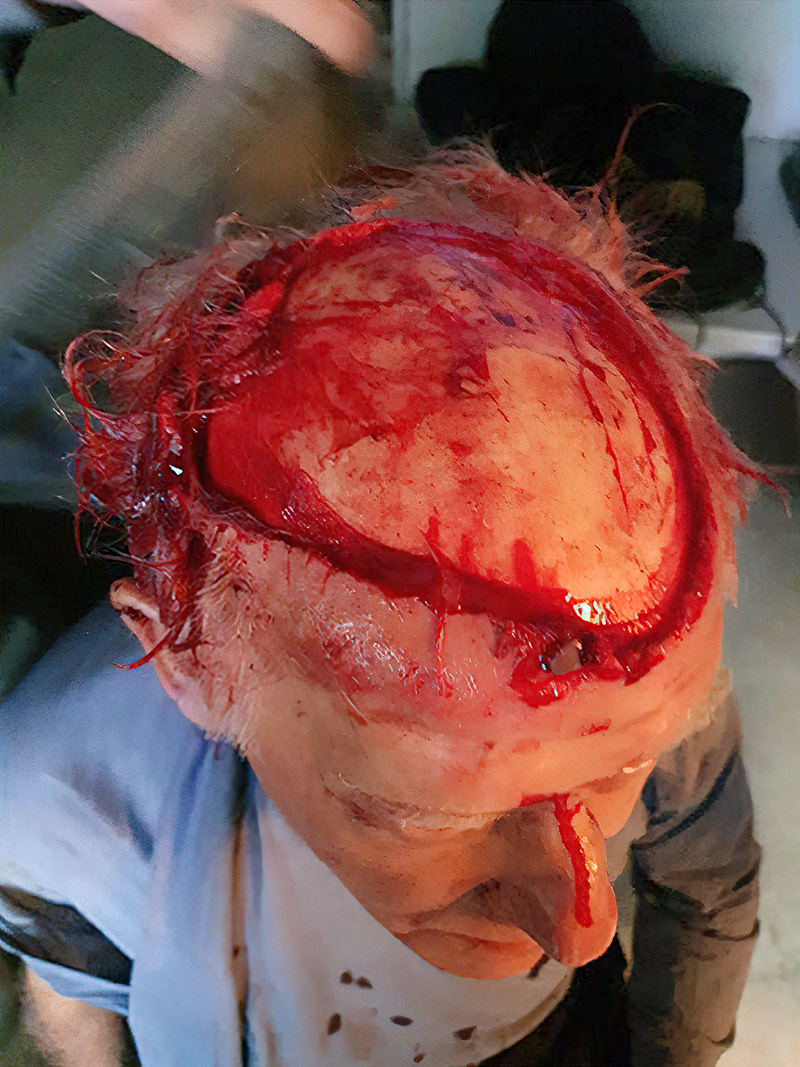 Fig.1 Major traumatic scalp injury. 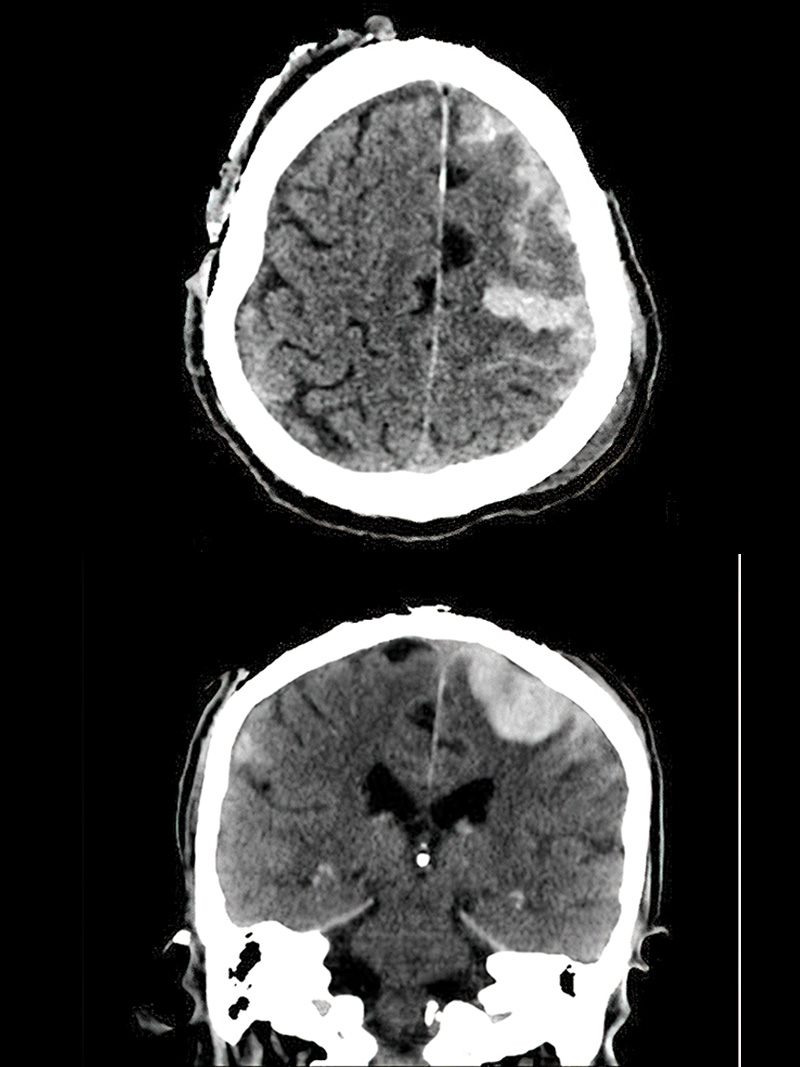 Fig.2 Cerebral computed tomography showing left-side intraparenchymal hematoma with post-traumatic arachnoid hemorrhage. A traumatic, avulsive scalp injury with an intraparenchymal hematoma caused by hypoglycemia. The patient described adrenergic symptoms prior to the accident and was taking sulfonylurea, a medication at risk of hypoglycemia. The patient’s hypoglycemia had been severe; he had required firefighter-administered resuscitative assistance. It was imperative to adjust his treatment because severe hypoglycemia is associated with cardiovascular and all-cause mortality. 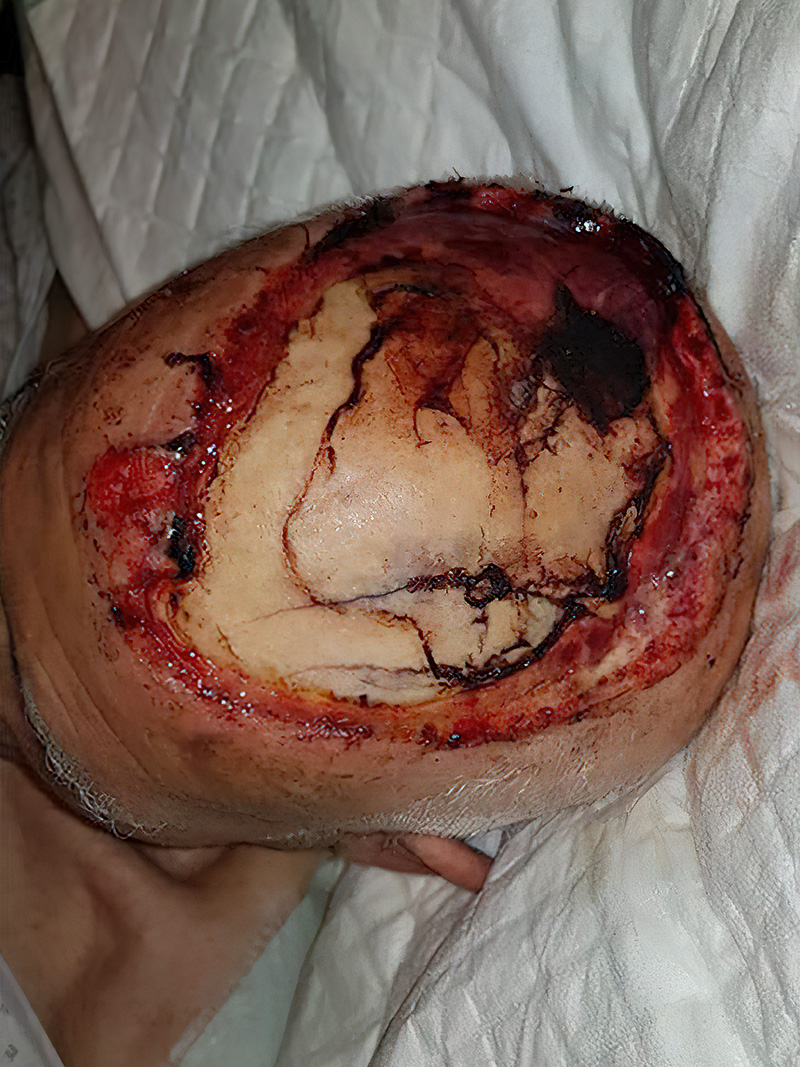 Fig.3 A simple bone fracture. 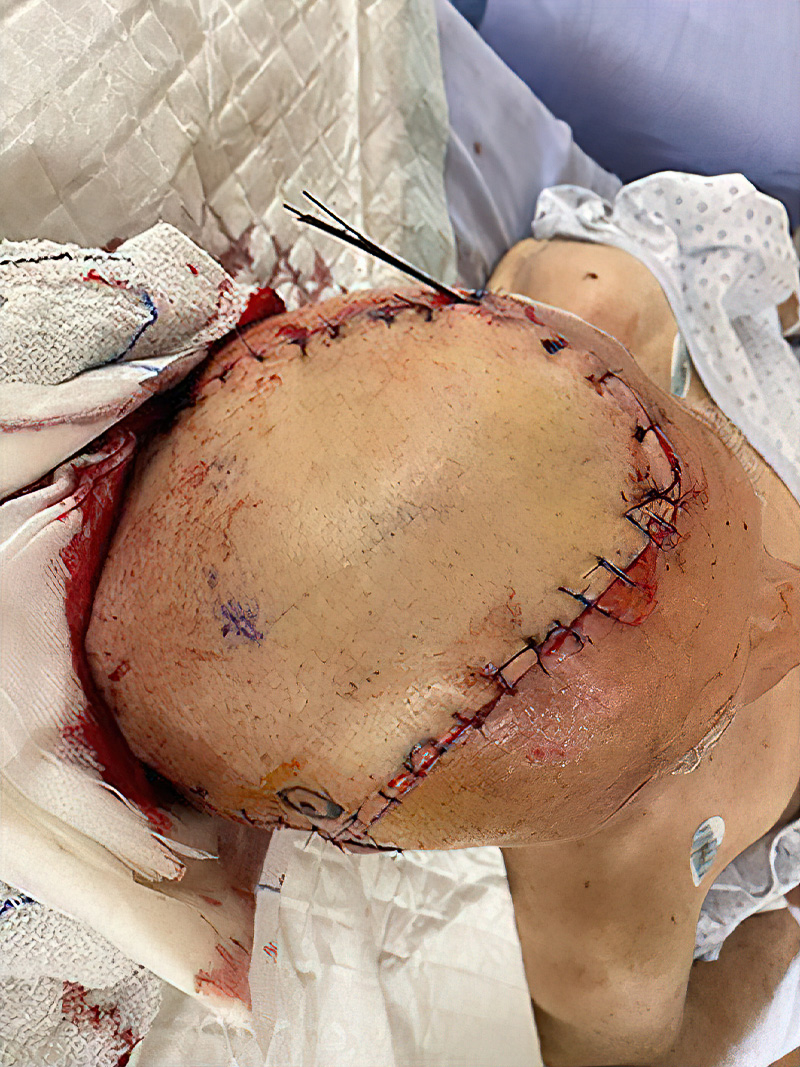 Fig.4 Result of free thin antero-lateral thigh flap. Scalp reconstruction was performed using a free thin anterolateral thigh flap (Fig.4). As in this case, free tissue transfer for scalps defects is indicated for large defects. It can provide an immediate and durable reconstruction. Flaps success rates from all sources are greater than 95%. The intracranial hematoma explained the motor deficit of the upper limb. Primary screening (in the Emergency Department) of patients with traumatic brain injuries is essential to classify patients by the risk of intracranial pathology. - This post is for educational purposes only and is nonprofit. Under Section 107 of the US Copyright Act of 1976; Allowance is made for "Fair Use" for purposes such as criticism, comment, news reporting, teaching, scholarship, and research. OP is not a medical expert. No copyright infringement intended. This post does not encourage or glorify violence/harassment. Images might have been upscaled and enhanced. Text might have been shortened and simplified/reorganized for online view. |
|
#2
●
10-22-2021, 04:32 PM
| ||||||||
 ★ Legacy Member ★ Poster Rank:197 All woman Join Date: Jun 2012 Posts: 7,773 Mentioned: 22 Post(s) Quoted: 1420 Post(s)
| ||||||||
|
Re: Extensive Scalp Defect with Exposed Bone After a Head Trauma
Anyone who suffers from any disease which might cause their blood sugar to drop suddenly should always carry glucose in some form, sweets, or juice handy. My mother's diabetic and I've seen how weird it is when she becomes hypoglycemic.
|
|
#5
●
02-28-2022, 07:47 AM
| ||||||||
| My Rank: PRIVATE Poster Rank:5371 Join Date: Dec 2021 Posts: 48 Mentioned: 0 Post(s) Quoted: 8 Post(s)
| ||||||||
|
Re: Extensive Scalp Defect with Exposed Bone After a Head Trauma
Hypoglycemic behavior can indeed be weird, my brother in law is diabetic and he would go around the house looking for something for like an hour getting increasingly agitated, so when I finally asked him WTF he was looking for, he told me he was looking for his keys, and I told him, "You're holding them in your right hand." Then he looked at them, then at me again, and then just walked out, and I can only imagine what kind of road rage incidents he generated that afternoon.
|