|
#1
●
09-23-2024, 07:47 PM
|
 These are the rooms Poster Rank:26 of ruin. Join Date: Sep 2014 Posts: 54,008 54,008Posts 87,658Thanked 30,403Quoted 145Mentioned 0Contrib. |
|
Accidental Burn During Surgery
It is highly possible for iatrogenic burns to occur under general anesthesia and sedation, because a patient cannot complain under such conditions. Therefore, iatrogenic burns tend to be deep and wide. There have been numerous reports of fires and explosions occurring in the operating room. The inhalation of flammable anesthetic reagents have been reported to be the cause of many incidents in the past, but such reagents are no longer available in many countries. However, other causes of fires and explosions in the operating room still exist [1]. Many cases of gastrointestinal gas explosions caused by the use of an electric scalpel during endoscopic or laparoscopic surgery have been reported, and hence precautionary measures have been recommended for the use of such methods in an enclosed space, in which the density of a gas can readily increase [1], [2], [3], [4], [5], [6], [7], [8], [9], [10], [11]. However, to our knowledge, our present report is the first of an iatrogenic intraoperative burn occurring in an open space by gastrointestinal gases in combination with the use of a holmium YAG laser. We present a patient who sustained iatrogenic second-degree and third-degree burns to both the buttocks and thighs, with the intention of increasing awareness about the hazards of flammable gastrointestinal gases during the use of a holmium YAG laser. A 30-year-old woman underwent surgery for cervical cancer under general anesthesia in the lithotomy position. A holmium YAG laser (VersaPulse, Lumenis, Israel) was used as the surgical option. When the operator used the laser on the patient’s cervical lesion, the operator noticed that the drape under the patient’s right leg was on fire. The patient suffered burns to both buttocks and posterior thighs. The fire was put out immediately with saline solution that was on the table of the operation room. The patient was referred to the plastic and reconstructive surgery team for assessment and treatment. On examination, the burn was 7.6% of the patient’s TBSA (total body surface area), comprising 5.25% full-thickness burns, 1.75% deep dermal burns, and 0.6% superficial dermal burns. Both the buttocks and right posterior thigh had full-thickness burns, the left posterior thigh and right popliteal fossa had deep dermal burns, and the right hand had superficial dermal burns (Fig. 1a, b). The vagina and anus were intact. The burn was dressed with nonadherent gauze and antibiotic ointment in the operation room. The first operation for the burn was performed 2 days after the injury. Tangential excision was performed to the left posterior thigh and right popliteal fossa, and the wound was covered with a meshed split thickness skin graft. Fascial excision was performed on both the buttocks and right posterior thigh, and covered with polyurethane foam dressing. The second operation was performed 10 days after the injury. Debridement was performed to both buttocks and the right posterior thigh, and the wound was covered with a meshed split thickness skin graft. The third operation was performed 22 days after the injury. The wound was covered with a patched split-thickness skin graft on the buttocks near the anus (Fig. 2). The graft was checked 35 days after the injury, and showed an almost full graft take. The right hand healed spontaneously. The patient also started rehabilitation. The wound was completely healed by 50 days after injury. The operation for cervical cancer was performed again 80 days after injury by a different procedure, namely, the loop electrosurgical excision procedure. The surgery was successful and without any problems. The patient was hospitalized for a further 5 months owing to other reasons. (Fig. 3) There was no contracture of the hip and knee joint, and her cosmetic appearance was acceptable 1 year after injury. We promptly reported the incident to the police department and the fire department according to the laws at that time. In terms of the cause of fire, three points were apparent. First, alcohol-based cleansing agents have resulted in severe burns to the skin [11], [12], but they were not used in this operation. Second, there were no problems with the laser instrument and electric equipment. Finally, laser irradiation was accurately performed to the uterine cervix, but the fire started from the drape under the patient’s right leg. This shows that the location of ignition was different from the area of irradiation, and hence we were unable to explain the mechanism. Therefore, an investigating committee consisted of external well-informed persons, such as professors and experts recommended by the Japan Society for Laser, Fire and Disaster Management, etc. The committee concluded that it was very likely that flammable gastrointestinal gases that were released during use of the holmium YAG laser caused the fire that spread to the drape. That was why the patient suffered burns to both buttocks and posterior thighs [13]. 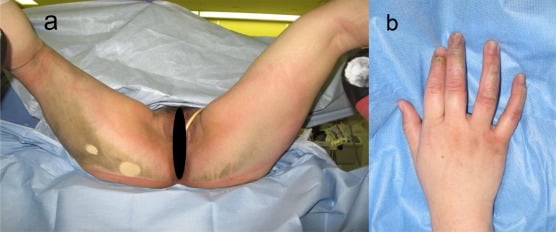 · 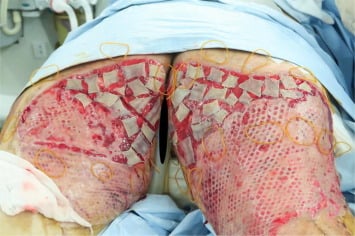 · 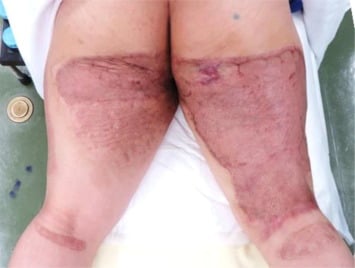 · |
|
#2
●
09-23-2024, 08:21 PM
|
 ♚ Legacy Gold Member ♚ Poster Rank:206 Iceman Join Date: Aug 2017 Posts: 7,503 7,503Posts 12,801Thanked 3,630Quoted 19Mentioned 0Contrib. |
|
Re: Accidental Burn During Surgery
So what you're saying is they set her farts on fire?
|
|
#4
●
09-23-2024, 11:53 PM
|
 ★ Legacy Member ★ Poster Rank:110 Secret Agent Join Date: Dec 2009 Posts: 14,801 14,801Posts 49,155Thanked 3,051Quoted 6Mentioned 0Contrib. |
|
Re: Accidental Burn During Surgery
I had a friend who didn’t believe farts could be lit on fire. That was until I blew a blue flame out my ass one day while sitting together outside smoking with a lighter in my hand…   |
|
#5
●
09-24-2024, 03:09 AM
|
 ✝Mudderator from Hell✝ Poster Rank:10 e-mail Join Date: Oct 2006 Posts: 96,659
Contributions: 901
96,659Posts 543,270Thanked 10,366Quoted 479Mentioned 901Contrib. |
|
Re: Accidental Burn During Surgery
 sometimes surgeons burn their hand. sometimes surgeons burn their hand. |
|
#6
●
09-24-2024, 03:26 AM
|
 My Rank: FIRST SERGEANT Poster Rank:410 Male Join Date: Nov 2009 Posts: 2,964 2,964Posts 4,915Thanked 448Quoted 18Mentioned 0Contrib. |
|
Re: Accidental Burn During Surgery
As if going in for cervical cancer surgery wasn't bad enough...
|
|
#7
●
09-24-2024, 03:03 PM
|
 My Rank: CORPORAL Poster Rank:1271 Join Date: Sep 2024 Posts: 489 489Posts 418Thanked 256Quoted 0Mentioned 0Contrib. |
|
Re: Accidental Burn During Surgery
I worked ten years in an OR and never heard about that I'm sorry for that lady I hope she won't keep getting roasted because of this fart story |